Final Round AI vs Parakeet AI: Real Live Coding Test

In the last 3 months, I've been working hard to get through the technical screening system design phases and the real-time online proctored assessments for non-entry-level software engineering roles. To be honest, it's been a bit of a rollercoaster. I've even had to turn to various real-time AI interview assistants to help me cope with the stress of these interviews. I've read articles on all sorts of topics, like 'the best oral AI exam interview tools' and 'how to bypass TestGorilla proctoring'. I've also compared a bunch of popular interview assistants.
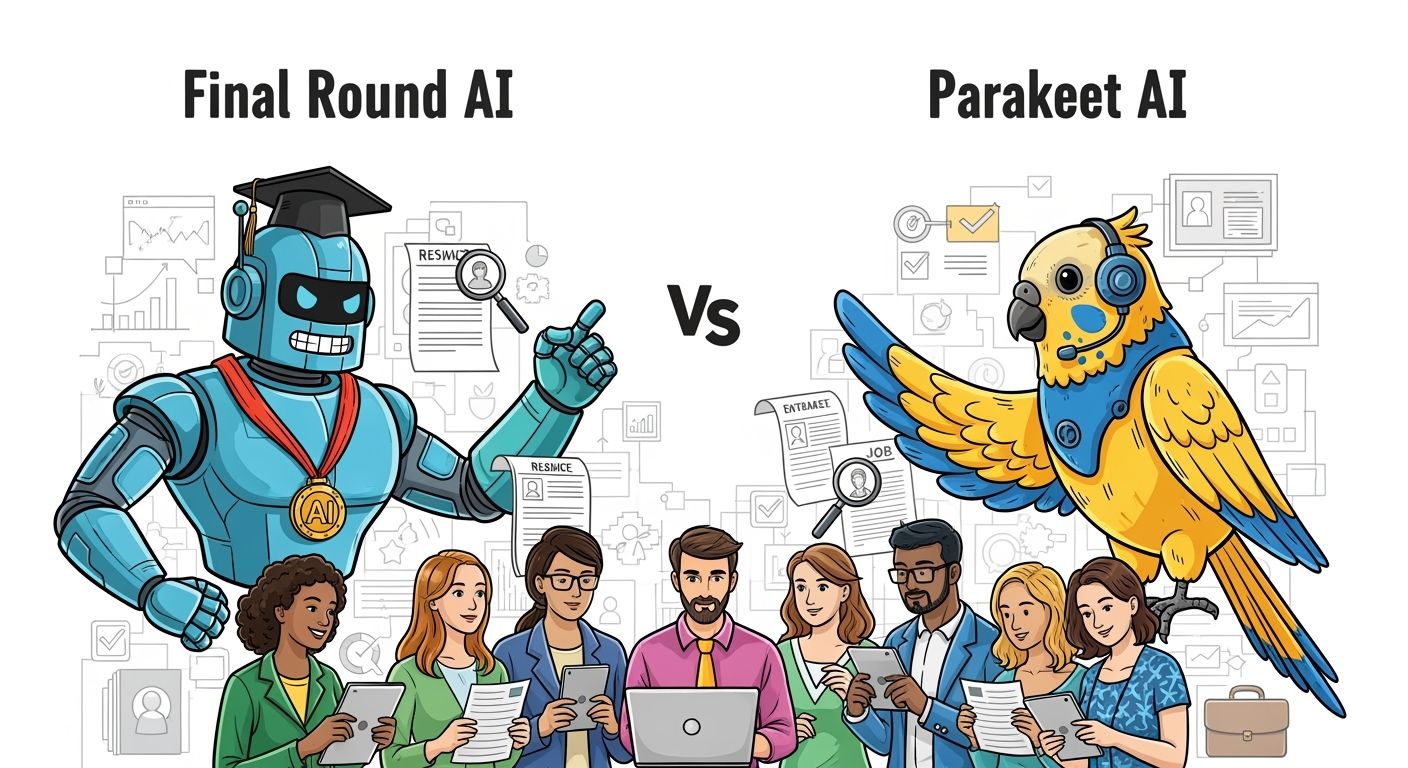
To get ahead of the game, I did a full head-to-head comparison of the two most talked-about interview assistants in this Final Round AI vs. Parakeet AI real-world test.
Sadly, even though both platforms promise help during video calls straight away, my testing showed annoying delays, glitched mouse tracking and expensive prices. Here's what happened when I tried out these two tools, and why I eventually switched to relying completely on Linkjob AI.
Final Round AI vs Parakeet AI: My Real 2026 Developer Experience
When I started the interview process, I was hoping for an assistant who could listen quietly, analyse technical issues and offer clear, logical insights without interrupting my train of thought.
Testing Parakeet AI’s Speech Transcription & Manual Trigger Flaws
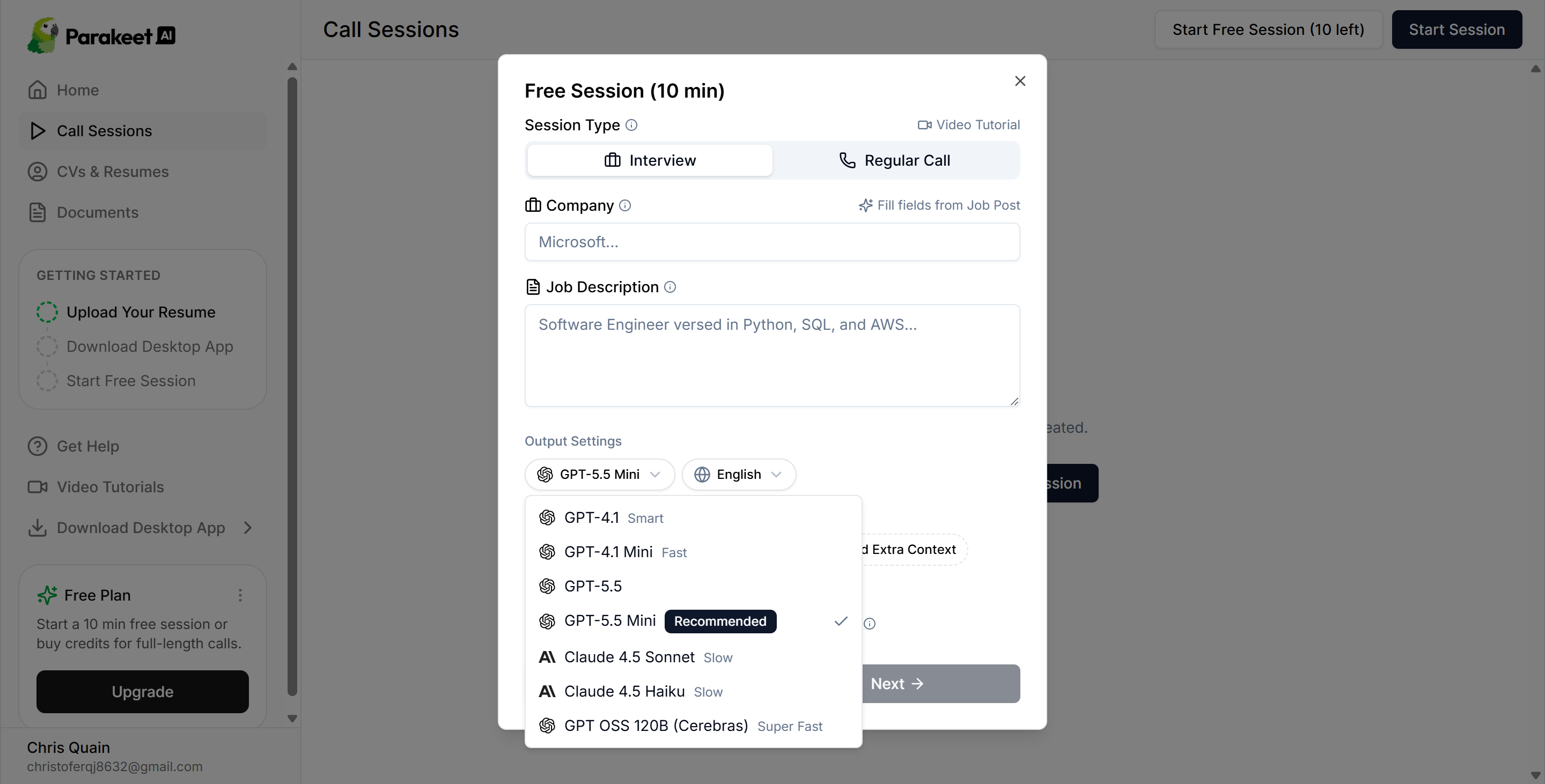
Parakeet AI positions itself as a fast, real-time audio assistant for interviews. However, using it during actual real-time technical calls revealed a major user experience design flaw:
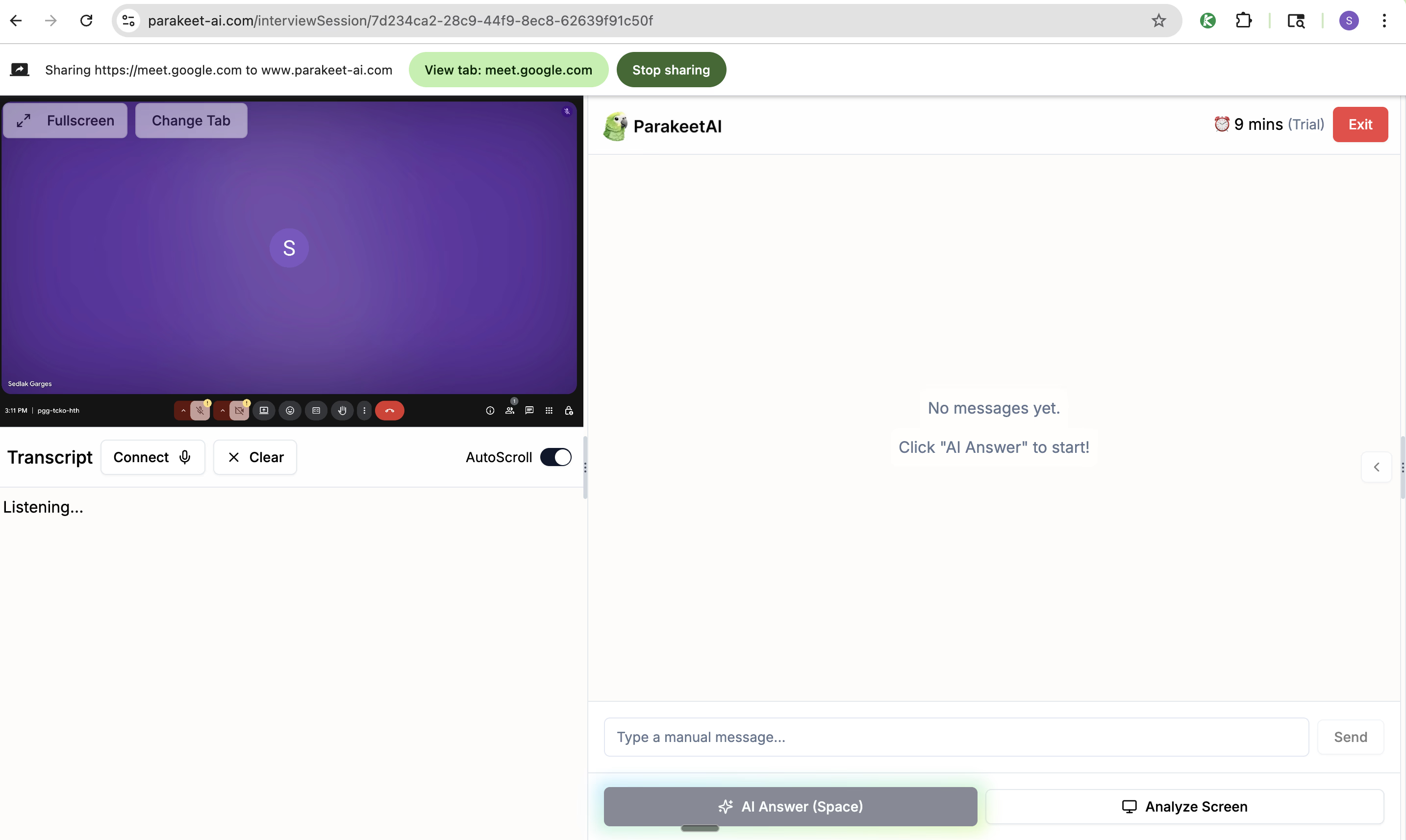
The Manual Trigger Requirement: Parakeet AI doesn't automatically give answers straight away. I had to click the "Start Answering" button on the screen before it would start working and come up with some answers.
Awkward Conversational Pauses: I noticed a delay of about 6 to 8 seconds during the test interview. This was because I had to wait for the interviewer to finish speaking, move the mouse, and click the trigger button.
Outdated AI Models: When it comes to complex algorithmic or system design problems, it often generates results that are too generic and lack depth.
Trying Final Round AI for All-In-One Features & Mock Rounds
Then I tried out Final Round AI. The platform has a full set of features called the "interview suite", including AI-powered mock interviews, a tool to build your CV and a real-time assistance tool called "Copilot Engine".
Over-Engineered Setup: Before I started using the official interview assistant, the welcome pack showed me the ropes with all kinds of non-technical tools.
Behavioral Focus: Final Round AI does really well on behavioural questions in the general STAR format (like "Tell me about a time you had a conflict"), but it's not so great at real-time coding tasks.
Fluffy Code Outputs: When you get a technical tip, it shows long blocks of dialogue text that keep popping up on the screen instead of short, useful code snippets that you can quickly type in.
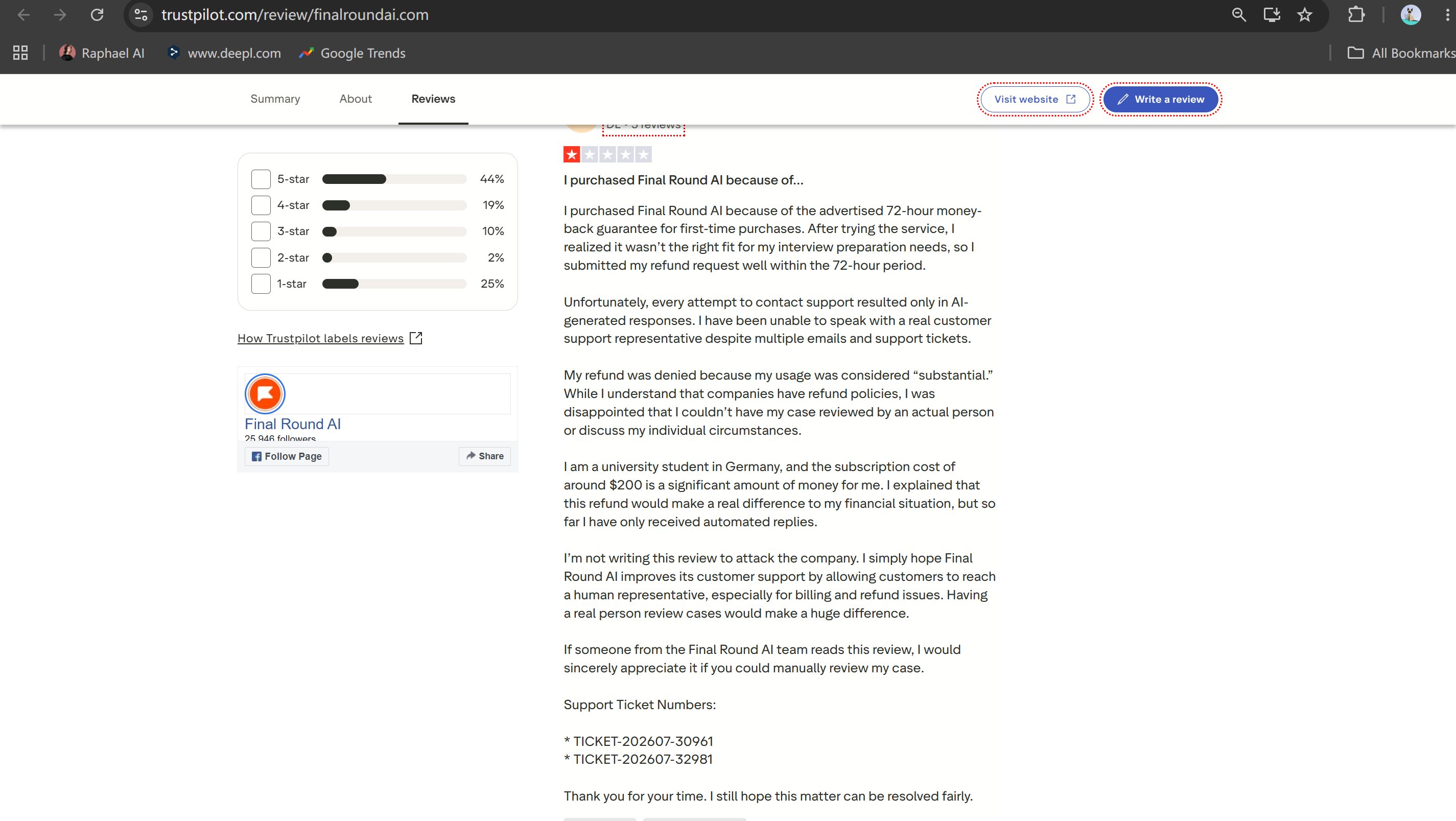
On top of the issues we mentioned, Final Round AI's reputation has been a bit tarnished lately. I gathered the 20 most recent reviews on Final Round AI's Trustpilot and put them in a chart:
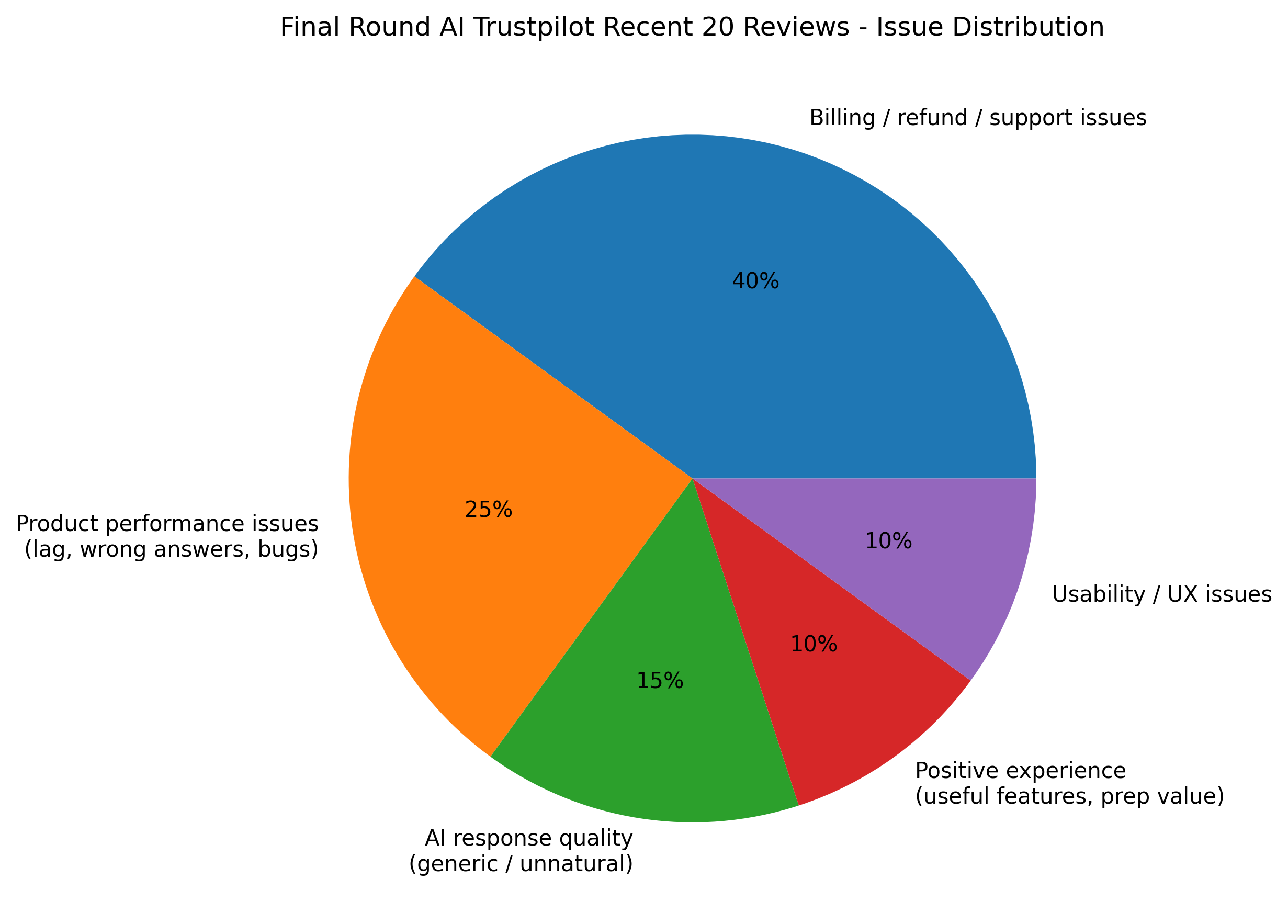
I haven't run into a lot of the problems mentioned in the reviews, but I'd suggest waiting to use Final Round AI in formal interviews until there's an update.
Final Round AI vs Parakeet AI: Latency, Speech-to-Text & Code Accuracy
For software engineers working on the live interface on CoderPad or HackerRank, it's just as important to be fast as it is to be accurate. If a tool is slow to respond or makes mistakes in its logic, it's not just useless — it's more than that. It messes up my normal workflow.
Speech-to-Text Processing Delays & Unnatural Silence
In real-time apps, a delay of more than two seconds can be uncomfortable. I measured how long it took to run the STT and model generation for ten DSA sample problems:
Copilot Platform | Avg. Speech-to-Text Latency | Trigger Method | Live Coding Usability |
Final Round AI | ~8.0 seconds | Automatic / Audio Stream | ❌ Too slow; causes awkward silence |
Parakeet AI | ~6.5 seconds | Manual Click Required | ⚠️ Slow; requires manual mouse clicks |
Linkjob AI | ~1.2 seconds | Automated IDE Pixel Reader | ✅ Instant real-time code streaming |
Both Parakeet AI and Final Round AI created unnatural silences while processing incoming audio, making me sound hesitant and unconfident to the interviewer.
DSA Code Generation & Manual Screenshot Hurdles
When dealing with complex Data Structures and Algorithms (DSA), both tools hit serious bottlenecks:
Parakeet AI’s Screenshot Bottleneck: It can't automatically parse your screen code. When I was doing the interview, I had to take a screenshot and then upload it. It was impossible to do that secretly while sharing the screen.
Final Round AI’s Missing Edge Cases: Its code outputs frequently missed critical edge cases or generated sub-optimal
O(N^2)runtime solutions without warning.Zero Complexity Analysis: Neither tool automatically summarized time and space complexity bounds, forcing me to calculate standard
O(N)runtimes in my head while speaking.
Final Round AI vs Parakeet AI: Mouse Tracking, Screen Share Stealth & Anti-Cheat Risks
Getting caught using an AI assistant during an interview is every candidate's worst nightmare.
Parakeet AI’s Mouse Cursor Cues & Lack of Global Hotkeys
Parakeet AI claims to be invisible, but its reliance on manual UI interaction creates major stealth risks on camera:
Visible Mouse Movement: I had to click "Start Answering" or drag the screenshot boundaries, and my mouse cursor kept moving from the IDE to the Copilot window, which was then detected.
No Global Hotkeys: It doesn't have keyboard shortcuts that are hidden in the background, so you can't trigger or close the tooltip without moving the mouse cursor.
Interviewer Focus Loss: A friend who helped me run the test said she noticed my cursor kept clicking repeatedly in the blank area outside the code window while she was watching the full-screen desktop share.
Final Round AI’s Floating Overlay Capture & OA Detection
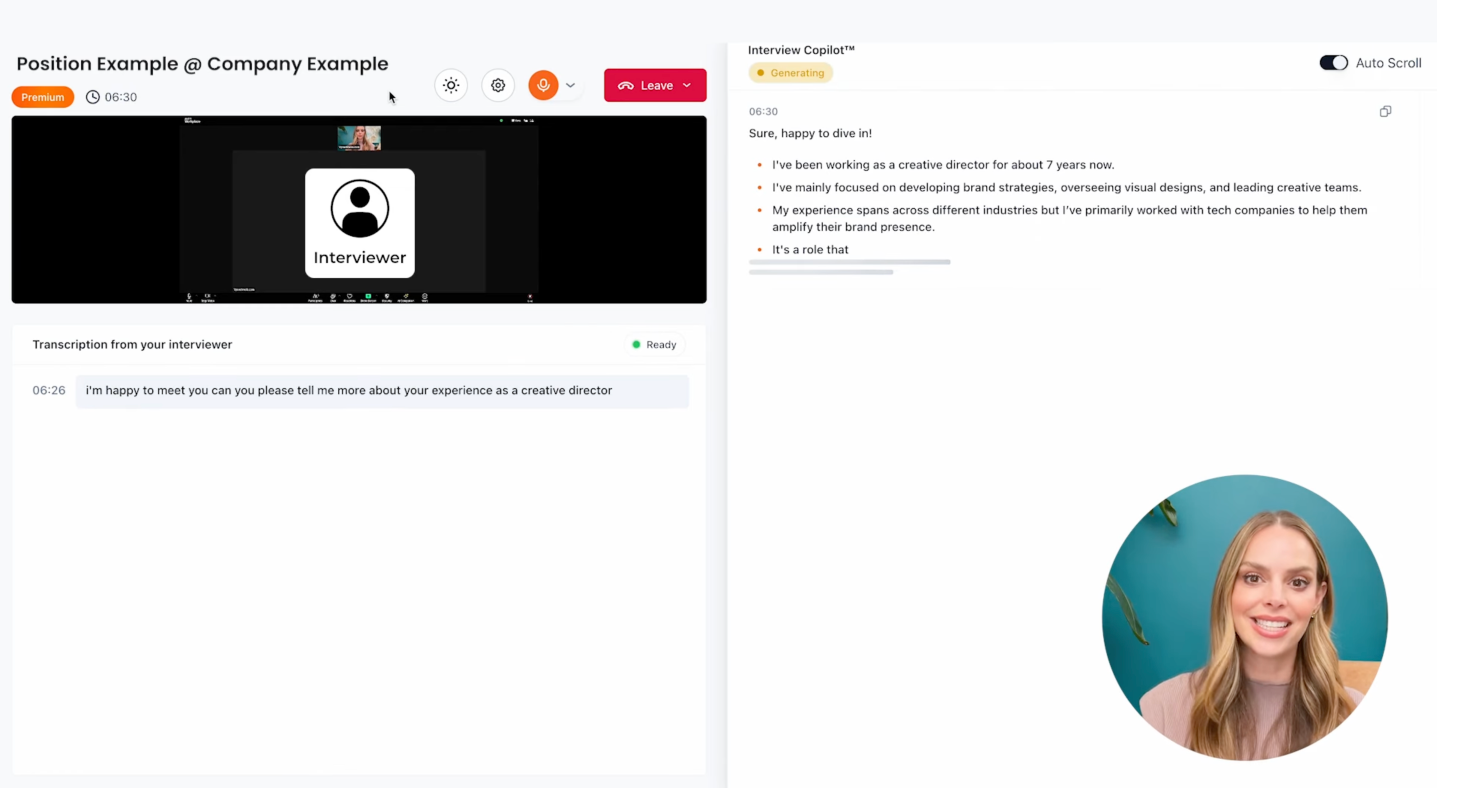
Final Round AI runs as a standard desktop software overlay, which poses severe risks during proctored OAs:
Zoom/Teams Window Capture: Standard software overlays render inside the OS window stack, meaning Zoom, Teams, or Google Meet full-screen captures can accidentally capture the overlay.
Anti-Cheat Process Auditing: Platforms like HirePro, iMocha, and Secure Exam Browsers (SEB) run active background process scans that flag Final Round AI's client binaries.
DOM & Focus Blur Detection: Switching focus away from test windows logs instant blur and tab-switch events on web-based test platforms.
Final Round AI vs Parakeet AI: Credit Timeouts vs Subscription Paywalls
Understanding the pricing structures of Final Round AI vs Parakeet AI is vital when planning a job search that might span several weeks or months. At least it was vital to me at that time.
Parakeet AI’s Restrictive Credit Limits & Mid-Interview Timeouts
Parakeet AI relies on a Session and Credit-based system that can leave you stranded mid-interview:
Pay-Per-Session Anxiety: The Parakeet AI basic plan sets a limit on how long calls can be, either in minutes or in terms of the number of tokens. If I run out of credit in the middle of a call, I'll have to stop using the service or buy another one while I'm still on the call...
Credit Timeouts: A friend who's used this tool told me that interview slots that aren't used tend to expire pretty quickly. If an interview is rescheduled, those slots just waste away, and she can't really ask for most of the money back.
No Refund Guarantees: The same friend also told me that if a call gets disconnected or fails — meaning there's an issue with the tool itself — you can't get a refund.
Calculating the Cost: Subscription Paywalls vs Value
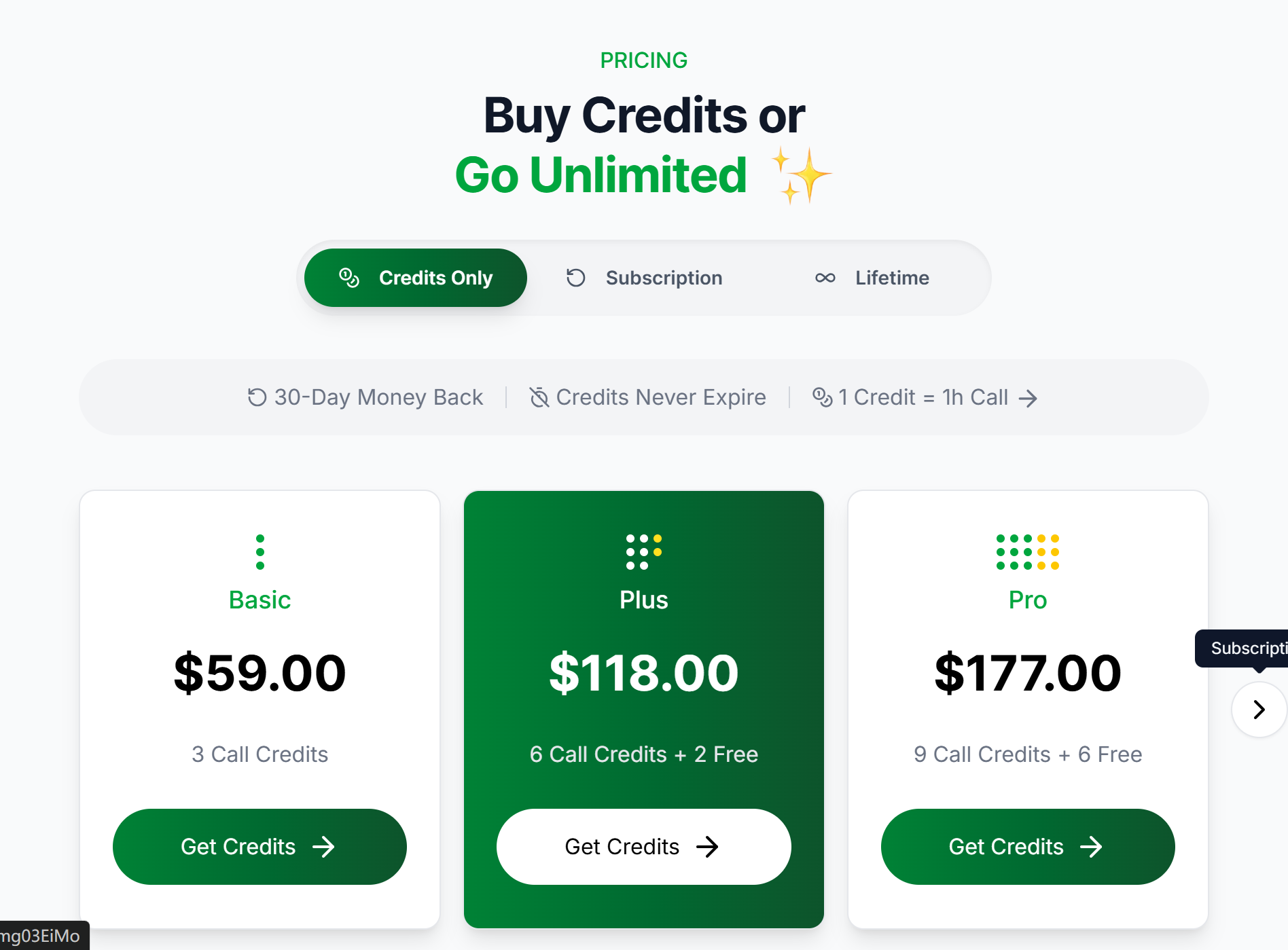
Here is how their pricing models compare for an active candidate:
Feature & Pricing Metric | Parakeet AI | Final Round AI | Linkjob AI |
Pricing Structure | Credit / Session-based | Heavy Monthly Subscription | Flat Unlimited Subscription |
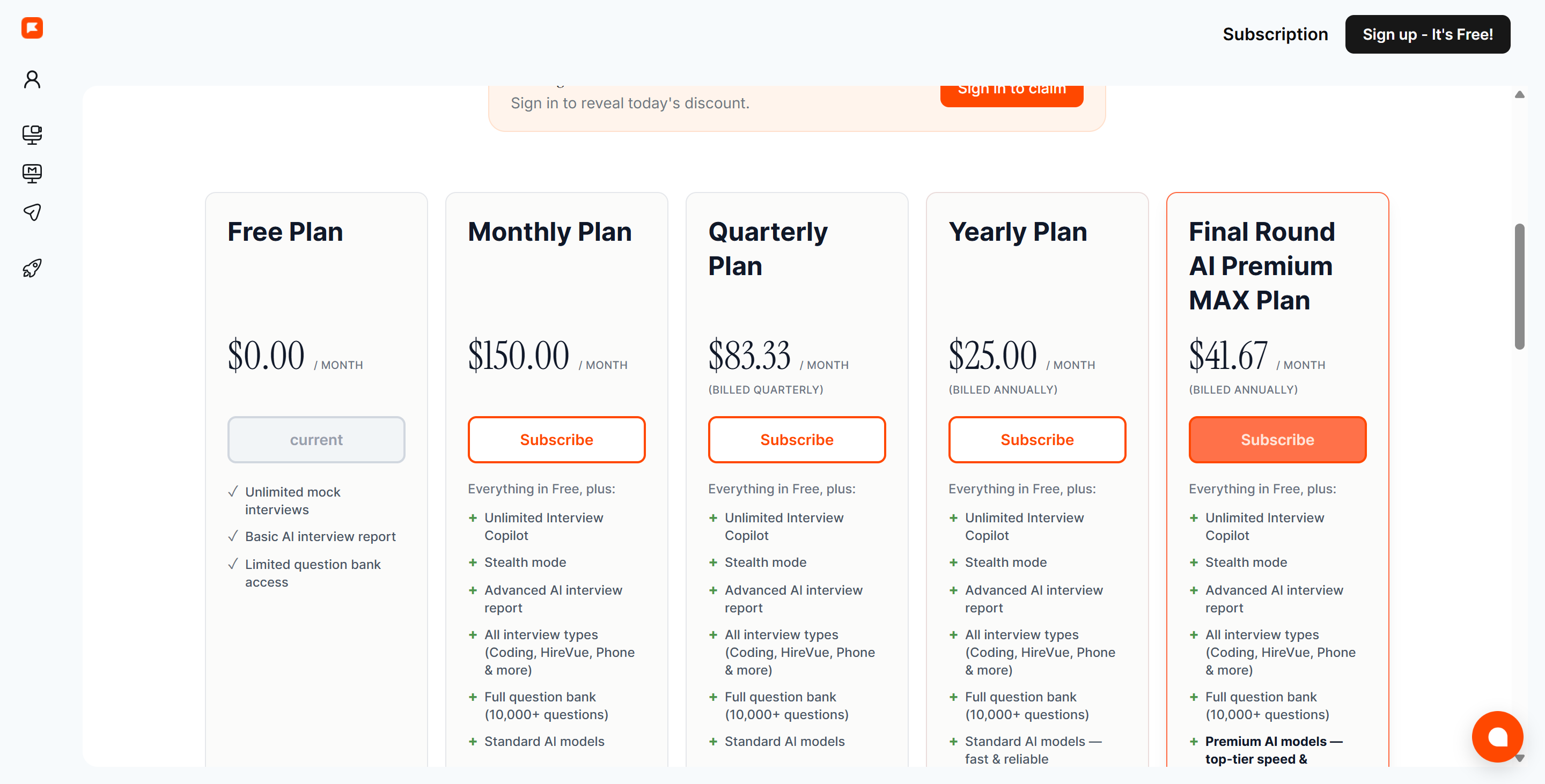
Starting Cost | ~$59 / session package | $41–$150.00 / month | $29.99 / month |
Stealth Technology | Soft overlay (Mouse dependent) | Soft overlay (Process visible) | OS-Level Hardware Overlay |
Screen Reading | Manual Screenshot Uploads | Soft Audio Listening | Instant IDE Pixel Parsing |
Target Audience | General interviewees | Non-technical & General roles | Software Engineers & Coders |
Paying $150/month for Final Round AI just to get generic conversational answers is a huge financial barrier for most job seekers.
Why I Ditched Both Tools and Switched to Linkjob AI
After getting frustrated by Parakeet AI’s manual triggers and Final Round AI’s heavy monthly price tag, a principal engineer recommended Linkjob AI. It immediately solved every pain point I experienced with the other two tools.
True OS-Level Hardware Overlay for 100% Undetectable Stealth
Unlike the soft overlays in Final Round AI vs Parakeet AI, Linkjob AI uses a proprietary system-level hardware overlay:
Hardware Layer Rendering: Displays directly below the operating system’s display composition layer. It is 100% invisible to screen sharing on Zoom, Teams, Meet, and full-desktop screenshots.
Invisible Global Hotkeys: Zero mouse movement required. You can trigger, scroll, or clear prompts using fully customizable background hotkeys without moving your cursor.
Proctoring Bypass: Operates outside browser sandboxes, bypassing DOM inspection, process monitoring, and window-blur tracking on HirePro, Coderpad, HackerRank, and SEB.
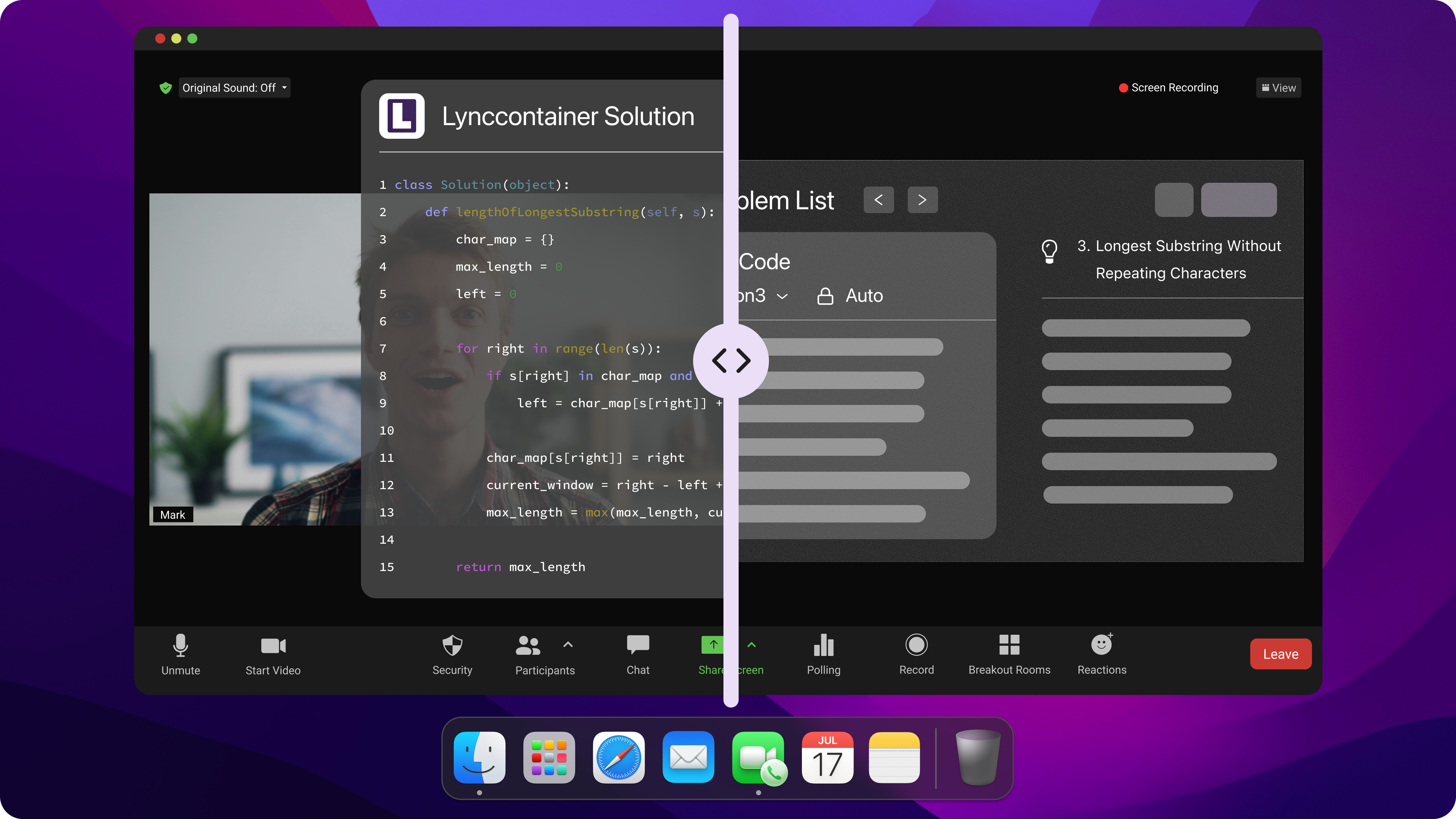
Instant Screen Pixel Parsing & Production-Ready Code Outputs
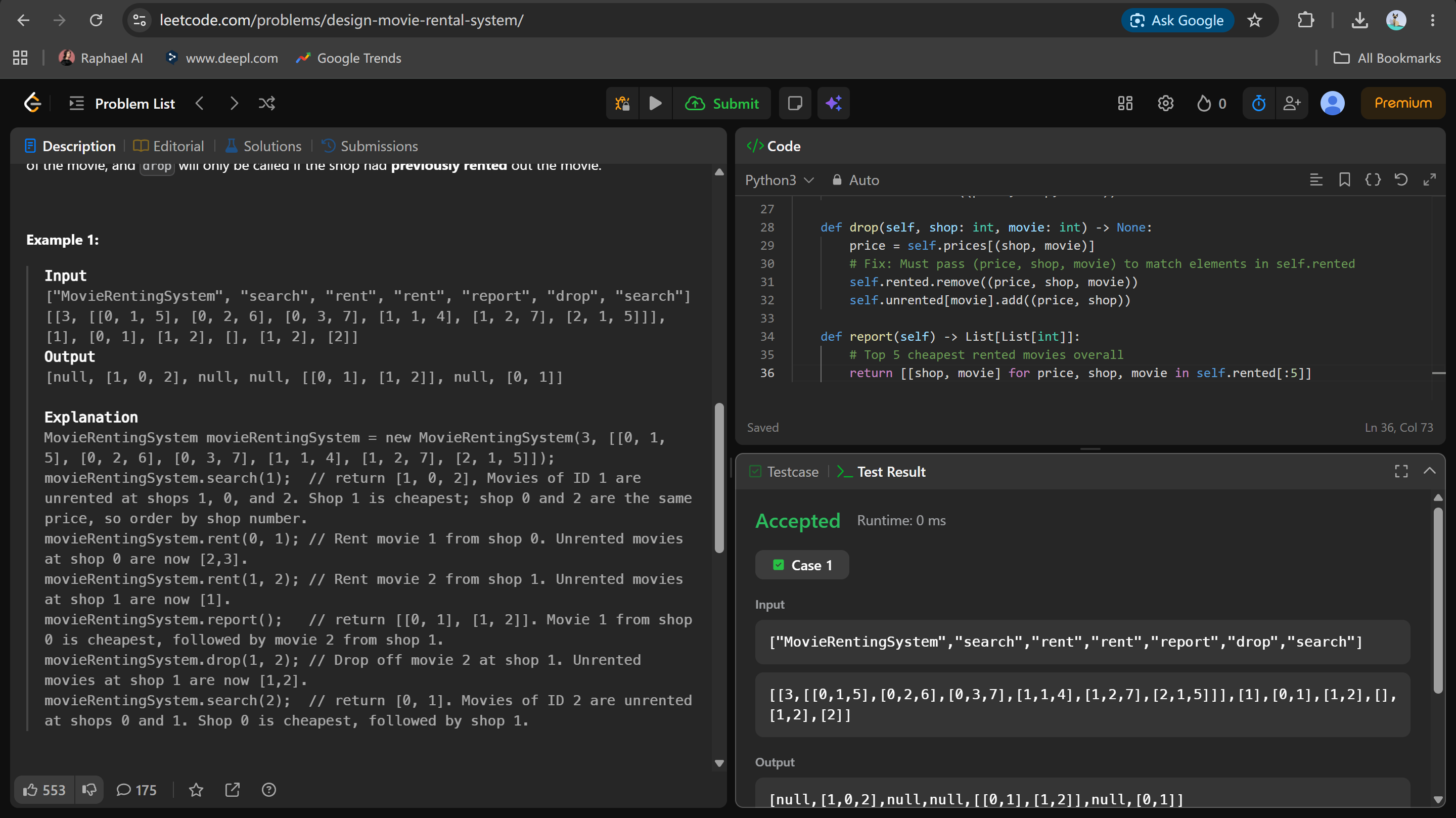
Linkjob AI uses an instant screen pixel reader that parses your IDE directly—no manual screenshots or "Start Answering" clicks required.
I tested it against LeetCode 1912 (Design Movie Rental System), a complex Hard design problem. It instantly read my IDE screen, parsed the multi-index requirements, and generated clean, executable Python 3 code complete with runtime bounds:
# Linkjob AI Solution for LeetCode 1912 (Design Movie Rental System)
from typing import List
from sortedcontainers import SortedList
from collections import defaultdict

class MovieRentingSystem:

    def __init__(self, n: int, entries: List[List[int]]):
        self.unrented = defaultdict(SortedList)
        self.rented = SortedList()
        self.prices = {}

        for shop, movie, price in entries:
            self.unrented[movie].add((price, shop))
            self.prices[(shop, movie)] = price

    def search(self, movie: int) -> List[int]:
        return [shop for price, shop in self.unrented[movie][:5]]

    def rent(self, shop: int, movie: int) -> None:
        price = self.prices[(shop, movie)]
        self.unrented[movie].remove((price, shop))
        self.rented.add((price, shop, movie))

    def drop(self, shop: int, movie: int) -> None:
        price = self.prices[(shop, movie)]
        self.rented.remove((price, shop, movie))
        self.unrented[movie].add((price, shop))

    def report(self) -> List[List[int]]:
        return [[shop, movie] for price, shop, movie in self.rented[:5]]
It also instantly provided exact runtime complexity breakdowns formatted directly as inline code snippets:
Time Complexity:
O(N log N)initialization,O(log N)forrent/drop,O(1)slice lookups forsearch/report.Space Complexity:
O(N)linear space for tracking movie states.
Flat Unlimited Plan Starting at $29.99/mo
Linkjob AI offers transparent, developer-friendly pricing that eliminates per-session anxiety and $150 paywalls.
Key takeaway: Parakeet AI stalls you with manual clicks and credit limits; Final Round AI burns your wallet at $150/month with soft overlay risks. Linkjob AI gives you 100% OS-level hardware stealth, instant IDE screen parsing, and clean code for just $29.99/month.
If you want a truly invisible, lightning-fast copilot engineered specifically for software engineers, stop wasting time on Final Round AI vs Parakeet AI and check out Linkjob AI.
FAQ
Which tool gives better feedback for interviews?
Final Round AI provides better behavioral feedback and STAR-format practice through its mock interview tools. Parakeet AI only offers generic notes with minimal guidance. However, for technical coding interviews, Linkjob AI provides far superior real-time code output and $O(N)$ runtime complexity analysis.
Can I use these tools for coding interviews?
While both claim to support coding, they struggle in live rounds: Parakeet AI requires clunky manual screenshot uploads, and Final Round AI suffers from ~8-second latency. For live coding screens, Linkjob AI is much better suited due to its instant IDE screen parsing and zero-lag code streaming.
Is my privacy safe with these AI tools?
Neither is 100% safe on screen shares. Parakeet AI requires visible mouse clicks that give away usage, and Final Round AI uses a soft overlay that can be captured by Zoom/Teams or flagged by anti-cheat software (like HirePro). For guaranteed stealth, Linkjob AI uses a true OS-level hardware overlay that is 100% undetectable.
Which tool is better for beginners?
Final Round AI is better for beginners preparing for non-technical behavioral interviews due to its structured mock rounds. Parakeet AI is simple but offers little guidance. For beginner software engineers taking live coding tests, Linkjob AI is the easiest option because it automates screen reading with zero manual clicks.
How do the pricing models compare?
Final Round AI requires an expensive monthly subscription ($148–$150/month). Parakeet AI uses a credit/session-based pay-as-you-go model (~$59/package) that risks timing out mid-interview. By contrast, Linkjob AI offers a transparent, flat unlimited plan starting at just $29.99/month.
See Also
Top Alternatives to ParakeetAI for Interview Assistance
Evaluating Parakeet AI: Interview Effectiveness and Drawbacks
I Tested Final Round AI & It Just Fell Short of My Expectations, Here’s Why