My 2026 Google Software Engineer Interview Questions


Landing a Software Engineer (SWE) role at Google is widely regarded as one of the most challenging hurdles in tech. The interview process is known for its high bar, original problems, and emphasis on deep problem-solving, with an acceptance rate as low as 10–30%, even lower than Harvard’s admission rate. But here’s what really matters: Google cares far less about whether you land on the “perfect” answer and much more about how you get there—your thought process, how you break down ambiguity, communicate trade-offs, and collaborate in real time. They’re also looking for that often-discussed (and sometimes misunderstood) quality called “Googleyness”: humility, adaptability, and a user-centered mindset.
Having just gone through the full loop myself, I can honestly say: it’s intense. So I’m sharing my experience in this post to help you prepare smarter, not harder.
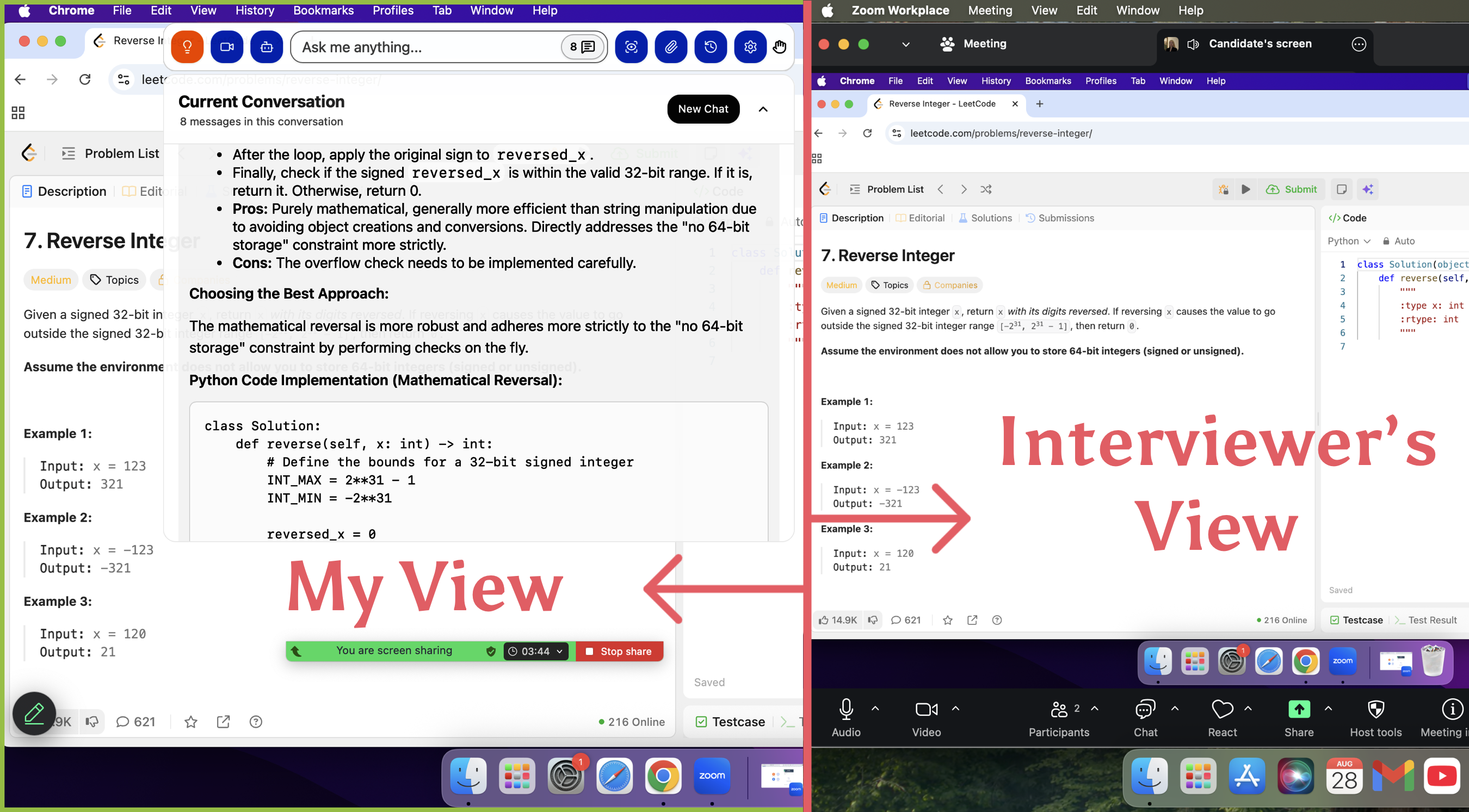
I’m really grateful to Linkjob.ai for helping me pass my interview, which is why I’m sharing my interview questions and experience here. Having an undetectable AI interview copilot during the interview indeed provides a significant edge.
Real Questions in Google SWE Interview
Google’s hiring process is highly standardized and efficient, you’ll always hear back within a week. In my case, I went through one online coding assessment followed by five interview rounds: one phone screen and four onsite interviews.
Since I was referred internally (my resume went straight to my senior colleague at Google), I skipped the initial HR screening step. Most Googlers are happy to refer candidates because they receive a referral bonus if the candidate gets hired. That said, even with an internal referral, I still had to complete the online assessment. It was fairly straightforward: a few multiple-choice questions testing core computer science fundamentals, followed by two short-answer questions.
At the time, I also studied Google SWE interview experiences shared on YouTube and other social media platforms—here is a helpful video I’d like to pass along!
Phone Screen Questions
The initial interview focused primarily on coding ability and problem-solving skills. It started with a brief self-introduction, followed by the interviewer asking me to walk through a project on my resume—specifically, what role I played, what challenges I faced, and what I learned from the experience. Then came two coding problems. We used a shared Google Doc to solve them, as is typical for early-stage interviews.
The first question was a classic: convert a sorted array into a height-balanced binary search tree. The approach is straightforward—recursively pick the middle element as the root, use the left half for the left subtree, and the right half for the right subtree.
The second problem involved finding a missing element in a sorted array using binary search—an efficient twist on standard binary search logic.
Fortunately, both questions fell well within the scope of my preparation, so I was able to tackle them confidently and smoothly.
Questions in Four Onsite Interview Rounds
After the screening, I moved to the technical rounds. These interviews happened over video calls. Each session lasted about 45 minutes to an hour. I faced two rounds in one week, then a third round the next week. The questions covered algorithms, data structures, and system design. The interviewers wanted to see how I thought through problems, not just if I got the right answer.
The technical focus areas and their respective weightings in Google Software Engineer (SWE) technical interviews are as follows:
Technical Topic | Weight in Interviews |
|---|---|
Misc | 6.7% |
Simulation | 1.3% |
Two Pointers | 4.0% |
Data Structures | 13.3% |
Backtracking | 5.3% |
Basic DSA | 13.3% |
Binary Search | 4.0% |
Heap | 10.7% |
Graph | 6.7% |
Dynamic Programming (DP) | 9.3% |
DFS | 13.3% |
BFS | 12.0% |
My First Onsite Interview: "Frog Jump" (DP Problem)
In my first onsite interview at Google, I was asked to solve the "Frog Jump" problem, which is a classic dynamic programming (DP) question. It tests your ability to model state transitions and optimize recursive logic efficiently.
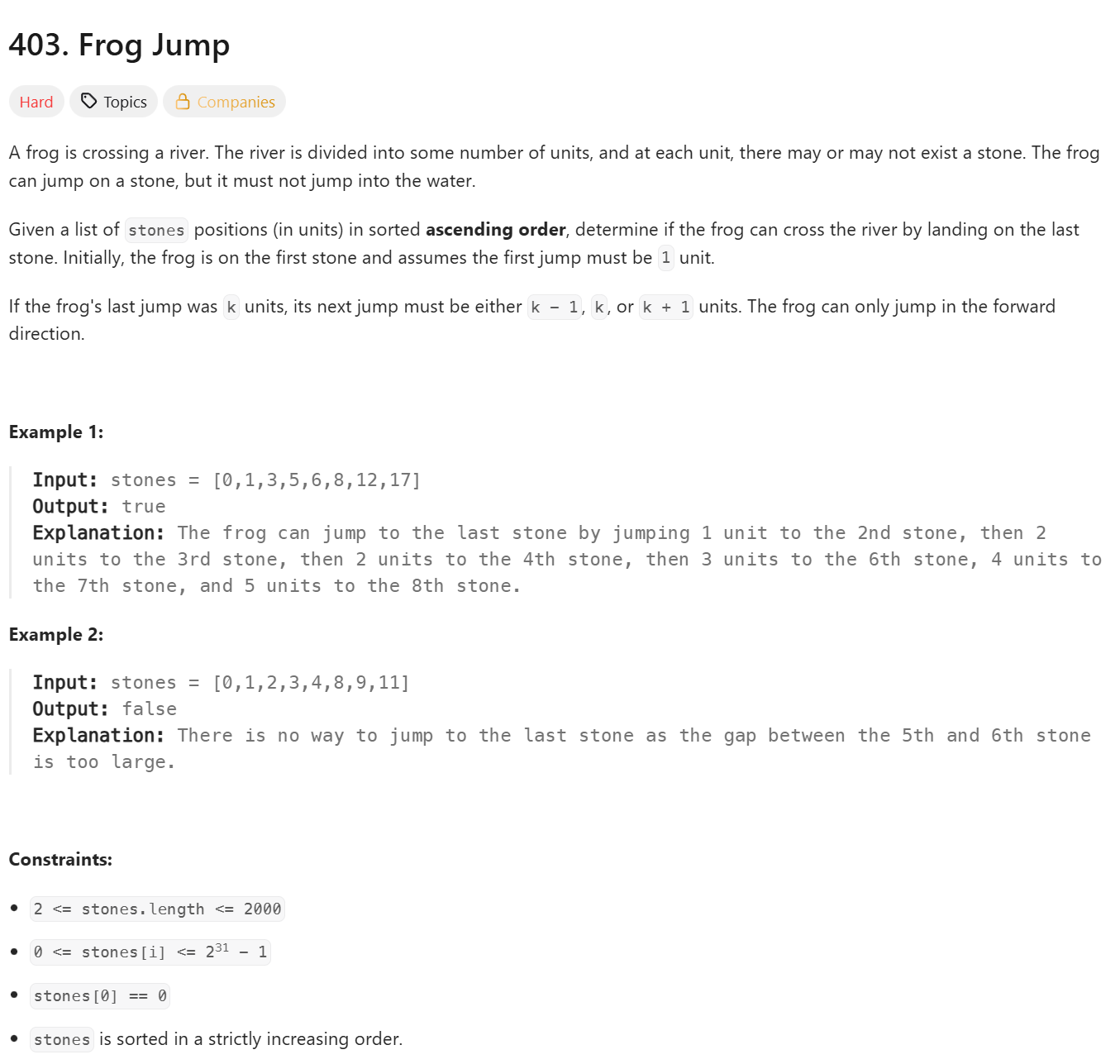
So Why This Question? I think that Google loves such problems because they test:
Problem modeling skills
Recursion + memoization
State design in DP
Attention to edge cases
It’s challenging but solvable with clean thinking—exactly what Google looks for!
My Second Onsite Interview: "Verbal Arithmetic Puzzle" (Backtracking + DFS)
In my second onsite interview at Google, I was given the "Verbal Arithmetic Puzzle" ,which is a classic backtracking problem that tests your ability to model constraints and explore permutations efficiently. It’s often referred to as a “cryptarithmetic puzzle” or “alphametic”.
This question is known for its complexity and is frequently used in top-tier tech interviews due to its blend of logic, constraint handling, and search optimization.
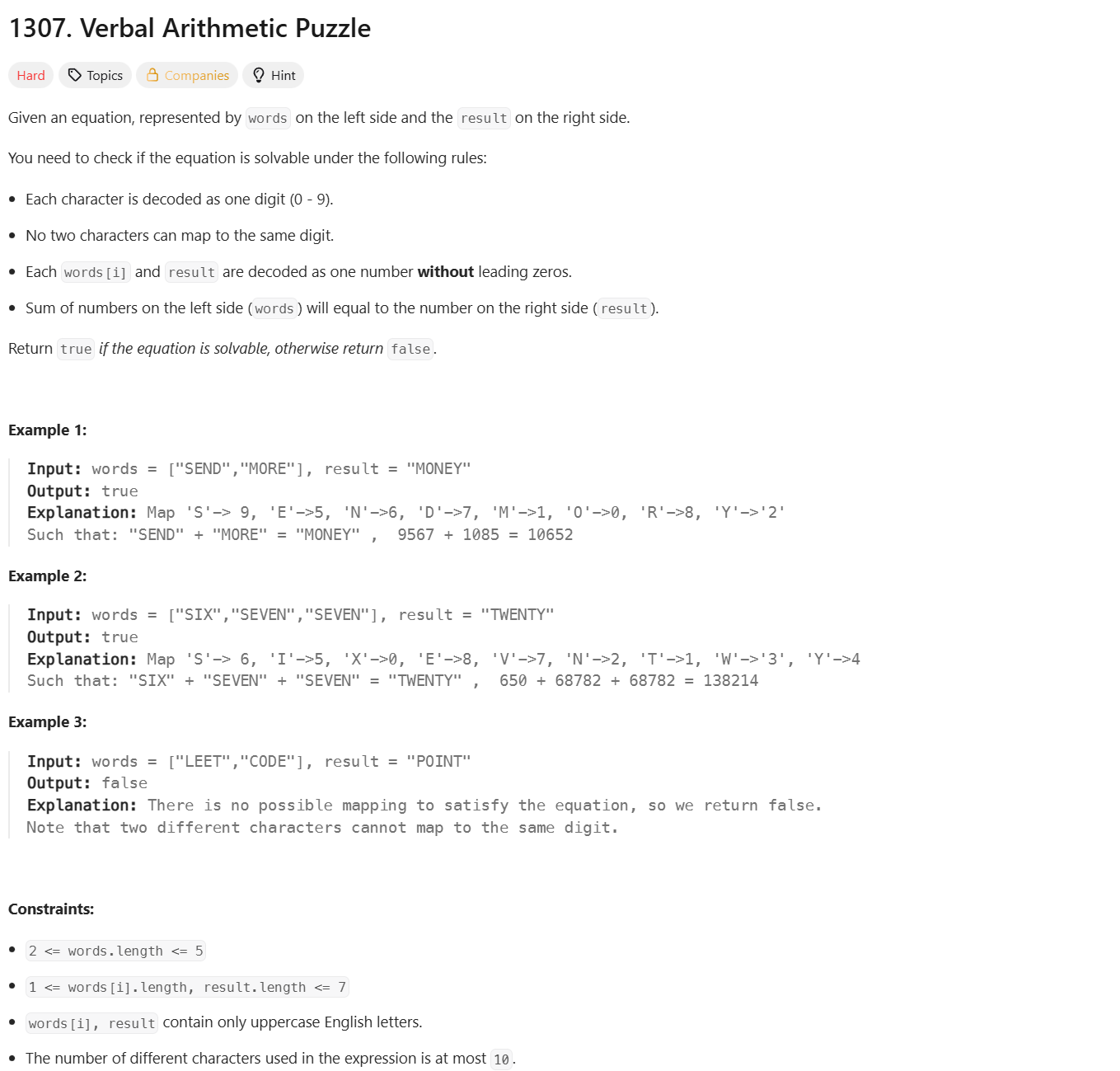
We process each column from right to left (least significant digit), keeping track of:
Current carry
Which digits are already assigned
Mapping from char → digit
At each step:
Try assigning unused digits to unassigned characters
Check if current column sum matches expected digit (mod 10)
Propagate carry to next column
it evaluates Logical reasoning, Constraint modeling, Backtracking efficiency, Attention to edge cases (leading zeros). It's a deep dive into algorithmic thinking — not just coding, but designing the search space wisely.
The third and fourth interviews both featured binary tree–related coding problems—specifically, the classic LeetCode problem: Serialize and Deserialize Binary Tree.I found these two problems a bit easier than the first two.
During the first two interviews, I had a vague sense of what concepts were being tested, and I tried to briefly explain my reasoning to the interviewer, but it was pretty unclear at first. Thankfully, Linkjob AI provided real-time hints and structured thinking guidance, which helped me articulate my approach much more clearly and confidently. I managed to recover smoothly and complete the interview without a hitch !
My Problem-Solving Approach
When I got each question, I took a deep breath and tried to break the problem down. Here’s how I tackled each one:
Frog Jump (DP):
I started by clarifying the rules: “Can the frog only jump forward? Is the first jump always 1?” Once confirmed, I explained my dynamic programming approach—tracking reachable positions with possible jump sizes using a hash map. I walked through the state transitions step by step and discussed how to avoid redundant computation. I coded it iteratively and mentioned edge cases like large gaps between stones.Verbal Arithmetic Puzzle (Backtracking):
This one felt intimidating at first. I began by restating the constraints: unique digit mapping, no leading zeros, and the sum must hold. I proposed a backtracking solution that assigns digits to characters while validating column-wise addition from right to left. I emphasized pruning invalid branches early and handling carry correctly. Though I didn’t finish full code, I clearly articulated the search strategy and key optimizations.Serialize and Deserialize Binary Tree:
For this LeetCode classic, I first asked whether they preferred a compact format or human-readable (e.g., level-order vs. preorder). I chose preorder with null markers for simplicity. I explained how recursion naturally mirrors the tree structure—serialize by DFS, deserialize by rebuilding node-by-node while tracking index. I implemented both methods cleanly and verified with a small example.
Throughout each round, I remembered some key strategies that helped me:
I built a strong foundation in data structures and algorithms.
I practiced coding problems and made sure I understood the reasoning behind each solution.
I communicated my thought process clearly, even when I got stuck.
I asked clarifying questions before jumping into code.
I showed my passion for technology and problem-solving.
Tip: Don’t be afraid to talk out loud. Interviewers want to see how you think, not just the final answer.
Follow-Up And Feedback
After each coding question, the interviewer asked thoughtful follow-ups that pushed me to think deeper.
For Frog Jump, they asked: “What if the stone positions aren’t sorted?” and “How would your solution scale if there were millions of stones?” I explained how preprocessing (like using a hash set for O(1) lookups) helps, and discussed time/space trade-offs for large inputs.
For the Verbal Arithmetic Puzzle, the follow-up was intense: “What if we allowed multiple solutions—how would you return all valid mappings?” and “How would you parallelize this or cache partial results?” I talked about modifying the backtracking to collect all solutions and using memoization on character-digit assignments, though I admitted full parallelization would be tricky due to shared state.
For Serialize and Deserialize Binary Tree, they asked: “Can you make the serialized string more compact?” and “What if the tree is extremely deep—would recursion cause a stack overflow?” I proposed using iterative DFS or BFS with level markers, and mentioned switching to an iterative approach or increasing stack limits in production systems.
The feedback I received was direct but constructive. One interviewer said they appreciated how I verbalized my thought process during the DP state design in Frog Jump. Another noted that while my backtracking logic for the Verbal Puzzle was sound, I could’ve pruned invalid branches earlier (e.g., by checking leading-zero constraints upfront). For the binary tree problem, they liked my clean code but suggested considering space-efficient formats like level-order with run-length encoding for sparse trees.
Looking back, I realized that the Google SWE interview isn’t just about solving the problem—it’s about how you explore trade-offs, respond to constraints, and adapt under pressure. If you can communicate clearly, stay structured, and learn from hints, you’re already demonstrating what Google calls “Googleyness.” And that often matters more than a perfect solution.
Behavioral And Googliness Interview
Culture Fit Questions
The last round of my google software engineer interview felt different from the technical ones. The interviewer wanted to know how I work with others and how I handle tough situations. They asked questions like:
Tell me about a time you disagreed with a teammate. How did you handle it?
Describe a situation where you had to learn something quickly to solve a problem.
How do you deal with failure or setbacks?
Can you share an example of when you took the lead on a project?
What do you do when you face an unclear or ambiguous task?
I noticed that the interviewer paid close attention to how I talked about teamwork and learning. They wanted to see if I could stay humble, adapt to new situations, and work well with people from different backgrounds. Here are some traits they looked for:
Intellectual humility
Comfort with ambiguity
Collaboration across diverse teams
A bias for action backed by data
Creativity and user-centered thinking
Tip: Be honest about your experiences. Interviewers can tell when you are genuine.
My Reflections
Looking back, I realized this round was not about having the perfect answer. It was about showing who I am and how I think. I shared stories where I made mistakes but learned from them. I talked about times when I had to make decisions with limited information. I also explained how I listen to feedback and use it to improve.
I learned that Google values people who can work with others, stay curious, and keep the user in mind. If you prepare for this part, think about your own stories. Practice telling them in a way that shows growth and teamwork. This round can feel less stressful if you remember to be yourself.
Preparation Strategies
Coding And Algorithms Prep
When I started prepping for my Google interview, I focused on coding problems every day. I picked topics that show up often, like data structures and algorithms. I practiced writing code for questions, starting with a simple solution and then making it better. I always thought about time and space complexity. I even used Google Docs to type out my answers, just like in a real interview.
Here’s what helped me the most:
I solved problems on arrays, strings, trees, graphs, and hash maps.
I worked on system design questions, both small and big.
I practiced explaining my thought process out loud.
I used real experiences to answer behavioral questions.
I asked clarifying questions before jumping into code.
Tip: Communicate clearly during interviews. Interviewers care about how you think, not just your final answer.
Resources And Practice Tools
I tried a bunch of online tools and platforms to get ready. Some helped me practice coding, others gave me mock interviews. Here are my favorites:
LeetCode, Lintcode and HackerRank for coding problems.
Iinkjob AI for mock technical interviews and real interview questions.
reading Programming Interviews Exposed to solidify core concepts and Coders at Work to broaden your perspective on software engineering careers.
Zety Blog for resume tips and interview guides.
I also checked Google’s official interview resources. Reading blogs and success stories gave me extra confidence.
Lessons And Tips
What I’d Do Differently
Looking back, I see a few things I would change if I could do the Google interview again. I spent a lot of time grinding coding problems, but I sometimes forgot to practice explaining my thought process out loud. I also rushed into solutions without asking enough clarifying questions. That made me miss some edge cases.
Here’s what I’d focus on next time:
Practice talking through each problem, not just solving it.
Ask questions before starting to code. Make sure I understand the problem.
Test my code with tricky edge cases.
Spend more time on system design, even for junior roles.
Stay calm when I see a new or tough question.
If you freeze or panic, break the problem into smaller steps. Interviewers want to see how you think, not just the final answer.
Advice For Candidates
If you’re getting ready for a Google software engineer interview, here’s my best advice:
Preparation takes time. Treat it like a marathon, not a sprint.
Practice coding every day. Even 30 minutes helps.
Don’t just memorize answers. Focus on understanding patterns and variations.
Work on your communication. Explain your ideas clearly.
Learn from every rejection. Each one brings you closer to success.
Stay positive and keep going, even if you feel stuck.
Set a daily goal for solving problems.
Use Google-specific resources and mock interviews.
Talk to recent hires for fresh tips.
Make quick notes for last-minute review.
Google cares about how you solve problems, not just if you get the right answer.
2026 Interview Insights
The 2026 interviews felt a bit different from what I expected. Preparation mattered more than ever. Interviewers wanted to see how I adapted to new challenges. They listened closely to my stories and how I connected my experience to the questions.
Adaptability helped me handle surprises.
Personal stories made my answers stand out.
Consistent practice built my confidence.
Mental preparation kept me steady during long waits.
The best thing you can do is show who you are, not just what you know. Stay curious, stay humble, and keep learning. That’s what Google looks for.
Looking back at my google software engineer interview, I learned that success comes from more than just coding. I focused on these steps:
Communicate your thought process.
Practice data structures and algorithms daily.
Test your code and consider edge cases.
Share real stories during behavioral rounds.
Remember, preparation is a marathon. Stay calm, keep learning, and trust your journey. Every setback is a step forward.
FAQ
How many rounds did I face in the Google interview?
I went through five main rounds. These included application, recruiter screen, three technical interviews, and a behavioral round. Each step tested a different skill.
What programming language did I use during the interview?
I chose Python. The interviewers let me pick. I felt most comfortable with Python, so I stuck with it. You can use Java, C++, or Go if you prefer.
Did I get asked any system design questions for a junior role?
Yes, I did. Even for entry-level roles, I faced at least one system design question. I recommend practicing basic system design concepts.
How did I handle a question I did not know?
I stayed calm. I talked through my thoughts and asked clarifying questions. I showed my approach, even if I was unsure. The interviewer cared more about my process than a perfect answer.
See Also
Insights From My 2026 Oracle Software Engineer Interview
Key ES6 Interview Questions That Led to My 2025 Job
Navigating My 2026 Bloomberg New Grad Interview Journey
Strategies That Helped Me Succeed in My 2025 Palantir Interview
Reflections on My 2025 Anthropic Software Engineer Interview
© Copyright 2025 Linkjob.ai - All Rights Reserved.