How I Passed the 2026 JP Morgan System Design Interview


I still remember the moment I walked out of the jp morgan system design interview, feeling a mix of relief and pride. My strategy centered on three things: prioritizing data consistency over availability, showing deep domain awareness of financial constraints, and treating the interviewer like a colleague rather than an examiner. I practiced using a structured architectural framework to keep my answers clear. One day, after a tough mock interview, I realized I needed to think like a JP Morgan engineer, ensuring stability above all else.
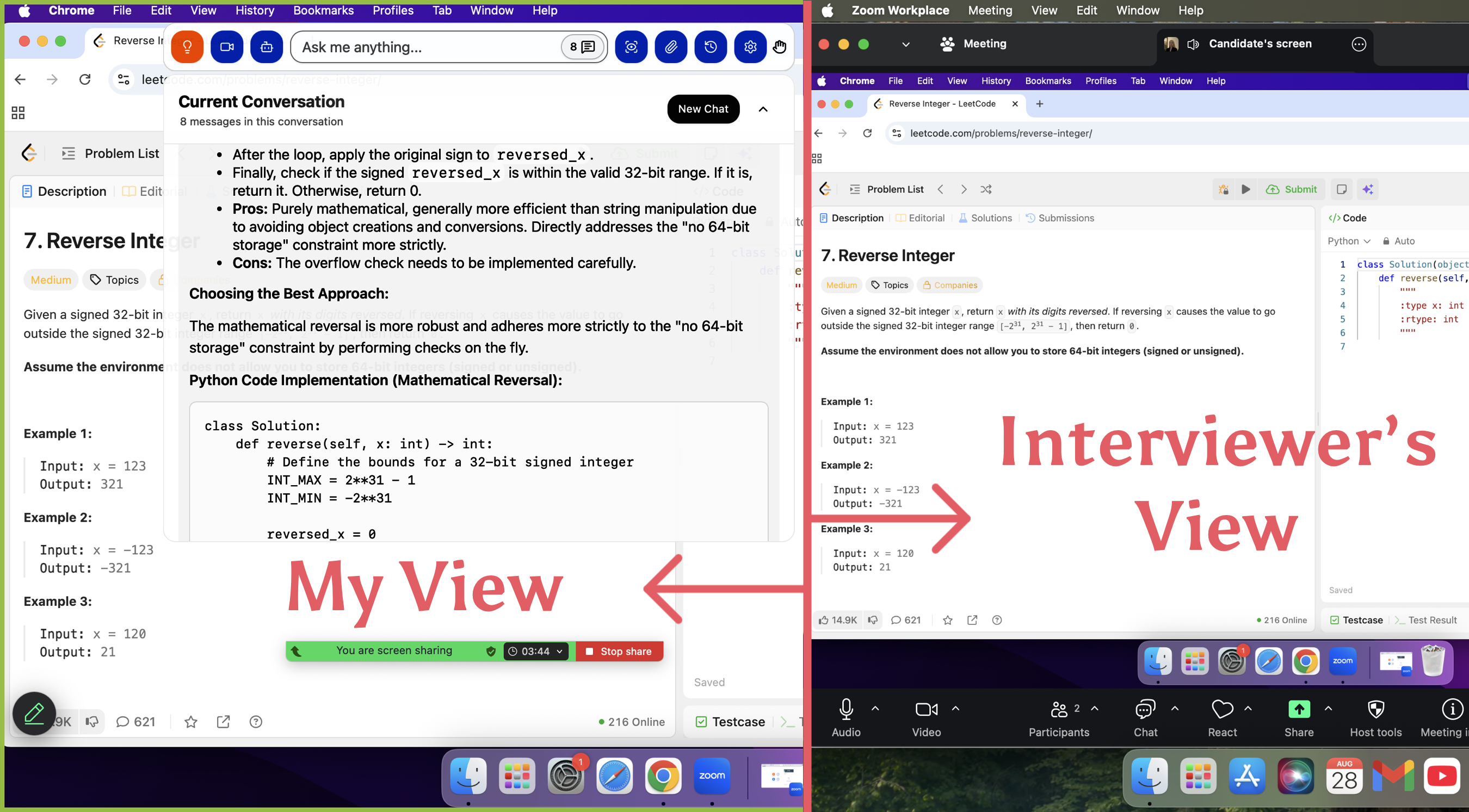
I’m really grateful to Linkjob.ai for helping me pass my interview, which is why I’m sharing my interview questions and experience here. Having an undetectable AI interview copilot during the interview indeed provides a significant edge.
Key Takeaway: If you want to succeed, focus on ACID properties, regulatory compliance, and "consultative" communication.
JP Morgan System Design Interview Process
Interview Stages
When I started preparing for the JP Morgan system design interview, I wanted to know exactly what to expect. The process is distinct from Big Tech because it heavily emphasizes risk management. Here’s a quick look at the main stages:
Stage | Description |
|---|---|
CodeVue / Technical Screen | A strict 45-60 minute coding round (often LeetCode Medium) focused on Data Structures and Algorithms (DSA). In this stage, I used Linkjob.ai, very good tool, really help me in online coding interview. Strongly recommended. |
System Design (Super Day) | A 45-60 minute verbal or whiteboarding session. Unlike Google/Meta, this is less about "scale to 1 billion users" and more about "scale to millions of secure, distinct transactions.". |
Behavioral (Hiring Manager) | A discussion on "Business Principles" and culture fit. |
100% Undetectable AI Interview Copilot
I noticed that both the System Design and Technical interviews are typically scheduled for 60-minute slots. Here is the breakdown of the two stages
Technical Interview (Coding/Implementation):
Total Scheduled Time: 60 minutes.
Actual Working Time: ~45–50 minutes.
Format: Focuses on Data Structures & Algorithms (LeetCode style) and often includes language-specific questions (e.g., Java concurrency, Spring Boot basics) if you are applying for a backend role.
System Design Interview:
Total Scheduled Time: 60 minutes.
Actual Working Time: ~45–50 minutes.
Format: High-level architecture, scalability, and specific trade-offs (e.g., "Design a Rate Limiter" or "Design a Payment System").
What Interviewers Expect
During the JP Morgan system design interview, interviewers look for specific "financial" engineering traits. They focus on:
Consistency > Availability: Can you explain why you chose a CP (Consistent/Partition-tolerant) system over an AP system?
Operational Excellence: How does your system handle end-of-day reconciliation and audit logging?
Security First: Is encryption (at rest and in transit) a core part of your design, not an afterthought?
Consultative Communication: Can you push back on requirements if they violate compliance rules?
Correction: Do not use the STAR method here. Instead, use a structured Design Framework: Requirements -> APIs -> Database Schema -> High-Level Design -> Deep Dive.
Tip: Practice explaining your decisions out loud. Interviewers want to see how you think, not just what you know.
8 JP Morgan System Design Interview Questions
The JP Morgan system design interview often covers topics related to financial systems. I spent extra time learning about these areas:
System Design Topic | Functional Requirements |
|---|---|
Trade Processing Engine | Low latency ingestion, deduplication of trade orders, and sequence preservation. |
Payment Gateway | Idempotency (crucial to prevent double charging) and ACID compliance. |
Real-time Risk Dashboard | Aggregating exposure across multiple asset classes in near real-time. |
Regulatory Reporting System | Batch processing of massive datasets to generate reports for regulators (e.g., SEC/FINRA). |
Notification System | Guaranteed delivery of margin calls or fraud alerts (reliability > speed). |
If you want to stand out, explicitly mention "Idempotency" and "Audit Trails". These are the buzzwords that matter at JPMC.
Here are 8 hot interview questions/cases.
1. Design a high-frequency trading platform
Goal:
Build a trading platform capable of processing thousands of orders per second while ensuring consistency and fairness.
Key considerations:
Ultra-low latency and concurrency control
Order book synchronization
Failover and disaster recovery
Architecture highlights:
Kafka / RabbitMQ for event streaming
Redis Sorted Sets for in-memory order books
Cassandra / PostgreSQL for persistence
Zookeeper / Etcd for coordination
Load balancers for scaling execution nodes
2. Design a real-time risk management system
Goal:
Track and analyze firm-wide exposure in real time across all trading desks.
Key considerations:
Real-time aggregation
Consistent global state updates
Historical data archiving
Architecture highlights:
Flink / Spark Streaming for risk event aggregation
Kafka for transaction data ingestion
BigQuery / Snowflake for analytical queries
Grafana / Tableau for visualization
Prometheus + Alertmanager for real-time alerts
3. Design a global payments gateway
Goal:
Enable clients to send and receive payments across multiple currencies and regulatory zones.
Key considerations:
Cross-border compliance and audit logging
Real-time settlement and reconciliation
Fault tolerance and retry logic
Architecture highlights:
Microservices for regional payment processing
API Gateway for routing and authorization
Kafka for transaction orchestration
Cassandra for ledger storage
Vault / HSM for secure key management
4. Design a market data distribution system
Goal:
Deliver real-time price feeds and updates from multiple stock exchanges to internal trading teams.
Key considerations:
Low-latency data ingestion and delivery
Data normalization and deduplication
Scalability under burst loads
Architecture highlights:
WebSockets / gRPC for data push
Kafka Streams for processing
Redis for in-memory caching
ElasticSearch for indexing and replay
CDN edge nodes for global access
5. Design a portfolio analytics dashboard
Goal:
Provide traders and analysts with real-time and historical insights into portfolio performance.
Key considerations:
Real-time aggregation and snapshot updates
Historical data storage for trend analysis
Access control and auditing
Architecture highlights:
Flink / Beam for data aggregation
S3 + Parquet for data lake storage
Presto / Trino for ad-hoc querying
Superset / Power BI for visualization
OAuth2 + RBAC for access security
6. Design a data lineage and audit tracking system
Goal:
Build an internal service to trace the flow of data through all financial pipelines for compliance.
Key considerations:
Versioned metadata tracking
Immutable event logging
Regulatory audit readiness
Architecture highlights:
Kafka for event logging
Neo4j for lineage graph modeling
ElasticSearch for metadata search
Airflow for ETL orchestration
S3 / Glacier for cold storage
7. Design a secure API platform for internal tools
Goal:
Create an API gateway that securely exposes internal services to developers and analysts.
Key considerations:
Authentication and authorization
Traffic throttling and usage analytics
Multi-tenant access control
Architecture highlights:
Kong / Apigee as the API Gateway
OAuth2 / SAML for authentication
Prometheus + Grafana for API metrics
Redis for rate limiting
Vault for token and key management
8. Design a batch reporting and reconciliation system
Goal:
Automate the daily generation of trading and transaction reports across business units.
Key considerations:
Large-scale data joins
Retry and fault tolerance
Audit and compliance validation
Architecture highlights:
Airflow for pipeline orchestration
Spark / EMR for large-scale batch computation
PostgreSQL for intermediate staging
S3 for report archiving
Lambda for on-demand report triggers
Preparation for the JP Morgan System Design Interview
Financial System Design Skills
When I started preparing for the JP Morgan system design interview, I realized that understanding financial systems was more than just knowing how to code. I needed to think about ACID transactions and Eventual Consistency vs. Strong Consistency. I spent time learning how payment processing works (ISO 20022 standards), how fraud detection systems utilize rules engines, and why JPMC often prefers relational databases (PostgreSQL/Oracle) over NoSQL for core ledgers.
I found it helpful to break down real-world scenarios. For example, I tried designing a Stock Exchange or a Ledger System. These exercises taught me how to handle locking mechanisms, race conditions, and exactly-once processing. Each time, I asked myself, "What happens if the data center in New York goes down during a transaction?"
Tip: Always ask about Regulatory constraints. For example, "Does this data need to stay within specific geographic borders (Data Sovereignty)?"
Key Design Patterns
One tough mock interview showed me that I had gaps in my understanding of design patterns. I realized that mastering these concepts was essential for the JP Morgan system design interview. I focused on four key patterns:
Design Pattern | Why It Matters in Financial Systems |
|---|---|
Saga Pattern | Essential for managing distributed transactions across microservices without locking the whole system. |
Circuit Breaker | Prevents a failure in a non-critical service (like email notifications) from crashing the core trading engine. |
Sidecar Pattern | Used heavily in modern cloud architectures for handling logging, monitoring, and security mTLS separate from business logic. |
CQRS | Separating Read and Write operations to handle high-frequency trading reads vs. slower ledger writes. |
I also practiced explaining concepts like Two-Phase Commit (2PC) versus Saga, and when to use each. I designed systems for high-reliability services. These exercises helped me understand how to ensure data integrity across distributed components.
Note: Don't just list Object-Oriented patterns unless specifically asked for Low-Level Design. Focus on Architectural patterns.
Study Resources and Mock Interviews
I didn’t just rely on textbooks. I used practical resources and joined communities that support candidates preparing for the JP Morgan system design interview. Here are some tools and platforms that helped me:
System Design Insider: Great for deep dives into specific components like distributed locking.
The "Red Book" (DDIA): Designing Data-Intensive Applications is the bible for understanding consistency models.
Mock Interviews with Peers: Specifically asking peers to play the role of a "difficult stakeholder" to test my communication.
I scheduled regular mock interviews with friends and mentors. Each session helped me refine my answers and improve my communication. I used structured approaches to practice explaining my thought process step by step.
💡 Pro Tip: Don’t just study alone. Join communities, ask questions, and learn from others who have gone through the JP Morgan system design interview. Real feedback is the fastest way to improve.
I kept a notebook of common system design topics and my best answers. Reviewing these notes before each interview helped me stay calm and focused.
My Interview Experience
Types of Questions
During my JP Morgan system design interview, I faced a mix of high-level architecture and deep-dive component questions. I got questions like, "Design a system to ingest millions of trade signals per second," and "How would you modernize a legacy monolithic payment system into microservices?" The interviewers wanted to see my thought process on migration strategies (e.g., Strangler Fig pattern) just as much as the greenfield design.
Handling Challenges
I ran into a few tough moments. At first, I thought I needed to use the trendiest tech (like GraphQL or MongoDB). I soon realized that JPMC values proven, stable technology. Many candidates believe they need to suggest "cutting edge," but the interviewers cared more about "reliable and compliant." Here are some common challenges I noticed:
Over-engineering: Suggesting complex distributed systems when a simple relational database would suffice.
Ignoring Failure Modes: Forgetting to discuss what happens when a message queue fails.
Business Logic Gaps: Focusing purely on tech and forgetting the business goal (e.g., preventing fraud).
When I felt stuck, I took a breath and asked, "In this scenario, is data loss ever acceptable?" (The answer is almost always No).
Communication Approach
I used a Consultative Approach for every design question. This helped me organize my answers and present them logically. I started by clarifying the constraints, then proposed options with trade-offs (e.g., "Option A is faster, but Option B is more secure; for a bank, I recommend B"). This approach made my responses clear and showed my maturity as an engineer.
Tip: Treat the interview like a work meeting. Use phrases like "In my experience..." or "Given the strict compliance requirements, I would propose..."
Tips to Succeed in the JP Morgan System Design Interview
Structuring Answers
When I sat down for my JP Morgan system design interview, I knew that structure would make or break my performance. I learned to break down big problems into smaller, manageable parts. This made my answers clear and easy to follow. Here’s how I structured my responses:
Clarify Requirements: Functional (what it does) and Non-Functional (Consistency, Auditability, Latency).
Back-of-Envelope Math: Estimate storage for 5 years of audit logs (JPMC has long retention policies).
High-Level Design: Draw the core boxes (Load Balancer, API Gateway, Service, DB).
Deep Dive: Focus on the hardest part (e.g., "How do we prevent double-spending?").
Wrap Up: Discuss failure scenarios and monitoring.
I always tried to show my thought process. I explained why I picked SQL (ACID compliance) over NoSQL, or why I needed a message queue (Kafka) for decoupling.
Tip: Don’t just jump into the solution. Take a moment to clarify the problem and explain your plan. This shows you can think critically and communicate clearly.
I also made sure to explain my design as if I owned the system. I focused on simplicity and reliability. I shared stories from my past projects, not just what I did, but why I made those choices. This built trust with the interviewer and showed that I understood the fundamentals.
Time Management
Time can slip away fast during a system design interview. I practiced estimating how long each part of my answer would take. I planned my approach before I started talking. Here’s what worked for me:
5 min: Requirements & Scope.
10 min: High-Level Diagram.
20 min: Deep Dive & Bottlenecks.
5 min: Wrap up & Questions.
Practical estimation and planning helped me stay on track. I didn’t rush, but I also didn’t get stuck on small details. If I ran out of time, I made sure to summarize my main points so the interviewer saw my overall approach.
⏰ Pro Tip: Practice answering questions within a set time. This helps you stay calm and organized during the real interview.
Confidence and Mindset
Mindset played a huge role in my success. I reminded myself that the interview was not just about finding the “right” answer. It was about showing how I think and how I solve problems. I challenged myself to ask questions and think outside the box.
I would rather have a person who joins the team and asks a lot of questions, and challenges through the questions as opposed to just defer to an opinion of a senior salesperson or a senior trader."
I stayed curious and open-minded. If I didn’t know something, I admitted it and explained how I would find the answer. I kept my energy up by treating the interview like a conversation, not an interrogation.
Clear communication mattered just as much as technical skill. I made sure to explain each step of my design so the interviewer could follow my logic. This helped me show my problem-solving strategies and made the whole process smoother.
Note: The best candidates focus on clarity and fundamentals. They don’t try to cover every topic. They show depth, confidence, and a willingness to learn.
Looking back, I passed the JP Morgan system design interview by focusing on preparation, adaptability, and clear communication. Here’s what helped me most:
I practiced common design themes and explained my choices with confidence.
I stayed ready for follow-up questions and showed I could adapt.
I worked on both technical and collaborative skills.
What Matters Most | Why It Helps |
|---|---|
Preparation | Builds confidence and helps handle tough rounds. |
Adaptability | Shows you can thrive in a fast-paced environment. |
Authenticity | Lets your strengths and story shine through. |
Stay persistent, keep learning, and let your real self show. You’ve got this! 🚀
FAQ
What should I do if I get stuck during the interview?
State your assumptions. Say, "I am assuming we prioritize consistency here. If that's the case, I would choose X. Does that align with your expectations?"
How can I practice system design before the interview?
I use mock interviews with friends or online platforms. I pick real-world scenarios like payment systems or social media apps. I sketch diagrams and explain my choices step by step.
Do I need to know every financial system detail?
No, I focus on the basics like security, reliability, and scalability. I connect my answers to JP Morgan’s business needs. I show that I understand how technology supports their goals.
What resources helped me the most?
I found LeetCode and GeeksforGeeks very useful. I joined communities for feedback. I kept notes on common topics and reviewed them before each interview.
How do I handle time pressure during the interview?
I set a mental timer for each step. I keep my answers focused. I summarize my main points if time runs out. Practicing with a stopwatch helps me stay calm.
See Also
Insights From My 2026 Dell Interview Journey And Queries
Navigating My Successful Palantir New Grad SWE Interview
Details Of My 2026 Bloomberg New Grad Interview Journey
Exploring My 2026 Oracle Senior Software Engineer Interview Insights

© Copyright 2025 Linkjob.ai - All Rights Reserved.