How I Answered LinkedIn SWE Interview Questions in 2026


I faced Linkedin software engineer interview questions head-on by focusing on steady preparation and building real coding skills. I knew that memorizing endless algorithms would not help me much. Instead, I practiced solving problems out loud and learned to explain my thought process clearly. Some of the toughest moments came from the pressure to code quickly and the feeling that interviews can be harder than the actual job.
Many candidates struggle with:
Memorizing algorithmic solutions
Performing under strict time limits
Facing questions that feel tougher than daily work
"It's not about problem solving. It's about how many algorithmic solutions you have memorized, and how fast you can scribble-write code to implement those solutions without an editor."
I realized this challenge was not unique to me. I saw similar stories from those who went through the Anthropic software engineer interview or even the Roblox software engineer interview. I kept my focus on learning, practicing, and understanding the culture of each company. At the same time, I used an AI interview assistant to perform better by providing real-time coding solutions without being detected.
Key Takeaways
Focus on understanding concepts rather than memorizing algorithms. Practice explaining your thought process during coding.
Tailor your resume to highlight accomplishments and quantify results. Keep it concise and ATS-friendly.
Prepare for behavioral questions using the STAR method. Show how your values align with the company's culture.
Practice coding problems in a timed setting. Simulate real interview conditions to build confidence.
Ask questions during the recruiter call. This shows your curiosity and helps you understand the interview process better.
Linkedin Software Engineer Interview Application and Screening Questions
Resume and Motivation Questions
When I started my LinkedIn application, I knew my resume had to stand out. I focused on showing my impact, not just listing tasks. I made sure every bullet point reflected what I accomplished and how it helped my team or project. I kept my resume concise and edited it several times. I also checked other resumes for inspiration and made sure mine was ATS-friendly. Proofreading became my best friend.
Here’s a quick checklist I used:
Highlight accomplishments, not just duties.
Quantify results whenever possible.
Keep it short and clear.
Tailor my resume for each role.
Double-check for typos and formatting issues.
I also prepared for common motivation questions. Some examples I practiced:
Talk about a challenging piece of code I wrote and what I learned.
Share a time I disagreed with a stakeholder and how I handled it.
Describe traits I value in a product team.
Suggest resources that helped me grow as a software engineer.
I realized LinkedIn recruiters look for more than just technical skills. They want to see problem-solving, adaptability, and cultural fit. Here’s what they focus on:
Criteria | Description |
|---|---|
Technical Proficiency | Strong technical skills relevant to the role. |
Problem-Solving Abilities | Ability to tackle complex problems effectively. |
Cultural Fit | Alignment with company values and teamwork. |
Learning and Adaptability | Willingness to learn new technologies and adapt to changes. |
I Asked LinkedIn Software Engineers How To Get Hired
Linkedin Recruiter Call Approach
The recruiter call felt less intimidating once I knew what to expect. I treated it as a two-way conversation. I asked about the interview process, the types of technical screens, and the average timeline. This helped me plan my preparation and manage my time.
Some questions I asked the recruiter:
What are the next steps in the process?
How long does the process usually take?
What types of problems should I expect in the technical screen?
What are common reasons candidates don’t move forward?
Can you share tips for presenting my skills effectively?
Tip: Don’t be afraid to ask questions. Recruiters appreciate candidates who show curiosity and preparation.
I made sure to highlight my teamwork and positive attitude. I wanted them to see I could fit into their team and culture, not just write code.
Types of Linkedin Software Engineer Interview Coding Questions
When I prepared for the LinkedIn online coding assessment, I noticed a pattern in the types of questions. Most questions focused on real-world scenarios and tested my ability to solve practical problems. Here are some examples I encountered or practiced:
Flatten a nested list iterator.
Implement pow(x, n) to calculate powers.
Evaluate arithmetic expressions in Reverse Polish Notation.
Find the minimum number of operations to convert one word to another.
Merge two sorted linked lists.
Calculate the maximum depth of a binary tree.
Solve the climbing stairs problem for distinct ways to reach the top.
Return indices of two numbers in an array that add up to a target.
I realized that practicing these types of problems helped me get comfortable with the style of linkedin software engineer interview questions.
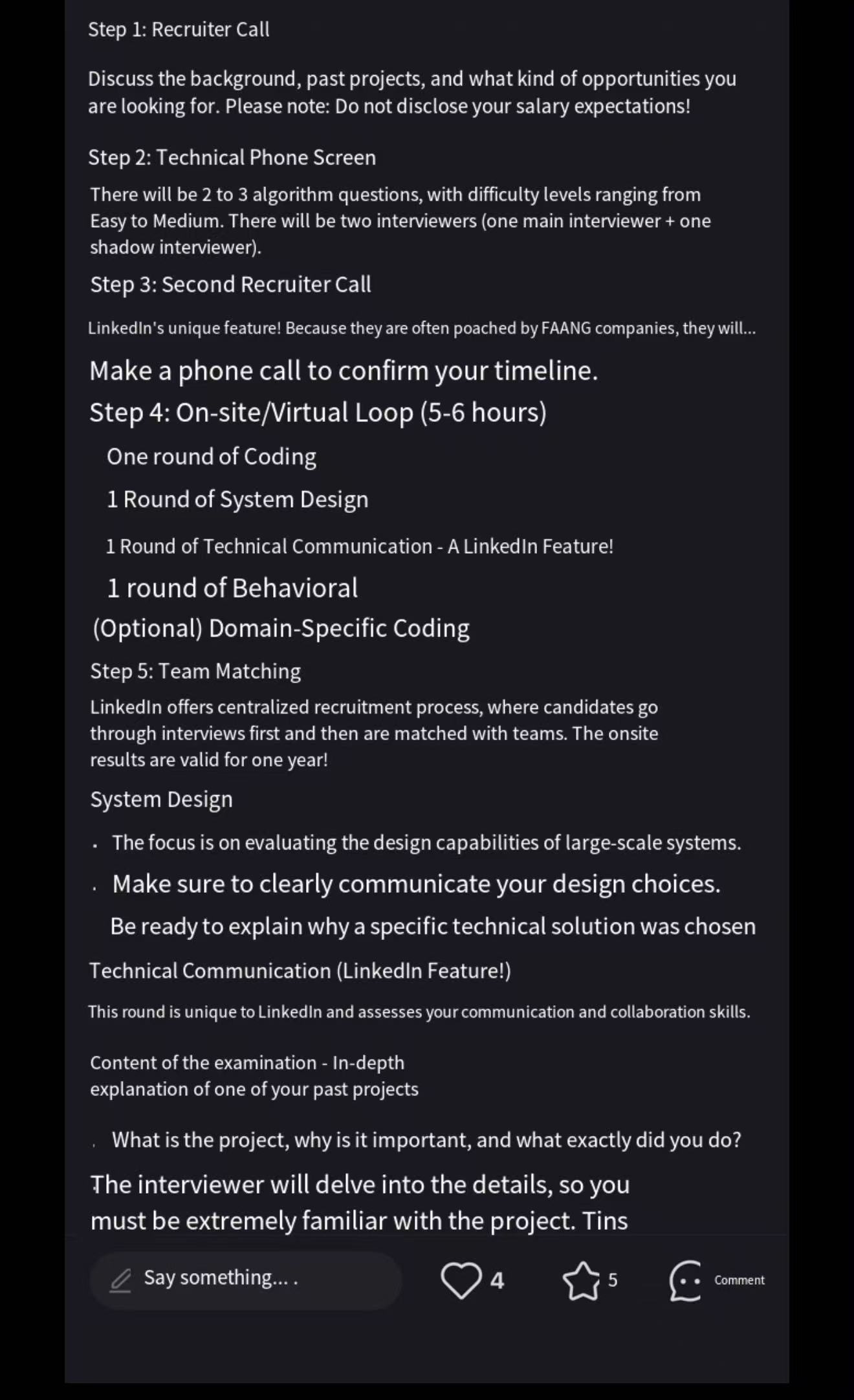
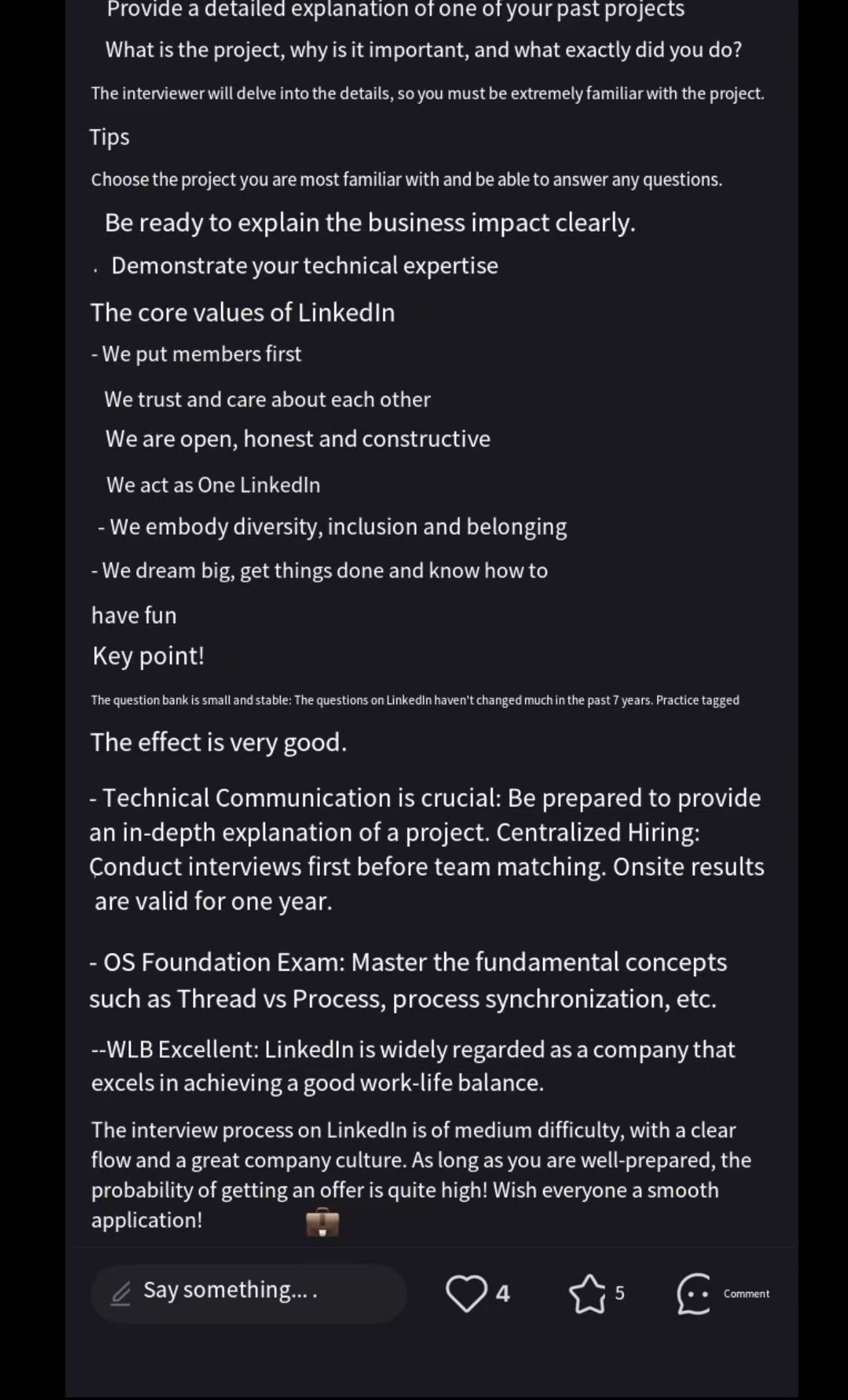
Some previous experience from rednoteSolving on CoderPad
The assessment usually happened on platforms like HackerRank or CoderPad. I had 90 minutes to solve four coding questions. Each task felt like a mini project, not just a puzzle. I made sure to:
Read the problem statement twice to avoid missing details.
Clarify inputs and outputs before writing any code.
Outline my approach in comments or by talking through my plan.
Write clean, modular code with good naming.
Test my solution with sample and edge cases.
Tip: I always explained my logic out loud, even if I felt nervous. This showed my thought process and helped the interviewer follow my reasoning.
Linkjob AI worked great and I got through my interview without a hitch. It’s also undetectable, I used it and didn't trigger any HackerRank detection.
Linkedin Software Engineer Interview Questions—Coding Strategies
I learned that quality practice mattered more than quantity. I used LeetCode, but I focused on simulating real interviews. I set a timer, talked through my solutions, and reviewed my mistakes. My offer rate improved when I practiced this way.
Here’s my step-by-step approach for tackling linkedin software engineer interview questions:
Understand the problem and clarify requirements.
Outline the solution before coding.
Write code in small, testable chunks.
Test with normal and edge cases.
Discuss improvements, trade-offs, and production concerns.
Interviewers often asked follow-up questions about edge cases, performance, and how my code would work in production. I made sure to leave time for these discussions. I also practiced explaining how I would handle concurrency or data issues. But this is not an easy task during the interview. Most of the time, we can only remember the logic of programming, but it is very difficult to comprehensively address edge cases and performance-related issues. At this point, the auxiliary tool I used was an undetectable AI interview assistant, which can automatically listen to the interviewer's questions and quickly generate answers.
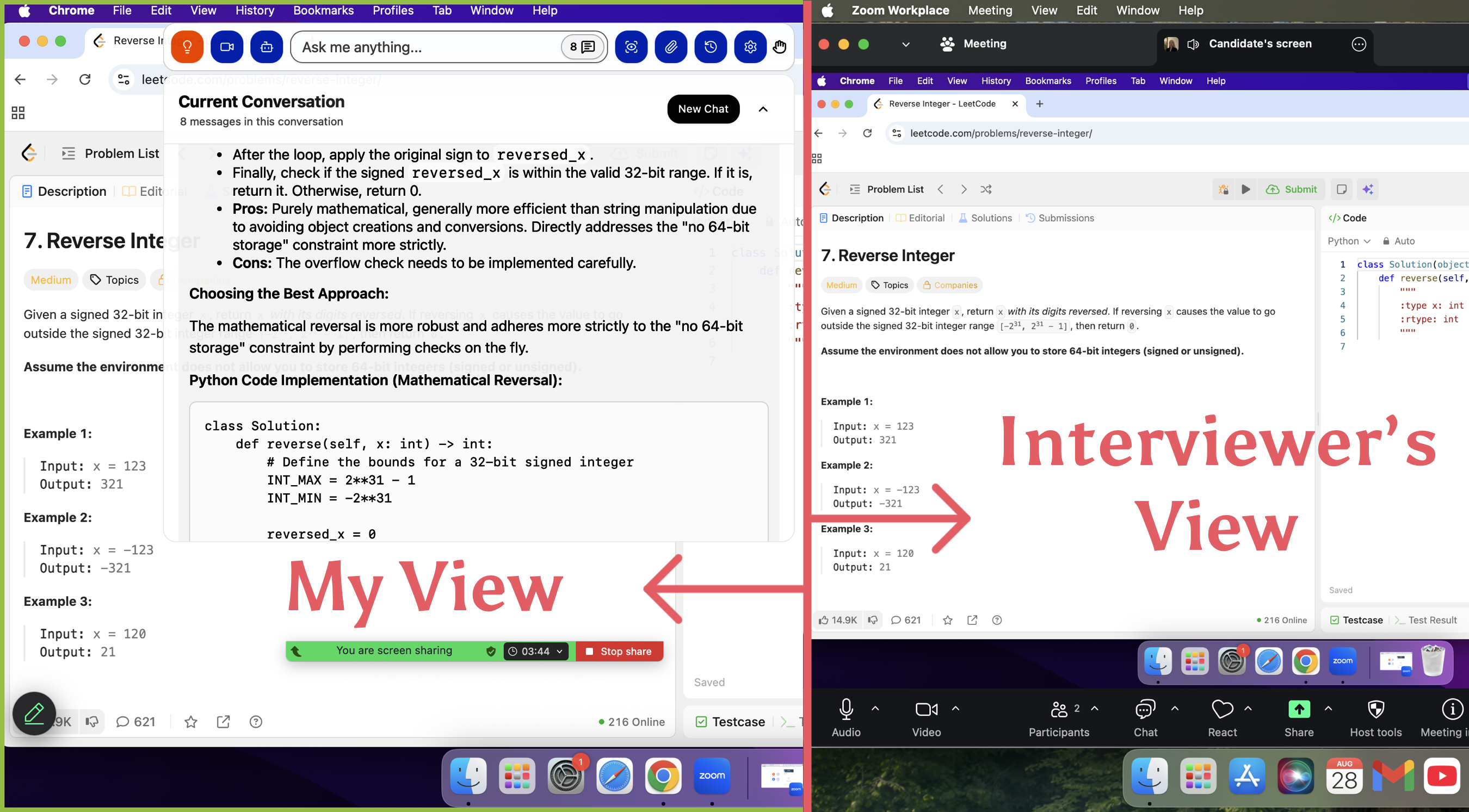
undetectable AI interview assistant
Linkedin Software Engineer Interview Technical and Behavioral Questions
Linkedin software engineer interview questions—Algorithms and Data Structures
When I walked into the technical interview, I knew I had to show more than just coding skills. I needed to demonstrate my understanding of core computer science concepts. I noticed that Linkedin software engineer interview questions often focused on the basics. Interviewers wanted to see if I could solve problems using the right data structures and algorithms.
Here are the topics I saw most often:
Arrays and Strings
Linked Lists
Stacks and Queues
Recursion and Backtracking
Binary Trees and Binary Search Trees
Searching and Sorting
Hashing
Dynamic Programming
Graph Algorithms
I made sure to practice each one. I built small projects and solved problems on whiteboards and online platforms. I also reviewed the strengths and weaknesses of each data structure. For example, I reminded myself that arrays offer fast lookups, while linked lists are better for dynamic memory. I practiced using stacks for backtracking and queues for workflows. I also brushed up on hash tables for quick key-value access, binary trees for organizing data, and graphs for modeling relationships.
Tip: I always explained why I chose a certain data structure. Interviewers liked hearing my reasoning, not just seeing the code.
I learned to break down problems step by step. I started by clarifying the requirements. Then, I outlined my approach before writing any code. I tested my solution with both normal and edge cases. If I got stuck, I talked through my thought process. This helped me stay calm and focused. What's more, the AI assistant also helped me a lot when I was facing some situations beyond my expectation.
Behavioral and Culture Fit
Technical skills matter, but LinkedIn also cares about how you work with others. I prepared for behavioral questions by thinking about my past experiences. I used the STAR method to structure my answers:
Situation: Set the scene.
Task: Explain what needed to be done.
Action: Describe what I did.
Result: Share the outcome.
This method helped me tell clear and confident stories. Here are some behavioral questions I practiced:
Tell me about a challenging project you worked on. How did you approach it, and what was the outcome?
Describe a situation where you had to work with a tight deadline. How did you prioritize tasks and ensure timely delivery?
Can you share an experience where you had a disagreement with a team member? How did you handle it, and what was the resolution?
Tell me about a time when you had to learn a new technology or programming language. How did you go about it, and what challenges did you face?
Describe a situation where you identified a bottleneck in a project. How did you address it, and what impact did it have on the overall outcome?
I made sure my answers showed my problem-solving skills, adaptability, and teamwork. I also researched LinkedIn’s mission and values. I wanted to show that my personal values matched theirs. I talked about how I value learning, collaboration, and helping others grow. I found that aligning my answers with the company’s culture made a big difference.
Note: I always tried to be honest about my challenges and what I learned from them. Interviewers appreciated my authenticity.
Mentorship and Collaboration
LinkedIn values engineers who can work well with others and help the team grow. I prepared stories about times when I mentored others or learned from a mentor. I talked about how I created an open environment where teammates could ask questions and explore new tools. I shared examples of how I gave back to the community by writing blogs or tutorials.
Here are some ways I demonstrated mentorship and collaboration:
I encouraged open-ended discussions during team meetings.
I prioritized code reviews and gave constructive feedback.
I shared resources and tips with new team members.
I discussed real project stories that showed how I solved problems with others.
I looked for ways to improve our workflow and suggested changes that helped the whole team.
Tip: I found that interviewers liked hearing about real situations where I worked with others to solve tough problems. They wanted to see that I could communicate clearly and support my teammates.
I also made sure to mention how I researched the company’s culture before the interview. I wanted to be sure that LinkedIn was the right fit for me, just as much as I was the right fit for them.
By focusing on both technical and behavioral skills, I felt ready for any linkedin software engineer interview questions that came my way.
LinkedIn Software Engineer System Design Interview Questions
Requirements and Scope
When I started the system design interview, I always kicked things off by asking clarification questions. I wanted to know exactly what the interviewer expected. For example, I asked about the main goal of the system, the scope (like whether they wanted an end-to-end solution or just an API), and the scale (such as how many users or transactions per second). I made sure to talk through my assumptions out loud. This helped me avoid misunderstandings and showed my communication skills.
I wrote down the key functional requirements first. I focused on what the system must do and got confirmation from the interviewer. Then, I listed non-functional requirements, like availability or latency targets. I tried to be specific, saying things like “99.9% uptime” instead of just “high availability.” I also jotted down any APIs the system would need, both for users and internal services. Clear communication was my top priority.
Tip: Treat the interview as a conversation. Check in with your interviewer often and explain your choices.
High-Level Design
After I understood the requirements, I moved to the high-level design. I started by sketching out the main components—front-end, web servers, databases, and any external services. I liked to draw a simple block diagram and walk the interviewer through each part. I talked about how data would flow and where bottlenecks might appear.
Here’s a quick table I used to organize my thoughts:
Design Aspect | Details |
|---|---|
Scalability | Load balancers, sharding, caching |
Reliability | Replication, failover, backups |
Performance | Queues, async processing, efficient queries |
I always discussed why I chose certain technologies or patterns. For example, I explained when I would use caching or sharding to handle large amounts of data.
Low-Level Details and Trade-Offs
Once the high-level design was clear, I drilled down into the details. I talked about how each component would work, what data structures I’d use, and how I’d handle failures. I made sure to discuss trade-offs. For example, I compared SQL and NoSQL databases, explained when to use event-driven design, and talked about retry mechanisms for failed operations.
I also mentioned things like idempotent APIs, circuit breakers, and how to handle backpressure in queues. I wrapped up by summarizing how my design met all the requirements and where I might improve it in the future.
Note: Interviewers want to hear your reasoning, not just see a fancy diagram. Be ready to explain your choices and discuss alternatives.
I found that the best way to succeed at LinkedIn interviews is to focus on the basics and keep a growth mindset. Here’s what worked for me:
Practice coding questions and review data structures.
Use a structured approach for system design.
Communicate clearly and ask questions.
Treat each interview as a learning experience.
After interviews, here’s what usually happens:
Step | Description |
|---|---|
Team Matching | Find the right team fit within LinkedIn. |
Executive Chat | Discuss your fit and potential roles with leadership. |
Negotiation | Talk about compensation and benefits. |
Onboarding | Start your journey at LinkedIn. |
Honest self-assessment helped me see my strengths and weaknesses. I kept improving and stayed open to feedback. That made all the difference.
FAQ
How did I prepare for the LinkedIn coding assessment?
I practiced on LeetCode and timed myself. I explained my solutions out loud. I reviewed my mistakes and learned from them. I focused on real interview simulations, not just solving random problems.
What should I do if I get stuck during an interview?
I stay calm and talk through my thought process. I ask clarifying questions. I try to break the problem into smaller parts. If I need help, I ask the interviewer for hints.
How can I show culture fit at LinkedIn?
I research LinkedIn’s values and mission. I share stories about teamwork and learning. I talk about how I help others grow. I show that I care about collaboration and open communication.
What is the best way to answer behavioral questions?
I use the STAR method. I describe the situation, task, action, and result. I keep my answers clear and honest. I focus on what I learned and how I improved.
Should I ask questions during the interview?
Yes! I always ask about the team, projects, and company culture. I show curiosity and preparation. Interviewers like candidates who want to learn and contribute.
See Also
My 2026 Oracle Senior Software Engineer Interview Questions and Answers
How I Aced the Goldman Sachs Software Engineer Online Assessment in 2025
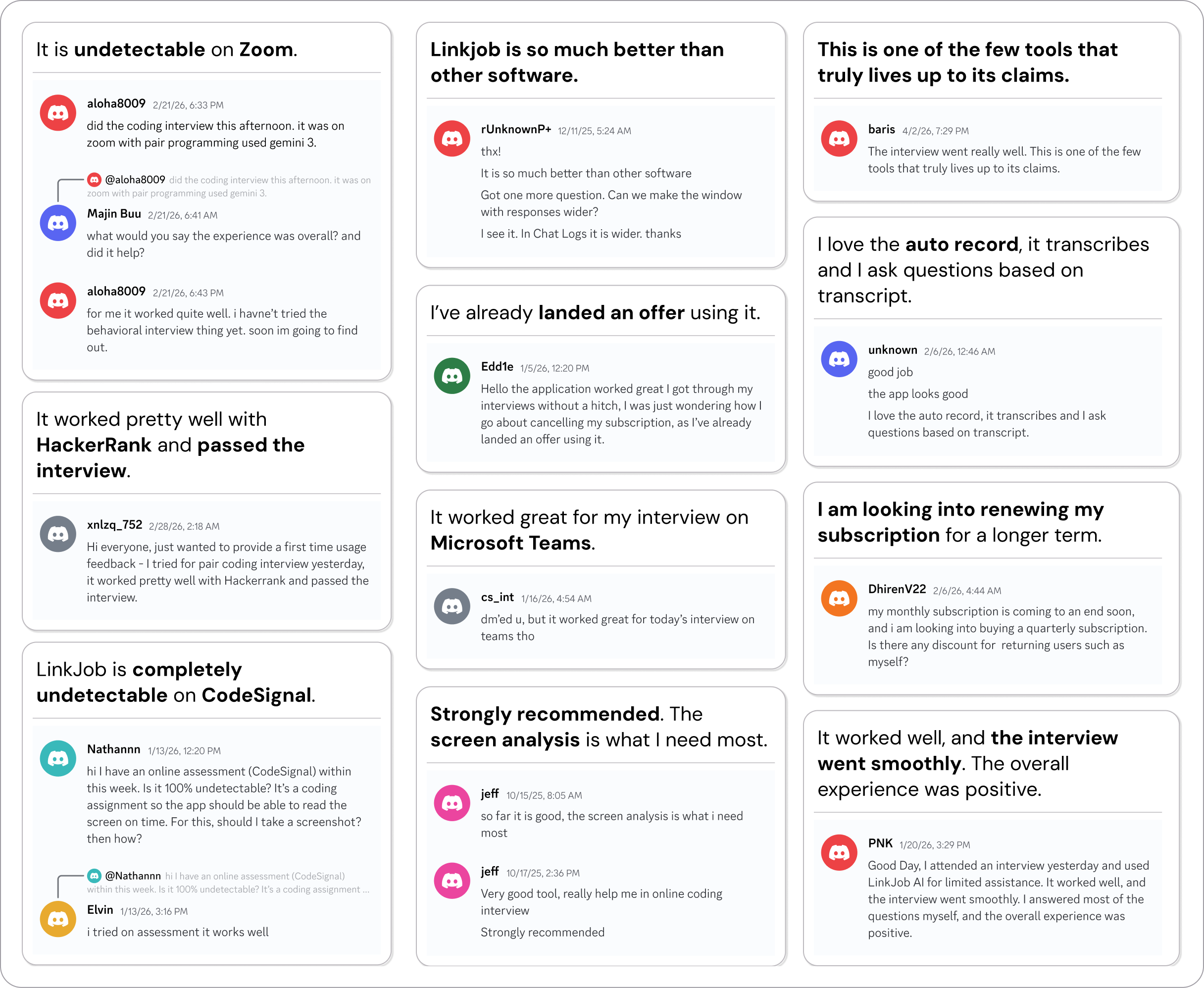
Why People Choose Linkjob AI
Smoother interviews, coding challenges cleared, and job offers landed. See how users describe their experience with Linkjob AI—in their own words.

© Copyright 2026 Linkjob AI - All Rights Reserved.