My 2026 Meta PE Interview Experience and Real Questions


I just finished the meta production engineer interview in 2026, and I want to share everything I learned. The process felt intense, and at every stage, the odds got steeper: about 75% of people pass the recruiter screen, then only 25% get through the first technical round, and fewer than 5% ultimately land an offer.
My goal here is simple: give you the real story about the actual questions I faced, the insights I gained, and actionable advice that actually works. You’ll get my honest take as someone who just went through it.
I’m really grateful to Linkjob.ai for helping me pass my interview, which is why I’m sharing my interview questions and experience here. Having an undetectable AI coding interview copilot during the interview indeed provides a significant edge.
Real Questions From My Interview
My Meta Production Engineer interview journey consisted of three stages: an online assessment, two phone screens, and a four-round virtual onsite. Here are some real questions from my interview.
Online Assessment Questions
The OA was very straightforward and easy, in which mostly multiple-choice questions focused entirely on core Linux concepts. Topics included things like:
How processes work (e.g., fork(), exec(), PID hierarchy, zombie vs. orphan processes)
File permissions and ownership (understanding rwx bits, chmod/chown, umask, and how permissions apply to files vs. directories)
Common command-line utilities (e.g., what grep, awk, sed, ps, top, netstat, and lsof do—and when to use them)
The structure of the Linux filesystem hierarchy (e.g., purpose of /proc, /dev, /etc, /var/log)
Basics of standard streams (stdin, stdout, stderr) and I/O redirection
How inodes work and what happens when you delete a file that’s still open
These are all foundational topics, but Meta expects us to understand not just what commands do, but how and why they work under the hood.
Phone Screen Questions
Round 1: PE Basics(Production Engineering Fundamentals)
This round is essentially a systems-focused assessment disguised as open-ended questions—it tests your foundational knowledge of computer systems in a practical context. According to multiple recent candidates, only two questions have been repeatedly asked this quarter:
“How does the
lscommand work under the hood?”
→ This probes your understanding of system calls likeopendir()andreaddir(), inodes, directory structure internals, and permission checks.“What happens when you type
meta.cominto a browser and hit Enter?”
→ This explores the full request lifecycle: DNS lookup → TCP connection → TLS handshake → HTTP request → load balancing → backend service response, and more.The goal isn’t to recite a memorized script—it’s to demonstrate systematic thinking across operating systems, networking, and real-world production environments.
Round 2: Standard SDE-Style Coding Interview
This round is identical to the coding interview for Meta’s Software Engineer (SDE) role. I got one LeetCode Medium-level problem, with emphasis on:
Clean, correct implementation
Edge-case handling
Time/space complexity analysis
I recall encountering a Minesweeper-related problem during my interview, and it was very similar to a LeetCode question. The problem is as follows:
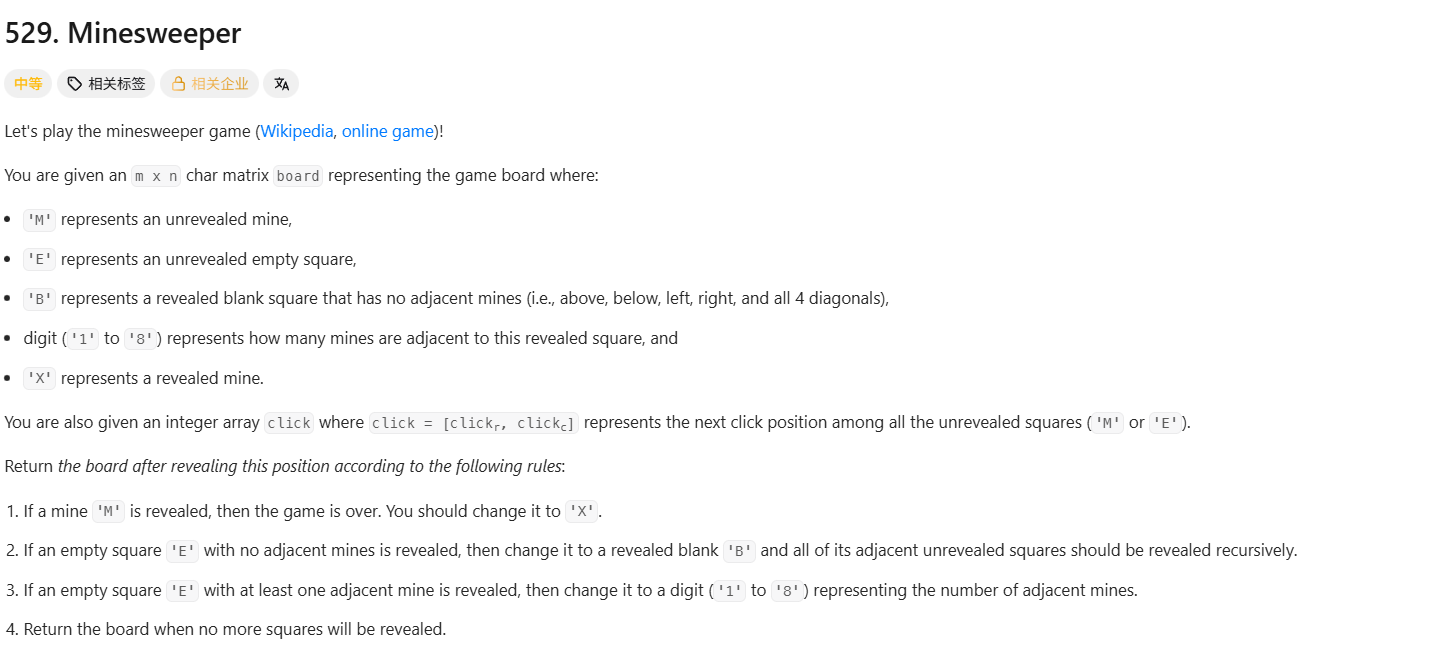
This problem is a classic Depth-First Search (DFS) question. During the interview, I clearly understood the logic flow:
First, check the clicked cell.
Then, count the number of adjacent mines in all 8 directions (not just 4).
Finally, decide the next step based on the mine count:
If the count is 0, mark the cell as 'B' and recursively apply DFS to all adjacent unrevealed cells.
Otherwise, replace it with the corresponding digit ('1'–'8') and stop propagation.
I was also mindful of the recursive trigger condition and base case.
However, I got stuck while actually coding it up. Fortunately, in the interview, with the help of Linkjob AI, which can provide useful answers details, I was able to implement a correct and accepted (AC) solution, and ultimately passed the interview.
The software left no detectable trace, and the interviewer never suspected I had used it.
Virtual Onsite Questions
My virtual onsite with Meta consisted of four rounds, covering coding, systems, networking, and system design.
Round | Focus | Details |
|---|---|---|
1 | PE Basics | Similar to the phone screen but often more in-depth. Interviewers will drill down based on your answers (e.g., if you mention “DNS,” they might ask, “What are the layers of DNS caching?”). |
2 & 3 | Coding ×2 | Two independent coding problems, comparable in difficulty to Meta’s SDE onsite interviews. Any language is allowed (Python or Bash is recommended). |
4 | System Design (SD) | Design a scalable, highly available system—typically infrastructure-oriented (e.g., a log collection pipeline or configuration distribution service), rather than a standard web application architecture. |
During the coding round of my Virtual Onsite interview, I got so nervous that my mind went completely blank—I couldn’t recall key concepts no matter how hard I tried. Fortunately, thanks to Linkjob AI, the logic and patterns came rushing back just in time. I managed to recover smoothly and complete the interview without a hitch !
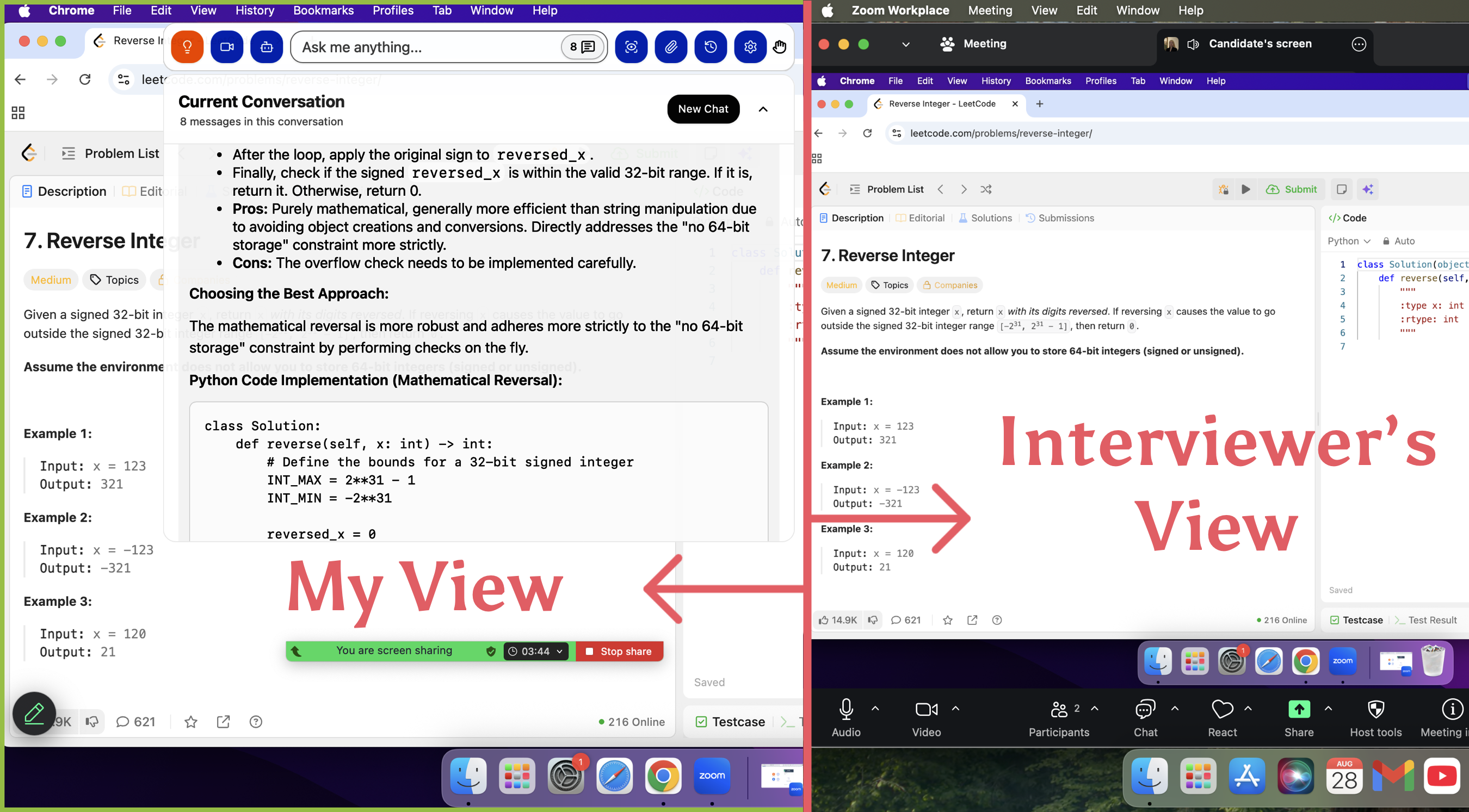
Undetectable AI Interview Assistant for Tech Interviews
The full loop included not only the technical rounds but also a behavioral interview. The behavioral interview felt different from the technical rounds. The interviewer wanted to know how I work with others and handle tough situations. Here are some questions I remember:
Describe a time you handled a conflict in a team setting.
Tell me about a time you had to adapt quickly to a big change.
Give an example of when you influenced a team decision.
How do you communicate technical ideas to non-technical people?
Share a story where you made a measurable impact on a project.
I used the STAR method for each answer: Situation, Task, Action, Result. I prepared stories that showed leadership, problem-solving, and collaboration. I also made sure to highlight moments where I worked across teams or learned something new.
Note: Practicing your stories ahead of time helps you stay focused and confident during the interview.
My Approach To Each Question
I learned that every round in the meta production engineer interview has its own focus. Here’s how I tackled each type of question:
Round | My Approach |
|---|---|
Resume/Recruiter | I reviewed my resume and practiced explaining my projects clearly. I stayed honest. |
Coding | I broke down the problem, wrote test cases, and explained my logic before coding. |
System Design/Linux | I used real-world examples, drew diagrams, and talked through my troubleshooting steps. |
Behavioral | I used the STAR method and picked stories that matched the question. I kept answers concise. |
I also tried to avoid common mistakes. I didn’t claim skills I couldn’t back up. I practiced in a quiet space, simulating real interview conditions. I focused on showing how I think, not just getting the right answer.
If you want to do well, prepare for each round separately. Practice coding, review Linux basics, and have stories ready for behavioral questions.
In addition to the real interview questions I encountered—the most critical part—I’ll also share key details with you, including the full interview process, how I prepared, and strategies I used to navigate each stage effectively.
Meta Production Engineer Interview Process
Role Overview
Actually, I was looking for a fresh graduate software engineer position but was contacted by a Meta recruiter who recommended me for a PE position. In fact, they’re pretty much the same—they test on similar points. Production Engineer(PE) sits at the intersection of software engineering and site reliability engineering (SRE)—a hybrid role that blends coding, systems knowledge, and operational excellence.
As a Production Engineer at Meta, you’ll work closely with multiple engineering teams to make sure Meta’s large-scale services run reliably, scalably and efficiently. When incidents pop up, you’re expected to respond quickly and calmly, diagnose the root cause, and roll out long-term fixes. It’s not just about keeping the systems up and running—it’s also about making the whole system better over time.
Key Responsibilites:
Partner with diverse engineering teams across the company
ensure production services are reliable, scalable,and efficient
Respond to and resolve high-severity incidents under pressure
Continuously improve system reliability and automation
Required Skills:
Strong coding ability(Python, Bash, or similar)
Deep understanding of computer systems: operating systems, networking, and distributed infrastructure
Proficiency in Linux internals (processes, file systems, memory management, etc.)
Calm, clear-headed problem-solving during outages or high-stress scenarios
Interview Stages Summary
The meta production engineer interview has five main rounds. Each one tests a different skill. Here’s how it breaks down:
Interview Round | Assessment Focus |
|---|---|
Resume screen | Initial evaluation of candidate's qualifications and experience. |
Recruiter screen | Discussion of the candidate's background and fit for the role. |
Technical screening | Assessment of technical skills relevant to the position. |
Onsite interviews | Comprehensive evaluation through multiple interviews covering various topics. |
- Coding interview | Problem-solving skills through coding challenges. |
- Systems interview | Knowledge of Linux operating systems. |
- Networking interview | Understanding of network protocols. |
- Design/architecture interview | Ability to design systems or solutions. |
- Career interview | Evaluation of motivation, communication, and project management skills. |
As a new grad, I get an online assessment focused on Linux and OS concepts before the main rounds.
Recruiter Communication
I found the recruiter communication pretty smooth. After each stage, I usually got feedback within five to ten business days. Sometimes, if the team needed more time, it stretched to about two weeks. For my meta production engineer interview, the recruiter kept me updated and answered my questions quickly. That helped me stay calm during the waiting periods.
Candidates typically receive feedback within five to ten business days after the final interview.
For software engineering roles, a response time of 3–7 days is common if feedback is aligned.
For PMs or TPMs, the response time can extend to 7–14 days due to the need for broader feedback.
Community Insights and More Interview Questions
Other Candidates’ Experiences
I didn’t just rely on my own journey. I spent a lot of time reading about other candidates’ stories on Blind, LeetCode, and Reddit. Many people described the meta production engineer interview as one of the toughest they had faced. Some said the technical rounds felt like a marathon. Others mentioned that the interviewers stayed friendly and gave hints if you got stuck. I noticed that almost everyone agreed on one thing: you need to practice both coding and system design. A few candidates shared that they got follow-up questions if their first answer wasn’t strong enough. That made me realize how important it is to explain your thinking out loud.
Tip: Don’t get discouraged if you stumble during an interview. Many people said they made mistakes but still moved forward because they showed their problem-solving process.
Additional Real Questions
I collected a bunch of extra questions from online communities and friends who interviewed at Meta. Here are some that stood out:
Implement a function to detect cycles in a directed graph.
Design a system to handle billions of user requests per day.
Explain the difference between TCP and UDP.
How would you debug a memory leak in a Linux service?
Describe a time you had to learn a new technology quickly.
I saw that these questions often pushed candidates to think on their feet. They covered everything from algorithms to real-world troubleshooting.
Common Patterns
After talking with others and looking at shared experiences, I noticed some clear patterns in the interview questions. Here’s a table that sums up what I found:
Theme/Pattern | Description |
|---|---|
Algorithmic Patterns | Interviewers love to ask about DFS, BFS, and dynamic programming problems. |
Coding Fluency | You need to write code quickly and explain your logic as you go. |
Behavioral Depth | They want to see ownership, adaptability, and teamwork in your stories. |
Product Thinking | Answers should show you care about user impact and product metrics. |
System Design Concepts | Be ready to talk about scalability and performance bottlenecks. |
I always try to master these areas before any big interview. Practicing these themes helped me feel more confident and prepared for anything.
Preparation Tips and Strategies
Resources I Used
I wanted to make my prep as efficient as possible, so I focused on resources that gave me real insight into the meta production engineer interview. Here’s a quick table of the main study materials I found most helpful:
Study Material | Description |
|---|---|
Meta Production Engineer Coding Interview Guide 2026 | This guide has actual coding problems from Meta PE interviews, detailed solutions, and production engineering tips. |
Meta System Design Interview: A step-by-step Guide | This book walks you through system design interviews, core design principles, and real-world challenges. |
I used Linkjob AI to run realistic mock interviews—and it made all the difference. It can give timed coding problems, ask follow-up questions like a real interviewer, and provide instant, targeted feedback—all while keeping the experience completely private and distraction-free.
I also checked out LeetCode for coding practice and watched YouTube videos on system design basics.
Coding and System Design Prep
For coding, I practiced problems that focused on strings, arrays, and graphs. I always wrote out test cases before jumping into code. I used CoderPad to get comfortable with the interview environment and made sure I knew how to use built-in libraries. For system design, I broke down big problems into smaller parts and drew diagrams to explain my thinking. I reviewed the Meta System Design Interview Guide to understand what interviewers look for.
Tips:
Practice coding in a sandbox environment.
Use mock interviews to get feedback.
Focus on explaining your logic, not just solving the problem.
Linux and Behavioral Prep
Linux questions can get tricky. I reviewed OS fundamentals like virtual memory, resource management, and networking. I set up a virtual machine to practice commands and troubleshooting. For behavioral prep, I reflected on my experiences with teamwork and conflict resolution. I made sure my stories matched Meta’s core values.
Review OS concepts and practice real commands.
Prepare stories that show leadership and adaptability.
Do mock interviews to build confidence.
Managing Time and Stress
Staying organized made a huge difference for me. I planned my study schedule each week and used the Pomodoro Technique—25 minutes of focused work, then a short break. I also made time for exercise and sleep. When I felt stuck, I took a walk or did something fun to recharge. Mindfulness exercises helped me stay calm before interviews.
Planning ahead, taking breaks, and keeping a healthy routine can really boost your confidence and reduce stress.
Reflections and Advice
Surprises and Challenges
I thought I knew what to expect—but the Meta interview still surprised me.
What struck me most was how much they care about how you think, not just whether you get the right answer. They want to see your reasoning, how you handle ambiguity, and whether you can stay clear-headed under pressure. I’d heard that Meta pays close attention to authenticity—so I made sure my prep was about real understanding, not just memorizing solutions.
That’s where Linkjob AI came in handy for me. It helped me break down problems step by step, like a patient coding partner who asks the right questions. It pushed me to explain my logic out loud, which turned out to be great practice for the actual interview.
By the time I interviewed, I felt confident not because I’d seen the questions before, but because I’d practiced thinking through them deeply. When I got stuck during a coding round, I didn’t panic,but I just walked through my assumptions, and the interviewer appreciated that.
Honestly, tools like this aren’t about shortcuts—they’re about learning faster and more effectively. And in a tough job market, that kind of focused prep makes a real difference.
What Worked and What Didn’t
Looking back, some strategies helped me a lot, while others didn’t work as well. Here’s a quick table of what I found most effective:
What Worked | What Didn’t Work |
|---|---|
Practicing coding and system design | Relying only on memorized answers |
Explaining my thought process | Ignoring Meta’s culture and values |
Managing my time with a timer | Skipping mock interviews |
Preparing stories for behavioral | Focusing only on technical skills |
I also learned that balancing technical prep with personal reflection made a big difference. I tried to show curiosity, explain my trade-offs, and communicate across disciplines.
Advice for Future Candidates
If you want to succeed in the Meta Production Engineer interview, here’s my advice:
Align with Meta’s values. Use real stories to show how you move fast, focus on impact, and work well with others.
Practice by yourself. Build confidence by solving problems on your own before doing mock interviews.
Communicate your thinking. Always explain your logic, even if you get stuck.
Manage your time. Use a timer during practice to get used to the pressure.
Prepare for teamwork questions. Be ready to talk about collaboration and conflict resolution.
Stay adaptable. Show that you can learn quickly and handle surprises.
If you focus on these areas, you’ll feel more confident and ready for whatever the interview throws at you. Good luck! 🚀
FAQ
How long did I spend preparing for the Meta Production Engineer interview?
I spent about six weeks preparing. I studied coding, system design, and Linux every day. I also did mock interviews with friends. Consistency helped me stay sharp.
What was the hardest part of the interview?
The system design round challenged me the most. I had to think fast and explain my ideas clearly. Drawing diagrams helped me organize my thoughts.
Did I need to know advanced Linux commands?
I used basic and intermediate Linux commands. I practiced with ps, top, grep, and systemctl. I did not need to know every advanced command, but I made sure I understood how to troubleshoot common issues.
What should I do if I get stuck on a question?
Stay calm.
Explain my thinking out loud.
Ask for clarification if needed.
Try a simple solution first.
Interviewers care more about my approach than a perfect answer.
See Also
Insights From My 2026 Oracle Software Engineer Interview Experience
Navigating My Prompt Engineering Interview: Key Questions And Responses
Exploring My Roblox Software Engineer Interview Experience And Queries
ES6 Interview Questions From 2025 That Led To My Hiring
A Journey Through My Technical Support Engineer Interview Questions
© Copyright 2025 Linkjob.ai - All Rights Reserved.