How I cracked my Microsoft new grad interview in 2026

I just finished my first month as a new grad at Microsoft San Francisco. I recently graduated from the University of Southern California with a degree in CS, so I can give a fairly recent overview of what my interview and onboarding process was like.
As a new grad applying to multiple companies at once, time for interview prep is often limited. A reliable AI Interview assistant can significantly boost your efficiency, offering seamless, undetectable and real-time support during online assessments and live interviews. This is especially helpful for companies where you can’t afford to spend extensive time preparing.
Key Takeaways
I was invited to apply and didn’t have to submit an application myself through the portal (it was a LinkedIn outreach). It sometimes took about 2–3 weeks for the staff to get back to me if they were considering me for the interview process.
The hiring process was split into two parts:
The 3rd-party phase: I received a take-home test and had an interview with a 3rd-party recruiting company. I had to complete both. The take-home test was done through a tool called Codility and involved solving some simple LeetCode-style problems (easy to easy-medium). It wasn’t too bad and could mostly be solved with intuition. My interview didn’t contain any coding; instead, it was a behavioral interview where they wanted to understand what kind of person I was. I focused on being myself and answering the questions honestly. At the end, there was a logic question, which I didn’t need to solve perfectly—a solid attempt in the right direction was enough. After I completed the take-home test and the first interview, I expected a response within one or two weeks.
The 1st-party phase: I received an email notification along with an invitation to a pre-interview Teams call. During that call, they walked me through what would happen on the main interview day and introduced a new grad/new employee whom I could ask questions about the process. After the main interview day, once I completed all four interviews (I will share this part later), I heard back within 48 hours that I had passed. If I hadn’t passed, I was told it could have taken up to two weeks to receive a response.
Resume And Application Tips For Microsoft New Grad Interview
Resume Tailoring
Before applying, I asked a friend from our campus business club to help polish my resume. Later during my onsite, I also asked the interviewer directly how Microsoft screens resumes. Here’s a brief summary of what HR told me:
In the end, every resume gets sorted into three buckets:
Yes Pile — Top Talent (~5%)
These are near-perfect matches. Very high alignment with the role, plus strong signals — for example, an exact tech stack match and high-quality, credible experience.
No Pile (~70%)
Even if these resumes pass ATS, they often get rejected within seconds during manual review. If they fail to create a professional first impression quickly, or show obvious red flags, they’re out.
Maybe Pile (~25%)
Technically qualified candidates, but without clear distinction. Microsoft only revisits this pile if candidates from the Yes Pile don’t perform well in interviews or if there’s still headcount available.
On average, HR spends about 4-7 seconds per resume. The initial impression is often formed in under 3 seconds. They’re not scanning for reasons to say “yes.” They’re scanning for reasons to say “no.”
When refining my resume, I focused on a few things:
1. Reduce cognitive load.
Make it easy to process. Recruiters are going through stacks of resumes — don’t make yours mentally expensive to read.
2. Prioritize six core data points:
Name
Most recent role/school
Previous role/school (to show growth)
Education
Tenure (average time per role)
AI tool usage (this has become a new signal)
Things like summaries, skills lists, or hobbies are basically ignored during initial screening. They only get looked at if the first six signals are already strong enough to justify deeper validation.
3. Formatting matters — a lot !
This isn’t about aesthetics. It’s a direct signal of your organization skills and communication efficiency. Clear headers, consistent formatting, and intentional bolding create a subconscious signal for recruiters: this candidate delivers clean, structured work.
In short: optimize for signal density, clarity, and speed of understanding. Treat your resume like a technical spec, not a personal essay.
Cover Letter Essentials
A cover letter isn’t required for Microsoft applications, but I wrote one anyway just to be safe. I used GPT to generate and refine it, which made the process much more efficient.
One important point: a cover letter is not a condensed version of the resume, and it’s not an expanded set of bullet points. So I didn’t simply restate my resume. My core purpose is to answer two questions: “Why you?” and “Why Microsoft?”
I highly focused on how my past experiences, thinking, and values naturally led me to apply for the position, and what specifically motivates myself about the position.
Keep the language professional and genuine, but don’t overdo the emotion. Half a page (A4) is more than enough.
Coding Prep For Microsoft New Grad Interview
Practice Platforms
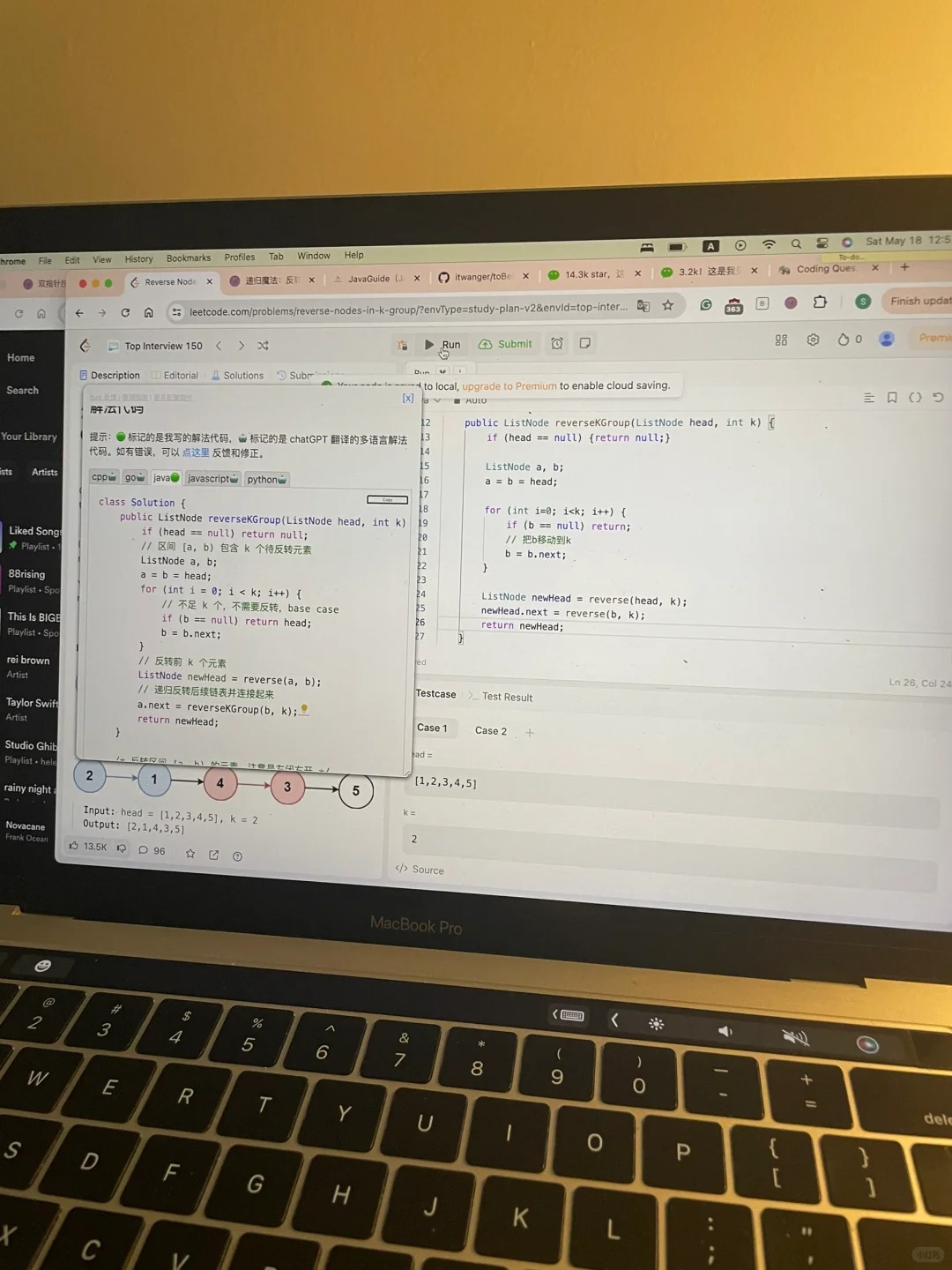
I built a foundation with Blind 75 (First 2 Weeks): If you can immediately identify the solution approach when looking at problems in Blind 75, it indicates your foundation is solid.
Focus on High-Frequency Problems (Top Liked): Microsoft has many "classic recurring problems," such as Merge Intervals, Word Break, Number of Islands, Serialize and Deserialize Binary Tree, etc.
Pay Attention to OA Specific Question Types: Microsoft's OA uses Codility or HackerRank. The OA may include a Debugging section (where you are given a piece of buggy code to fix), or basic SQL questions. It is recommended to spend some time familiarizing yourself with these types of questions.
Since the difficulty of Microsoft interview problems focuses mainly on Medium, with occasional Hards, based on Blind 75, I focused on practicing the following areas:
Strings & Arrays: Key problem types to practice include Sliding Window, Two Pointers, Prefix Sum, and Subarray/Substring problems.
Trees & Graphs: Such as traversal, path finding, Lowest Common Ancestor (LCA), serialization/deserialization. Key problem types include DFS/BFS, Binary Search Tree (BST) properties, Topological Sort, and Island problems (Grid BFS/DFS).
Hash Maps & Linked Lists: Focus on practicing Linked List reversal, cycle detection, Two Sum variations, and frequency counting.
Dynamic Programming: In new grad interviews, DP is usually not tested at a very difficult level; it's more often classic problems like Knapsack, Climbing Stairs, Longest Subsequence, etc.
Behavioral Interview Prep
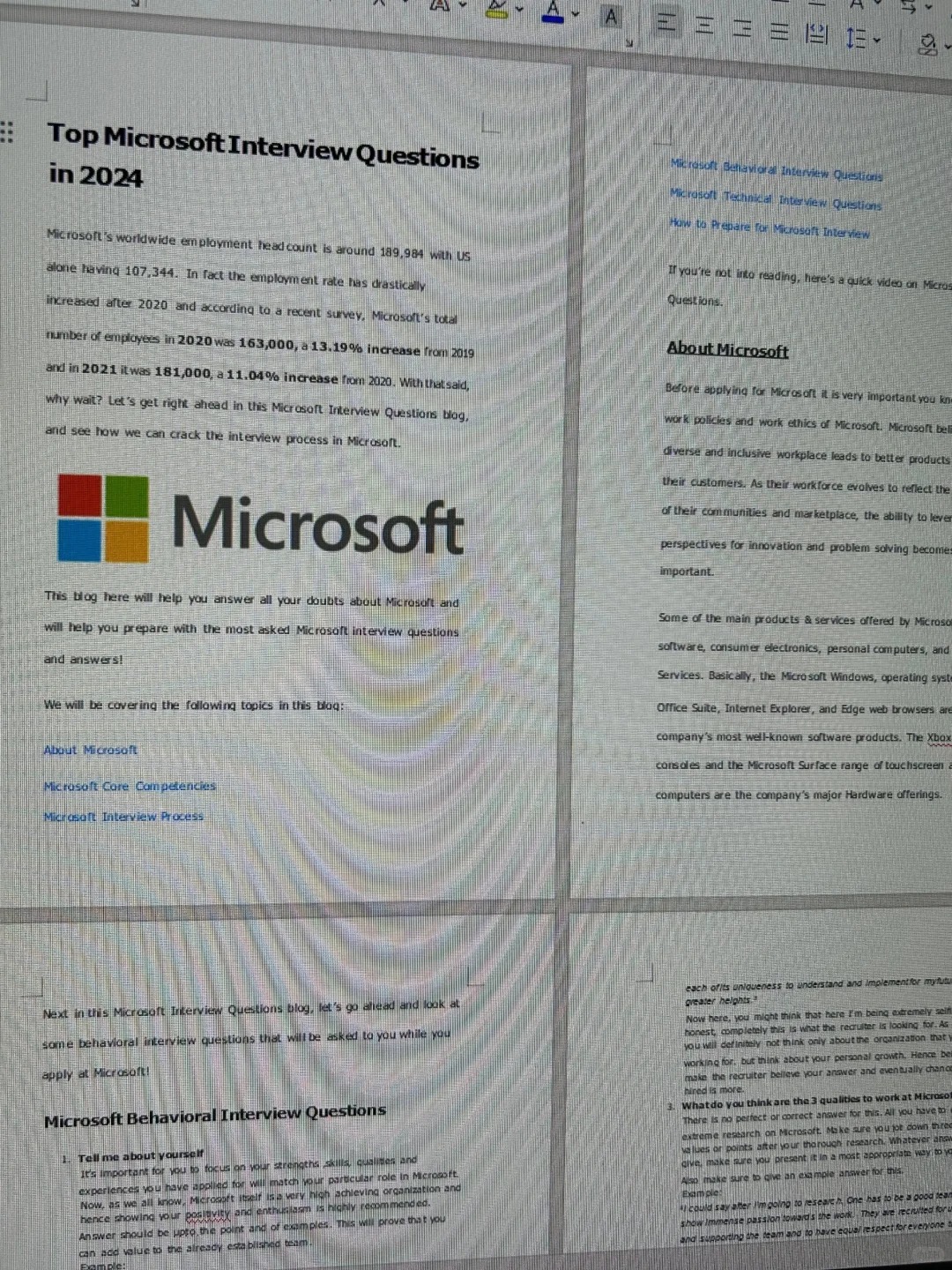
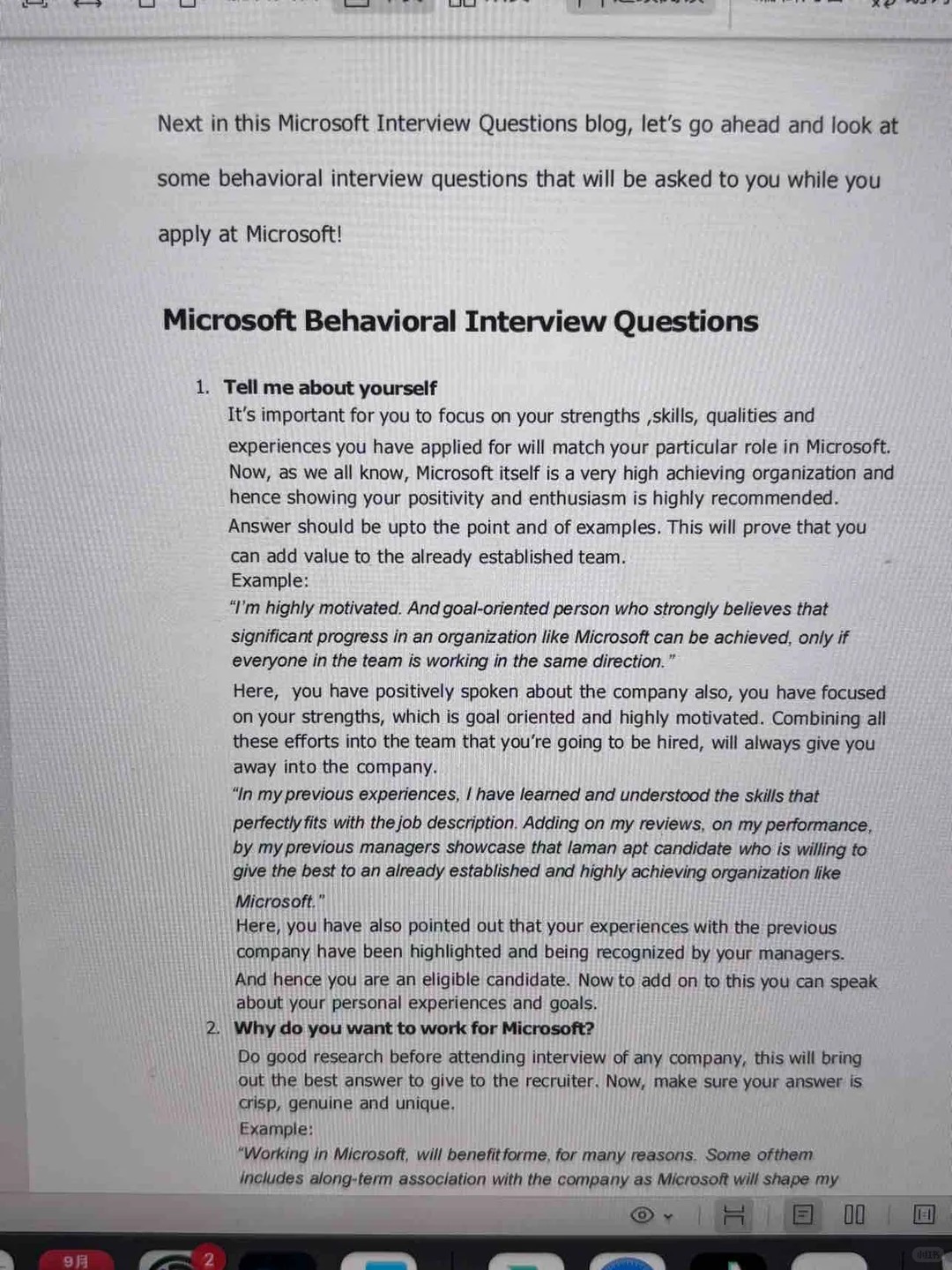
Like other major tech companies, Microsoft places significant emphasis on behavioral interviews. Therefore, I purchased past question banks from 2024 and 2025 online—resources that can also be obtained through platforms like Amazon, alumni networks, or peer exchanges:
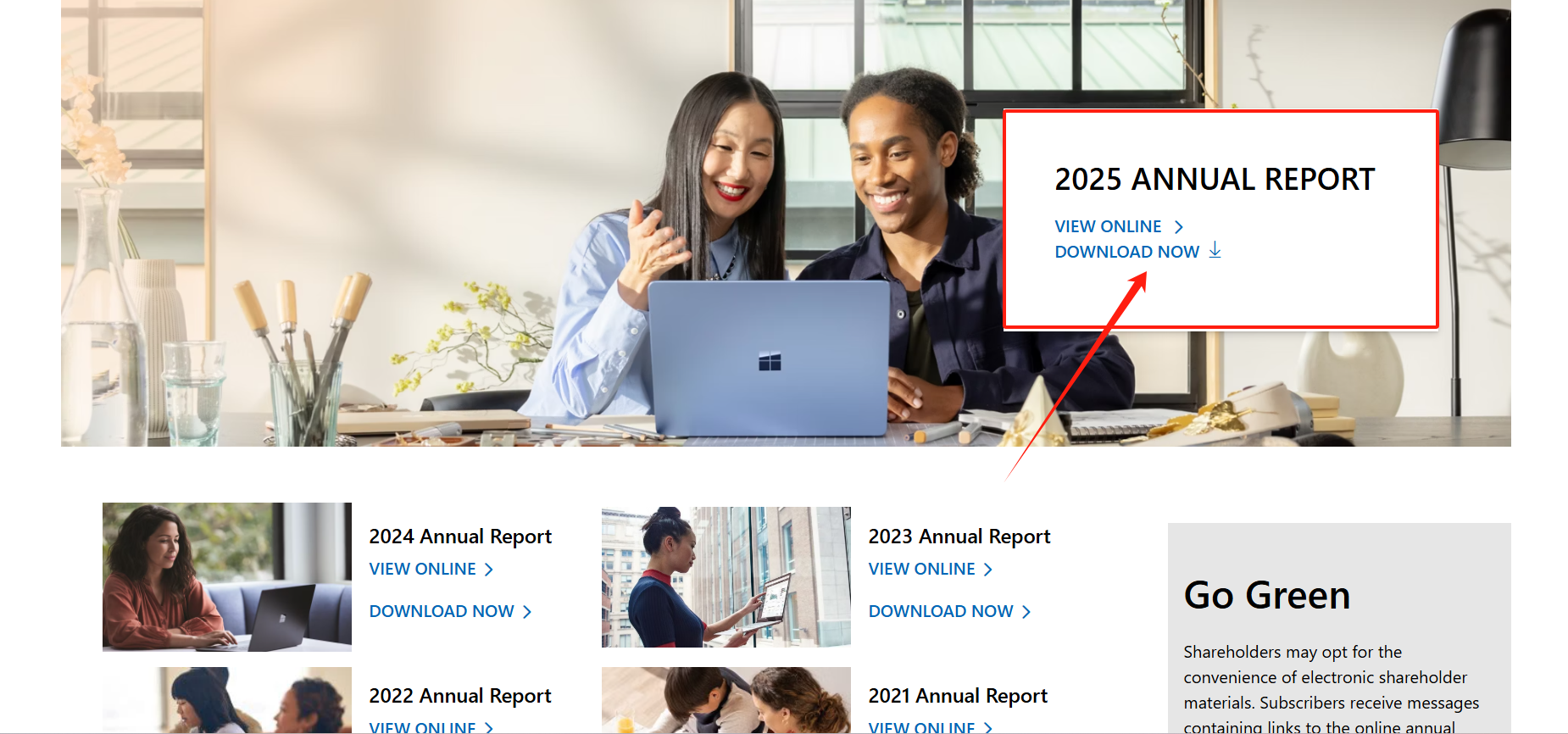
I also took time to learn about Microsoft’s culture and products. I wanted to show that I aligned with their values and understood what sets them apart. A great way to do this is by reviewing Microsoft’s investor materials, such as the 10-K and recent press releases. They provide valuable insight into the company’s strategy and priorities:
I know for most people — myself included — no matter how well you prepare, you’ll still feel some level of anxiety once you’re actually in the interview room. In those moments, having a discreet AI interview assistant that can offer real-time problem-solving and step-by-step guidance can make a huge difference. It boosts your confidence, keeps you grounded, and helps you stay on track — giving you a stronger shot at landing that offer.
Navigating The Interview Process
The whole interview process lasted approximately 4-5 weeks.
Online Assessment (OA)
Platform: HackerRank (135 minutes).
Problems/Topics: Two problems covering Dynamic Programming (DP) and Graph Theory.
Result: Solved both within the allotted time.
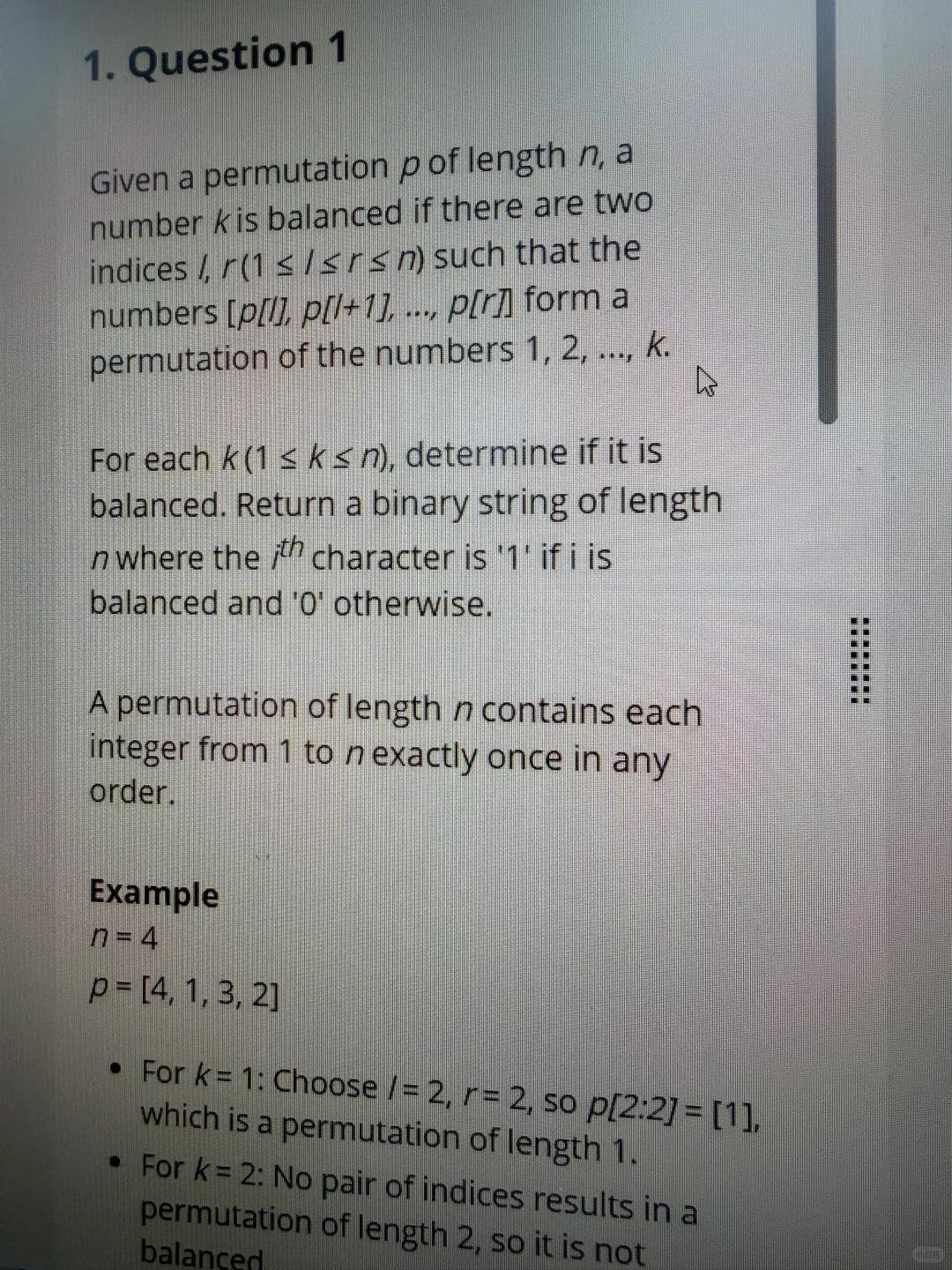
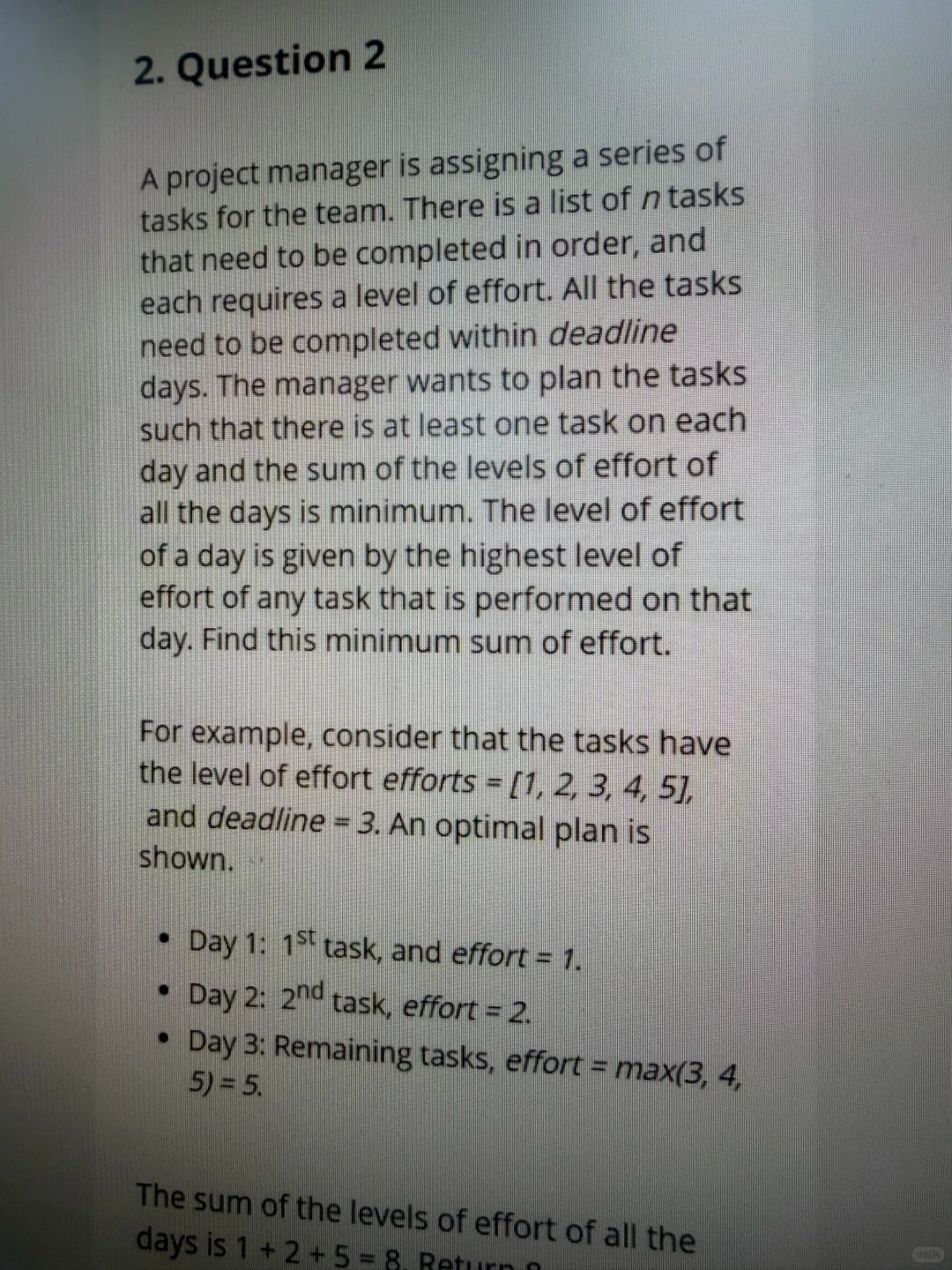
My OA consisted of 2 coding problems, similar to LeetCode questions, involving algorithms and data structures. The time limit was 60 to 90 minutes, and common languages like Python or Java could be used. Occasionally, there were multiple-choice questions testing basic concepts or asking to fix buggy code. Difficulty varies by role, but it's not particularly hard if you've practiced problems. Passing the OA is a mandatory step to proceed to subsequent interviews.
Now comes the part everyone dreads, but is really not that bad. You can expect to go through 4–5 rounds of interviews with seniors or managers, with each session lasting 45 minutes to 1 hour (though some interviews may extend up to 90 minutes).
BQ & Problem Solving (~1 hour)
The interviewer was a Senior SDE. The first 20 minutes were pure BQ, with less focus on technical details. The remaining 40 minutes focused mainly on coding problems. My Assigned Problem was "Binary Searchable Numbers in an Unsorted Array". The interviewer asked follow-up questions like "How would you handle it if duplicate elements were allowed in the array?"
The interview mainly focused on optimizing from a brute-force solution to the optimal solution, and handling edge cases.
System Design + LLD (~1.5 hours)
Process: Deep dive into the resume and LLD-style coding problems.
Problems/Topics: The interviewer was the Hiring Manager.
System Design: Deep dive into resume projects (scalability, database selection, Kafka, etc.). BQ questions focused on previous projects.
Coding (LLD): Maximum Path Sum from Root to Leaf in a Binary Tree (framed as choosing a skill score path).
Focus: Implementing the optimal solution and discussing test cases.
HLD+ DSA (~2 hours)
Process: The interviewer was a Senior SDE from a different team.
Structure: Coding problems, project architecture review, and system design questions.
My Assigned Problems:
Coding: "Rotting Oranges" (LC 994).
HLD: Design a Job Scheduler / Orchestrator.
Requirements: Manage nn types of tasks, generate unique jobRunIds, and ensure mutually exclusive execution for specific task types.
Concepts: Parallel execution, avoiding Single Point of Failure (SPOF), Redis distributed locks, Leader Election, Observability.
Engineering Director (1.5 hours)
Process: Behavioral interview, Code Review, and low-level implementation.
Problems/Topics:
Behavioral: Motivation for changing jobs, how to handle failure, expectations for Microsoft.
Code Review: Reviewing a piece of Java/SQL connection code (focusing on resource management and error handling).
Coding: Implement a Priority Queue (Min-Heap) from scratch without using library functions.
Strategies to Stand out
What Worked
My biggest tip here is to talk through the process as this allows the interviewers to help you out in case you get stuck. And getting stuck is not the end of the world. Its important to understand at this stage that interviewers are not out to get you, rather they really want you to succeed! So don't be afraid to ask them things and engage with them.
For the LeetCode part, the trick is that there is a rather small amount of combinations of algorithms and data structures they can ask. So when asked a leetcode question, approach it from the thought of "what algorithm or data structure would fit this problem" and just go over all of them. You'll find one that fits as every company except for Google is not going to go make their own questions. They just yoink them from leetcode most of the time. It happened to me that one of the questions on my interview I'd done about 4 times before on leetcode itself. It was exactly the same word for word.
Cracking the microsoft new grad interview took more than just technical skills. I adapted my resume, built my network, and practiced both behavioral and technical questions. Consistent daily practice and learning from feedback made a huge difference for me. I tracked my progress and treated every mistake as a lesson. If you stay persistent and keep improving, you can succeed too. I hope this helps you out and gives you a decent insight into what it's like to interview with Microsoft as a new grad. Best of luck!
FAQ
How did I stay motivated during months of prep?
I set small goals each week. I tracked my progress on a whiteboard. I celebrated little wins, like solving a tough LeetCode problem. I also talked with friends who were preparing for interviews. Their support kept me going.
What tools did you use to improve your coding efficiency?
I used Claude Opus to help me generate and understand code. Opus performs exceptionally well when handling complex algorithms, data structures, and multi-step logical reasoning. Not only can it produce runnable code, but it also handles edge cases effectively. For LeetCode-style algorithm problems or system design tasks, it often provides optimal or near-optimal solutions directly, significantly reducing the need for repeated debugging. I used the Claude Opus model in Linkjob AI to generate code during my OA and virtual interviews, and it worked incredibly well. I highly recommend this interview assistant — it’s a game changer.
What should I do if I get stuck on a coding problem?
I take a short break and clear my mind. I read the problem again and write out test cases. If I still feel stuck, I check hints or discuss with a friend. I never give up after the first try.
How important are side projects for the Microsoft new grad interview?
Side projects helped me stand out. I showed real-world skills and initiative. I picked projects that solved problems or used Microsoft tech. Interviewers loved hearing about them.
Can I apply to multiple roles at Microsoft?
Yes, I applied to more than one role. I tailored my resume for each position. I made sure my cover letter matched the job description. This increased my chances of getting noticed.
See Also
How I Passed 2026 Microsoft HackerRank Test on My First Try
How I Cracked the Microsoft AI Engineer Interview (2026)
How I Used AI to Pass the Interview on Microsoft Teams
© Copyright 2025 Linkjob.ai - All Rights Reserved.