My 2026 Netflix CodeSignal OA: Real Questions and Approach


Netflix CodeSignal OA Questions MCQ and Coding Tasks
The Netflix OA was on the CodeSignal platform. I applied for the MLE Intern position, so I assume it’s different from the SWE Intern OA. The test included 4 multiple-choice questions and 2 coding questions. The overall difficulty and workload were reasonable, and all of them were closely related to machine learning, not traditional algorithm problems. More details can be found in how I solved Netflix coding interview challenges. I hope this helps you pass the OA!
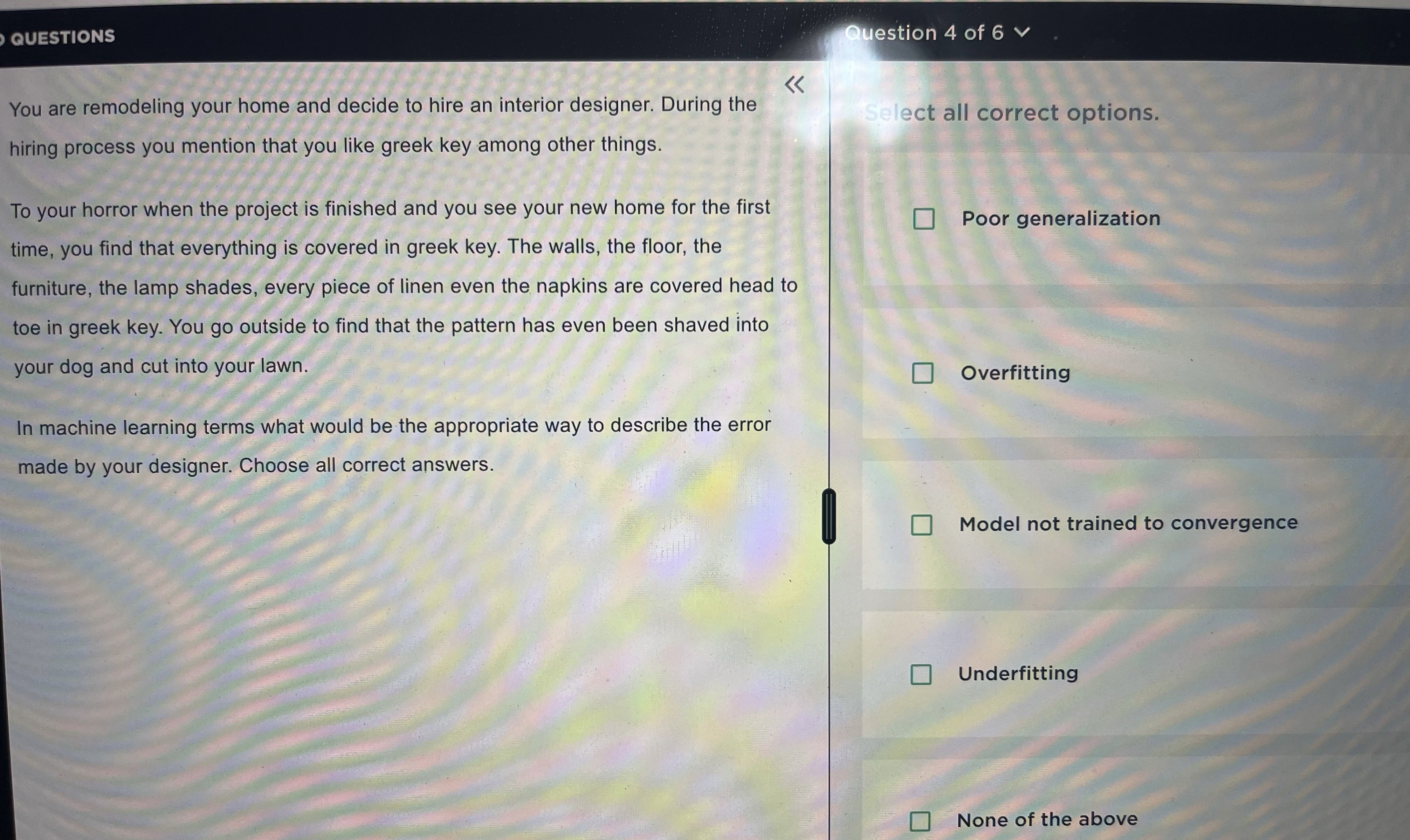
Below, I’ll share the questions I got. One of the multiple-choice ones wasn’t captured, but it was something like:
Given y’ = wx + b and E(w) = (y’ - y)^2, find the derivative \frac{dE(w)}{dw}.
I’m really grateful to Linkjob.ai for helping me pass my interview, which is why I’m sharing my OA questions and experience here. Having an undetectable AI coding interview assistant during the interview indeed provides a significant edge.
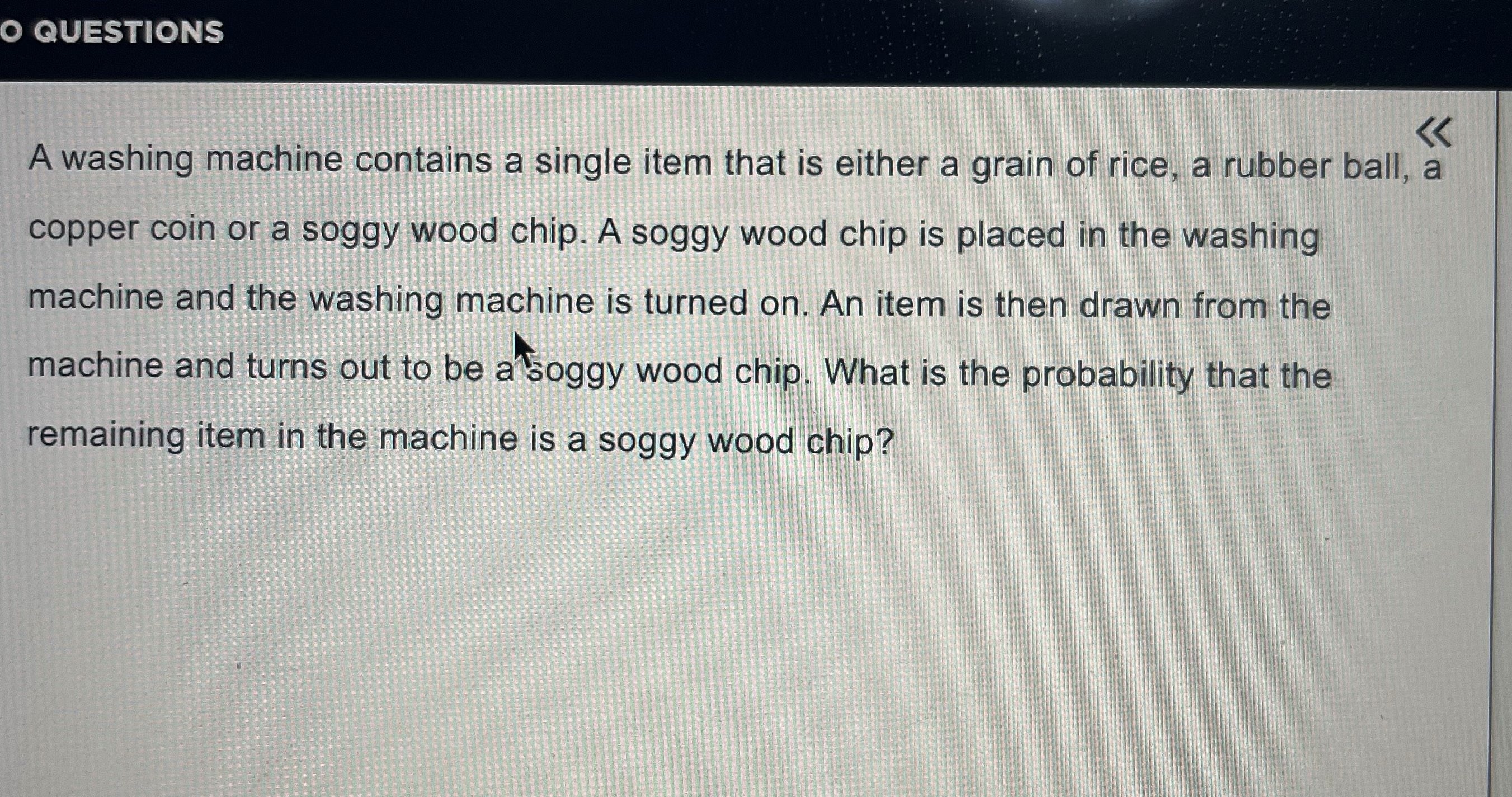
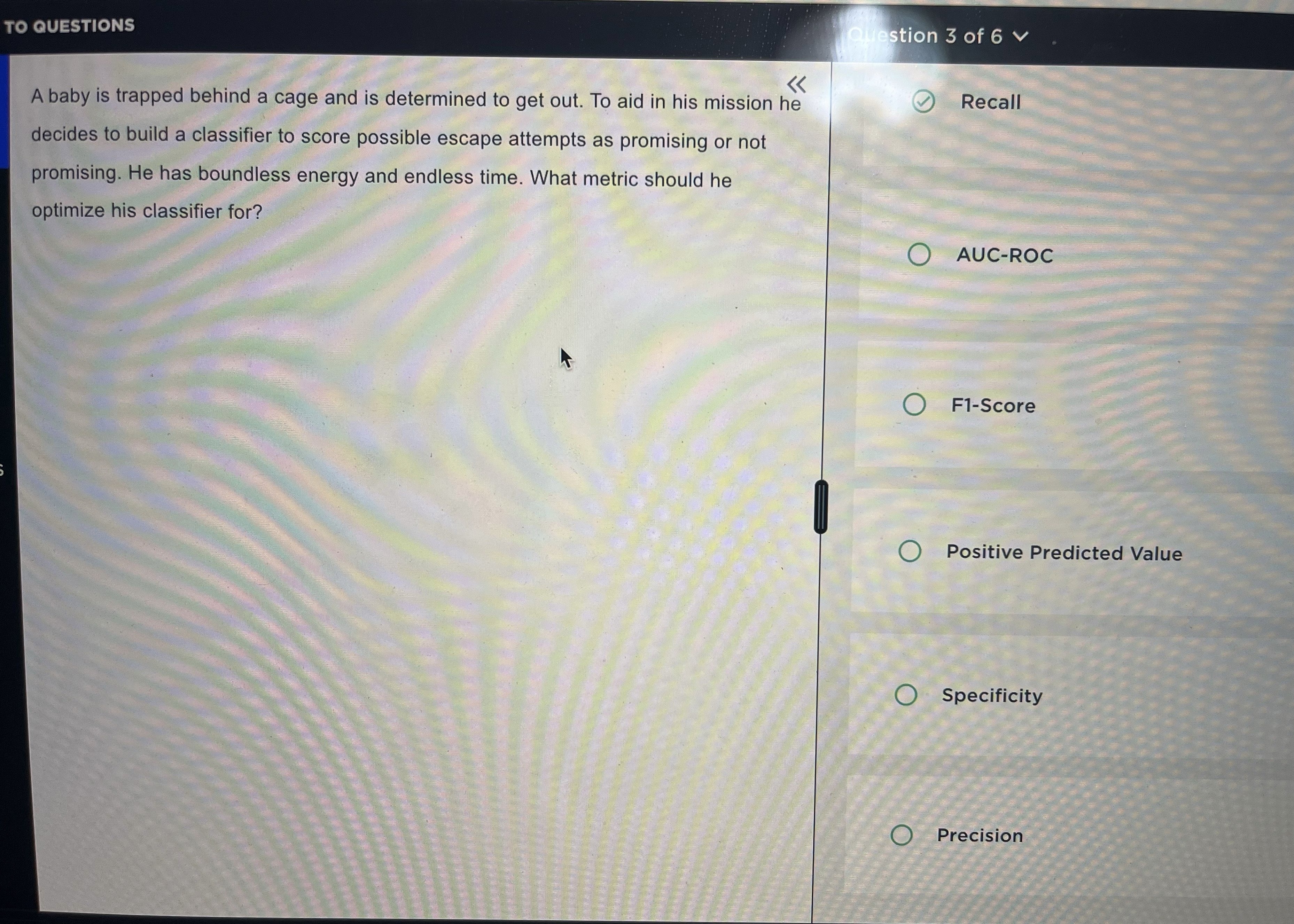
Multiple-Choice Questions
Coding Task 1: Tennis Serve Speed Similarity
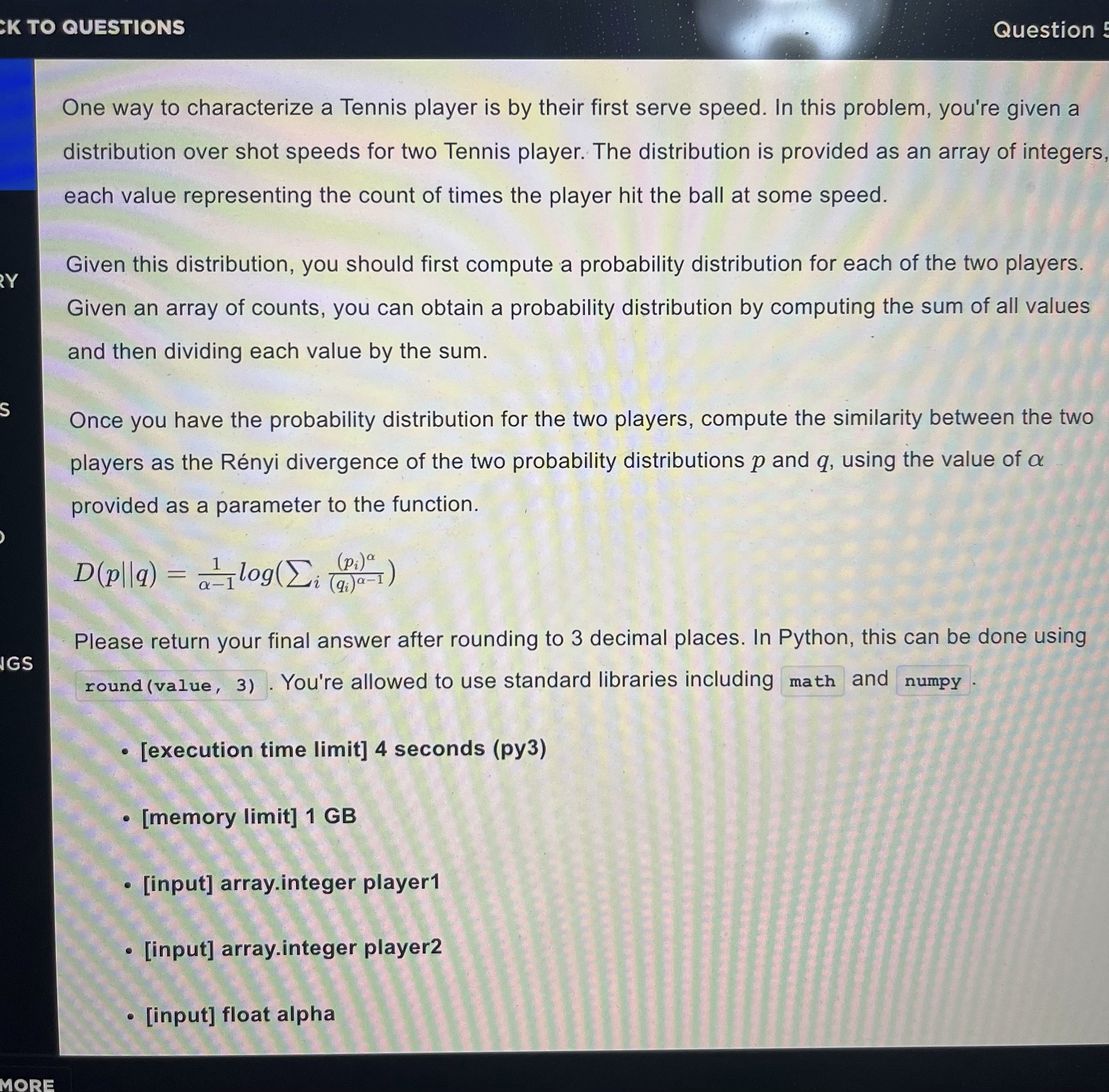
This problem was about calculating the similarity between two tennis players’ serve speed distributions.
My approach was: given two players’ serve speed frequency distributions, I needed to convert them into probability distributions and then measure their similarity using Rényi divergence.
Here’s how I approached it:
First, I calculated the total count for each player and divided each element by the total to get two probability distributions, p and q.
Then, using the Rényi divergence formula provided in the problem, I iterated through each index i, computed (p_i^\alpha) / (q_i^{\alpha - 1}), and summed up the results.
Finally, I applied the formula
D(p||q) = \frac{1}{\alpha - 1} \log(\text{sum})
and rounded the answer to three decimal places.
A couple of things to be careful about:
When calculating probabilities, make sure the total count isn’t zero to avoid division by zero (though the problem likely guarantees valid input).
When implementing Rényi divergence, be careful not to mix up α and α - 1 in the exponents, it’s an easy mistake to make.
AI Interview Copilot for Codesignal
Linkjob AI worked great and I got through my interview without a hitch. It’s also undetectable, I used it and didn't trigger any Codesignal detection. Here's how I cheated on the CodeSignal proctored test.
Coding Task 2: Finding the Closest Galaxy and Planet
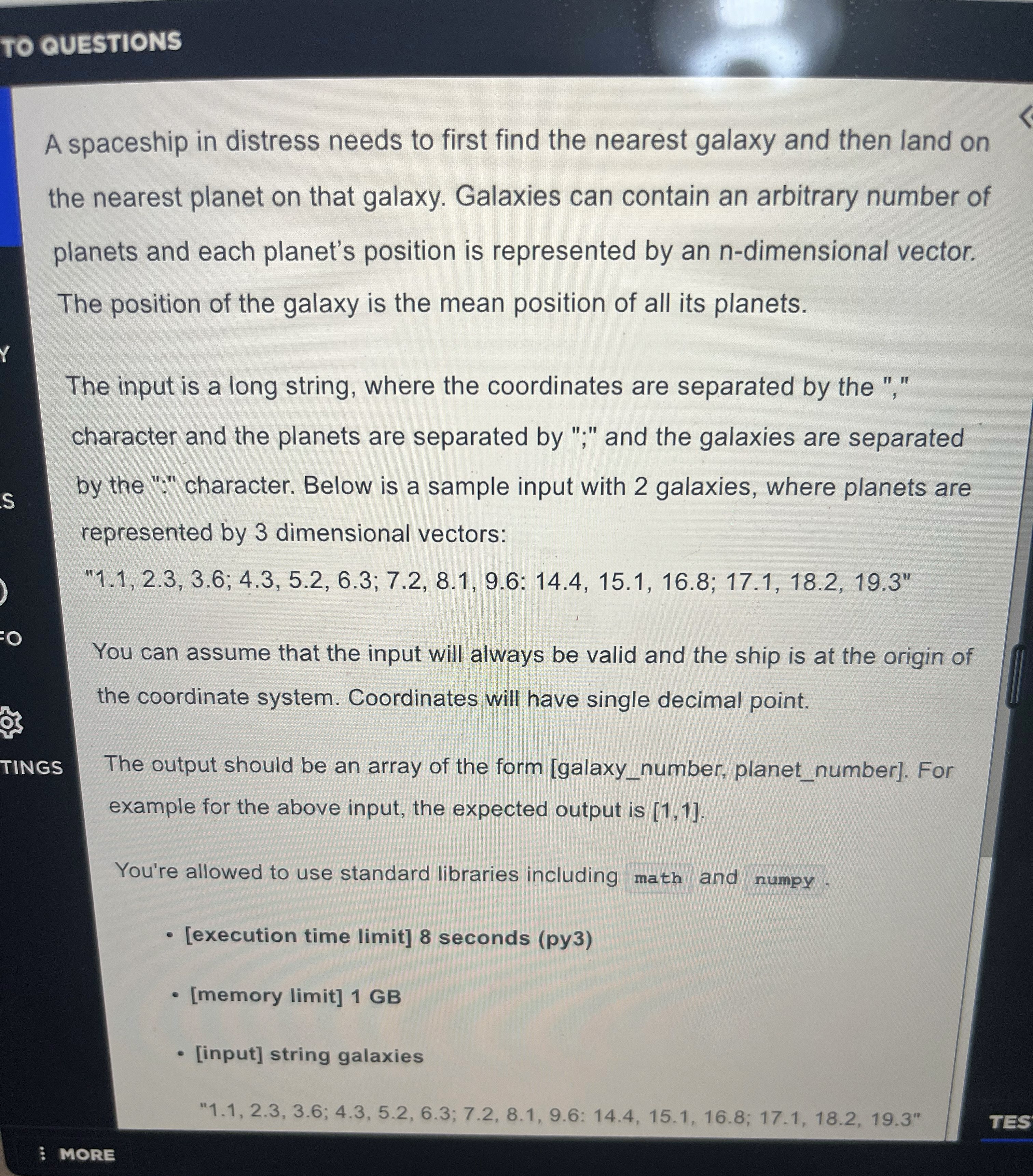
This problem was about identifying which galaxy and planet are closest to the origin (the spaceship).
The input was a string: galaxies are separated by colons :, planets within a galaxy are separated by semicolons ;, and each planet’s coordinates are separated by commas ,.
The goal was to find the nearest galaxy to the origin, and within that galaxy, the nearest planet to the origin.
Here’s my approach:
Split the input string by colons to get each galaxy’s data.
For each galaxy, split by semicolons to extract each planet, then parse each planet’s coordinates into a vector.
Compute the “center” of each galaxy (the average of its planets’ coordinates), then calculate its distance to the origin and find the nearest galaxy.
For that galaxy, compute the distance from each planet to the origin and find the closest one.
Finally, output the galaxy index and planet index (both 1-indexed, as specified in the problem).
Points to watch out for:
Be mindful of floating-point precision when parsing coordinates. The problem specifies single-precision decimals, so using float is fine.
When comparing distances, you can use the squared Euclidean distance instead of taking the square root, it saves computation and gives the same result.
Key Focus Areas in Netflix CodeSignal OA GCA and Coding Skills
Core Programming Skills and Syntax Fluency
Netflix’s CodeSignal OA first evaluates how comfortable you are with fundamental programming concepts: variable types, loops, conditional statements, and function definitions.
Most questions involve basic but essential tasks such as string parsing, list or dictionary manipulation, and numerical operations. The goal is to see whether you can translate logic into clean, efficient code without syntax errors or unnecessary complexity.
For example, when handling complex input formats, being able to quickly use string splitting and type conversion is often the key to passing the initial screening.
Mathematical Logic and Formula Implementation
Many problems integrate mathematical concepts, testing your ability to turn abstract formulas into working code. You might see questions involving probability distributions, distance calculations, or statistical measures.
To solve these, you must interpret the mathematical definitions correctly and break them down into precise programming steps.
For instance, the earlier Rényi divergence problem required accurate handling of exponentiation, summation, and floating-point precision, reflecting both mathematical understanding and careful coding discipline.
Problem Decomposition and Step-by-Step Thinking
Netflix’s OA often uses practical, scenario-based questions that require structured problem solving. You’ll need to decompose a broad challenge into smaller, manageable steps.
Take the “spaceship finding the nearest galaxy and planet” problem as an example: it involves parsing input data, calculating each galaxy’s center, and comparing distances to identify the optimal result.
This tests your ability to think in clear stages — defining inputs, outputs, and dependencies for each part — while avoiding logical gaps.
Netflix values engineers who can approach problems like real-world projects, where breaking down complex logic efficiently is essential.
Awareness of Edge Cases and Error Handling
Edge cases are where most bugs occur, and Netflix’s OA subtly checks for this awareness.
When calculating probability distributions, for example, you must ensure you don’t divide by zero if the total count happens to be zero. When processing coordinate data, you should verify that all inputs are valid numeric types.
Candidates who proactively anticipate and handle these cases demonstrate code robustness, which is a critical quality for Netflix engineers, who work with massive-scale systems where reliability and fault tolerance matter as much as correctness.
Netflix CodeSignal OA Assessment Tips and Time Management
Study Routine
A solid study routine truly changed everything for me. I read other candidate's Netflix interview process timelines and experience, and then built a schedule and stuck with it. Nothing fancy, just consistent progress every day. Here’s what helped me the most:
Practicing coding problems regularly. This made me more confident with the types of challenges that showed up in the assessment.
Spending time on system design resources. Netflix interviews care a lot about design thinking, so I made sure I understood how to structure scalable systems.
Preparing STAR stories for behavioral rounds. I practiced telling my experiences clearly and confidently using the Situation–Task–Action–Result format.
Reviewing quick trivia and theory questions. This helped me brush up on key computer science concepts and data structures I hadn’t used in a while.
Resources
I used a mix of online tools and study materials to get ready for the coding assessment. Here’s a quick look at my favorite resources:
Resource | Purpose | Why I Like It |
|---|---|---|
LeetCode | Practice coding questions | Lots of real interview problems |
CodeSignal | Assessment simulation | Matches netflix format |
YouTube | System design tutorials | Easy to follow |
Google Docs | STAR story prep | Organizes answers |
I also joined a few online study groups. Talking with others helped me learn new strategies and stay motivated. I shared my progress and got feedback on my solutions. If you want to improve your skills, try using a variety of resources. Each one offers something different.
Time Management
Time management is key during the Netflix CodeSignal OA. Here’s a simple strategy I used:
1. Read the question carefully. 2. Plan my solution before coding. 3. Write code for the main logic. 4. Test with sample data. 5. Move on if I got stuck for more than 5 minutes.
I practiced this routine until it felt natural. During the assessment, I stayed calm and focused. I didn’t rush, but I didn’t waste time either. Managing my time well helped me finish all the questions and review my answers.
Netflix CodeSignal OA Practice Strategies and Progress Tracking
Simulate Assessment
The best way to prepare for the Netflix CodeSignal OA was to recreate the pressure of the real thing. Instead of just solving random problems, I picked questions that focused on data manipulation and algorithmic thinking, the kind that actually show up in the test. And most importantly, I forced myself to solve them without peeking at any hints or solutions.
Before each mock session, I followed a simple routine that helped me get into the right mindset:
Set a timer for the same length as the actual assessment to simulate the real time pressure.
Use only the allowed resources, just like in the test environment.
Find a quiet space and treat it like the real exam.
Review my code afterward to catch mistakes, check efficiency, and note what I could’ve done better.
Doing this repeatedly made me much more comfortable under time pressure and helped me build the discipline to stay focused during the real OA.
Track Progress
Tracking my progress really kept me motivated, it was satisfying to see my improvement over time. I kept a simple table to record my scores and the topics I practiced. It helped me identify weak spots and stay focused on what mattered most. You can use a similar format to track your own progress and stay consistent.
Date | Topic | Score | Notes |
|---|---|---|---|
10/10 | Arrays | 80 | Missed edge cases |
10/11 | Data Structures | 85 | Improved speed |
10/12 | Algorithms | 90 | Fewer mistakes |
I also made a habit of reviewing my mistakes. I wrote down what went wrong and how I could fix it next time. This process helped me learn faster.
FAQ
What’s the time limit and difficulty level of the Netflix CodeSignal OA?
Typically, the Netflix CodeSignal OA lasts around 1–2 hours, and you must complete it in one sitting, pausing isn’t allowed. The overall difficulty is moderate, with questions often tied to real-world business scenarios, so it’s important to quickly understand the problem requirements and implement efficient solutions.
Which programming languages can I use for the Netflix CodeSignal OA?
You can choose from Python, Java, C++, or JavaScript, among other major languages. I personally recommend Python, its clean syntax and rich set of built-in libraries make it ideal for fast and reliable implementation.
If I don’t pass the Netflix OA, can I retake it?
Yes, but note that CodeSignal enforces a 14-day cooldown period between attempts. If your first try doesn’t go well, you’ll need to wait until the cooldown ends before retaking the assessment. My advice: prepare thoroughly before attempting it, so you don’t waste the opportunity due to lack of readiness.
See Also
My Journey Through Capital One CodeSignal Questions in 2026: What I Learned
How I Aced the BCG X CodeSignal Assessment in 2026
How I Passed the 2026 TikTok CodeSignal Online Assessment: Tips, Strategies, and Preparation Guide
How I Navigated the Visa CodeSignal Assessment and What I Learned
How I Cracked the Ramp CodeSignal Assessment and What You Can Learn
Why People Choose Linkjob AI
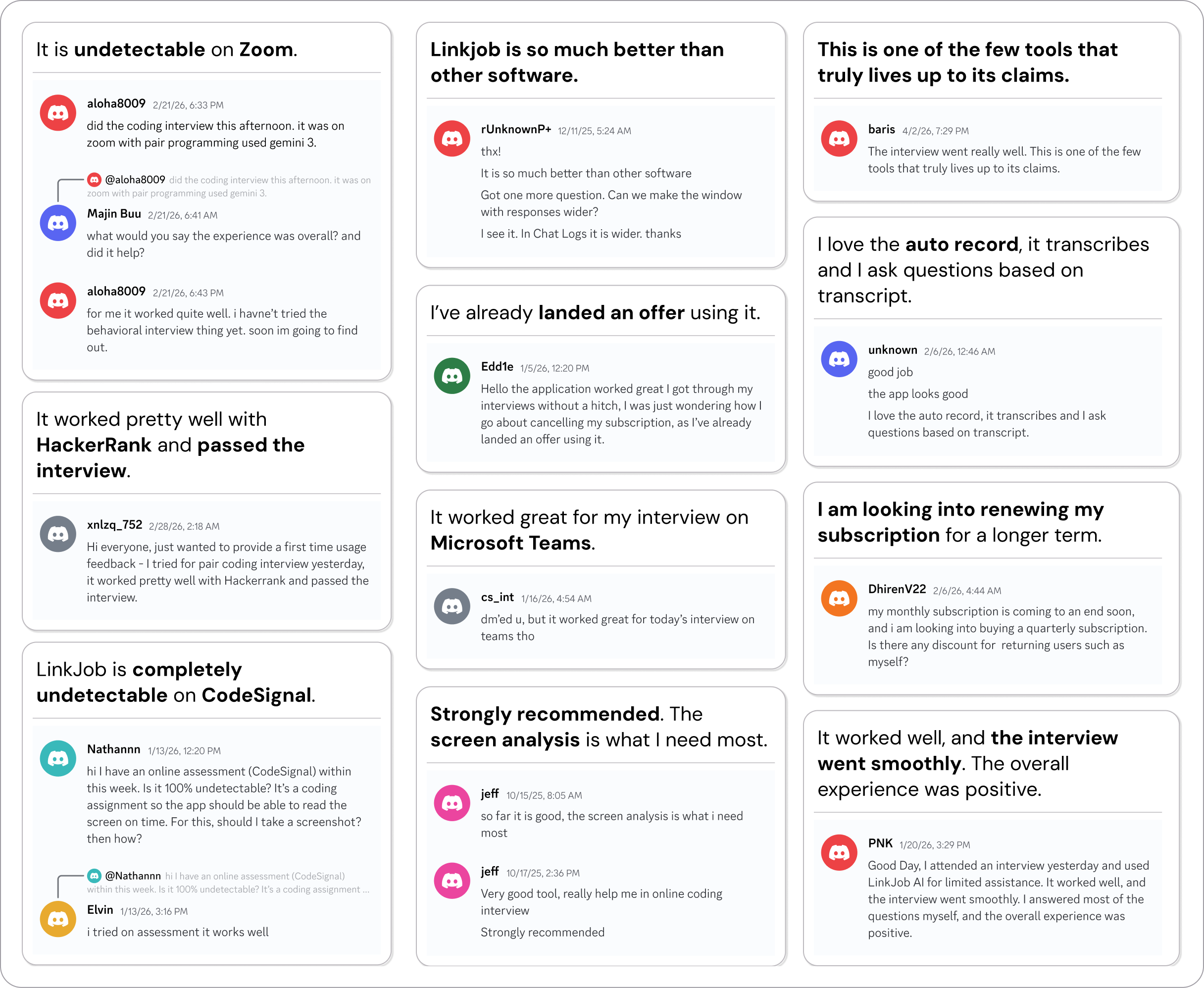
Smoother interviews, coding challenges cleared, and job offers landed. See how users describe their experience with Linkjob AI—in their own words.