My Top Tips from My Real Experience for Passing the OpenAI Behavioral Interview in 2025

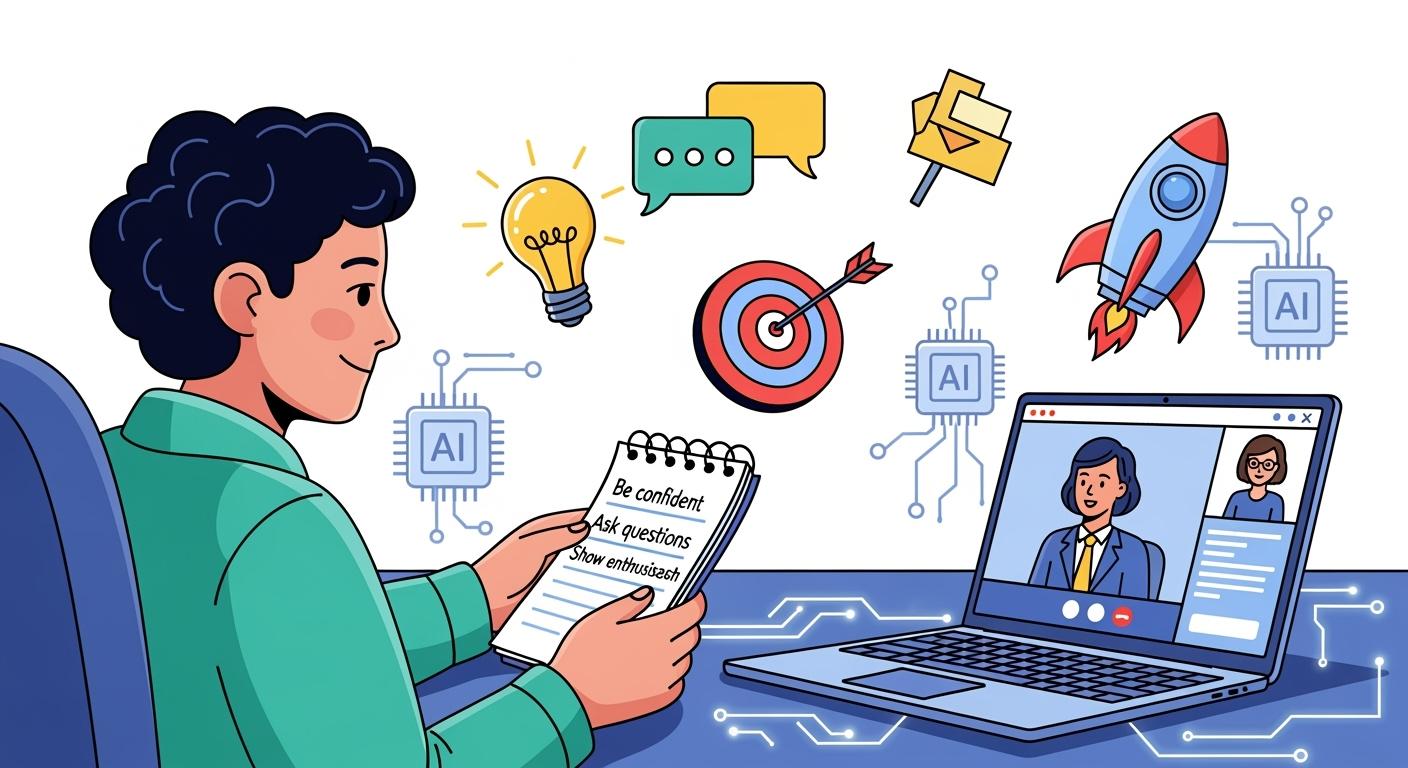
Surprise! I just got an offer from OpenAI in late 2025—it still feels like a dream! Reflecting on the interviews, I realized they placed more emphasis on overall qualities than just purely technical skills. The behavioral round carried much more weight than I expected.
From this first-hand experience, I've compiled some insights and suggestions to share with everyone. Hope it helps those who need it.
A special thanks to Link Job AI for its invaluable support—it’s what helped me successfully pass this interview! Invited to share my insights here, I can confidently attest to the exceptional practicality of this tool—it served as an AI interview support assistant. Not only did it comprehensively elevate the quality of my preparation, but it also granted me a distinct competitive edge.
My Experience with OpenAI Behavioral Interview
Behavioral interviews at OpenAI don’t have a fixed question bank like coding challenges, but their focus is clearly defined. Interviewers assess whether you fit the team and company culture based on your past experiences and personal traits, with a special focus on how you collaborate and solve problems in high-pressure, fast-paced environments.
There’s no single correct answer to such questions, but there are clear evaluation criteria for how you structure your response and the qualities you demonstrate. The most effective trick is to structure your answers using the STAR method (Situation, Task, Action, Result), emphasizing your depth of thinking and the growth you gained from those experiences.
For example, I Was Asked:
1."Tell me about a time when you had to come up with a creative solution to a problem involving severely incomplete data in a machine learning project."
My thought process:
This question assesses your creative thinking, data sensitivity, and pragmatic approach. The interviewer wants to know whether you easily give up when faced with imperfect data or can find ways to make it work.
My answer:
In a previous project, we built a recommendation system for an e-commerce platform and found that a key feature—users' historical browsing records—had major data gaps. Instead of discarding this feature, we attempted the following:
Alternative features: We noticed that users with missing browsing records often had complete purchase and search histories. We therefore created a "user interest similarity" feature by calculating the distance in embedding space between the products users bought/searched and the candidate products, effectively compensating for the lack of browsing behavior.
Model optimization: During model training, we treated missing values as a separate category, letting the model learn the implications of "no browsing history" on its own.
Outcome: Ultimately, the click-through rate (CTR) for recommendations increased by 12%, demonstrating the effectiveness of this creative approach to handling incomplete data.
Answer Framework
S (Situation):Describe the project background. For example, you are working on a user churn prediction model and discover that a critical dimension, "customer service interaction records," has a missing data rate of up to 70%.
T (Task):Your task is to address the data missing issue to ensure the model’s accuracy and usability.
A (Action):Break down the creative steps you took in detail. This part is the core of your answer and should reflect your thought process.
Step 1: Deeply analyze the reasons for the missing data—whether the issue lies in the data collection process itself or whether the users in question rarely interact with customer service. Understanding the cause helps you choose the most appropriate solution.
Step 2: Multi-dimensional data fusion—since "customer service records" are missing, but data such as "number of user complaints" and "in-app user reviews" are complete. You can creatively use these as alternative features to construct a "user negative sentiment index," indirectly reflecting the potential risk of user churn.
Step 3: Introduce external data sources—if internal data cannot sufficiently address the gaps, consider incorporating third-party data, such as users’ public social media behavior (while ensuring privacy and compliance) or industry-standard user behavior tags.
Step 4: Model-level handling—for missing values that cannot be replaced, try using advanced algorithms like Multiple Imputation or Autoencoders to predict and fill the gaps, rather than simply deleting the missing values or filling them with the mean.
R (Result):Describe the final outcome. For example, through the methods above, you successfully built a more comprehensive feature system. The model’s AUC improved from 0.75 to 0.82. More importantly, the model’s interpretability gained recognition from the business team, and it was successfully deployed, helping the team identify potential churn users in advance.
2."Talk about how you handled disagreements when collaboratively developing a machine learning model within a team."
My thought process:
This question assesses your communication skills, teamwork spirit, and emotional intelligence. The interviewer wants to know whether you are a mature team player rather than a rigid "lone wolf."
My answer:
What I Did: I suggested that instead of arguing, we test the two strategies separately on the training set and then evaluate the models' generalization ability using the same validation set. The results showed that the moderate enhancement strategy performed best on the validation set, while aggressive augmentation actually led to overfitting.
Outcome: Through this small experiment, we quickly aligned on a consensus and finalized the data augmentation approach based on the experimental results. This experience also taught me that in technical teams, data is the most effective language for communication.
Answer Framework
S (Situation):Describe the conflict scenario. For example, while developing an NLP model, you advocated for using a more complex Transformer architecture to pursue optimal performance, while a senior colleague insisted on a more stable, interpretable traditional model.
T (Task):Your task was to find a mutually acceptable solution to ensure the project progressed smoothly.
A (Action):Describe your approach, focusing on "communication" and "collaboration."
Step 1: Listen and Understand
First, I actively listened to the other person’s perspective. Their preference for the traditional model stemmed mainly from concerns about online service stability and inference speed, worrying that the Transformer model might face latency and high resource consumption issues in a production environment.
Step 2: Data-Driven Discussion
Instead of directly opposing the idea, I proposed conducting a quick A/B test. We experimented with both models on a small traffic subset, comparing them across multiple dimensions such as performance, latency, and resource usage, letting the data speak for itself.
Step 3: Seek a Compromise
The experimental results showed that the Transformer model indeed performed better but came with higher latency drawbacks. Therefore, we proposed a compromise: during peak user activity hours, use a lightweight Transformer model; during off-peak hours, use the traditional model to ensure resource efficiency. Alternatively, we could explore techniques like Knowledge Distillation to transfer knowledge from the large model to a smaller one.
Step 4: Reach Consensus and Execute
In the end, the team unanimously agreed on the compromise solution and clarified the direction for future optimization. Throughout this process, I maintained my pursuit of model performance while fully respecting the team’s considerations for system stability.
R (Result):Describe the final outcome. For example, through this collaboration, we not only successfully deployed the model but also achieved a strong balance between performance and stability. More importantly, this experience strengthened mutual trust within the team, as everyone learned that disagreements can be resolved through rational discussion and data-driven decision-making to find the optimal solution.
OpenAI Behavioral Interview Overview
Interview Format and Process
I’ve realized that OpenAI’s behavioral assessment actually works in a "dual-track" fashion:
Explicit Process:
There is a structured, multi-stage screening process—from initial recruiter screening to interviews with team members—each focusing on different aspects of your overall fit and skills.
Implicit Integration:
Instead of having a separate behavioral interview round, they naturally weave assessments of thinking patterns, collaboration skills, and problem-solving abilities into technical interviews and the final leadership round. At its core, it’s all about using your past experiences to predict how you’ll perform in the future.
Assessment Focus | Specific Evaluation Content | Typical Question Direction |
|---|---|---|
Motivation & Values | Initial motivation for joining OpenAI, passion for AGI, thoughts on AI's long-term impact, and alignment with OpenAI's core values (e.g., user-centricity, dedication, etc.) | Why do you want to join OpenAI? What are your thoughts on the development of AGI? |
Teamwork &Collaboration | Ability to collaborate across different backgrounds and methods for handling disagreements | How do you collaborate with colleagues from diverse backgrounds? How do you handle disagreements? |
Real-world Problem-solving | Thinking frameworks and decision-making processes for complex/uncertain problems, as well as the ability to learn from challenges | How do you approach and make decisions when facing complex problems? |
Leadership & Growth | Ability to drive projects, resilience under pressure, and performance in continuous learning from experiences | How do you drive projects forward? How do you stay motivated under pressure? |
The openai behavioral interview usually lasts about 45-60 minutes. I found that each question gave me a chance to share my values and experiences.These questions are not trying to "trip you up" at all, but rather to invite you to proactively share your own story.
What OpenAI Looks For
Beyond hardcore technical skills, OpenAI places greater emphasis on whether you possess the soft skills and mindset required to thrive in a top-tier AI environment in interviews. They are not merely looking for an engineer who can write code, but rather for a team member who can independently drive projects, collaborate effectively with researchers, and deeply understand AI ethics.
Research Thinking & Engineering Execution
OpenAI's interviewers expect me to think like a researcher while executing like an engineer.
I need to integrate theory with practice: during the interview, I must not only explain theories but also link them to real-world systems, proactively considering engineering challenges like storage solutions and distributed processing.
I must demonstrate depth in system design: I should thoroughly elaborate on the rationale behind technical choices, potential bottlenecks as business scales, and corresponding solutions—aligning with the interviewers’ emphasis on strong system design capabilities.
I need to actively contextualize my answers in business scenarios: applying technical solutions to real business contexts will make my responses stand out. For example, when addressing a string-related problem, I would consider billing logic such as "Should free call tokens be excluded?"—this showcases a depth of thinking far beyond simply writing code.
Self-Motivation & Project Ownership
OpenAI has exceptionally high expectations for candidates, seeking individuals with strong self-motivation and the ability to independently drive projects.
Independent Problem-Solving: Interviewers dig deep into projects on your resume to assess your resilience and problem-solving depth when faced with challenges. Questions like "How did you prove your solution was optimal?" or "How would you improve it if you started over?" are common.
Considering Edge Cases: Interviewers may deliberately introduce various edge cases to test whether your code remains robust under extreme conditions. This requires a clear understanding of the failure modes for each module.
Communication & Team Collaboration
At OpenAI, communication skills are seen as addressing 80% of workplace issues. They look for individuals who can articulate ideas clearly, effectively advocate for support, and collaborate seamlessly with the team.
Articulating Complex Ideas: It is crucial to clearly explain complex concepts or intricate logic during system design discussions or when presenting technical solutions.
Team Collaboration Fit: Interviewers assess the "chemistry" of your interaction to determine if you can complement team members and collectively achieve goals.
Understanding AI Safety & Ethics
As a leader in the AI field, OpenAI highly values your ethical principles and your consideration of AI's long-term impact.
Ethical Sensitivity: Interviews may explore your understanding of AI safety and ethics, and how your work can create tangible real-world impact.
Sense of Mission: They hope your motivation for joining extends beyond technical challenges to include a sense of mission to advance AI development for the benefit of humanity.
Interviewers often ask scenario-based questions. They want to see how I react under pressure and if I can stay true to OpenAI’s values.
Why Mission Alignment Matters
Mission alignment is huge at OpenAI. Right then, I knew I had to let the interviewers feel my passion for "using artificial intelligence to benefit humanity." They are looking for people who genuinely care about AI safety and ethical use—neglecting safety concerns or having misaligned motivations would be seen as a red flag.
Tip: When answering, be sure to connect your personal experiences to OpenAI’s mission. Show them that you truly understand their goals and sincerely want to be a part of their team.
I also noticed that their behavioral interviews focus not only on what you did but also on why you did it—and how that relates to their overarching My Experience with OpenAI Behavioral Interview
Common Question Types and Response Frameworks
Interviewers typically frame questions around your resume, past projects, or OpenAI’s core values. Here are several high-frequency directions and corresponding thinking frameworks:
Sample Question: "Describe an experience where you had a significant disagreement with a team member about a technical solution. How did you resolve it?"
Team Collaboration and Conflict Resolution
Response Framework: This question isn’t about judging who was right or wrong—it’s about assessing your communication, collaboration, and problem-solving skills.
S: Introduce the project background and your responsibilities.
T: Explain the specific technical point where you and your teammate disagreed (e.g., model selection, architecture design).
A: Focus on describing your actions. How did you initiate communication? Did you involve a third party (e.g., consulting a more experienced colleague)? Did you use data or experiments to support your viewpoint? The key is to demonstrate how you sought consensus rather than stubbornly insisting on your own opinion.
R: What was the outcome? Was consensus reached and successfully implemented, or was the optimal solution verified through experiments? Conclude by emphasizing how this experience contributed to your growth in collaboration.
Challenges and Failures
Sample Question: "Tell me about the most difficult technical challenge you’ve faced and how you solved it?" or "Describe a project you were involved in that didn’t meet expectations. What did you learn from it?"
Response Framework: This assesses your resilience under pressure, problem-solving skills, and willingness to learn from failure.
S: Clearly describe the difficulty encountered (e.g., model performance bottlenecks, system deployment failures, poor data quality).
T: What was your goal at the time, and what problem were you trying to solve?
A: Detail the specific steps you took to troubleshoot and address the issue. For example, how did you locate the bug? What different methods did you try? Did you conduct A/B testing? This process should reflect your systematic thinking and exploratory mindset.
R: Was the problem resolved, or did you find an alternative solution even if the original goal wasn’t fully achieved? The key is to explain what you learned from the experience and how it helped you avoid making similar mistakes in the future.
Alignment with OpenAI’s Values
Sample Question: "Why do you want to join OpenAI?" or "What are your thoughts on AI safety and ethical issues?"
Response Framework: This aims to identify candidates who genuinely resonate with the company’s mission.
Preparation Tips: You need to have a deep understanding of OpenAI’s mission (ensuring that artificial general intelligence (AGI) benefits all of humanity), not just its reputation as a top-tier company. Relate your own project or research experiences to discuss your views on AI safety, alignment, or responsible innovation.
Response Technique: Avoid vague compliments; instead, offer specific examples, such as how you considered data bias or model misuse risks in a previous project. This will be more persuasive than simply stating, "I strongly agree."
Leadership and Initiative
Sample Question: "Describe an experience where you proactively initiated and drove a project or idea."
Response Framework: This assesses your initiative, leadership, and influence.
S: What was the work environment or need at the time?
T: What problem or opportunity did you observe that sparked this idea?
A: How did you persuade the team or superiors to adopt this idea? During execution, how did you coordinate resources and overcome obstacles?
R: What results did the project ultimately achieve? What positive impact did it have on the team or product?
Reflection
Looking back on the entire interview process, I have summarized the following key insights:
Do your homework on the company in advance
Before the interview, make sure to thoroughly research OpenAI's latest projects . This will help you connect your responses to their current work, demonstrating a strong alignment with their goals.
Structure all your responses using the STAR method
Frame all your experiences using the "Situation - Task - Action - Result" structure, with a special emphasis on explaining your thought process rather than just listing what you did.
Highlight teamwork and communication skills
Provide examples that showcase your ability to collaborate, such as how you resolved disagreements through communication, proactively sought help, and achieved goals as part of a team. OpenAI values individuals who excel at working with others.
Emphasize problem-solving and technical resilience
When describing technical challenges, demonstrate your systematic thinking and depth in problem-solving. Be sure to highlight your focus on code robustness, quality, and reliability.
Demonstrate alignment with values and a sense of mission
Clearly articulate your understanding of "responsible AI" and ethical considerations, and use specific examples to illustrate how your actions align with these values. Showcase your commitment to advancing AI for the benefit of humanity.
Sincerely exhibit a growth mindset
Openly acknowledge past mistakes and shortcomings, and emphasize what you learned from them and how you improved. This demonstrates maturity more effectively than trying to conceal flaws.
Tip: Go back to your past projects, re-examine the challenges you faced, and brainstorm better solutions than you used at the time. This will add depth to your interview responses.
I realized that being honest about my strengths and weaknesses left a lasting impression. Instead of hiding my mistakes, I explained the lessons I learned and how I improved. Staying genuine and tying my answers to OpenAI's mission helped me stand out.
Other Role Questions & Approaches
For non-technical roles, I noticed that OpenAI's behavioral interviews focus heavily on hands-on experience with AI projects. You’ll want to share specific examples of challenges you’ve faced, such as rolling out a feature that underperformed or failed to meet expectations, or explaining AI’s limitations to stakeholders with non-technical backgrounds. It’s also a great opportunity to discuss how you’ve continually learned and grown throughout your career to stay current in this fast-evolving field.
The core principle of BARS is to prioritize behavior over qualifications. It validates a candidate's true capabilities by having them recount specific past experiences, instead of solely relying on the titles and descriptions listed on their resume.
Using specific, detailed examples will make your interview responses far more convincing and memorable.
Top Tips for OpenAI Behavioral Interview Success
Research OpenAI’s Mission and Values
Before my openai behavioral interview, I always dig deep into OpenAI’s mission. I want to show that I care about building artificial general intelligence (AGI) that benefits everyone. I start by reading OpenAI’s blog, research papers, and recent product launches. This helps me understand their focus on ethical AI, collaboration, and data-driven decisions.
Here’s how I make sure I’m ready:
I study OpenAI’s mission statement and core values.
I check out their latest research and product updates.
I reflect on my own experiences that match their values, like using data for good or working with diverse teams.
I write a one-page summary of a recent project to practice explaining my thought process.
Story and Question Preparation Techniques
Polish 3–5 In-Depth, Real-Life Project Stories
Skip memorizing rigid "standard answers." Instead, pick case examples that cover different assessment angles—like a smooth, high-impact team collaboration, a reflective post-mortem after a setback, or a tough problem you took the lead to solve.
When sharing these stories, be sure to spell out the specific challenges you faced, the actionable steps you took, and the quantifiable results you delivered. Most importantly, walk the interviewer through your thought process. Especially for technical behavioral questions, break down your decision-making logic, the trade-offs you weighed, and the lessons you learned from any missteps. This shows your patience and problem-solving skills far better than just stating the end result.
Prepare Thoughtful Questions to Ask
Towards the end of the interview, the interviewer will almost certainly ask, “Do you have any questions for us?” Having a few insightful questions ready will leave a great impression. For example:
“In your opinion, what are the most essential skills for excelling in this role?”
“What are the biggest challenges the team is currently navigating to move work forward?”
Questions like these directly reflect that you’ve genuinely thought about the role and are truly interested in joining the team.
Hidden "Bonus Points" in Behavioral Interviews
In addition to the core competencies mentioned earlier, OpenAI's behavioral interviews place special emphasis on "bonus qualities" that highlight a candidate's unique value. These can be boiled down to three key areas:
Cross-Disciplinary Thinking and Fresh Perspectives
OpenAI has no shortage of technical talent—it particularly values candidates who bring interdisciplinary perspectives to the table. If you can interpret the profound societal impact of AGI technology through the lenses of anthropology, art, or ethics, and think beyond purely technical frameworks, this will become your unique competitive edge.
Balancing Research Depth with Practical Implementation
The ideal candidate should be able to think like a researcher—to dive deep into problems and explore innovative directions—while also having the practical mindset of an engineer who can turn ideas into reality. That means proactively considering real-world engineering challenges like storage solutions and distributed processing. During the interview, strike a balance between articulating theory and showcasing engineering thinking to demonstrate that you’re someone who walks the talk.
Holistic Thinking Grounded in Business Context
Many interview questions are tied to real-world AI business scenarios. If your answers can look beyond pure technicality and incorporate business logic—for example, factoring in token billing rules when discussing string processing—you’ll stand out far more than someone who only gives a technical response. This shows you’re not just coding for the sake of coding; you’re coding with a clear understanding of business implications.
Throughout the interview, proactively share your passion for OpenAI and your reflections on its mission. Tie your personal experiences to the company’s goals to show how you align with its vision, and what unique value you can bring to the team. This directly hits the mark of what interviewers are looking for.
Interview Guidance
Stay Genuine and Natural
Treat the interview like a casual chat with a mentor—just share your real experiences and thoughts naturally. There’s no need to sound stiff, rehearsed, or like you’re reciting a script.
Minimize Fillers and Vague Language
Cut down on filler words such as “um” and “ah,” and avoid wishy-washy phrases like “maybe” or “perhaps.” Aim to speak with clarity and conviction.
Listen Carefully and Ask for Clarification
Make sure you fully grasp the question before you start answering. If something feels unclear or confusing, don’t hesitate to ask the interviewer to repeat it or elaborate a bit more.
I believe anyone can pass the OpenAI behavioral interview with the right mindset. Prepare well, connect your stories to the mission, and stay true to yourself. Use my tips as a guide.
You’ve got this—show them your best self and go make an impact at OpenAI!
FAQ
How long should my answers be in the OpenAI behavioral interview?
I keep my answers short and focused. Usually, I aim for two minutes or less. I want to give clear details without rambling.
What if I don’t have experience with AI projects?
That’s okay! I share stories from any project where I solved problems, worked with others, or learned something new. OpenAI values growth and curiosity.
Can I ask questions during the interview?
Absolutely! I always ask about team culture or recent projects. This shows I care and want to learn more about OpenAI.
See Also
Navigating The 2025 OpenAI Interview Process: My Journey
Authentic Insights On AI Tools For 2025 Interview Prep
My Preparation Journey For The 2025 Generative AI Interview
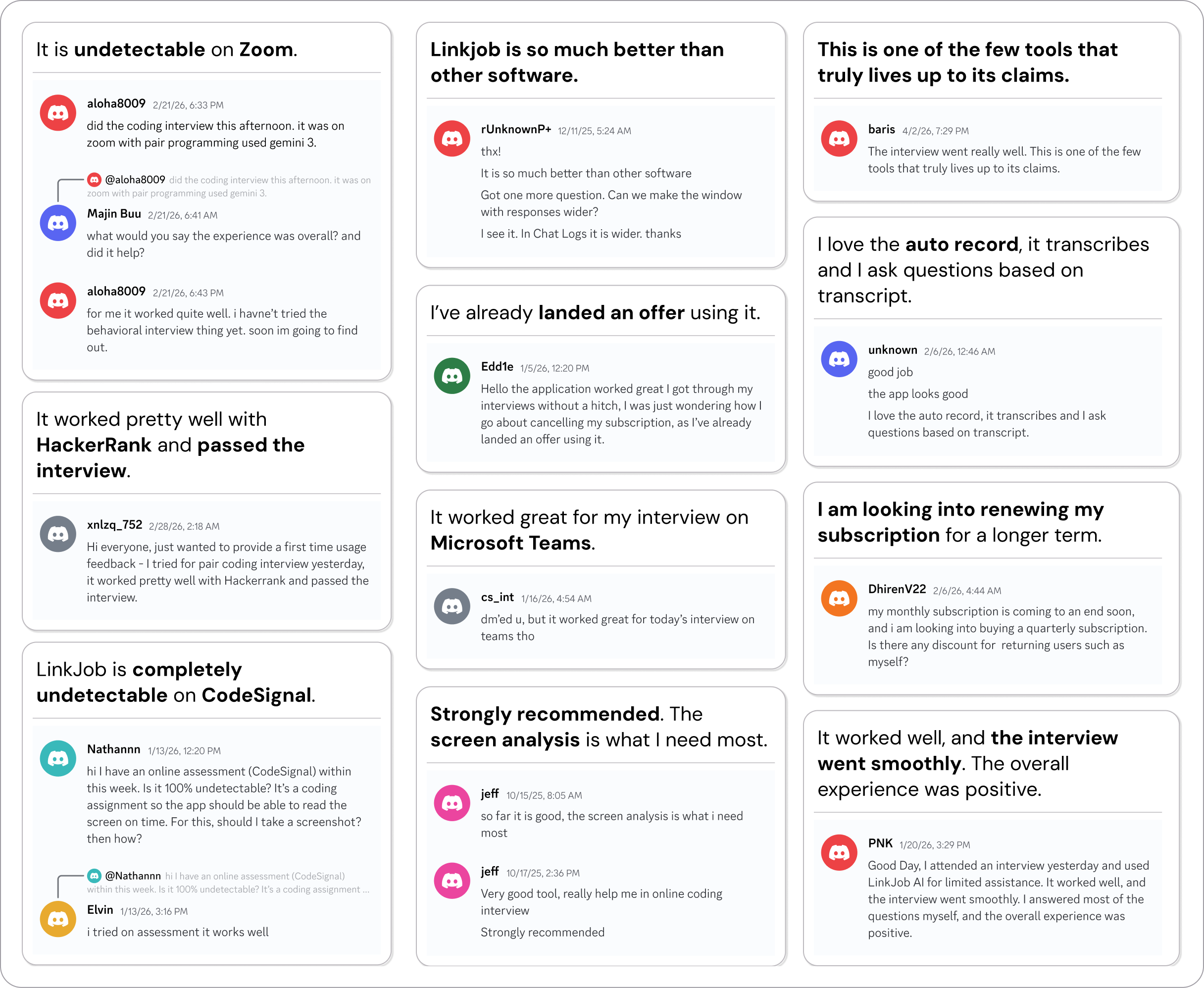
Why People Choose Linkjob AI
Smoother interviews, coding challenges cleared, and job offers landed. See how users describe their experience with Linkjob AI—in their own words.