My 2026 OpenAI Loop Interview Experience and Exact Questions I Faced

OpenAI's interview process is highly efficient but quite challenging. From the recruiter phone screen to five rounds of video interviews, it totals nearly nine rounds. Moreover, every line of code written during technical interviews must run successfully, creating significant pressure. Fortunately, I had Linkjob, an invisible AI interview assistant, to help. It remains undetected by testing platforms and swiftly provides correct answers, offering invaluable support throughout the interviews.
OpenAI Loop Interview Process
Steps and Timeline
My OpenAI interview process was extremely fast-paced. Below is the timeline I've summarized:
Week 1: Recruiter Call
The take-home assignment arrived the day after the call. HR was highly professional, directly asking for details on my technical stack.
Week 2: Technical Screen
Given 48 hours to complete a mini-project.
Note: They don't care how fast I finish, but focus on code structure and documentation. I wrote a detailed README explaining my design choices, which was a major plus.
Week 4: Virtual Onsite (5 Rounds)
All interviews completed in one day—extremely intense.
- 2 rounds of Coding (Practical, not puzzle-based)
- 1 round of System Design (LLM infrastructure focused)
- 1 round of Behavioral (Culture fit)
- 1 round with the Hiring Manager (Deep dive into past projects)
Week 5: Offer Call
The recruiter called to extend the offer, not only providing the salary figure but also explaining the equity (PPU) logic in detail.
My First Impressions
What struck me most about my OpenAI interview was their relentless pursuit of depth. This was evident in the test questions, the interviewers' probing follow-ups, and their genuine curiosity about your thought process. They are deeply passionate about this industry and seek candidates who share that passion. I believe demonstrating this passion during the interview gives you a significant advantage.
OpenAI Loop Interview Questions
Technical Rounds
The overall style leans heavily toward systems and data processing, unlike the traditional big tech approach focused purely on LeetCode and general system design. Both the problems and follow-up discussions are more oriented toward real-world business scenarios. Here's one problem I recall:
Given a string containing API call logs, extract the total token consumption for all users and sort it by user ID.
I noticed that the difficulty level was medium-to-hard. The interviewers wanted to see how I approached open-ended problems and how I thought through each step. They cared more about my reasoning than about memorized answers.
Coding and Problem Solving
OpenAI's programming questions are a standard collection of high-frequency Leetcode problems. Those who have reviewed interview experiences will find them very familiar. For instance, variations of Time Travel Hash and database design questions are regular fixtures in OpenAI's assessments.
Time Travel Hash Variant
Task: Implement a versioned key-value store. When `put(key, value) is executed, automatically record the version number (starting from 1 and incrementing). When `get(key, version)` is called, return the latest value for that version and all preceding versions.
Example:
put(“model”, “gpt-3”) (Version 1)
put(“model”, “'gpt-4”) (Version 2)
get(“model”, 1) returns “gpt-3”
get(“model”, 3) returns “gpt-4”.
ML puzzle. The first question is to implement One-NN (the simplest case of KNN). The second question is trickier, requiring a basic feedforward neural network and activation layer. The core trick is that L2 distance can be transformed into a problem of Y = WX + b.
Transformers caught four bugs. The first was position embedding initialization, the second was the mask not set to -inf, the third was missing loss.backward(), and the fourth was incorrect dimensions in the nn.Linear for projection. Follow-up involves the KV cache. The class is already written; we need to insert and modify the position embedding during attention calculation, then pass parameters through correctly to resolve the major issues.
Given a file containing over 400 lines of PyTorch code, the task requires completing 3 parts plus 1 bonus part. Numerous questions about time and space complexity were asked. For example: What is the time and space complexity of matrix A @ matrix B?
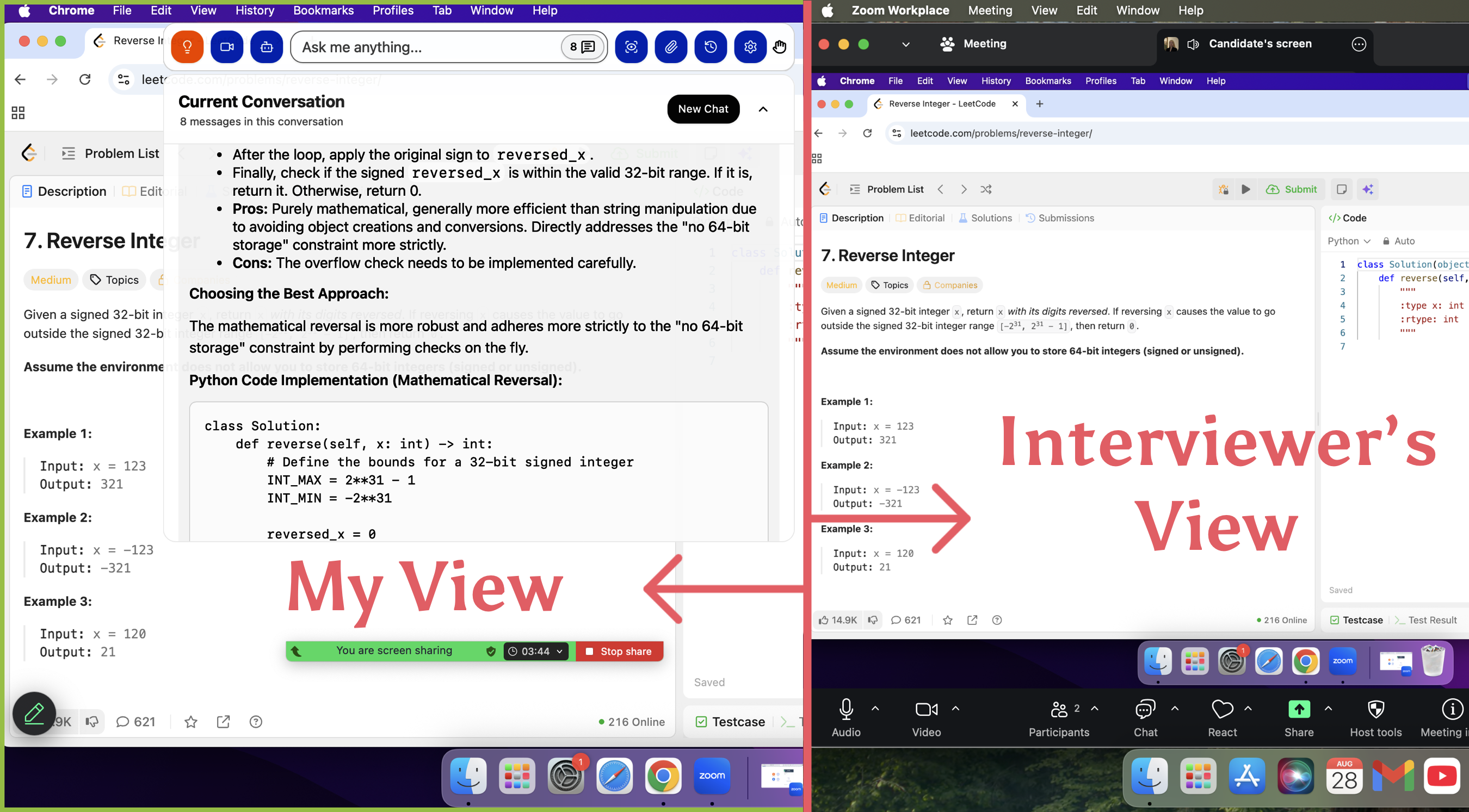
The fourth problem left a particularly strong impression on me. To be honest, I hadn't previously considered the time and space complexity of matrix A @ matrix B. Fortunately, with the help of Linkjob, I was able to resolve it promptly.
System Design
OpenAI's interview style is particularly evident in the area of system design. The same question was revisited during the VO phase. Below are the specific questions:
Requirements for designing a user profile system:
Store basic user information (ID, email, registration time);
Track multi-device logins (device ID, login time, IP);
Flexibly expand user preferences (e.g., default model, API call quotas).
I designed 3 tables:
users (user_id, email, created_at) — *E user_id;
user_sessions (session_id, user_id, device,
login_time, ip) — indexed by user_id;
user_settings (setting_id, user_id, key, value) — key ‡= “default_model”,
Value stores
“gpt-4”
’, facilitating new configuration additions.
The interviewer later noted the table structure was sound but suggested adding a user_api_usage table to track call volumes, which is essential for our actual operations.
Follow up 1: “User base has grown to 100 million. Queries for recently logged-in devices are slowing down. How can we optimize this?”
Answer: “Partition the user_sessions table by time, e.g., quarterly. When querying only the last 3 months' data, avoid scanning the entire table. Add a composite index on (user_id, login_time) to improve lookup speed by 10x.” He nodded: “That's exactly what we're doing now. We also implemented hot/cold data separation, storing old data in an archive database.”
Follow up 2: "We need to support ‘batch migration of user preferences’
(e.g., transferring from old accounts to new accounts). How should the SQL be written?"
57 $ INSERT INTO user_settings (user_id, key, value) SELECT # ID, key, value FROM
user_settings WHERE user_id=|BID, and we added transactions to ensure atomicity, preventing partial success or failure.
One thing that makes OpenAI interviews particularly stressful is that the code must run successfully. Fortunately, I had Linkjob to assist me, providing real-time help to resolve any unfinished parts.
Behavioral and Culture Fit
The behavioral and culture fit interviews focused on my motivation, values, and how I work with others. Here’s a exact questions I faced:
1. Describe your experience with reinforcement learning.
2.How do you measure the success of an Al project?
3. What role do statistical methods play in your AI projects?
They also asked about communication, AI safety, and ethics. I realized that OpenAI cares deeply about how candidates align with their mission and values.
My Approach to Each Question
I learned that a structured approach works best for both technical and behavioral questions. Here’s how I tackled each type:
Clarify the problem: I always started by asking clarifying questions to make sure I understood the requirements.
Outline a high-level plan: For system design, I described the main components and how they interact.
Drill down: I discussed each part in detail, focusing on scalability, reliability, and security.
Explain my reasoning: I talked through my thought process, mentioning trade-offs and why I chose certain solutions.
Use real examples: I shared stories from past projects to show hands-on experience.
Stay calm and adapt: When I got stuck, I explained my thinking and adjusted my approach based on feedback.
Note: The interviewers appreciated when I narrated my reasoning step by step. They wanted to see depth of understanding, not just the final answer.
If you’re preparing for an openai loop interview, I recommend practicing structured communication. Always clarify constraints, frame trade-offs, and walk through your reasoning. This approach helped me stay organized and confident, even when the questions got tough.
Other OpenAI Loop Candidates’ Experiences
Common Questions Shared
I wanted to know if other candidates faced similar questions in their openai loop interview. I joined forums and read posts from people who went through the process. Many shared questions that matched mine. Here are some examples I saw often:
Design a scalable notification system.
Implement a rate limiter for a web service.
Build a cache with expiration logic.
Discuss trade-offs in distributed systems.
Most candidates said the interviewers focused on practical engineering tasks. They rarely saw classic algorithm puzzles. Instead, the questions tested how you would solve real-world problems.
Note: If you practice system design and coding for production scenarios, you’ll feel more confident during the interview.
Comparing My Experience
My experience matched the patterns I saw. The openai loop interview focused on practical engineering skills and real-world problem-solving. I spent more time discussing system design and communication than solving algorithmic challenges. The coding rounds did not use LeetCode-style questions, which surprised me. I felt the interviewers wanted to see how I think and explain my ideas.
If you want to prepare, talk to others who went through the process. Compare notes and look for common themes. This helps you target your practice and avoid surprises.
OpenAI Loop Interview Preparation Tips
Study Resources
I started my prep by picking the right resources. I used a mix of books, online courses, and hands-on projects. Here are my top picks:
Books: "Designing Data-Intensive Applications" helped me understand system design. "Cracking the Coding Interview" gave me a good coding foundation.
Online Platforms: I practiced coding on LeetCode and HackerRank, but I focused more on real-world problems than puzzles.
OpenAI Blog and Papers: I read recent posts and research from OpenAI. This helped me stay current with machine learning trends and ethical debates.
Project Work: I built small projects that mirrored interview scenarios, like rate limiters and caching systems.
Tip: Don’t just read—build and experiment. Real projects stick in your mind.
Practice Methods
I found that structured practice made a big difference. Here’s what worked for me:
I set up mock interviews with friends and mentors.
I practiced explaining my solutions out loud, step by step.
I wrote code that was clean, readable, and well-tested.
I reviewed my past projects and prepared to discuss the problem, my approach, and the impact.
I got comfortable talking about trade-offs and what I learned from failures.
I kept up with recent machine learning research and ethical issues.
When I practiced for the openai loop interview, I focused on real engineering tasks and clear communication.
Mindset and Stress Management
Staying calm helped me think clearly during tough moments. Here’s how I managed stress:
I took a breath and asked for a moment when I needed to think.
I talked through my thought process, even if I felt unsure.
I asked for clarification if a question seemed vague.
I stayed honest about my weaknesses and showed how I learned from them.
Remember, interviewers want to see how you handle challenges, not just perfect answers. Stay curious and keep learning.
Pitfalls and Lessons Learned
Mistakes to Avoid
I made plenty of mistakes during my OpenAI loop interview prep. Some of them surprised me. If you want to avoid common traps, here’s what I learned:
I spent too much time grinding LeetCode problems. I neglected system design and teamwork skills. OpenAI cares more about how you build and communicate than how fast you solve puzzles.
I sometimes forgot to explain my thinking while coding. This made it harder for interviewers to follow my logic. Clear communication matters as much as correct code.
I didn’t brush up enough on AI and machine learning basics. OpenAI expects you to know foundational concepts, even if you’re not applying for a research role.
I underestimated behavioral rounds. I thought technical skills would carry me, but culture fit and motivation play a big role.
Tip: Balance your prep. Practice coding, system design, and behavioral questions. Don’t skip AI/ML basics.
Key Takeaways
After the interview, I reflected on what helped me stand out. Here are the lessons I wish I’d known earlier:
Comfort with systems-level ML design sets you apart. Interviewers want to see how you approach building and scaling machine learning systems.
Study LLM evaluation methods and embedding models. These topics come up often and show you understand modern AI.
Drill ML system design and practice structured communication. Explain your ideas step by step. Use real examples from your projects.
Foundational math and classical machine learning knowledge matter. Brush up on linear algebra, probability, and deep learning basics.
Specialize in one area, like NLP or computer vision. Depth in a field makes your answers stronger.
Practice soft skills. Simulate interviews with friends. Get comfortable talking about trade-offs and failures.
If you focus on both technical and communication skills, you’ll feel more confident and prepared. OpenAI values candidates who can build, explain, and adapt.
After the OpenAI Loop Interview
What I’d Do Differently
Looking back, I see a few things I would change if I could redo my OpenAI loop interview. I want to help you avoid my mistakes, so here’s my how-to list:
Focus on System Design Early
I spent too much time on coding puzzles. Next time, I would start with system design practice. I would sketch architectures and talk through trade-offs with friends.Prepare Stories for Behavioral Rounds
I didn’t have enough examples ready for teamwork and leadership questions. I would write down stories from past projects and rehearse them out loud.Review AI Ethics and Mission Alignment
I underestimated how much OpenAI cares about ethics. I would read their blog and papers, then think about my own views on AI safety.Simulate the Interview Day
I would set up a mock interview marathon. I would practice back-to-back rounds to build stamina and get comfortable with the format.
Tip: Make a checklist before your interview. Review it the night before. This helps you stay calm and organized.
Final Reflections
The OpenAI loop interview pushed me to grow. I learned that preparation goes beyond coding. You need to show how you solve real problems and how you fit the team.
Here’s a quick table of my main takeaways:
What Worked | What I’d Improve |
|---|---|
Structured answers | More system design practice |
Clear communication | Deeper AI ethics prep |
Real project examples | Better behavioral stories |
If you want to succeed, focus on both technical and soft skills. Practice explaining your ideas. Stay curious and open-minded. The interview is tough, but you can learn a lot from the process. I hope my experience helps you prepare smarter and feel more confident.
I learned so much from my openai loop interview. The most important lessons came from focusing on clear communication, real-world problem solving, and honest self-reflection. Here’s a quick table of actionable advice:
What to Do | How to Prepare | Extra Tips |
|---|---|---|
State problems clearly | Practice coding and system design | Review real-world systems |
Explain your thinking | Read recent AI papers | Handle edge cases |
Use these strategies to shape your own prep. Stay true to yourself, learn from every step, and keep pushing forward. You’ve got this!
FAQ
How did I schedule my OpenAI loop interview?
I worked with my recruiter to pick a date. I asked for a day when I felt rested. I made sure to block off the whole day for the interviews.
What should I do if I get stuck on a question?
I pause, breathe, and talk through my thoughts. I ask clarifying questions. I show my reasoning, even if I do not know the answer right away.
How can I prepare for behavioral questions?
I write down stories from past projects.
I practice telling them out loud.
I focus on teamwork, leadership, and learning moments.
What tools did I use during the virtual interview?
Tool | Purpose |
|---|---|
Zoom/Meet | Video calls |
CoderPad | Coding assesment |
Google Docs | System design diagrams |
Can I ask for breaks during the interview?
Yes, I asked for short breaks between rounds. The interviewers understood. I used that time to stretch, drink water, and reset my mind.
See Also
The 2026 OpenAI Coding Interview Question Bank I've Collected
How I Navigated the 2026 OpenAI Interview Process: A Guide
How I Passed the 2026 OpenAI HackerRank Test: Real Questions
© Copyright 2025 Linkjob.ai - All Rights Reserved.