My Complete Guide to Answering Paid Media Manager Questions

Paid media manager interviews are tough, we all know that. They're not just about your resume, they're about proving you can deliver real results. I'm here now to tell you exactly how I passed my interviews in 2025. I figured out a bunch of proven strategies, pulled together some real-world examples, and made sure all my stories were backed up with data. This approach gave me the confidence to walk into my interviews and give answers that were all about the results I could deliver. I want to share exactly how I did it, so you can turn your toughest interview questions into easy wins, too.
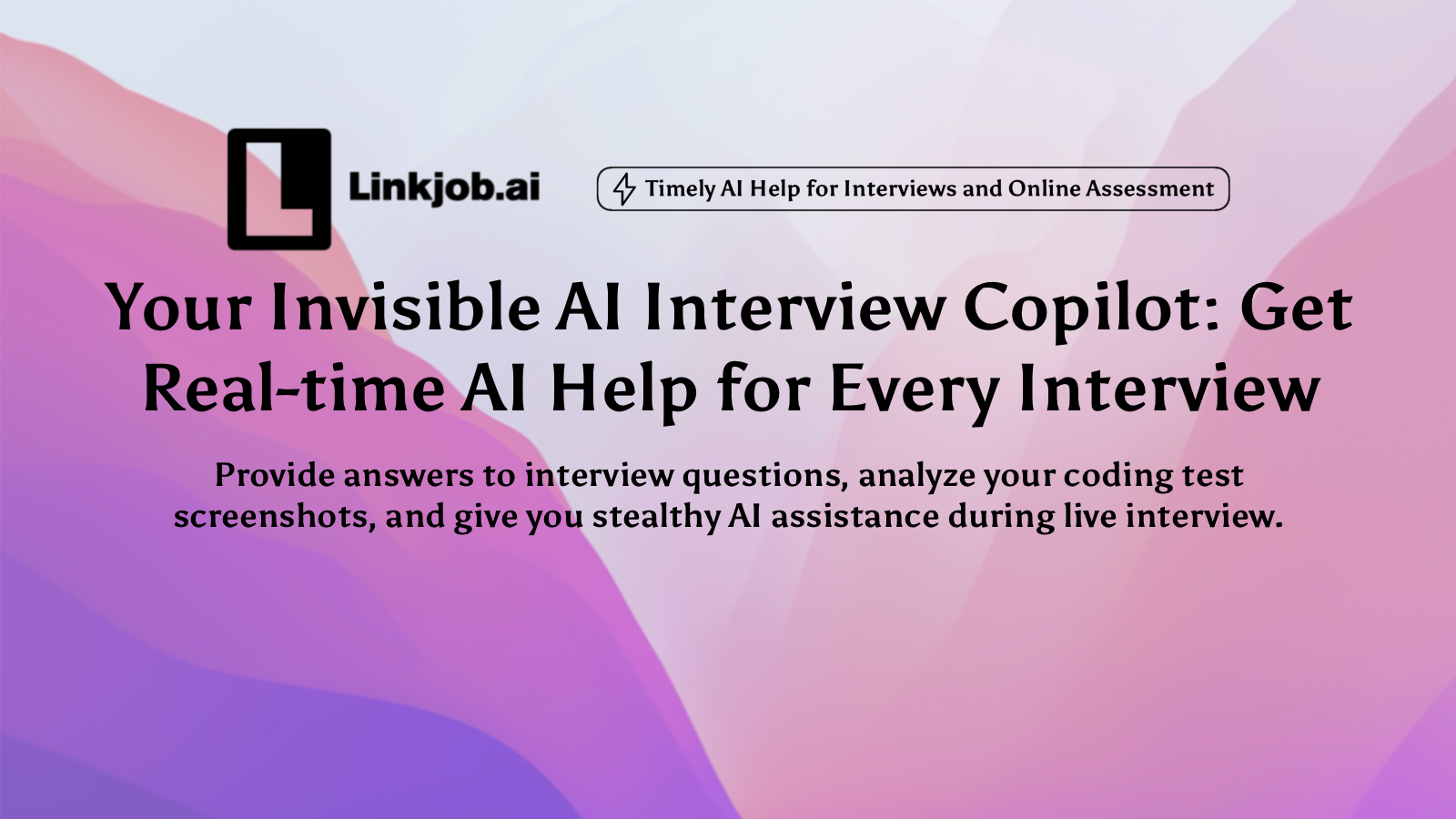
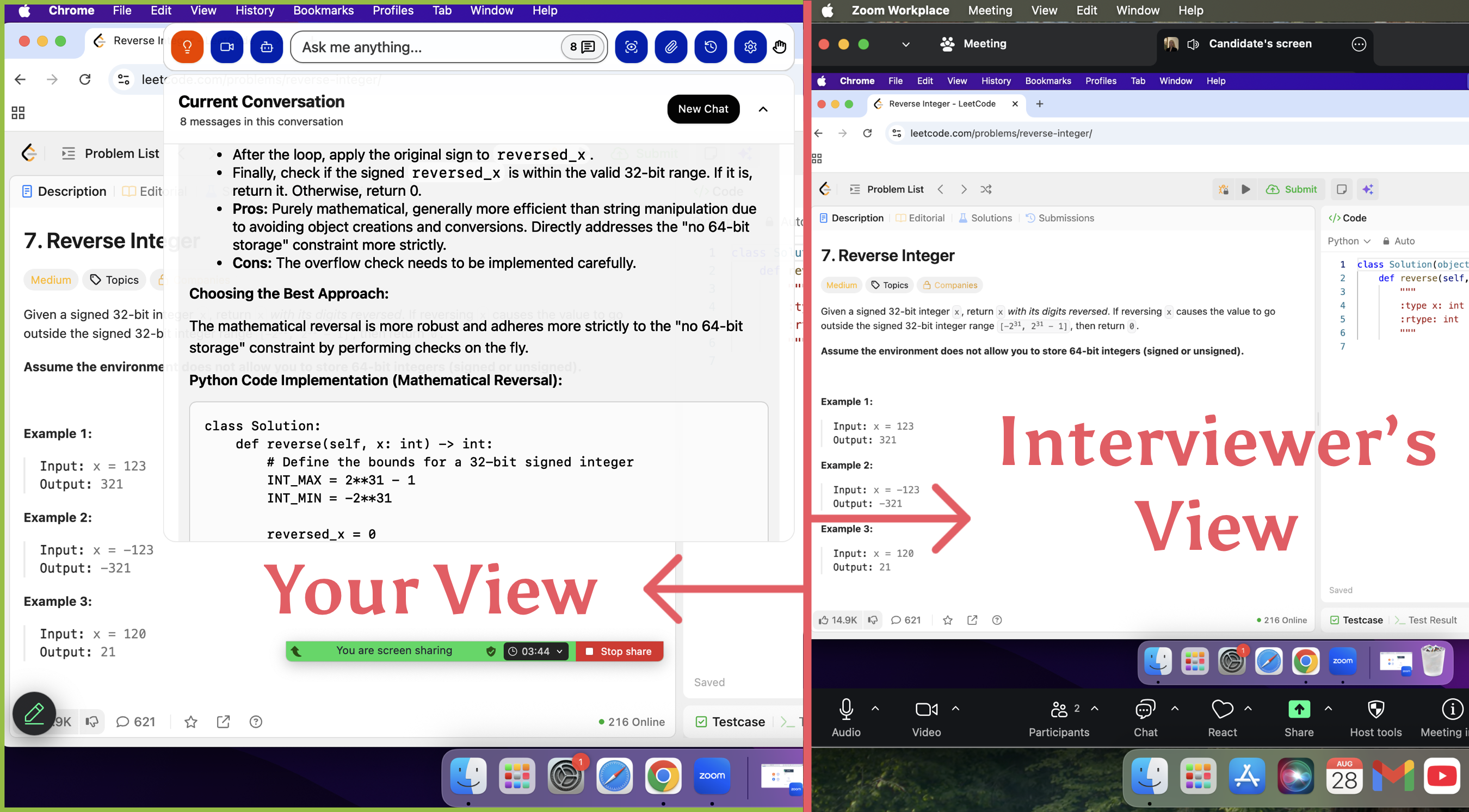
I have to say, Linkjob.ai is really incredibly useful for live interview AI help. During the interview process, it's completely invisible—even if the interviewer requires screen sharing, the other party can't see at all that I'm using AI.
Next, I'll walk you through my real-life interview experiences and the specific questions I was asked. I'll then show you how to demonstrate your skills when answering these questions. For each type of question, I'll provide actual interview questions and guide you through how to respond.
My Real Paid Media Manager Interview Experiences
Paid Media Manager Interview Process
Since the interview process for a paid media marketing manager is usually quite long, lasting around three months, I applied for the position at several different companies simultaneously. The companies I interviewed with were quite diverse: a dedicated digital marketing agency, growth marketing teams at tech startups, and a digital transformation department at a traditional corporation. Overall, their processes typically included multiple rounds, from an initial screening to a final presentation, with each stage having its own specific focus areas.
I felt that different types of companies had different requirements for this role. However, while paid media interviews are broad compared to traditional marketing roles, their core requirements are a blend of technical skills and strategic thinking.
The technical skills include proficiency in platforms like Google Ads, Facebook Ads, Amazon DSP, and The Trade Desk, among others. Strategic thinking, on the other hand, can be broken down into analytical capabilities, creative problem-solving skills, and business acumen, etc.
Paid Media Manager Real Interview Questions
Here are a few real interview questions I've faced, so you can get a feel for what you might encounter.
Imagine you're designing a Q4 holiday campaign for a D2C skincare brand. The budget is $200K, and the goal is to increase revenue by 40%. How would you approach this?
How would you design a targeting strategy for an enterprise solution at a B2B SaaS company?
How do you effectively collaborate with a creative team to improve ad performance?
How would you design an effective retargeting strategy for an e-commerce brand?
While I was preparing, I used Linkjob's AI mock interviews and encountered a wide range of questions with varying difficulty. I found them to be very helpful, as many of the questions were quite similar to the ones I faced in my actual interviews.
Paid Media Manager Interview Challenges and Solutions
The biggest challenge I faced in interviews was dealing with the open-ended questions that paid media interviewers love to ask. It was a lot of pressure because I was already so nervous, and then I had to come up with a rough plan on the spot, in a short amount of time.
For example, I remember one interviewer asked me for a specific example of how I'd optimize ROI, but they didn't give me any detailed context or information beforehand. I felt so overwhelmed at first, but I forced myself to calm down. I broke down the core of the question, asked for some key data to help me assess the situation, and then answered the question step by step.
To handle challenges like these, I believe it's more reliable to be fully prepared beforehand. I used to have friends run mock interviews with me. Even though they weren't experts in the field, I would give them what I thought were the most important questions to prepare for and they'd play the role of the interviewer. That way, even if they couldn't give me in-depth feedback on my answers, I could still practice my communication skills and my ability to handle pressure.
However, if you want a better mock interview experience, I think the increasingly popular AI mock interviews are a great choice. They can ask professional follow-up questions based on your resume and the job description, which helps you identify your weaknesses and prepare in a more targeted way.
Of course, besides these, I have a few other small tips to share with you:
Prepare concrete stories that show adaptability and quick decision-making.
Stay updated on industry trends and tools.
Take care of yourself before the interview: rest, eat well, and arrive early.
How to Show Key Skills When Answering Paid Media Manager Interview Questions
After all that, it's time to go over the core skills needed for this role.
Technical Foundation
When preparing for a paid media manager interview, technical skills are the absolute foundation. I've found that many people underestimate the technical complexity of this role, thinking that just knowing how to set up ads is enough. In fact, modern paid media marketing requires a deep understanding of the entire digital advertising ecosystem.
Platform Mastery Questions
A deep mastery of the Google Ads Ecosystem
Google Ads isn't just search ads. The entire ecosystem includes multiple campaign types like Search, Display, Shopping, YouTube, Discovery, and Performance Max.
During my preparation, I found that interviewers love to ask about the optimization strategies and use cases for these different campaign types.
For example, Performance Max campaigns are Google's newest automated campaign type, using machine learning to optimize across all Google properties. I was often asked in interviews, "When would you choose Performance Max over traditional Search campaigns?"
The framework for my answer was: PMax is suitable for scenarios where you have sufficient conversion data for machine learning optimization, you want to expand reach beyond search, you have diverse creative assets that can be used for different placements, and you hope to simplify campaign management. However, if you need granular control over keywords, audiences, or bidding strategies, traditional campaigns might be a better fit.
A deep understanding of Facebook/Meta Advertising
Meta's advertising platform has gone through a lot of changes, especially with the impact of the iOS update on attribution and targeting. Because of this, I'm often asked in interviews how I would adapt strategies to handle these challenges.
For example, when an interviewer asks, "How do you handle attribution challenges post-iOS update?", I explain that my approach includes a few key steps. First, I'd implement the Facebook's Conversions API to improve data accuracy. Then, I'd adjust attribution windows, like shifting from a 7-day click to a 1-day click and 1-day view. I'd also focus on incrementality testing to measure a campaign's true impact. Finally, I'd build first-party data collection strategies, like email capture campaigns and customer surveys, to supplement the data loss from third-party tracking limitations.
Programmatic Advertising Understanding
Many paid media roles now involve programmatic buying, so an understanding of DSPs (Demand-Side Platforms), SSPs (Supply-Side Platforms), and the Real-Time Bidding (RTB) process is crucial. I spent a lot of time learning about the programmatic ecosystem, including header bidding, private marketplaces (PMPs), and audience data management. If I'm asked in an interview to "Explain the programmatic buying process from ad request to ad serving", my answer would outline how the process unfolds: a user first visits a website, and the publisher's ad server sends a bid request to an SSP. The SSP then conducts an auction among multiple DSPs, which evaluate user data and campaign targeting to place a bid. The winning DSP serves the ad, and finally, impression tracking and attribution occur. The entire process typically happens in under 100 milliseconds.
Analytics and Multi-Touch Attribution Models Questions
Modern paid media marketing requires a sophisticated understanding of attribution. I prepared the pros and cons for various attribution models:
First-touch attribution credits the first interaction, which is great for evaluating awareness campaigns.
Last-touch attribution credits the final interaction, which is best for conversion-focused campaigns.
Linear attribution distributes credit evenly, which is good for long sales cycles.
Time-decay attribution gives more credit to recent interactions, which is ideal for campaigns where the recency effect is a factor.
Interviews often include scenario questions like, "A customer sees your display ad, clicks on a search ad, then converts through email marketing. How would different attribution models credit this conversion?" When asked this, I would explain in detail how each model distributes credit and in what business context each one is most appropriate.
Customer Lifetime Value (CLV) and Cohort Analysis Questions
Advanced paid media marketing requires thinking beyond immediate ROAS (Return on Ad Spend). To show this, I prepared CLV (Customer Lifetime Value) calculation methods and cohort analysis techniques.
CLV can be calculated using a historical approach (average revenue per customer x average customer lifespan) or a predictive approach (using machine learning models based on customer behavior data). Cohort analysis helps you understand how customer value evolves over time, which is especially important for subscription businesses or repeat-purchase products.
When asked in interviews, "How do you optimize campaigns for long-term customer value rather than just immediate conversions?", my answer would include:
Adjusting bidding strategies to account for CLV differences across customer segments.
Using lookalike audiences based on high-CLV customers.
Implementing sequential messaging strategies to nurture customers through their lifecycle.
Regularly analyzing cohort performance to identify optimization opportunities.
Advanced Analytics Tools Proficiency Questions
Beyond platform native analytics, I also dove deep into Google Analytics 4 (GA4), Adobe Analytics, and various third-party attribution tools. GA4's event-based tracking model and enhanced measurement capabilities are particularly hot topics in interviews.
I prepared GA4 setup best practices, including custom events configuration, conversion tracking setup, and audience building strategies. Interviews often have technical questions like, "How do you set up cross-domain tracking in GA4?" or "Explain the difference between GA4 and Universal Analytics data models."
Top Paid Media Manager Interview Questions
I've already gone over the core skills that are consistently emphasized in interviews. Now, let's dive into some different types of questions you might face.
Technical and Platform Questions
Which advertising platforms have you managed campaigns on?
How do you structure a Google Ads campaign for maximum performance?
Can you explain the difference between keyword match types?
What’s your approach to A/B testing and audience targeting?
How do you use Facebook Business Manager for paid social campaigns?
Which social platforms—like Instagram, LinkedIn, TikTok, or YouTube—have you found most effective for different audiences?
Strategy and Budgeting
How do you decide budget allocation across different paid channels?
What steps do you take when a campaign underperforms?
How do you optimize campaigns for ROI, especially with a limited budget?
Can you walk me through a time you had to pivot your strategy due to platform changes or new data?
How would you choose one platform and ad format if your budget was cut in half?
Behavioral and Adaptability
Describe a time you had to adapt to unexpected changes in a project.
Tell me about a situation where you had to learn a new skill quickly.
Can you share an example of managing conflicting priorities?
How did you handle a campaign when you had limited data or ambiguous results?
Describe a time you failed and what you learned from it.
Preparation Framework and Practice
Now that I've explained the specific challenges you'll face in interviews, I want to give you some general preparation tips to help you go from a solid candidate to a truly outstanding one.
Step-by-Step Interview Prep
Research the Company and Role
I always began by digging into the company’s recent campaigns, values, and paid media strategy. I checked their social channels and read news articles. This helped me tailor my answers and show genuine interest.Review Common Interview Questions
I made a list of the most frequent paid media manager interview questions. I focused on technical, strategic, and behavioral topics.Update My Resume and Portfolio
I highlighted my best campaigns, results, and skills. I made sure my resume matched the job description. I prepared a digital portfolio with screenshots and performance metrics.Practice the STAR Method
I used the STAR method (Situation, Task, Action, Result) to structure my stories. This kept my answers clear and focused.Prepare Questions for Interviewers
I wrote down smart questions to ask at the end. This showed I cared about the role and wanted to learn more.Mock Interviews and Feedback
I used AI-powered tools and practiced with friends.
Showcasing Skills and Results

Data-Driven Stories
When I walk into an interview, I know my stories need to stand out. I always use the STAR method to organize my answers. Here’s how I make my stories pop:
I start by thinking about the job. What skills does the company want? I look for examples from my past that match those needs.
I pick stories that show off my strengths, like problem-solving or teamwork.
I focus most on the Action part. I explain exactly what I did, which tools I used, and how I made decisions.
I always include numbers. For example, I might say, “I improved click-through rates by 25% in three months by testing new ad copy.”
I finish with what I learned or how I grew from the experience.
I keep a running list of my achievements with numbers attached. This helps me remember details and keeps my answers sharp. When I talk about results, I make sure to give context, like “This was the highest ROI our team had seen all year.”
Leadership and Collaboration
I share stories where I brought teams together or solved problems as a group. Here are some ways I highlight these skills:
I talk about working with product and design teams to improve landing pages. We ran tests, shared results, and made changes together.
I mention managing agencies or freelancers. I explain how I set clear goals, checked in weekly, and measured performance.
I describe times when goals changed suddenly. I show how I adapted, kept everyone focused, and still hit our targets.
I give examples of forecasting budgets and sharing updates with leadership. I use clear communication and regular reports to keep everyone aligned.
FAQ
How can I stand out when talking about campaign results?
I always use real numbers and clear examples. For instance, I might say, “I increased conversions by 20% in two months.” Sharing specific data makes my impact easy to understand.
Should I ask questions at the end of the interview?
Absolutely! I always prepare two or three thoughtful questions. I might ask about team culture or upcoming projects. This shows I care about the role and want to learn more.
What if I get a question about a platform I haven’t used?
I stay honest. I mention similar tools I’ve used and explain how I learn new platforms quickly. I might say, “I haven’t used TikTok Ads yet, but I picked up Facebook Ads fast by following tutorials and experimenting.”
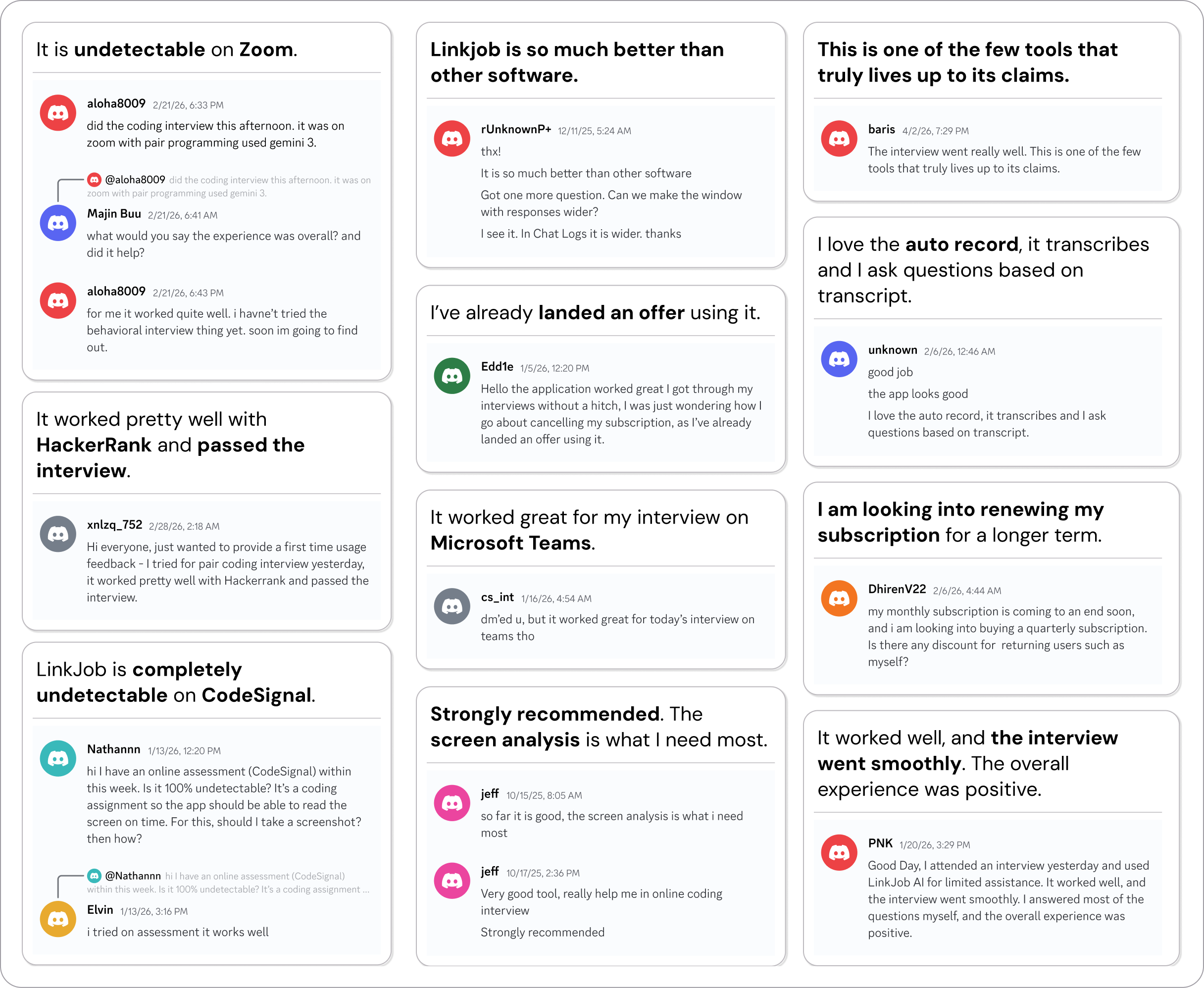
Why People Choose Linkjob AI
Smoother interviews, coding challenges cleared, and job offers landed. See how users describe their experience with Linkjob AI—in their own words.

© Copyright 2026 Linkjob AI - All Rights Reserved.