Pfizer 2026 HireVue Interview Questions I Got (Plus My Full Interview Experience)

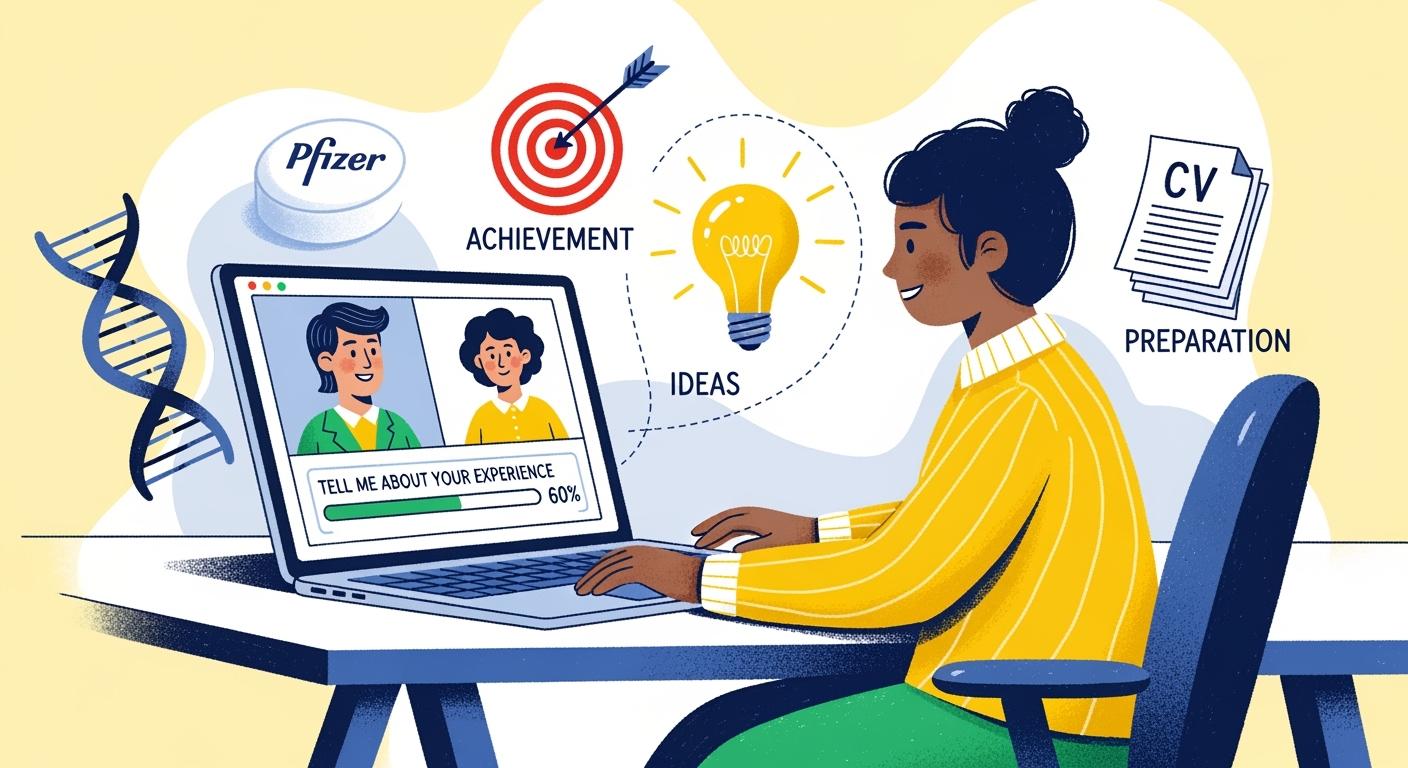
Honestly, when I first started preparing for the Pfizer HireVue Interview Questions, I did find some information online, but most of it felt pretty fragmented. There were scattered examples of questions and a few short posts, but not many detailed, first-hand experiences explaining what the HireVue stage was actually like. Facing that uncertainty made me feel a little anxious going into the process.
I recently went through the 2026 Pfizer Commercial Trainee Program interview process, and the HireVue round was definitely the most unfamiliar part. Since it’s recorded rather than live, you only get a short prep window. During my preparation, I used an AI interview copilot that can provide real-time suggested answers and talking points based on the questions. Having that kind of support helped me organize my thoughts quickly under time pressure—and that’s also why I accepted the invitation to come here and share my experience.
In this post, I’ll walk through my full experience — from the Pfizer HireVue questions to later rounds like the case presentation and panel interview — hoping it gives anyone preparing for a pharma interview a bit more confidence.
Pfizer Interview Hiring Process
Here’s roughly how my process unfolded:
Resume Screening: 1–3 weeks after submission
HireVue Digital Interview
Onsite Interview
Offer Decision
Program Start Date
Tip: It’s a multi-step process, so patience and staying organized are key. Check your email regularly and don’t hesitate to send a polite follow-up if you haven’t heard back after two weeks.
Before Pfizer Hirevue Interview: Resume Screening
After submitting my application, I waited for the initial review. Pfizer uses an applicant tracking system (ATS) alongside recruiter screening. They check for keywords, relevant experience, and GPA. Only a small percentage of candidates move forward, so make sure your resume clearly highlights your skills and accomplishments.
The Practice Guide to Pfizer HireVue Interview Questions
This stage was honestly the most unfamiliar one for me. Unlike a normal interview, HireVue is not a conversation with a person. Instead, you record answers to questions while looking at your camera.
What Is a HireVue Interview?
HireVue is an AI-driven asynchronous interview platform widely used in the early screening stages of many large companies, including:
investment banks
consulting firms
major tech companies
global pharmaceutical companies like Pfizer
For example, if you're preparing for a JP Morgan Hirevue Interview, you'll likely encounter this format during the early application stages.
Simply put, instead of speaking with a live interviewer, you record your answers to a set of questions on camera. Your responses are then reviewed and evaluated using a combination of human recruiters and AI-assisted signals such as:
communication clarity
structured answers
keyword relevance
behavioral indicators
Because of this format, many candidates feel uncomfortable the first time they try it.
Pfizer HireVue Interview Format
My HireVue interview had two parts.
Video Section
5 questions
1 minute preparation time
3 minutes to answer
only one attempt per question
Written Section
1 written prompt
50 minutes
around 500 words
The video portion focuses mainly on behavioral questions.
Pfizer HireVue Interview Questions I Got
Here are the questions I remember most clearly.
Introduce yourself and explain why you're interested in Pfizer.
Tell us about a project you participated in during university. What was your role and how did you collaborate with others?
Describe a situation where you disagreed with teammates during a project.
How did you handle the disagreement?Tell us about a time when you proposed a new idea or approach to solve a problem. What was the result?
Most Pfizer HireVue Interview Questions are behavioral, and many are designed to reflect Pfizer's values, including:
Courage
Excellence
Equity
Joy
Speaking up
Focus on what matters
Preparing real stories from your experience is extremely helpful.
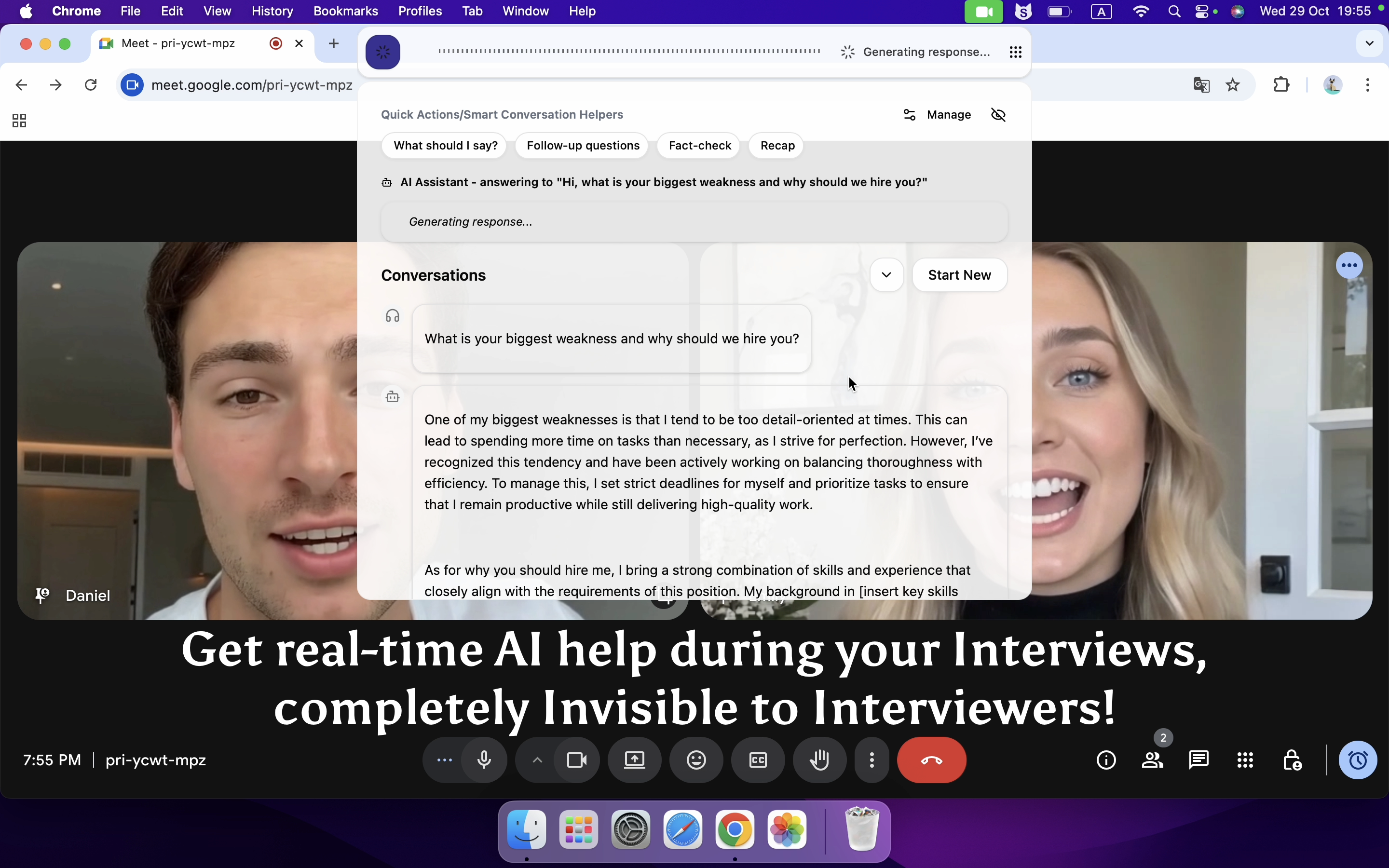
Linkjob AI worked great and I got through my interview without a hitch. It’s also undetectable, I used it and didn't trigger any Hirevue detection.
How I Prepared for the Pfizer HireVue Interview
Preparing for a recorded interview is very different from preparing for a normal interview. Reading sample answers is not enough — you actually need to practice speaking on camera. I practiced by recording mock interviews and reviewing my responses afterward. Watching the recordings helped me improve:
pacing
filler words
eye contact
answer structure
Understanding How HireVue Evaluates Candidates
Another interesting thing I learned while preparing is that HireVue often uses AI-assisted evaluation models. The backend algorithm may analyze things like:
keyword relevance
structured storytelling
clarity of answers
communication style
Because of that, structured answers (like using the STAR method) can make a big difference.
Using AI Tools to Practice HireVue Interviews
One thing that made a noticeable difference in my preparation was experimenting with AI interview tools.
If you’ve never done a HireVue interview before, the format can feel a bit strange. You’re not speaking to a real interviewer — instead, you’re recording answers alone in front of a camera, with only a short preparation window before the timer starts. That pressure makes it surprisingly easy to lose your train of thought, even if you understand the question.
While preparing for the interview, I came across a few posts from people who mentioned using AI interview assistants for HireVue interviews. Out of curiosity, I decided to try one myself — a real-time AI interview copilot designed for online interviews.
During the actual HireVue interview, I kept the AI interview copilot open in the background. As each question appeared, it could quickly generate a few suggested talking points and a simple structure for the response. That small bit of guidance was surprisingly helpful, especially since HireVue usually only gives you a short window to prepare before the recording starts.
Using the STAR Method for HireVue Answers
For behavioral questions like Pfizer's, the STAR method works extremely well.
STAR stands for:
Situation – what was the context
Task – what needed to be done
Action – what you did
Result – what happened afterward
Example structure:
Situation: Our team had conflicting ideas about how to approach a project.
Task: I needed to help the group reach alignment.
Action: I organized a discussion where everyone could explain their reasoning.
Result: We combined the strongest parts of both ideas and completed the project successfully.
Structured answers like this help both AI screening systems and human interviewers understand your thinking clearly.
After Pfizer Hirevue Interview:Onsite Rounds Interview Experience: Onsite Round Interview Experience
The onsite round had four three parts: a short slide presentation, a group case discussion, and a panel interview.
Slide Assignment
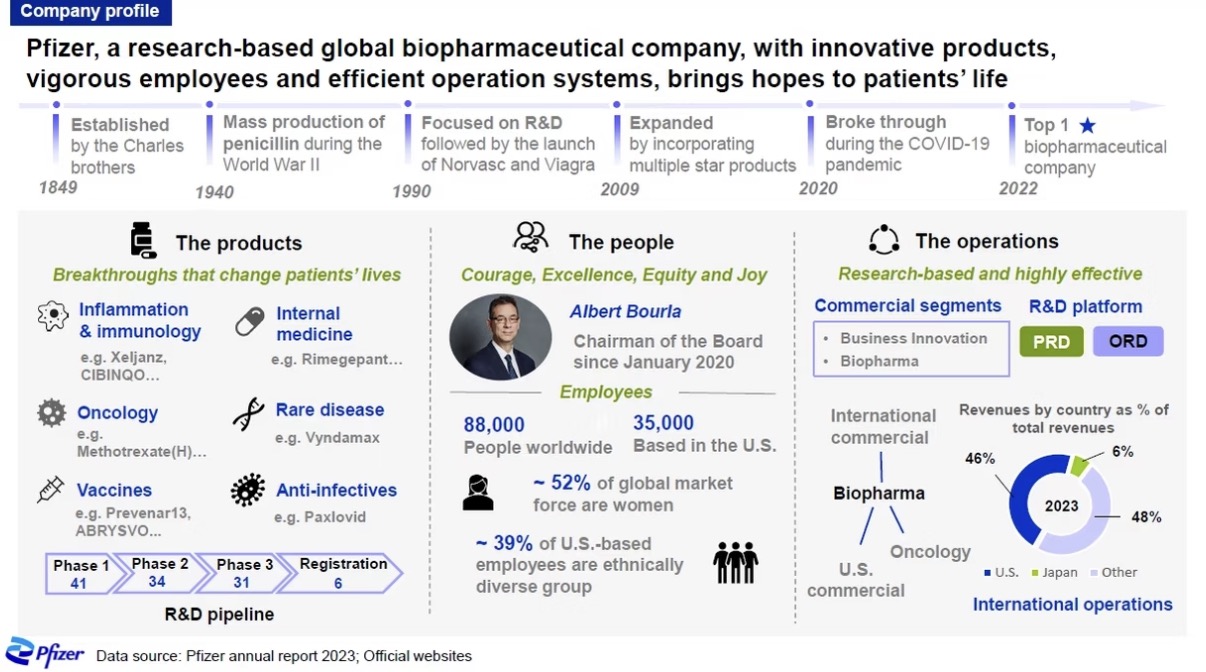
After the HireVue interview, I was asked to complete a slide assignment. The assignment was essentially a high-level analysis of Pfizer, and the slides needed to cover a few key areas:
Company overview — basic macro information such as the company background, major business segments, and overall positioning.
Financial overview — a simple analysis of Pfizer’s financial performance based on public information, including metrics like market capitalization, revenue performance, and overall business trends.
Future opportunities and challenges — based on the information gathered, we were asked to identify three major opportunities or challenges Pfizer may face in the future, and propose possible strategies or actions the company could take in response.
Here are the slides I submitted for my Pfizer interview.
5-Minute Slide Presentation
The onsite interview started with a 5-minute presentation based on slides we had prepared in advance. Everyone presented individually.
The presentation itself wasn’t overly complicated, but the time limit meant you had to be very clear and structured in how you explained your ideas. The interviewers seemed to care more about how you communicated your thinking rather than how complex the slides were.
Group Case Discussion
After the presentations, we moved into the group case discussion.
Interestingly, the case wasn’t directly related to the pharmaceutical industry. It focused more on a business scenario that required basic market sizing and structured thinking.
As a group, our task was to identify the company’s biggest challenge, and then come up with:
Three key priorities.
Specific actions to address those priorities
The discussion itself felt similar to a typical group case you might see in consulting-style interviews. The interviewers were clearly observing how everyone approached the problem, contributed ideas, and interacted with the rest of the group.
Panel Interview (Multi-to-One)
The final part was a panel interview with the same interviewers who had been observing the group case. Each candidate was interviewed individually.
Most of the questions were directly related to what had just happened during the discussion, so it was clear they had been paying attention to everyone’s participation.
Some of the questions I was asked included:
What role do you think you played in the group discussion? What could you improve?
Who do you think performed best and who struggled the most in the discussion?
In team settings, are you usually more of a leader or more of a contributor?
You didn’t speak very much during the discussion. If you had another chance, what would you do differently?
Tip: One thing I’d definitely recommend is taking notes during the group discussion. Some of the panel questions refer back to specific moments, and having notes makes it much easier to answer thoughtfully.
Key Takeaways from My Pfizer Interview Experience
It’s not just about memorizing answers. It’s about knowing yourself, understanding the company, and showing how you can contribute — all while staying calm and genuine. Preparing thoroughly, but keeping a positive mindset, made the whole experience manageable and even enjoyable.
Here are some practical steps that helped me throughout the process:
Craft a standout resume – Highlight your relevant skills and experience clearly so both AI systems and human recruiters notice your strengths.
Understand the company culture – Research Pfizer’s values, teamwork style, and innovation focus. Knowing this helps you see if the company is a good fit for you.
Study products and industry trends – Familiarize yourself with Pfizer’s pipeline, blockbuster products, and competitors. This gives you conversation topics and shows your industry awareness.
Talk to current employees – If possible, reach out on LinkedIn to understand daily work life and culture.
Practice, practice, practice – Record yourself answering timed questions to get comfortable with the format. For realistic HireVue practice, AI-based tools can simulate timed interviews and even suggest answers to help you refine your responses.
Stay positive and authentic – Remember, interviews are a two-way street. Your mindset can make a real difference in performance.
FAQ
How can I stand out in the Pfizer HireVue interview?
I always try to share specific stories from my experience. I use the STAR method to organize my answers. I make sure my examples match Pfizer’s values. I also speak clearly and look at the camera.
What should I do if I make a mistake during the video interview?
If I mess up, I stay calm and keep going. I focus on finishing my answer. I remind myself that everyone makes mistakes. I try to show how I handle pressure and recover.
How soon will I hear back after the final round?
I usually get an update within one to three weeks. I check my email and the application portal often. If I do not hear anything after two weeks, I send a polite follow-up email.
Can I retake the HireVue interview if I am unhappy with my answers?
No, Pfizer only allows one attempt per question. I take a deep breath before each response. I use the 30 seconds of prep time to plan my answer.
What should I wear for the video interview?
I wear business casual clothes. I choose something neat and simple. Even though I am at home, dressing up helps me feel confident and professional.
See Also
Insights From My 2026 Cohere Interview Experience And Questions
A Look Into My 2026 Palantir Interview Journey And Queries
Navigating The 2026 OpenAI Interview Process: My Experience
Exploring My Prompt Engineering Interview Journey And Key Questions
© Copyright 2025 Linkjob.ai - All Rights Reserved.