My Stripe Coding Interview in 2026: Real questions & Tips

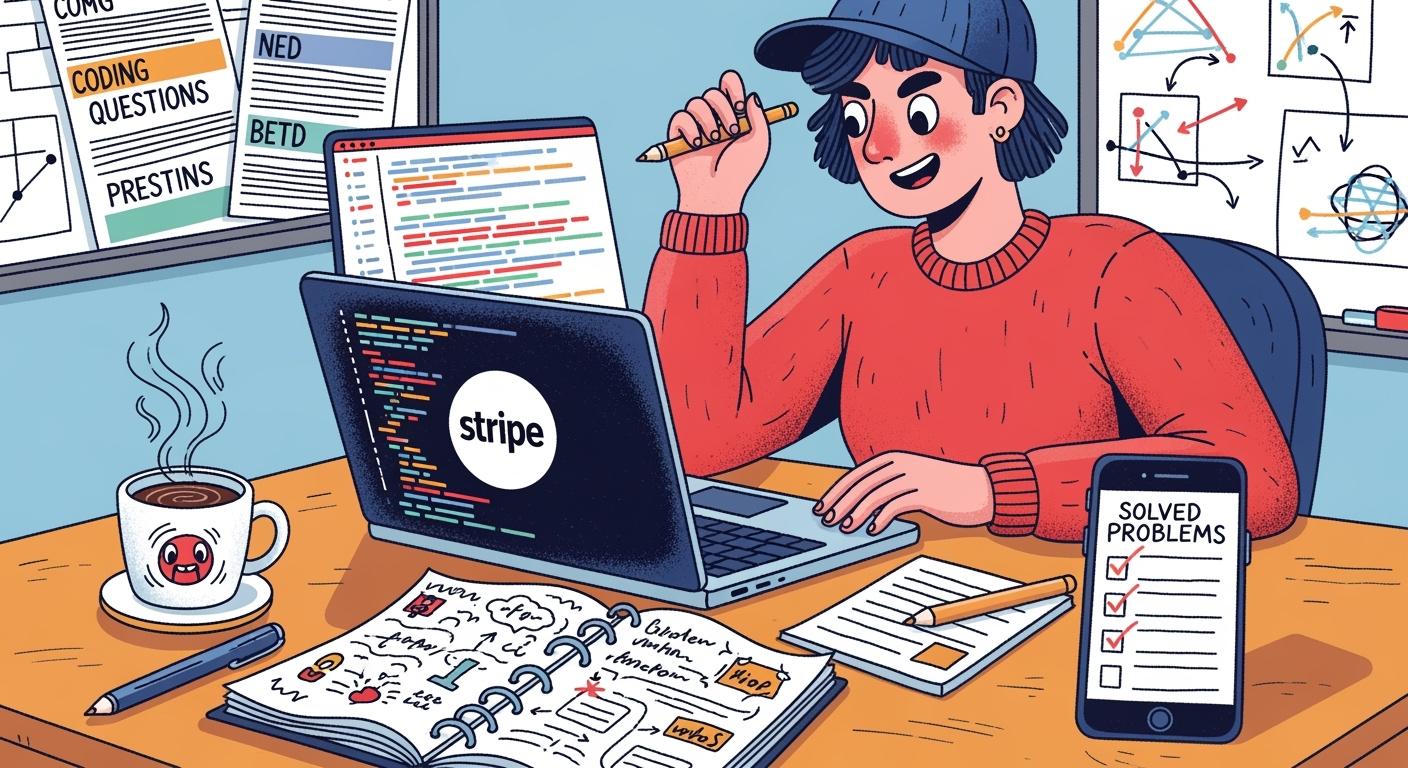
I just finished my interview with Stripe. As expected, the questions I encountered were from their question bank. Based on the interview experiences I've gathered, all the coding challenges in their interviews are drawn from a specific bank of eight problems. Some of these are recent additions that have replaced older ones. Below, I'll share these eight actual problems I collected from various sources before my interview. Since the previous questions are no longer in use, I won't be covering them here.
I am really grateful to Linkjob.ai for helping me land my dream job, which is why I'm sharing my application experience and the cover letter examples I've curated here. Having an invisible AI interview assistant indeed gives candidates a competitive advantage.
Here are the actual questions I faced in my stripe coding interview in 2026:
Read a CSV file of transactions, filter by status, and output the total per user.
Make an HTTP request to a mock payment API, handle errors, and parse the response.
Refactor a messy codebase for readability and write automated tests.
I want to share how I solved each one, step by step.
Stripe Coding Interview Questions and Solutions
Question 1: File I/O Challenge
The first question in my stripe coding interview asked me to read a CSV file of transactions, filter by status, and output the total per user. This problem tested my ability to handle file input and output, process data, and produce clear results.
Solution and Code Example
I chose Python for this task because it handles CSV files easily. Here’s how I solved it:
import csv
from collections import defaultdict

def total_per_user(filename, status_filter):
    user_totals = defaultdict(float)
    with open(filename, newline='') as csvfile:
        reader = csv.DictReader(csvfile)
        for row in reader:
            if row['status'] == status_filter:
                user = row['user_id']
                amount = float(row['amount'])
                user_totals[user] += amount
    return user_totals

# Example usage:
totals = total_per_user('transactions.csv', 'completed')
for user, total in totals.items():
    print(f"{user}: {total}")
Reasoning and Approach
I started by reading the problem carefully. I wanted to avoid missing any details. I used Python’s csv.DictReader to make the code readable and avoid manual parsing. I filtered transactions by the given status and summed the amounts for each user. I chose a defaultdict to simplify the code and avoid key errors. I made sure to handle the file safely and close it after reading.
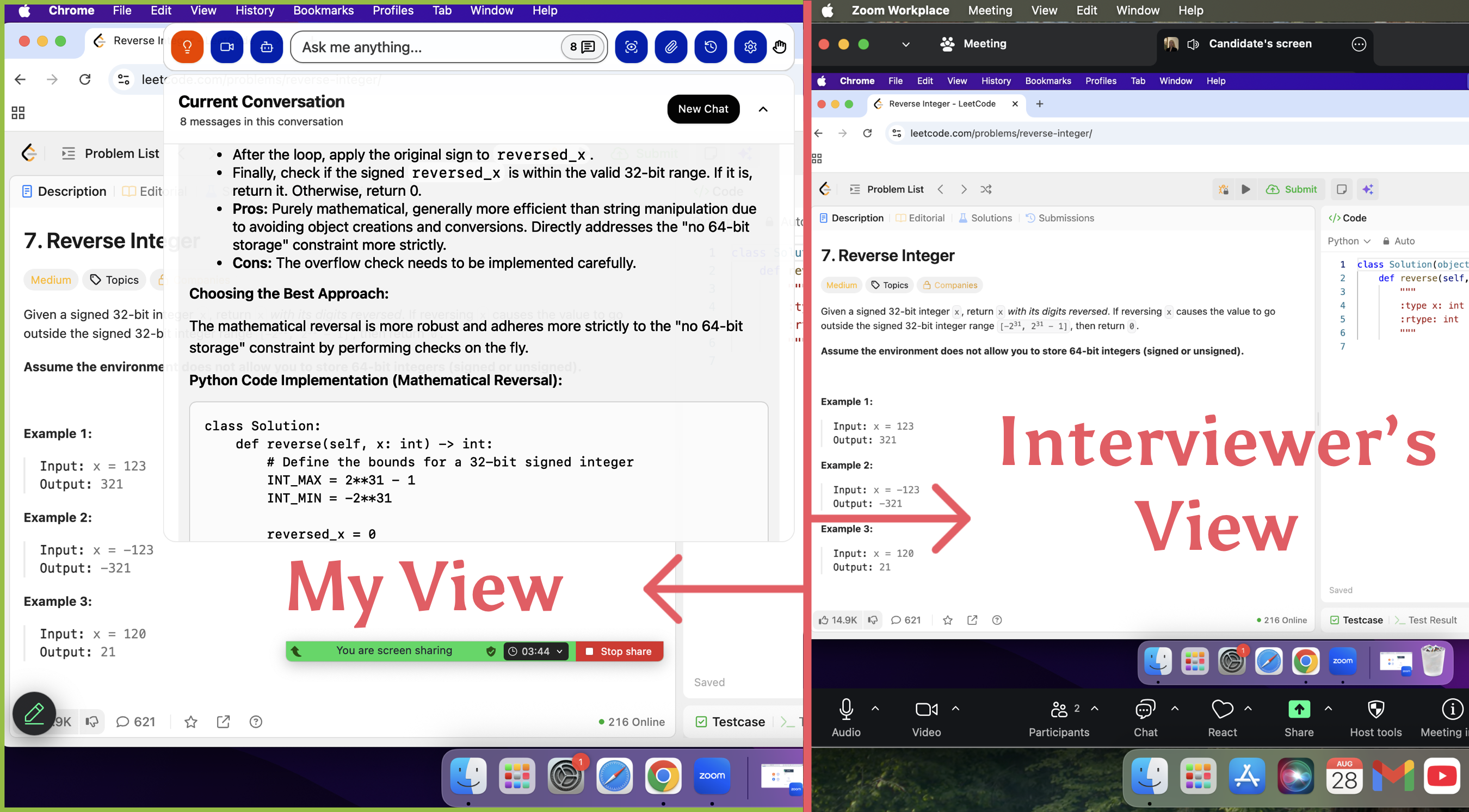
Furthermore, by leveraging system-level integration to hover as a top-level overlay, desktop AI interview tools ensure the environment cannot detect their presence, making AI usage absolutely secure. Taking Linkjob AI as an example, its invisibility is so advanced that when I tried to take a screenshot to show you, the interface simply didn't appear in the image. Because of this, I can only provide an official product photo here to demonstrate its effect.
Tips for File I/O Problems
Always check the file format and column names before you start coding.
Use built-in libraries like
csvin Python to avoid reinventing the wheel.Test your code with small sample files to catch edge cases, like missing values or wrong types.
Print intermediate results if you get stuck. It helps you debug faster.
Question 2: HTTP Request Problem
The second question in my stripe coding interview focused on making an HTTP POST request to a mock payment API. I had to handle errors and parse the response. This problem felt more complex because it involved multiple steps and time pressure.
Typical Challenges in Stripe HTTP Request Problems
The interview included complex HTTP request problems, especially during the integration phase.
I had to write code for an existing API, which meant understanding the API docs quickly.
Time constraints made it tough to finish all parts.
Handling errors and retries was a big part of the challenge.
Solution and Code Example
Here’s how I tackled the HTTP request problem using Python and the requests library:
import requests

def make_payment(user_id, amount):
    url = "https://mock.stripe.com/payments"
    payload = {
        "user_id": user_id,
        "amount": amount
    }
    try:
        response = requests.post(url, json=payload, timeout=5)
        response.raise_for_status()
        data = response.json()
        if data.get('status') == 'success':
            return data['transaction_id']
        else:
            print("Payment failed:", data.get('error', 'Unknown error'))
            return None
    except requests.exceptions.RequestException as e:
        print("HTTP Request failed:", e)
        return None

# Example usage:
transaction_id = make_payment("user_123", 100.0)
print("Transaction ID:", transaction_id)
Reasoning and Approach
I broke the problem into small steps. First, I built the payload and sent the POST request. I used a timeout to avoid hanging. I checked for HTTP errors with raise_for_status(). I parsed the JSON response and checked the status. If the payment failed, I printed the error. I wrapped everything in a try-except block to catch network issues.
Here’s a table that shows the principles I kept in mind for this kind of stripe coding interview question:
Principle | Description |
|---|---|
Financial correctness | I made sure the code handled money accurately, not just quickly. |
Immutable ledger events | I treated each payment as a permanent event, not something to change later. |
State machine workflows | I thought about each step as a state change, like "pending" to "completed". |
Normalization of retries and failures | I expected retries and partial failures, so I handled them in the code. |
Reconciliation focus | I made sure to log and check all transactions, not just the successful ones. |
Global constraints awareness | I considered what would happen if the API was slow or down in another region. |
Observability integration | I thought about how to monitor and audit payments in a real system. |
I also took charge of the interview by clarifying assumptions and justifying my choices. I explained how my code would behave in different scenarios and why I made certain decisions.
Confusion regarding the capabilities and comparative analysis of AI tools can prove particularly vexing. Should such questions arise, the detailed examination presented in 6 Best AI Coding Interview Assistants serves as an invaluable resource.
Tips for HTTP Request Problems
Read the API documentation carefully before you start.
Handle errors and retries as normal, not as exceptions.
Use timeouts to avoid waiting forever for a response.
Log both successful and failed transactions for easier debugging.
Explain your reasoning out loud, especially when you make design choices.
Question 3: Clean Coding and Automated Testing
The third question in my stripe coding interview asked me to refactor a messy codebase for readability and write automated tests. This tested my ability to write clean code and think about real-world scenarios.
Solution and Code Example
Here’s a simplified example. The original code looked like this:
def pay(u, a):
    r = requests.post("https://mock.stripe.com/payments", json={"user_id": u, "amount": a})
    if r.status_code == 200:
        return r.json()["transaction_id"]
    else:
        return None
I refactored it for clarity and added a test:
import requests

def make_payment(user_id, amount):
    url = "https://mock.stripe.com/payments"
    payload = {"user_id": user_id, "amount": amount}
    response = requests.post(url, json=payload)
    response.raise_for_status()
    data = response.json()
    return data.get("transaction_id")

# Automated test
def test_make_payment(monkeypatch):
    class MockResponse:
        def __init__(self, status_code, json_data):
            self.status_code = status_code
            self._json = json_data
        def raise_for_status(self):
            if self.status_code != 200:
                raise requests.HTTPError("Error")
        def json(self):
            return self._json

    def mock_post(url, json):
        return MockResponse(200, {"transaction_id": "txn_456"})

    monkeypatch.setattr(requests, "post", mock_post)
    assert make_payment("user_456", 50.0) == "txn_456"
Reasoning and Approach
I started by reading the entire problem to understand what needed fixing. I renamed variables for clarity and split logic into smaller steps. I wrote modular code with clear names. I added an automated test using a mock to simulate the API. I explained my testing approach and covered edge cases. I focused on correctness and reliability, not just speed.
Here’s what I kept in mind:
I communicated my reasoning while coding.
I explained my testing approach, including edge cases.
I prioritized correctness over optimization.
I discussed how to monitor the code in production.
I wrote modular code and commented on trade-offs if I couldn’t optimize everything.
Tips for Clean Code and Testing
Write code quickly, but explain your thought process as you go.
Practice timed coding problems to get comfortable under pressure.
Use clear names and clean abstractions.
Cover edge cases in your tests.
Focus on correctness and reliability before you worry about performance.
I found that these habits helped me stand out in the stripe coding interview. They also prepared me for real-world scenarios, like managing subscriptions and handling disputes. Stripe cares about seamless user experiences, so clean code and solid tests matter a lot.
For more actual questions for Stripe interviews, checking out these articles: all the Stripe interview questions asked in an 8-round experience , Stripe HackerRank online assessment questions.
Stripe Coding Interview Process Overview
Interview Rounds Breakdown
When I went through the stripe coding interview, I noticed the process felt structured but friendly. Here’s how the rounds looked for me:
Round | Description |
|---|---|
1 | Recruiter Phone Screen: Informal discussion. |
2 | Technical Phone Screen: Tests on System Design, Databases, Heaps, and Data Structures. |
3 | Onsite Interview: Comprises 5 interviews including Coding, Behavioral, Bug Bash, System Design, and Integration. |
The process included four main technical rounds and one behavioral round. The recruiter started with a casual chat. The technical phone screen tested my understanding of system design and data structures. The onsite phase felt intense but fair. I had to code live, explain my thinking, and even squash bugs in real time.
Common Topics and Evaluation Criteria
Stripe wants to see how I solve real-world problems. They don’t care much about tricky algorithm puzzles. Instead, they focus on:
File I/O and reading data from files.
Making HTTP requests and handling errors.
Writing clean, readable code.
Automated testing and test-driven development.
Object-oriented programming and logical thinking.
During each stripe coding interview, I had to talk through my approach. The interviewers watched for clear communication, practical implementation, and how I handled edge cases. They wanted to see if I could write code that works in production, not just on paper.
Tip: Practice explaining your code out loud. It helps a lot during live interviews!
Languages and Tools Used
I could choose my preferred language. Most candidates, including me, picked Python for its speed and readability. Here’s a quick look at the most common choices:
Language | Advantages |
|---|---|
Python | Fast to write, readable, strong library support |
Java | Good debugging, familiar to many |
C++ | Performance, strong typing, robust structures |
I also reviewed PostgreSQL for database questions and brushed up on tools like Kafka and Redis. Knowing one scripting language well made the stripe coding interview much smoother.
Stripe Coding Interview Insights from Other Candidates
Frequently Asked Stripe Coding Interview Questions
I wanted to know what other candidates faced in their Stripe interviews. I found that many people got questions similar to mine, but some rounds included behavioral and situational prompts. Here are a few that kept popping up:
Describe a time you solved a tough technical problem.
How would you handle a disagreement with a teammate?
What motivates you to work at Stripe?
Where do you see your career in five years?
Explain a project that challenged you.
These questions go beyond coding. Stripe wants to see how you think, communicate, and fit into their culture.
Common Themes and Patterns
I noticed some clear patterns in the interview process. Stripe values problem-solving, career goals, and interpersonal skills. Here’s a table that sums up the main themes and sample questions:
Common Themes | Example Questions |
|---|---|
Problem-solving | What is the hardest technical problem you have run into? |
Career aspirations | Why do you want to work here? |
Where do you see yourself in five years? | |
Interpersonal skills | Explain a project that was difficult. |
How do you handle disagreements with co-workers? |
Stripe interviews feel practical. They focus on real-world scenarios and teamwork. I saw that candidates who prepared stories and examples did better.
Lessons from Candidate Experiences
I learned a lot from reading about other people’s experiences. Here are some strategies that helped them succeed:
Practice explaining your thought process clearly.
Prepare for different interview formats, even when expectations are vague.
Document each round for your own reference.
Learn about Stripe’s products and metrics to ground your answers.
Structure your analysis quickly and prioritize impact.
Here’s a table with more lessons:
Strategy | Description |
|---|---|
Align with values | Show rigor, ownership, and clarity in your work. |
Time management | Structure your answers quickly, like a timed assignment. |
Knowledge of products | Learn about Stripe’s products and core metrics. |
Communication skills | Explain technical concepts simply and share leadership stories. |
I realized that strong communication and preparation make a big difference. If focusing on these areas, you’ll stand out in your Stripe interview.
While software engineering interviews often share common structural elements across companies, Stripe's evaluation process introduces distinct nuances. This detailed account of a Stripe 2026 SWE interview journey offers concrete insights into those specific differences.
Preparation Tips and Strategies for Stripe Coding Interview
Practicing for Stripe Coding Interview
When I started my prep, I focused on the skills that matter most. I made a plan and stuck to it. Here’s what worked for me:
I reviewed data structures and algorithms every day.
I practiced system design questions and built small projects.
I wrote code by hand to improve my speed and accuracy.
I solved real-world problems, like designing a rate limiter or payment workflow.
I learned about financial technology basics.
I didn’t just code. I talked through my ideas out loud, explained my assumptions, and described trade-offs. I made sure to focus on correctness and testability. Consistent practice helped me get faster and more confident. I used LeetCode and CodeSignal for daily challenges, aiming for medium and hard problems.
Tip: Don’t rush to code. Take a moment to understand the problem and plan your approach.
Recommended Resources
I found some resources that made a big difference in my prep. Here’s a quick table of my favorites:
Resource Name | Description |
|---|---|
Grokking the Coding Interview Patterns | Learn essential coding patterns for interviews. |
Grokking the Low-Level Design Interview Using OOD Principles | Master object-oriented design fundamentals. |
Grokking the Modern System Design Interview | Get ready for distributed system questions. |
Grokking the Behavioral Interview | Prepare for culture and behavioral rounds. |
Grokking the Product Architecture Design Interview | Practice API and product design scenarios. |
I also used NeetCode 150 and Grind 75 for structured practice. Mock interview platforms gave me live feedback. ChatGPT helped me simulate interviews and polish my resume.
Mindset and Time Management
I kept a positive mindset and managed my time carefully. I always explained my thought process clearly. I took time to understand each problem before jumping in. I discussed edge cases and tested my solutions with examples. If I got stuck, I asked for hints or clarification.
Communicate your ideas step by step.
Consider all possible edge cases.
Test your code before you say you’re done.
Don’t be afraid to ask for help.
Staying calm and focused helped me succeed in the stripe coding interview.
Common Pitfalls and How to Avoid Them
Mistakes in Stripe Coding Interview
I’ve seen a lot of candidates, including myself, trip over the same hurdles during Stripe interviews. Let me share the most common mistakes I noticed:
I sometimes rushed into coding without explaining my reasoning. This made my thought process unclear.
I jumped into solutions before I fully understood the problem. That led to wasted time and wrong answers.
I forgot to consider edge cases, like failed payments or network errors. Stripe cares about these details.
I didn’t test my code enough, even with sample data. Bugs slipped through because of this.
I hesitated to ask for clarification when something seemed unclear. This made me miss important requirements.
Tip: Slow down and talk through your approach. Interviewers want to hear how you think, not just see your code.
How to Stand Out
Standing out in a Stripe interview takes more than just writing code. Here’s what helped me shine:
I always clarified the problem first. I asked questions to remove any ambiguity.
I broke down the problem out loud. I talked about inputs, outputs, constraints, and assumptions.
I outlined my approach before I started coding. I explained my algorithm and discussed trade-offs.
I wrote my code slowly and carefully. I focused on clean, readable code.
I tested my solution with different cases. I wanted to show my code could handle anything.
I reflected on my solution at the end. I talked about performance and possible improvements.
Note: Don’t treat the interview like a LeetCode race. Stripe wants to see real-world thinking, not just fast answers.
I also made sure to avoid some common traps. I didn’t write unstructured code. I prepared for behavioral questions. I asked thoughtful questions at the end. These steps helped me stand out and avoid mistakes.
If following these strategies, I can not only avoid common pitfalls but also show Stripe that you’re ready for the real challenges their engineers face every day.
I learned that success in Stripe coding interviews comes from focusing on the basics and practicing real-world problems. Here’s what helped me most:
Write clean, production-quality code.
Break down business logic and organize rules.
Think about scalability and future changes.
Communicate clearly and check details.
Stay curious and keep practicing. Use these strategies and learn from every experience—yours and others’. That’s how you’ll grow and get ready for Stripe.
FAQ
How did I prepare for the Stripe coding interview?
I made a daily plan. I practiced coding problems on LeetCode. I reviewed system design basics. I read about Stripe’s products. I also did mock interviews with friends. This routine helped me feel ready.
What should I do if I get stuck during the interview?
I pause and take a deep breath. I explain my thoughts out loud. I ask clarifying questions. Sometimes, I write down what I know. This helps me find a way forward. The interviewer often gives hints if I communicate well.
Can I use any programming language in the Stripe interview?
Yes, I could choose my language. I picked Python because it is fast and readable. Stripe cares more about clear logic than language choice. I suggest using the language you know best.
How important are automated tests in the interview?
Automated tests matter a lot. I always write tests to check my code. This shows I care about quality. Stripe likes to see that I can catch bugs before they reach production.
What if I make a mistake while coding live?
I stay calm. I correct the mistake as soon as I see it. I talk through my fix. Interviewers want to see how I handle errors. They care more about my process than perfection.
See Also
How I Passed 2026 Stripe Technical Interview with Real Questions
The 2026 OpenAI Coding Interview Question Bank I've Collected
Anthropic Coding Interview: My 2026 Question Bank Collection
How I Nailed Stripe Integration Round in 2025 on My First Try
How I Solved Real Problems in My 2025 Stripe Intern Interview
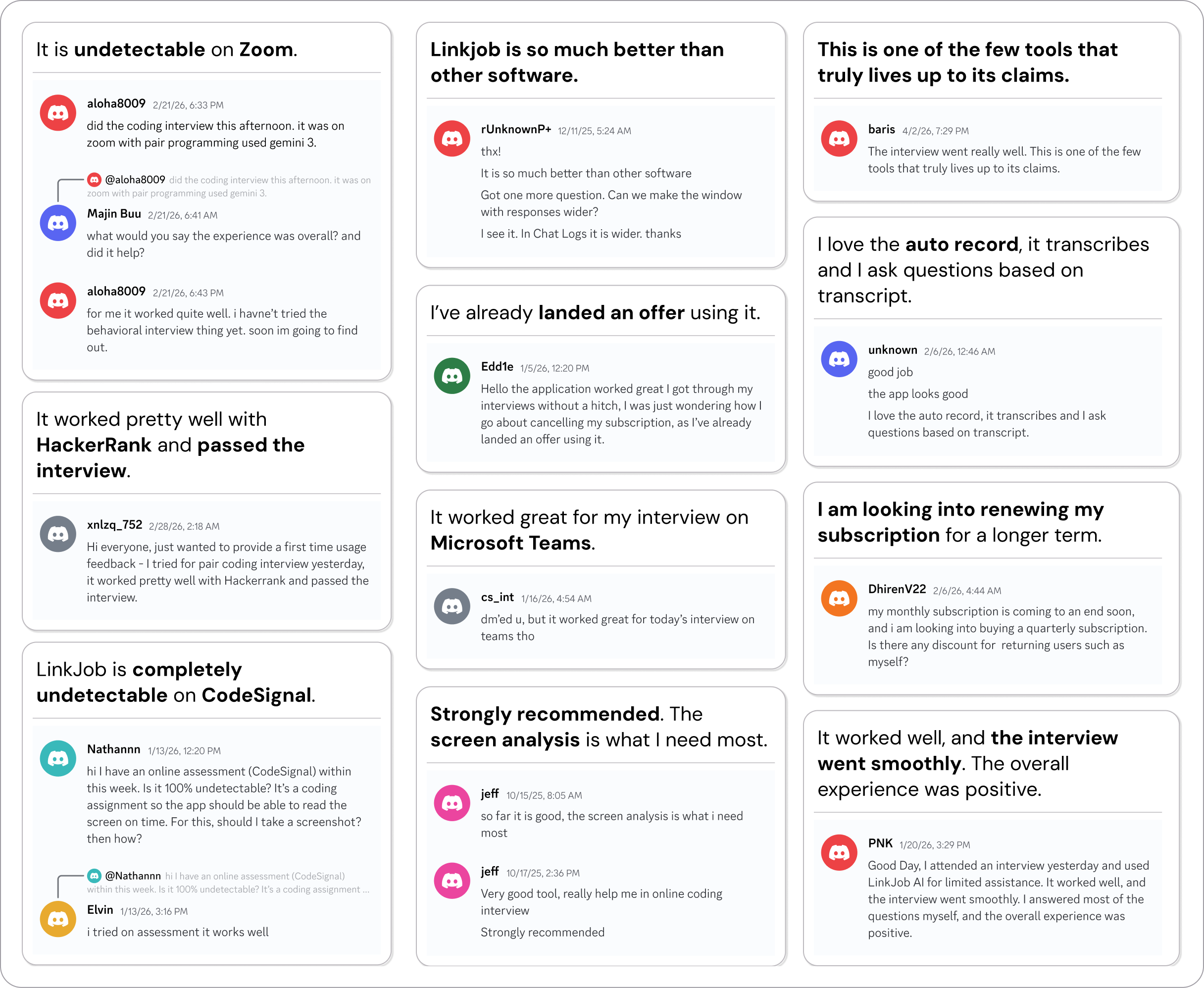
Why People Choose Linkjob AI
Smoother interviews, coding challenges cleared, and job offers landed. See how users describe their experience with Linkjob AI—in their own words.

© Copyright 2026 Linkjob AI - All Rights Reserved.