How I Nailed Stripe Integration Round in 2025 on My First Try


Stripe Integration Round Process and Timeline
Stripe’s New Grad VO has three rounds: coding, integration, and bug squash. For interns, there are only two rounds, without the bug-squash portion.
VO Structure
The whole onsite takes about three and a half hours. Each round is one hour, with a 15-minute break in between, and screen-sharing is required for the entire session.
VO Timeline
After completing the OA, I received the next step, the technical screen, three days later. Then things got messy. I was ghosted, so I followed up by email, only to find out the recruiter’s email address didn’t even exist anymore. Later I was told the recruiter had left the company, which was honestly a pretty bizarre experience.
After I was assigned a new recruiter, we scheduled the VO, which happened about two weeks later. Then I moved on to the HM round. A little over a week after that, I received the offer call and email.
I genuinely appreciate how much Linkjob.ai has helped me throughout the process, which is why I’m sharing my interview details here. Having an invisible AI interview assistant during the interview is indeed very convenient.
Stripe Integration Round Questions
I will share the integration questions I encountered during my VO, along with some first-hand insights I gathered while preparing for this round.
My Stripe Integration Round Question
My task was BikeMap, and it turned out to be the round I handled the best. I had to read three JSON files, convert them into dictionaries, and do some back-and-forth ETL.
In the end, I solved 3.9 out of 5 requirements, and the missing 0.1 came from an enhanced condition I did not fully implement. If I had just one more minute, I could have added a one-line helper function to finish it. Since time was already up, I explained my approach directly to the interviewer, and they seemed satisfied with the reasoning.
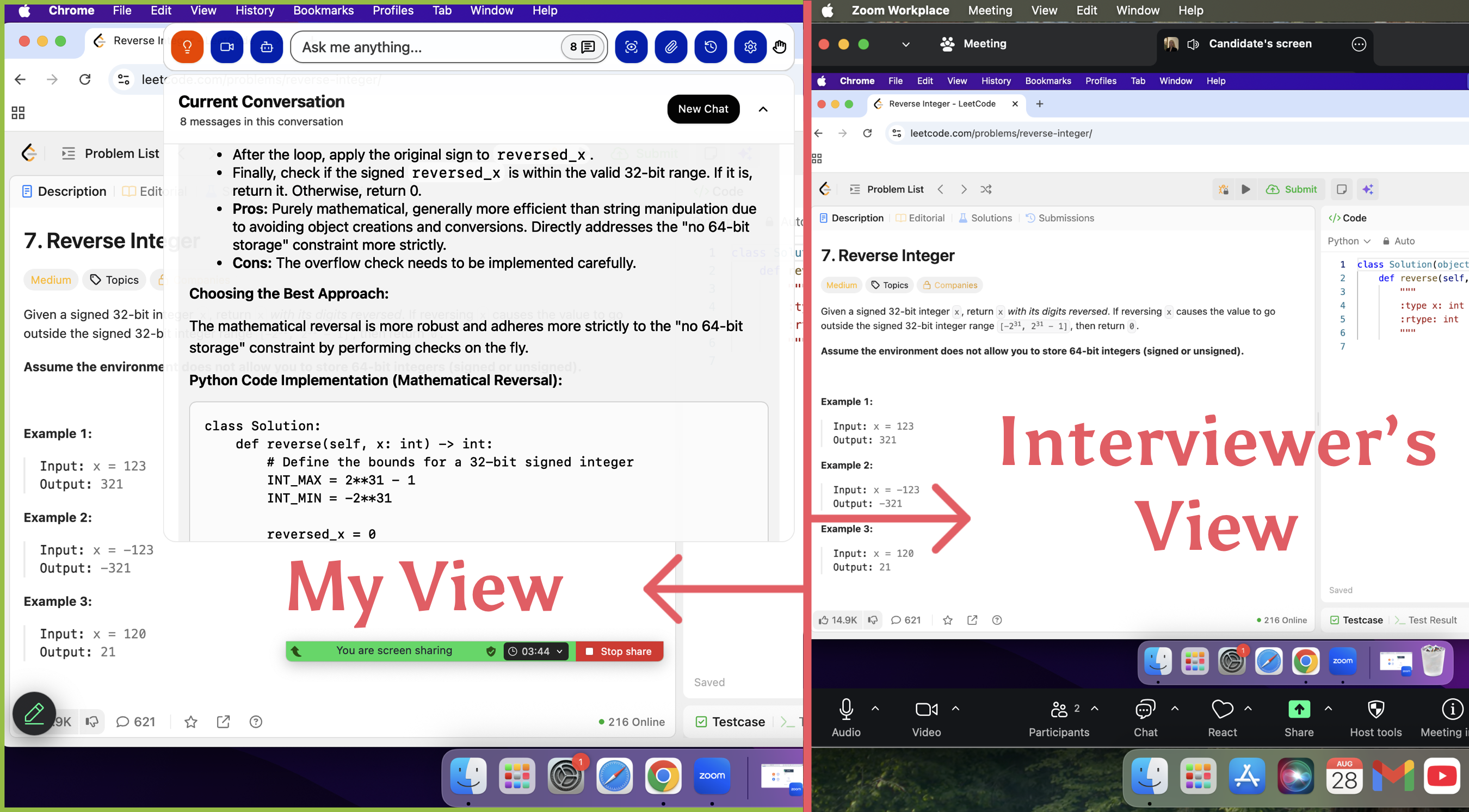
I have to say, Linkjob AI is really easy to use. I used it during the interview after testing its undetectable feature with a friend beforehand. With just a click of the screenshot button, the AI provided detailed solution frameworks and complete code answers for the coding problems on my screen.
Stripe Integration Round Experience
Experience 1
They directly gave me a Git repository link containing all the problems. I had to use the provided API and the given JSON or data to implement the required functionality for each task. There were a total of five questions, and I managed to solve three. The output for the third question did not appear, so I was unable to complete it, but the interviewer did not count it against me. This round required running everything locally.
Experience 2
In this round, I had to integrate the Stripe Payment API. I felt the emphasis was on my understanding of API design and payment security, such as PCI compliance.
Experience 3
They required me to write code using an IDE and the existing codebase. In my case, the IDE did not work properly because the codebase used an incompatible JDK version, and I spent a lot of time fixing the issue. As a result, they deducted points because of this.
Experience 4
I’d definitely recommend using Python or any other language that offers a wide range of built-in functions and libraries. It saves a lot of time, helps you focus more on problem-solving and logic rather than low-level implementation details, and prevents you from reinventing the wheel. This makes the whole development process smoother, faster, and more efficient—especially when prototyping or working on time-sensitive projects.
Experience 5
In the integration test, I was given a codebase and needed to implement the required functionality on top of it.
Experience 6
I needed to integrate parts of the code with API endpoints to complete the specified tasks, testing my ability to work with real-world code integration.
Stripe Integration Round Overview
What To Expect
When I first heard about the stripe integration round, I wanted to know what the format looked like. I found that the round focuses on using the Stripe API for real-world integrations. The goal is to see how well I can work with APIs and solve practical problems. Here’s a quick look at the format:
Aspect | Details |
|---|---|
Duration | 1 hour |
Focus | Use of the Stripe API for real-world integrations |
Objective | Assessing practical skills in API integration |
During the round, I faced challenges that tested my skills. Some common issues included debugging, testing, and handling errors. I also needed to manage updates and changes in the API. Here are some challenges I ran into:
Testing for reliability and performance
Debugging tricky integration issues
Keeping up with API updates and versioning
Handling vague error messages
Making sure my code was secure
Reading and understanding documentation
Evaluation Criteria
The evaluators wanted to see more than just working code. They looked for clear problem-solving and strong technical skills. I realized they paid attention to how I handled errors and explained my approach. They also checked if I could maintain and update integrations over time. To prepare, I focused on these areas:
I learned about RESTful APIs, HTTP methods, and status codes.
I built small projects using API calls, like payment gateways.
I contributed to open-source projects to get used to unfamiliar code.
I took courses on Stripe API integration to build a solid foundation.
Interview Flow
The stripe integration round started with a quick introduction. The interviewer explained the task. I worked on the coding problem while talking through my thought process. The interviewer asked questions about my choices and how I would handle errors or updates. At the end, I reviewed my solution and explained how I would improve it.
Preparation Strategies
Key Resources
When I started preparing for the stripe integration round, I wanted to find the best resources. I focused on guides that explained Stripe API features like payment processing, subscriptions, and invoicing. I found the official Stripe documentation very helpful. It gave me practical steps for setting up my environment, creating a Stripe account, and getting API keys.
I also used testing tools to make sure my integration worked smoothly. I learned that testing with tools like this saved me a lot of time and headaches.
Here are some resources I relied on:
Stripe API documentation for payment, subscription, and invoicing features.
Apidog for testing and validating API requests.
Tutorials on setting up Stripe accounts and managing API keys.
Guides on handling sensitive payment data securely.
Articles about choosing the right payment API for different business needs.
Forums and customer support for troubleshooting integration issues.
I made sure to read guides that focused on reliability and efficiency. These helped me improve my Python applications and keep my payment systems running smoothly.
Time Management
Managing my time was key to staying calm and focused. I learned to avoid time sinks like trying to make my code perfect or optimizing too early. Instead, I set time checkpoints to track my progress during practice and interviews.
I used the Pomodoro Coding Technique. I worked in 25-minute intervals and took short breaks. This kept me fresh and prevented burnout. I also tried the 5-Minute Algorithm Challenge to solve simple problems quickly. These methods helped me build efficient coding habits.
Here’s a table showing how I split my preparation time:
Activity | Time Allocation | Focus Areas |
|---|---|---|
Learning New Concepts | 30% | Data structures, algorithms |
Problem Practice | 40% | Coding platforms, Stripe API tasks |
Review & Refinement | 30% | Mock interviews, revisiting topics |
I always prioritized correctness over completeness. If I ran out of time, I made sure my code worked for the main use case. I outlined my algorithms with pseudocode before writing any code. This saved me time and helped me stay organized.
Technical Skills For Integration Success
Stripe APIs To Know
When I prepared for the Stripe integration round, I made sure to get comfortable with the most important APIs. I focused on the Payment Intents API, Customers API, and Webhooks. These APIs form the backbone of most Stripe integrations. I also practiced making HTTP REST calls and parsing JSON responses. This helped me understand how to interact with external APIs and handle their responses.
Here are the technical skills I found most critical:
I followed instructions for working with external APIs and handling their responses.
I paid attention to API design and clarified requirements before writing code.
I created logical service layers and database structures to support my integration.
I practiced reading requirements and writing clean, maintainable code.
I learned to balance technical skills with problem-solving, especially when making tradeoffs.
Error Handling
Error handling can make or break your Stripe integration. I always parse error codes from the Stripe API and show clear messages to users. I keep logs of API errors so I can spot patterns and improve stability. When a request fails, I use a retry mechanism to handle temporary issues. I also write unit tests for my API endpoints and run integration tests to make sure everything works together.
Here’s my error handling checklist:
Parse and display meaningful error messages.
Log all API errors for later analysis.
Retry failed requests when possible.
Write unit and integration tests for API endpoints.
Use mock data to simulate API responses during testing.
Debugging Tips
Debugging Stripe integrations can feel tricky, but I found some tools and habits that really help. I use Stripe’s Workbench to inspect API requests and prototype commands without writing extra code. This tool lets me see the exact state of an invoice or payment. Centralized logging helps me track issues across my system. I also make sure my error messages are clear and consistent.
By following these steps, I can quickly find and fix problems in my Stripe integrations.
Communication And Common Pitfalls
Explaining Your Approach
I always make it a point to talk through my ideas during the Stripe integration round. When I explain my thought process, I show the interviewer how I break down problems and make decisions. This helps me stay organized and lets the interviewer follow my logic. I use simple language and avoid jargon unless I know the interviewer understands it. If I hit a roadblock, I say what I’m thinking out loud. This way, the interviewer can see my structured thinking and may even offer hints.
Here’s why clear communication matters in Stripe interviews:
I can articulate my thought process step by step.
I share past experiences in a way that’s easy to follow.
I keep everyone on the same page, which prevents misunderstandings.
Avoiding Mistakes
I’ve seen many candidates make the same mistakes in integration rounds. I try to avoid these by staying mindful and methodical. Here’s a list of common pitfalls and how I dodge them:
I never skip explaining my reasoning, even if I feel rushed.
I take a moment to fully understand the problem before I start coding.
I always consider edge cases, like failed payments or network errors.
I test my solution, even if it’s just with sample data.
I ask for clarification when something isn’t clear.
Note: Rushing or skipping steps can lead to missed bugs or incomplete solutions.
FAQ
Which platform is used for the Stripe interview?
The meeting was on Zoom, and the coding problems were done on an online coding pad.
What is the main focus of the Stripe Integration Round?
This round mainly tests my ability to integrate a third-party API into an existing codebase. It evaluates how I handle real-world API calls, manage data flow, and ensure that the integration works reliably under different scenarios. Security and best practices for handling payment information are also assessed.
See Also
How I Succeeded In My Stripe Interview Journey
My Strategy For Excelling In The BCG X Assessment
Steps I Followed For The Bloomberg New Grad Interview

© Copyright 2025 Linkjob.ai - All Rights Reserved.