Cracking My 2026 Uber Coding Interview with Real Questions


I finally did it. I’m writing this while staring at my offer letter for a Senior SWE role at Uber, and honestly, my brain is still a bit fried from the six-week gauntlet I just ran. If you’re anything like me, you’ve probably spent your late nights staring at a screen, grinding LeetCode until your eyes crossed, wondering if anyone actually passes these things. The "Uber Bar" in 2026 is no joke—it has shifted from abstract brainteasers to a deep obsession with real-world operational excellence and high-concurrency marketplace dynamics. They don’t just want to know if I can code; they want to know if I can handle millions of real-time requests without the system collapsing into a pile of technical debt. Here is exactly how I navigated the process, the questions that nearly broke me, and the secret sauce that actually got me the "Strong Hire" verdict. Having an undetectable AI online interview assistant during the OA indeed provides a significant edge.
Uber Coding Interview Process Overview
The whole thing moves at a surprisingly reasonable pace, usually wrapping up in two to six weeks, but the intensity is dialed up to eleven the entire time.
Here’s a quick look at the main stages and their timelines:
Stage | Duration | Timeline |
|---|---|---|
Recruiter Phone Screen | 20–60 Minutes | week 1 |
Online Assessment (OA) | 60–90 Minutes | week 1-2 |
Technical Phone Screen (BPS) | 45–60 Minutes | week2-3 |
Virtual Onsite Loop (4–6 rounds) | 4–6 Hours total | week3-5 |
Hiring Committee & Offer | 3–5 Business Days | week4-6 |
Application and Online Assessment
First up is the recruiter screening call—just a quick 30-minute chat. They’re basically check if I’m a "missionary" or a "mercenary"—basically, do I actually care about mobility, or am I just here for the high compensation. If I pass that round, I have to take the CodeSignal OA, which is the toughest technical filter by far. I only get 70 to 90 minutes for four coding questions, and the difficulty spikes super hard. The first two are pretty easy warm-ups, but the final two are brutal—usually advanced graph problems or tricky spatial logic puzzles. From what I’ve heard, I need to score over 800 out of 840 to even keep my application going. They really test how fast and error-free I can code under tight pressure.
Screening and Technical Phone Interview
If I survive the OA, I move on to the Technical Phone Screen — some people call it the Business Phone Screen (BPS).
It’s a 60-minute live session with an engineer, and unlike the "silent" interviews at other big tech companies, Uber interviewers are super interactive. It feels more like a pair-programming session where my interviewer keeps questioning my assumptions. I solved 2–4 Uber online assessment questions. The questions focused on data structures, algorithms, and sometimes SQL or Python.This whole round is about proving I can collaborate, think out loud, and write clean, working code at the same time.
Uber Interviews Final Loop
The final loop is the "onsite," though in 2026 it’s usually virtual. It’s a four-to-six-round marathon that covers Coding, Machine Coding, System Design, and Behavioral. For senior roles, it might also have a "Technical Retrospective" where requires deep-dive into a past project until the interviewer finds exactly where I made a trade-off. They are looking for "full-stack architects"—people who can write a topological sort in twenty minutes and then turn around and argue the pros and cons of Kafka vs. RabbitMQ for a notification system.
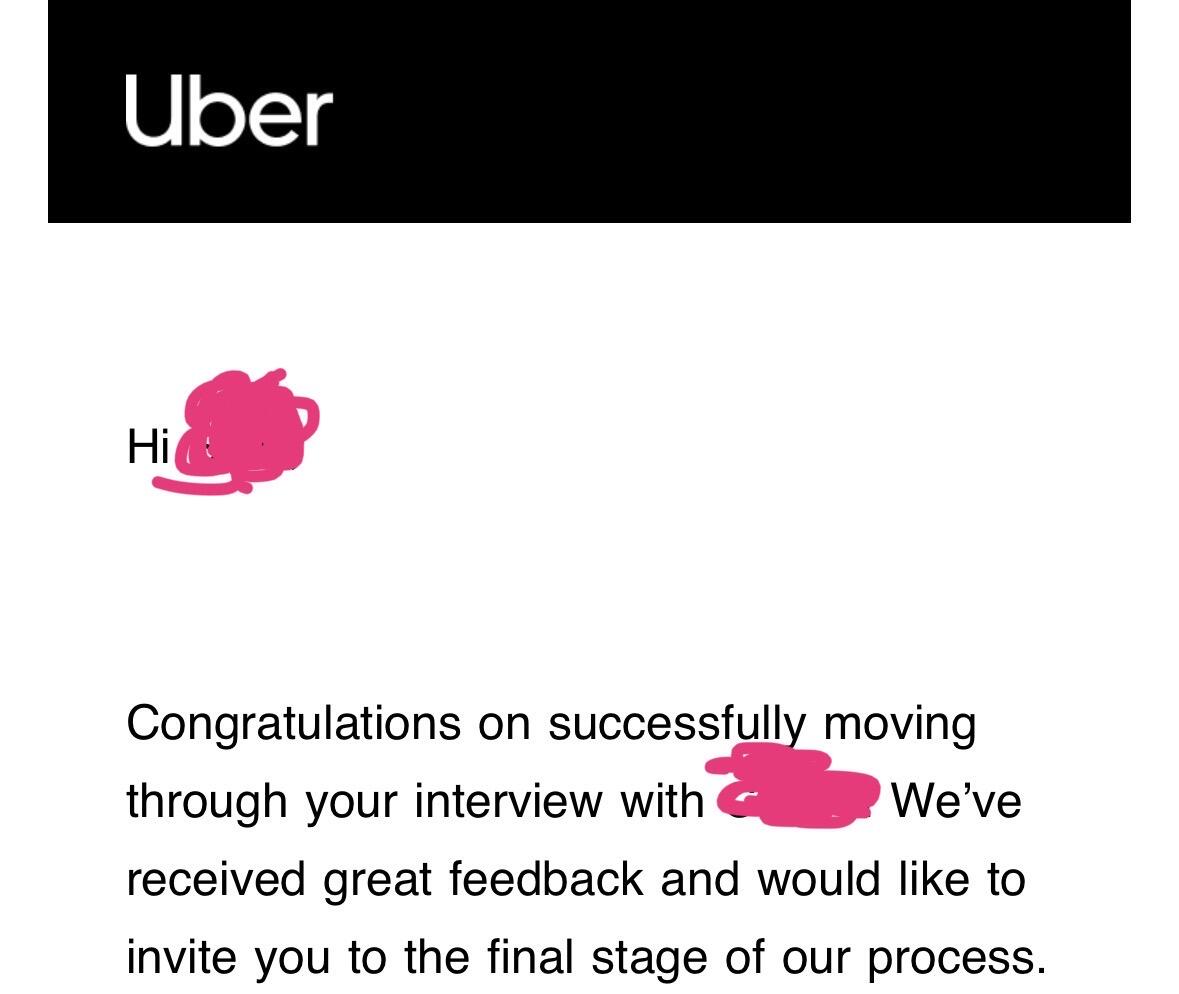
Real Coding Questions from My Uber Interview
The questions at Uber are curated for depth, not breadth. About 27% of their question bank is rated as "Hard," which is the highest rate I’ve seen compared to other top-tier tech companies
When I prepared for the uber coding interview, I focused on practicing with real questions. I want to share the exact problems I faced in the real interview process and how an ai coding interview assistant would help during coding interviews.
Four Problems of Uber Interview
The first question I got was about optimizing the throughput of a multi-stage data processing pipeline, and the interviewer wanted to see if I could identify that the system's performance is limited by its weakest link (the bottleneck) and apply a binary search algorithm to find the most cost-effective way to scale those services.
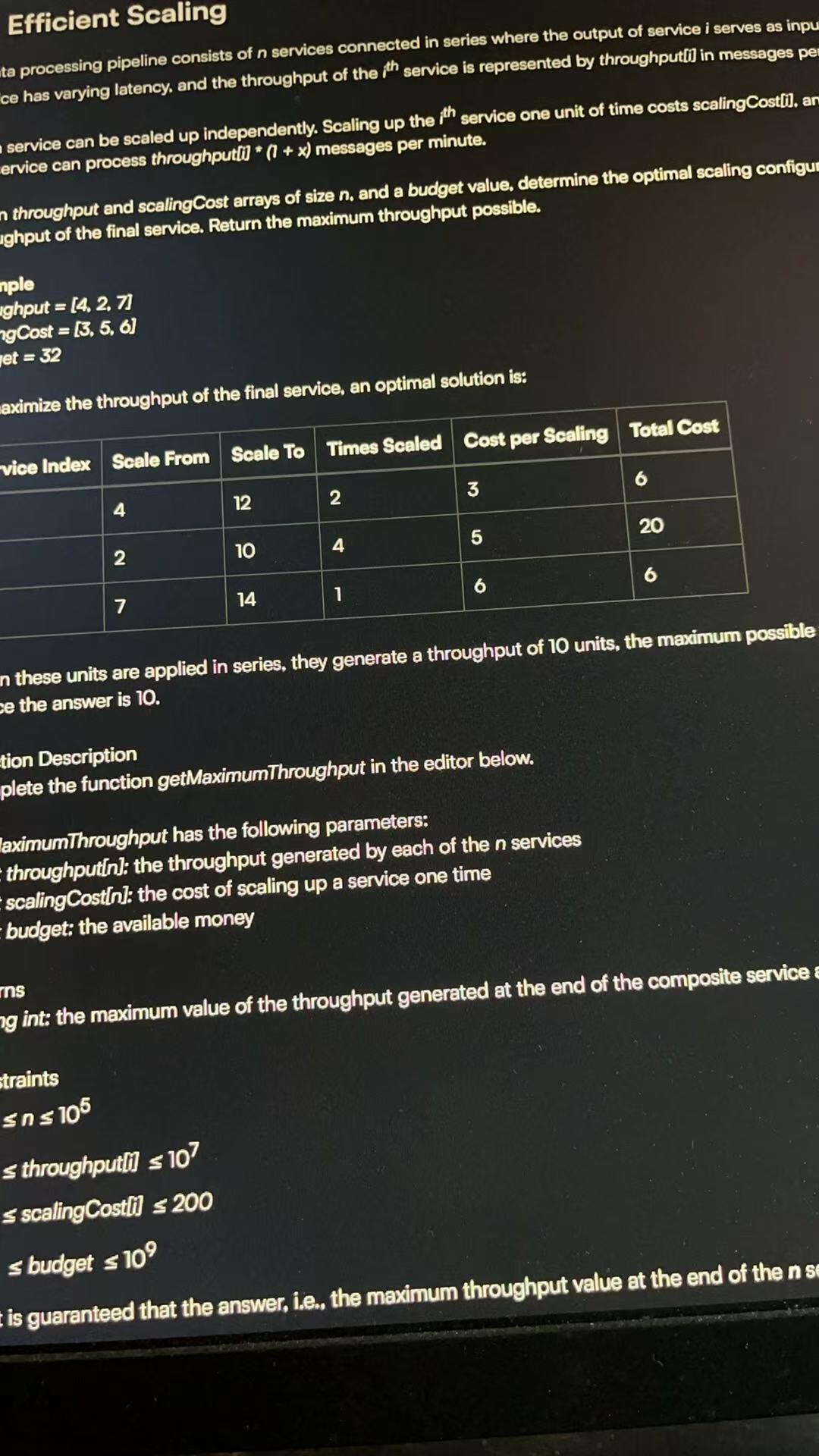
The next part of the challenge focused on resource allocation under strict constraints, and the interviewer wanted to see how I would handle large-scale inputs (up to 10^5 services) and whether I could design an efficient O(Nlog M)solution that keeps the total cost within a 10^9 budget.
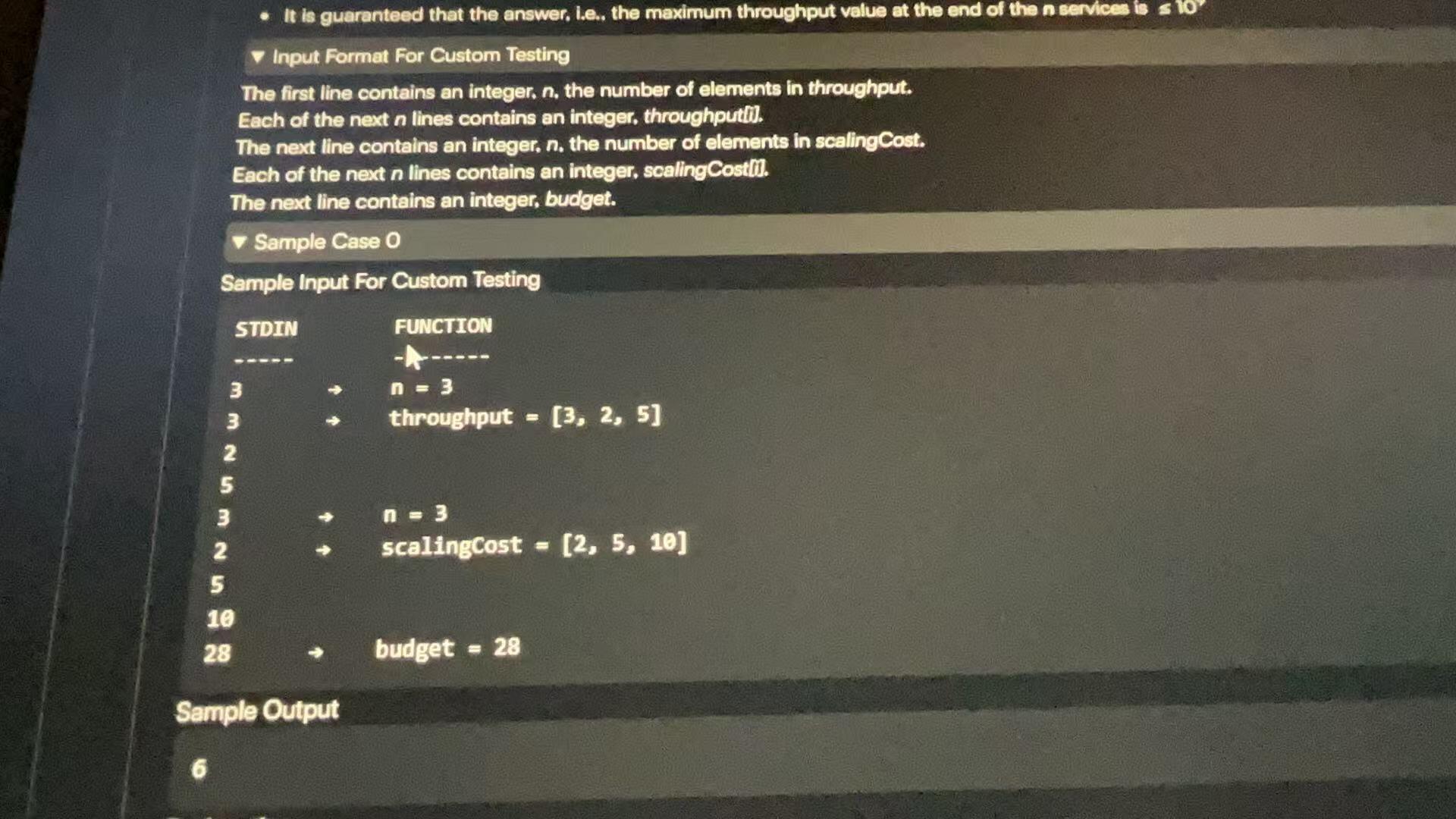
Finally, the problem presented a scenario involving integer-based scaling costs and multiplicative throughput gains, and the interviewer wanted to see if I could translate a real-world engineering problem into a mathematical model, specifically using the ceiling function to calculate exactly how many scaling units are required to hit a target performance goal.
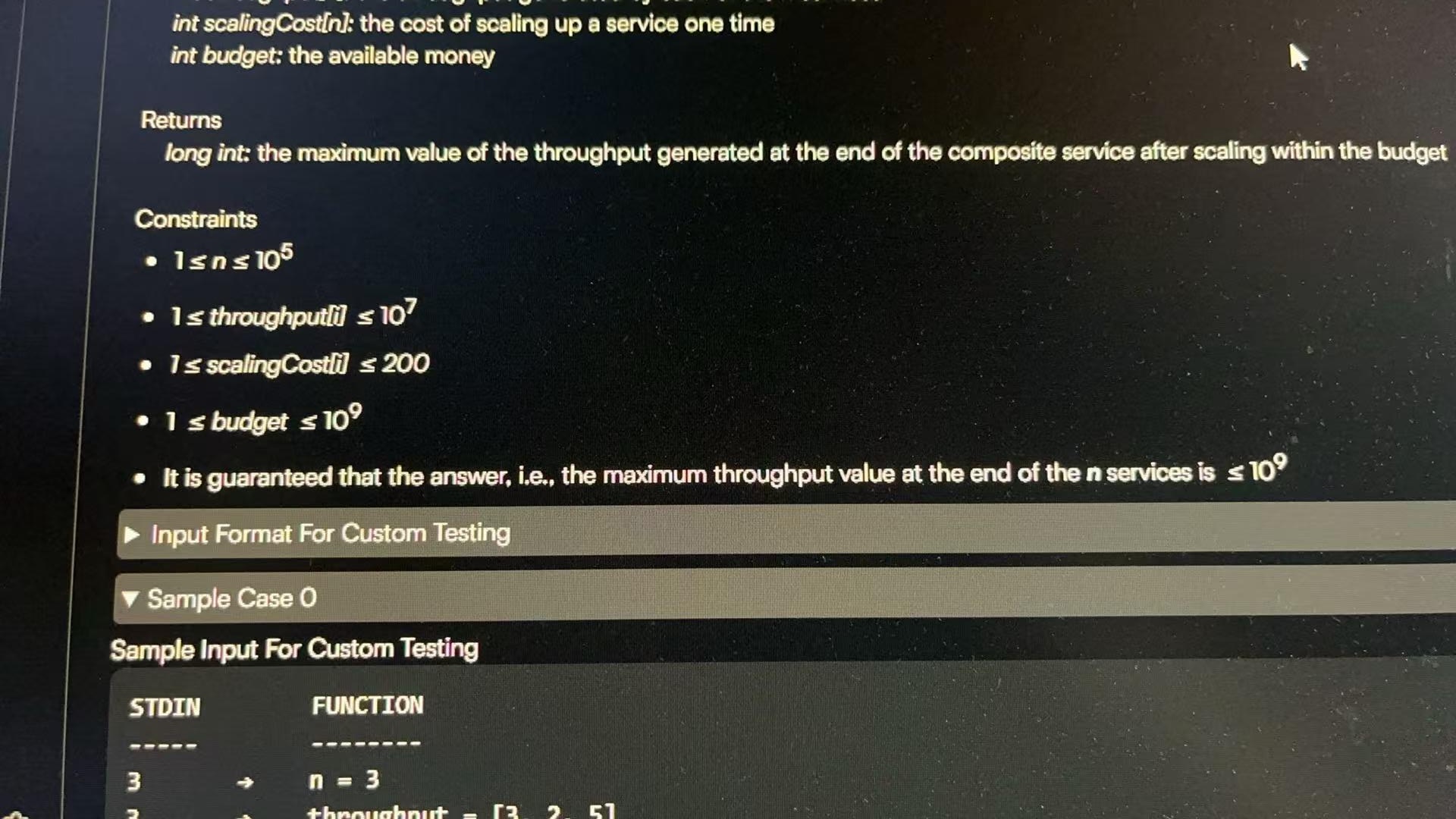
Thanks to Linkjob.ai, I was able to solve the CodeSignal questions during my interview in a timely manner.
Repeating Question Type in Uber Coding Interview: Missing Number in Array
This is another frequently tested technical question type. One of my friend faced a problem about finding a missing number or interval in a collection. This quickly evolved into merging overlapping intervals, which is a classic Uber theme because it models driver availability windows. The key here wasn't just getting the right output, but handling the edge cases—like empty inputs or single-element arrays—without my code crashing. They expect the code to be "runnable" and production-ready, not just a logic sketch.
Repeating Question Type in Uber Coding Interview:Dynamic Programming Challenge
This involved a variation of the Minimum Coins (Coin Change) problem, meant to model the minimum operations needed for a driver to reach a specific target state. The state transition dp[i]=minc∈coins(dp[i−c]+1) is standard, but the follow-up was all about memory management. My interviewer pushed me to reduce my 2D DP table into a 1D array to save space, reminding me that at Uber’s scale, even a small memory leak across a million instances can be catastrophic
Repeating Question Type in Uber Coding Interview:Graph Algorithm Question
The graph type was the hardest, as claimed by many candidates.There is this Alien Dictionary problem shared on PracHub, which is a masterclass in topological sorting. They threw a curveball: a weighted graph problem which asked the candidate to find Maximum Arbitrage or the best conversion rate between currencies. Instead of Dijkstra’s standard "minimize a sum," the candidate has "maximize a product" by swapping to a Max-Heap and changing the relaxation condition to maxRate[v]=max(maxRate[v],maxRate[u]×edge(u,v)). It was a brilliant test of whether I truly understood the algorithm or had just memorized the LeetCode solution
Experiences and Questions from Other Candidates
Talking to other people who've interviewed at Uber, you start to see a very specific pattern in what they care about. They are obsessed with geospatial logic and high-concurrency state machines.
Top Shared Uber Coding Interview Questions:
Bus Routes.Find the minimum number of bus transfers required to travel between two specific stops, typically solved using a level-order BFS.
Number of Islands II. Manage and count connected components in a dynamic grid as land is added, testing proficiency in Union-Find or graph traversal.
Alien Dictionary.Derive the character order of an unknown language from a sorted list of words using topological sorting on a directed graph.
Sliding Window Maximum.Track the maximum value in every contiguous subarray of a specific size, often using heaps or deques for streaming data
K-Nearest Drivers.Find the K closest available drivers to a rider’s location using a heap-based approach, mirroring Uber’s actual dispatch logic.
Evaluate Division.Calculate conversion rates between items (like currency exchange) given a list of known rates, modeled as a directed weighted graph.
Maximum Arbitrage. A variation of Dijkstra’s algorithm where the goal is to maximize a product of exchange rates rather than minimizing a sum.
Meeting Rooms II.Determine the minimum number of rooms required to accommodate a set of overlapping time intervals.
Minimum Window Substring.Find the smallest substring that contains all characters of another given string, testing sliding window techniques.
Coin Change (Minimum Coins).Calculate the minimum number of operations to reach a target state, a core dynamic programming problem for resource optimization.
Two Sum (High-Throughput).Find pairs that sum to a target with a focus on production optimization, such as caching results for high-read environments.
Pitfalls and Success Stories in Uber Coding Interviews
The biggest pitfall? Being "LeetCode correct" but "Production wrong". I know a guy who solved every algorithm perfectly but failed because he didn't ask a single clarifying question about the scale of the users or the latency expectations. Another common mistake is not having metrics ready for the behavioral round. When they ask about your impact, they don't want to hear "I made it faster"; they want "I reduced P99 latency by 250ms by swapping RabbitMQ for Kafka". Success stories always mention the "Think out loud" approach and treating the interviewer like a coworker you're debugging with
Preparation Tips and Strategies for Uber Coding Interview
Preparing for Uber is more like training for a sport than studying for a test. You need to build muscle memory for core algorithms so you have brainpower left for the complex follow-ups.
Recommended Study Resources
I started by gathering the best study materials. I wanted resources that went deep but also gave me practical skills. Here’s what helped me the most:
Primary
read the Uber Engineering Blog; it is a goldmine for understanding how they actually solved things like surge pricing and dispatch
Also get comfortable with the H3 library documentation, specifically functions like kRing (for proximity queries) and h3ToParent (for resolution scaling)
Mock Interviews
I practiced with online interview assistance. I advocate for Linkjob.ai. The platforms gave me real feedback and helped me get used to the pressure.
Coding Platforms
I used LeetCode and HackerRank for daily practice. These sites helped me build speed and accuracy.
I focused on CodeSignal because its problems matched Uber’s online assessments better.
I made sure to practice SQL questions every day, since Uber sometimes includes them.
Practice Routines and Time Management
Here’s how I structured my study plan:
Weeks 1-2: Focus on mastering medium-difficulty arrays, strings, and hash maps, aiming to solve them in under 20 minutes.
Week 3: This is "Graph Week"—you need to live and breathe BFS, DFS, Dijkstra, and Topological Sort.
Weeks 4-5: Shift your focus to Machine Coding and System Design, practicing "runnable" implementations of small services like a Rate Limiter.
Week 6: Run full-length mock loops and polish your behavioral stories using the STAR methodTo keep myself on track, I set short-term goals like “solve five dynamic programming problems this week.” I also set long-term goals, such as “finish the system design section by the end of the month.” I used Google Calendar to block out study time and Trello to track my progress.
Handling Stress and Test Cases
Write Tests First: During the coding rounds, writing your test cases before you touch the logic proves you are thinking about edge cases.
Don't Freeze: If you get stuck, describe a brute-force approach and explain why it's inefficient; the interviewer will often give you a nudge in the right direction.
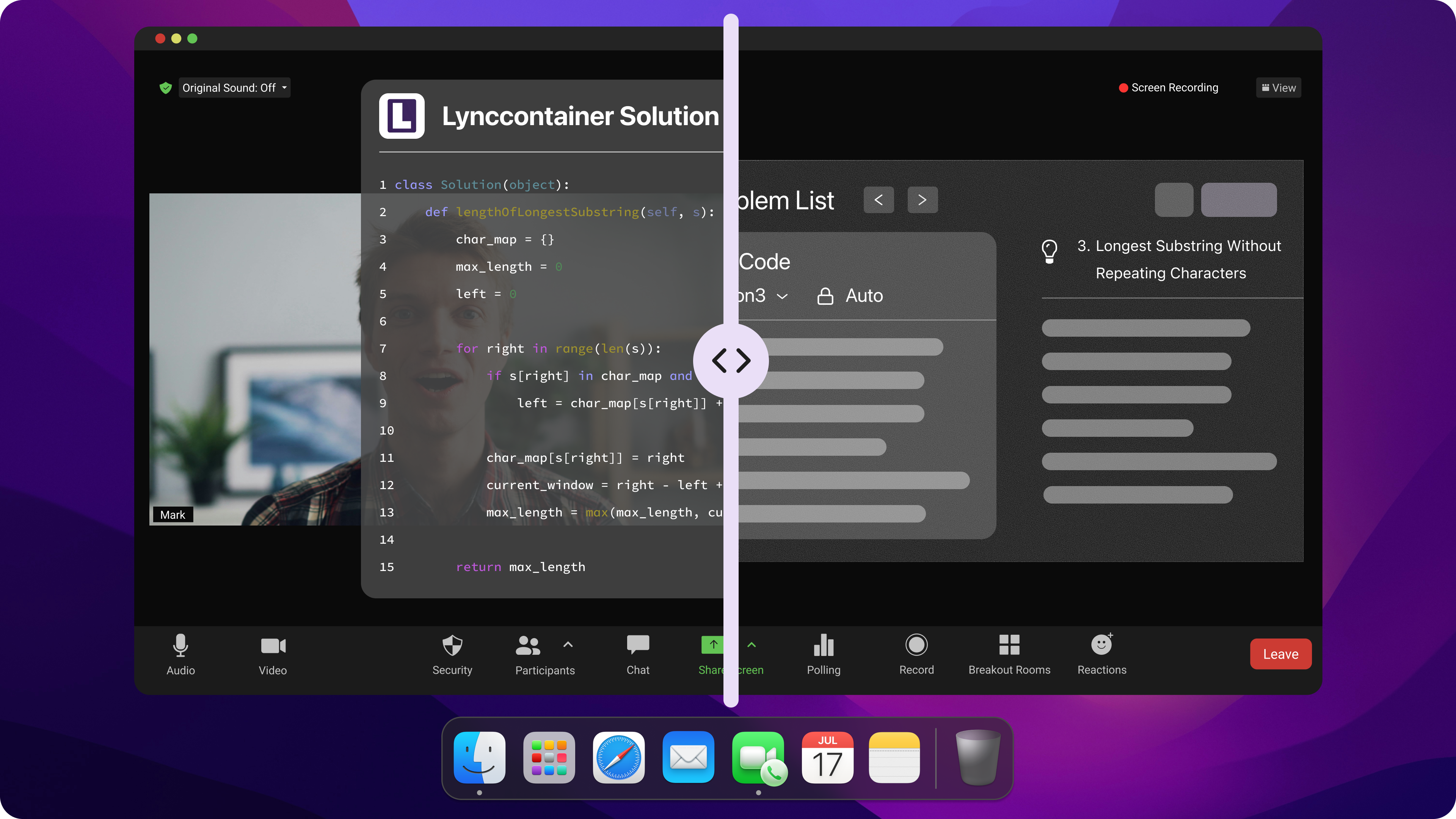
Your Secret Safety Net: Let’s be real—even with perfect prep, the stress of a 60-minute loop can make your brain go blank. That’s why I actually used an invisible AI interview assistant during my rounds. It’s a total game-changer because it’s undetectable on platforms like CodeSignal or Zoom—it doesn’t show up in your dock or Activity Monitor. During my design round, it picked up the words "dispatch matching" before my interviewer even finished the sentence and fed me a starting architecture in real-time. It’s like having a Staff Engineer whispering the right patterns in your ear when you're about to panic.
Quantify Everything: If you're designing a service, state whether you're assuming 10,000 or 10 million concurrent users.
Problem-Solving and Lessons Learned
Coding and Algorithm Strategies
BFS First: For Uber’s domain, BFS is almost always a better first instinct than DFS because it naturally finds the "minimum" operations or shortest paths.
Modularity: In machine coding, focus on abstractions; your code should be easy to extend without a complete rewrite.
Complexity Narrative: Always verbalize your time and space complexity trade-offs before the interviewer asks
Effective Communication
Be the Pilot: Start every round by repeating the problem back to the interviewer to ensure no details were missed.
Quantify Impact: Use the STAR method to frame your past projects, ensuring you have specific P99 latency or throughput numbers ready.
Collaborate: Treat the session as a pair-programming exercise; the interviewer is looking for a future teammate, not a calculator
Mistakes and Mindset Shifts After the Uber Coding Interview
My biggest mindset shift was moving from "solving a puzzle" to "building a product" for a rider waiting in the rain:
Mistake | How I Fixed It |
|---|---|
Coding without talking | I used a real-time AI assistant, Linkjob.ai, that gave me the confidence to narrate my design choices while it helped me keep track of production-grade patterns |
Treating behavioral rounds as fluff | I rewrote my stories to explicitly use Uber values like "Go Get It" and "Trip Obsessed" |
Designing for planet-scale immediately | I started with a functional base and discussed how to scale it to millions of users during the follow-up |
Assuming code was correct on the first pass | I adopted a habit of writing 3-4 test cases (empty, single, large, duplicate) before I touched the logic |
Mastering these shifts—and perhaps having a little extra help when the pressure gets intense—is what ultimately transforms you from a "LeetCode correct" candidate into a production-minded engineer ready for the Uber ecosystem.
FAQ
How did you choose which programming language to use in the interview?
I picked the language I knew best—Python.Because when you’re facing a "Hard" problem, you don't want to be fighting with syntax. Uber is actually pretty flexible; they expect you to be proficient in at least one major language like C++, Java, or Python.The key is to choose the one you’re most comfortable with so you can focus on the logic rather than looking up library functions.
What should I do if I get stuck on a coding problem?
Don't go silent. Silence is the biggest signal-killer in an Uber interview because the interviewer can't tell if you're stuck on the logic or just thinking.
How do you practice system design questions for Uber?
I sketch out high-level diagrams on paper. I focus on scalability, reliability, and real-interview questions. I practice explaining my design choices step by step. Here is where you could check interview questions for uber on hackerrank.
How do you handle time pressure during the interview?
I use an AI online interview assistant. It operates completely in the background and remains fully undetectable throughout every live coding and behavioral interview session.
Should I memorize solutions or focus on understanding concepts?
Focus on the concepts, 100%. Uber’s question pool is curated for depth, and they love throwing curveball follow-ups that break any "memorized" solution.
See Also
How ES6 Interview Questions Helped Me Land a Job
Insights From My 2026 Oracle Software Engineer Interview
Navigating My 2026 Perplexity AI Interview Journey
Why People Choose Linkjob AI
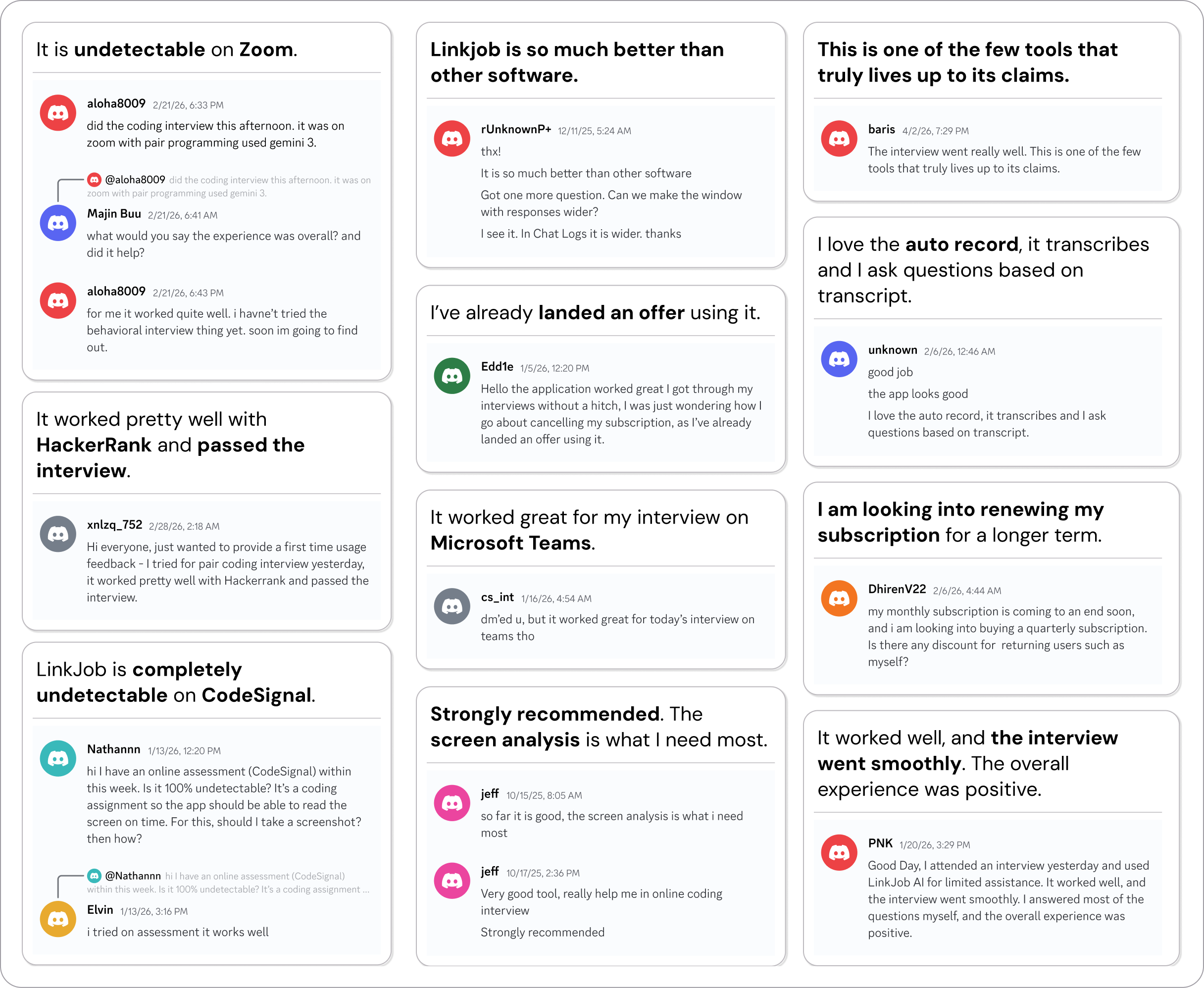
Smoother interviews, coding challenges cleared, and job offers landed. See how users describe their experience with Linkjob AI—in their own words.