My 2026 Wells Fargo Software Engineer Interview Questions


Preparing for the Wells Fargo software engineer interview, I found the scope of the assessment to be incredibly comprehensive—covering everything from coding algorithms and hands-on SQL/Python, to the difference between RESTful and SOAP web services, and even the STAR method for behavioral questions. Every part demanded solid preparation. I used an AI interview assistant to help me tackle each area methodically.
Wells Fargo Software Engineer Interview Questions
Wells Fargo Online Assessment Questions
Here’s how I break down the main types of questions and how I tackle them.
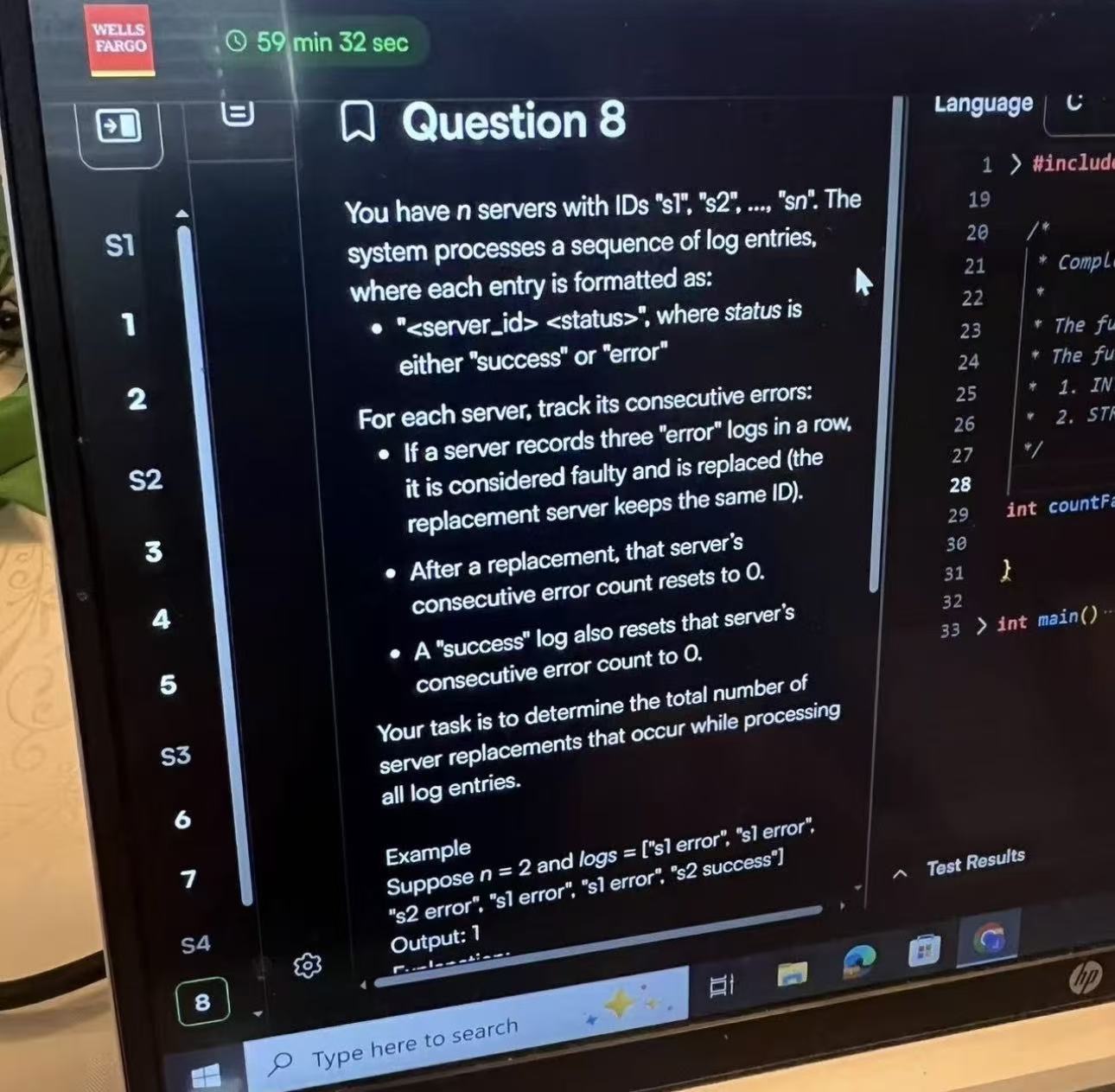
Q8: Use a hash table to record the consecutive "error" count for each server. When encountering "success", reset the count for that server to zero; when encountering "error", increment the count by one. If the count reaches 3, increment the replacement count by one, reset the count to zero, and continue processing all logs. Finally, return the total number of replacements.
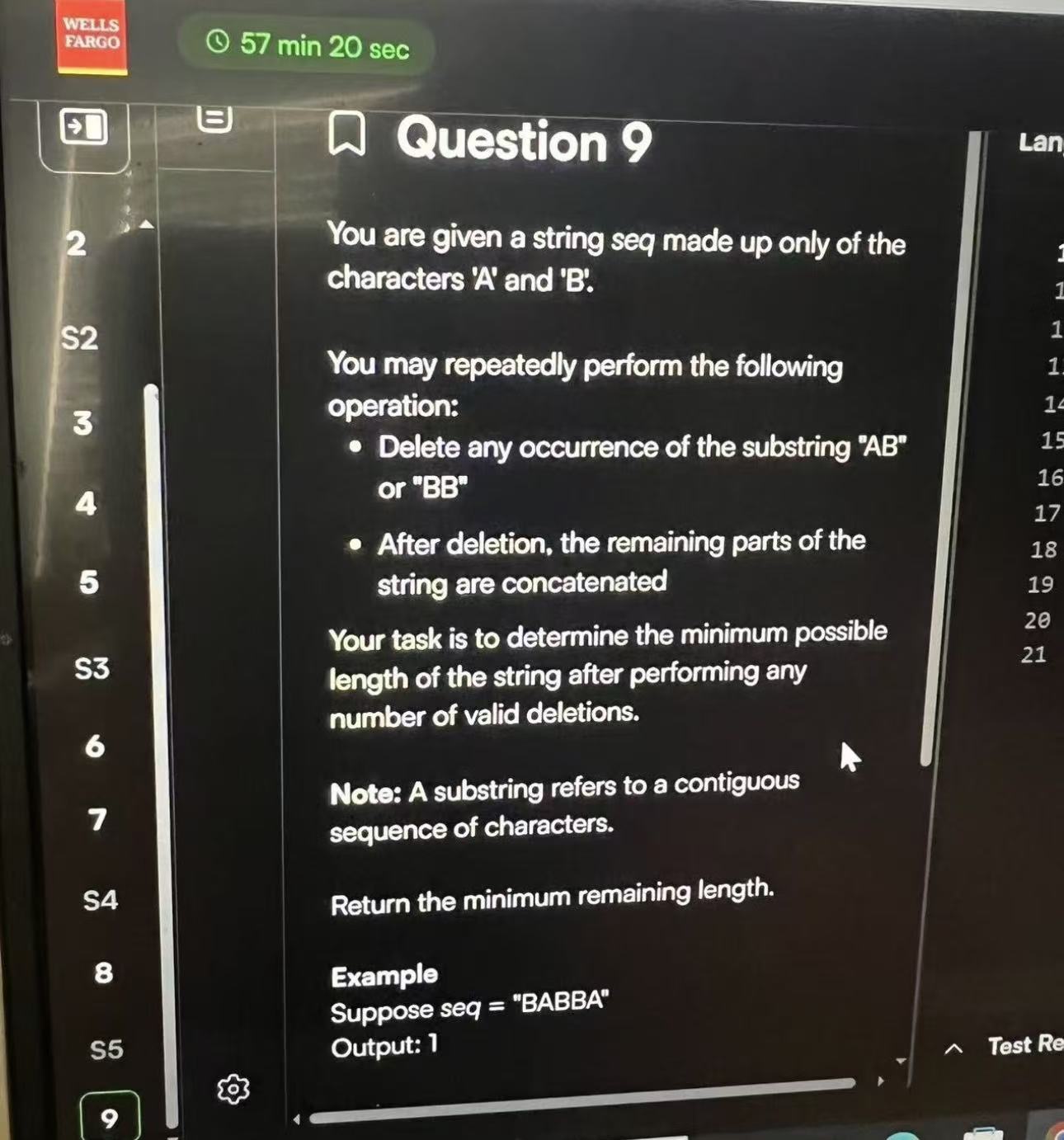
Q9: The ability to delete "AB" or "BB" is equivalent to: every time a 'B' is encountered, if there is a character to its left, they can form a deletable pair and be removed together. Use a stack simulation: when reading 'A', push it onto the stack; when reading 'B', if the stack is not empty, pop the stack (remove a pair), otherwise push it onto the stack. The final length of the stack is the minimum remaining length.
Object-Oriented & Java Concepts
Interspersed with coding, I got theoretical questions:
Can a destructor be overloaded? (No, destructors don't support overloading in Java—Java uses finalize() instead)
Overloading vs overriding (compile-time vs runtime polymorphism)
Why pointers are not there in Java? (security and simplicity—Java handles memory references internally)
Garbage collection in Java (explained mark-and-sweep, generational GC, and when System.gc() actually runs)
Final, Finally, Finalize (final for constants/inheritance, finally for exception handling, finalize for cleanup before GC)
While preparing for my interviews, I also came across the "Oracle Senior Software Engineer Interview" content, which was very helpful as well.
Coding & Algorithm Questions
I get questions about data structures, sorting, searching, and memory management. Here’s a list of common coding and algorithm questions I’ve seen:
Dynamic memory allocation and examples
Can destructor be overloaded
Compile time exception vs runtime exception
Stack overflow
Method overloading (Implement)
Can return type be different for method overloading
Real-world use of binary search
Find the max element in an array
Bubble sort
Avoiding palindromic substrings of length two or three
Verbal Arithmetic Puzzle: Determine if an equation where words represent numbers can be solved
Minimizing Array After Replacing Pairs With Their Product
Arrays, linked lists, trees, and graphs
Sorting and searching algorithms
During the interview, I get asked to solve three coding problems. I show both brute-force and optimized answers. For example, I might need to find the length of the longest substring with non-repeating characters, implement a queue using two stacks, or create a palindrome checker. I always explain my thought process and write code that is easy to read.
# Example: Find the max element in an array
def find_max(arr):
    max_val = arr[0]
    for num in arr:
        if num > max_val:
            max_val = num
    return max_val
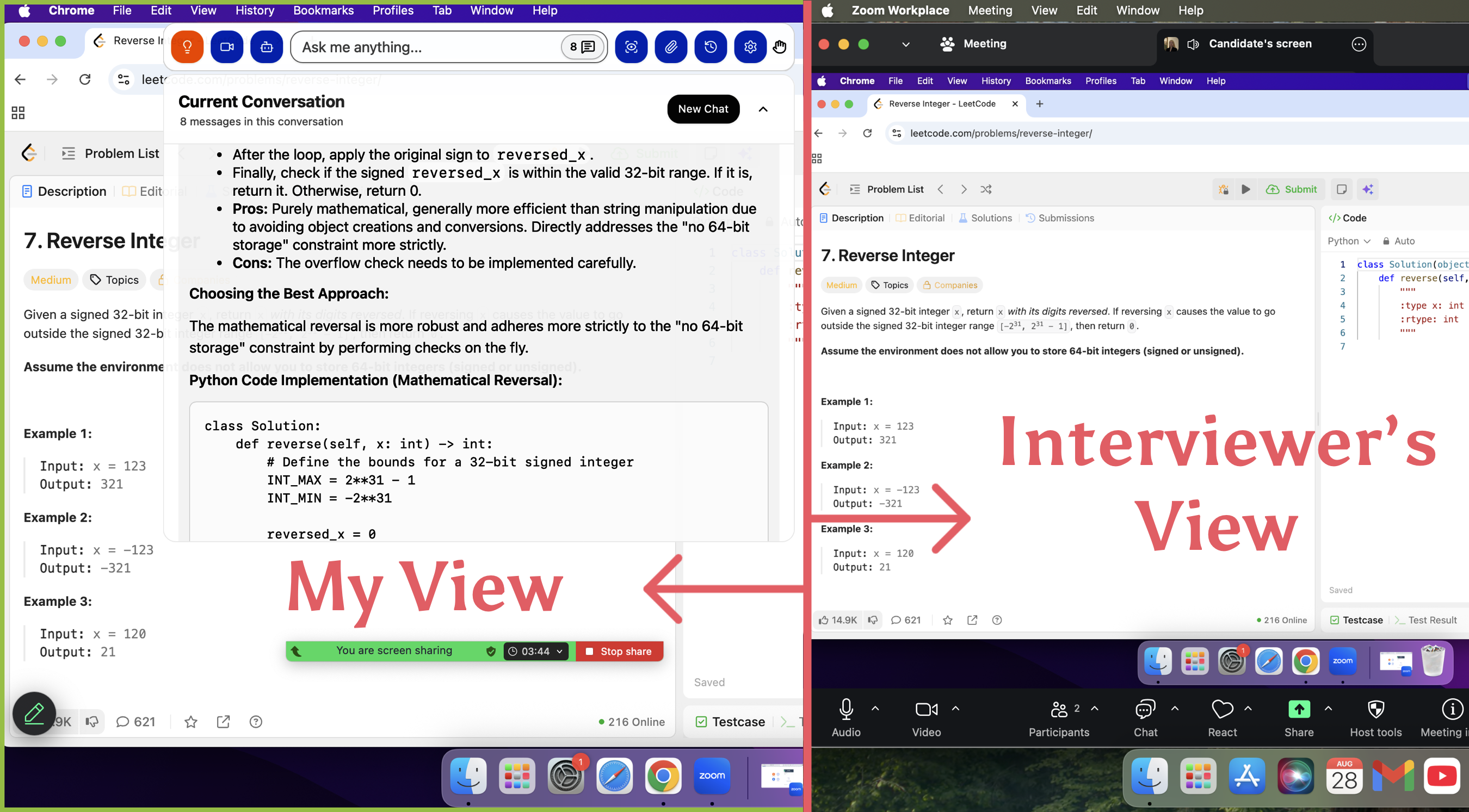
Linkjob AI worked great during the interview, and I managed to use it without being detected. The two interview reviews I read beforehand were also a huge help—they shared experiences from the Anthropic Software Engineer interview and specific questions from the Roblox Software Engineer interview. They really helped me understand the types of questions and specific technical problems I might encounter in a Software Engineer interview.
Wells Fargo Software Engineer Interview Process
Application & Resume Review
When I start the wells fargo software engineer interview, I pay close attention to my resume. Here’s a table that shows what they expect:
Criteria Type | Specific Criteria |
|---|---|
Required Qualifications | Industry-standard technology certification, strong communication skills, Agile experience, HTML, JavaScript, CSS, J2EE, Java, UNIX, Web Services, Cloud technologies, Kubernetes, Cloud Foundry, organizational skills, collaboration, technical and quantitative skills, root cause analysis |
Other Desired Qualifications | Leadership in fast-paced environments, high production standards, hands-on Cloud Technologies (AWS/PCF), Microservices, development ecosystem apps (JIRA, ALM), database applications (Oracle/Teradata), Data warehousing, ETL tools, PCF hosted apps, database design and optimization, Spark, Python, Scala |
I check every item and highlight my experience with coding, technical projects, and teamwork.
Recruiter Screening
After submitting my application, I get a call from a recruiter. This stage feels selective. Only about 30-40% of applicants move forward. I prepare to talk about my technical skills and my experience as a software engineer. I focus on clear communication and show my passion for coding.
Technical Assessment
The technical assessment tests my coding and problem-solving abilities. I practice coding test questions and review data structures and algorithms. Wells Fargo wants to see strong technical skills. I use Python and Java to solve problems quickly. I also study web services and cloud technologies.
Web Services (RESTful & SOAP)
Web services questions are a big part of the software engineer interview. I get asked about RESTful and SOAP services, their differences, and when to use each. The interviewer wants to know if I understand how web services work in a banking environment.
What are SOAP and RESTful web services?
When and why would you use SOAP versus RESTful services?
In a banking context, I would choose SOAP for operations requiring high security and reliability.
I always prepare answers that show I understand both protocols. I explain how RESTful services are lightweight and easy to use, while SOAP is better for secure and reliable transactions. I practice describing real-world scenarios where I would pick one over the other.
Behavioral & Situational Questions
I get behavioral questions about teamwork, leadership, and handling feedback. The interviewer asks me to share stories from my past work and explain how I solve problems under pressure.
I use the STAR method (Situation, Task, Action, Result) to structure my answers. I make sure my stories show how I align with Wells Fargo’s values and work well in a team.
Wells Fargo Software Development Engineer Preparation
Study Topics & Resources
When I start preparing for a software development engineer role, I break down my study plan by weeks. I focus on the most important topics first. Here’s a table that helps me organize my preparation:
Study Topic | Duration |
|---|---|
Data Structures & Algorithms | Weeks 1-2 |
System Design | Weeks 3-4 |
Behavioral & Leadership | Week 5 |
Mock Interviews & Final Review | Week 6 |
I also make a checklist of technical skills. I study Java, SQL, web services like RESTful and SOAP, object-oriented programming concepts, database management, agile methodologies, and continuous integration tools such as Jenkins. I use online platforms like LeetCode and HackerRank for coding practice. Additionally, I used a tool called LinkJob.ai, which was incredibly helpful for structuring my approach and tackling real-world coding scenarios efficiently. I read Wells Fargo guides and look for candidate experiences on forums.
Final Checklist Before Interview Day
Review all LeetCode top 100 questions (medium difficulty)
Practice explaining code without running it
Prepare 5 STAR stories with measurable outcomes
Re-read Wells Fargo engineering blog posts
Test microphone and camera setup (for virtual interviews)
Do one last mock interview with LinkJob.ai
If you're preparing right now, trust the process. The questions feel overwhelming when you list them out, but when you break them into weekly chunks and practice with the right tools, you'll walk in knowing you've done the work. I did—and it paid off.
FAQ
What should I focus on for the Wells Fargo software engineer interview?
I always start with system design, coding, and communication. Practicing technical interviews helps me feel ready. I review my interview experience and learn from others. I build projects to show my skills.
How do I prepare for system design questions?
I sketch diagrams and outline my ideas. I break down the system design problem into smaller parts. I use real-world examples from my interview experience. Practicing with friends helps me explain my solutions clearly.
What resources help with technical interviews?
I use LeetCode, HackerRank, and mock interviews. I read guides about system design and review my interview experience. I join online forums to ask questions and get feedback.
How do I handle behavioral questions during the interview?
I use the STAR method. I share stories from my interview experience. I focus on teamwork and leadership. I connect my answers to system design challenges I faced.
Why does Wells Fargo care about system design?
Wells Fargo values strong system design skills. I show how I solve real problems and build scalable solutions. My interview experience proves I can handle complex projects. I always explain my design choices.
See Also
How I Passed My 2026 Notion Software Engineer Interview
My Flexport Software Engineer Interview Journey in 2026
How I Aced the Goldman Sachs Software Engineer Online Assessment in 2025
My Experience Navigating the Tesla Software Engineer Interview
© Copyright 2025 Linkjob.ai - All Rights Reserved.