Chiku AI Review: Pros, Cons, and My Experience


TL;DR, Chiku AI's version of tab-sharing isn't fully invisible, and its truly invisible app has major issues when it comes to answering behavioural interview questions and solving LeetCode problems. And that's why I still went with my invisible interview copilot, Linkjob AI.
This time, the experience with Chiku AI was different from what I've usually mentioned in my InterviewMan review: Chiku AI's marketing hype is focused more on short-video platforms, which is how I came across its homepage. I thought I'd write another review, just like I did in my Sensei AI review and Lockedin AI review.
The review process was pretty much the same as before: I had a look at what Chiku AI was offering; I tested it for myself to make sure it was really invisible; and finally, I had a look at the refund policy and privacy terms, just to avoid any nasty surprises like the "no invisibility guarantee" that was tucked away in the small print in my Cluely review.
Before Chiku AI Review: Features Overview
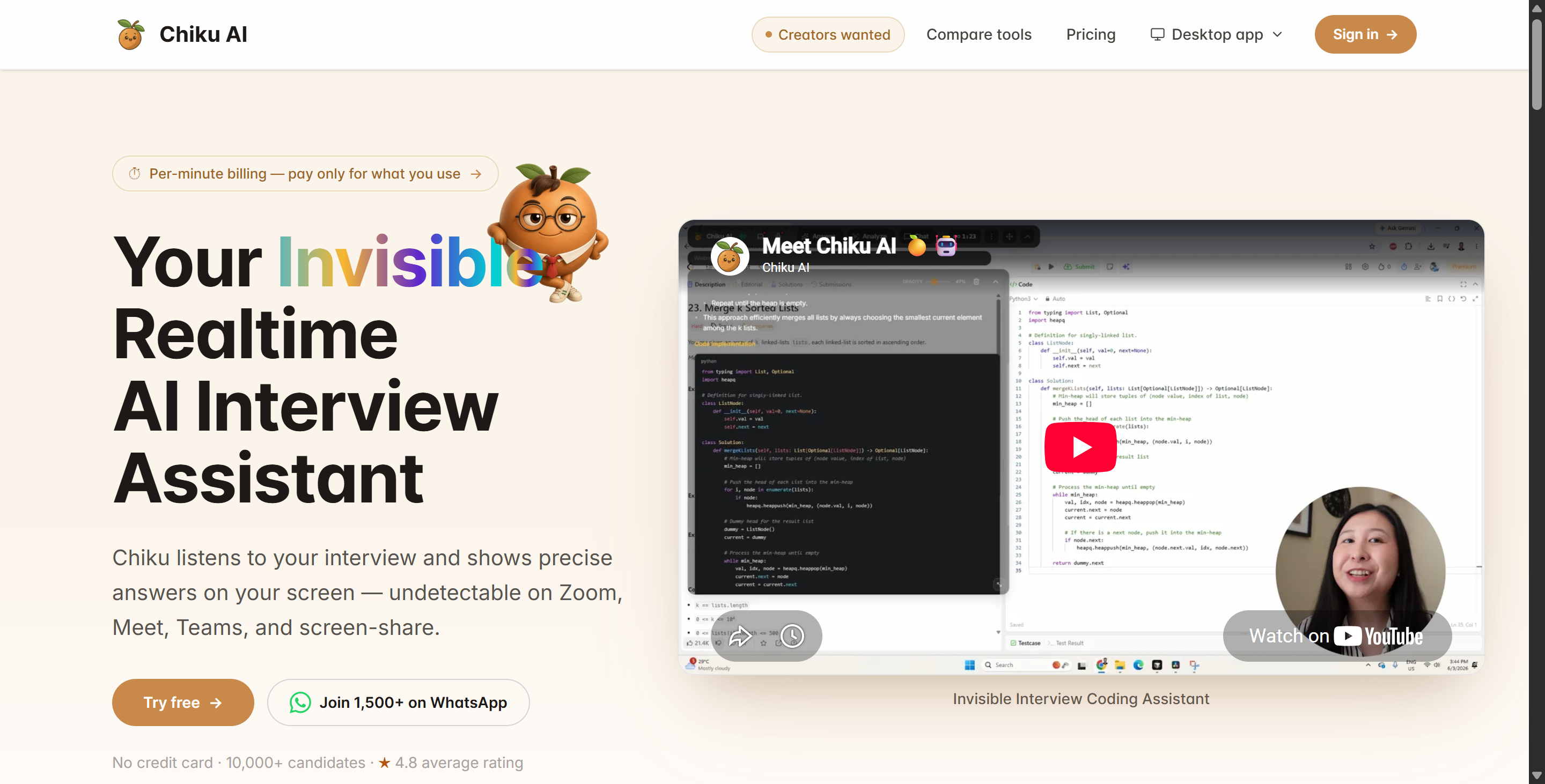
What Is Chiku AI? What Do I plan for My Chiku AI Review?
I knew I had to understand how this tool differs from other similar products before I began writing this Chiku AI review. Chiku AI is moving away from its old tagline of "Built specifically for the Indian job market" and instead positioning itself as a discreet and user-friendly real-time AI interview assistant.
Its features can be roughly divided into the following categories:
Real-time feedback during interviews and mock interviews
Screenshot analysis to address OA issues
Support for uploading resumes, with the option to select which resume to use before the interview begins
Job recommendations based on the resume you upload
AI resume generator and ATS-friendly templates
And I tested the core features that are used when taking interviews: real-time answers, undetectability, and screenshot analysis.
Chiku AI Review: Is It Worth It?
First Impressions
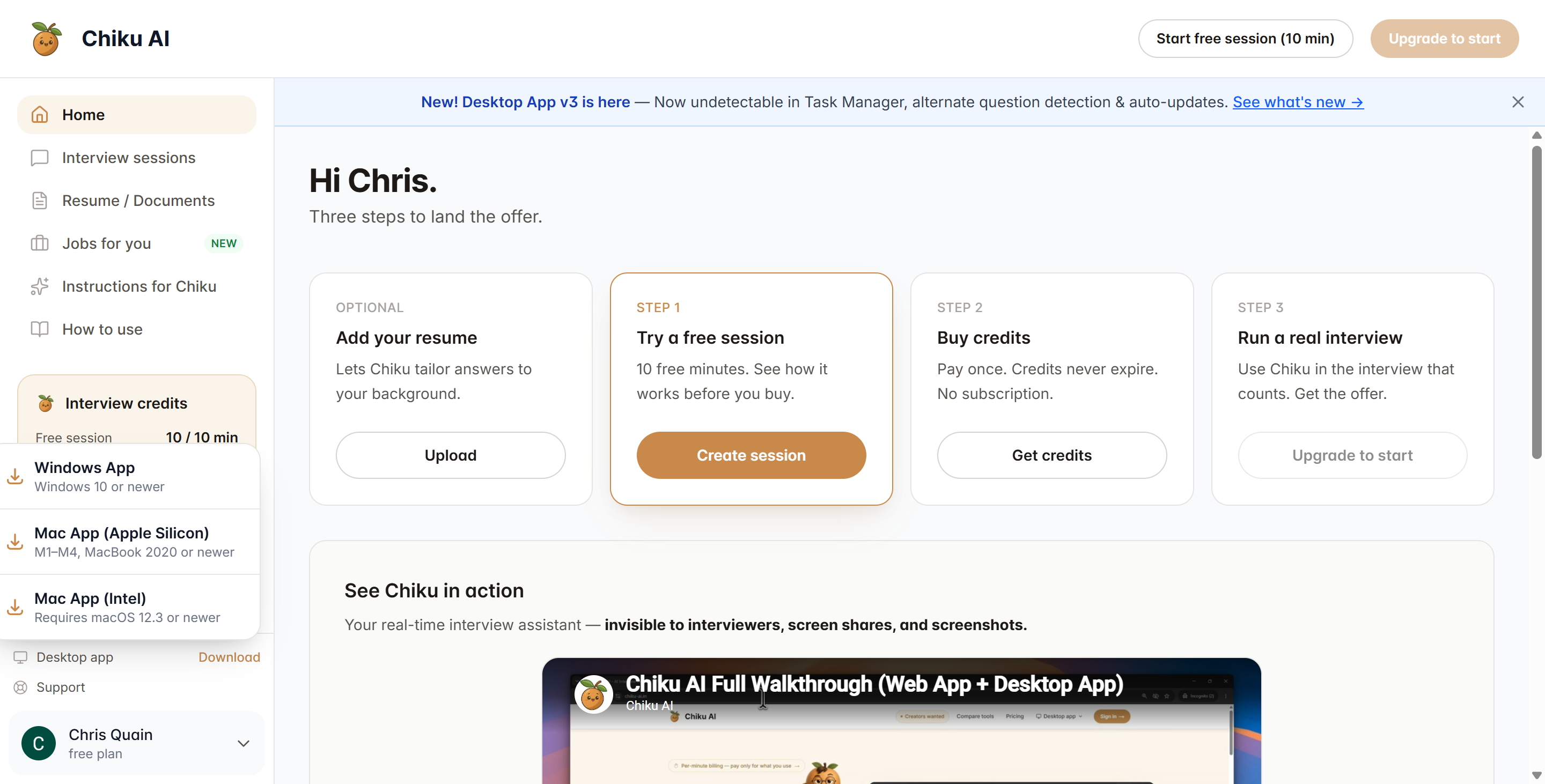
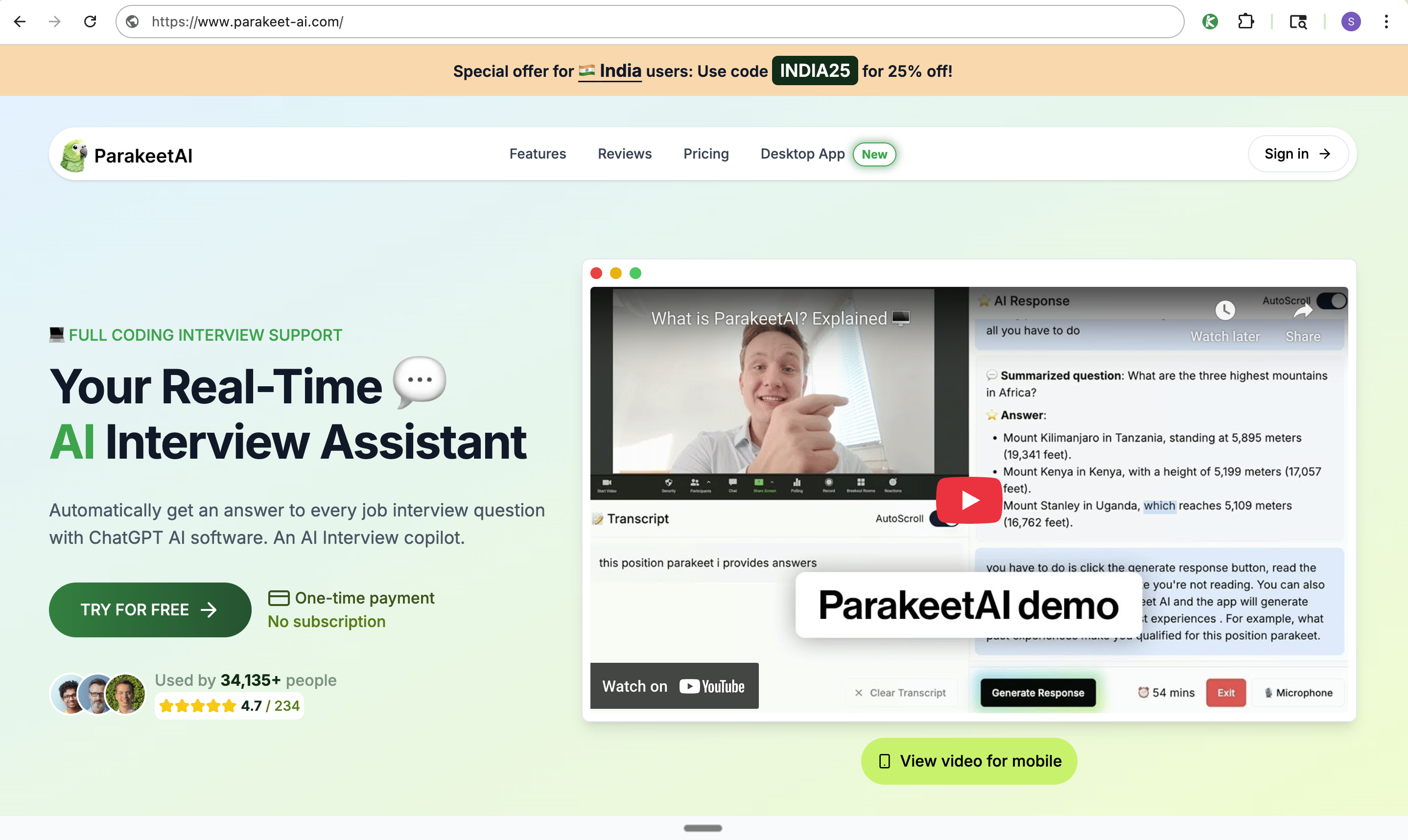
When I went to the Chiku AI homepage, I just had a feeling that something wasn't quite right. The way Chiku AI has been designed, along with all its different parts, is pretty much the same as Parakeet AI. When I clicked on the "Free Trial" tab, the interface that appeared was the same as Parakeet AI's, but there were a few differences, like the main colour scheme. To be honest, I thought that was a bit disappointing.
I gave its Tab-based interview copilot a quick try, but as I thought it might, it couldn't guarantee perfect undetectability. The answers didn't come across as sharp or helpful as those generated by AI, but they were decent enough – I'll talk more about this in the "Cons" section later.
I couldn't find the "Desi Mode" toggle, even though it was in other Chiku AI reviews. I reckon it must have been a feature in older versions that they gradually stopped using — Chiku AI probably just changed its target audience.
Real-World Performance: Where the Tracks Align—and Fail
Once I'd confirmed the issue was down to the tab-sharing mode, I downloaded the Chiku AI desktop app. It does stay invisible, though – I couldn't take a screenshot – and during testing, I didn't notice it suddenly popping up in others' views when sharing in full-screen mode. I went for the best Claude Sonnet model it offered for testing. After doing a bunch of practice technical and behavioural interviews, I felt that this hands-on experience showed some serious limits of Chiku AI.
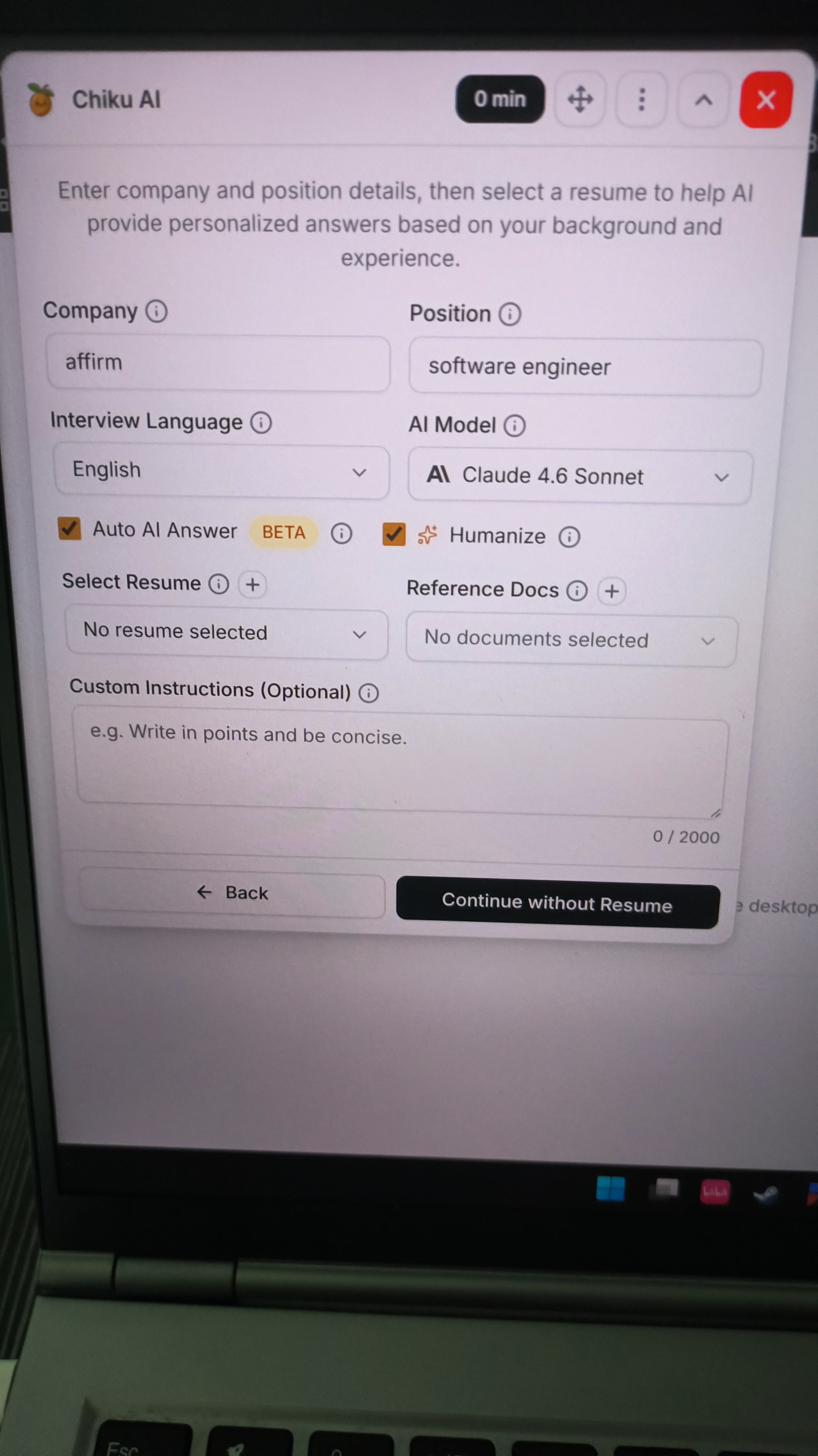
1. Clunky Startup Lag & Single-Line Text Mashing
As the real-time conversation got going, problems popped up.
Chiku AI experienced noticeable lag within the first five seconds after I clicked "Start" and sometimes froze.
The audio transcription speed was good, but the text is all squished into a single line. The system then took a moment to analyse that line of text, extract the question, and highlight it on the screen.
2. The LeetCode Hard Brick Wall
If you're taking tests for the best tech companies, don't count on this tool.
Even when I used Claude 4.6 Sonnet, the most advanced model offered by Chiku AI, it still can't handle complex problems or scenario-based questions.
When it came to tough LeetCode problems or complex system design tasks, it usually produced flawed logic and the wrong code snippets. I'll go through these in more detail in the next few sections.
3. Basic Conversational Clichés for HR Rounds
To be fair, Chiku AI's answers don't sound totally robotic. They're a bit more natural than those old-fashioned text generators.
The content was a bit limited, though. It was pretty good at answering basic questions, but the answers it came up with were a bit samey and predictable.
It just didn't have the strategic depth, quantitative metrics, or the ability to understand the situation that you need for high-stakes, high-level corporate interviews.
Chiku AI Review: Cons
Apart from the earlier issue of the answers being too formulaic and not suited to senior-level positions, there are actually some bigger problems with Chiku AI that can't be ignored.
Wrong Answers for LeetCode Questions
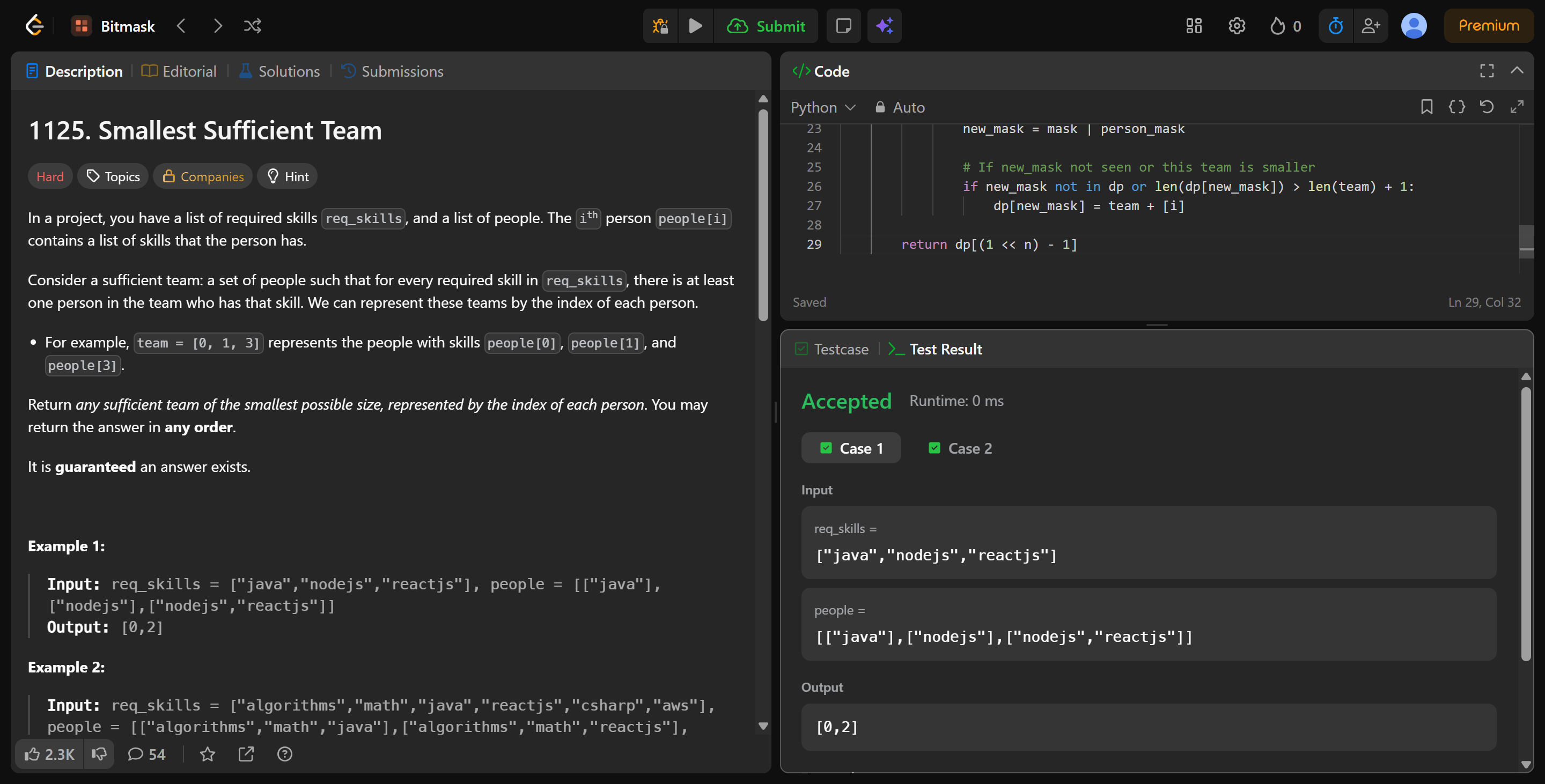
When I was practising, there was one thing that really surprised me (in a bad way). The thing is, the AI gave the wrong answers to even the hardest LeetCode problems. As you can see in the screenshots below:
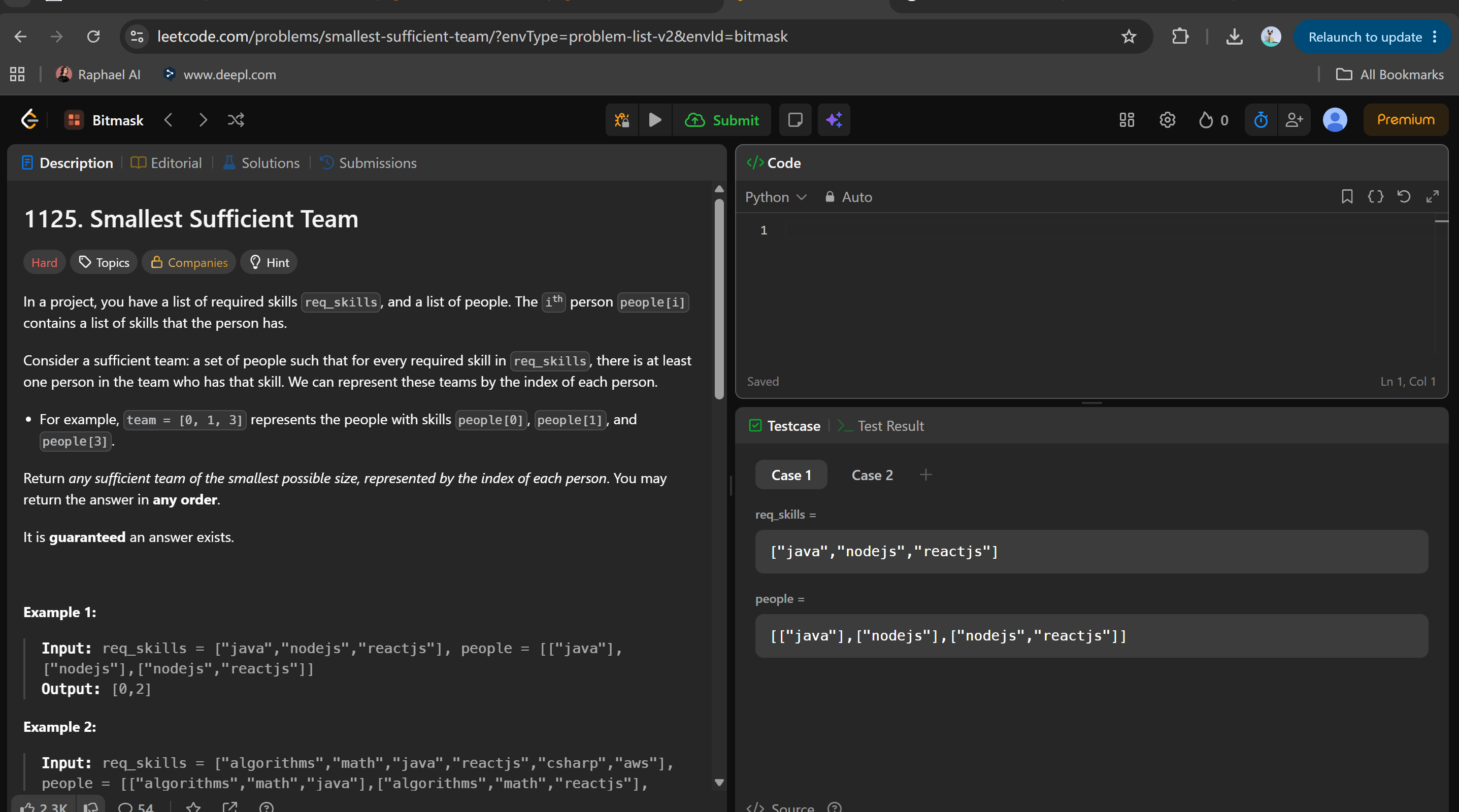
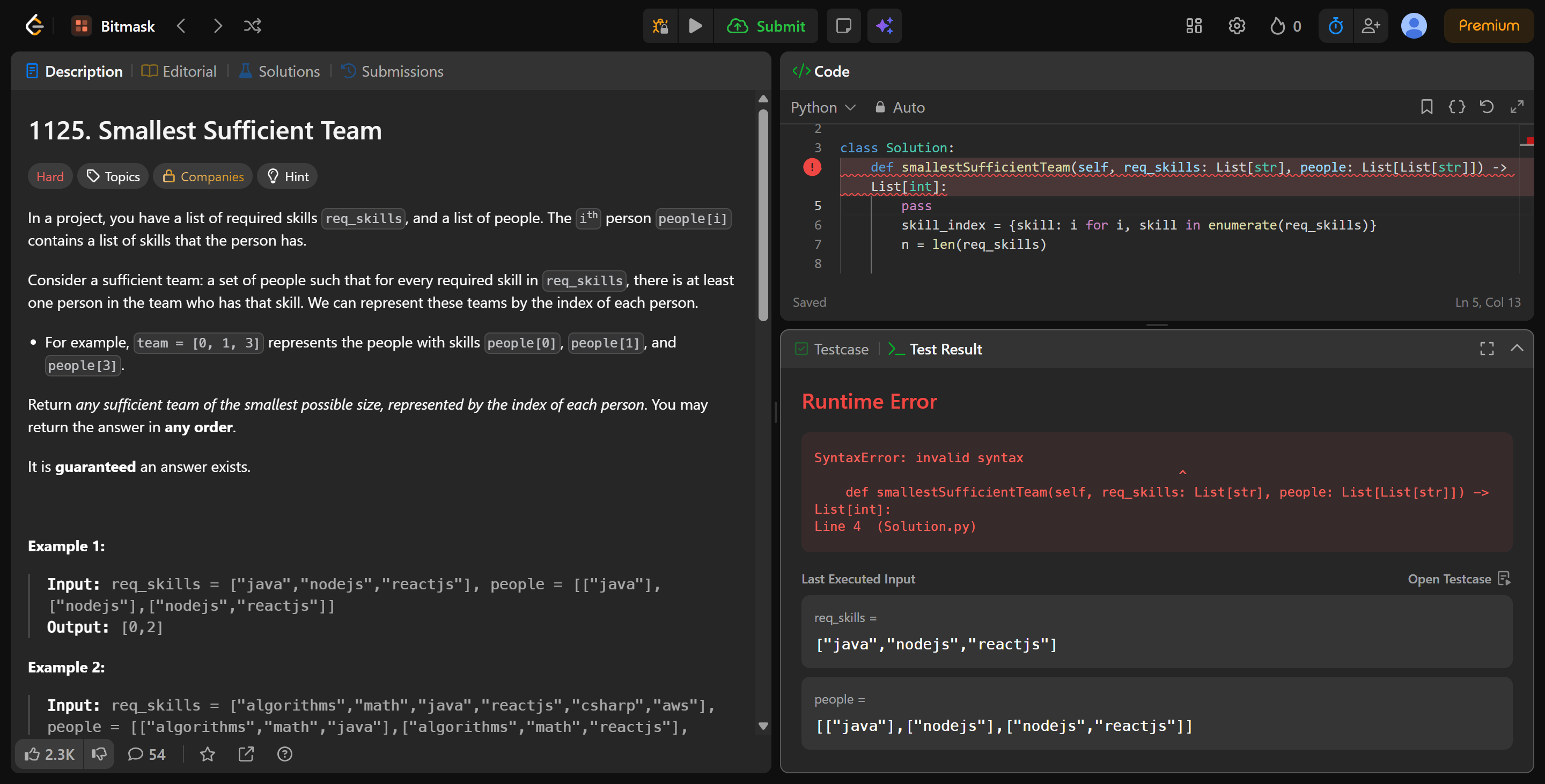
To be honest, sometimes the solutions provided by Chiku AI just weren't right, or they missed some of the smaller details. I had to double-check the answers myself.
Chiku AI's model performance often didn't match the model it claimed to be using. I mean, even taking a screenshot and sending it to Claude would get the right answer. I tried the same conditions and got the same result as before when I used Linkjob AI's Claude 4.6 Sonnet model – see the images below.
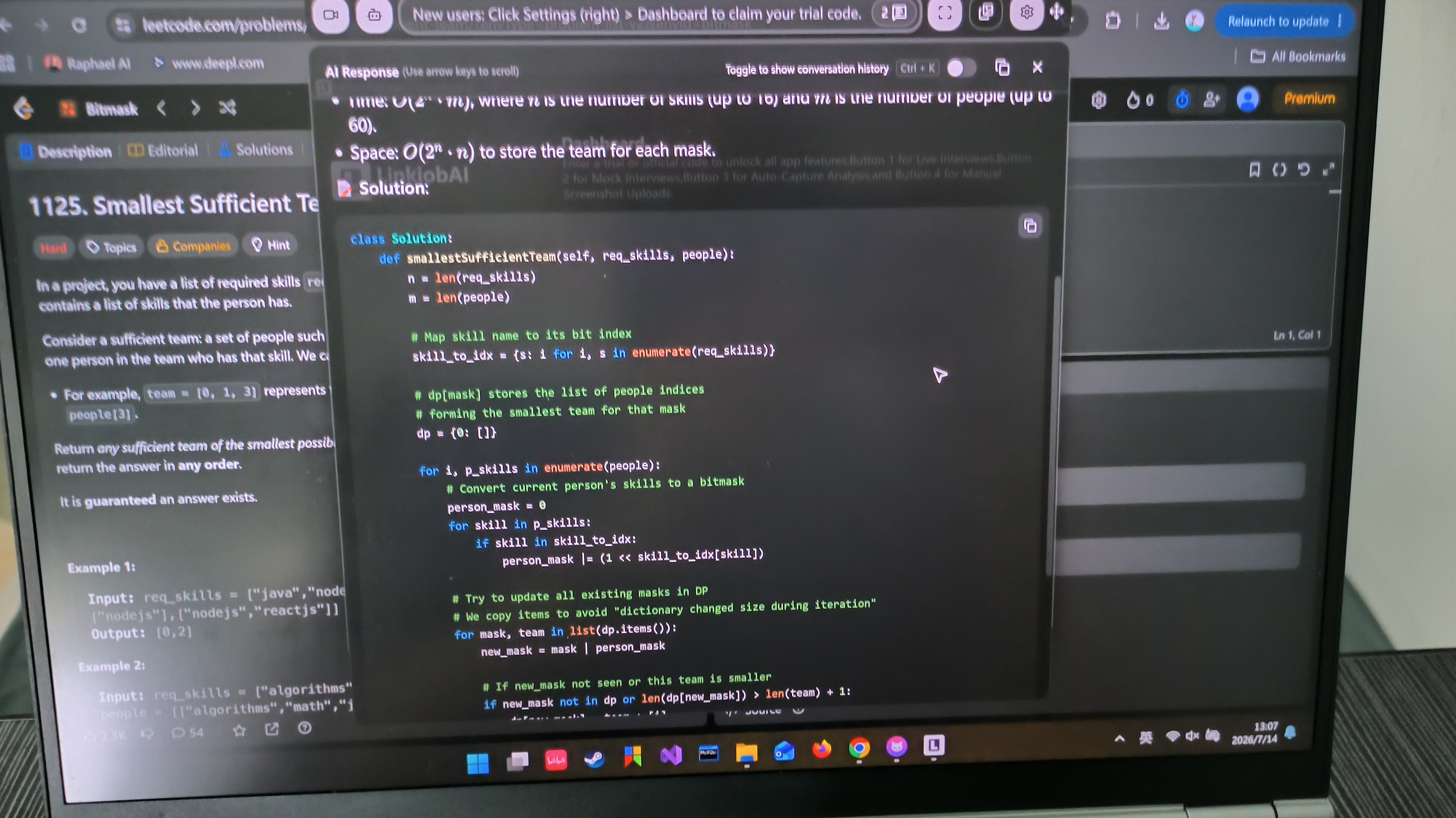
100% Visible Tab Mode
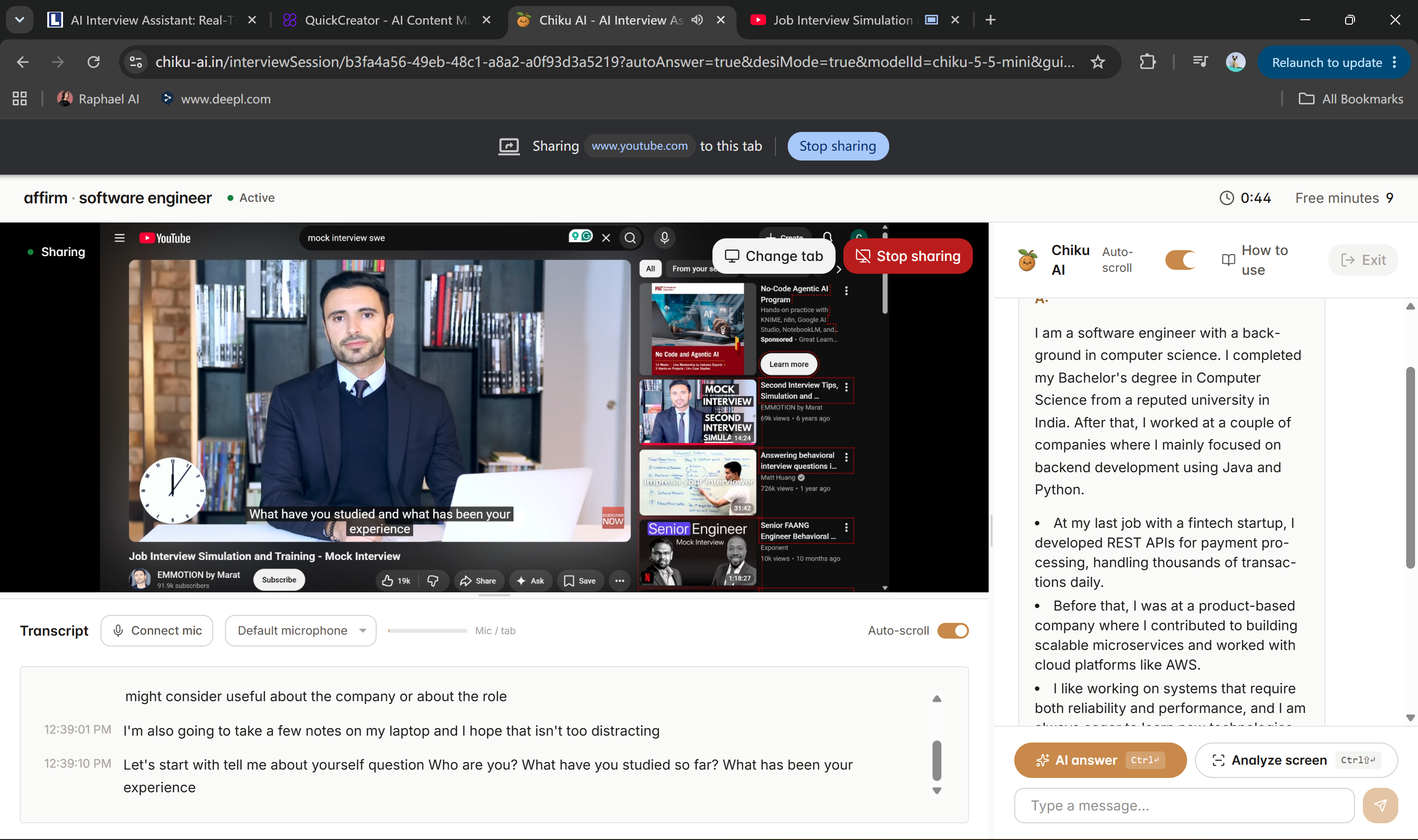
Another thing that bothers me is this 100% visible tab-sharing mode.
When I tried out Chiku AI in my browser, I found that, just like other interview assistants with limited sharing capabilities, it can only be used when full-screen sharing isn't required. But how many remote interviews these days don't require full-screen sharing? And then there's active tab detection and OA tests where you can't switch tabs, and so on.
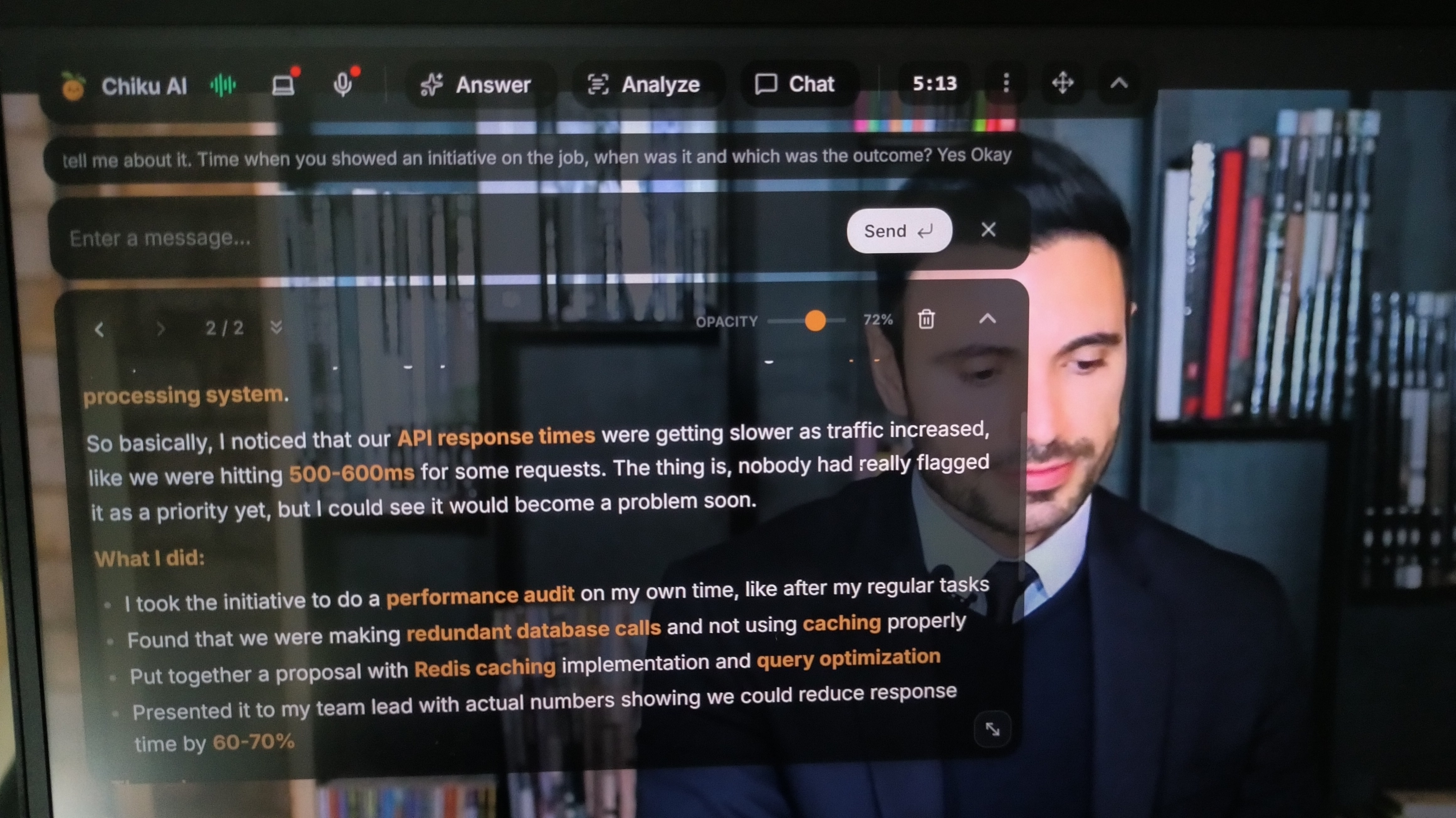
Different APP Name to Hide Process

As you can see in the image above, the app's actual name is not "Chiku AI." So, Chiku AI won't show up in the background, whether you're checking with Task Manager or Activity Monitor.
But this is just a trick. I'll still get caught out if they're using proctoring software that can spot background processes during the interview. They'll think I'm using Unihost instead of Chiku AI. Basically, Chiku AI can still be detected, unlike Linkjob AI, which can completely hide its program.
Chiku AI Review: However, It Still Holds Pros
User-Friendly Design
I love how easy it feels to use Chiku. The dashboard looks clean, and I never get lost searching for features. The buttons stand out, so I always know where to click next. I can start a mock interview in seconds. The layout makes sense, and I do not need to read a manual to figure things out. Even if you have never tried an ai tool before, you will feel comfortable here. I think this design helps me focus on practicing, not on learning a new system.
Tip: If you want to save time, use the quick-start option on the home page. It gets you into a session right away.
Personalization Features
Personalization stands out as one of my favorite parts. I can upload my resume, and the AI tailors questions to my background. This makes every session feel unique. I also get to pick the type of company and role I want to practice for. The AI changes its questions based on my choices. Sometimes, I switch between fresher and experienced modes to see different question styles. This flexibility keeps my practice interesting and relevant.
Here’s a quick table showing what you can personalize:
Feature | What You Can Do |
|---|---|
Resume Upload | Get custom questions |
Role Selection | Target specific jobs |
Difficulty Level | Adjust for your comfort |
Language Choice | Practice in English or Hindi |
Pricing and Plans
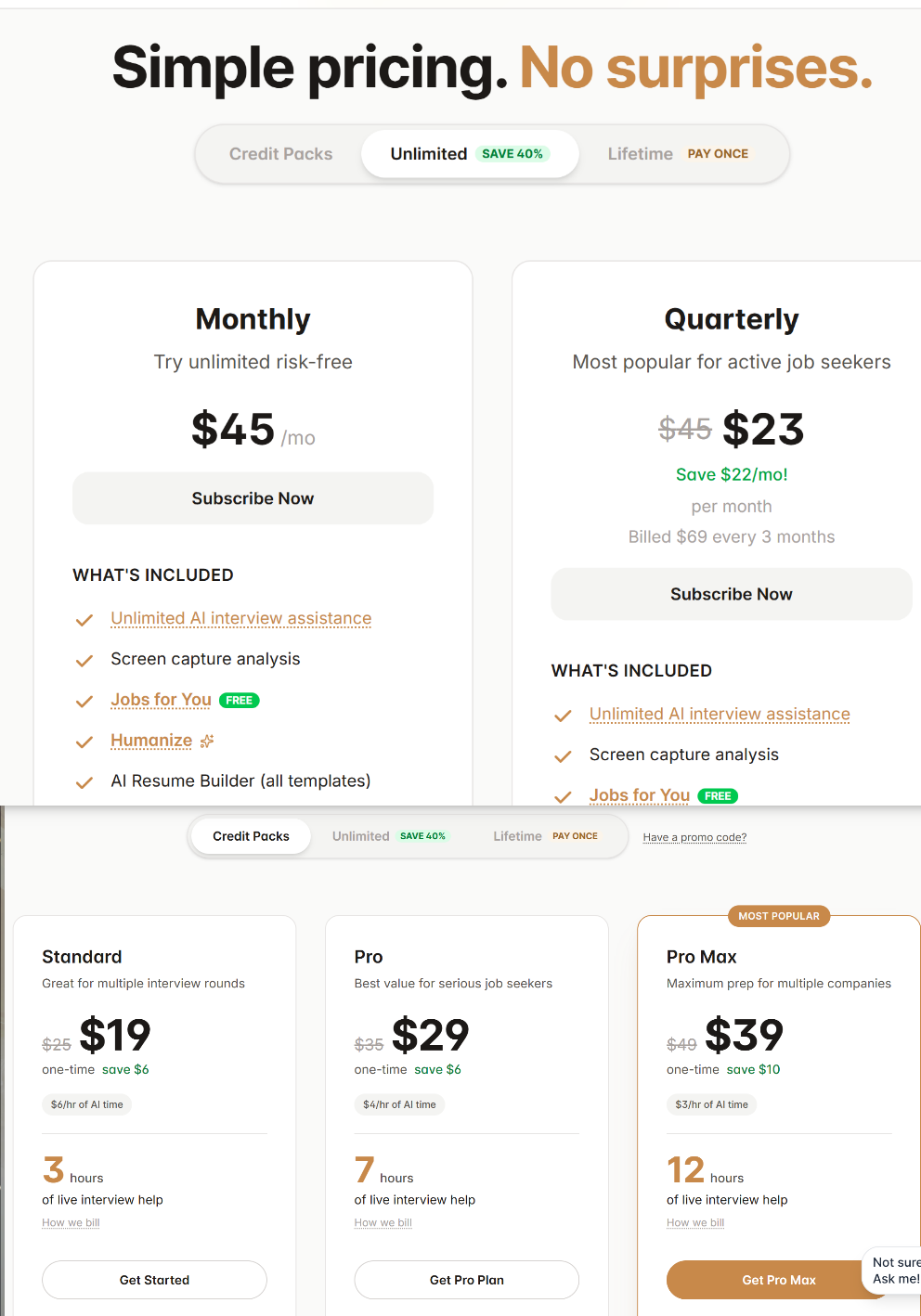
Let's talk about the price. Chiku AI has pretty much copied Parakeet AI's two pricing models (credit-based and unlimited), but it does offer refunds for unused portions, and with a starting price of around $19, it's quite affordable compared to some other AI interview assistants.
Its answers might not be suitable for high-level interviews, but it's pretty good for behavioural interviews for entry-level positions.
Here’s a quick comparison:
Feature | Chiku AI | Linkjob AI | Parakeet AI | Final Round AI | Beyz AI | LockedIn AI |
|---|---|---|---|---|---|---|
Subscription required | No (credits) | No (free tier) | Yes | Yes | Yes | Yes |
Starting price | $19 (credits) | $29.9/mo | ~$75/mo | Contact | $24.99/mo | ~$30/mo |
Chiku AI vs. Alternatives: The Real Deal
If you're looking for an AI interview assistant, there's a massive gap between basic practice bots and elite, real-time engines. Here is how the top options stack up:
Competitor | Pricing | Key Edge | Best For |
Linkjob AI | $29.90/mo | 100% OS-level stealth, premium LLMs, custom STAR logic | Crushing LeetCode & Senior Tech Roles |
Chiku AI | ~₹1,199 packs | Hindi support, pay-as-you-go credits | Freshers / Casual local practice |
Others (Beyz, LockedIn) | ~$25-$75/mo | Standard web text overlays | Generic English practice |
The Premium Alternative: Linkjob AI
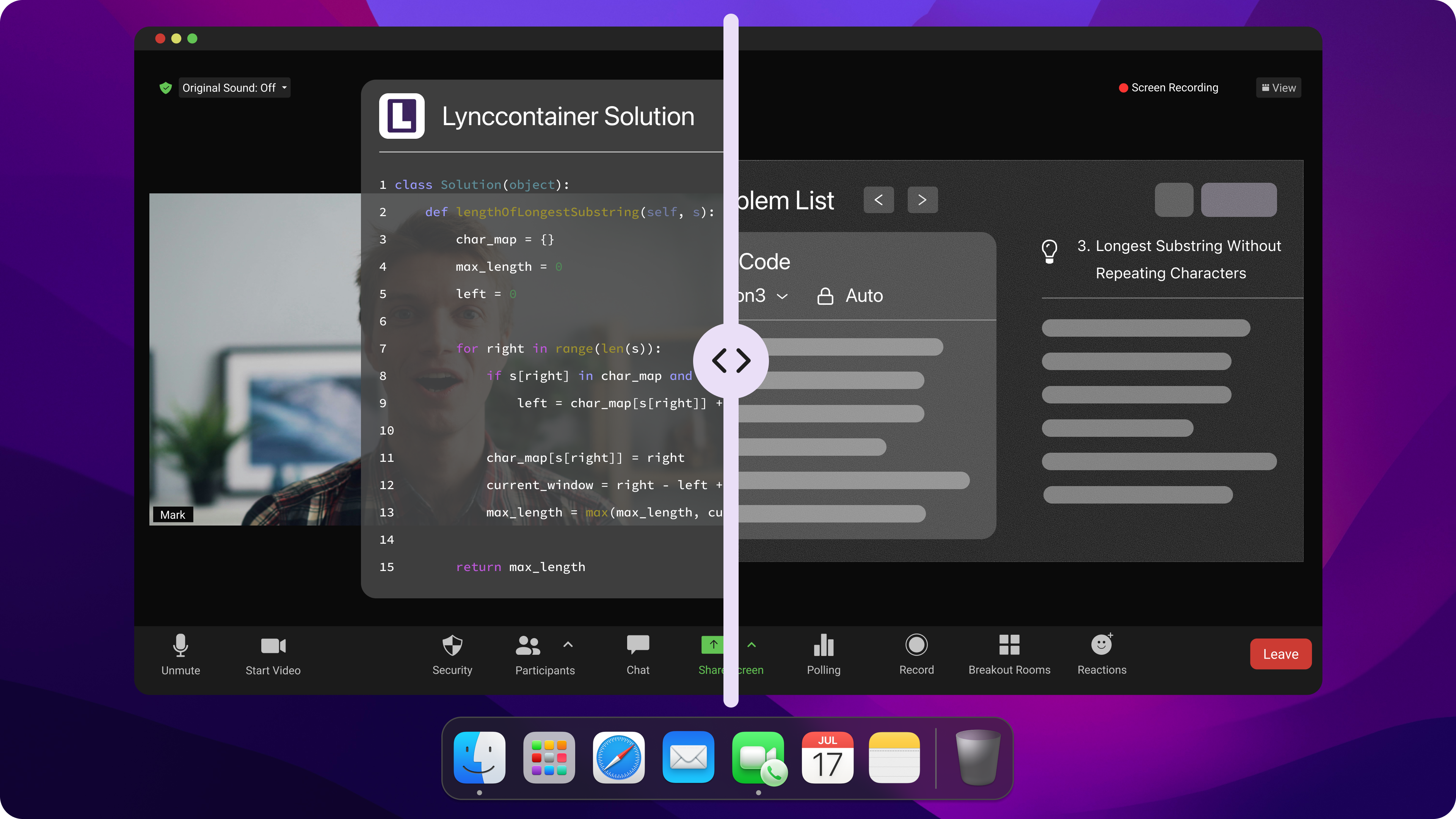
If your career is on the line and you are targeting senior tech roles or elite development teams, you can't risk your loop on an entry-level browser extension.
Linkjob AI is an enterprise-grade interview copilot engineered for absolute stealth and high-stakes execution.
Unlike clunky web tools, Linkjob AI runs on an isolated system-level hardware layer that is 100% invisible on Zoom, Teams, or Google Meet screen shares. It features a perfectly smooth, zero-lag scrolling transcript feed and harnesses next-gen AI processing models to instantly tear through LeetCode Hard coding logic. Plus, it dynamically cross-references your actual resume with the job description to output elite, metric-driven STAR answers tailored specifically for high-level situational rounds.
FAQ
How does Chiku AI help with interview preparation?
Chiku AI is designed to give you real-time feedback and structure your thoughts during mock sessions for both technical and HR behavioral tracks. It provides a solid baseline for general interview prep, but if you are using it as an active review tool, you need to watch out for a couple of major limitations:
The LeetCode Deficit: When it comes to complex data structures or advanced algorithmic tracking, Chiku AI frequently stumbles. It has a habit of generating incorrect logic or outright wrong answers when you try to throw medium-to-hard LeetCode problems at it.
The Senior-Level Ceiling: If you are interviewing for a senior, lead, or staff role, the behavioral and situational answers it generates are far too basic. They read like generic, entry-level textbook responses and completely lack the strategic depth, scale, and cross-functional nuance expected of an experienced professional.
The Verdict: It works fine as a structural scaffolding tool to get freshers or junior candidates comfortable speaking out loud, but do not rely on it blindly for high-level executive rounds or elite coding evaluations.
Can I use Chiku AI for free?
There isn't a fully functional free plan available. Instead, the platform relies on a pay-as-you-go credit model where you buy hours of live interview assistance up front. Your credits only tick down when you are actively running a session, and they do not expire. It is highly flexible if you hate monthly subscription pressure, but you will need to open your wallet to get any real use out of it.
Is my data safe with Chiku AI?
The privacy setup is straightforward. Before signing up, a look at the privacy controls confirms that you maintain ownership over your data footprints. You have the option to manually clear or completely delete your past interview transcripts and practice sessions from your dashboard at any time. The platform also keeps things clean—you will not have to deal with aggressive spam or third-party ad tracking after using it.
Does Chiku AI support Hindi or other Indian languages?
Yes, this is one of its strongest features for candidates in the Indian job market. The engine fully supports both English and Hindi, allowing you to switch between the two languages instantly. It also features a dedicated "Desi Mode" that is explicitly optimized to recognize local phrasing, regional corporate scenarios, and mixed language patterns (Hinglish) that regular Western AI tools usually trip over.
See Also
Evaluating Parakeet AI: Insights on Interview Effectiveness
My Experience with OfferGenie: A Genuine Review
An Authentic Review of InterviewBee: 2026 Insights
InterviewPal Experience: A Comprehensive Review for 2026
Interview Coder 2026 Review: Advantages, Disadvantages, Gaps
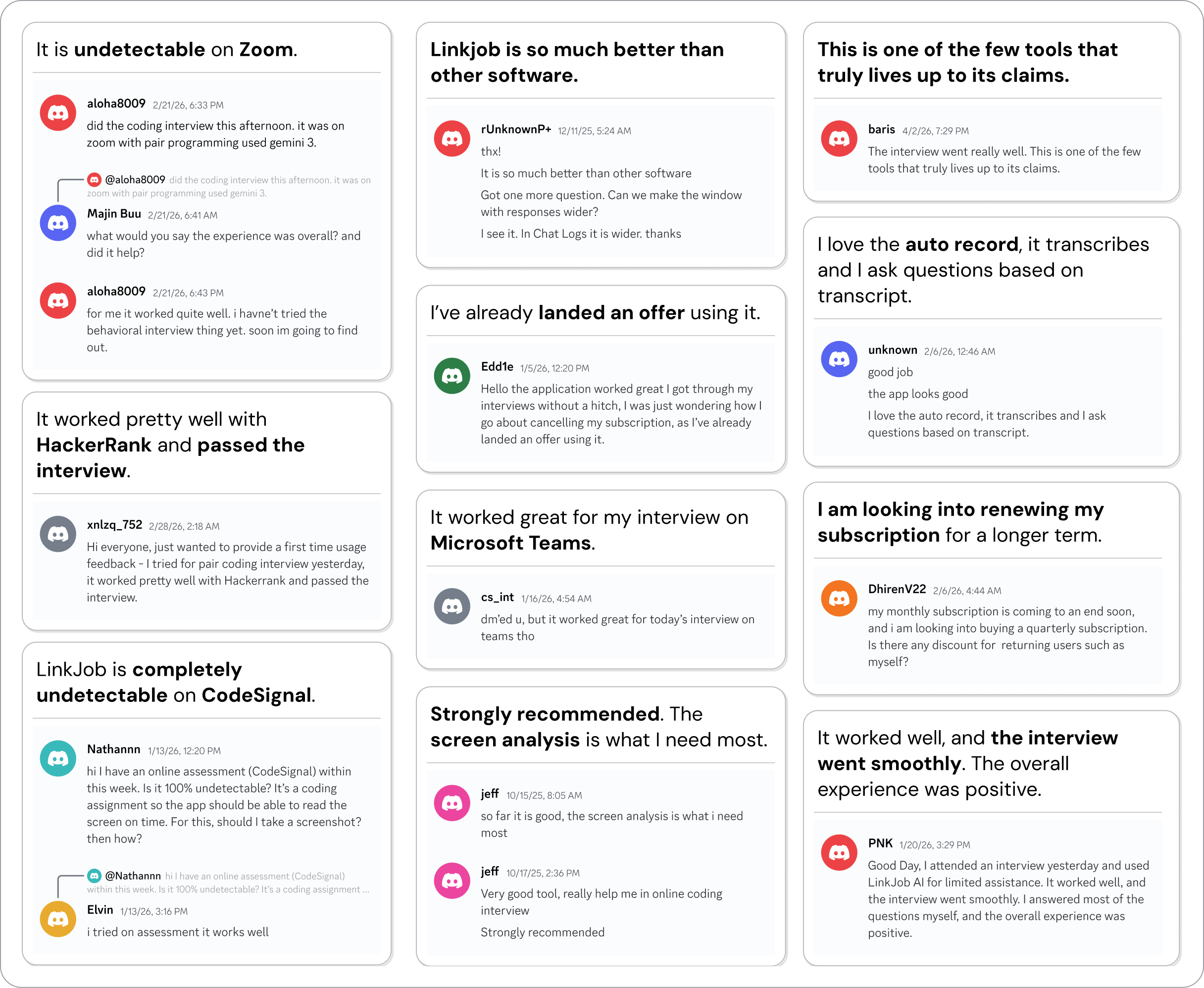
Why People Choose Linkjob AI
Smoother interviews, coding challenges cleared, and job offers landed. See how users describe their experience with Linkjob AI—in their own words.

© Copyright 2026 Linkjob AI - All Rights Reserved.