How I Faked Eye Contact in Virtual Interviews While Reading Answers

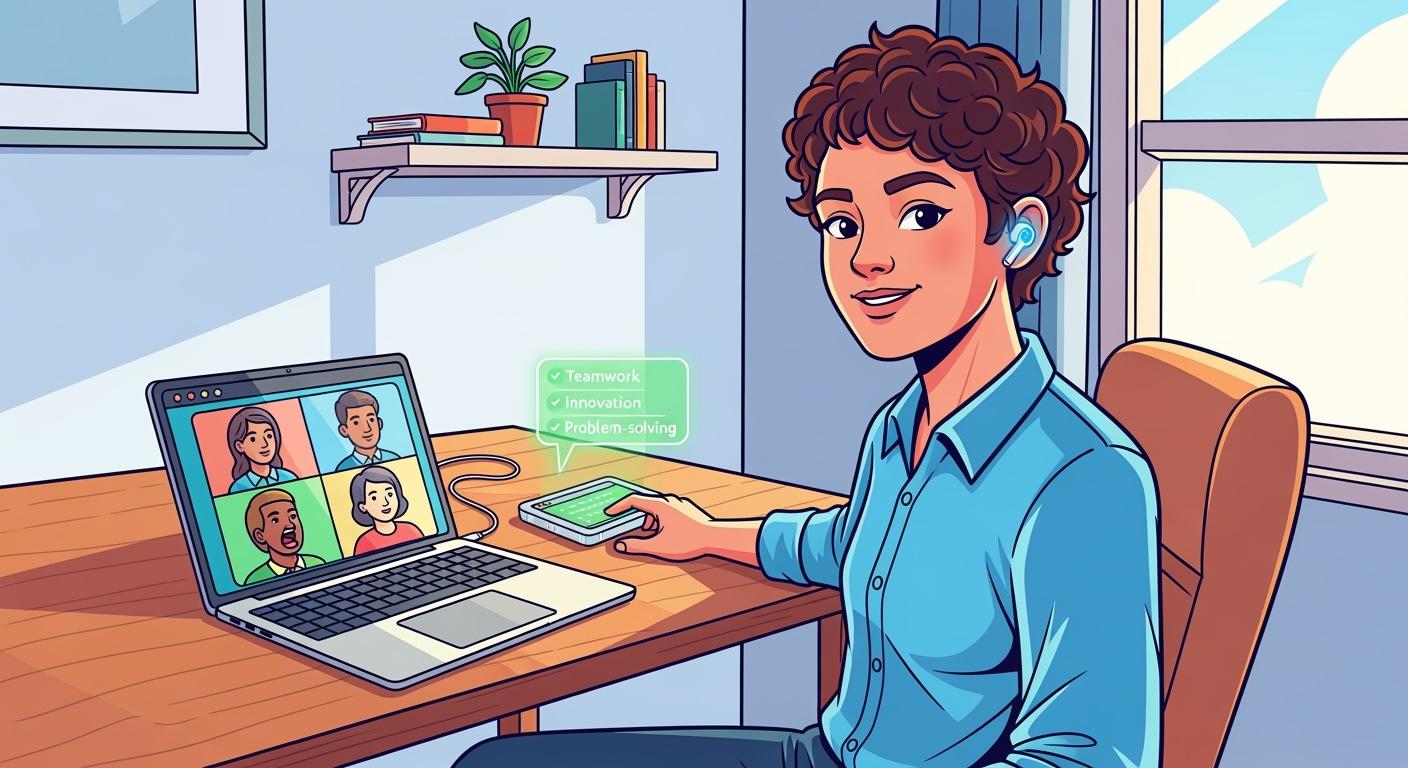
During my first Zoom interview, I placed my phone next to my laptop and read ChatGPT’s answers while talking. However, my eyes kept shifting to the side, and the interviewer warned me twice. Unsurprisingly, I didn’t pass. After that, I kept wondering how to read answers while maintaining natural eye contact to avoid suspicion.
Last month, I discovered a powerful AI interview assistant. It's called Linkjob.ai. It displays a transparent AI chatbox right below the camera and generates responses in real time. Now, I can keep eye contact while seamlessly reading answers without being noticed. Thanks to this, I know how to cheat on HackerRank and how to cheat in Microsoft teams interview!
How Interviewers Detect Cheating in Virtual Interviews
One big challenge with video interviews is maintaining eye contact.
Naturally, you’ll want to look at the person on the screen while speaking. But to them, it looks like you’re looking down. If you want to appear warm and approachable, you have to focus on that tiny circle at the top of the screen.
Interviewers generally understand that you’ll need to glance at the screen or interact with information, so it’s normal not to stare at the camera the whole time.
However, people are highly intuitive. Interviewers can quickly assess whether you’re breaking eye contact for natural reasons or attempting to cheat by analyzing your eye movements, body language, facial expressions, tone, and the content of your answers.
The table below outlines key methods interviewers use to monitor eye contact and detect cheating:
Method | Description |
Eye Tracking | Rarely looking directly at the screen during a Zoom call, especially when answering key questions. |
Motion Analysis | Frequent small hand movements (e.g., scrolling a mouse or typing) while breaking eye contact. |
Facial Expression | Fixed gaze with an overly calm expression, showing no signs of active thinking. |
Voice Analysis | Regularly delaying responses with excuses, using overly formal language, or over-explaining simple concepts. |
Answer Content | Responses are inconsistent, lack detailed follow-ups, handle tough questions well but struggle with basic concepts. |
With eye contact, facial expressions, movements, and language being closely analyzed, cheaters often slip up under pressure. To address this, the key is figuring out how to keep your gaze near the camera without obvious wandering while still being able to see the answers.
Interview Eye Contact Cheating Challenges
My friend and I tried two methods before. They worked in specific situations but had obvious drawbacks.
Dual Device Struggles
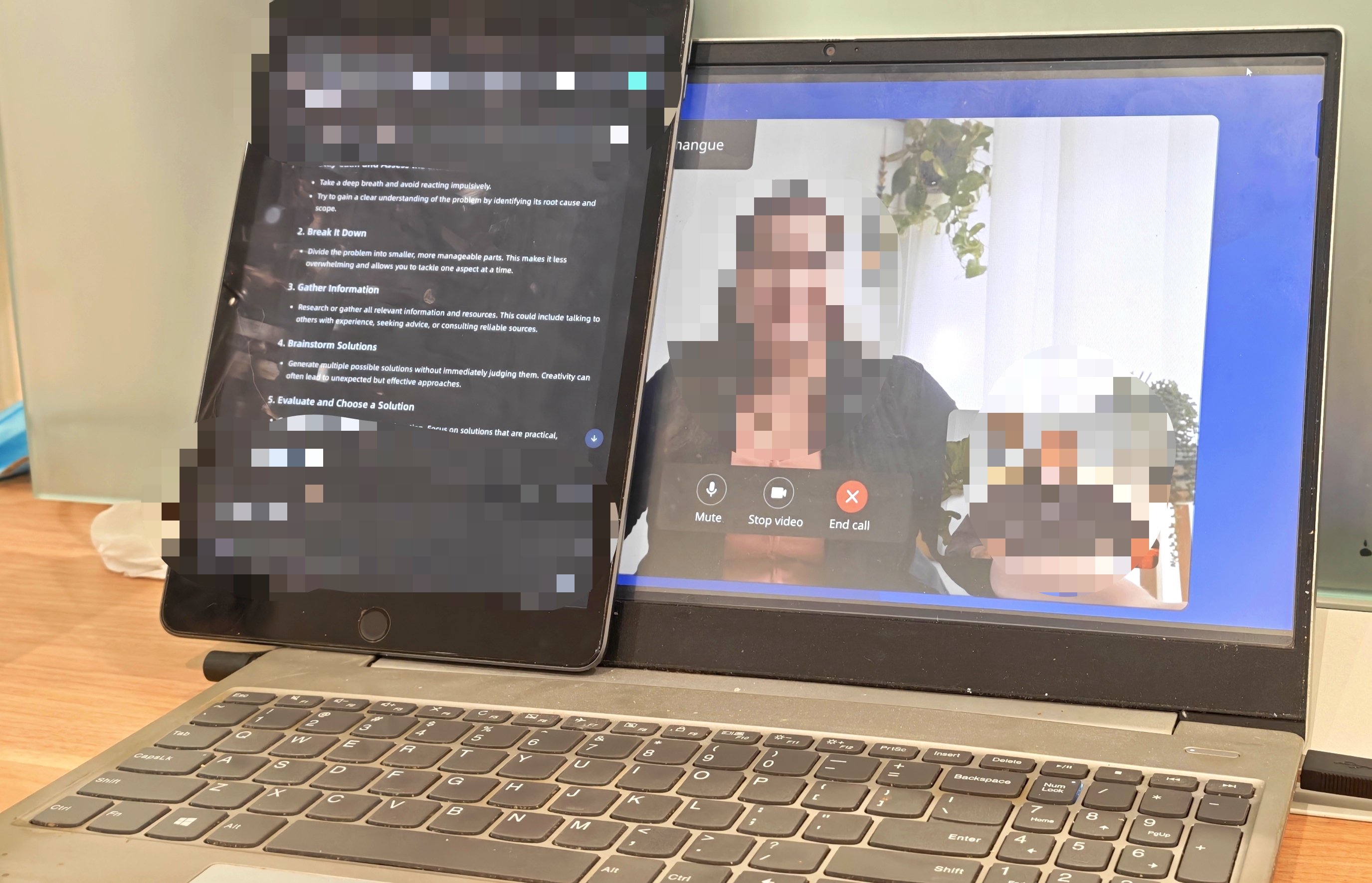
I used to cheat with two devices at the same time. I mainly used my phone because it blocked less of the screen, but it was obvious that I kept looking down.
Later, I switched to an iPad since its screen height was closer to my laptop, which helped me look more straight ahead. But the iPad was too big, so I had to put it next to the laptop, which made my eyes shift left or right. Also, the iPad blocked too much of the screen, so whenever I had to share my screen during a demo, I had to move it away and then put it back.
I thought this setup would work, but when I tested it with a friend and watched the recording, it was clear my eyes kept looking to the side, even when I tried to focus on the laptop. Plus, I had a lot of small hand movements. It must have been really obvious to the interviewer.
Sticker Notes Struggles
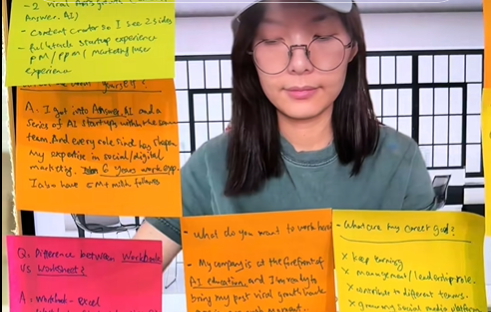
Since using two devices didn’t solve the issue of shifting eye contact, I came up with another idea: sticking post-it notes with notes around the webcam. You can use semi-transparent ones and place them around the front camera. The benefit is that it blocks very little of the screen, and it helps keep your eyes near the camera.
But the downsides were obvious. First, the writing on the notes had to be small. To make it readable, you’d need to write as big as possible, which means using more post-its. But space around the camera is limited. Second, I had to handwrite everything in advance, which made the notes very rigid. They only worked as an outline and couldn’t handle unexpected situations, like follow-up questions or open-ended thinking. I tried it once and gave up right after.
You've probably realized that maintaining natural, undetectable eye contact without technical help is time-consuming, difficult, and ineffective.
Here's a more straightforward soution: Linkjob.ai.
It provides a one-stop service for screen sharing, online interviews, and coding tests—completely invisible, with real-time answer generation that requires no extra movement or eye contact from you. Open it 10 minutes before your interview, do minimal setup, and no complex preparation. You can easily read answers and pass the interview.
Fake Eye Contact in Interview-My Tools and Hacks
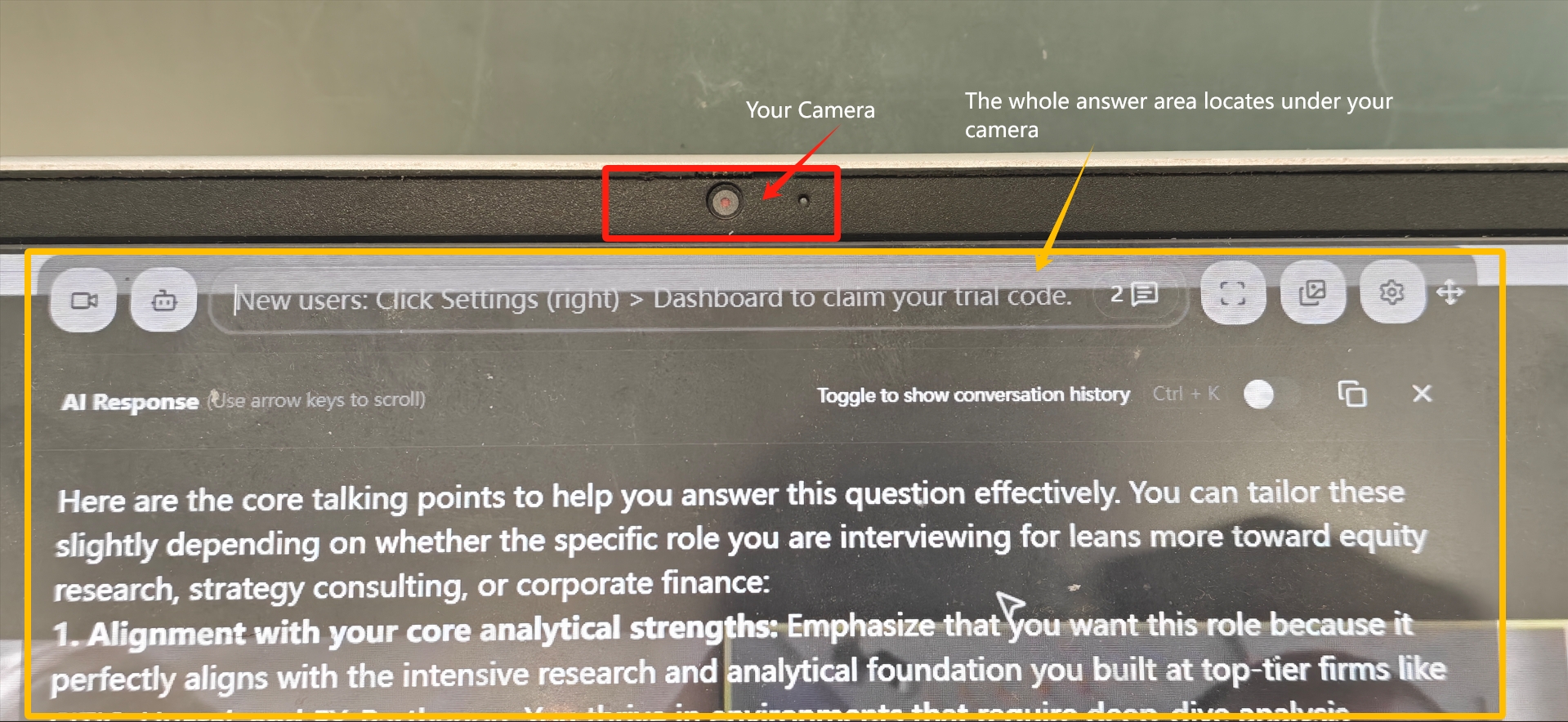
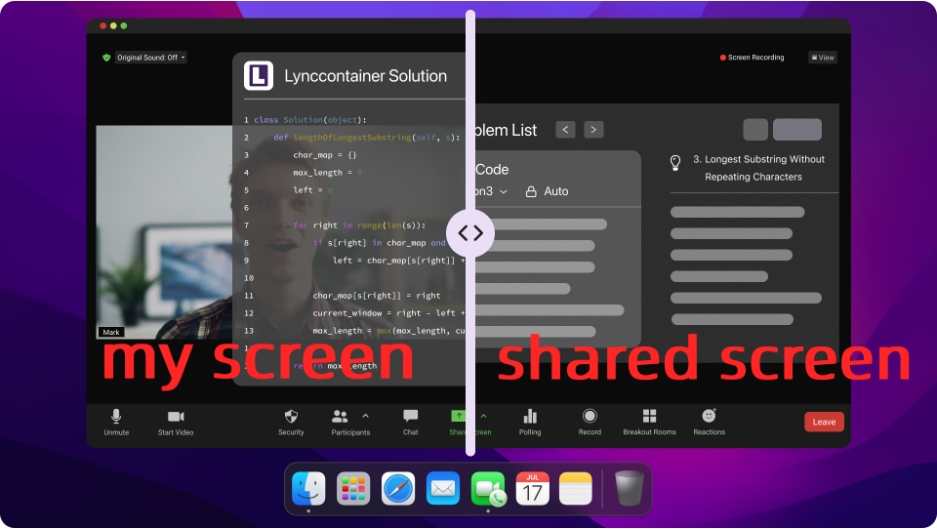
The overlay tool of this AI assistant displays AI-generated answers directly over your online meeting window, so you don't need to look away from the camera. Its architecture uses DMA/EDID splitters, making it undetectable at the software level.
This makes Linkjob.ai my go-to tool because I can adjust overlay transparency to ensure text doesn't block the interviewer's view. I can position the overlay near the camera for more natural eye contact.
Here's what I like about the overlay tool:
Easy setup and use in Zoom calls.
Adjustable transparency keeps the screen clear.
Positioning near the camera helps maintain eye contact.
Answers appear in real-time right when I need them.
I still avoid excessive eye movement. Staring at the overlay too long can still look suspicious. However, compared to using various devices or paper notes, the overlay tool is already quite safe and reliable.
AI Eye Contact Features
More Zoom tools now come with AI features. I've tried platforms like NUIA Full Focus and NVIDIA Maxine Eye Contact. NUIA lets me watch content while still appearing to look at the interviewer. It adjusts my display based on where I'm looking, making my attention seem more natural. NVIDIA Maxine uses AI to redirect my gaze back to the camera even when I look away.
These features impressed me, but since they lack real-time answer eneration, I prefer combining them with overlay tools like Linkjob.ai. This way I can focus on the camera, get live feedback, and avoid obvious cheating signs in virtual interviews.
Step-by-Step Guide to Fake Eye Contact in Virtual Interviews with AI Assistant
Setting Up Overlay Tools
Before each online interview, I set up the overlay tool first. This makes the rest easier. Here's how I do it with Linkjob.ai:
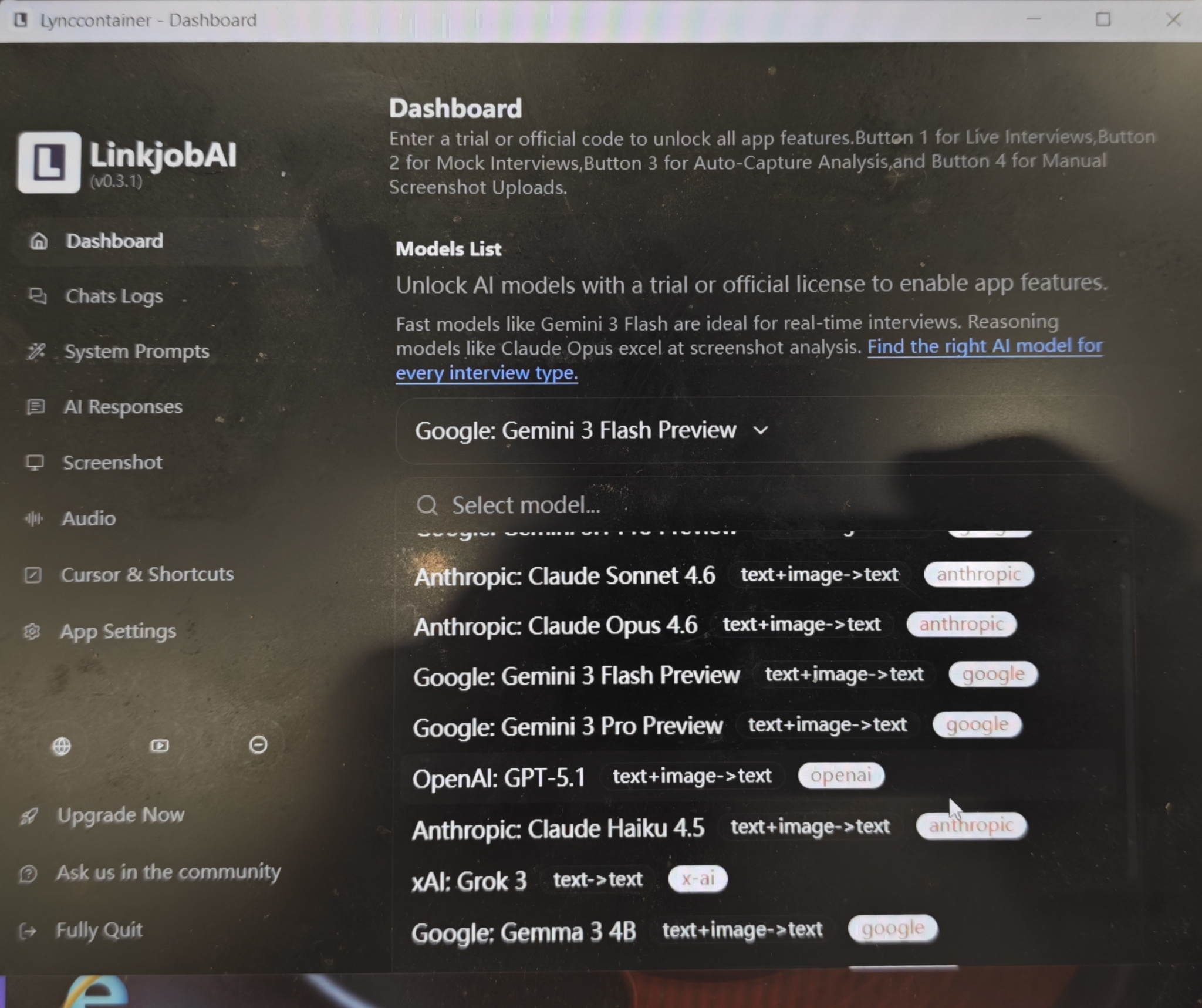
I position overlay chatbox directly above my main screen. I place overlay tools like Linkjob.ai as close to the camera as possible. This helps maintain eye contact and keeps my gaze steady.
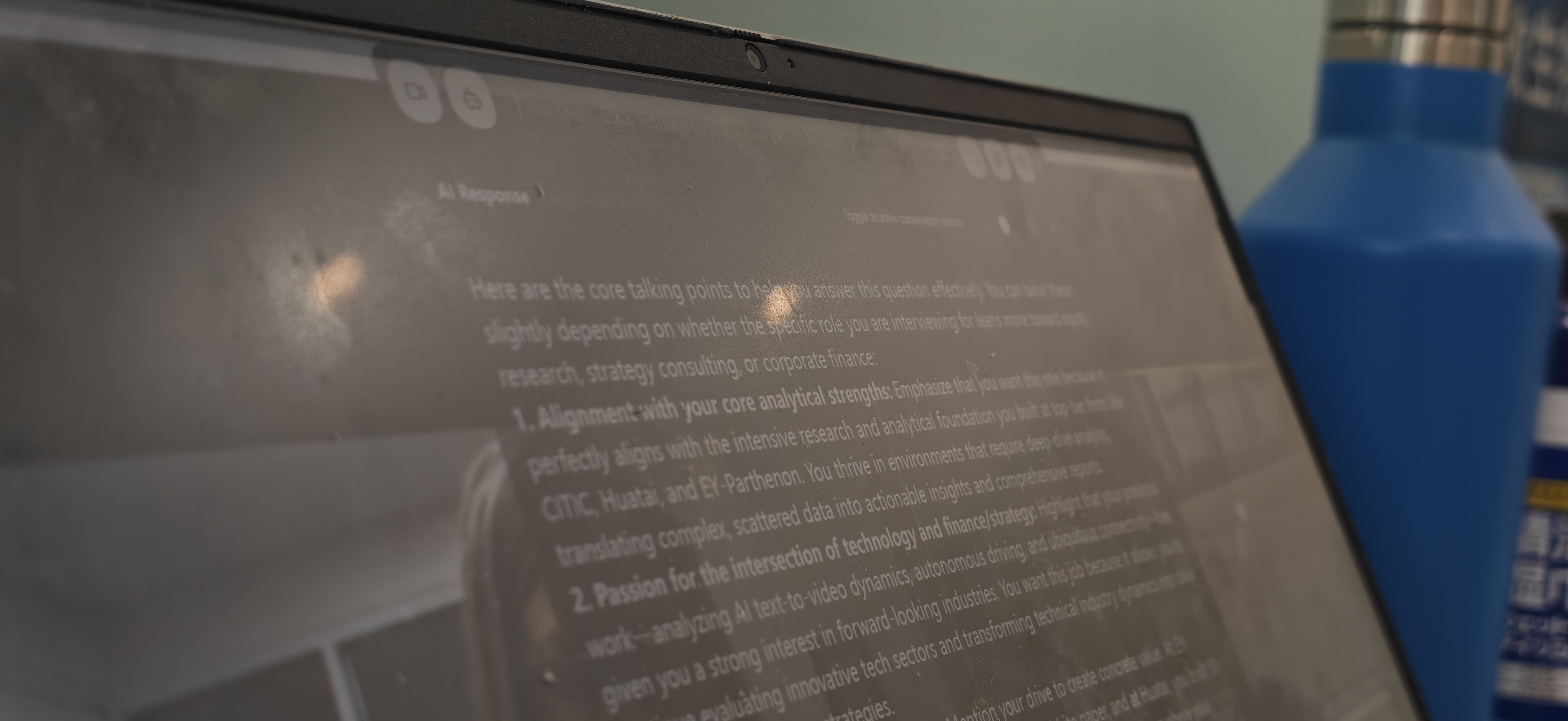
I adjust the overlay's transparency so I can see both the interviewer and my real-time responses. I don't want it blocking my view or distracting me.
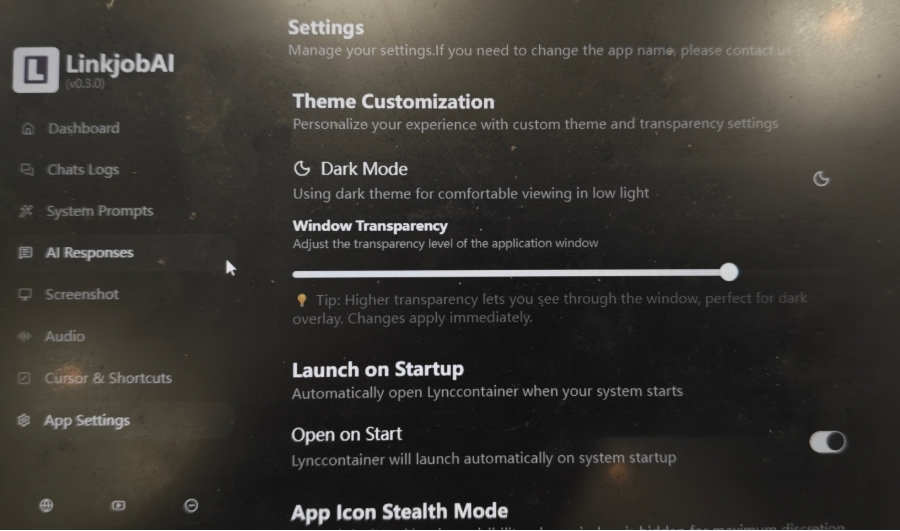
For model settings, Linkjob.ai offers over 14 advanced deep reasoning models. If the interview focuses on communication, I usually pick Gemini 3 Pro. For online coding, I use Claude Code Opus 4.6.
Camera and Screen Positioning
Camera and screen setup can make or break an online interview. Here’s my process:
Before the interview, I close any tabs and apps I don’t need. That helps me stay focused and keeps my computer running smoothly.
I turn off app alerts and system notifications. I don’t want anything pulling my attention away.
I keep my notes in a clean view right below the camera. This helps me hold eye contact, even when I need to glance at something quickly.
Test Devices and Avoid Risks
Even if it works well on my setup, that doesn’t mean nothing can go wrong on yours. To reduce risk, I’d suggest a few steps:
Test the overlay on another device ahead of time. Make sure it stays invisible and the text is easy to read.
Do a practice Zoom call with a friend. Ask them to watch whether your eye contact looks unnatural when you read from your notes.
You can also place a bright sticky note star or arrow near the camera. A simple visual cue can remind you to look at the lens regularly.
FAQ
How do I keep eye contact while reading AI prompts?
I place the overlay near my webcam. I practice looking at the camera, not just the screen. This trick helps me look engaged and confident.
What is the safest tool for maintaining eye contact?
I use overlay tools like Linkjob.ai. These let me read prompts without looking away. I keep the overlay close to my camera for best results.
Should I use AI eye contact features during interviews?
I use AI eye contact features when I want extra help. Tools like NVIDIA Maxine make my gaze look natural. I always test them before the interview.
See Also
How I Share Screen to Cheat in Exams and Interview in 2026
How I Cheat on Codility and Avoid Getting Caught in 2026
How to Cheat on CodeSignal Proctored Tests in 2026: My Tricks
Top AI Tools for Cheating in job interviews: My Honest Picks for 2026
The Best AI Tools for Job Interviews Preparation I've Tried-My Top 8 Picks
© Copyright 2025 linkjob.ai - All Rights Reserved.