How I Hacked My Way Through Zara AI Interview

After talking about how to get around the proctoring systems of OA platforms like CoderPad and ways to cheat during proctored exams on platforms like WECP loads of times, I found a new opportunity: an interview led by Zara AI, an AI recruiter made by Micro1. My interview was just a Zoom meeting, so I thought Linkjob AI could be useful in that situation too.
After a bit of tinkering, I found that if I set up Linkjob AI to be invisible when Zara AI interviewed me, it could actually help out. That's how I got past the interview, with a little help from this invisible AI assistant. In this article, I'm going to give you the lowdown on all the features of Zara AI and show you how to use an invisible AI interview assistant to get around its anti-cheating mechanisms.
How to Cheat in Zara AI Interview: Prep Steps
How Does Zara AI Detect Your Cheating Behavior?
Traditional Platforms (e.g., Adaface) | Zara AI (Zame AI / Micro1) |
Focus: Output verification (Does the code compile/run?) | Focus: Input verification (Can you verbally explain why?) |
Mechanism: Restrictive environment locks, camera logs | Mechanism: Conversational depth, real-time follow-ups |
Vulnerability: Vulnerable to seamless hardware-layer overlays | Vulnerability: Vulnerable only to instant-response, highly organic AI copilots |
Zara’s Anti-Cheating Architecture
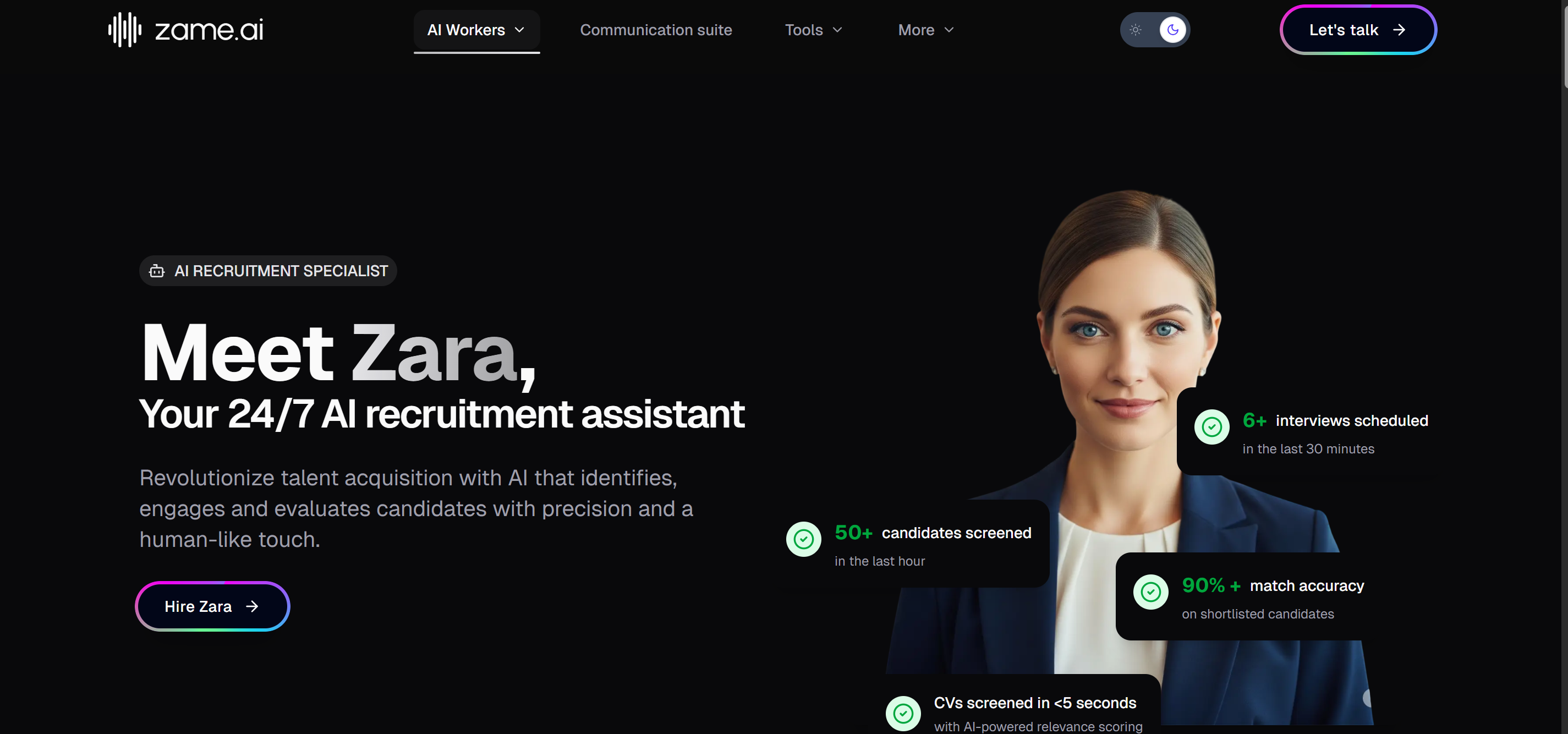
After going through all the relevant documents a few times and asking people who'd been to an interview at Zara, I figured out that they use something called the "integrity layer." Basically, it's a way of making sure people aren't cheating by using the way the conversation is set up to make it tricky for AI to do so.
The Copilot Killer: Prompt-and-Recite Latency
The primary way Zara exposes real-time AI interview assistants (like standard copilots) is through conversational pacing. Because Zara conducts rapid, multi-turn voice conversations, the loop looks like this:
Zara asks a nuanced technical or architectural follow-up question.
A cheating candidate has to wait for their tool to transcribe it, process the answer, and show it on screen.
The candidate then has to read and recite the answer.
This entire sequence creates an undeniable 3- to 5-second acoustic hesitation lag. Zara's backend flags these systematic, unnatural delays between a question being finalized and an answer beginning, rendering slow or unoptimized tools obsolete.
Deep Behavioral & Acoustic Biometrics
While Zara doesn't necessarily want to alienate honest candidates with highly invasive locks, its video/audio processing layer acts as a passive fraud detector:
Scripted Reading Cadences: The AI is trained to detect the rhythmic, flat inflection of someone reading scrolling text off an overlay versus a human naturally formulating thoughts on the fly.
Gaze Vectors: Frequent, micro-level shifting of eyes away from the central webcam area to read secondary windows or hidden devices during tough questions triggers a risk signal.
Multi-Voice Signatures: The audio stream analyzes the room's noise environment to flag secondary voices or background whispering.
CV & Background Consistency Scoring
Zara uses a customised resume-matching engine. Before the interview, the system will look at your CV, GitHub profile and any previous job applications you've made. During the interview, the system looks at how well your performance matches the job level on your CV. It does this by checking the technical words you use, how detailed your answers are, and how quickly you solve problems.
If there's a sudden and unusual surge in performance on really complex topics, the system sets off a post-interview review flag, so the human recruiters can take a look.
Tools and Software Helped Me Find How to Cheat in Zara Interview
Let me start with the basics. If you want to know how to cheat in Zara AI interview, you need the right tools. I always set up my environment before the interview. I keep my laptop clean, my browser tabs organized, and my phone silent. I also use a few secret weapons that make a huge difference.
Here are some tools I had tried myself:
Hardware-Level Overlay Copilots like Linkjob AI
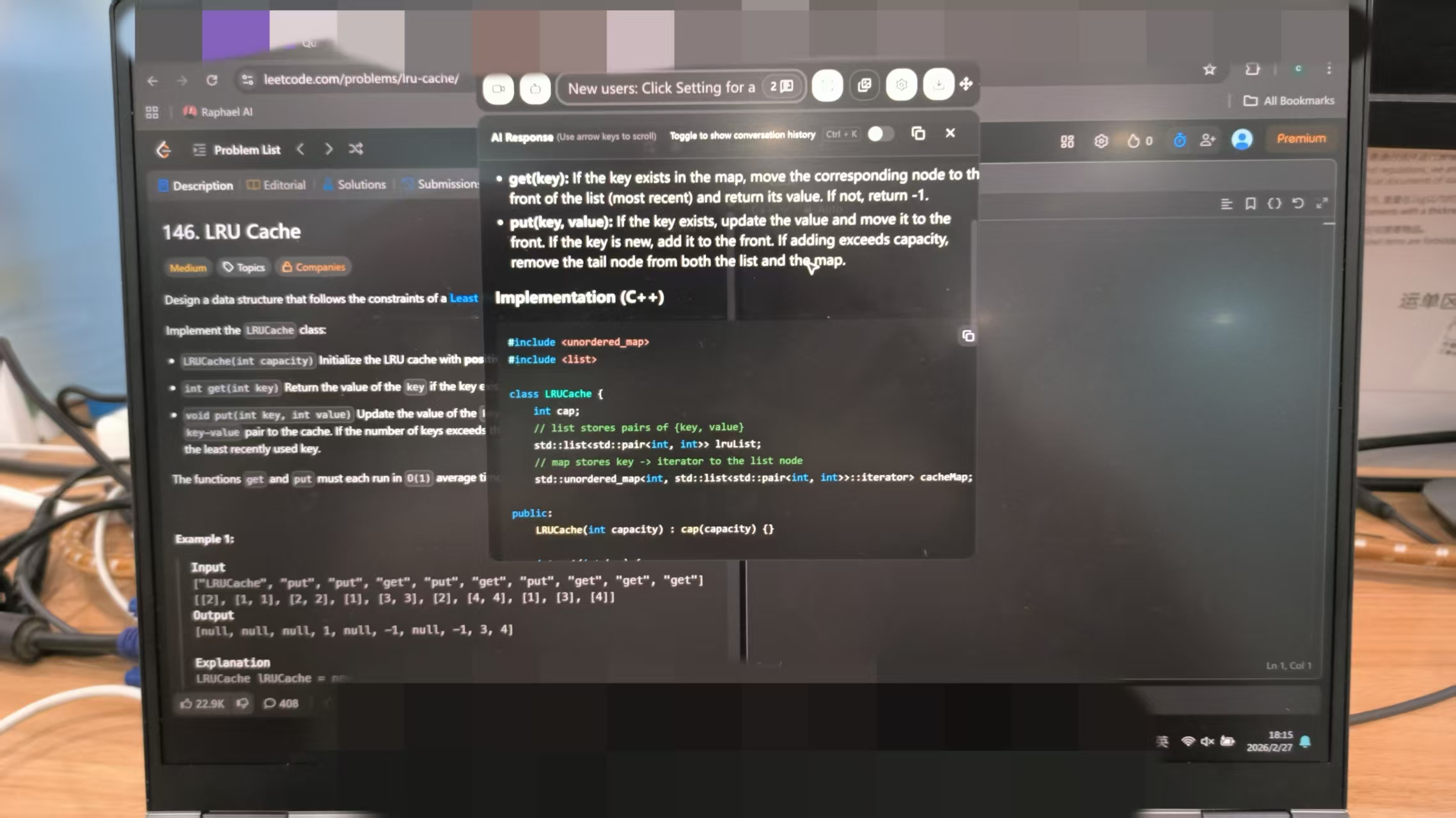
These are specialized desktop applications that operate at the operating system's graphics layer rather than the browser layer.
How they work: They capture the screen contents via hardware-level hooks and display generated answers on a transparent, borderless overlay.
Why I used them: They don't inject code into the browser's DOM, so they're invisible to standard web-based screen recording streams and full-screen sharing tools. After a few experiments, I decided to place these overlays directly under the webcam to trick the eye-tracking algorithm.
Audio Interceptors & Voice-to-Text Streams
Since Zara AI speaks its questions aloud, I cannot always rely on text extraction. They use virtual audio routing tools.
How they work: I used a virtual audio driver (like VB-Cable or Loopback) to secretly record the interviewer's audio in the background, based on a post with some good tips. This audio was sent straight to a speech-to-text programme (like OpenAI Whisper or Groq), which wrote down the question as text in no time and sent it to a big language model (LLM). This approach was way more complex than the previous one, so I gave up after trying it only a few times.
Why I used them: It eliminates the need for me to type out what the AI interviewer just said, drastically cutting down on response latency.
Dual-PC & HDMI Capture Card Hardware Setups
For I was terrified of local client-side process detection or corporate-managed laptop monitoring, hardware isolation is the go-to approach.
How they work: At the time, I used an HDMI splitter to send the video output from the main monitor to both the exam monitor and a separate backup computer. At the time, the backup computer was running Linkjob AI, the AI assistant software.
Why I used them: There's no unauthorised software on the computer used for interviews, and no software running in the background. The AI assistant runs on a separate machine, so it can't be detected by software scans during investigations.
But if an external proctoring system is used during the interview, which usually includes IP checks and eye-tracking tests, I don't think a virtual machine or a second device would help me figure out how to cheat in Zara AI interview.
Real-World Zara AI Interview Bypasses Compared
So, a little summary after real-world tests within the chart below:
Strategy | Setup & Prep Time | Technical Detection Risk | Behavioral Detection Risk (Latency/Gaze) | Estimated Real-World Success Rate |
System-Level Software Overlays (e.g., Linkjob AI) | ~5 minutes. Open the app, calibrate your background data, and align the transparent window. | Ultra-Low. Advanced OS-level graphics injection completely bypasses standard browser-level screen recording. | Moderate. You still have to practice your reading cadence, but placing the window right under the lens protects your eye line. | ~90% (The most practical choice for fluid, live conversational rounds) |
Dual-PC Hardware Rigs (Splitters + Capture Cards) | 1–2 hours. Requires a physical hardware capture card, HDMI splitters, and a secondary computer setup. | Absolute Zero. No unauthorized code or background processes ever execute on the primary testing machine. | High. Glancing entirely off-screen to a separate physical monitor creates immediate, unnatural gaze-tracking red flags. | ~65% (Great for static coding tests; highly vulnerable during live video/voice interviews) |
Second-Device Fallback (Phone or tablet on your desk) | 1 minute. Simply prop up your mobile device next to your keyboard or monitor. | Zero (when there were no external proctoring tools). | Extreme. Bending your neck or shifting your eyes down to look at a secondary physical device is an immediate AI trigger. | ~15% (An instant fail on any platform utilizing active video proctoring metrics) |
Behind the Screen: How to Cheat in Zara AI Interview Telemetry
When I wanted to go completely unnoticed during Zara AI's real-time interview, I realised that the key was not only to give the right answers, but also to strictly adhere to the code of conduct. Zara's a pretty dynamic, conversational voice and video AI assistant, so I knew that using traditional, clumsy cheating tactics would get me flagged by the system straight away.
Here's how I managed to stay one step ahead of the platform's detection mechanisms by keeping track of my digital and physical traces.
1. How I Master My Visual and Graphic Footprints
I had to think of a way to outsmart video-based AI recruitment systems, and I knew I had to get rid of any data anomalies that might trigger those backend integrity filters. I used Linkjob AI's system-level, invisible overlay, which operates outside the browser sandbox. As Linkjob AI doesn't inject code into the webpage's DOM or alter the state of my browser tab, I made sure that the platform's native proctoring scripts were completely unaware of my setup.
But for me, hiding the software was only half the battle; I also had to do a lot of work on my body language:
I Maintained Cam Discipline: I kept my eyes locked directly in line with my webcam lens. I positioned my assistant interface right at the top-center of my glass display so my gaze vector never shifts horizontally while I read.
I Eliminated My Speech Lag: I never read generated blocks line-by-line. Instead, I memorized key architectural keywords on the fly, close my eyes naturally for a split second as if I'm brainstorming, and speak with a natural, unscripted cadence.
I Neutralized My Background: I always sit against a completely blank wall with flat, even lighting. This prevents the platform's computer vision models from flagging any secondary motion or suspicious shadows in my room.
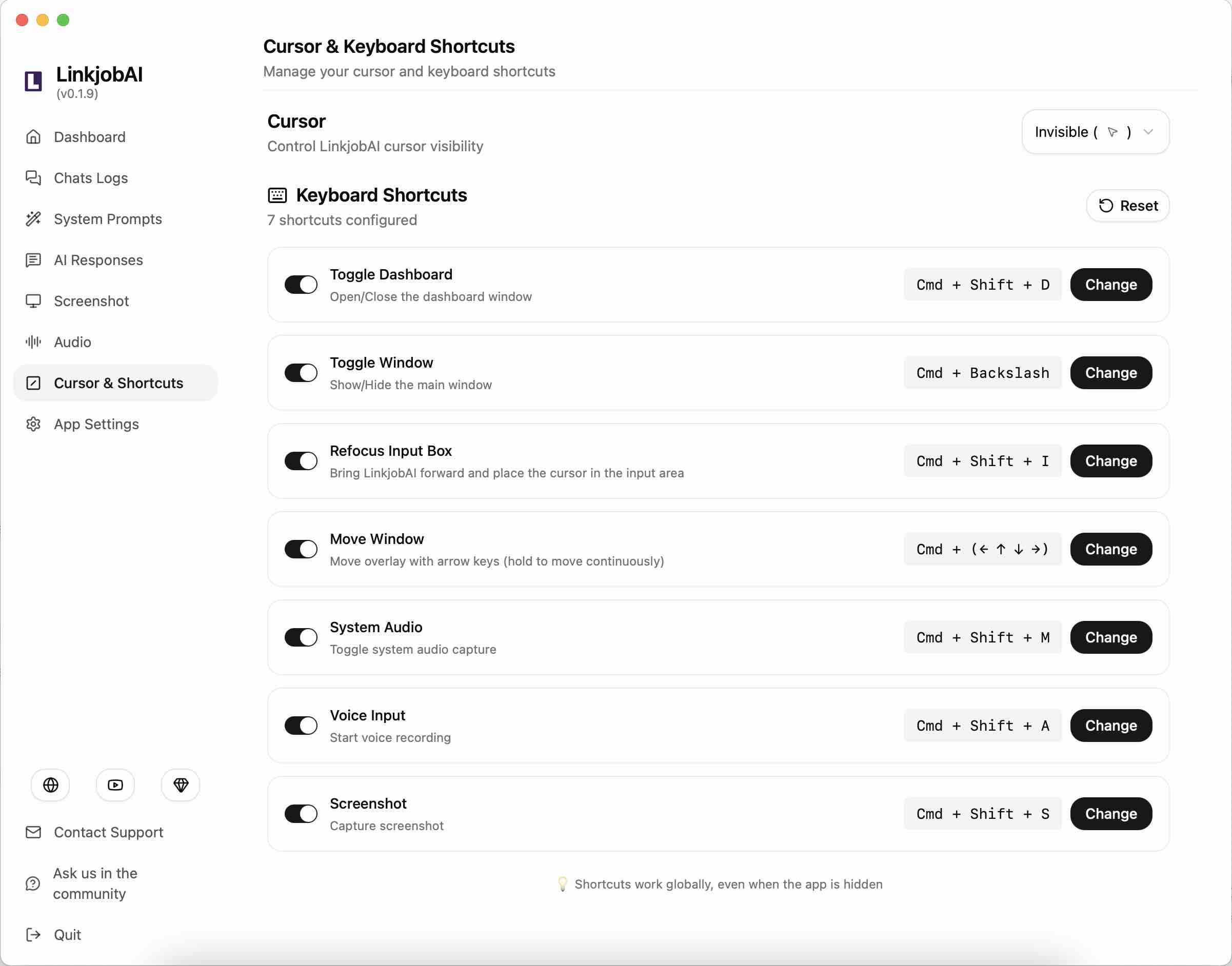
My Golden Rule: Subtlety is my absolute shield. If my facial expressions look unnaturally rigid or my lip movements don't perfectly sync with my audio stream, I know the AI's behavioral baseline will instantly flag my session for a manual HR audit.
2. How I Navigate the Pre-Exam Tech Check
Before my official interview with Zara AI starts, I always have to go through a hardware calibration process. This environmental check makes sure that:
Camera stability
Microphone input clarity
Network latency
—and it's during this step that I've seen setups that aren't optimised well fail.
If my AI tool relies on complex virtual audio routing or unstable browser extensions, such as Sensei AI or Verve AI, I know that the platform's pre-interview check will often detect driver conflicts before the interview even begins.
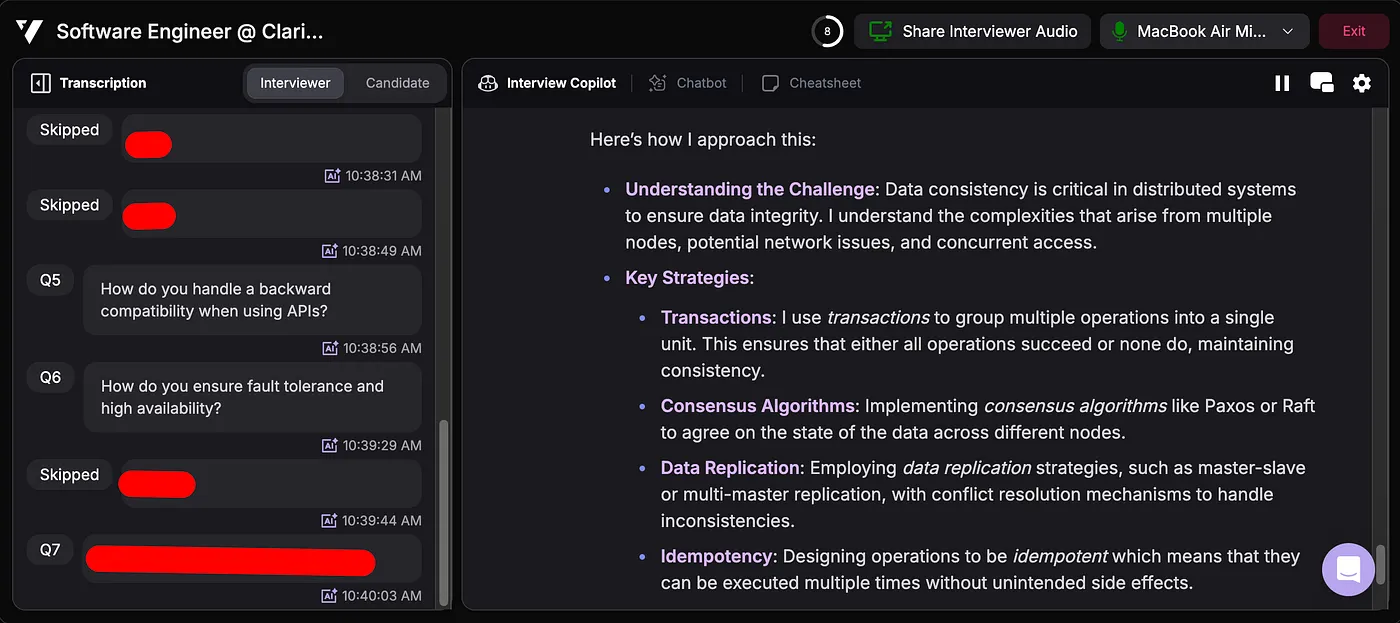
I made sure my main audio channel was clean and stable before I started. I saw the hardware check as the first part of my plan:
I've been able to stay under the radar from the start by keeping the audio and video connection clean and uninterrupted.
3. Beating the Conversational Verification Layer
For me, the hardest bit in the Zara AI interview was getting my head around all the different ways you can chat to the platform. This AI agent uses something called a multi-round, adaptive RAG framework, which basically means it can generate follow-up questions based on the answers you've just given.
If my initial response sounded like an overly polished definition straight from an AI prompt, the interviewer would definitely want to dig a bit deeper to make sure I really knew what I was talking about.
I knew that hiring managers in 2026 are actively rejecting "automated" candidates. If I come across as a perfect senior engineer, but my coding speed isn't as fast as it should be in real-world scenarios, it will raise red flags straight away. From what I've seen, if you want to pass the first round, the best approach is :
keep it real
stay focused
keep it neat
My Personal Framework for Passing Behavioral Verification
My Objective | My Tactical Execution | Why I Do It |
Protect My Cadence | I keep all my verbal answers under 2 minutes. | Long, rambling responses make me sound like I'm reading a scrolling script. |
Maintain Authenticity | I anchor my answers around my actual project history. | It’s much easier for me to speak naturally about things I've actually built. |
Manage Technical Depth | I consciously avoid over-complicating my vocabulary. | Sounding too polished or overly formal triggers their AI-use flags. |
Isolate My Hardware | I thoroughly test my physical microphone and headset placement. | A giant mic blocking my mouth interferes with the AI's facial telemetry tracking. |
In the end, the only way to outsmart a chatbot like Zara AI is to pay close attention to lots of small details. I was pretty good at reducing the risk of being exposed to anything by controlling the direction of my gaze and adjusting my speaking speed based on conversation delays. I also used the AI's suggestions only as rough, conceptual references.
Common Pitfalls and Strategic Adjustments
Mistakes I Actively Avoid
I’ve watched plenty of candidates—and honestly, I fell into the trap myself early on—try to completely outsmart conversational interfaces like Zara AI, only to trip over the exact same mechanical mistakes. Conversational models are incredibly sensitive to behavioral anomalies. Here is what I always watch out for to keep my interview delivery seamless:
Regurgitating Canned Definitions: Relying on raw text memorized from ChatGPT or generic YouTube tutorials never works. The AI’s integrity layer instantly flags standard, robotic answers that lack personal context.
Over-Embellishing My Skill Set: If I claim expertise in a framework just to check a box, Zara AI's adaptive RAG backend will immediately hit me with a deep-dive follow-up question, exposing the gap fast.
Allowing My Gaze to Drift: The moment I read directly from a rigid script on my monitor, my eyes dart unnaturally, my vocal inflection flattens out, and the system logs a behavioral red flag.
Forcing Dense Technical Jargon: Packing my answers with buzzwords sounds artificial if I can't break down the underlying architecture simply.
My Strategy: I always keep my communication grounded. If I run into a technical concept I genuinely don't know, I find it's much safer to admit the limitation honestly and pivot the conversation toward the core engineering principles I actually master.
The Realities of Over-Relying on AI Assistants
While exploring advanced tools can give you a major confidence boost, I’ve had to accept that using AI to completely fake skills I don’t possess creates massive technical debt down the road. Pushing the limits of an interview copilot past my actual understanding introduces serious long-term friction:
The Downstream Capability Gap: If I land a role based entirely on an AI's real-time output, I’m left handling an environment I’m not equipped for, leading to immediate performance anxiety.
Team Morale Strain: When I can't deliver on the technical promises made during my screening, my future teammates end up having to pick up my slack, which ruins professional relationships.
Wasted Corporate Cycles: The company ends up spending valuable time and engineering budget on onboarding and training me, only to realize there's a skill mismatch later.
Reputational Risks: Getting flagged post-interview for a mismatch between my interview performance and my live coding capability damages my professional network and employer trust.
Balancing the Quick Win with Long-Term Growth
Ultimately, I’ve realized that the smartest move is knowing when to rely on my genuine expertise. Whenever I feel tempted to push my luck too far with an overlay tool, I pause and weigh the immediate satisfaction of passing the screen against the long-term career fallout.
Unprepared hires lead to high team turnover, which makes engineering managers hyper-suspicious of new talent. Furthermore, my own stress levels skyrocket if I find myself drowning in a senior role I wasn't actually ready for. By sticking to what I know, pacing my tool usage carefully, and prioritizing authentic technical explanations, I keep my competitive edge without putting my professional reputation on the line.
FAQ
How likely is it that someone would cheat during a Zara AI interview?
As long as you choose the right tools and don't just read from a script, the chances of getting caught are still very low.
I was wondering if I could use the tools I use for the Zara AI interviews for other interviews too?
Yeah, I've used Linkjob AI for a bunch of technical interviews. It helped me practise real questions and gave me feedback. I find it useful even outside of the Zara AI interview process.
What if Zara AI asks a question you weren't expecting?
I'll keep my cool and give a straight answer. If I don't know the answer, I'll just say so and talk about what I do know. Zara AI interviews value clear thinking, not perfection.
Will I need any special hardware or software?
Apart from Linkjob AI, which helped me figure out how to cheat on a Zara AI interview, I used a good-quality webcam in a quiet room and made sure my internet connection was stable. Before the interview, I always remember to test my equipment (hardware and software) to make sure everything's working properly. I find simple tools work best for me.
I was wondering if I'd get into trouble for using a tool like Linkjob AI to generate answers?
As long as you don't make a big deal out of it, you'll probably be fine. I try not to read directly from the text and I put the outline of the answer I've generated straight under my camera so that eye contact feels natural. I keep my responses natural and fluent, and make sure I understand what I'm saying.
See Also
Conquering My Lark Interview With AI Copilot Assistance
Evading Sherlock AI's Radar During My 2026 Interview
Utilizing Stealth AI Aid For My Talenscio Interview