Parakeet AI vs Interview Coder: Worth It or Just a Scam?

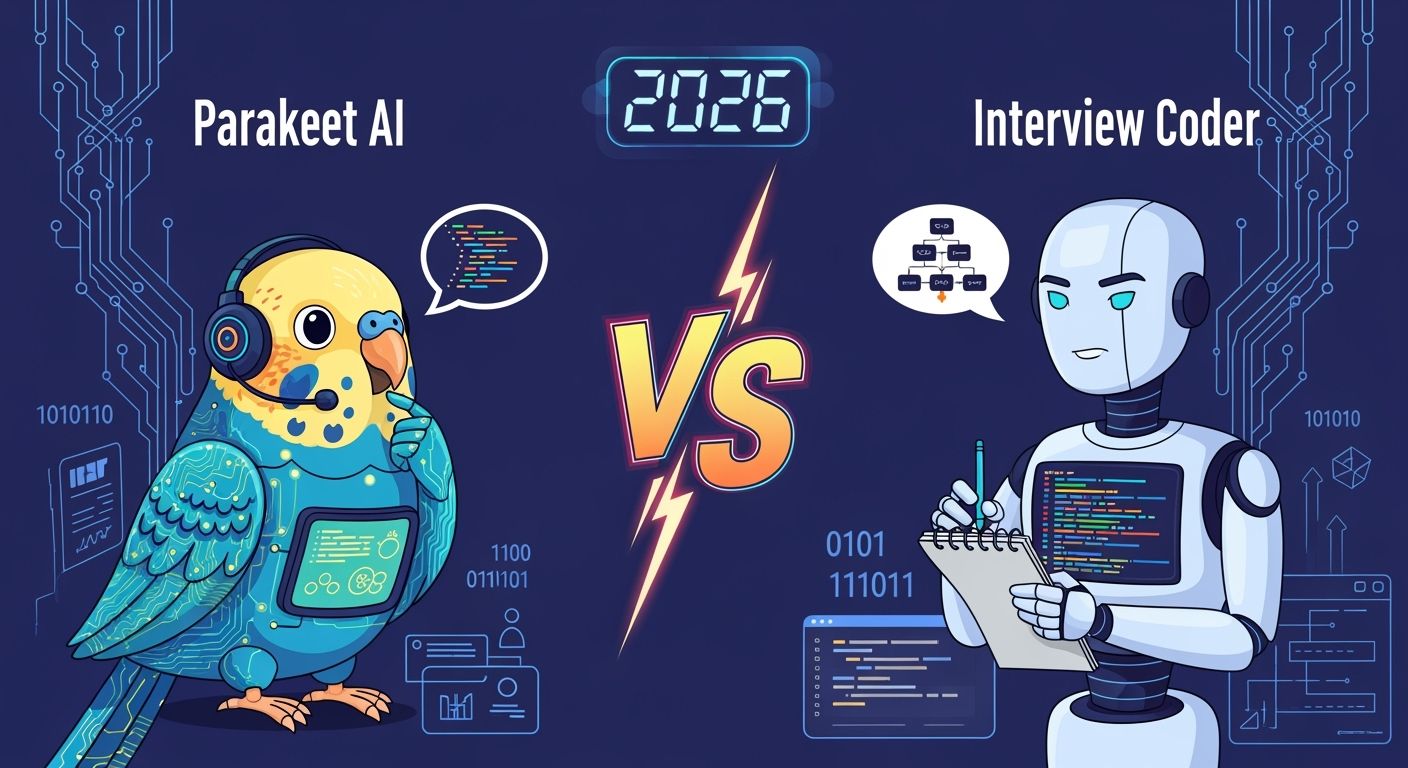
As a senior software engineer, I spent months navigating live coding screens and OA rounds. I read tactics about how to cheat on Coderpad and how to get around TestGorilla, generating some blogs like Parakeet AI review and Interview Coder review.
Nowadays, to stay competitive, I put Parakeet AI vs Interview Coder through real LeetCode Hard problems and Zoom calls. Before risking your career on buggy overlays or keylogger traps, read my real test results below—or watch the 1-minute video demo and download Linkjob AI to see a zero-latency interview copilot in action.
Parakeet AI vs Interview Coder: Reputation and Community Investigations
Before diving headfirst into a real-time coding session with an AI interview assistant, I spent a few days digging into user reviews on Reddit, Hacker News, Trustpilot, and YouTube.
As a software engineer, I was, of course, well aware that those flashy marketing landing pages rarely present the full technical truth. When evaluating public sentiment for Parakeet AI vs Interview Coder, I uncovered a wave of community backlash regarding stealth flaws, billing dark patterns, and subpar AI performance.
Parakeet AI: Speech Delays and Billing Traps
Parakeet AI says it's a one-stop shop for real-time voice assistance, designed to listen to interviewers' questions and churn out answers in the moment.
Unfortunately, HR SaaS platforms like Talview, which have built-in proctoring tools, have already said they can detect Parakeet AI—they even made a dedicated landing page to make sure people don't try to use Parakeet AI during the interview rounds.
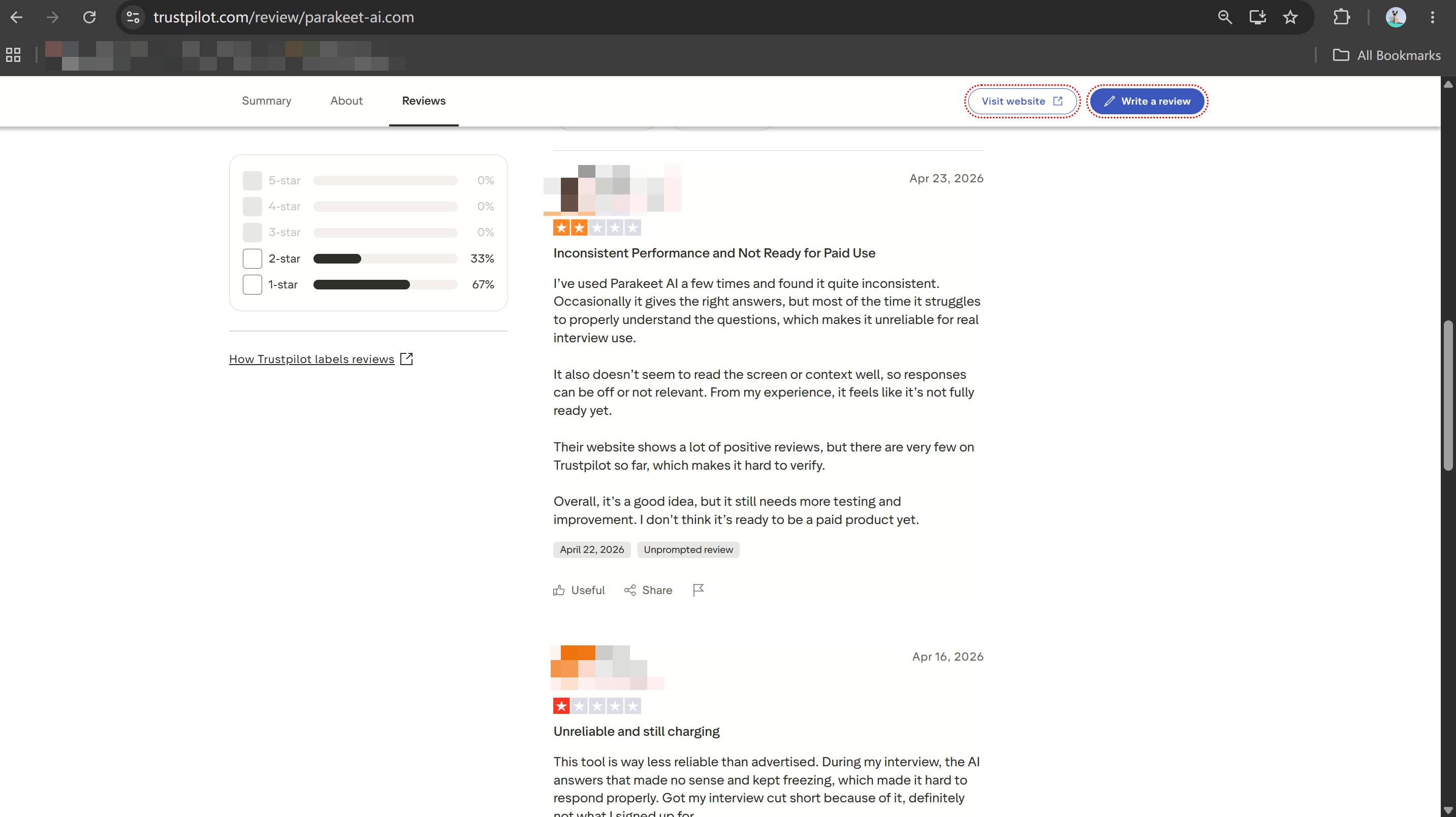
And on Trustpilot and Reddit, job seekers of all kinds have said they had a lot of trouble with the actual in-person coding tests:
Inescapable Speech Processing Latency: The continuous audio stream requires a 6 to 8-second round trip (microphone capture ➡️ cloud audio transcription ➡️ LLM generation ➡️ UI rendering). During a live interview, eight seconds of dead silence while waiting for code to appear makes you look completely unprepared.
Visible OS Window Overlays: Parakeet AI utilizes a software-level window overlay. Because it sits inside the standard operating system display stack, it remains fully visible to interviewers whenever you share your desktop on Zoom, Microsoft Teams, or Google Meet.
Aggressive Subscription Paywalls: Paying candidates complain about being locked into non-refundable $99 to $150 monthly billing cycles. When the software fails during live interviews, customer support routinely issues automated denials citing "account usage" clauses.
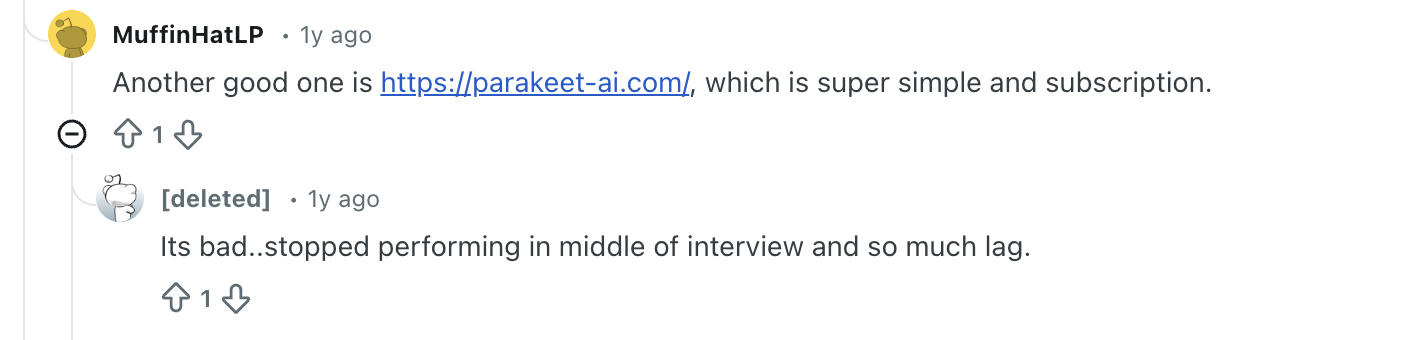
Engineering Reality Check: Voice-based interview tools have issues with coding. Speech-to-text models have a hard time accurately recognizing the pronunciation of technical terms. They often misinterpret variable names, function signatures, and algorithmic constraints. This can lead to incorrect code suggestions.
Interview Coder 3.0 Teardown: Browser Keyloggers and Stolen Proof
It might be because it's the most popular tool in the real-time interview assistant community, but the process of identifying issues with Interview Coder is way easier than with Parakeet AI. I found a YouTube video that gives you a quick overview of the main issues in just a few minutes:
While Interview Coder claims to be an undetectable tool built specifically for software engineers, a detailed security teardown of Interview Coder 3.0 revealed shocking technical vulnerabilities that put candidates at immediate risk of getting caught and permanently blacklisted:
Hotkey Keylogger Triggers: Interview Coder heavily markets its tool as "100% undetectable." However, pressing its global shortcut keys to trigger AI generation fires standard browser
keydownevents. Any basic JavaScript keyboard event listener—or anti-cheat script on HackerRank, CoderPad, and HirePro—logs these hotkey events instantly.Abysmal 40% LeetCode Pass Rate: In independent benchmark tests across five LeetCode Medium and Hard problems, Interview Coder failed 3 out of 5 questions. The underlying reason? Its backend is not a custom fine-tuned model, but simply a generic four-sentence ChatGPT system prompt wrapper.
Fabricated Social Proof and Stolen Offer Letters: The platform posted "verified user offer letters" on its homepage to build trust. Independent investigations on Hacker News revealed that these offer letters were stolen public documents—including a 2017 offer letter from Script, dated eight years before Interview Coder even launched in 2025.
Exposed System Credentials: Before its public launch, the developers left their internal API keys fully exposed in a public GitHub repository, demonstrating a concerning lack of security standards for a tool that handles user data.
Inflated Revenue Claims: The founders admitted to publicly fabricating user metrics and inflating revenue figures by roughly 100x to generate press hype, claiming $45 million in sales while actual revenues were a tiny fraction of that amount.
Interview Coder 3.0 Detection Execution Log:
[User Presses Trigger Hotkey] ➔ [OS Global Key Event] ➔ [Browser JS Listener Intercepts 'keydown'] ➔ [HackerRank Flags Anti-Cheat Violation] ➔ [Silent Candidate Blacklist]
Parakeet AI vs Interview Coder: The Live Coding Benchmark Test
To rigorously compare Parakeet AI vs Interview Coder under realistic pressure, I set up a dual-laptop test environment. During a 45-minute CoderPad session where they do some sort of interview, my main computer had an interview support tool running, and another laptop joined the session via Zoom as the interviewer.
I also used LeetCode 1912 (Design Movie Rental System) for testing later on. It's a complex Hard problem that needs custom data structures, fast lookups, and dynamic state tracking, so it should effectively simulate an interview scenario for a modern senior engineer.
Also, the interviewer side used ChatGPT Live on my phone to sometimes throw in some edge cases. Halfway through, they changed the dynamic pricing rules to see if both tools could handle the flexible criteria usually seen in real interviews.
What Happened During the Live Coding Tests
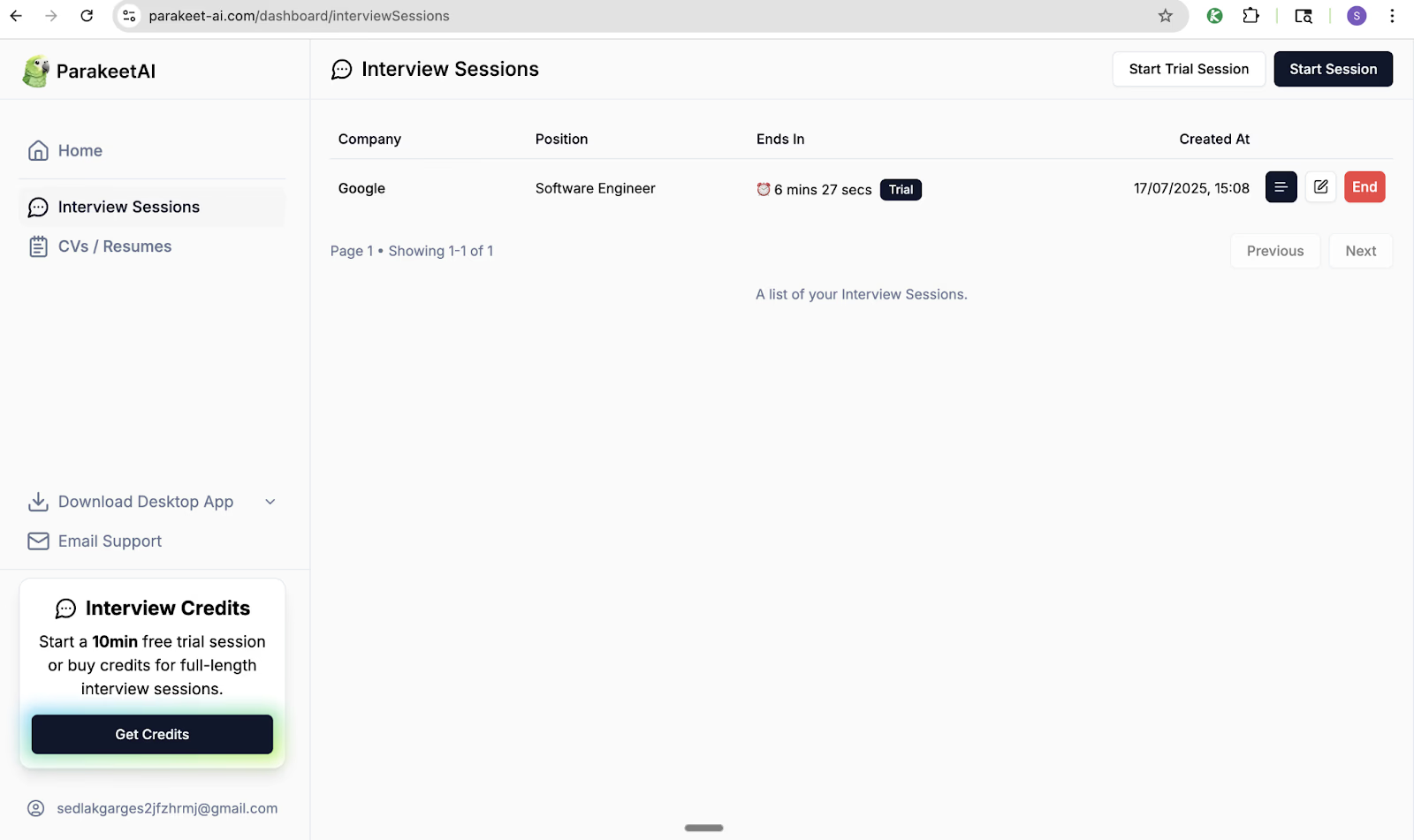
During the real-time algorithm testing session, Parakeet AI, an audio-based tool, didn't work properly for very long. When the interviewer (ChatGPT Live) explained the initial movie rental constraints, Parakeet AI totally messed up the technical terminology—they transcribed "monotonic queue" as "monotonic cue" and "hash set" as "has set." This led to the LLM's context buffer getting the wrong idea about the problem requirements.
Audio STT Pipeline Latency Chain:
[Interviewer Speaks] ➔ [Local Audio Capture] ➔ [Cloud STT Processing (Errors)] ➔ [LLM Prompt Assembly] ➔ [6.0s–8.0s Lag]
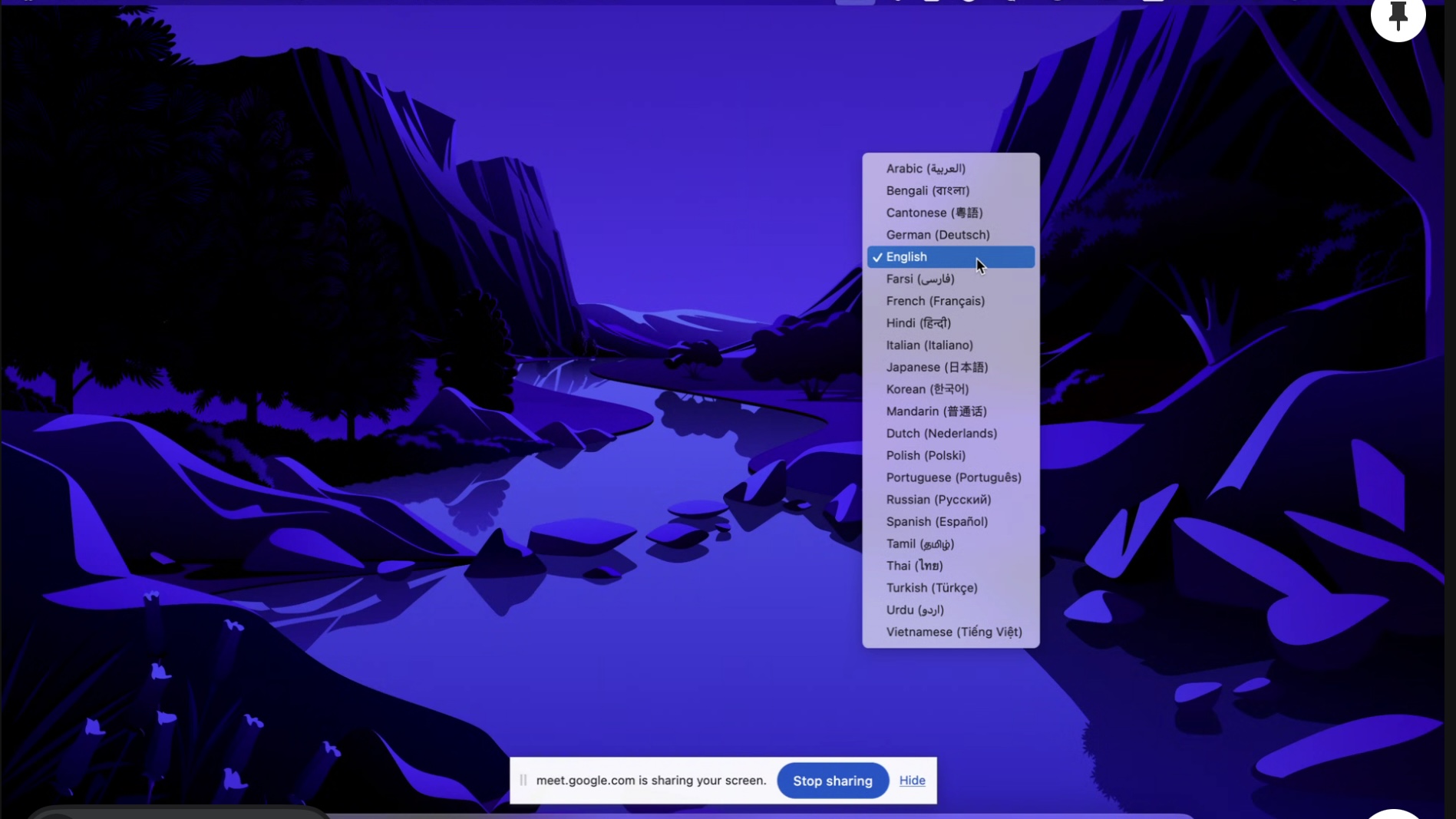
And at the same time, Interview Coder had issues with how detailed the model was, and its answers were too simple or even had basic errors. While I was using the computer, I even triggered a bug with stealth mode enabled—one that was immediately visible in the screenshot👇
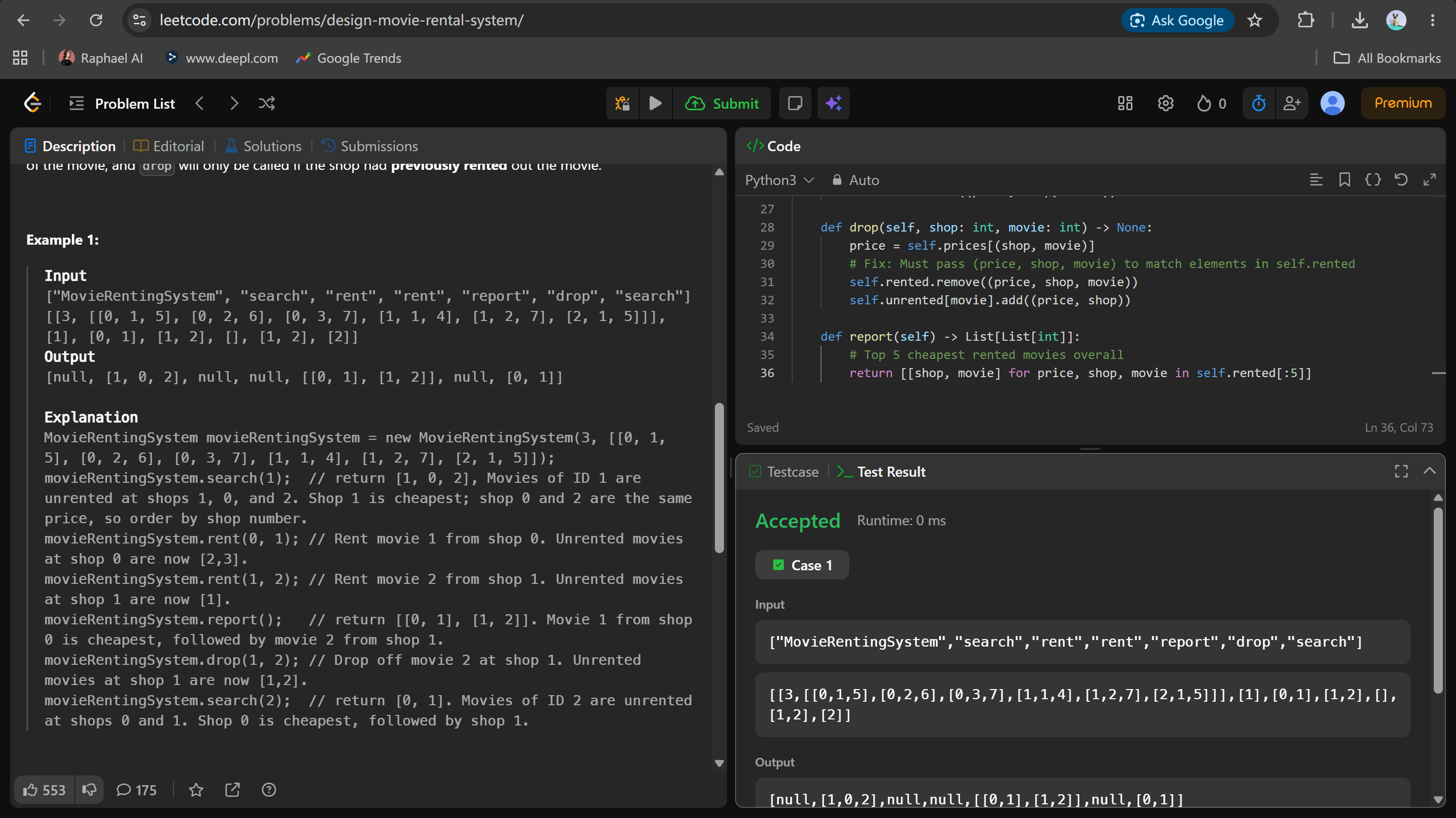
I also used Linkjob AI and selected the Claude Opus model to solve the same LeetCode problem for comparison. Here's the deal: the interviewer side couldn't see the window showing my answer on their computer, and the solution from Linkjob AI worked like a charm.
Parakeet AI vs Interview Coder: Live Coding Test Summary Chart
Performance & Stealth Metric | Parakeet AI | Interview Coder | Linkjob AI |
Response Latency | ~7.0 Seconds | ~5.0 Seconds | ~1.2 Seconds |
Detection Vulnerability | Visible Soft Overlay | Hotkey JS Event Flagged | 100% Invisible Hardware Layer |
LeetCode Accuracy | Low (Audio Context Loss) | 40% Pass Rate (Fails 3/5) | All Passed, no bug repoted |
Pricing Model | $99–$150 / month | $299- 799 / month | $29.99 / month |
Algorithmic Code Quality on LeetCode Hard Problems
When my test interviewer asked me to adapt the solution to support dynamic pricing lookups across multiple shops, Interview Coder panicked and generated a generic conversational text response instead of working code. Parakeet AI truncated the interviewer's speech mid-sentence, returning incomplete Python code that threw runtime IndexError exceptions during execution.
In contrast, Linkjob AI's automated pixel reader captured the updated problem statement directly from my CoderPad screen in 1.2 seconds, outputting production-ready Python code:
# Linkjob AI Solution for LeetCode 1912 (Design Movie Rental System)
from typing import List
from sortedcontainers import SortedList
from collections import defaultdict

class MovieRentingSystem:

    def __init__(self, n: int, entries: List[List[int]]):
        self.unrented = defaultdict(SortedList)
        self.rented = SortedList()
        self.prices = {}

        for shop, movie, price in entries:
            self.unrented[movie].add((price, shop))
            self.prices[(shop, movie)] = price

    def search(self, movie: int) -> List[int]:
        return [shop for price, shop in self.unrented[movie][:5]]

    def rent(self, shop: int, movie: int) -> None:
        price = self.prices[(shop, movie)]
        self.unrented[movie].remove((price, shop))
        self.rented.add((price, shop, movie))

    def drop(self, shop: int, movie: int) -> None:
        price = self.prices[(shop, movie)]
        self.rented.remove((price, shop))
        self.unrented[movie].add((price, shop))

    def report(self) -> List[List[int]]:
        return [[shop, movie] for price, shop, movie in self.rented[:5]]
Time Complexity Analysis:
- System Initialization: O(N log N) sorting entries into indexed lists
- Rent / Drop Operations: O(log N) logarithmic binary search maintenance
- Search / Report Queries: O(1) constant time top-5 slice lookups

Space Complexity Analysis:
- Memory Allocation: O(N) linear memory tracking movie inventory across shops
Parakeet AI vs Interview Coder: Stealth Risks and Detection Mechanics
Being caught using an AI assistant during the technical screening phase is a devastating blow for anyone. In addition to the tests mentioned above, in my evaluation of Parakeet AI vs Interview Coder, I also analyzed how these two software programs handle full-screen sharing in proctored browser environments such as Zoom, Microsoft Teams, HackerRank, and HirePro.
Soft Window Overlays vs. OS Hardware Stealth
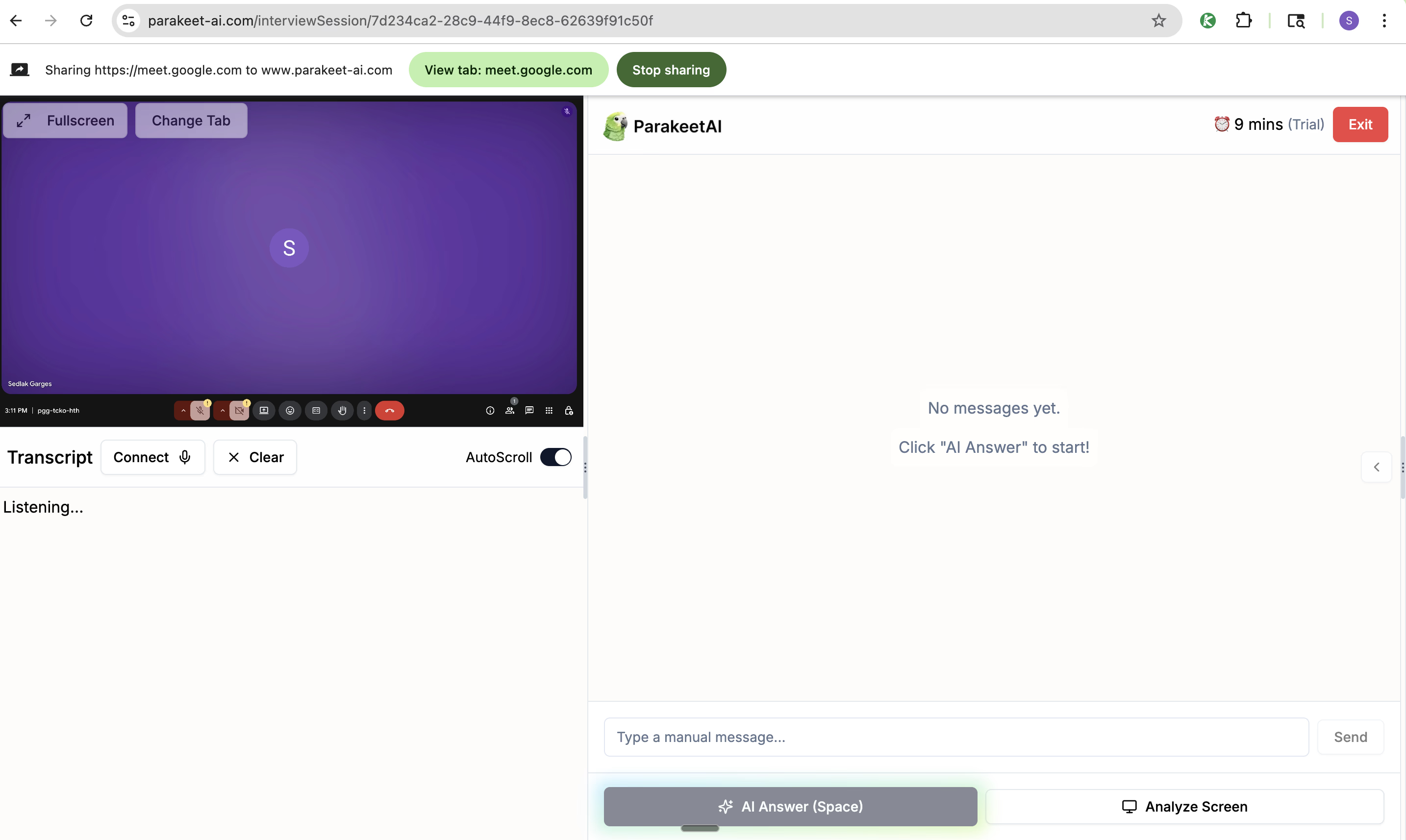
Parakeet AI relies on standard software overlays built using web frameworks like Electron or Qt. In desktop environment rendering, soft overlays sit inside the operating system window stack (WS_EX_TOPMOST on Windows or NSWindowLevel on macOS).
When you're on a call with an interviewer and they ask you to share your whole desktop screen, the operating system's DWM basically takes all the window layers and puts them into the display buffer. So, overlays from standard software like Interview Coder when stealth mode is off, or Parakeet AI running in a browser tab, will be sent to the interviewer in real time via the camera.
Critical Stealth Hazard: In today's world, full-screen sharing is pretty much par for the course in programming interviews. Even if users try to avoid it, once the screen is shared, Parakeet AI's browser application forces them to frantically close the AI software—or they risk having the interviewer see all of the answer hints on the full-screen shared page.
To eliminate this fundamental vulnerability, Linkjob AI was engineered with a system-level hardware overlay architecture:
Hardware Layer Rendering: Renders AI prompts directly beneath the operating system's display composition layer, making it 100% invisible to Zoom, Teams, Meet, and background screen-capture software.
Zero Mouse Movement: Controlled entirely via background system shortcuts, allowing you to trigger or scroll prompts without moving your cursor away from your code editor.
Proctoring Bypass: Operates completely outside the browser sandbox, bypassing process monitoring and DOM inspection.
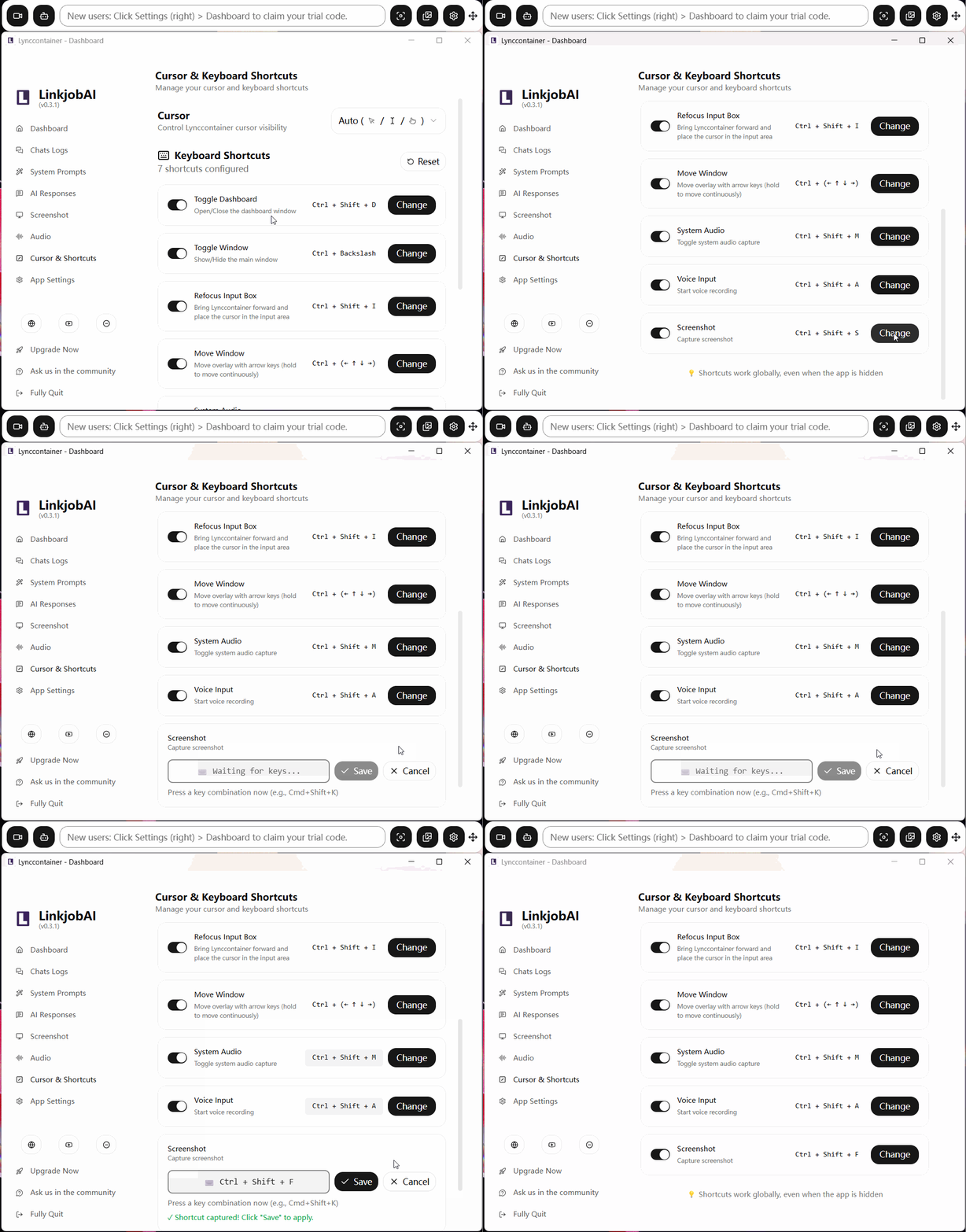
Browser DOM Blur Events and Keylogger Detection
When taking an OA on HackerRank, CoderPad, or HirePro, interacting with standard AI tools creates clear behavioral footprints:
DOM Focus-Switching Flags: Clicking into a soft overlay to scroll through code suggestions causes the operating system to shift focus away from the browser window. The assessment platform immediately intercepts the browser's
window.onbluranddocument.visibilitychangeJavaScript events, logging a tab-switch violation on the recruiter's dashboard.Keylogger Event Capture: Tools like Interview Coder rely on global keyboard shortcuts that trigger standard browser key listeners. Assessment engines log these rapid
keydowncombinations as unauthorized automation scripts.
// How Anti-Cheat Platforms Capture Hotkey Triggers
document.addEventListener('keydown', (event) => {
    if (event.ctrlKey && event.key === 'i') {
        console.warn('Unauthorized Hotkey Shortcut Intercepted');
        FlagCandidateForReview({ reason: 'Suspicious Keyboard Automation' });
    }
});
Parakeet AI vs Interview Coder: Pricing, Refunds, and ROI
I looked at the pricing closely, in addition to some of the technical aspects. For a bunch of reasons, the prices of different AI interview assistants have changed recently. As of now, here's a rundown of their prices.
Comparing Subscription Costs and Developer Value
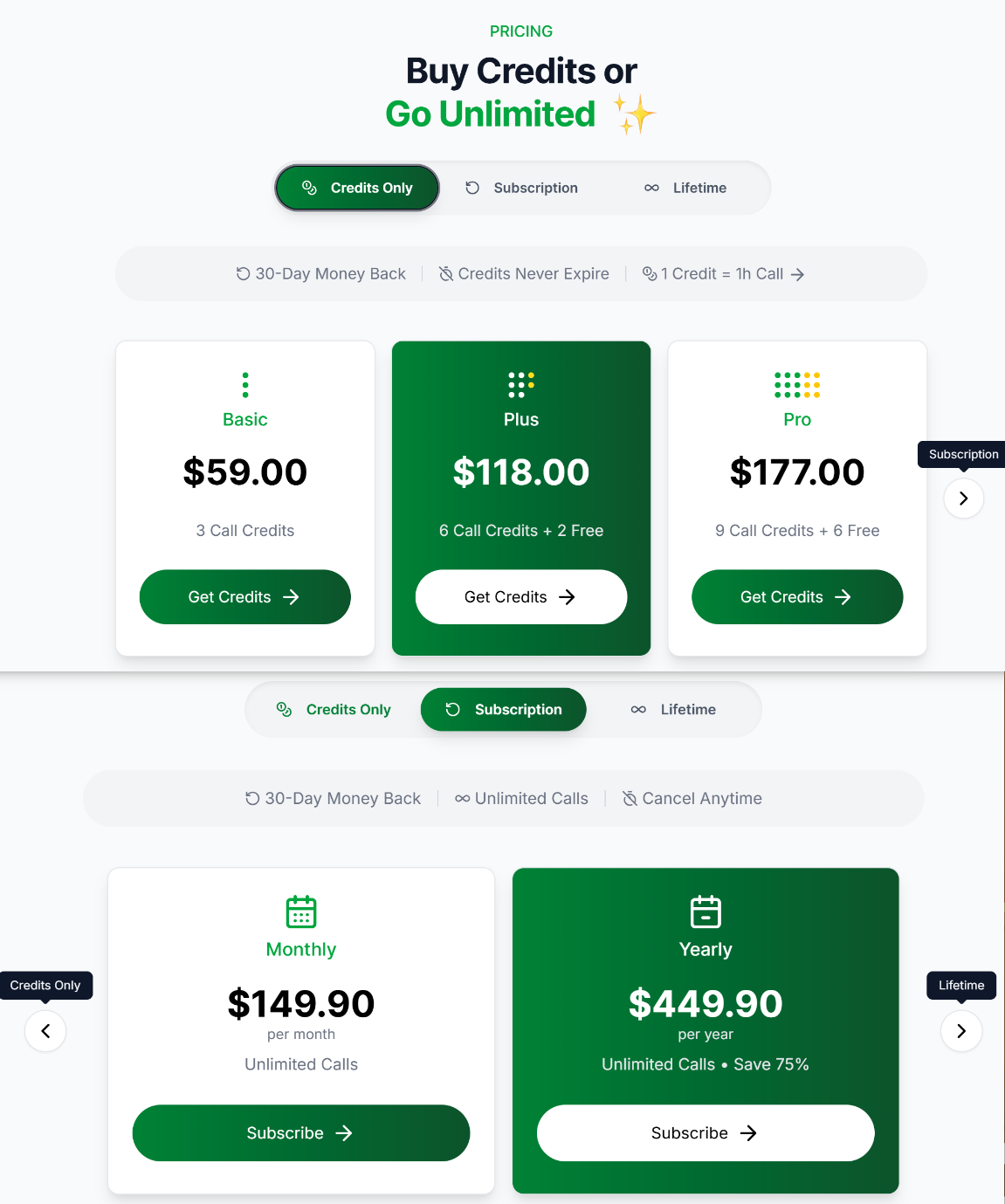
A detailed comparison highlights the stark differences in value, transparency, and technical capability across these platforms:
Feature & Pricing Metric | Parakeet AI | Interview Coder | Linkjob AI |
Pricing Model | Heavy Monthly Plan | Fixed Monthly Fee | Flat Unlimited Plan |
Starting Cost | $59–$149.9 / month | $299.00 / month (with Stealth Mode) | $29.99 / month |
Refund Policy | Strict usage-based denials | Non-refundable digital policy | Transparent self-service cancellation |
Stealth Technology | Soft overlay (Visible on Zoom) | Hotkey JS Event Flagged | OS-Level Hardware Overlay |
Code Accuracy | Low (Audio Context Loss) | 40% Pass Rate (Fails 3/5) | Exact AST Code Parsing |
Target Audience | General job seekers | Marketing-focused tool | Software Engineers & Coders |
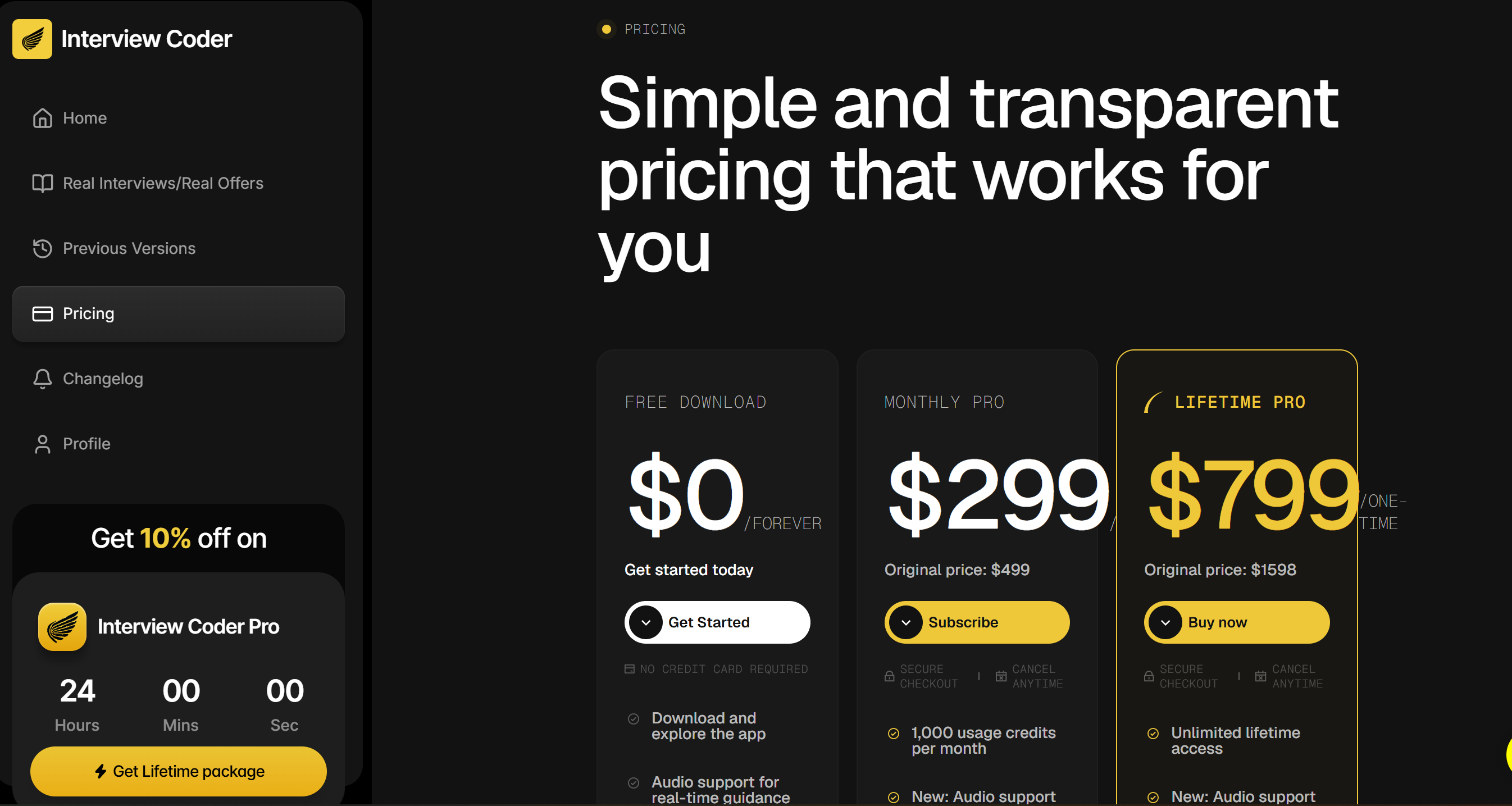
In my experience, spending $299 a month on a service that can't even solve LeetCode problems, triggers the browser's keylogger, and frequently crashes or freezes in the middle of an interview—among other issues—is not a smart use of your money.
Why I Abandoned Parakeet AI vs Interview Coder for Linkjob AI
After weeks of hands-on technical testing, my head-to-head comparison of Parakeet AI vs Interview Coder led to a clear conclusion: neither platform is suitable for senior software engineering interviews.
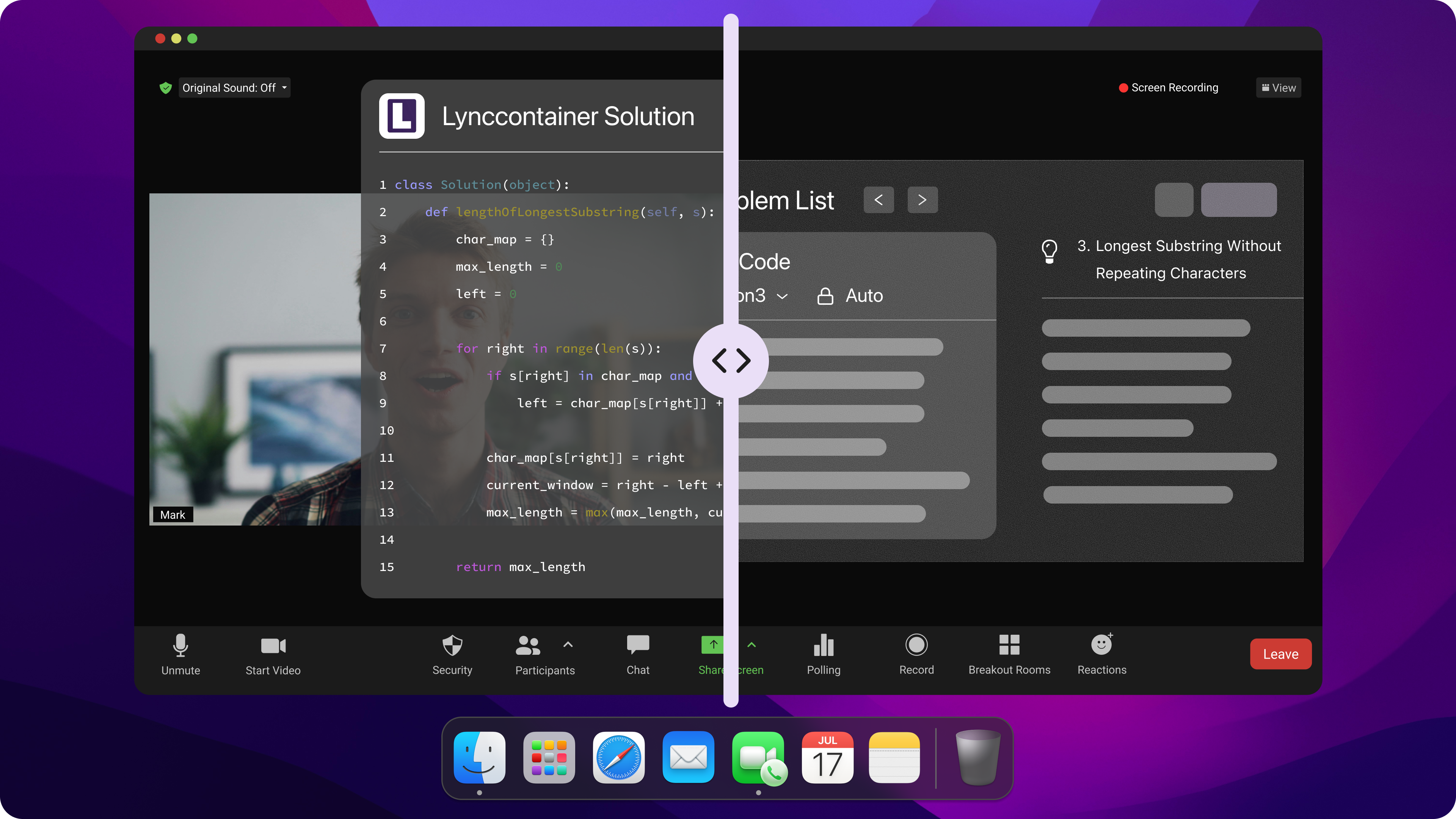
Switching to Linkjob AI completely transformed my interview preparation and live performance:
1.2s Latency: Instant code generation with time and space complexity breakdowns.
100% Undetectable Hardware Stealth: Renders beneath the OS compositor, staying completely invisible to Zoom, Teams, and proctoring tools.
Zero Keylogger Detection Risks: Controlled via background system shortcuts that bypass browser JavaScript and event listeners.
Developer-Friendly Pricing: Monthly fees start as low as $29.99, with self-service cancellation available and no hidden restrictions.
FAQ
Is Parakeet AI or Interview Coder undetectable on HackerRank?
No, neither tool is completely undetectable on HackerRank because both trigger browser keyboard event listeners or standard screen-capture overlays.
Interview Coder: Fires global
keydownevents caught instantly by open-source browser keyloggers and proctoring scripts.Parakeet AI: Renders soft window overlays that show up during full-desktop Zoom screen shares and background screenshot sweeps.
Linkjob AI Alternative: Utilizes OS-level hardware rendering and background hotkeys to bypass DOM event monitoring entirely.
Which tool solves LeetCode questions most accurately?
Linkjob AI delivers the highest accuracy by reading your IDE screen directly in 1.2 seconds, whereas Interview Coder failed 3 out of 5 LeetCode tests.
What is the best alternative to Parakeet AI vs Interview Coder?
Linkjob AI is the best alternative for software engineers, offering 100% OS-level hardware stealth and instant IDE pixel parsing for just $29.99/month.
See Also
Parakeet AI Review: Real Interview Performance, Pros and Cons
Top Alternatives to ParakeetAI for Interview Assistance
Utilizing AI for Live Coding Interviews in 2026
My Interview Coder Review 2026: Pros, Cons, What’s Missing
Best Interview Coder Alternative for Coding Interview Copilot