How I Use AI Tools Fully for My 2026 Interview Preparation

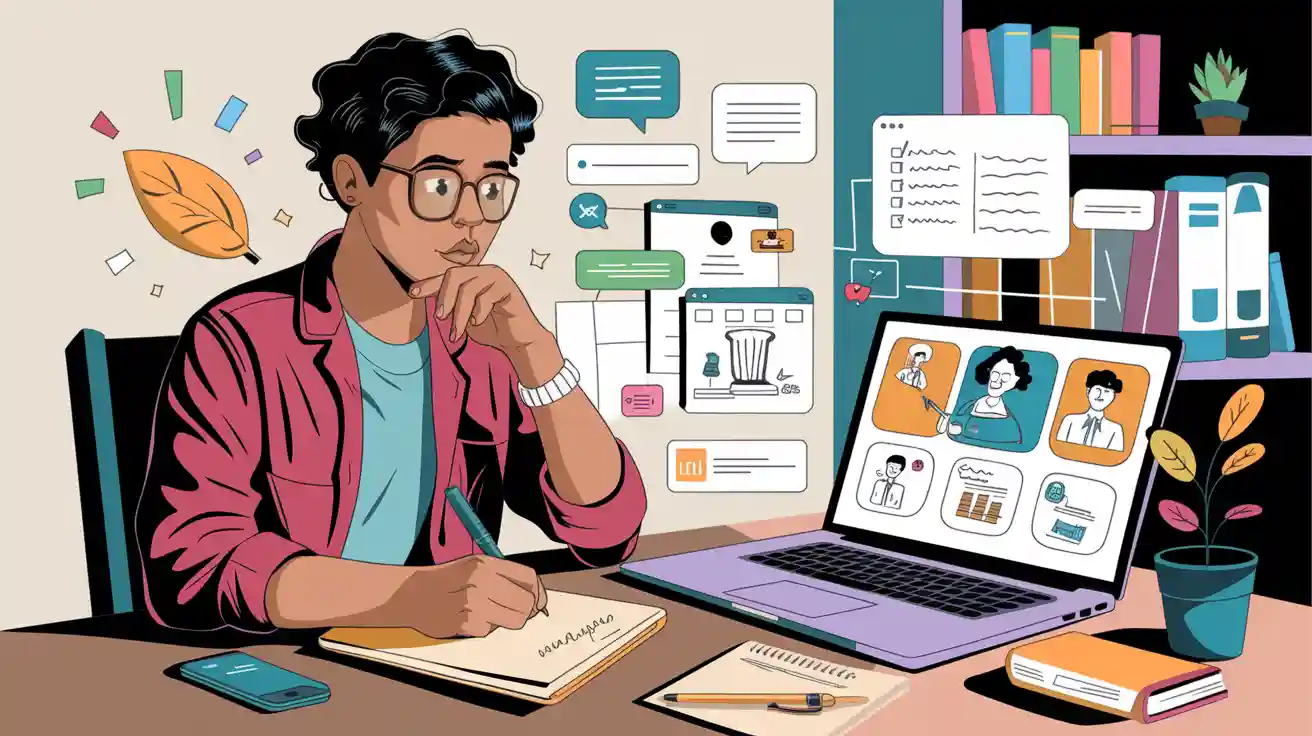
During the 2025-2026 interview preparation process, using AI tools has become my daily routine. Previously, I used ChatGPT to help me simulate interviews, but now there are AI tools specifically optimized for interview scenarios. It can ask questions based on my resume and the position I am applying for, allowing me to answer verbally, and the AI will follow up with further probing questions. This targeted training enables me to achieve significant improvement in a short period.
I am very grateful to Linkjob AI for helping me pass my interview, which is why I accepted the invitation to share how I use AI tools for my interview preparation. Next, I will share how to effectively utilize the various types of assistance provided by AI interview tool to maximize its capabilities.
My Verdict on AI Interview Tools
First Impressions
AI interview preparation tools offer significant advantages compared to traditional mock interviews with coaches or using ChatGPT.
First, hiring a coach for interview preparation is expensive and requires scheduling time in advance. Finding a suitable coach with extensive experience is also not an easy task. In contrast, with an AI interview preparation tool, I can start at any time.
Second, compared to ChatGPT, AI interview preparation tools provide highly personalized questions. They also support real-time dialogue, meaning I can answer questions verbally just like in a real interview without having to type my responses. The tool can capture my answers in real-time and follow up immediately with probing questions, allowing me to prepare much more thoroughly.
Key Outcomes
After using the tool for a few weeks, I saw real changes. I answered questions faster. I felt more confident. I noticed that my answers sounded clearer and more organized. The tool helped me spot weak points and fix them before the real interview. I also learned how to handle tricky or unexpected questions. The AI gave me ideas for answers I had not thought of before.
Using an AI Tool for Interview Preparation
Strategic Mock Interviews and Dynamic Practice
When I transitioned from ChatGPT to a specialized AI tool like Linkjob, the most immediate shift was the environmental realism. Unlike text-based bots, Linkjob creates a high-pressure environment that mimics a real video call.
Adaptive Follow-up Logic: During my mock sessions, the AI didn't just move to the next question. If my explanation of a "System Design" project was vague, it would probe deeper with: "You mentioned using Redis for caching; how did you handle cache invalidation in that specific scenario?"
Skill-Specific Modules: I utilized specialized banks for coding (DSA), system design, and behavioral questions (STAR method). While platforms like LeetCode focus on the code itself, Linkjob evaluated how I explained my logic while coding.
Here’s a quick look at what Linkjob offers for practice:
Feature | How It Helped Me |
|---|---|
Unlimited mock interviews | I could practice as much as I wanted. |
Real-time transcription | I saw my answers instantly. |
Instant feedback | The AI points out my mistakes immediately and prompts me to think deeper through follow-up questions. |
Specialized question banks | The AI curated the most relevant questions for me to practice. |
View old chats | I can review my history of conversations with the AI, which allows me to identify areas where I still need to improve. |
Real-Time Support in Live Interviews
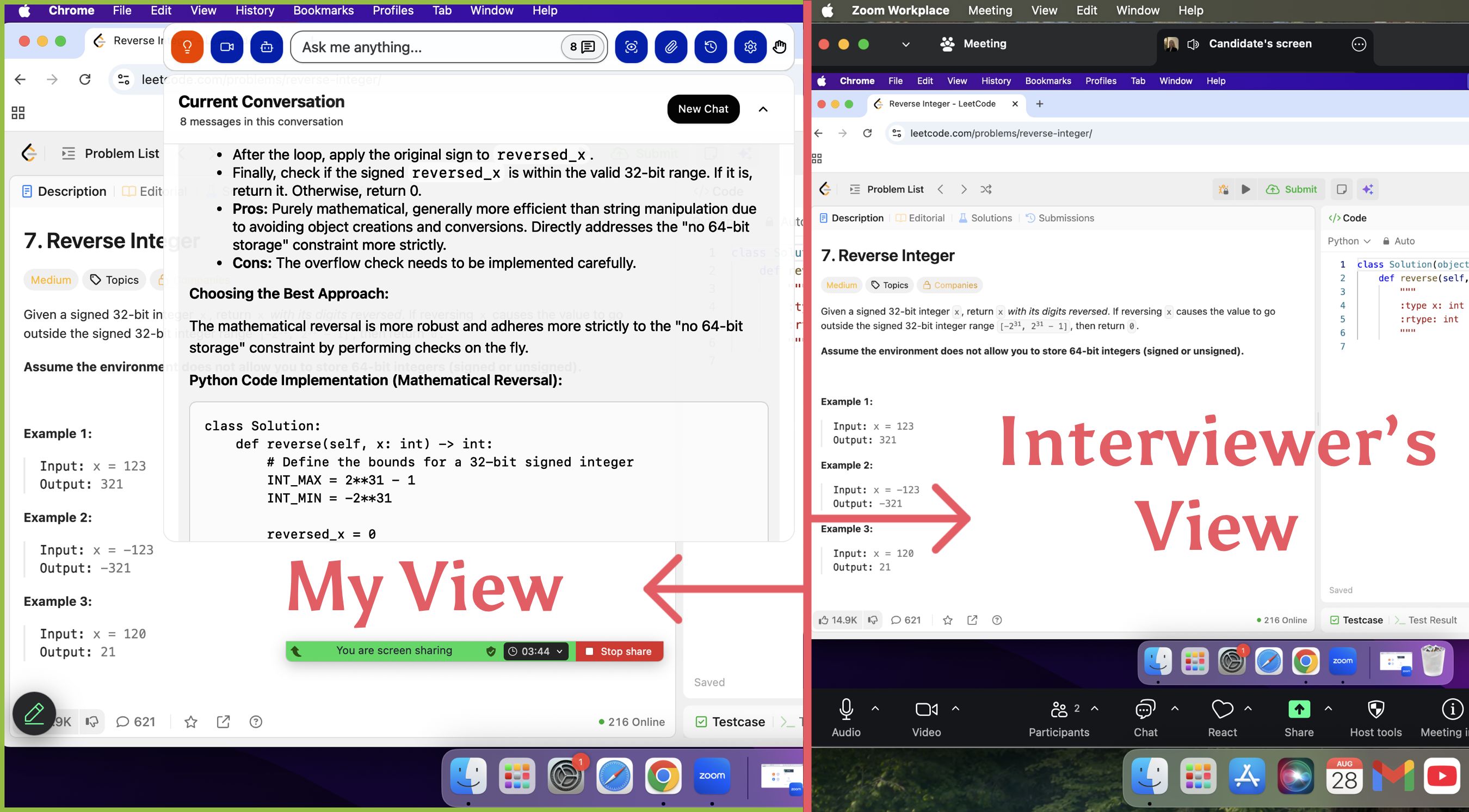
This AI interview tool can assist with answering questions during live interviews, which I find far more practical than AI prep tools that are limited to mock simulations.
Context-Aware Suggestions: During a live interview, the tool listens to the interviewer’s query. Within seconds, it generates concise bullet points based on my uploaded resume and the specific job description. This ensures my answers are always on-brand for the role.
Structured Answer Output: AI tools provide me with more structured reference answers, which makes my responses more logical and allows me to express my thoughts more clearly. For instance, it can generate answers in bullet-point format or follow frameworks like the STAR method, ensuring a well-organized delivery.
Live Transcription: The tool provides a real-time transcript of the conversation. Seeing my words as I speak them helps me catch myself if I start rambling or using too many filler words.
Industry-Specific Preparation
General AI often fails at the nuances of specialized fields. My preparation for 2026 roles required a bifurcated approach that Linkjob handled seamlessly:
Industry | Specific AI Support Features | Impact on My Preparation |
Tech / Software | Integration of whiteboard coding logic and system architecture feedback. | Improved my ability to "speak" code and explain architectural trade-offs. |
Finance / Consulting | Market-sizing cases and financial modeling prompts. | Sharpened my quantitative reasoning and structured case-cracking speed. |
Cross-Industry | Multilingual support and accent recognition for global roles. | Increased my confidence for interviews with international teams. |
Here’s a table comparing Linkjob with other tools:
Feature/Aspect | Linkjob AI | Other AI Interview Tools |
|---|---|---|
Real-time assistance | Yes, during live and mock interviews | Mostly during practice only |
Industry-specific questions | Strong in tech and finance, also adaptable to others | Varies by tools |
Multilingual support | Yes, with instant translation | Limited or none |
Tailored Support | Detailed and personalized | Basic or less detailed |
Integration with meeting platforms and online assessment platforms | Seamless (Zoom, Teams, Google Meet, HackerRank, CodeSignal, CoderPad, etc.) | Varies |
I found that using an ai tool for interview preparation made me feel ready for any interview, no matter the job field. The tool kept up with new trends and what employers want, so I always felt prepared.
Overcoming Interview Challenges
Nervousness and Confidence
I used to get really nervous before interviews. My hands would sweat, and my mind would race. I always worried about making mistakes or forgetting what to say. Practicing with an ai tool for interview preparation changed that for me. I could practice anytime, anywhere, and I didn’t have to wait for someone else to help. The tool let me answer questions as many times as I wanted, which made me feel more in control. I read that many people feel less stressed when they can practice on their own schedule. That helped me build real confidence.
Getting Real Feedback
One thing I always struggled with was knowing if my answers were good enough. Friends and family tried to help, but their advice was not always clear. When I started using Linkjob, I got instant feedback after every answer. I could see my progress right away. Here’s what stood out to me:
I got detailed feedback on my answers, including tone and clarity.
I could practice as much as I wanted, without waiting for anyone.
The tool tracked my improvement over time, which kept me motivated.
I still think human coaches are great for personal advice, but AI tools like Linkjob make it easy to practice the basics and see real growth.
Handling Unexpected Questions
The scariest part of any interview is getting a question you didn’t expect. I used to freeze when that happened. With Linkjob, I practiced with a huge variety of questions, including ones from real companies.
Maximizing Results with AI Interview Tools
Best Practices
I learned that getting the most out of an ai tool for interview preparation takes more than just clicking through questions. I always start by uploading my resume and the job details. This way, the tool gives me questions that match the job I want. I try to practice every day, even if it’s just for a short time. Daily practice helps me get used to the interview format and builds my confidence.
Here are some steps I follow:
I upload my resume and job info for tailored questions.
I do mock interviews focused on the job I want.
I use the feedback to fix my tone and pacing.
I change my answers to fit the company’s style.
I research the company’s values and news to make my answers personal.
Balancing AI and Human Feedback
I found that using only AI is not enough. AI gives me fast, clear feedback on my answers and helps me spot mistakes. But sometimes, I need advice from a real person. Human coaches or mentors help me with things like body language, eye contact, and how to show my personality. They also give me tips that AI might miss, like how to connect with the interviewer.
I like to mix both. I use AI for daily practice and quick feedback. Then, I ask a friend or mentor to listen to my answers and give me their thoughts. This way, I get the best of both worlds. I feel more prepared and confident.
Avoiding Common Pitfalls
I learned that it’s easy to rely too much on AI. Sometimes, I catch myself copying AI-generated answers without thinking. That’s not good. Interviewers want to hear my real thoughts, not just perfect answers from a machine. I make sure to personalize every answer and practice saying them out loud.
Here’s a quick table of what to watch out for:
Pitfall | How I Avoid It |
|---|---|
Overusing AI answers | I add my own stories and examples |
Ignoring human feedback | I ask for advice from real people |
Practicing too little | I set a daily practice schedule |
I also remember to keep eye contact, listen carefully, and stay relaxed. AI helps me prepare, but I know my own effort matters most.
I’ve seen how combining steady practice with real-time AI support changes everything. Linkjob’s instant answer suggestions, smart phrasing, and live coaching help me stay calm and clear, even when the pressure is high. Here’s what stood out for me:
I get answers tailored to my job and industry.
Real-time help boosts my confidence and keeps me focused.
I feel ready for tough questions, especially in tech and finance.
If you want to feel prepared and confident, I’d say give AI tools like Linkjob a try. They really make a difference.
FAQ
How often should I practice with AI interview tools?
I try to practice every day, even if it’s just for 10 minutes. Regular practice helps me remember what I learn and keeps me calm when the real interview comes.
Can AI tools really help with live interviews?
Yes! I use Linkjob’s real-time assistant during my interviews. It listens, gives me answer ideas, and helps me stay focused. I feel less nervous knowing I have support.
Do I still need to talk to real people if I use AI?
I do! AI helps me practice and fix mistakes fast. When I want feedback on my body language or personality, I ask a friend or mentor. Mixing both gives me the best results.
What if I get a question I’ve never seen before?
I’ve faced this too. I stay calm and use the real-time suggestions from Linkjob. The tool helps me organize my thoughts and answer clearly, even if the question is new.
See Also
How to Cheat HackerRank Tests With AI: My 2026 Update
How I Used AI to Pass the Interview on Microsoft Teams
The 2026 OpenAI Coding Interview Question Bank I've Collected
© Copyright 2025 Linkjob.ai - All Rights Reserved.