How I Prepared for the Coinbase System Design Interview 2026

I took the coinbase system design interview seriously. But in the real-time interview process, I used to get nervous when I was being watched. And now I passed my Coinbase system design interview thanks to Linkjob AI. Having an undetectable real-time interview copilot gave me a massive advantage during the live session. That’s why I accepted the invitation to share how this tool helped me succeed.
Key Takeaways
Understand key concepts like security, compliance, and scalability. These are crucial for designing systems at Coinbase.
Practice using a structured framework for your answers. This helps organize your thoughts and communicate clearly during the interview.
Live guidance helped me handle pressure and adapt on the fly. The Linkjob AI acts as your Digital Copilot, prompting you for the next step. This builds confidence and helps you handle stress effectively.
Focus on real-world problem scenarios. Embrace feedback during the interview. Use it to improve your design and show your ability to adapt.
Coinbase System Design Interview Overview
The Coinbase interview is notorious for its Triple Set screening and intense Virtual Onsite (VO). Having recently navigated the process, I’ve detailed the stages below.
Interview Rounds and Format
Coinbase uses a multi-round process that tests both coding and system design skills.
Phase 1: The "Triple Set" Screening
Intelligence Test (15 min): Focused on GRE-style sentence completion and pattern-based Math.
Strategy: Never get stuck. If a pattern doesn’t click in 10 seconds, guess and move on.
Culture Test (15 min): Coinbase looks for player who's high effort, direct communication, and mission-focus.
Strategy: Be consistent. Choose options that reflect a "disagree and commit" and "high-performance" mindset.
CodeSignal (90 min): Classic algorithmic questions but with a focus on clean, production-ready code.
Phase 2: Real Questions
Coinbase interviews are practical. They want to see how you build real systems.
1. Coding: Food Delivery System
The Task: Manage a dictionary of orders/prices.
The Evolution: It typically ends with a Binary Search optimization to find the
average priceof orders within a rolling time window or price range.The AI Assistant can instantly draft the
BinarySearchhelper function for aTime-Based Key-Value Storepattern, ensuring your implementation is bug-free.
2. Coding:Domain Round
The Context: You must implement the logic for block creation or validation.
The Focus: Handling data integrity and ensuring the hash meets specific difficulty criteria.
3. System Design:
Part 1: The Banking System
You must implement a functional base and then layer on complex logic under a strict timer.
Level 1: Core Ledger
Tasks: Implement
addUser,deposit, andtransferBetweenUsers.Focus: Focus on input validation (e.g., checking if accounts exist, ensuring transfer amounts are positive) and basic state management.
Level 2: Analytics & Top-K Ranking
Task: Rank accounts based on total spending.
Key Data Structure: Use a PriorityQueue (Min-Heap) in Java to maintain the Top-K spenders. Familiarize yourself with
Comparatorsyntax to ensure O(N \log K) efficiency.
Level 3: Temporal Logic
Tasks: Implement
schedulePayment(timestamp, amount)andcancelPayment.Focus: You need a way to track "pending" vs. "executed" transactions. Consider a
TreeMapor a sorted list to efficiently find payments that are due based on the provided current timestamp.
Task: Merge two users while maintaining their complete, unified payment history.
Focus: This tests your ability to handle complex object references and list merging. Ensure the merged history remains sorted by timestamp for future auditability.
While I verbally explained the high-level logic of "account deactivation" and "pointer re-mapping" to the interviewer, I had the AI Assistant instantly generate the Two-Pointer Merge boilerplate and the custom Java Comparator. The interviewer was clearly impressed by the speed and the cleanliness of the final implementation.
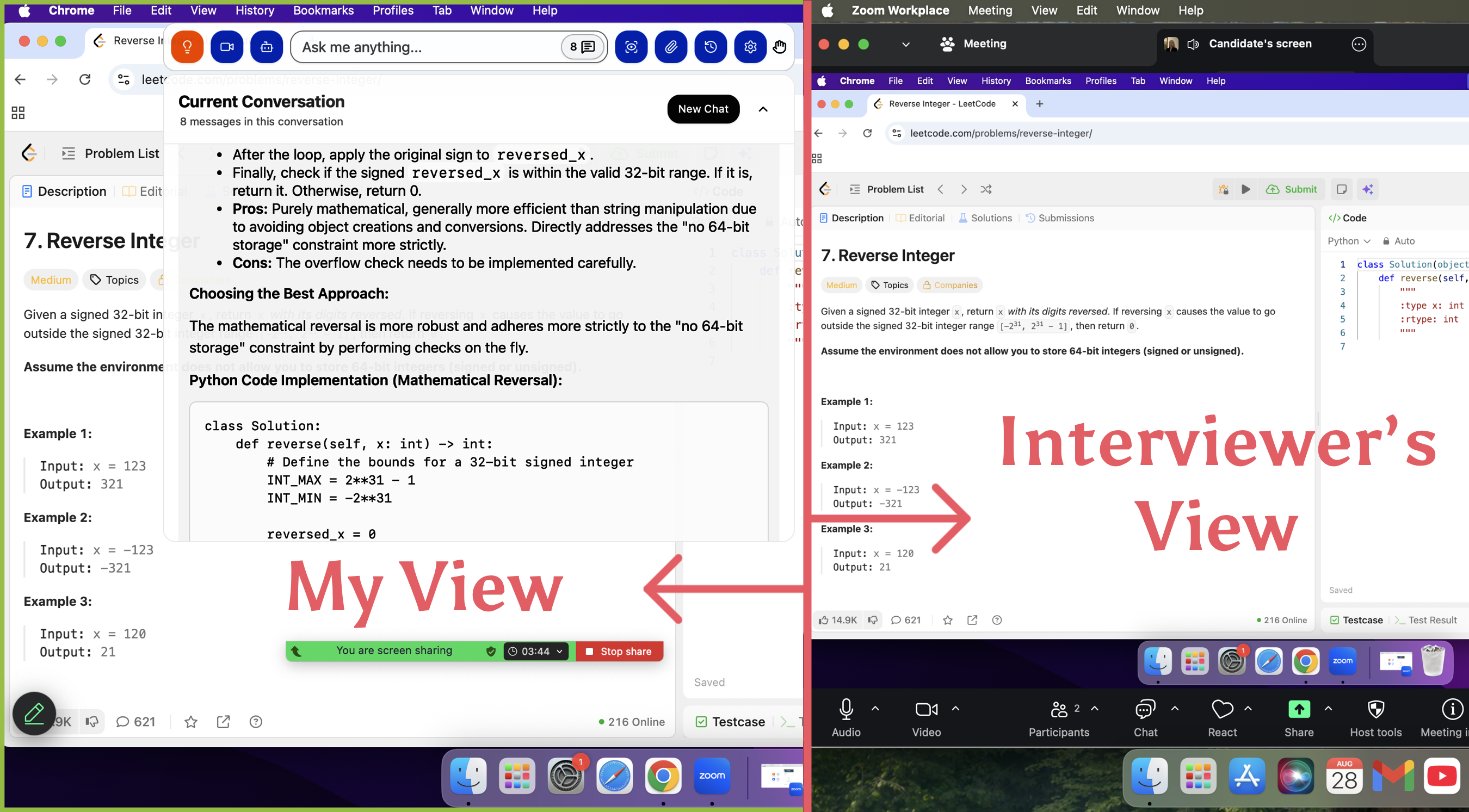
Part 2: From Banking to Crypto Ecosystem
1. Real-Time Price Monitoring
The Goal: Design a system like Coinbase Explore that displays live prices for thousands of assets to millions of users.
Data Ingestion: Use WebSockets to ingest data from multiple exchanges. Implement a Normalization Layer to standardize different API formats.
Low-Latency Distribution:
Push Model: Use a Pub/Sub architecture (Redis or Kafka) to push updates to a WebSocket Gateway.
Caching: Store the "latest price" in a high-speed Redis cache. For historical data (K-lines), use a Time-Series Database like InfluxDB.
2. Scaling the Ranking Engine (NFT Marketplace)
The Goal: Show the "Top 10 Trending NFTs" based on transaction volume in real-time.
Distributed Ranking: Since a single
PriorityQueuewon't scale, use Redis Sorted Sets (ZSET).Increment scores (spending/volume) in real-time as transactions occur.
ZSET allows O(\log N) updates and O(1) retrieval of the top-K elements.
3. Transaction Reliability & User Merging at Scale
The Goal: Ensure that when users merge accounts or schedule payments , data is never lost or doubled.
Idempotency: Crucial for financial systems. Every
transferormergerequest must have a uniqueIdempotency Key. If a request retries due to a network error, the system recognizes the key and does not execute the transfer twice.Coinbase handles real-time transactions, focuses on consistency, and prioritize massive data orchestration, like Databricks System.
Similar to the Databricks system design interview, Coinbase evaluates candidates on their ability to architect systems for real-time transactions and strong consistency while navigating complex data orchestration at scale.
4. Security & Compliance
Hot vs. Cold Storage: Discuss how user funds are moved from highly accessible "Hot Wallets" (for trading) to "Cold Storage" (offline, for security).
Audit Trails: Every action—especially
cancelPaymentormergeUser—must generate an Immutable Audit Log. Use a Write-Ahead Log (WAL) pattern to ensure that if the system crashes, the state can be perfectly reconstructed.
Key Takeaways
Correctness Over Cleverness: In the Banking round, a bug that allows a negative balance is an automatic fail. Prioritize Strong Consistency and ACID properties.
While crypto platforms prioritize high-frequency volatility, traditional financial giants have a different set of rigors. For a detailed comparison, see jp morgan system design interview , where it explain why data consistency and regulatory compliance are the top priorities.
Clarify Constraints: Before designing the NFT Marketplace, ask: "Is the price data real-time or delayed?" and "What is the peak QPS during a market crash?"
Handle Volatility: Your design must account for 10x traffic spikes. Mention Auto-scaling, Rate Limiting, and Circuit Breakers to protect the system during high crypto volatility.
Phase 3:Behavioral Round
Project Dive Deep: Be prepared to explain a past project in extreme technical detail.
Core Competencies: They look for Mentorship , Creativity , and Ownership.
Round | Topics Covered | Key Challenges |
Coding 1 | Food Delivery System | Managing hash dictionaries; ends with a Binary Search for average price. |
Coding 2 | Mining Block | Implementing blockchain logic and data integrity. |
System Design | Crypto Explorer | Designing for real-time prices. |
Behavioral | Project Deep Dive | Ownership, mentorship, and creativity. |
Coinbase System Design interview preparation
Coinbase doesn’t just look for a working diagram; they look for financial-grade rigor.
Don't Just Copy Generic Templates: Unlike a standard social media app, crypto systems are 24/7 and highly volatile. Your design must account for extreme traffic spikes during market crashes.
Trade-off Reasoning: The "perfect" answer doesn't exist. The interviewer wants to hear: "I chose SQL here for ACID compliance in transactions, even though NoSQL scales better, because data integrity is our #1 priority."
Clarify Everything: Always ask about the scale, the required latency, and whether the data needs to be "real-time" or "near real-time" before you draw a single box.
Why Use an AI Interview Assistant:In 2026, the gap between a "Pass" and a "Reject" is often communication clarity and knowledge retrieval speed. When if you get stuck during the interview. Try LinkJob AI. It may help you bridge gaps in your answers and stay confident under pressure.
Coinbase System Design interview common Question Types
1. Typical Scenarios:
Microservices Architecture: Specifically, how to set up microservices for a crypto dashboard (aggregating prices, displaying trends, etc.).
Network Topology: Explaining the underlying network structure and overall system architecture.
API & Data: Discussing API design choices (REST vs. WebSocket vs. gRPC) and tracing the data flow through the system.
System Qualities: Designing specifically for scalability (handling high traffic) and reliability (ensuring the system stays up during volatility).
2. What Interviewers Evaluate: They are assessing your specific approach to:
Architecture: How you organize the high-level system.
Data Flow: How data moves from source to user.
API Design: How services communicate.
Database Design: How you store and retrieve data efficiently.
Key Success Factor: The material highlights that the most critical skill is the ability to reason through trade-offs. Interviewers care less about a "perfect" answer and more about your ability to explain why you made specific choices and your understanding of the consequences of those choices.
Essential Study Resources
I didn’t just rely on my own knowledge. I used a mix of books, online courses, and Coinbase-specific materials to get ready. Here’s a table of the resources that helped me the most:
Category | Resource Title |
|---|---|
System Design | Designing Data-Intensive Applications by Martin Kleppmann |
System Design | System Design Primer (GitHub repository) |
System Design | Grokking the System Design Interview |
Blockchain and Cryptocurrency | Mastering Bitcoin by Andreas M. Antonopoulos |
Blockchain and Cryptocurrency | Mastering Ethereum by Andreas M. Antonopoulos and Gavin Wood |
Blockchain and Cryptocurrency | Coinbase Learn: Educational resources provided by Coinbase |
Specific Experience | Engineering Blog |
Coinbase-specific Resources | Coinbase’s GitHub repositories |
Coinbase-specific Resources | Coinbase API documentation |
I found that mixing general system design resources with Coinbase-specific content gave me a big advantage. For example, reading the Coinbase Engineering Blog helped me understand how their team thinks about scaling and security. The API documentation showed me what real-world endpoints look like.
Strategy: The "Don't Linger" Rule
Intelligence Test: The clock is your biggest enemy. If a GRE word or a math pattern doesn't click in 10 seconds, guess and move on. Completion volume is often as important as accuracy.
Culture Fit: Coinbase has a "championship team" culture. Choose options that favor direct communication, high effort, and logical consistency across similar questions.
The VO Mindset
Coinbase's bar can be unpredictable. If the recruiter says "no feedback," don't take it personally. Focus on your communication clarity—many candidates pass the code but fail the "explanation" phase.
If you prefer online courses, here are some that I found especially helpful:
Course Name | Features | Target Audience |
|---|---|---|
ByteByteGo | Visual guides, real-world examples | Software Engineers, Developers |
Educative: Grokking Modern System Design Interview | 180 Lessons, 8 Mock Interviews, Certification | Aspiring System Designers |
Tryexponent | Beginner-friendly, easy-to-understand | Beginners in System Design |
Algomonster | Pattern-based learning, covers basic to advanced | Software Engineers preparing for interviews |
Note: I spent extra time on “Designing Data-Intensive Applications” and the “Grokking the System Design Interview” course. Both gave me a strong foundation and lots of practice problems.
If you want to succeed in the coinbase system design interview, focus on mastering these key concepts and using the best resources. Don’t just memorize answers—practice explaining your reasoning and adapting to new scenarios. That’s what helped me feel confident on interview day.
Practice for the Coinbase System Design Interview
Essential Study Resources: From Theory to Execution
Preparing for Coinbase isn't just about general system design; it's about applying those concepts to high-stakes financial infrastructure. I used a mix of foundational books, specific engineering blogs, and real-time tools to get ready.
Here is the curated list of resources that actually move the needle:
1. The Foundation: System Design & Crypto Architecture
Coinbase interviews heavily scrutinize data consistency and reliability. These resources provide the necessary theoretical depth.
The interview process at Coinbase focuses on practical coding skills and problem-solving approaches, contrasting with other tech companies that may prioritize theoretical knowledge or algorithmic challenges.
I noticed that the interviewers cared less about textbook answers and more about how I approached each problem. They wanted to see my reasoning, especially when I had to make tough choices or explain trade-offs. I practiced breaking down big problems into smaller parts and always kept reliability and security in mind.
In the Coinbase interview, the interviewer is not solely looking for the correct answer but also evaluates the candidate's approach to solving the problem, which differs from the expectations of conventional companies.
To prepare, I created my own scenarios based on what I read in the Coinbase Engineering Blog and from mock interviews. For example, I designed a crypto wallet system that could handle millions of users and needed to be both secure and fast. I also practiced building ingestion pipelines for real-time price updates and thought about how to keep everything running smoothly during high traffic.
If you want to get better, try to solve problems that force you to think about trade-offs. Ask yourself questions like, “How would I keep this system reliable if one part fails?” or “What happens if a hacker tries to break in?” This kind of practice made me much more confident when I walked into the real interview.
Structuring Your Solutions
I learned that having a clear structure for my answers made a huge difference. When I followed a step-by-step framework, I could organize my thoughts and show the interviewer that I understood the problem from every angle. Here’s the framework I used most often:
Step | Description |
|---|---|
1. Requirements clarification | Define what you are building, including functional and non-functional requirements. |
2. Estimation | Predict the infrastructure and resources needed for the system's scale. |
3. Storage schema | Define how information will be structured and stored. |
4. High-level design | Outline the system's major components and their interactions. |
5. API design | Design the interfaces for user and system interactions. |
6. Detailed design | Refine the high-level design into a complete solution. |
7. Evaluation | Critically assess the design for bottlenecks and trade-offs. |
8. Distinctive components | Identify unique challenges of the system. |
I always started by clarifying the requirements. I asked questions to make sure I understood what the system needed to do. Then, I estimated the scale—how many users, how much data, and how fast the system needed to respond. Next, I thought about how to store the data and what the high-level architecture would look like.
After that, I designed the APIs and filled in the details. I finished by evaluating my design, looking for bottlenecks, and thinking about what made this system unique. Sometimes, I wrote out my plan like this:
1. Clarify requirements (functional and non-functional)
2. Estimate scale (users, data, throughput)
3. Design storage schema
4. Draw high-level architecture
5. Define APIs
6. Detail each component
7. Evaluate trade-offs and bottlenecks
8. Highlight unique challenges
I found that this structure helped me stay on track, even when the interviewer asked tough follow-up questions. It also made it easier to communicate my ideas clearly.
I always started with requirements.
I considered data types, access patterns, and scale.
I moved on to the design, making sure each part fit together.
Interviewers at Coinbase assess candidates based on their ability to break down complex problems, evaluate trade-offs, and consider factors like reliability, latency, and security within practical constraints. They prioritize clarity in communication, structured reasoning, and the identification of edge cases and potential failures. Candidates who effectively integrate product understanding with technical depth are more likely to succeed.
If you want to stand out, practice using this framework until it feels natural. Try explaining your solution out loud or to a friend. The more you practice, the easier it gets to handle curveballs during the coinbase system design interview.
Coinbase System Design Interview Skills
Explaining Your Design Choices
When I walked into the coinbase system design interview, I knew that how I explained my ideas mattered just as much as the ideas themselves. I wanted to make sure the interviewer could follow my thought process. Here’s the approach that worked best for me:
I always started by asking clarifying questions. This helped me understand what the interviewer wanted and showed that I cared about the user’s experience.
I wrote down my thoughts or drew diagrams. Visuals made it easier for both of us to stay on the same page.
I explained every decision I made. I talked about why I picked certain technologies and what trade-offs I considered.
I also found that top candidates at Coinbase use structured frameworks and keep their presentations concise. Here’s a quick table that helped me remember what to focus on:
Focus Areas | Tips |
|---|---|
Technical expertise, problem-solving, stakeholder management, communication, and alignment with Coinbase’s high-performance culture. | Use structured frameworks for system design. Highlight your ability to navigate ambiguity, collaborate cross-functionally, and prioritize security and privacy in financial systems. |
Clear communication, problem-solving, and the ability to address real Coinbase scenarios. | Keep the presentation concise (no more than half the allotted time) and practice delivering it clearly. Anticipate tough questions and prepare to defend your solution. |
Tip: I practiced explaining my designs out loud, even when I was alone. This helped me sound more confident and clear during the real interview.
Handling Feedback and Iteration
Getting feedback during the interview can feel stressful, but I learned to see it as a chance to improve. Here’s how I handled it:
I wrote down every piece of feedback. This helped me spot patterns and learn faster.
I asked specific questions if I didn’t understand something. This kept the conversation moving and showed I wanted to improve.
I made small changes to my design instead of trying to fix everything at once. This made it easier to see what worked.
I explained my revised solution to the interviewer. This deepened my understanding and showed that I could adapt.
Practicing with peers and doing mock interviews gave me fresh perspectives. Mentors pointed out blind spots I missed. Positive feedback boosted my confidence, and even tough critiques helped me build resilience. I reviewed recordings of my practice sessions to find areas where I could improve.
Remember: Embracing feedback and iterating on your design is a key part of growing as an engineer. The more you practice, the better you’ll get at handling curveballs during the interview.
Looking back, I found that the best way to prepare was to stay organized and keep learning. I focused on structured thinking, technical depth, and understanding the crypto space. Here’s what helped me most:
Practicing mock interviews and explaining my designs out loud
Reviewing my resume and LinkedIn for impact
Staying updated on crypto trends and Coinbase’s products
Building confidence by tackling new challenges and refining my approach
Persistence made all the difference. If you keep practicing and improving, you’ll get there too!
FAQ
How much time should I spend preparing for the Coinbase system design interview?
I spent about 4-6 weeks, practicing a little every day. I focused on system design basics, mock interviews, and Coinbase-specific topics. Consistency helped me more than cramming.
Do I need to know blockchain and crypto concepts deeply?
I learned the basics of blockchain, wallets, and security. I did not need to be an expert. I focused on how these concepts affect system design at Coinbase.
See Also
My Anthropic System Design Interview Experience: From Problem to Architecture
I passed the OpenAI system design interview in 2025: Real questions
Microsoft System Design Interview 2026: Questions & Advice
I Faced Real Atlassian System Design Interview Questions in 2026
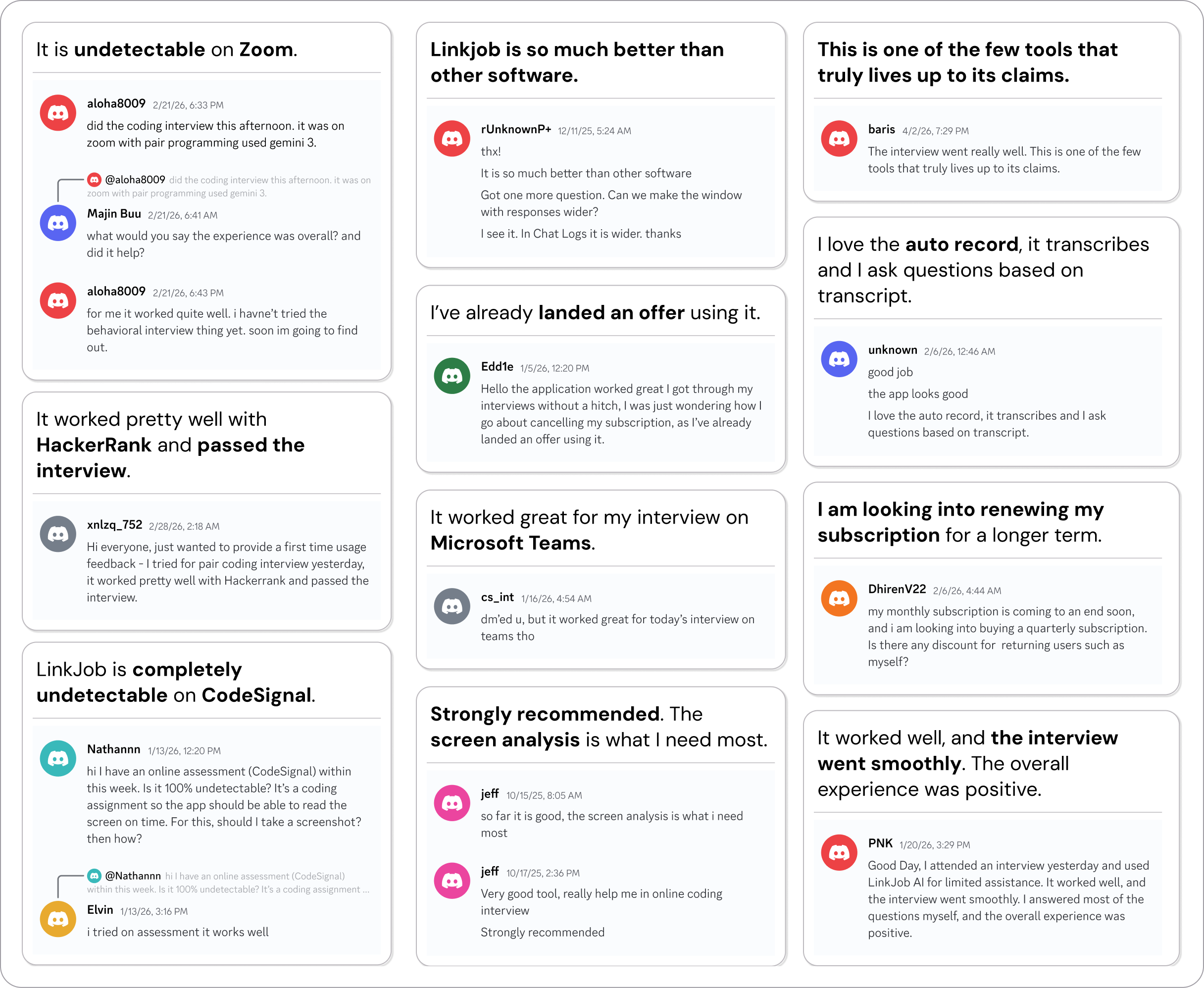
Why People Choose Linkjob AI
Smoother interviews, coding challenges cleared, and job offers landed. See how users describe their experience with Linkjob AI—in their own words.

© Copyright 2026 Linkjob AI - All Rights Reserved.