How I Passed Goldman Sachs Summer Analyst 2026 Interview

I applied to Goldman Sachs’ IBD Summer Analyst Program, and somehow the process went from application to offer in about 10 days. No exaggeration: every round felt like another filter, and Superday was truly “super”—high intensity, back-to-back conversations, and the kind of pressure where your heart rate and your offer can’t both stay stable.
Idk how they moved that fast. They just did.
If I had to summarize the entire Goldman interview process in one line:
⭐️ Why Goldman, why you — and can you explain it with judgment, not buzzwords?
What I realized (a bit late) is that Goldman isn’t primarily testing “who’s the most technical” in early rounds. They’re testing whether you can make reliable professional judgments under pressure, communicate them clearly, and behave like someone they can trust on a team—very consistent with how the firm frames its culture around Partnership, Client Service, Integrity, and Excellence.
The interviewers kept circling back to three things:
Commercial + market awareness (Do you track what’s happening, and can you form a view?)
Structured thinking + clean communication (Headline first, then logic; no rambling)
Behavioral fit under pressure (Partnership mindset, ownership, calm execution)
In this post, I’ll break down the full process—CV screen → OA → one-way video interview (tight prep/answer timing) → Superday—and explain what Goldman seems to reward at each step, specifically for IBD Summer Analyst, where interns are expected to be fully immersed, trained fast, and take on real responsibilities.
Stage | Description |
|---|---|
Online Application | Candidates submit their CV and Cover Letter through the Goldman Sachs website. |
HireVue Interview | Candidates complete a video interview after their application is reviewed. |
Superday Assessment | Final interview round where candidates are assessed by multiple interviewers in a single day. |
I practiced answering questions under time constraints and made sure to address every part. I found that rehearsing responses and using the HireVue practice feature helped me deliver concise, complete answers during the interview.
Key Takeaways
The video interview is not a debate or a performance. It’s a trust test: “If you were already on a live deal team, would your judgment be safe?”
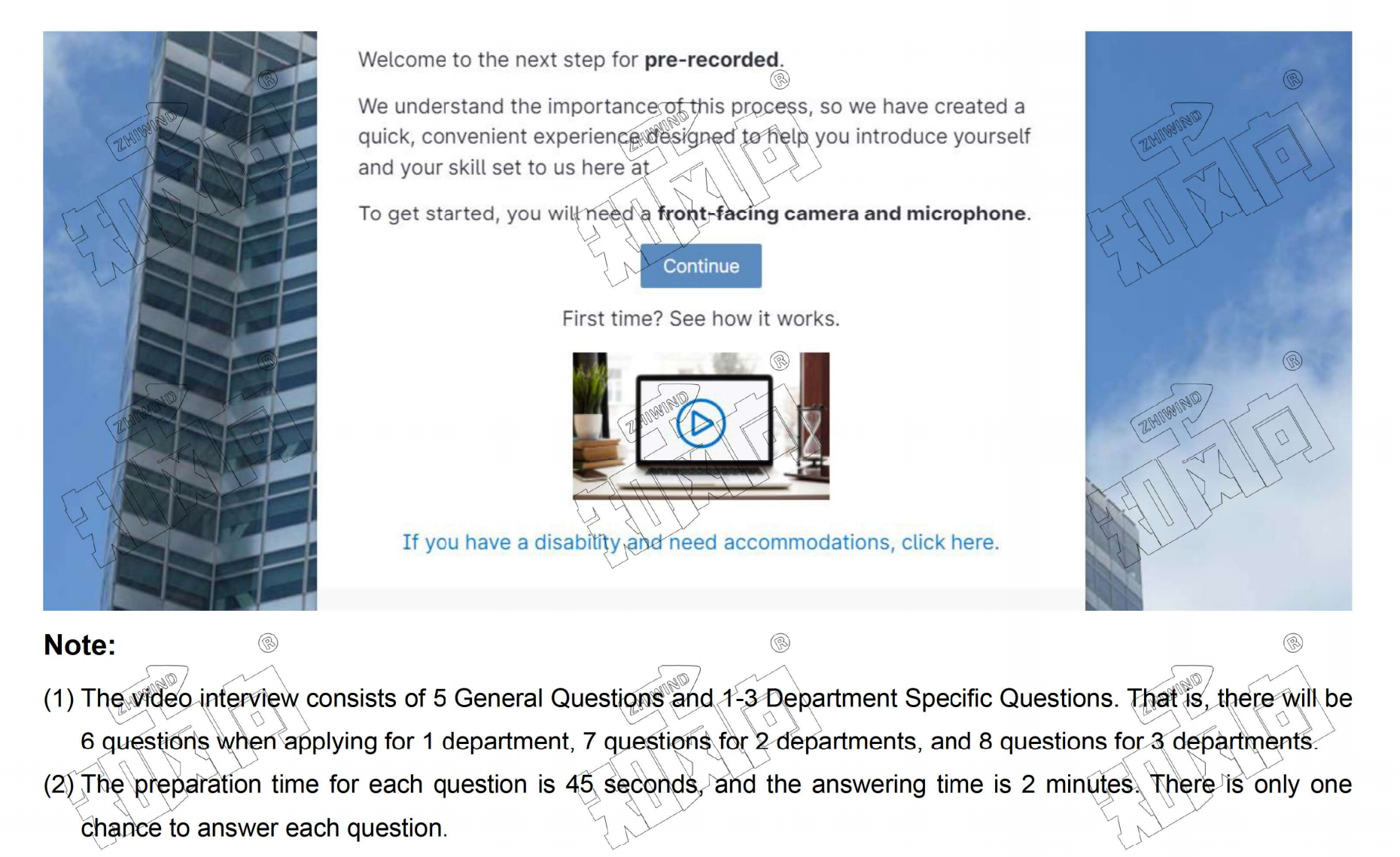
The format is typically a set of short prompts with tight timing (commonly ~2 minutes per answer, with brief prep time).
Your first 5 questions are primarily about integrity, accountability, teamwork, resilience, and decision-making (your screenshots match this).
Your last 3 questions are IBD-focused, but still judgment-driven: strategic rationale, market awareness, and “do you understand the job.”
The winning approach is not longer answers — it’s structured answers (headline → 2–3 supporting points → close).
Preparation for Goldman Sachs IBD Summer Analyst Interview
Researching Goldman Sachs and IBD
I started my preparation for the goldman sachs ibd summer analyst process by researching the firm and its Investment Banking Division. I wanted to understand what made Goldman Sachs unique and how I could align my responses with their expectations. I focused on the company's values and culture, which helped me tailor my answers during pre-recorded video interviews. I learned that teamwork drives success at Goldman Sachs. I also realized that understanding the firm's operations and values would help me stand out as an entry-level candidate.
Teamwork forms the foundation of Goldman Sachs' culture.
Knowing the firm's values and operations is essential.
Aligning my responses with these elements increased my confidence.
I also researched the responsibilities of an Investment Banking Division Summer Analyst. I wanted to show that I understood the role and could contribute from day one. I found that entry-level analysts handle a variety of tasks:
Preparing market updates for senior bankers
Creating and editing presentations for clients
Taking notes during internal calls and meetings
Assisting with financial modeling tasks
Building relationships and networking within the firm
This research helped me answer questions about why I wanted the banking internship and how I could add value during my internship.
Practicing for HireVue Interview
I knew that the hirevue stage would be crucial. I practiced answering behavioral and technical questions using preparation guides and online resources. I focused on the format of pre-recorded video interviews, which required me to deliver concise answers within a limited time. I outlined my stories and identified my strengths and weaknesses before recording practice responses. I wanted to avoid common mistakes, so I paid attention to my eye contact and pace.
Tip: Recording practice answers helped me evaluate my performance and improve my delivery for the hirevue interview.
I dressed in business professional attire for every practice session. I made sure my background looked clean and well-lit. This routine helped me feel comfortable and confident when I faced the actual hirevue.
My “2-Minute Answer System” (What Actually Worked)
Because the timing is tight in one-way video interviews, I used a repeatable template:
A) One-sentence headline (your conclusion first)
B) 2–3 proof points (actions + decision logic)
C) Close with reflection (what changed, what you learned, how you’d do it again)
This kept me calm and prevented rambling — which is the #1 failure mode in HireVue-style formats.
During my VI, I used LinkJobAI as a real-time support tool. While completing the assessment, it It can automatically recognise questions it hears and provide answers immediately. Because LinkJobAI runs as a 100% invisible desktop application, it did not interfere with the testing platform or trigger any detection mechanisms. It simply gave me clarity when time pressure was highest, allowing me to stay calm and consistent throughout the test.
The Exact Questions I Got + My Best Answer Structures
Question 1 (General): “Walk me through your resume.”
What they’re testing: clarity, narrative control, and whether your choices look intentional.
My structure (60–90 seconds): Past → Present → Future
Past: 1–2 lines on the theme (analytical + execution)
Present: what you’re doing now and your highest-signal experience
Future: why IBD, why Goldman, why now
Sample script (tight, 2 minutes max):
“I’m currently a management master’s student with a finance background, and the common thread in my experience is turning messy information into decisions under time pressure. I started with a strong accounting and finance foundation, then moved into projects where I had to analyze performance drivers and communicate recommendations clearly to stakeholders. Most recently, I’ve been working in team-based, deadline-driven environments where accuracy and judgment matter — I’ve learned to prioritize what moves the outcome, align people quickly, and deliver clean outputs.
I’m pursuing Investment Banking because I enjoy high-stakes problem solving at the intersection of strategy, markets, and execution. And Goldman specifically stands out for its reputation for excellence and the culture of partnership — teams operate at very high standards, and you’re expected to be both rigorous and trustworthy. That’s the environment I want to grow in, and I believe my analytical discipline and execution mindset translate well into an IBD analyst role.”
Question 2 (General): You submitted a critical monthly report, then
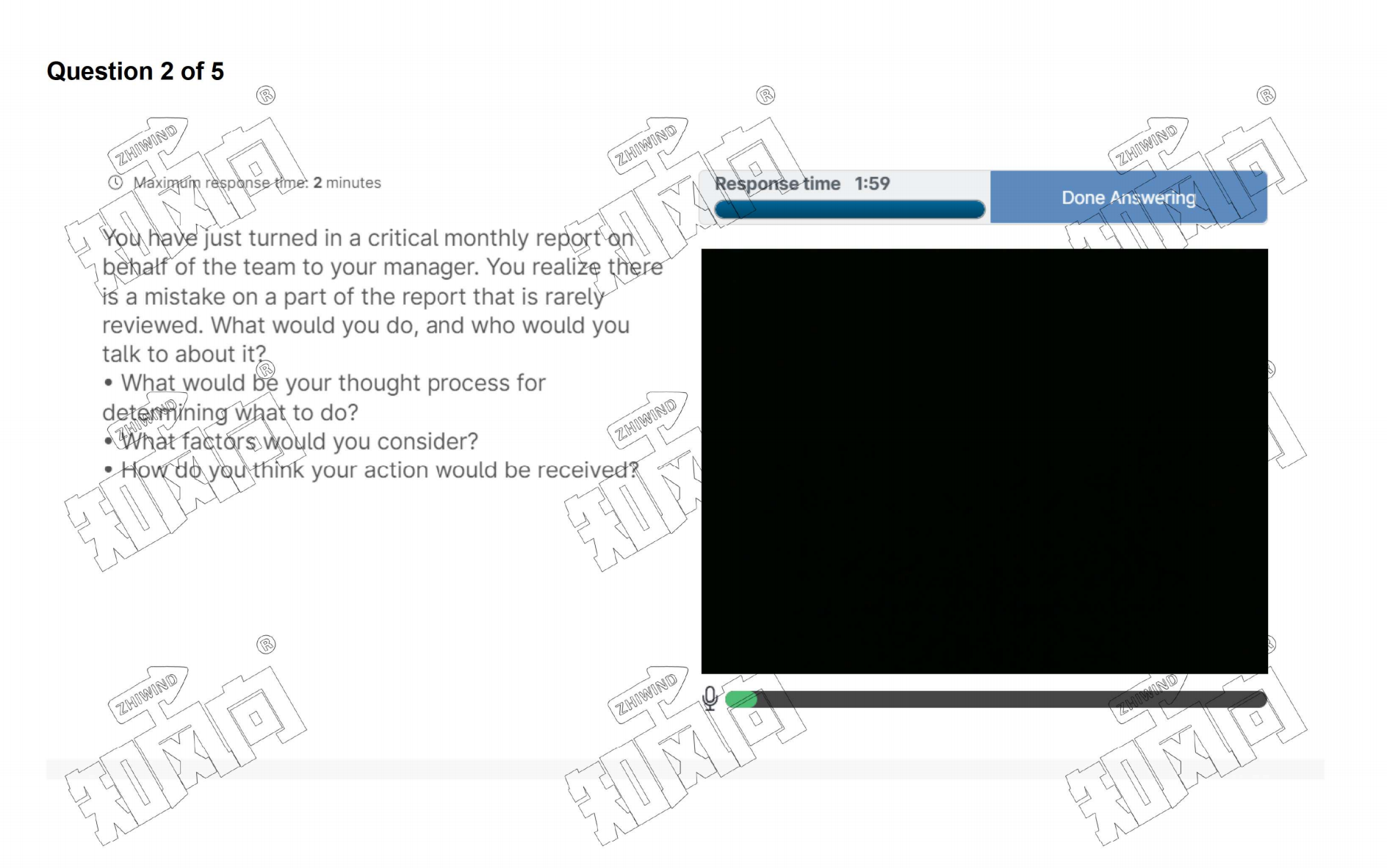
What they’re testing: integrity + accountability + risk calibration.
My structure: Assess impact → escalate fast → correct + prevent
Diagnose: materiality, audience, downstream decisions affected
Escalate: my manager first (and any impacted stakeholders)
Fix: corrected version + changelog + mitigation steps
Prevent: root cause + control improvement
Sample script:
“First, I would quickly quantify the impact — what exactly is wrong, how material it is, and whether it could change any decision or narrative in the report. If there’s any chance it could mislead management or affect action, I would escalate immediately rather than hoping it stays unnoticed.
Second, I’d go straight to my manager, clearly: what happened, what the impact is, and what I recommend as the fix. If the report went to other stakeholders, I’d align with my manager on the right communication path, but my default is transparency and speed.
Third, I’d deliver a corrected version with a clear note of what changed, so it’s easy to trust. Finally, I’d do a short root-cause review — whether it was a data pull issue, version control, or review coverage — and propose a simple control so it doesn’t happen again. I expect the action would be received positively because it protects decision quality and demonstrates ownership, even if it’s uncomfortable in the moment.”
Question 3 (General): Teamwork experience where you were not the leader; your role; how you built collaboration; how you held others accountable without undermining leader
What they’re testing: “Partnership” in practice.
My structure: Role clarity → collaboration mechanics → accountability with respect
Role clarity: I aligned on deliverables and dependencies
Collaboration: short check-ins, shared tracker, summaries
Accountability: data-based reminders, unblock, escalate only when needed
Respect leader: I supported the leader’s authority by bringing options, not complaints
Sample script:
“In one project, I wasn’t the formal leader, but I owned a core workstream with tight dependencies. I contributed by creating clarity: I summarized the goal, broke it into milestones, and shared a simple tracker so everyone could see owners and timing.
To build collaboration, I listened first — where people were stuck, what assumptions differed — and I used quick summaries to keep the group aligned.
When accountability became an issue, I avoided calling people out publicly. I used the tracker and concrete dependencies: ‘If we don’t have X by tonight, Y can’t be completed — what support do you need?’ That keeps it professional, protects relationships, and still drives delivery. If something risked the deadline, I flagged it to the leader with solutions rather than criticism, so I strengthened — not undermined — the leader’s role.”
Question 4 (General): Obstacles you had to overcome to be successful; situation; how you dealt; outcome
What they’re testing: resilience + maturity (not drama).
My structure: Constraint → actions → measurable outcome → learning
Pick a real constraint: time, ambiguity, stakeholder conflict, skill gap
Show calm problem solving and iteration
Quantify result where possible
Sample script:
“One obstacle I faced was delivering a high-stakes output with incomplete information and a tight deadline. The key challenge wasn’t effort — it was prioritization. I handled it by first confirming the decision criteria with stakeholders, then triaging work into must-have vs nice-to-have. I built a minimum viable deliverable early, stress-tested assumptions, and iterated quickly based on feedback.
The outcome was that we delivered on time with a clear rationale, and importantly, the process reduced rework because alignment happened early. The learning I took is that in high-pressure environments, calm prioritization and early alignment often matter more than doing everything perfectly.”
Question 5 (General): Example of making a quick decision in an uncertain, changing situation; what you relied on; thought process; was it the best decision?
What they’re testing: judgment under uncertainty (very banker-relevant).
My structure: Frame uncertainty → set decision rule → act → review
What I knew vs didn’t know
My “decision rule” (risk limits, reversible vs irreversible)
Who/what I relied on (data + senior input + principle)
After-action review
Sample script:
“I’ve had situations where conditions changed quickly and waiting for perfect information wasn’t an option. My approach is to separate what’s knowable now from what isn’t, then decide based on risk and reversibility. If a decision is reversible, I move faster with guardrails; if it’s irreversible, I escalate and slow down.
I rely on two things: the best available data in the moment, and quick alignment with the relevant stakeholder so we’re making the same trade-offs. After acting, I monitor outcomes and adjust fast. In hindsight, I consider it a good decision if it protected downside risk, maintained trust, and created optionality — even if the result wasn’t perfect.”
The 3 IBD Questions
IBD Q1: “Why might one company buy/merge with another company?”
What they’re testing: do you understand strategic rationale beyond buzzwords.
My structure: 5 buckets + one line each
Synergies: cost (overlap), revenue (cross-sell, distribution)
Capabilities: tech/IP/talent, vertical integration
Scale & market power: share, bargaining power, unit economics
Financial: tax, capital structure, cash deployment
Strategic positioning: new geography, diversification, defend disruptors
Sample script:
“Companies pursue M&A primarily to accelerate a strategic outcome that would take too long organically. The biggest drivers are synergies — cost synergies from removing duplication and revenue synergies from cross-selling or distribution. Another major reason is acquiring capabilities: technology, IP, talent, or vertical integration to control key inputs.
Some deals are about scale and competitive positioning — improving unit economics or defending market share. There can also be financial motivations, like deploying excess cash or optimizing capital structure, but those only make sense if the strategic logic is sound. Ultimately, good M&A is about value creation and execution feasibility, not just getting bigger.”
IBD Q2: “Describe a recent investment banking transaction you followed in the news. What were the most interesting aspects?”
What they’re testing: market awareness + ability to discuss a deal like a junior banker.
I used a simple, repeatable “deal memo” structure:
(1) 10-second deal summary (who/what/price/structure)
(2) Strategic rationale (why now)
(3) Key debate (valuation, synergies, regulation, financing)
(4) My insight (what I’d watch next)
Example you can use (Reuters, Dec 2025): BioMarin buying Amicus (~$4.8B)
Interesting angles include: premium paid, financing mix (cash + debt), “accretive” messaging, and integration/portfolio strategy, plus timeline to close.
Sample script:
“A deal I followed closely was BioMarin’s announced acquisition of Amicus for about $4.8 billion. What stood out first was the strategic logic: BioMarin is doubling down on rare disease, and the transaction expands both commercial products and pipeline optionality.
Second, the deal mechanics were interesting — the premium and the financing mix signal confidence, but also raise execution questions around leverage and integration speed.
Third, I watched the ‘value creation’ narrative: near-term revenue uplift versus longer-term accretion expectations, and what synergy assumptions are realistic in specialized pharma. Overall, the most interesting part wasn’t just the headline price — it was how the buyer justified certainty, integration feasibility, and shareholder value over time.”
IBD Q3: “What characteristics make an investment banker successful? Give examples of how you demonstrate them.”
What they’re testing: do you understand the job + do you have credible evidence.
My structure: 4 traits + 1 proof each
Structured problem solving → example (turning ambiguity into a plan)
Extreme ownership → example (fixing errors, tight deadlines)
Communication → example (executive-ready summaries)
Stamina + professionalism → example (pressure without ego)
Sample script:
“In my view, successful investment bankers combine rigor with reliability. First is structured thinking — the ability to break down ambiguity into priorities and communicate a clean story. Second is ownership: when something is wrong or late, you fix it and protect the team’s output quality. Third is communication — concise, client-ready updates, especially under time pressure. And fourth is stamina and professionalism: you can push hard while staying calm, respectful, and detail-accurate.
I’ve demonstrated these through experiences where I had to deliver high-stakes outputs under tight timelines, align teams around a clear plan, and maintain quality control even when conditions changed quickly. That’s the same operating model IBD requires day-to-day.”
My Practical Prep Plan (7 Days)
Goldman notes the first interview stage is a ~30-minute video interview.
So I trained exactly to that constraint.
Day 1–2: Build an answer bank
6 STAR stories that cover: conflict, failure, leadership, teamwork, pressure, ambiguity
3 technical mini-explainers: M&A rationale, valuation drivers, “deal in the news”
Day 3–4: Timed drills
30 seconds outline → 90–120 seconds deliver
Record, review, cut filler words
Day 5–6: Delivery
Strong first sentence, slower pace, clean closing
Practice “reset” if you stumble (pause → headline → continue)
Day 7: Full simulation
One sitting, 8 questions, no stopping, same lighting/setup
How LinkjobAI Gave Me a Real Advantage in Case Interviews
One tool that made a measurable difference for me during these interviews was LinkjobAI.
During live case and technical interviews, LinkjobAI listened invisibly in the background and helped me in three critical ways:
It captured complex case prompts accurately, so I didn’t miss key constraints or numbers.
It helped me organize my thoughts into structured bullet points in real time.
It reinforced clear, client-ready language when I needed to summarize or conclude.
Because LinkjobAI runs as a 100% invisible desktop application, it worked seamlessly during Zoom and online interview setups without appearing in screen sharing or recordings. That allowed me to stay focused on eye contact, communication, and reasoning—rather than scrambling to remember every detail.
Instead of replacing my thinking, it supported my structure, which is exactly what Goldman Sachs evaluates.
Final Insight
The Goldman video interview is not where you “prove you’re special.” It’s where you prove you’re safe, structured, and trustworthy — in other words, someone a deal team can rely on when the pressure is real. Goldman’s culture explicitly emphasizes partnership and integrity; your answers should sound like they come from someone who already operates that way.
Frequently Asked Questions (FAQ)
FAQ 1: Which stage of the Goldman Sachs IBD recruiting process eliminates the most candidates?
From my experience, the highest elimination rate happens earlier than most people expect — at the video interview (HireVue) stage. Goldman explicitly positions this as the first interview after your application is selected, and it is designed to be time-bound and standardized.
What makes it difficult is not “hard questions,” but the fact that strong candidates often underperform when they can’t rely on conversation flow, follow-up prompts, or extra time. Personally, what helped me pass was treating the HireVue like a professional deliverable: headline-first answers, tight logic, and consistent judgment under time pressure.
FAQ 2: Does Goldman Sachs value technical investment banking knowledge or “fit” more in the video interview?
Based on how the prompts were structured, the video interview is a judgment + communication test first, with light technical awareness layered in (e.g., M&A rationale, deal awareness, traits of a banker). Goldman’s own interview prep materials emphasize that interviews focus on real-world problems and how you navigate work situations — with questions informed by the role.
In practice, technical knowledge helps you sound credible, but what interviewers are really listening for is whether your decisions and explanations feel client-safe, structured, and mature.
FAQ 3: Can candidates without prior finance/IB experience still pass the Goldman IBD video interview?
Yes. Goldman states they recruit from all academic backgrounds, and their interview guidance explicitly says finance experience is not required.
What matters far more is whether you can translate your experience into banker-relevant signals: structured thinking, attention to detail, ownership, teamwork, and composure. In my prep, I focused on mapping each story to “deal-team behaviors” (accuracy, urgency, professionalism) rather than trying to pretend I had done the job already.
FAQ 4: How should I prepare for the HireVue format and timing?
Goldman notes the video interview takes ~30 minutes. Beyond content, the format itself is the challenge: timed responses, camera delivery, and no live back-and-forth.
Personally, what helped most was:
practicing on camera with a strict 2-minute cap per answer,
using one repeatable structure (e.g., headline → 2–3 points → closing),
and doing the basics that video platforms recommend: test your setup, choose a quiet space, and reduce technical risk.
FAQ 5: What happens after the Goldman Sachs video interview?
If you perform well, the next step is typically Superday, which Goldman describes as a series of final-round interviews — often 2 to 5 interviews for campus hires, depending on division — with a cross-section of people you could work with.
From my perspective, the video interview is about proving you’re “safe and structured.” Superday then goes one level deeper: whether you can hold that same standard in a more interactive, higher-pressure setting.
FAQ 6: How should I use AI tools like Linkjob.ai?
You can simply use its screenshot analysis feature directly. The AI will provide the strong answer. The app is completely invisible/stealthy, so you can use it without worry.
See Also
How to Cheat HackerRank Tests With AI: My 2026 Update
Questions I Encountered in 2026 Goldman Sachs HackerRank Test
2025 Goldman Sachs CoderPad Questions I Faced and My Answers
© Copyright 2025 Linkjob.ai - All Rights Reserved.