How I Aced My J.P. Morgan Software Engineer Interview in 2026


J.P. Morgan Software Engineer Interview 2026: My biggest takeaway from the experience is that it's not about grinding through endless problems, but about nailing the "details." The entire interview consists of three rounds, each lasting 45 to 60 minutes—the time given is neither too much nor too little. The real differentiator is having a complete thought process and solid implementation details throughout all stages.
I have to say, some questions are really extremely difficult, and for that, I'm truly grateful to Linkjob.ai — this AI Interview assistant that can remain completely "invisible" even under screen sharing is just perfect for these intense technical rounds, and that's also why I'm sharing my entire interview experience here. The JPM questions are quite challenging. Using the AI screenshot and question analysis features, I got comprehensive support: from initial problem-solving logic and detailed solutions to further optimization ideas.
J.P. Morgan Software Engineer Interview Online Assessment
I got the OA invitation on HackerRank after blasting out applications online.The platform allows you to pick whatever language you wanted. I chose Python for its string manipulation efficiency, though Java or C++ would work just as well depending on your comfort level.
The Assessment Structure
The test breaks down into two main sections. The first part covers aptitude questions—typically around 30 questions assessing your logic skills, pattern recognition, and basic mathematical reasoning. These are time-pressured but manageable if you've practiced mental math.
The second part focuses on coding questions. You get two problems ranging from simple to medium difficulty, with 60-90 minutes total to complete both. Here’s what I encountered:
Problem 1: String Operations
This was mostly about parsing, pattern matching, or manipulation tasks—testing your ability to handle text processing efficiently without relying on brute force. Think traversing strings, extracting substrings, or transforming character sequences under constraints.
Problem 2: 2D Matrix Gravity Simulation
The second question was a box-pushing scenario—a 2D matrix manipulation problem involving gravity mechanics. It went roughly like this:
You are given an m x n matrix of characters boxGrid representing a side-view of a box. Each cell of the box is one of the following:
A stone '#'
A stationary obstacle '*'
Empty '.'
The box is rotated 90 degrees clockwise, causing some of the stones to fall due to gravity. Each stone falls down until it lands on an obstacle, another stone, or the bottom of the box. Gravity does not affect the obstacles' positions, and the inertia from the box's rotation does not affect the stones' horizontal positions.
It is guaranteed that each stone in boxGrid rests on an obstacle, another stone, or the bottom of the box.
Return an n x m matrix representing the box after the rotation described above.
Preparation Strategy
I spent extra time practicing technical questions that matched the software engineer role. The key topics to focus on for this assessment include:
Data Structures and Algorithms: Linked lists, recursion, sorting algorithms, and string manipulation
Problem-Solving Speed: Being able to solve medium-difficulty problems within 30-45 minutes each
Edge Case Handling: Empty inputs, single elements, boundary conditions
I have to say environment setup matters more than you think. HackerRank locks your fullscreen and the webcam stays on the entire time—that suffocating moment when you're staring at a problem you don't recognize and the timer keeps ticking is very real. I had something in my back pocket for the interview. It's an insurance policy more than anything—there to keep your head in the game when things go sideways.
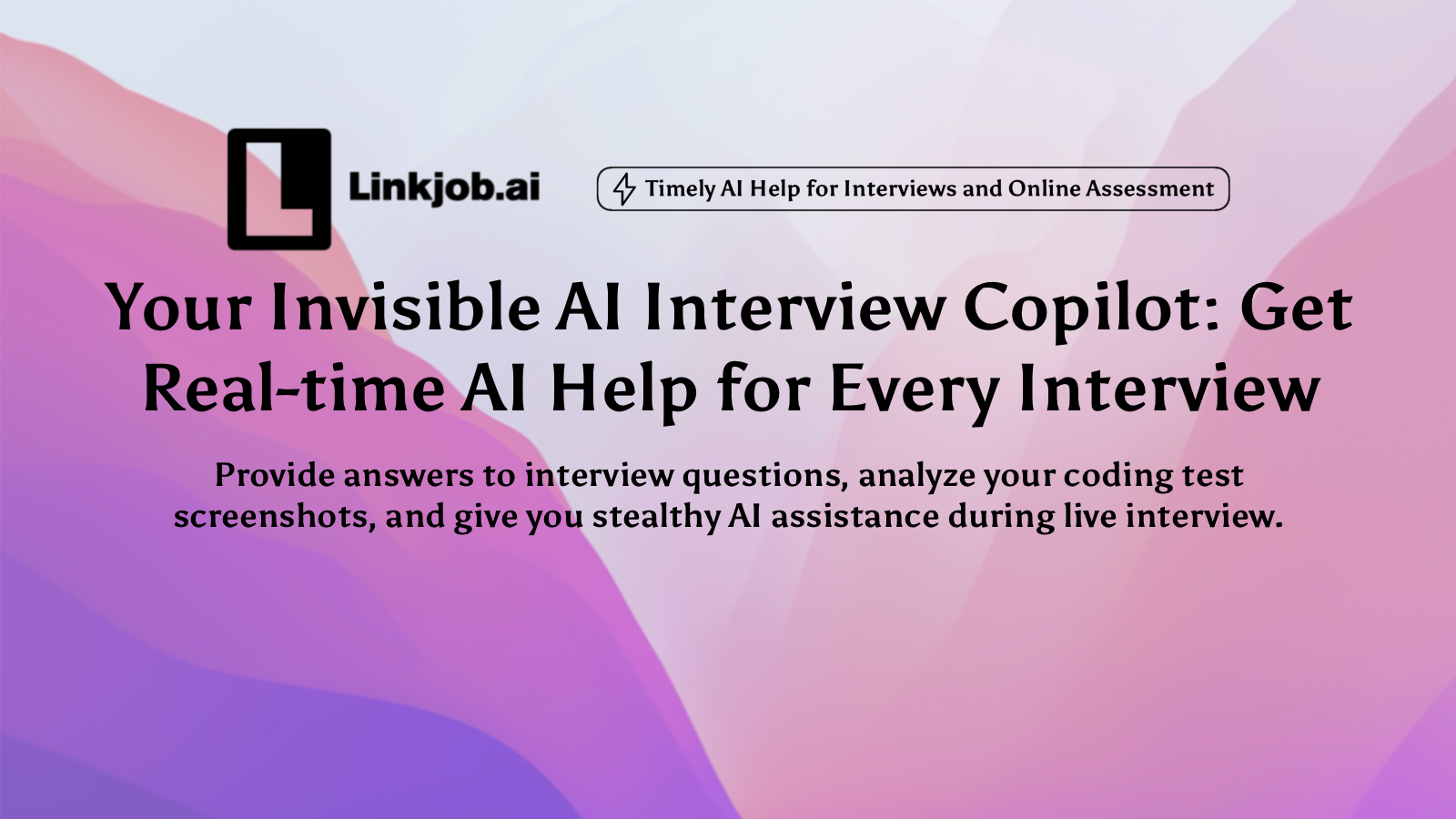
If you're concerned about HackerRank detecting AI interview assistants or unfamiliar with HackerRank interviews, you may find this article helpful: HackerRank how to cheat.
Key Tips for Success
Practice under timed conditions: HackerRank's interface is different from LeetCode—get familiar with their input/output format beforehand.
Prioritize the string question: If you're stronger with text processing, secure those points first before tackling the trickier matrix simulation.
Don't over-engineer: Clean, working code beats clever but broken solutions. You can refactor if time permits.
Test manually: Run through at least 2-3 custom test cases before submitting.
Passing this OA is non-negotiable to move forward. Once you clear this hurdle, you'll typically hear back within 1-2 weeks regarding next steps.
J.P. Morgan Software Engineer Interview Superday
The final stage of my J.P. Morgan software engineer interview felt intense but exciting. I walked into a series of back-to-back interviews. Each session lasted about half an hour. Some interviews focused on case studies. Others tested my behavioral skills or asked financial questions. I joined networking sessions with team members. The virtual interview took just one day.
The overall structure of my interview process was as follows:
Round 1: Technical Interview – Coding & Code Review
I tackled a medium-difficulty algorithm problem in 45 minutes, which tested my problem-solving and coding speed.
In the code review segment, the interviewer provided API call code, and I was tasked with identifying bugs and optimizing exception handling.
This round focused heavily on code quality, edge case handling, and my understanding of API design principles.
Round 2: System Design Interview – Real-World Project Design
I was asked to design a TicketMaster ticketing system.
I started by sketching a high-level architecture diagram, then walked through detailed database table design, deployment strategies (including cloud platform selection), and discussed how to ensure scalability and fault tolerance.
Round 3: Behavioral Interview
Every question in this round was answered using the STAR framework (Situation, Task, Action, Result), which helped me structure my stories clearly and demonstrate my soft skills effectively.
BQ:
1. difficult person
2. initiative you drive
3. your super power / strenth
4. your growth area
Before-interview Insights
Build a "story bank": Prepare around 10 stories clearly structured using the STAR method (Situation, Task, Action, Result), covering different themes such as leadership, teamwork, and problem-solving. This allows you to flexibly respond to various questions and avoid last-minute cramming.
Practice in front of a mirror or camera: This is the most effective way to improve your fluency of expression and sense of eye contact. During practice, pay attention to a moderate speaking speed, and maintain a smiling and confident posture.
Learn from others' experiences: Read relevant articles specifically tailored to the JP Morgan interview beforehand. Here are some recommendations: JP Morgan hackerrank test, JP Morgan data scientist interview, JP Morgan hirevue interview.
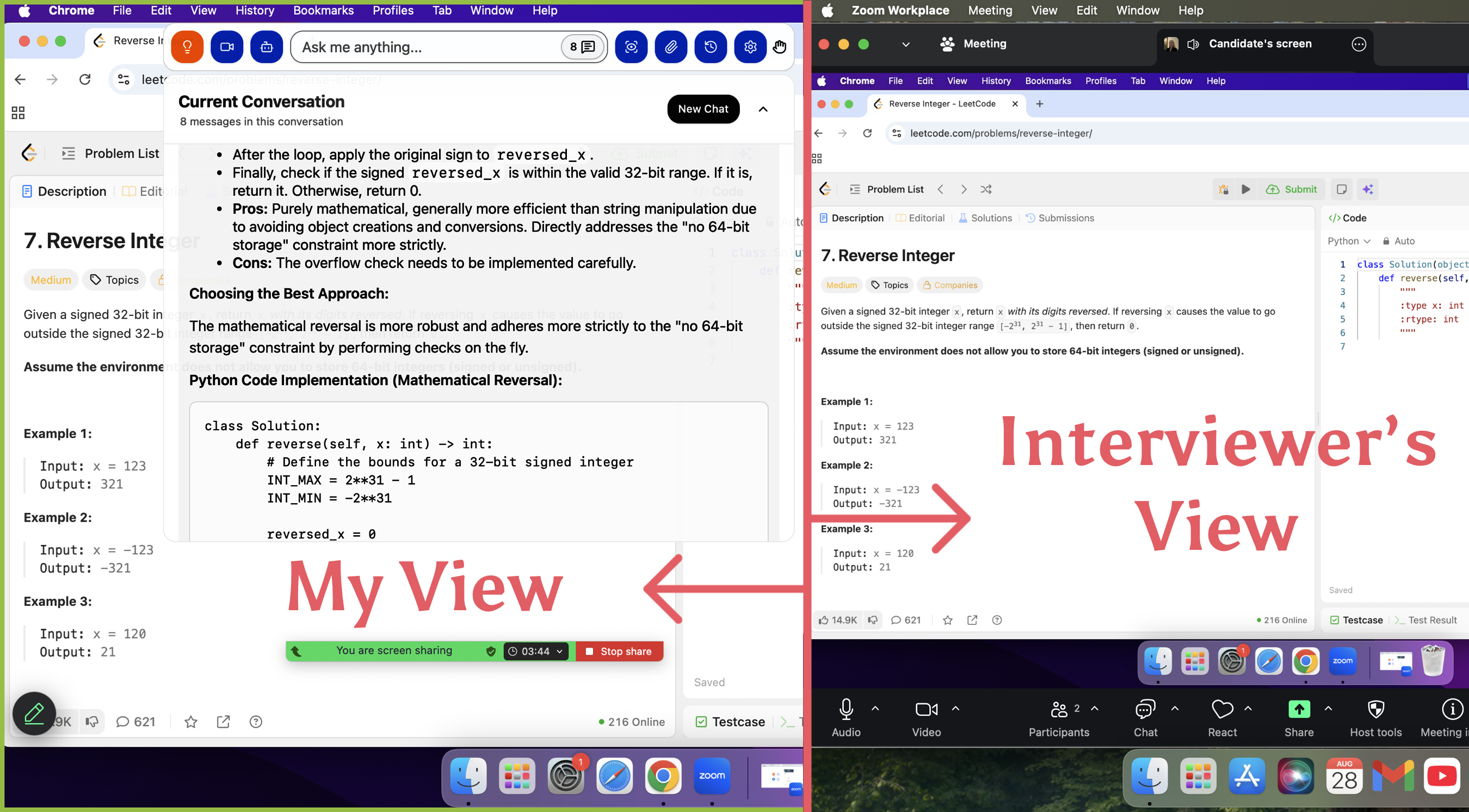
Equipment and environment: Test your network, camera, and microphone in advance to ensure clear audio and video quality. Choose a quiet room with a simple background, and opt for business-casual attire. You can also leverage the stealth capabilities of Linkjob AI to enhance your preparation and confidence.
Streamline your answers: Keep your responses within 80–90% of the time limit. For example, for a question with a 2-minute limit, aim to speak for about 1 minute and 40 seconds, leaving buffer time to avoid exceeding the limit.
Find the right tools: A powerful interview tool can make your preparation twice as effective with half the effort.
Managing Nerves and Communication
I felt nervous before the final round. I used a few tricks to stay calm and focused:
I took deep breaths before each interview.
I reminded myself that interviews are a two-way street.
I kept an equal footing mindset and saw the process as mutual learning.
I planned answers using the S.T.O.R.Y. tactic.
I spoke slowly and clearly to avoid rambling.
I prepared thoughtful questions for the end.
I chose a personal “anchor”—a small gesture that boosted my confidence.
I practiced with mock interviews tailored to JP Morgan.
I started each day with a positive mindset.
I acknowledged my nerves and turned them into enthusiasm.
Tip: Channel your nervous energy into showing excitement for the role. Interviewers notice genuine enthusiasm!
J.P. Morgan Software Engineer Interview Application
Resume Tailoring
When I started my J.P. Morgan software engineer interview prep, I realized my resume needed a serious upgrade. I didn’t just list my projects—I made sure every bullet point matched the software engineer role at jp morgan chase. I kicked off with a mission-driven summary that showed how my skills could help clients and boost efficiency. I used action verbs and numbers to highlight my achievements. For example, I wrote, “Improved deployment speed by 30% using CI/CD pipelines.” I kept my resume clean and easy to read, sticking to one page.
Here’s a table of the top skills J.P. Morgan looks for in software engineering candidates. I made sure to weave these into my resume wherever possible:
Skills | Description |
|---|---|
Java, Python | Programming languages for most jp morgan software engineer roles. |
Data Structures | Efficient algorithm design. |
System Design | Building robust architectures. |
Agile Methodologies | Collaborative development practices. |
Microservices | Scalable application design. |
Kubernetes | Container orchestration. |
CI/CD | Fast and reliable deployments. |
Cloud Computing | AWS, Azure experience. |
DevOps | Development and operations collaboration. |
Security Protocols | Protecting digital assets. |
Online Application Tips
I learned the hard way that the J.P. Morgan software engineer interview process starts with a solid online application. I always double-checked my resume for keywords from the job description. This helped me pass the automated screening tools. I kept my formatting professional and made sure my contact info was up to date.
Here are some common mistakes I avoided:
Forgetting a proper greeting in my cover letter.
Not clarifying my experience with coding languages like Java and Python.
Rushing through system design questions and leaving answers incomplete.
Networking Approaches
Networking played a huge role in my J.P. Morgan software engineer interview journey. I reached out to current jpmc employees on LinkedIn and asked about their interview process. I joined online forums and attended virtual events. These connections gave me insider tips on interview questions and helped me understand what jp morgan software engineer teams value most. I focused on showing my problem-solving skills and genuine interest in software engineering.
Tip: Don’t be shy about asking questions. Most people love sharing their experiences and advice!
By tailoring my resume, perfecting my application, and building my network, I set myself up for success in the jp morgan software engineer interview process.
Following Up After the J.P. Morgan Software Engineer Interview
Post-Interview Actions
After the final interview, I sent a thank-you email to each interviewer. I kept my message short and sincere. I asked about next steps and expressed my interest in joining the team. I waited for feedback. JP Morgan usually responds within five to seven business days. Sometimes, background checks or headcount reviews can add another week. The hiring committee reviews all notes before making a decision.
Expect feedback in 5–7 business days.
Sometimes, the process takes an extra week for checks.
The committee decides on level and compensation after reviewing notes.
I stayed patient and kept my phone close. I used the waiting time to reflect on my performance and prepare for possible next steps.
Looking back, I found that a few actions and mindset shifts made all the difference. I focused on:
Showing critical thinking and adaptability in every stage.
Using the STAR method to share my experiences.
Staying calm and using structured logic under pressure.
I also made sure to stay resilient and confident when things got tough. I used resources like the JP Morgan Software Engineer Interview Guide, their engineering blog, and GitHub projects. If you want to ace your interview, start with these steps and believe in your growth. You’ve got this!
FAQ
How did I manage my time during interview prep?
I made a weekly schedule. I set aside one hour each day for coding. I spent weekends on system design and behavioral questions. I tracked my progress in a notebook. This routine kept me motivated and organized.
What should I wear for a virtual interview?
I always choose business casual. A clean shirt and neat hair work well. I avoid flashy colors or busy patterns. I test my camera before the interview. Looking professional helps me feel confident.
How do I follow up after the interview?
I send a thank-you email within 24 hours. I mention something specific from our conversation. I ask about next steps. I keep my message short and polite. This shows respect and interest in the role.
See Also
My 2025 Anthropic SWE Interview Experience and Questions
How I Passed My 2026 Notion Software Engineer Interview
Insights From My 2026 Oracle Senior Software Engineer Interview
Exploring My 2026 Roblox Software Engineer Interview Experience