LSEG Codility: Questions, Test Format, and Passing Score

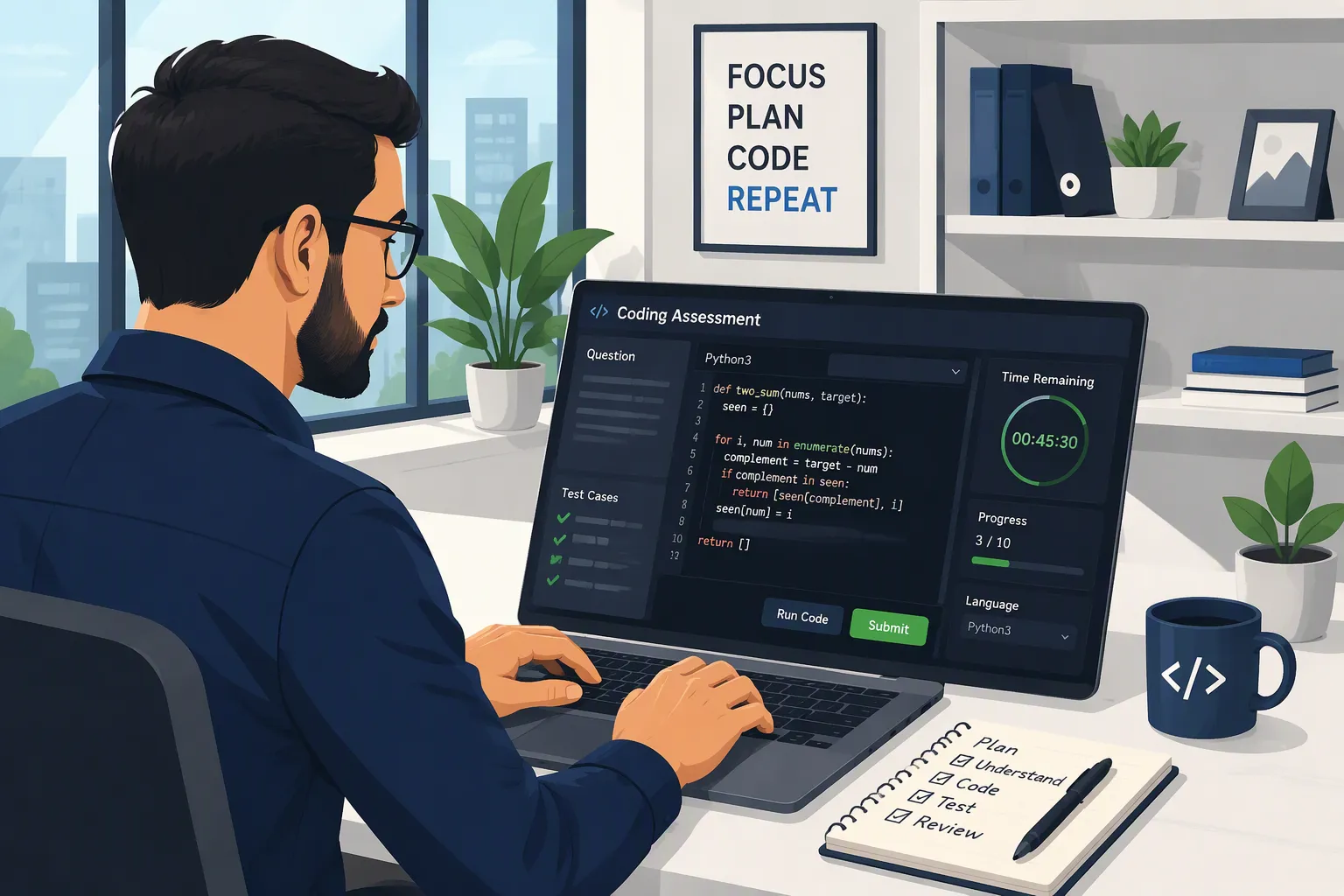
Three coding questions in an hour—or seven questions in two hours? When I started researching LSEG Codility, I found both. That changes more than my timing: it changes whether I should expect a focused coding round, debugging tasks, or a mix of coding and multiple-choice questions.
I wanted something more useful than another list of topics to revise. I compared candidate reports, checked Codility’s documentation, and worked through three reported question types: string transformation, array partitioning, and deleting a digit to maximize a number.
I’m really grateful to Linkjob.ai for helping me pass my interview, which is why I’m sharing my OA questions and the questions I collected from the question bank here. Having an undetectable AI interview tool during the interview indeed provides a significant edge.
Here’s how I approach those questions, what I make of the reported scores, and which details I check before starting an LSEG Codility assessment.
What I Found About the LSEG Codility Test Format
My first takeaway is that LSEG Codility does not describe one fixed test.
Report I reviewed | Format described | How I use that information |
|---|---|---|
A 2024 campus recruitment account on LeetCode Discuss | Three coding questions in 60 minutes, following an earlier knowledge round | I use it to identify coding question types, rather than assume every invitation follows this format. |
A Reddit account about the 2027 Graduate Intern Program | Seven questions in two hours: six coding questions and one MCQ | I prepare for a mixed assessment when my invitation describes several tasks. |
An October 2025 senior software engineering account from Bengaluru on Glassdoor | Thirty MCQs covering C#, SQL, React, and Azure | I give the role’s technology stack more attention when the assessment is knowledge based. |
I also found a useful comment in the Romanian developer community r/programare. A self-described former LSEG employee said some teams used algorithm questions, while others assessed API implementation or contract testing. That makes the job description and invitation more useful to me than a generic “LSEG test pattern.”
Before starting, I check the duration, task count, permitted languages, and whether the assessment includes coding, debugging, SQL, or MCQs. Those four details shape how I allocate my time.
The Three LSEG Codility Questions I Worked Through
I traced the following three question types to a candidate’s campus interview account. I use my own examples below to explain the reasoning; I treat them as practice reconstructions, since the public report does not include every original constraint.
LSEG Codility Question 1: How I Approach String Transformation
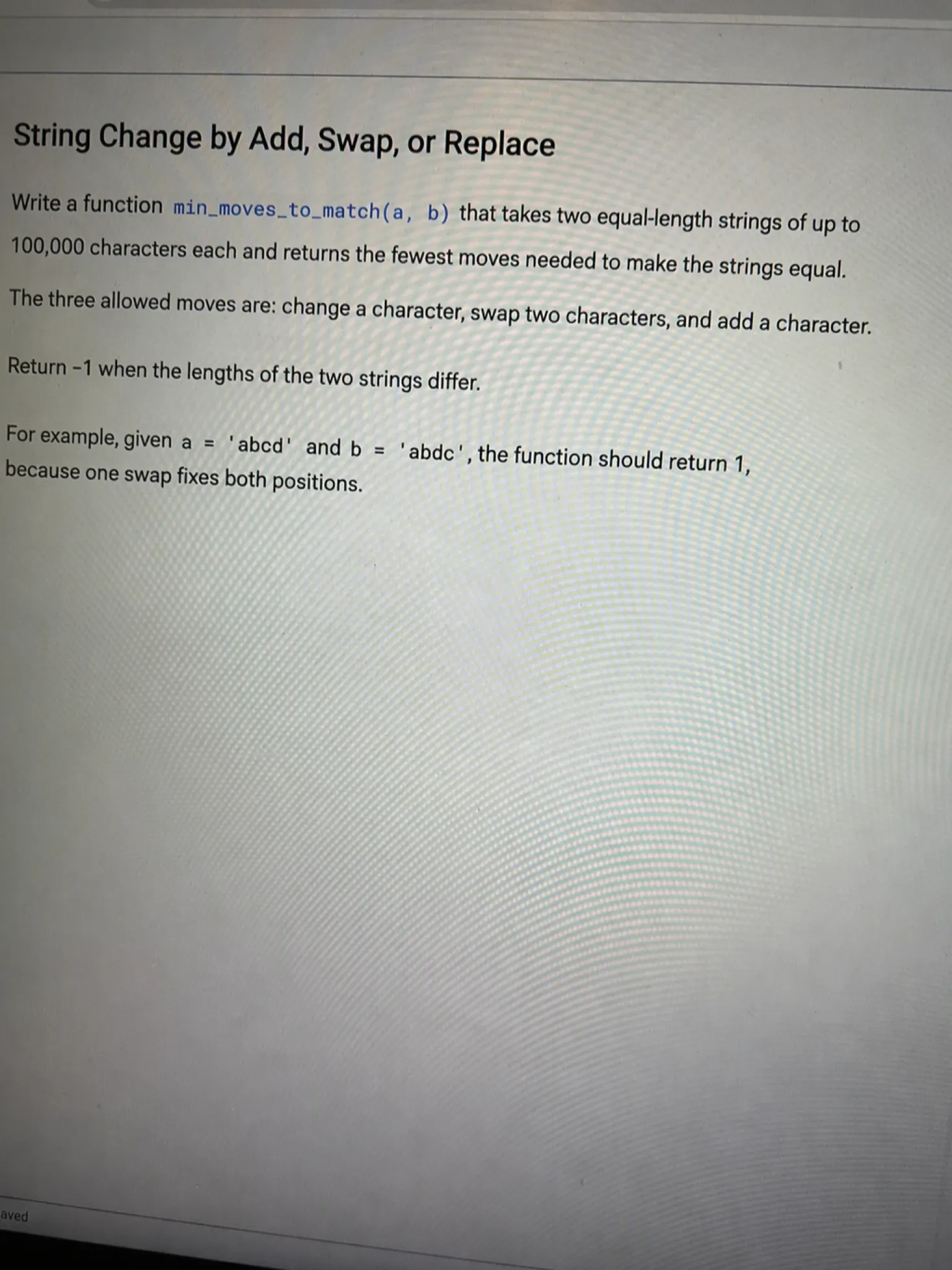
For this question, I start with two strings, s and t, and operations involving adding, swapping, or replacing characters. My first job is to identify exactly what I must return: whether a transformation is possible, the minimum number of operations, or whether I can finish within an operation limit.
That distinction decides the solution.
For a simple example, I compare abcd with abdc. If swapping any two positions is allowed, I can exchange the final two characters in one operation. Replacing both characters would take two.
That makes counting mismatches a useful starting point. It does not give me a complete minimum-operation algorithm, though.
I test that idea against abc → bca. I can finish in two swaps:
abc → bac → bca
An approach that only looks for reversed pairs of mismatches misses this three-position cycle and can overestimate the answer.
I also check how insertion interacts with length. If the strings already have equal lengths and deletion is unavailable, inserting a character cannot help me reach an equal-length target.
My priority is to settle the operation rules before choosing the algorithm. I check whether swaps are adjacent or unrestricted, whether operations have different costs, and whether the question asks for feasibility or a minimum. Without those details, I cannot justify one universal solution.
LSEG Codility Question 2: How I Split an Array Into Three Parts
For my practice version, I split an array into three nonempty contiguous sections. Within each section, I calculate its spread:
spread = maximum element − minimum element
I then take the largest of the three spreads. My goal is to choose two cut positions that make that value as small as possible.
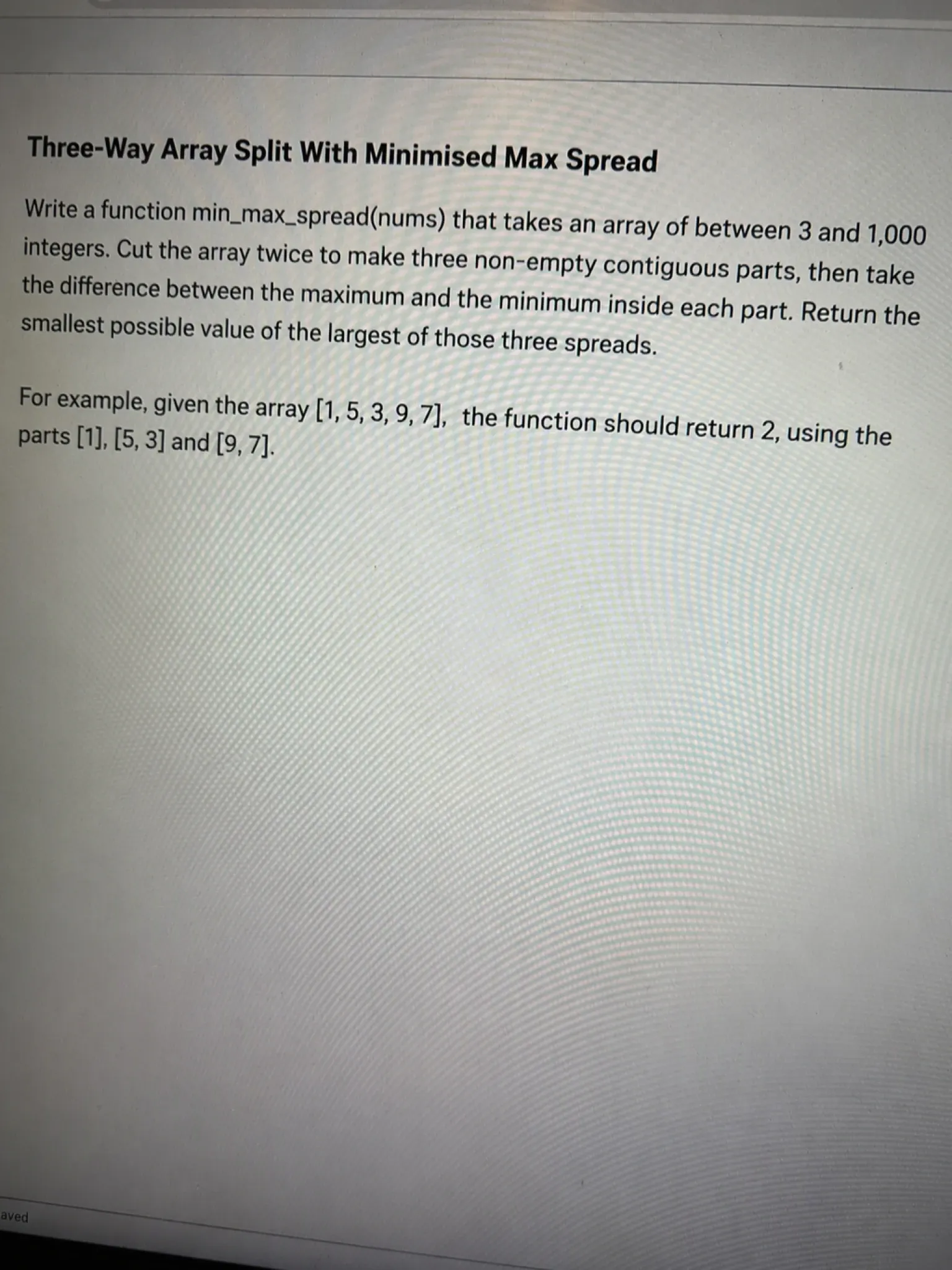
I use [2, 3, 9, 10, 16] as a small example. One split is:
[2, 3] | [9, 10] | [16]
I get spreads of 1, 1, and 0, so the largest spread is 1. I cannot reduce it to zero: all five values are distinct, and three sections cannot isolate every value.
My straightforward approach is to precompute the spread of every prefix and suffix. I then enumerate the two cut positions, updating the middle section’s minimum and maximum as I move its right boundary.
That gives me O(n²) time and O(n) extra space. I check the input limit before deciding whether this is fast enough.
The boundary I watch most closely is the second cut. If I let the middle section reach the final element, I leave the third section empty and accidentally evaluate an invalid partition.
Before trusting the implementation, I try an array of exactly three elements, repeated values, negative numbers, and a large outlier near either end.
LSEG Codility Question 3: How I Maximize a Number After Deleting One 5
Here, I take an integer containing at least one 5, delete exactly one occurrence, and return the largest resulting integer. I preserve the order of the remaining digits.
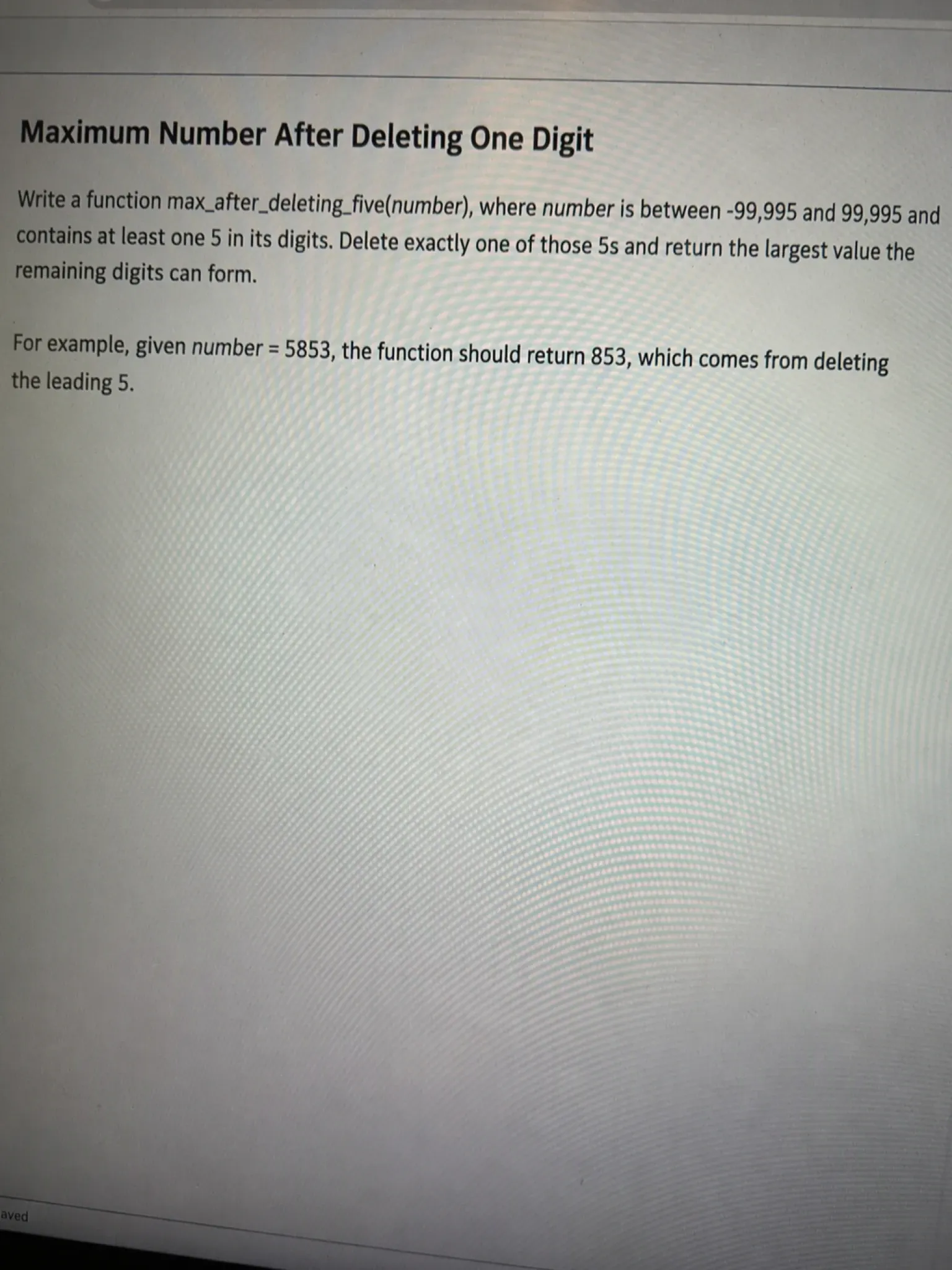
For 5159, I compare two possibilities:
I delete the first
5and get159.I delete the second
5and get519.
I choose 519.
For -5159, I get -159 or -519. This time, I choose -159, because it is the larger integer.
That sign change is why I prefer a simple enumeration for a short input. I remove each eligible 5 in turn, convert the remaining digits back to a signed integer, and keep the largest result.
If I rebuild a string and convert it to an integer for every candidate, my implementation takes O(d²) time, where d is the number of digits, with O(d) temporary space. For a small bounded integer, that is a reasonable trade-off for simpler logic.
I still check the rules for inputs such as 5 or -5. Deleting the only digit leaves no ordinary integer representation, so I need the prompt’s definition of that case.
How I Judge the Difficulty of LSEG Codility
I find the short questions deceptively easy to underestimate. “Delete one digit” sounds straightforward until I test a negative number. “Split an array” sounds routine until I enforce three nonempty sections.
For me, the practical difficulty comes from turning a plausible idea into code that survives cases I did not see in the examples.
Codility says submitted solutions are evaluated against additional cases for correctness and scalability.
What I Check About LSEG Codility Scores
How I Read LSEG Codility Task Weights
I check task weights before deciding where to spend extra time. Codility gives tasks equal weight by default, but employers can configure different weights; candidates are informed through the interface when weighted scoring is used.
For example, if three tasks carry weights of 50%, 30%, and 20%, and I score 100%, 50%, and 0% on them, my overall score is:
50% × 100% + 30% × 50% + 20% × 0% = 65%
What I Found About the LSEG Codility Passing Score
I could not verify a published passing score that applies to every LSEG Codility assessment. Codility lets employers set a passing threshold for each test, so I do not treat 70% or 80% as a universal rule.
I did find a concrete outcome in the 2027 Graduate Intern Program Reddit discussion: the original poster later reported receiving an immersive assessment invitation after scoring 62%. I read that as one candidate’s progression result, not evidence that 62% is LSEG’s cutoff.
What I Check About LSEG Codility Proctoring
I look at the instructions for my assessment before relying on someone else’s experience. A report about an unproctored test tells me how that sitting worked; it does not establish the settings on another invitation.
For video monitoring, I check the disclosure and permissions shown before the test. Codility documents Video Proctoring as an optional feature that is disabled by default. When enabled, it requires recording permissions, and the completed session recording becomes available in the candidate report.
I separately check whether the invitation requires the Codility App. Codility’s Device Integrity feature uses that desktop application to check for known assistance tools. Codility says this feature itself does not record the screen. I have not verified that every LSEG assessment uses it.
For the recording details, I use guide to whether Codility records your screen. I keep screen recording, activity records, and device checks separate when deciding what a particular setup can observe.
Where Linkjob AI Fits Into My LSEG Codility Workflow
For these problems, the appeal of Linkjob AI’s coding interview assistant is getting help from a screenshot without retyping the prompt. I can ask for an approach, debugging help, overlooked edge cases, or a complexity explanation—useful when I need to understand why an array boundary or negative-number case fails.
How I Would Allocate My LSEG Codility Test Time
For a 60-minute coding assessment, I would reserve roughly five minutes to scan the tasks and ten minutes for final checks, then adjust the remaining time around task weights and difficulty.
I start with the task where I can see a complete solution. Once it runs, I test the cases most likely to break my reasoning: negative values, duplicates, minimum input sizes, and boundary positions.
If I get stuck, I write down the specific obstacle before moving on. “My second cut can create an empty section” gives me something concrete to fix when I return.
For practice, I use Codility’s official lessons to revisit arrays, counting, prefix sums, and complexity, then apply those techniques to the question types above.
What I Look For After the LSEG Codility Assessment
Before closing the assessment, I check for submission confirmation. Afterward, I monitor my email and Workday profile. LSEG’s early careers guidance says review times vary and does not promise a fixed result window.
I also keep my reasoning fresh. A candidate report describes later technical discussion of the coding-round solutions, so I prepare to explain my approach, complexity, and edge cases rather than remember only the final code.
My Answers to Common LSEG Codility Questions
How Many Questions Are on the LSEG Codility Assessment?
I would not assume that. I found reports of three coding questions and a seven-question mixed assessment. I use the task count on my own invitation to plan my attempt.
Does LSEG Codility Include Multiple-Choice Questions?
I would include them if my invitation or role suggests a knowledge assessment. I found an experienced-hire report covering C#, SQL, React, and Azure, so I would review the advertised stack alongside coding practice.
Is Python Allowed in the LSEG Codility Assessment?
I check the languages offered for my actual tasks. If Python is available and suits the assessment requirements, I would use it when it is the language I can implement and debug most confidently.
Is 70% Enough to Pass LSEG Codility?
No. I have not found a verified universal cutoff, and a candidate’s score alone does not tell me the threshold or selection process for another vacancy.
What Happens if There’s a Technical Issue During LSEG Codility?
I would use the support link in the assessment or invitation and provide the error message, timing, and relevant screenshots. That follows LSEG’s published guidance for assessment problems.
Why People Choose Linkjob AI
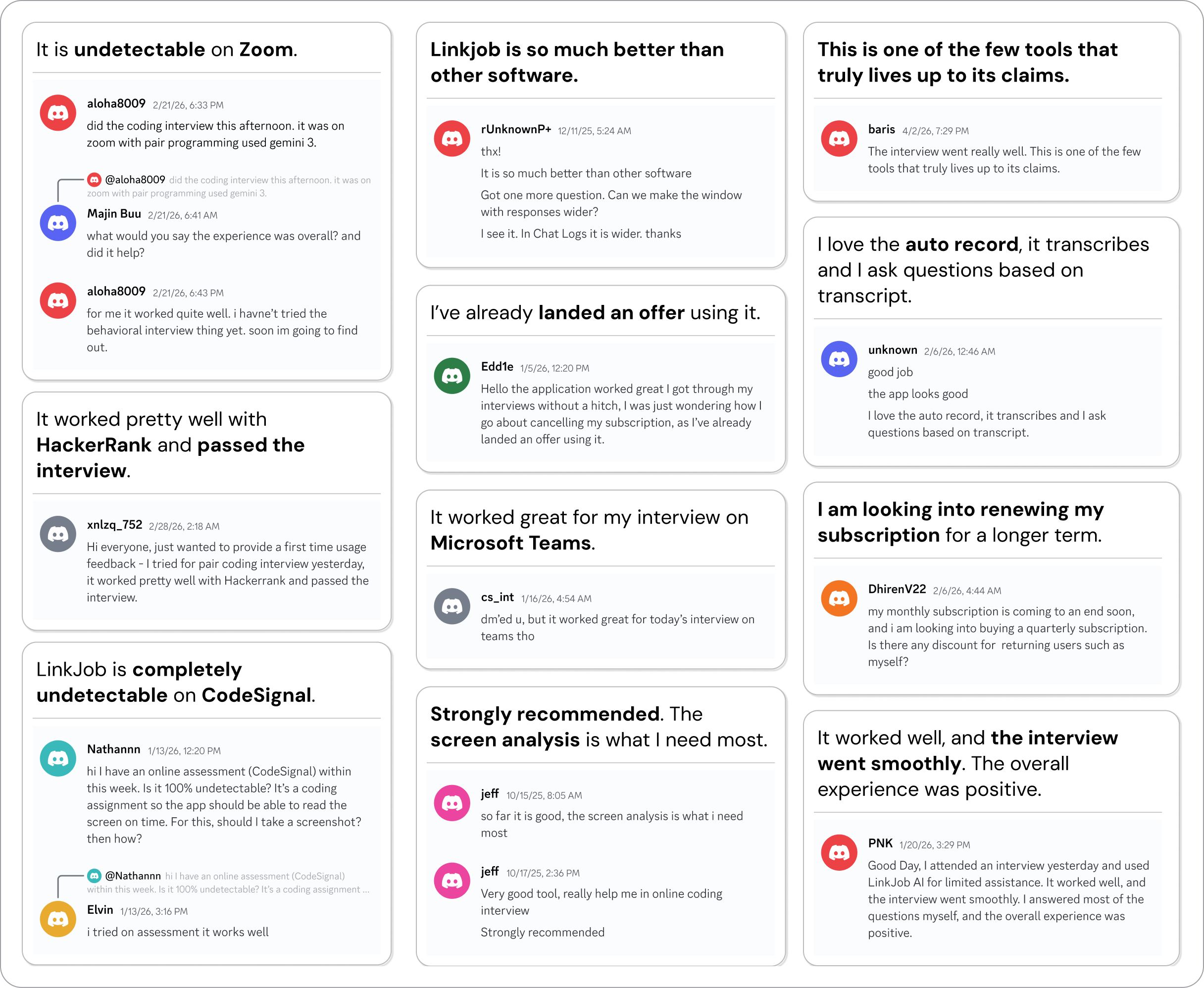
Smoother interviews, coding challenges cleared, and job offers landed. See how users describe their experience with Linkjob AI—in their own words.

© Copyright 2026 Linkjob AI - All Rights Reserved.