How I Passed Meta Software Engineer Interview In 2026


In early 2026, after 3 months of targeted preparation and 4 rounds of rigorous interviews, I finally received the offer for a Software Engineer position at Meta. As one of the most competitive tech companies globally, Meta’s interview process focuses heavily on practical coding skills, system design capabilities, and cultural fit—especially in 2026, with a greater emphasis on scalability, AI integration, and cross-team collaboration amid its continued focus on metaverse and cloud services.
Unlike many generic interview guides, this article shares my real experience: the mistakes I made, the key preparation strategies that worked, and the insights into Meta’s 2026 interview focus. Whether you’re a new grad or a mid-career engineer looking to switch to Meta, these actionable tips will help you avoid detours and maximize your chances of success.
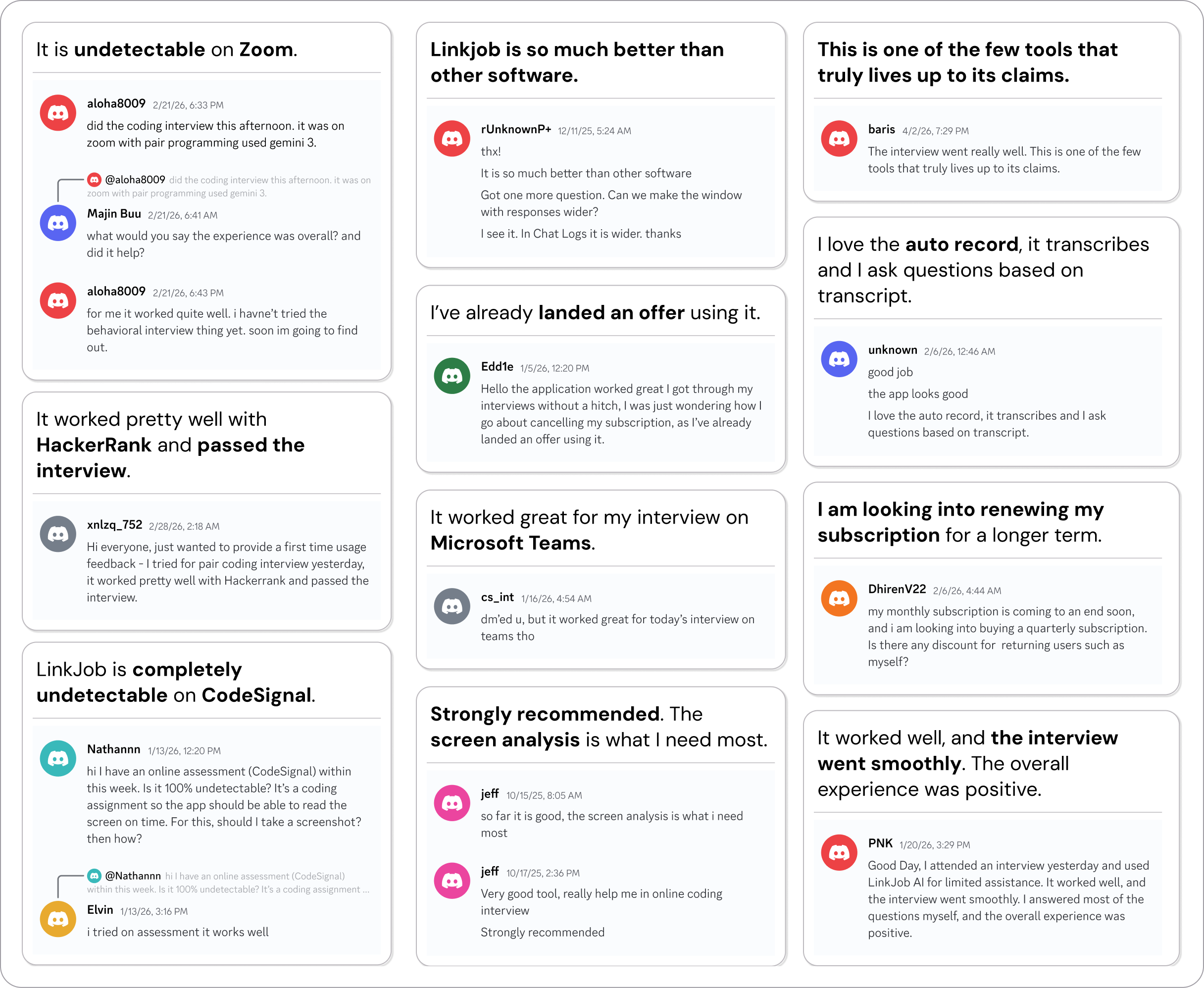
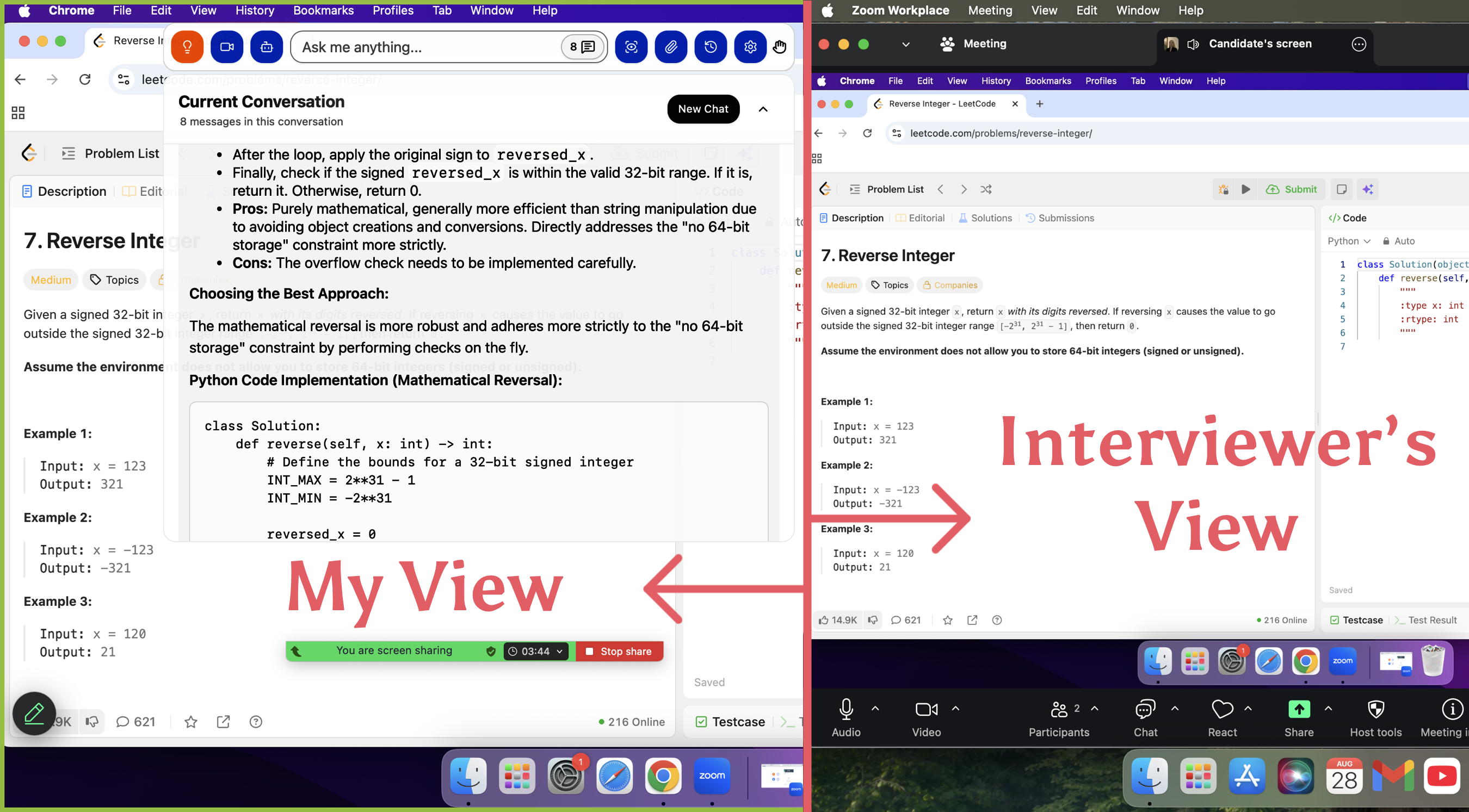
I’m truly grateful to Linkjob.ai for helping me ace my Meta Software Engineer Interview, and that’s exactly why I’m sharing the complete interview question bank here. Having this undetectable AI interview tool by my side throughout the entire process absolutely gave me a significant competitive edge in this highly competitive technical interview.
Preparation for the Meta Software Engineer Interview
I. Understand Meta’s Software Engineer 2026 Interview Process
Meta’s Software Engineer interview in 2026 follows a structured 4-round proces, with each round focusing on different core competencies. The entire process took me 3 weeks from the initial screening to the offer, and the rhythm was tight but predictable.
1. Recruiter Screen (15-20 Minutes, Phone Call)
This is the first hurdle to filter out unqualified candidates, and it’s often overlooked but critical. The recruiter will not ask technical questions but will focus on your background, career goals, and alignment with Meta’s culture (Move Fast, Be Bold, Focus on Impact, etc.).
Key Questions I Was Asked:
•Why do you want to work at Meta, especially as a Software Engineer?
•What’s your experience with distributed systems or large-scale applications?
•Are you comfortable working in a fast-paced environment where requirements change frequently?
•What’s your expected timeline for joining, and are you open to relocating?
Tip: Do not treat this as a casual chat. Research Meta’s latest tech focus (in 2026, it’ metaverse infrastructure, AI-driven product development, and cloud-native applications) andtie your experience to these areas. For example, I mentioned my experience with building scalable APIs, which aligns with Meta’s need for robust backend systems.
2. Coding Round 1 (60 Minutes, Remote via Meta Codepair)
This round focuses on algorithms and data structures, with 2 medium-difficulty questions.
The interviewer is a Meta Software Engineer who will evaluate your coding speed, problem solving approach, and ability to communicate your thought process.
Questions I Encountered:
1. “Given an array of integers and a target sum, find all unique triplets that add up to the target. Optimize for time complexity.” (Similar to LeetCode 15, but with edge cases for duplicate values)
2. “Design a function to implement a LRU (Least Recently Used) cache with O(1) time complexity for get and put operations.” (Classic question, but the interviewer asked to handle concurrency scenarios)
Key Tips for This Round:
•Think aloud: Meta values your thought process more than just the correct answer. Explain your approach, the trade-offs (e.g., “I’ll use a hash set to avoid duplicates, which increases space complexity but reduces time complexity to O(n²)”), and how you’ll handle edge cases.
•Write clean, readable code: Use meaningful variable names, avoid redundant code, and follow standard coding conventions (e.g., for Python, PEP 8). The interviewer will check if your code is maintainable.
•Practice with LeetCode: Focus on Medium questions (Easy is too simple, Hard is rarely asked in the first coding round) from the Top 100 Liked Questions and Meta-tagged questions. In 2026, Meta is placing more emphasis on concurrency and optimization, so practice questions related to threads, locks, and cache design.
3. Coding Round 2 (60 Minutes, Remote via Meta Codepair)
This round builds on the first coding round but focuses more on practical problem-solving and system integration. The questions are more realistic, simulating the problems Meta engineers face daily.
Question I Encountered:
Design a rate limiter for Meta’s API to prevent abuse. The rate limiter should restrict each user to N requests per minute. Explain your design, implement the core logic, and discuss how it would scale to millions of users.
What the Interviewer Evaluated:
•My ability to translate a real-world problem into a technical solution.
•How I handle scalability (e.g., I’ll use a Redis cluster to store user request counts, as it’s fast and supports distributed deployment).
•Your understanding of edge cases (e.g., What if a user sends 100 requests in 1 second? We’ll queue the excess requests or return a 429 status code).
Mistake I Almost Made: I initially proposed a solution using a local hash map, but the interviewer pointed out that it wouldn’t scale to multiple servers. I quickly adjusted my approach to use Redis, which impressed the interviewer—they value adaptability.
4. Onsite/Final Round (3-4 Hours, 4 Interviews)
This is the final and most comprehensive round, consisting of 4 back-to-back interviews (each 45-60 minutes) with different Meta engineers and managers.
The rounds are:
1. System Design Interview: Focuses on building large-scale, scalable systems (the most important round for mid-career engineers).
2. Behavioral Interview: Evaluates your cultural fit and teamwork skills.
3. Coding/Problem-Solving Interview: A more complex coding question or a mix of coding and system design.
4. Hiring Manager Interview: Combines behavioral and technical questions, and discusses your career goals and team fit.
II. System Design Interview (60 Minutes)
Question I Encountered:
Design a real-time notification system for Meta’s social mediaplatforms (e.g., Facebook, Instagram) that can send billions of notifications daily to users. The system should support multiple notification types (likes, comments, friend requests) and ensure low latency (≤ 1 second) and high availability.
My Approach (Step-by-Step):
1. Clarify Requirements: I asked the interviewer to confirm the user scale (billions of users),QPS peak (100k+), notification types, and non-functional requirements (latency, availability,durability).
2. High-Level Design: Proposed a distributed system with 5 core modules: User Preference Service (stores user notification settings), Notification Generation Service (generates notifications), Message Queue (Kafka, to decouple services), Delivery Service (sends notifications via push, email, etc.), and Monitoring Service (tracks delivery rate and latency).
3. Detailed Design: Discussed database selection (PostgreSQL for user preferences, Redis forcaching hot data), message queue partitioning (by user ID to avoid bottlenecks), and fault tolerance (multi-region deployment, retry mechanism for failed deliveries).
4. Scalability and Optimization: Proposed sharding the database by user ID, using CDN for static notification content, and implementing batching for low-priority notifications to reduce load.
Tip: Meta’s system design interviews do not require perfect solutions, but they value your ability to break down complex problems, make reasonable trade-offs, and communicate your design clearly. Use diagrams to explain your architecture (the interviewer will provide a whiteboard or digital drawing tool).
III. Behavioral Interview (45 Minutes)
Meta’s behavioral interview focuses on its core values, so prepare stories that demonstrate “Move Fast,” “Be Bold,” “Focus on Impact,” “Be Open,” and “Build Social Value.”
Key Questions I Was Asked:
•Tell me about a time you made a mistake at work. How did you handle it, and what did you learn?
•Describe a project where you had to move fast and deliver results under tight deadlines.
•Tell me about a time you disagreed with your team or manager. How did you resolve the conflict?
•How do you measure the impact of your work?
Tip: Use the STAR method (Situation, Task, Action, Result) to structure your answers. Be specific—avoid vague statements like “I improved the system’s performance.” Instead, say “I optimized the API response time by 50% by implementing caching, which reduced user complaints by 30%.”
IV. Coding/Problem-Solving and Hiring Manager Interviews
The third interview was a coding question about graph traversal (finding the shortest path in a weighted graph, similar to LeetCode 743), and the hiring manager interview focused on my career goals, why I wanted to join Meta’s specific team (I chose the Backend Engineering team for metaverse infrastructure), and how I would contribute to Meta’s mission.
V. My 3-Month Preparation Plan (Proven to Work)
I spent 3 months preparing for the interview, and my plan was divided into 3 phases. I focused on consistency over intensity—studying 2-3 hours per day on weekdays and 4-5 hours on weekends.
Phase 1: Foundation Building (Month 1)
•Algorithms & Data Structures: Reviewed core concepts (arrays, linked lists, trees, graphs,hash maps, heaps) and practiced 1-2 Easy/Medium LeetCode questions per day.
•Meta Culture & Interview Process: Read Meta’s engineering blog, watched interviews with Meta engineers, and understood the interview process and focus areas for 2026.
•System Design Basics: Reviewed core system design concepts (load balancing, caching,database sharding, message queues) and watched tutorials on distributed systems.
Phase 2: Targeted Practice (Month 2)
•Coding: Focused on Meta-tagged LeetCode questions (Medium difficulty) and practiced coding on Meta Codepair (simulate the interview environment).
•System Design: Practiced 1 system design question per week (e.g., design Twitter, design a URL shortener) and explained my design to a friend to improve communication skills.
•Behavioral: Prepared 8-10 STAR stories that cover Meta’s core values, and practiced telling them concisely (2-3 minutes per story).
Phase 3: Mock Interviews & Refinement (Month 3)
•Mock Interviews: Did 5+ mock interviews with former Meta engineers (via platforms like linkjob.ai) to get feedback on my coding, system design, and communication skills.
•Refinement: Fixed the mistakes identified in mock interviews (e.g., improving my system design scalability, simplifying my coding logic) and practiced time management (completing 2 coding questions in 60 minutes).
•Rest: Took 1-2 days off before the interview to avoid burnout—mental clarity is crucial.
VI. Key Mistakes to Avoid (From My Experience)
1. Ignoring the Recruiter Screen: Do not rush through the recruiter screen—this is where they decide whether to move you to the technical rounds. Prepare your answers and show enthusiasm for Meta.
2. Overlooking System Design: Many engineers focus too much on coding and neglect system design, but it’s a critical part of the final round (especially for mid-career roles). Practice system design regularly.
3. Not Communicating Your Thought Process: Meta engineers want to understand how you think, not just see the correct answer. If you’re stuck, explain your approach and ask for hints—this is better than staying silent.
4. Being Too Generic in Behavioral Answers: Avoid stories that do not demonstrate Meta’s core values. Be specific and focus on your impact.
5. Neglecting Edge Cases: In coding and system design interviews, edge cases (e.g., empty inputs, high concurrency) separate good candidates from great ones. Always mention how you’ll handle them.
VII. Final Thoughts: What Meta Really Looks For
After going through the process, I realized that Meta is not just looking for engineers with strong technical skills—they’re looking for engineers who are curious, adaptable, and aligned with their mission of “giving people the power to build community and bring the world closer together.”
In 2026, Meta’s interview focus is on scalability, AI integration, and cross-team collaboration,so make sure to highlight your experience in these areas. But most importantly, be yourself—Meta values authenticity, and if you’re passionate about building impactful technology, it will show.
If I can do it, you can too. With targeted preparation, consistent practice, and a clear understanding of Meta’s interview focus, you’ll be well on your way to passing the Meta Software Engineer interview in 2026.
FAQ
What coding topics should I focus on?
I focused on data structures, algorithms, and system design. LeetCode problems helped me a lot. I also practiced coding under time pressure. If you master these areas, you’ll feel confident.
How do I handle nerves during the interview?
I practiced mock interviews with friends. I took deep breaths before each round. Staying calm helped me think clearly. If you get stuck, talk through your ideas out loud.
What resources helped me the most?
I used linkjob.ai, LeetCode, and system design guides. Peer feedback made a big difference. I also wrote down my stories for behavioral questions. These tools kept my prep focused.
See Also
My Journey to Success in the Palantir SWE Interview
Insights from My Oracle Senior Software Engineer Interview
Leveraging AI to Succeed in My Microsoft Teams Interview
Exploring My Roblox Software Engineer Interview Experience
Successfully Tackling the Meta CodeSignal Test for Employment
Why People Choose Linkjob AI
Smoother interviews, coding challenges cleared, and job offers landed. See how users describe their experience with Linkjob AI—in their own words.