I Passed 2026 NVIDIA Technical Interview: Real Questions

I passed the NVIDIA technical interview in early 2026 by practicing creative problem-solving every day. I felt the pressure of the tight schedule as I worked to ensure all the intricate corner cases of this real-world task were handled. NVIDIA’s process stands out because it is extremely selective.
I am deeply grateful to Linkjob AI for helping me ace my interview, which is why I happily accepted the invitation to share my interview process and questions. Having an undetectable AI interview assistant during the interview indeed provides a significant edge.
Real Interview Questions I Faced
Coding and Algorithms
1. Memory Allocator "Here is a memory management problem: You have a 32-bit array where each element stores 64-bit data. Implement allocate() and free() functions without using any additional memory space."
2. Decaying Attention Implementation "Write code to implement 'decaying attention,' defined as:
Attention=softmax(QKT+b)V
Where b is the absolute difference between the indices. After implementing the layer, write the training loop using the provided data and model setup."
3.Formal (Written/Coding Prompt) Given three separate log files, representing Day 1, Day 2, and Day 3 respectively, find all users who generated more than 10 error logs on each of the three days.
The log data is provided as a stream of pairs (e.g., User1, 2, User2, 20, User1, 6), where a user may appear multiple times within a single file."
System Design
4. Photo Viewing App "Design a scalable photo viewing app. Focus on the practical aspects, such as how you would handle on-call rotations and system monitoring. You can skip the discussion on the news feed or timeline features."
Hardware & AI Architecture
5. GPU Architecture & Optimization
Memory & Threads: "Explain the GPU memory architecture, specifically the differences between SRAM and HBM. What is the maximum number of threads supported?"
Matrix Multiplication: "What is the complexity of Matrix Multiplication? How would you optimize this process?"
MLP & PyTorch: "Discuss some variations in MLP details. There are also some specific questions regarding PyTorch broadcasting operations."
DevOps & Cloud
6. Cluster Setup "How would you build a simplified compute cluster on a new cloud provider? Specifically, walk me through how to deploy Kubernetes (K8s) for the first time on a fresh account."
7. CI/CD & Kubernetes "Explain the image lifecycle (build, push, pull) within a CI/CD pipeline. Additionally, discuss Kubernetes Operators and Custom Resource Definitions (CRDs)."
Note: Don’t be afraid to ask clarifying questions. It shows you care about building the right solution.
I hope these examples help you prepare for your own nvidia technical interview. If you practice these types of questions and stay curious, you’ll be ready for whatever comes your way.
NVIDIA Technical Interview Process
Interview Timeline and Stages
I successfully passed the NVIDIA technical interview, a journey that spanned six weeks.. Here’s how my journey unfolded :
Coding and behavioral round – I solved debugging problems and answered questions about my work style.
ML system design and coding – I tackled a design challenge, then wrote code to solve a related problem.
ML design focused on my past projects – I explained my approach and decisions.
Vision research – I discussed computer vision datasets and metrics.
What to Expect at Each Step
Each stage of the nvidia technical interview has a clear focus. Take a look at this table:
Stage | Evaluation Criteria |
|---|---|
Resume Screening | AI checks for relevant experience and technical skills. |
Online Assessments | Coding and problem-solving skills. |
Phone Screen | Technical questions and cultural fit. |
Onsite Rounds | Coding, system design, and behavioral skills. |
Final Rounds | Team matching and job offer discussions. |
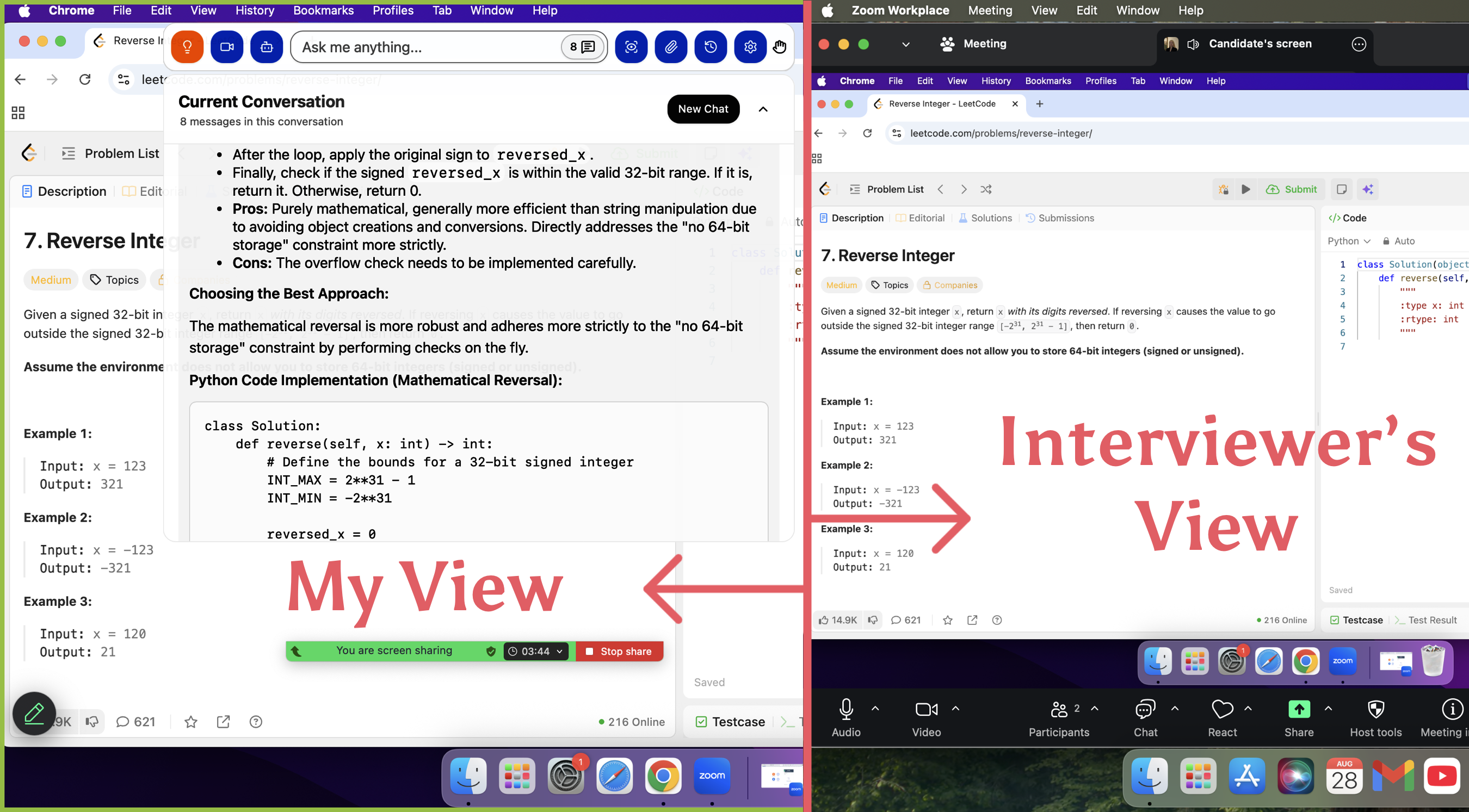
To be honest, despite all my preparation, the questions were still very challenging. I couldn't answer everything perfectly, so I relied on Linkjob AI to handle the bulk of the coding and problem-solving during the online assessment. Before the coding interview, I had a friend test its stealth mode—it worked exactly as shown in the image below—so I kept it running the entire time.
Key Differences from Other Tech Companies
NVIDIA’s process felt unique compared to Google or Amazon. I joined a 30-minute team interview that focused on technical details and how work gets divided. I answered coding questions in Python and C++. The process was tough and very selective, but the interviewers were friendly and supportive.
Insights from Other Candidates
Commonly Reported Questions
I talked with other candidates who went through the NVIDIA technical interview in 2025. Many shared similar experiences. Here are some questions they mentioned:
How would you optimize a deep learning pipeline for GPU performance?
Explain a time you solved a bottleneck in a distributed system.
What steps would you take to debug a memory leak in CUDA code?
Describe a project where you worked with cross-functional teams.
Most people said the interviewers wanted clear explanations. They liked when candidates broke down their thought process step by step.
Tip: Practice explaining your solutions out loud. It helps you sound confident and organized.
Trends in 2026 Interviews
I noticed some big changes in the NVIDIA interview process this year. The focus shifted toward parallel processing and GPU optimization. Interviewers cared more about how well I communicated complex ideas. They also asked about my awareness of industry trends and NVIDIA’s roadmap.
Here’s a quick comparison:
Aspect | 2026 Trends | Previous Years Trends |
|---|---|---|
Technical Skills | Parallel processing, GPU optimization | Coding skills |
Communication Skills | Explaining complex concepts | Less focus on communication |
Cultural Fit | Strong focus on collaboration | Considered, but less emphasized |
Interview Rounds | 3-4 rounds, more complex questions | Similar structure, simpler questions |
Industry Awareness | Knowledge of NVIDIA’s roadmap | General tech awareness |
Community Tips
I picked up some great advice from the NVIDIA interview community:
Review recent NVIDIA press releases and product launches.
Brush up on parallel programming concepts.
Join mock interview groups online.
Ask questions about team culture during your interview.
Note: Staying curious and showing genuine interest in NVIDIA’s mission can set you apart from other candidates.
Preparation Tips and Strategies
Study Plan and Resources
I started my NVIDIA interview prep with a clear study plan. I broke my timeline into weekly goals and focused on the most recommended resources. Here’s a table that helped me stay organized:
Study Plan/Resource | Description |
|---|---|
NVIDIA: Fundamentals of Machine Learning | Introductory course on machine learning concepts. |
NVIDIA: Fundamentals of Deep Learning | Basic principles of deep learning. |
Andrew Ng's 'Machine Learning' | Comprehensive course on machine learning. |
Deep Learning Specialization | In-depth specialization on deep learning techniques. |
TensorFlow 2 for Deep Learning Specialization | Focused on using TensorFlow for deep learning. |
TensorFlow: Advanced Techniques Specialization | Advanced techniques in TensorFlow. |
Machine Learning Engineering for Production (MLOps) Specialization | Practical aspects of deploying machine learning models. |
I also spent time understanding algorithms, data structures, and NVIDIA’s technologies like GPU architecture and CUDA. I reviewed my resume and made sure it highlighted my most relevant skills.
Practice Methods
I practiced coding and system design every day. Here’s what worked for me:
I explained my thinking out loud.
I asked questions before jumping into solutions.
I followed a logical structure for every answer.
I considered real-world trade-offs.
I joined mock interview groups online. These sessions helped me spot my weak areas and boosted my confidence. I also worked on coding challenges and take-home projects. I made sure to avoid common mistakes, like skipping problem definitions or ignoring scaling strategies.
Tip: Mock interviews are a game changer. They help you think on your feet and improve your communication skills.
Behavioral Questions
Feedback from other candidates suggests NVIDIA’s behavioral round tests how you tackle real-world friction. They look for specific examples of collaboration, problem-solving, and adaptability rather than generic answers. Here are the questions that people mentioned most often:
Describe a time when you had to implement a major change in your organization's infrastructure. How did you handle it?
Tell me about a situation where you had to collaborate with a difficult team member on a DevOps project.
Can you share an experience where you had to quickly adapt to new technology in a cloud environment?
Describe a time when you had to troubleshoot a critical production issue. How did you approach it?
Tell me about a project where you had to balance security concerns with operational efficiency in a cloud environment.
Share an experience where you had to convince management to adopt a new DevOps tool or practice.
Describe a situation where you had to manage conflicting priorities in a fast-paced DevOps environment.
Tell me about a time when you had to mentor a junior team member in cloud technologies.Can you share an experience where you had to optimize cloud costs without compromising performance?
I answered these questions by sharing stories from my past projects. I focused on what I learned and how I improved. The interviewers wanted honest answers, not perfect ones.
Alert: Be yourself. Authentic stories help you stand out and show your true strengths.
Mindset and Stress Management
I treated every practice session like the real interview. I used step-by-step guides and simulation tools to create a realistic environment. I practiced self-interviewing and peer coaching. When I felt nervous, I reminded myself to focus on curiosity and ownership.
Alert: Stay positive and take breaks. A calm mind helps you solve problems faster and think more creatively.
Mistakes, Lessons, and Checklist
Pitfalls to Avoid
I made some mistakes during my NVIDIA interview prep. I want to help you dodge the same traps. Here are some common pitfalls I noticed:
I focused on old experiences instead of recent, relevant work. Fresh stories make a stronger impact.
I forgot that every interview is like an elevator pitch. Making a strong impression matters.
Let me break down the biggest pitfalls I noticed others falling into:
Skimping on company and team research. It immediately puts you on the back foot.
Over-indexing on algorithms while totally neglecting system design practice.
Rambling without structure. Interviewers lose patience with messy, long-winded answers.
Ignoring behavioral prep. This is a huge error, especially at a place like NVIDIA.
Failing to ask questions at the end. It comes off as disinterest.
Tip: Listen closely and keep it focused. Concise, structured responses always win."
Lessons Learned
After going through the process, I picked up some valuable lessons:
Clarity beats speed. I always made sure I understood the problem before jumping in.
Communication matters. I explained my thinking step by step.
Authenticity wins. Sharing real challenges made me memorable.
Collaboration is key in system design. I asked for feedback and built on ideas.
Every interview teaches something. Even rejections helped me improve.
Note: Don’t rush. Take time to think and speak honestly.
Final Checklist
Before my final round, I used this checklist to stay on track:
Item Description |
|---|
Resume trimmed to one page with clear project bullets and tech stack. |
6–8 STAR stories written and practiced aloud. |
100+ practice problems completed with mixed topics and timed sessions. |
At least three mock interviews (peer, mentor, and one recorded self‑review). |
Followed NVIDIA recruiting channels and applied to the official posting. |
I checked off each item and felt ready for anything. If you follow this list, you’ll walk into your NVIDIA interview with confidence. Good luck!
I found these strategies helped me succeed at NVIDIA:
I focused on systems-level AI questions.
I reviewed CUDA fundamentals.
I practiced real-time optimization problems.
I learned about deep learning and GPU architecture.
Tip | Why It Matters |
|---|---|
Mock interviews | Build confidence and improve answers. |
Clear communication | Show technical and team skills. |
Stay curious and believe in yourself! 🚀
FAQ
Will Linkjob AI be visible if the interviewer asks me to share my screen?
Not at all. It integrates deeply with the operating system to render its overlay directly at the hardware layer. Because it operates independently of standard window capture processes, it remains completely invisible during screen sharing. The interviewer won't see a thing, so you can share your full screen with complete confidence.
How long did it take to hear back after each round?
I usually got a reply within one week. Sometimes, I waited a bit longer. I checked my email daily and stayed patient.
How should I manage my time during the coding interview?
I found time management critical, especially since most tasks were heavy implementations squeezed into 60–75 minutes. A single problem often split into sub-parts, so I really had to pace myself. I made sure to clarify and plan first, always prioritizing working code over getting stuck on micro-optimizations
See Also
My Secret Hacks For Beating HackerRank Proctoring Tools
Successfully Acing My Palantir New Grad SWE Interview Journey
20 Essential PyTorch Interview Questions From My 2025 Journey
My Preparation Journey for the Generative AI Interview Experience
© Copyright 2025 Linkjob.ai - All Rights Reserved.