My 2025 OpenAI Residency Interview Process and Questions

OpenAI’s Residency is a 6-month program designed for scholars from non-AI fields to transition into the industry, with the potential to convert into a full-time role.
Applications and interviews for the 2026 cohort are expected to open in January. Having successfully navigated the interview process and secured an offer in 2025, I’d like to share my experience and the insights I’ve gathered regarding the interview process before the 2026 application window opens.
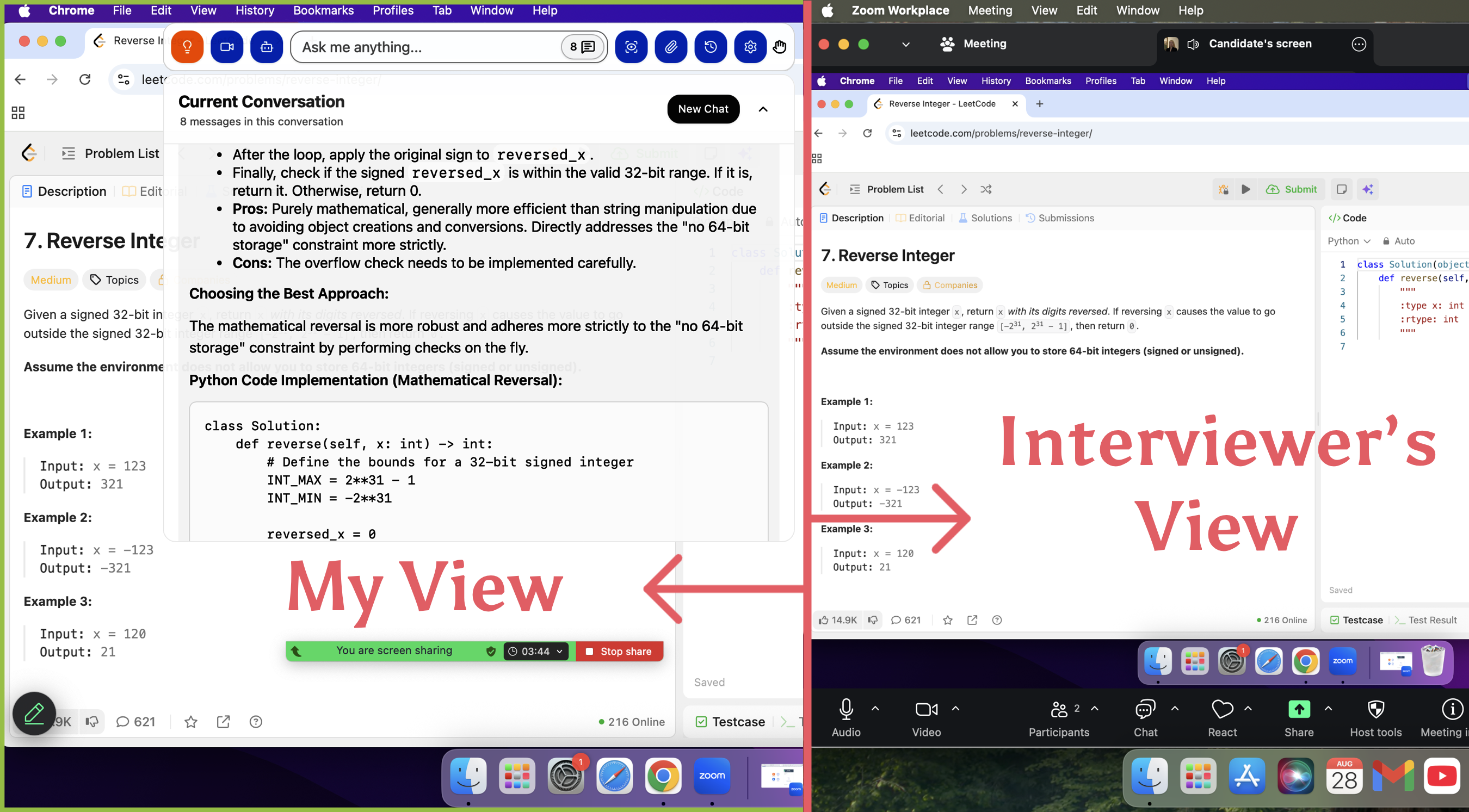
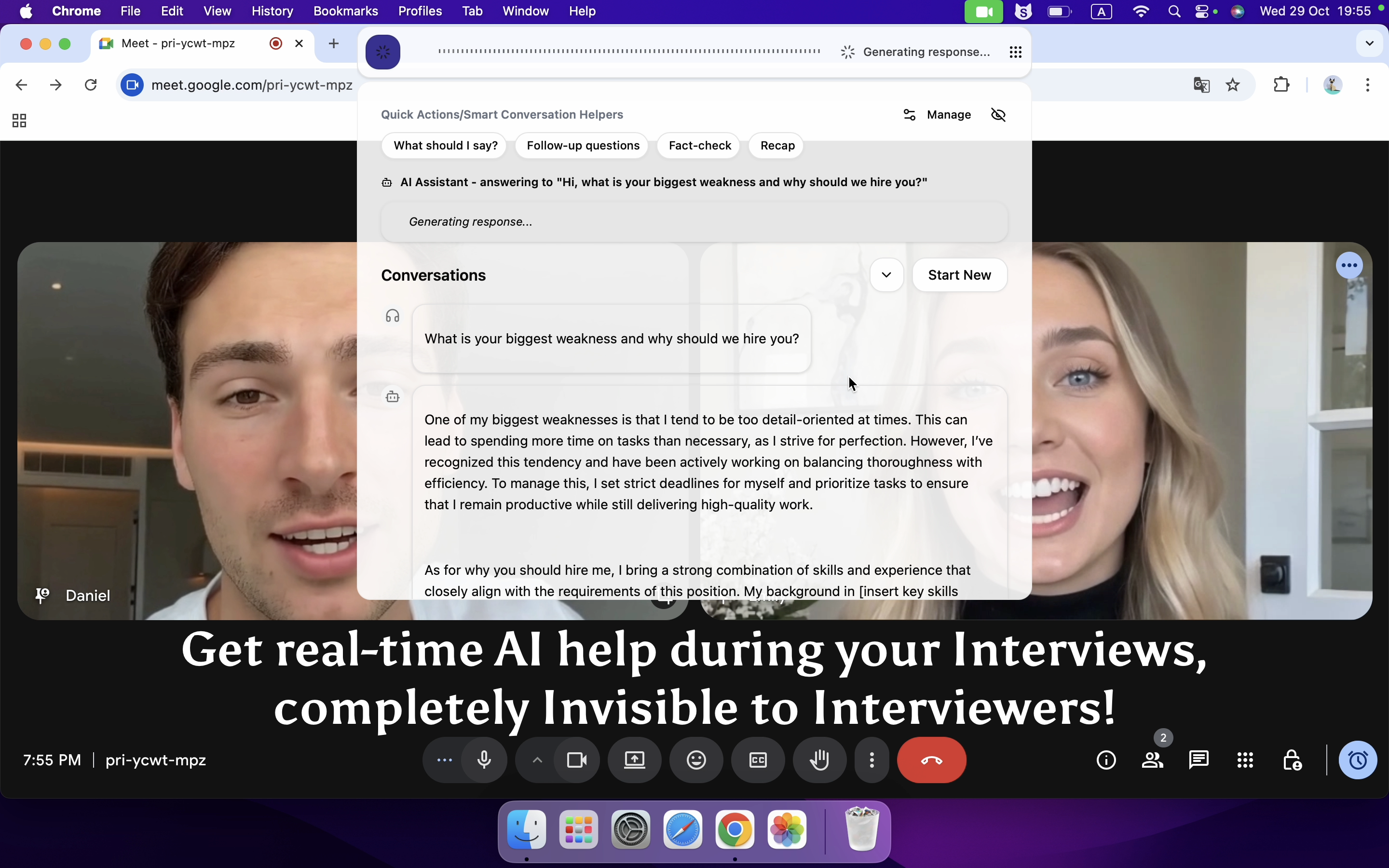
I genuinely appreciate how much Linkjob.ai has helped me throughout the process, which is why I’m sharing all of my interview details here. This AI can capture my screen to read the questions and generate answers immediately, covering both coding and general queries. It even offers real-time support during the conversation with the interviewer. The best part is that it remains totally invisible - it's incredibly seamless.
OpenAI Residency Interview Process and Questions
Interview Process
The OpenAI Residency interview process is insanely long with way too many rounds. It’s a real test of endurance.
HR call
HR behavioral round
Online assessment
Live coding
Research interview
Potential mentor round
HM round
Time Line and Interview Questions
A friend told me about a new program at OpenAI called the Residency Program, which launched in 2023. It’s designed for people with backgrounds in Mathematics, Physics, and Neuroscience. I figured I’d take a shot at it, so I submitted the same resume I used for Quant roles without making a single change.
Four days later, an HR representative emailed me to schedule a 15-minute introductory call. Four days after that, I had a behavioral interview with HR. It covered standard behavioral questions, one unusual question regarding AI safety, and a confirmation of my graduation date. I was told that same day that I’d be moving on to the Online Assessment (OA).
I completed the OA two days later; it consisted of math and coding problems, with the most difficult coding task being around a LeetCode Medium-to-Hard level. After the weekend, we scheduled the next round. Five days later, I had a one-hour Live Coding session. It wasn't a typical LeetCode-style problem and wasn't overly difficult.
The next round took place a week later: a 4-hour Research Interview. This involved three hours of research work followed immediately by a 30-minute presentation and a Q&A session. This was by far the most challenging interview I’ve ever experienced—much harder than those at top Quant firms like Citadel Securities or Jane Street. I signed an NDA, so I can’t disclose details, but there is absolutely no public information or "interview prep" online for this specific stage. After finishing, I honestly thought it was the final round. Looking back, I think passing this stage puts you into a candidate pool to be considered by various teams.
I used Linkjob.ai to complete both the coding problems and the research interview portions. I only discovered this product shortly before my interviews. After a quick test run with a friend, I jumped straight into the sessions. The results were quite impressive, and I was particularly satisfied with its undetectable feature.
Two days later, I had a Potential Mentor Interview, which was more of a casual chat. It lasted 40 minutes and focused on my resume and "research taste," ending with two brain teasers that I solved instantly. The interviewer mentioned that their specific team might not have headcount, but if that’s the case, I’d be considered by other teams.
A day later, we scheduled the next round for four days out. This round involved two Hiring Managers, each interviewing me separately for 30 minutes. Both were behavioral. The first focused on AI safety, diversity, inclusion, and motivation. The second focused on my research taste based on my past experience.
One day later, HR called to give me the unofficial offer. We confirmed my start date, and they mentioned the official offer just needs to be "submitted for approval," and then it's a done deal.
OpenAI Residency Interview Experience
Before the interview, I also found a post regarding the OA from someone who previously interviewed for this program. I’m sharing it here as well.
OpenAI Residency Interview OA Questions
The recruiter reached out on LinkedIn and sent the OA immediately, requiring it to be completed within 3 to 5 days. It lasts 1 hour and 40 minutes and consists of 4 questions: three Q&A questions related to Statistics/Probability and one coding question.
Question 1: Focused on KL Divergence. Given two uniform distributions, calculate D_KL(A||B) and D_KL(B||A).
Question 2: A probability question. Given two functions, calculate the expected value of a count. I don’t recall the exact details, but it was very straightforward.
Question 3: Focused on Language Models. Given Cross Entropy as the objective function, find the minimum possible value for the loss and calculate the text-level conditional probability.
Question 4: A coding question regarding All-Reduce.
Interview Questions and Formats
Interview Questions Format
The openai residency interview included a mix of technical and practical questions. Here are some common topics I faced and heard about from other candidates:
AI collaboration techniques, like working with edge cases and optimizing algorithms
Time complexity analysis and picking the most efficient solution
Clean code practices, such as good variable names and error handling
Avoiding code duplication and not just copying AI-generated code
I found that the interviewers cared more about my approach than getting everything right on the first try. They encouraged me to ask questions and think out loud. If I got stuck, they sometimes gave hints to see how I responded. I learned that showing curiosity and a willingness to improve mattered a lot.
Mission Alignment and Behavioral
The openai residency interview did not just focus on technical skills. The team also wanted to know if my values matched theirs and if I could work well with others. These interviews felt different from the coding rounds. I answered questions about how I would handle unintended model behaviors and how I worked with people from other teams.
Here is a quick comparison of the different interview types:
Interview Type | Purpose |
|---|---|
Mission Alignment Q&A | Assesses approach to controlling unintended model behaviors. |
Behavioral Interviews | Probes examples of cross-team collaboration and interpersonal skills. |
Technical Interviews | Involves coding challenges and problem-solving in relevant programming frameworks. |
During the mission alignment part, I talked about times when I had to make tough decisions or balance safety with innovation. For behavioral questions, I shared stories about working with classmates on group projects and how I resolved conflicts. The team wanted to see if I could listen, adapt, and communicate clearly.
Note: Be honest about your experiences. The interviewers can tell when you are being genuine.
Shared Experiences and Common Patterns
Advice from Past Candidates
I talked to several people who went through the OpenAI residency interview before me. Their advice helped me feel more confident. Here are some tips I heard again and again:
Take the technical interview descriptions seriously. They show you what to study.
Try to schedule your interviews when you feel most prepared. Timing can make a big difference.
The process feels tough but fair. Interviewers care about how you think and communicate.
Focus on your reasoning, not just memorizing answers. They want to see your thought process.
Prepare for questions about OpenAI’s mission and your fit with the team. This comes up often.
Expect more engineering and conceptual questions than pure algorithms.
Use community interview data to find out which topics matter most.
I followed these tips and noticed my confidence grew. I spent extra time on the technical interview descriptions and made sure I could explain my thinking clearly.
Frequently Asked Questions
People always ask me about the OpenAI residency interview. Here are some of the most common questions I get:
Question | My Answer |
|---|---|
How long does the process take? | Usually two to six weeks. |
What should I study? | Focus on machine learning, system design, and OpenAI’s mission. |
Do I need to know every algorithm? | No. Reasoning and communication matter more. |
Is it okay to ask questions during interviews? | Yes! Interviewers like curiosity and clear thinking. |
If you have other questions, don’t be afraid to reach out to past candidates. Most people are happy to share their experience.
Interview Trends
I noticed some patterns in the interviews. The team keeps updating their questions to match real-world problems. They care less about textbook answers and more about how you approach challenges. I saw more engineering and system design questions than pure coding puzzles. Interviewers often ask about your values and how you work with others.
Tip: Stay flexible and open-minded. The interview process changes, but clear reasoning and good communication always help.
I learned that sharing my thought process and showing curiosity made a big difference. The team wants to see how you solve problems, not just what you already know.
Preparation Tips and Strategies
Study Resources
When I started preparing for the OpenAI residency interview, I realized that the right resources made a huge difference. I paid close attention to the technical interview descriptions the recruiter sent me. These descriptions gave me a clear idea of what to expect and what to focus on. I didn’t just skim them—I took notes and made a checklist.
Here are some resources that helped me the most:
The recruiter’s technical interview descriptions (these are gold—take them seriously)
My own notes from past projects and coursework
I also found it helpful to schedule my interviews later in my interview tour. This gave me more time to prepare and build confidence.
Practice Techniques
Practice played a big role in my preparation. I didn’t just solve problems—I explained my thinking out loud, just like I would in the real interview. I used online coding platforms to simulate the interview environment. Sometimes, I recorded myself to catch mistakes or unclear explanations.
Here’s what worked for me:
Technique | Why It Helped |
|---|---|
Mock interviews | Built confidence and reduced nerves |
Timed coding challenges | Improved speed and focus |
Explaining solutions | Sharpened communication skills |
Tip: Don’t just memorize answers. Focus on understanding concepts and practicing your reasoning.
Building Connections
Connecting with others at OpenAI and in the wider AI community helped me grow fast. I joined online forums and LinkedIn groups to meet people with similar interests. I contributed to GitHub projects and attended AI conferences. I also took part in community events and roundtable sessions at OpenAI. These activities helped me learn from others and share my own ideas.
I engaged with the AI community both online and offline.
I joined Reddit’s AI threads and LinkedIn groups.
I contributed to open-source projects on GitHub.
I attended conferences and collaborated with other builders.
Tip: Don’t be shy about reaching out. Most people are happy to connect and share advice.
FAQ
How long did the OpenAI residency interview process take?
Since the OpenAI Residency has so many interview rounds, the timeline is quite stretched out. It took me over a month to finish the entire process. It was honestly an exhausting and grueling experience, but now that I’ve passed, I feel like it was all worth it.
What helped you stand out?
I believe my personal ability was part of it, but I have to say Linkjob.ai also helped me a lot. Especially during the technical interviews—it could directly help me solve the problems. In more general interview rounds, I could even use it to help me communicate with the interviewers.
Do I need a PhD to get accepted?
OpenAI doesn't explicitly emphasize this, but the requirements for this program are very high. They expect you to:
Should be open to consideration for full-time roles after the program.
Must be extremely proficient in programming languages and software development.
Must be very comfortable with advanced math concepts in linear algebra, statistics, probability, and calculus.
Must be able to independently build or execute complex technical projects.
See Also
Navigating My OpenAI Interview Experience Step by Step in 2025
My Real Questions List to Pass 2025 OpenAI Coding Interview
OpenAI HackerRank Tricks I Used to Pass Tough Tests in 2025
My Secret Hacks For Beating HackerRank Proctoring and Detection
Why People Choose Linkjob AI
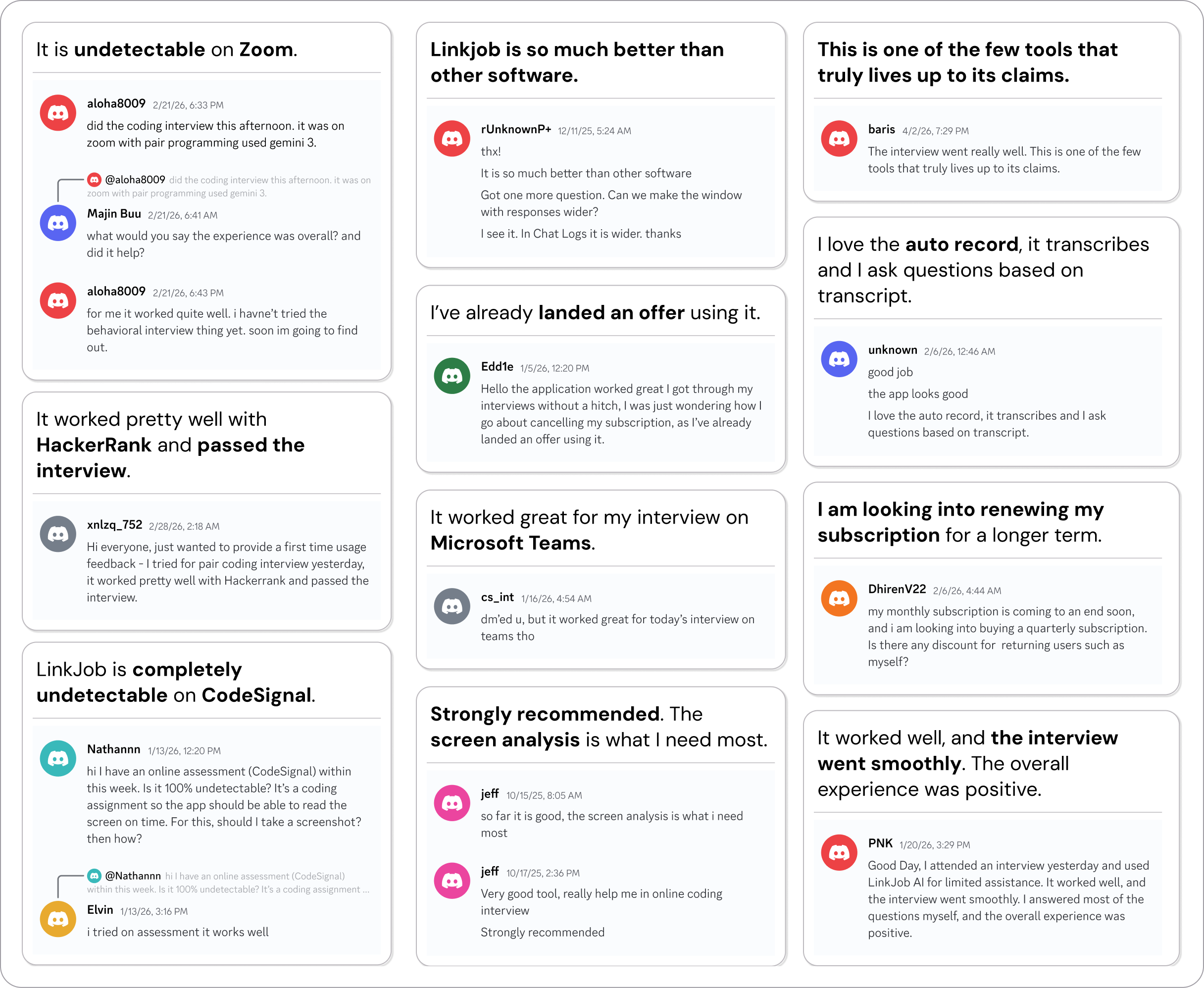
Smoother interviews, coding challenges cleared, and job offers landed. See how users describe their experience with Linkjob AI—in their own words.