My RBC CodeSignal Assessment: A First-Hand Account of the Interview

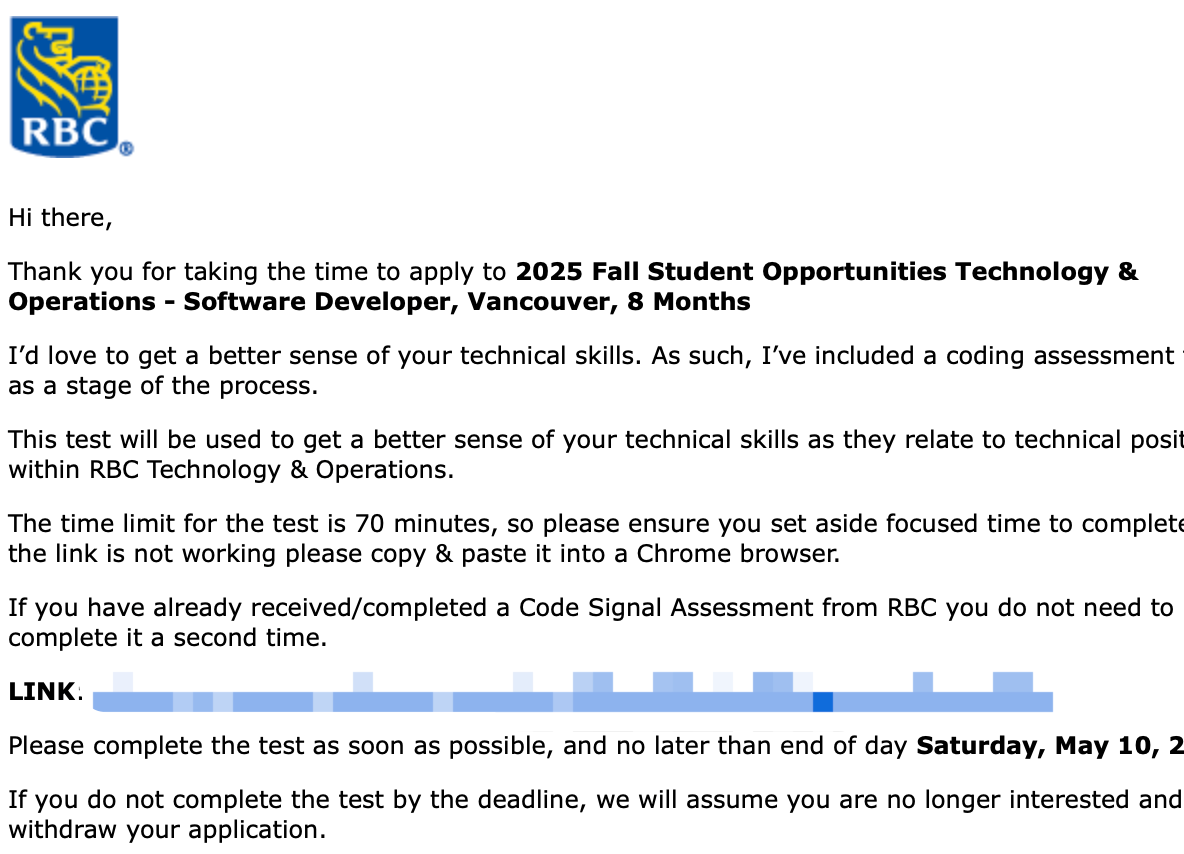
I just got the OA for the Tech@RBC Advisory Program 2025, and the questions are totally different this time. It's all on CodeSignal now—fewer problems, but way tougher!. Worth noting that CodeSignal's questions start at a higher difficulty level than HackerRank's. I have to say, Linkjob AI Interview assistant really saved my bacon this round—I used their AI-assisted coding feature multiple times, and their stealth mode is seriously a game-changer.
Total of 3 coding questions, 90 minutes.
2 Single-Function + 1 DevOps. You can pick the order yourself—tackle the easier ones first—but remember to submit after finishing each one.
Single-Function: One easy, one bordering on hard. Mostly covers stuff like String Simulation, Digital Processing, Constructive Problems, etc.
DevOps: Way more practical than pure theory—it's like real-world DevOps tasks, basically a combo of DevOps/Backend/Scripting.
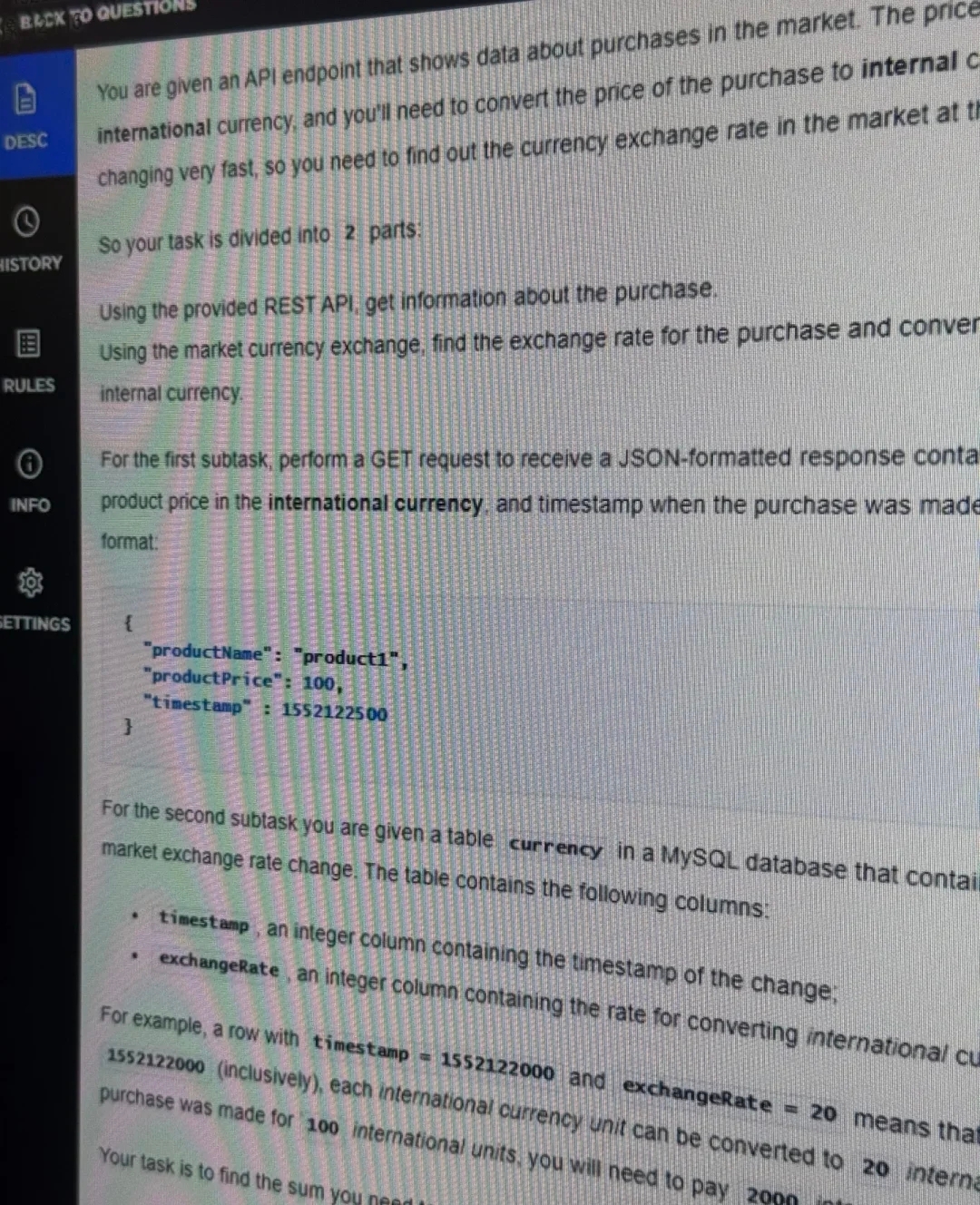
Pretty challenging, involving API calls, data parsing, time-sensitive conversions, automation scripts, and the like.
For example: Pull purchase details for a specific transaction from a market via REST API, then convert the international price to local currency based on the exchange rate at the time of purchase.
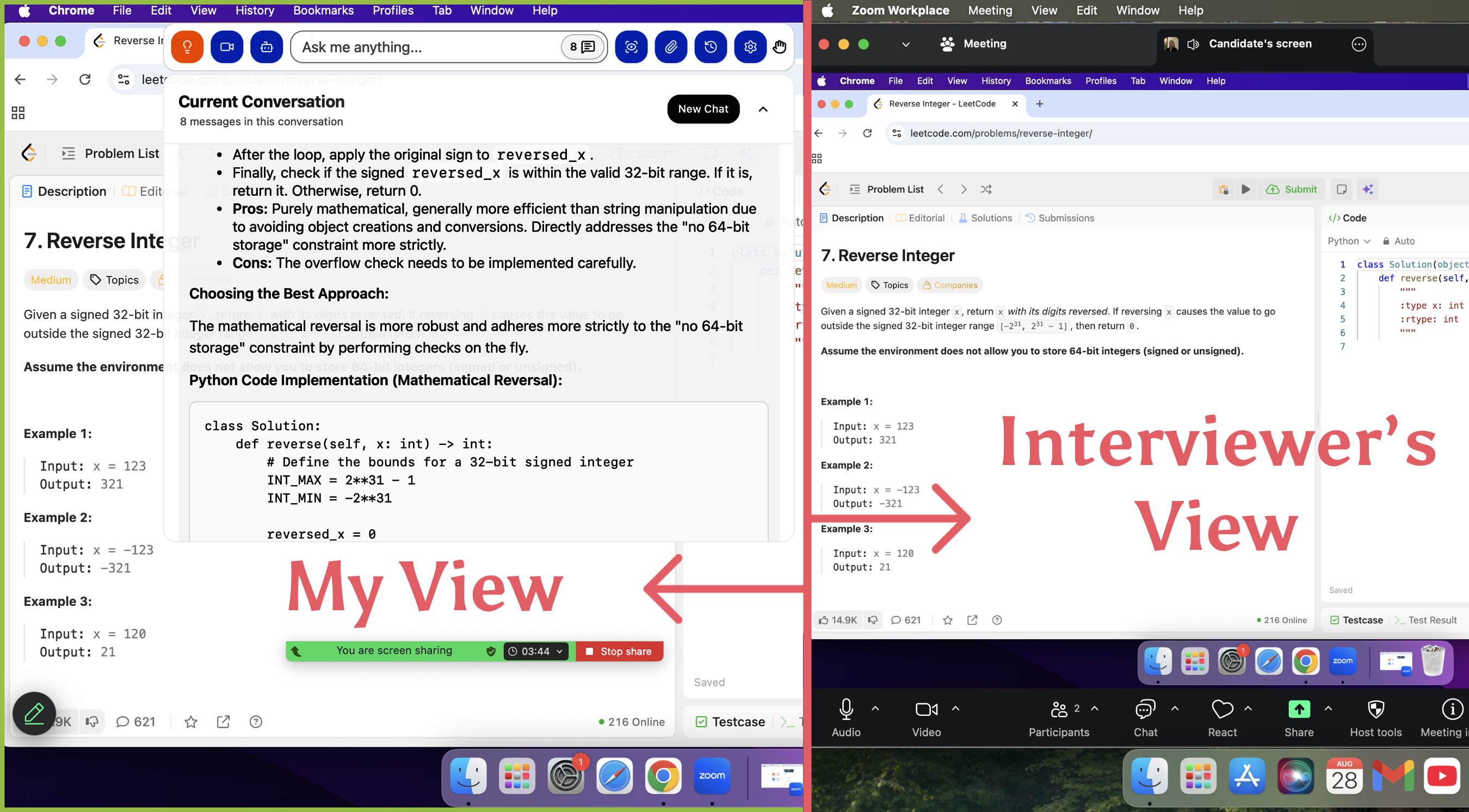
Linkjob AI worked great and I got through my interview without a hitch. It’s also undetectable, I used it and didn't trigger any CodeSignal detection.
Key Takeaways
Understand the assessment format. Familiarize yourself with the types of questions to set realistic expectations and reduce anxiety.
Practice regularly on platforms like CodeSignal, LeetCode, and HackerRank. If you want to handle emergencies during a formal interview process, you can use AI Interview copilot.
Manage your time wisely during the assessment. Spend a few minutes reading all questions, start with the easiest, and move on if you get stuck.
Simulate test conditions at home. Practice under timed conditions to prepare for the pressure of the real assessment.
Stay calm and focused. Use strategies like planning your approach and checking your code frequently to maximize your performance.
RBC CodeSignal Assessment Format
Before I took the RBC CodeSignal assessment, I asked a friend who had already joined the company about his interview experience at the time. Below are the test questions he encountered then.
Question Types
RBC's technical interviews won't just ask you something straightforward like "What is overfitting?" Instead, they'll throw a credit scoring scenario at you and ask you to analyze the implications of the bias-variance trade-off in that context. This kind of question really probes the depth of your understanding.
Here’s a quick look at the types of questions in the RBC CodeSignal assessment:
Question Type | Description |
|---|---|
Statistics and Probability: More Than Just Rote Memorization of Formulas | They asked a question about the Central Limit Theorem, but it wasn't about reciting the definition—instead, it was about how to apply CLT in risk management. I paused to think it over and answered from the perspective of portfolio theory. |
Machine Learning: Theory Meets Practice | There's a particularly interesting question about XAI. They gave me a neural network for loan approval and asked how to explain the model's decisions. I mentioned two methods—LIME and SHAP—and then dove into why explainability is so crucial in the banking context: regulatory compliance, building customer trust, model debugging, and the like. |
Programming in Practice: More Than Just Algorithm Problems | The SQL question was super practical—it had me write a query to segment customers based on their deposit amounts. I used a CTE and CASE statements, and the interviewer followed up by asking why I'd chosen those specific threshold values, which really calls for some solid understanding of banking operations. |
Business Case Study | The most interesting one was the branch network optimization question, where I used data science to help RBC decide where to open new branches or close existing ones. This really pulled in multiple angles like geospatial analysis, predictive modeling, optimization, and more—it truly tests your all-around skills. |
Tips:
When given a problem, don't rush straight into solving it—first, ask some clarifying questions to make sure you fully understand its scope and the expectations.
Second, think out loud. The interviewer wants to get a sense of your thought process, so voice your reasoning as you go. Even if you're unsure about the answer, explain your approach and any assumptions you're making.
Third, manage your time effectively. Some problems can be pretty complex, so you'll need to prioritize which aspects to tackle. If time's running short, start with a high-level solution, then outline how you'd dive deeper if you had more time.
Finally, strike a balance between confidence and humility. If you hit a question you truly don't know, be honest about it—but follow up by describing how you'd go about learning or researching the topic.
Scoring and Timing
Time management plays a huge role in my success. The assessment gives me 70 minutes to solve all questions. I try to divide my time so I don’t get stuck on one problem for too long.
The codesignal platform tracks my time and progress. I keep an eye on the timer, but I don’t let it stress me out. The assessment uses proctoring, so I make sure my webcam and environment are ready before I begin. Staying calm helps me focus on my coding and problem-solving skills.
Note: I always check my internet connection and test my webcam before the assessment starts. Technical issues can distract me and waste valuable time.Similarly, if you're planning to use an interview assistant like Linkjob, I recommend testing it out with a friend beforehand—especially to check its stealth mode. In my experience, everything worked perfectly fine.
Preparing for the RBC CodeSignal Assessment
Study Resources
Here are some resources I rely on:
I practice different question types directly on codesignal. This lets me get comfortable with the IDE and the way questions are structured.
I use LeetCode and HackerRank to solve a variety of coding problems. These platforms help me build my problem-solving skills and get used to the coding interface.
I read through sample questions and solutions. Seeing how others approach problems gives me new ideas.
Tip: I always try a few mock sessions before the real assessment. Simulating the test environment helps me manage stress and improve my responses.
I noticed that practicing on codesignal itself is especially helpful. The platform feels similar to the actual assessment, so I don’t get surprised by the interface or question format.
Practice Habits
Building strong practice habits is key for any general coding assessment. You can find a friend to practice with, or use Linkjob.ai's mock interview feature. If your budget allows, hiring a working professional is of course even better.
I check out the coding editor, test cases, and submission process. Familiarizing myself with the platform means I waste less time during the actual assessment.
Note:Consistency matters more than cramming. I find that regular practice builds my confidence and helps me perform better on the rbc codesignal assessment.
RBC CodeSignal Assessment Time Management Tips
Planning Approach
Here’s how I set myself up for success:
I practice regularly to get familiar with the codesignal format.
I dedicate time each day to work on general coding assessment problems.
After each practice session, I review my answers. I look for mistakes and try to understand what went wrong.
I simulate test conditions at home. I set a timer and work in a quiet space.
Staying Focused
Staying focused during the assessment is tough, but I use a few tricks to keep my mind sharp. Here’s my step-by-step approach:
I get comfortable with the coding framework before I start. I check the task structure and make sure I understand the basics.
I spend a minute planning my approach for each question. This saves time later.
I use code snippets and libraries when possible. These resources save me time and effort.
I run tests while I code. This lets me catch errors early.
I focus on passing tests first. I aim for a working solution instead of perfection.
Staying focused helps me make the most of my time. I remind myself that every minute counts, especially in a timed assessment.
Tackling RBC CodeSignal Assessment Questions
Here’s a trick I use:
# Plan for array manipulation
# 1. Loop through array
# 2. Check neighbor values
# 3. Handle edge cases
I test my code often. I run small test cases to catch errors early. If I get stuck, I skip the problem and come back later. I focus on writing clear code that solves the problem. I use built-in functions when possible. These save me time and reduce mistakes.
Tip: I always check the codesignal editor for helpful features like auto-complete and quick test runs. Getting comfortable with the platform makes the assessment less stressful.
Keep going. Every challenge is a chance to learn and grow.
FAQ
How do I register for the RBC CodeSignal assessment?
I sign up through the RBC recruitment portal. After I apply, RBC sends me an invitation email with a unique link. I follow the instructions in the email to schedule and start my assessment.
What should I do if I get stuck on a question?
I do recommend using Linkjob.ai. Successfully passing the test and landing the offer is more important than anything else—there's no such thing as moral or immoral about it.
How do I prepare my environment for proctoring?
I check my webcam and microphone before starting. I clear my desk of notes and devices. I make sure my internet connection is stable to avoid interruptions.
What happens if I lose connection during the test?
If I lose connection, I try to reconnect right away. I contact CodeSignal support if the problem continues. I explain my situation to RBC if I cannot finish.
See Also
How to Use Technology to Cheat on CodeSignal Proctored Exams
How I Navigated the Visa CodeSignal Assessment and What I Learned
My Journey Through Capital One CodeSignal Questions: What I Learned
I Cracked the Coinbase CodeSignal Assessment: My Insider Guide
How I Cracked the Ramp CodeSignal Assessment and What You Can Learn

© Copyright 2025 Linkjob.ai - All Rights Reserved.