My Personal Secrets for Passing the 2026 Tesla Codility Test


Tesla Codility Test Questions
There were three problems in the Tesla Codility test for my interview, which covered interval partitioning, test case design, and Caesar cipher respectively. The difficulty ranged from easy to medium, and I was given a total of 100 minutes to complete them.
Tesla releases a large number of internship spots, but each spot is for a single team, and the most difficult part is making it to a human recruiter. So if you get an interview, I hope my article can give you some helpful guidance.
I’m really grateful to Linkjob.ai for helping me pass my interview, which is why I’m sharing my OA questions and experience here. Having an invisible AI coding interview tool during the OA indeed provides a significant edge.
Task 1
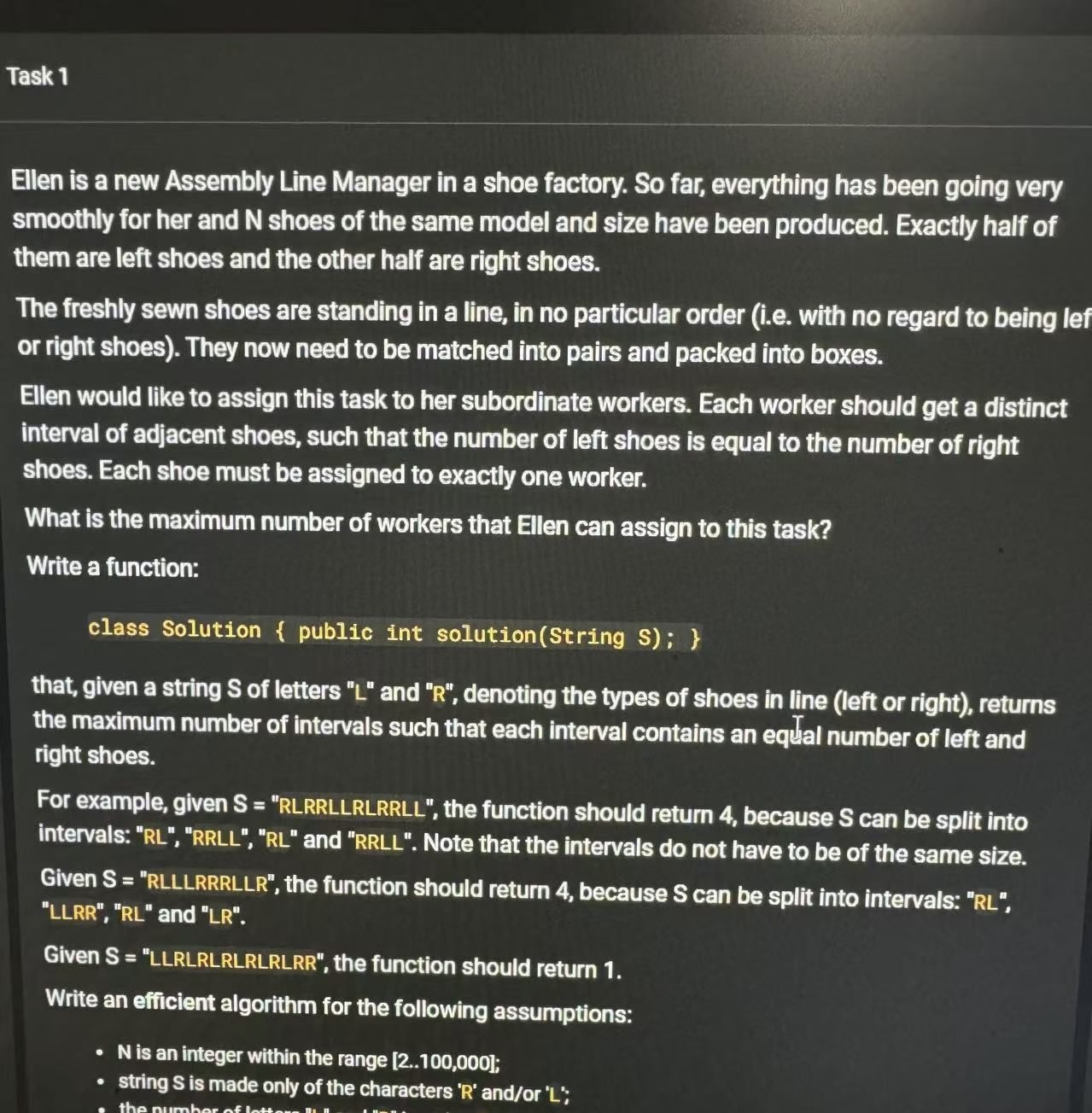
Problem Analysis: This problem requires understanding the properties of balanced substrings. It can be solved in a single pass with a time complexity of O(n) and space complexity of O(1). The approach requires some insight but is not overly complex.
Core Idea: Split a string consisting of ‘L’ and ‘R’ into the maximum number of consecutive substrings where each substring contains an equal number of ‘L’ and ‘R’. Maintain a balance counter while traversing the string: increment the counter by 1 for ‘L’ and decrement by 1 for ‘R’. When the counter reaches 0, the current segment is a valid balanced substring, so increment the result by 1.
Task 2
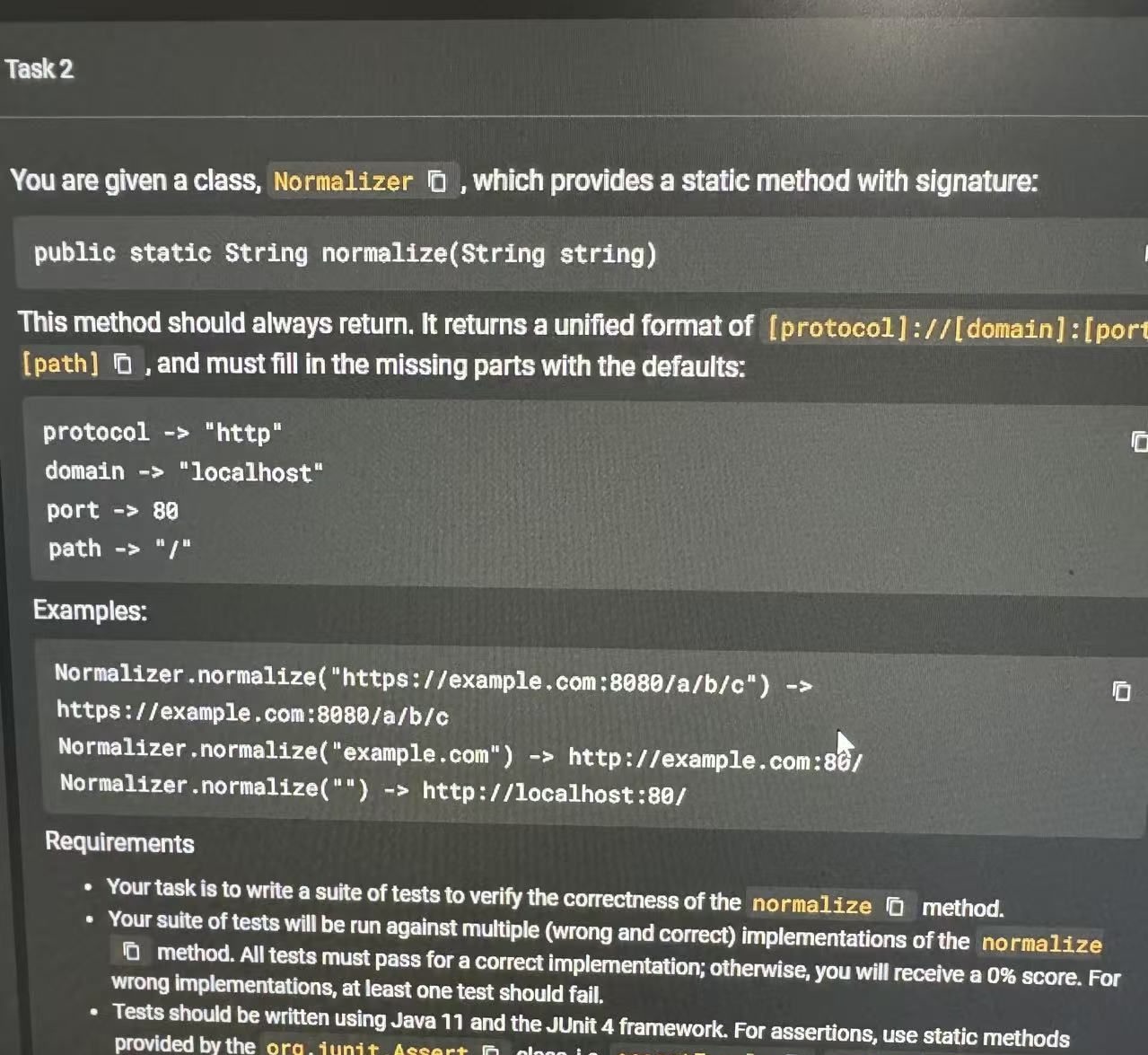
Problem Analysis: This problem is relatively simple and mainly tests the design of test cases. As long as the scenarios are comprehensively covered, the logic is straightforward.
Core Idea: Write JUnit 4 test cases for the normalize method of the Normalizer class to verify that URLs are normalized to the [protocol]://[domain]:[port][path] format. Design multiple test cases covering various input scenarios, such as complete URLs, missing components, and empty inputs. Use org.junit.Assert.assertEquals to assert that the actual output matches the expected output.
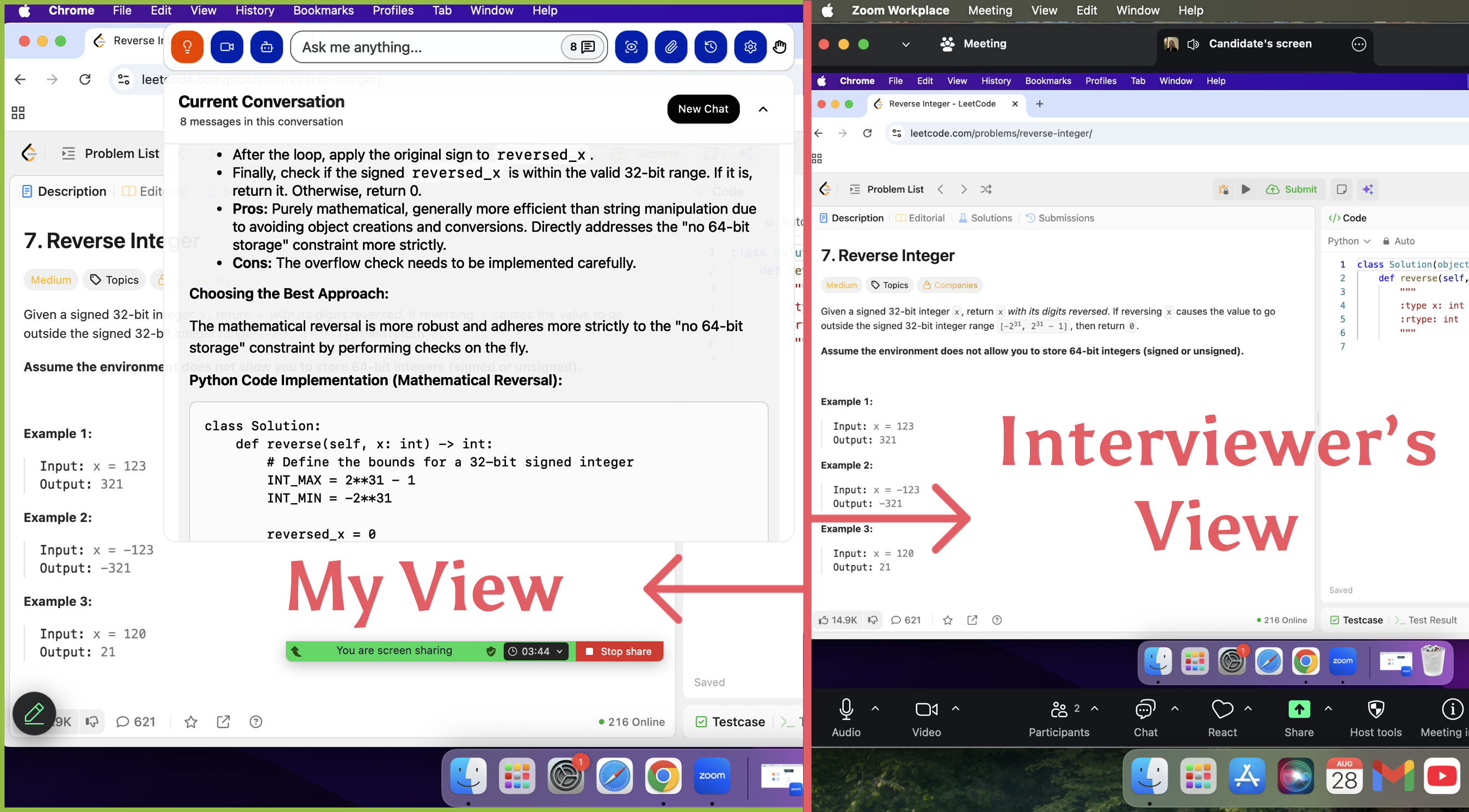
Linkjob AI worked great and I got through my interview without a hitch. It’s also undetectable, I used it and didn't trigger any Codility detection.
Task 3
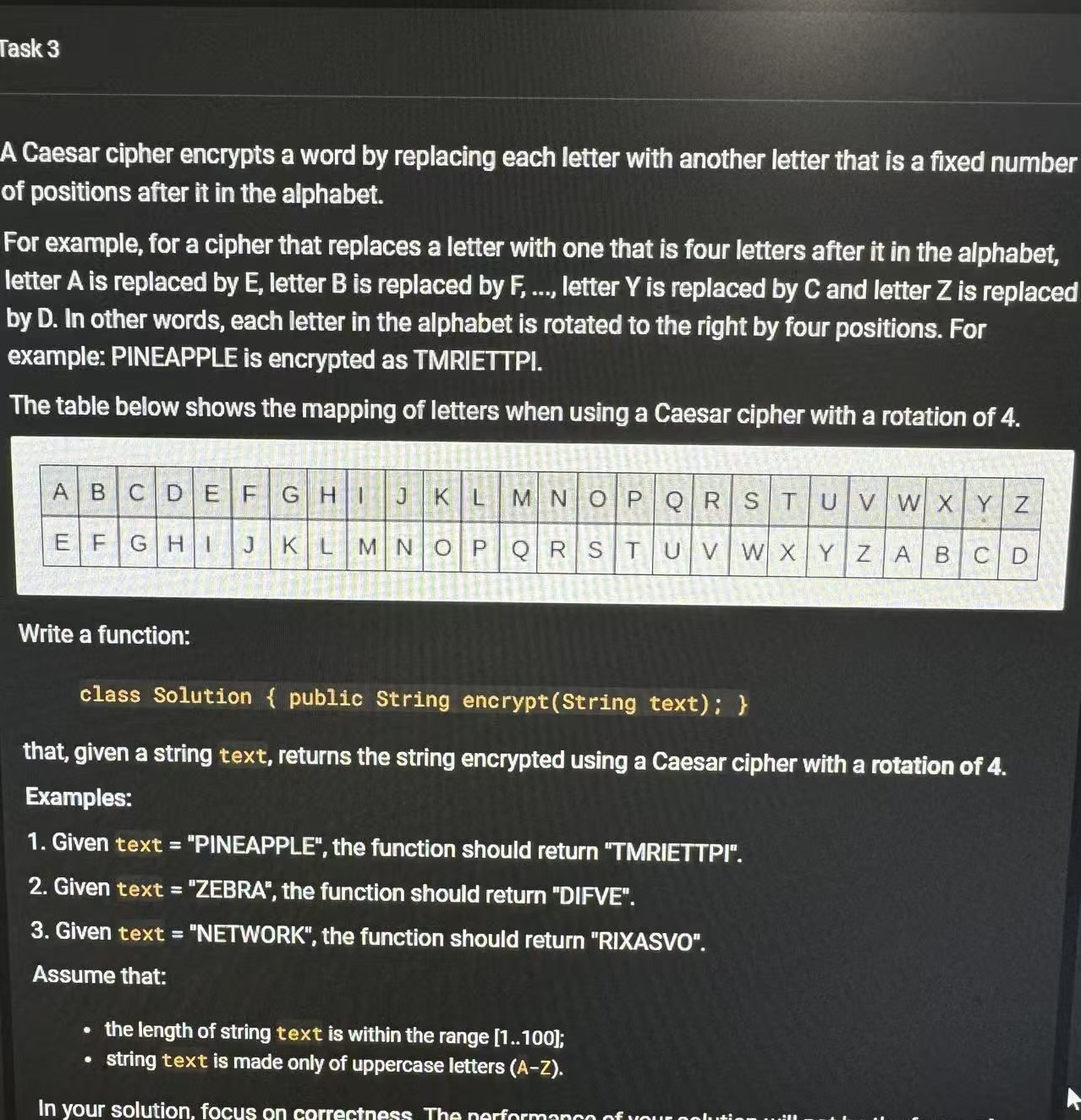
Problem Analysis: This is a typical string manipulation and character encoding problem. The logic is very direct and easy to implement. The task is to implement a Caesar cipher by shifting each letter 4 positions to the right, wrapping around from ‘Z’ to ‘A’.
Core Idea: Traverse each character in the input string. For each character, calculate its ASCII value, add 4, take modulo 26 to handle wrapping, and convert it back to the corresponding character.
Tesla Codility Test Format
Task Count and Independence
The test consists of three independent coding tasks, each unrelated to the others. The interface allows candidates to freely switch between tasks without following a fixed order, enabling flexible time allocation based on personal strengths.
Time Allocation
There is a total time limit of 100 minutes, which starts as soon as you enter the test environment. The timer cannot be paused or extended. Candidates must manage their own time across the full process of reading, coding, debugging, and submitting.
Interface and Coding Constraints
The platform provides a fixed code editor with pre-defined function signatures for each task (including parameter types and return formats). Code must strictly follow these signatures—custom interfaces are not allowed. Supported languages include Java, Python, and C++. The editor offers only basic syntax highlighting; dependencies (e.g., JUnit libraries for testing) must be manually imported. Any syntax error will prevent the code from running.
Core Competencies Assessed in the Tesla Codility Test
The Tesla Codility test focuses on core technical skills applicable to general software engineering roles. It does not depend on specific question scenarios but instead evaluates a candidate’s overall ability to solve algorithmic and coding challenges efficiently.
Algorithmic and Logical Design Ability
Candidates are expected to abstract real-world problems into mathematical or algorithmic models and design efficient solutions. This includes recognizing problem patterns, avoiding brute-force methods, and achieving linear or logarithmic time complexity to ensure stable performance on large-scale inputs.
Software Testing and Scenario Coverage Thinking
This area assesses the ability to ensure functional reliability. Candidates should identify all possible input scenarios and use logic design or test cases to guarantee that the function behaves as expected under every condition, with no overlooked or misjudged cases.
Fundamental Data Processing Proficiency
The test evaluates command over basic data operations such as character encoding conversions, element iteration and filtering, and data normalization. It also examines how well candidates apply basic mathematical operations in data handling to accurately perform data transformations and computations.
Edge Case Awareness and Code Robustness
A subtle yet crucial aspect of evaluation is how well candidates anticipate atypical inputs and prevent code failures caused by overlooked edge cases. Examples include handling boundary conditions in loops or safely managing null or empty data inputs, demonstrating thorough consideration and reliability in implementation.
Preparation Strategies
Study Plan
When I started preparing for the Tesla Codility test, I didn’t want to just jump in blindly. I’d heard it could be tricky, so I wanted a plan that would actually make me feel confident once the timer started. I spent a bit of time figuring out what to focus on and how to practice, and that made a huge difference in how I approached the test.
I practiced solving problems with a timer. I focused on basic data structures like arrays and linked lists. The pressure helped me get used to thinking fast.
I spent time reading about systems design. I looked at real-world problems and thought about how engineers solve them. I paid attention to things like edge deployment and constraints.
I read articles about Tesla’s Autopilot stack and their energy grid architecture. I wanted to understand how my code might fit into bigger systems.
I reflected on times when I had to deliver results with limited tools or unclear instructions. I asked myself how I handled those situations and what I learned.
Resources
I found some great resources that made my study sessions easier. Here’s what I used most:
Codility Technical Test platform. This site gave me a feel for the actual test environment. I could practice coding and get instant feedback.
LeetCode and HackerRank. These sites have tons of problems that cover arrays, strings, and algorithms.
Tesla’s engineering blog. I read about their latest projects and learned how they solve tough problems.
Coding and Time Management Tips
Clean Code
I always remind myself that clean code is my best friend during the Tesla Codility test. I keep my variable names simple and meaningful. I add short comments to explain tricky parts. When I write code that looks neat, I find bugs faster. Here’s what I focus on:
Use clear names for variables and functions.
Write short, focused functions.
Add comments for any logic that might confuse someone else.
Time Management
I set mini-goals for each question. I check the clock after every problem. Here’s my simple routine:
Read the question twice.
Code and test quickly.
Move on if I hit a wall.
FAQ
If I pass the OA, how long will it take to receive feedback?
After I completed the OA, the recruiter scheduled my next round within two to three days. Generally, if there’s no response after a week, it likely means the OA was not passed.
What’s the next step in the interview process?
After I finished the OA, I had two interviews: one technical interview and one combined technical plus HR interview. I received confirmation that I passed the first round within an hour.
See Also
How to Cheat HackerRank Tests With AI: My 2026 Update
My 2026 HSBC Codility Test: 3 Real Coding Questions & Answers
My Honest Story About Taking the Marshall Wace Codility Test
Why People Choose Linkjob AI
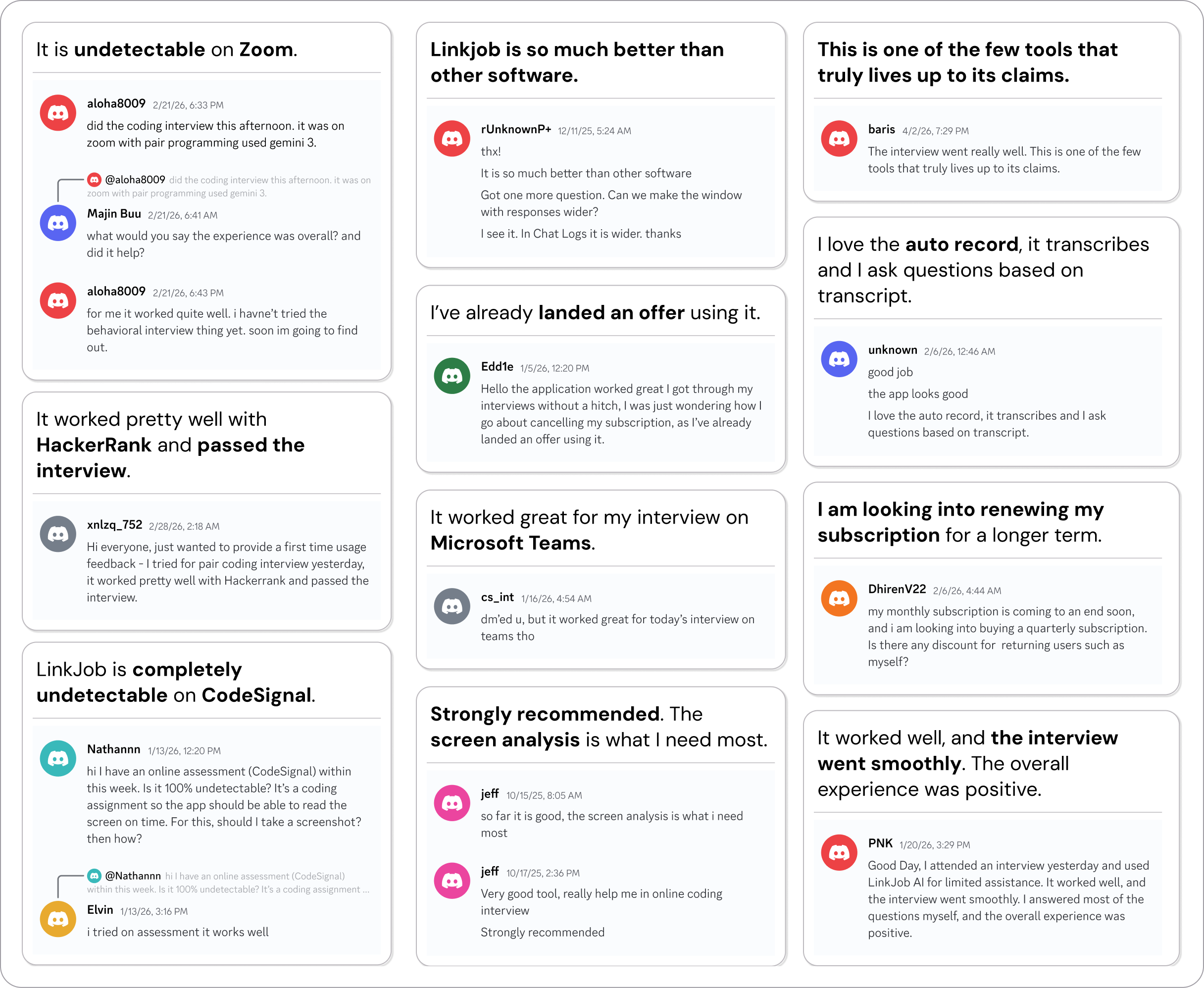
Smoother interviews, coding challenges cleared, and job offers landed. See how users describe their experience with Linkjob AI—in their own words.