My Real VMware HackerRank Questions From the 2025 Interview

I received the VMware OA about ten days after submitting my application. The assessment included six multiple-choice questions and three coding questions, with a total time limit of 90 minutes.
I genuinely appreciate how much Linkjob.ai has helped me throughout the process, which is why I’m sharing all of my OA details here. Having an invisible AI interview assistant guiding me in real-time really takes away a lot of stress.
Next, I’ll share the full prompts for all three of my coding questions, along with the thought process I had while solving them during the OA.
VMware HackerRank Questions
Question 1: Cardinality Sorting
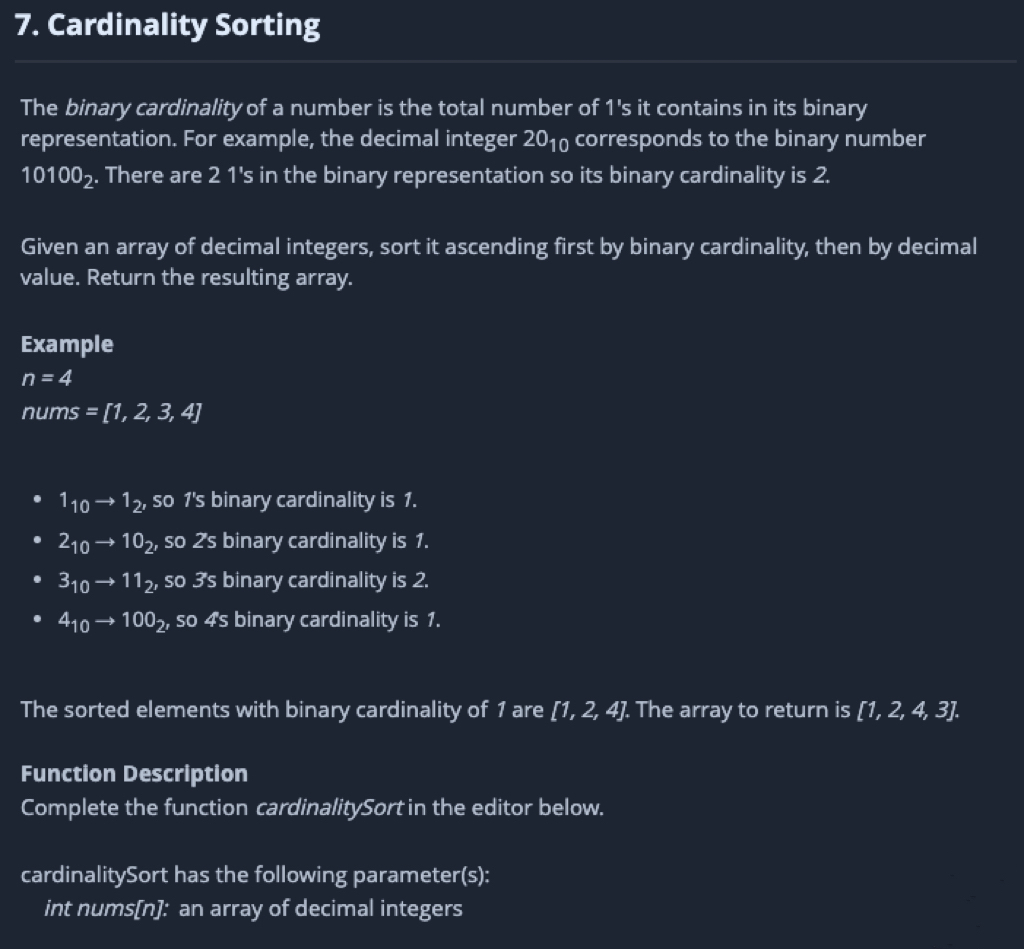
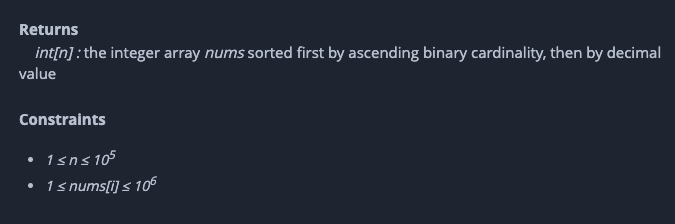
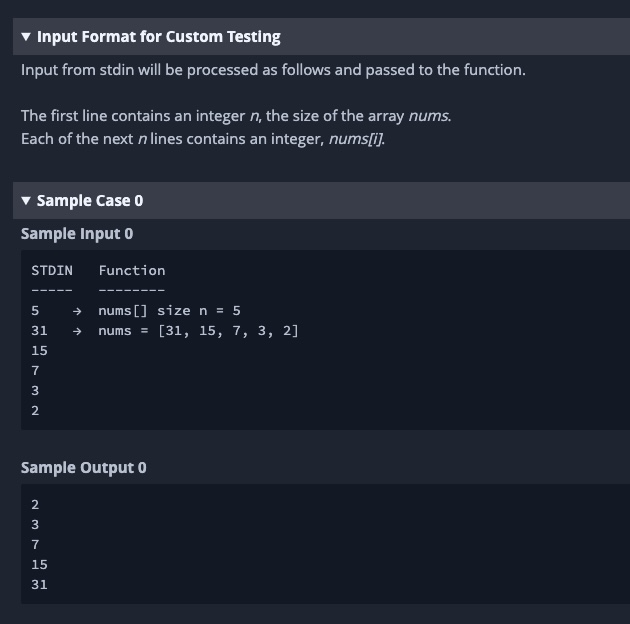
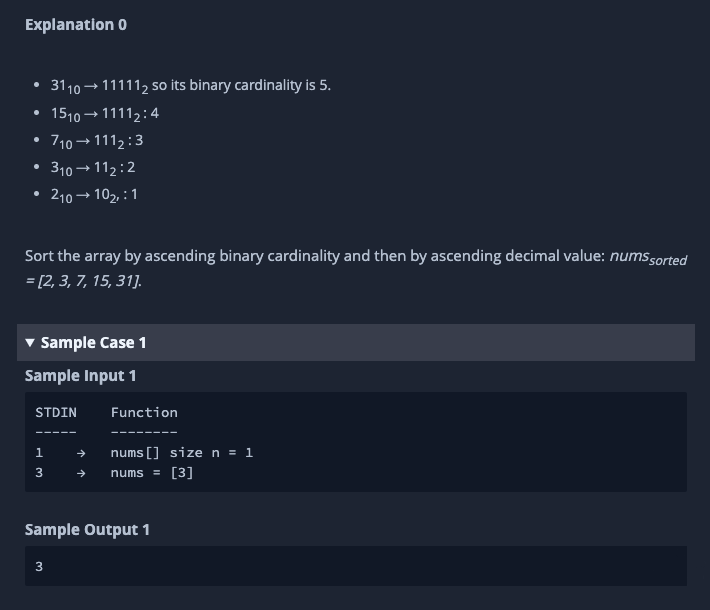
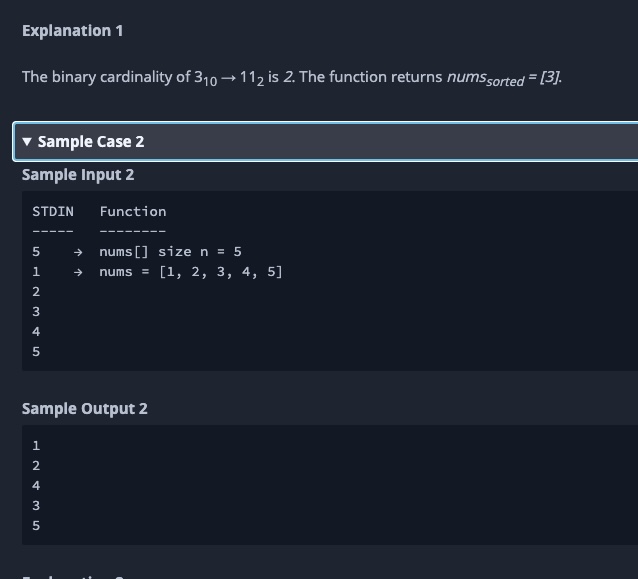
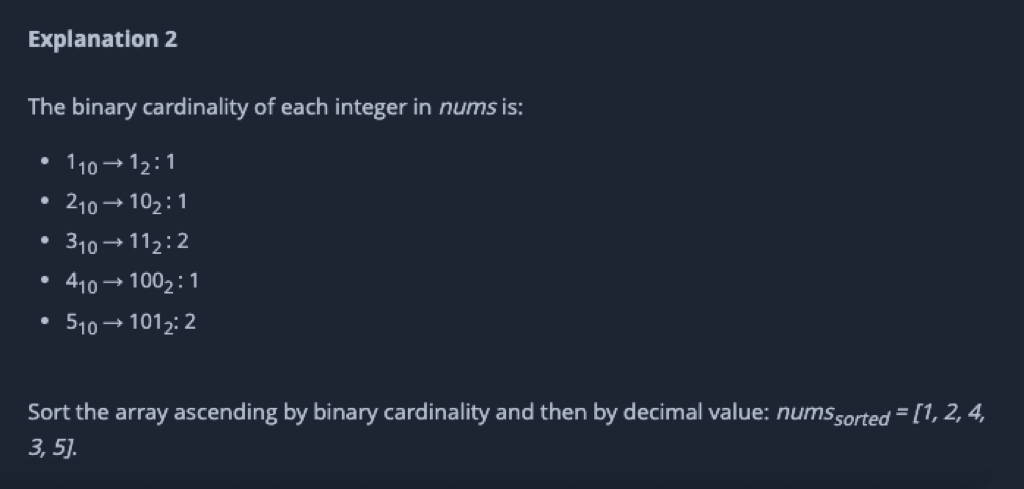
This was a custom sorting problem. The core rule was to sort first by the number of 1s in the binary representation in ascending order, and if counts were equal, sort by the number itself in ascending order.
My thought process:
I calculated the number of 1s in the binary representation. In Python, bin(x).count('1') worked well. For example, 20 converted to binary is 10100, giving 2 ones.
Then set the sorting key for the array as (number of 1s, element value) so that sorting would first compare the count of ones, and if equal, the number itself.
The array was sorted using this key, returning the final result. For the sample [1,2,3,4], the sorted result became [1,2,4,3].
Question 2: Distinct Digit Numbers
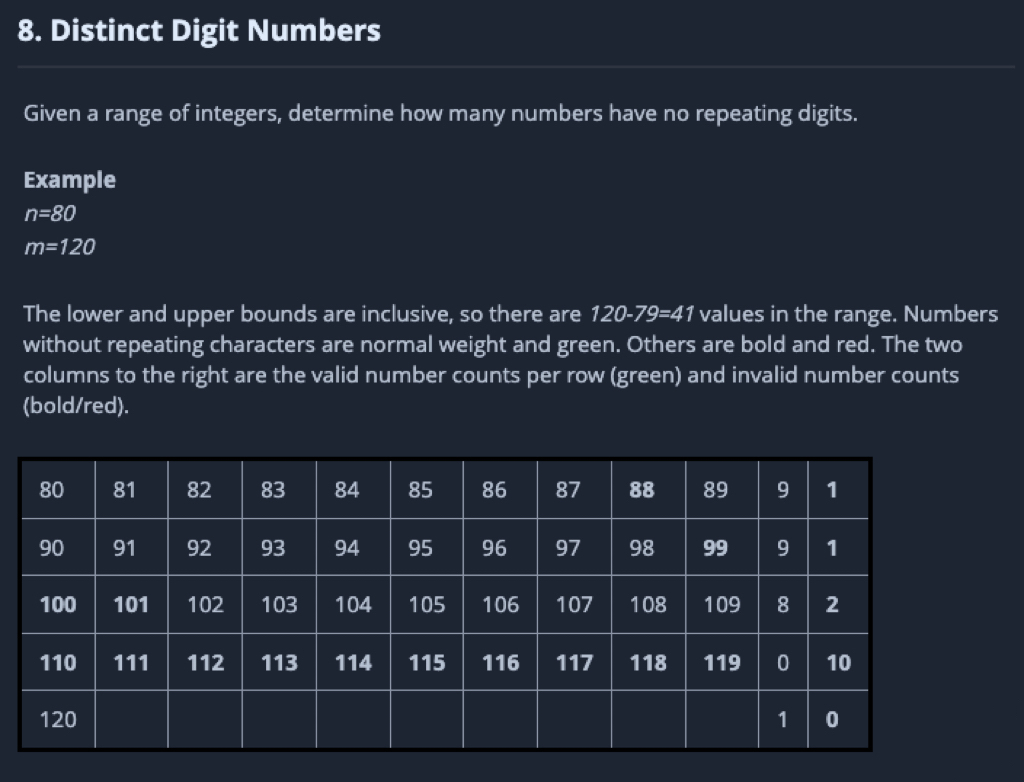
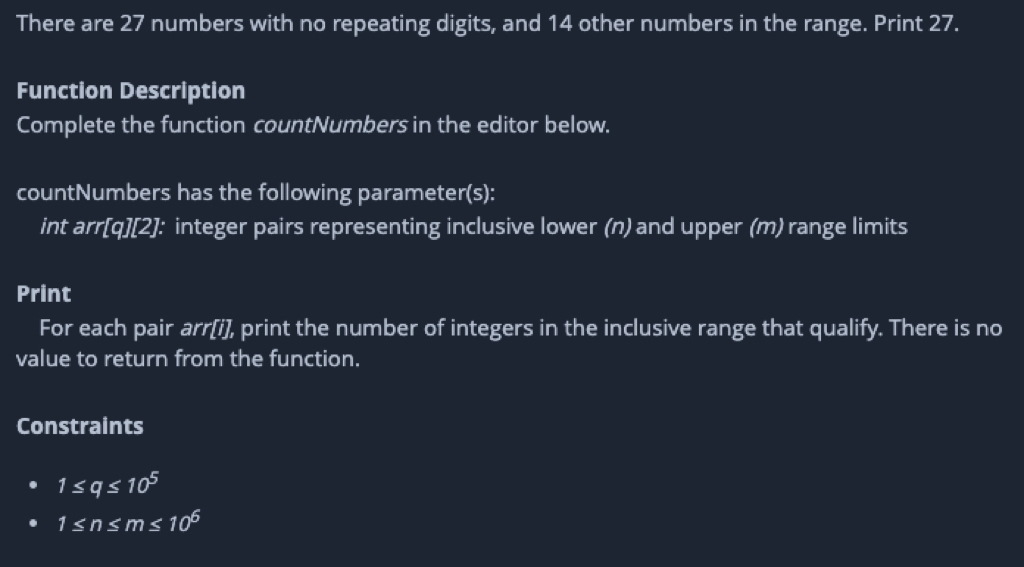
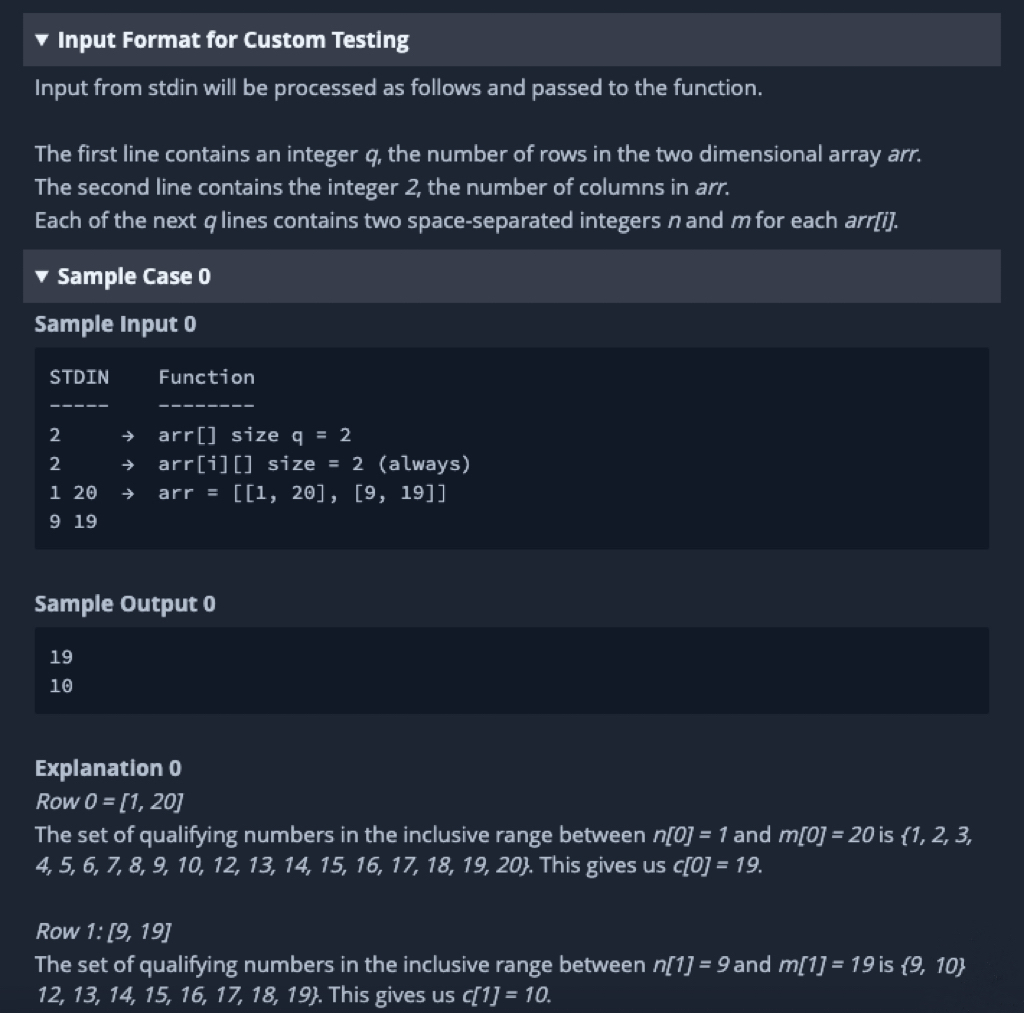
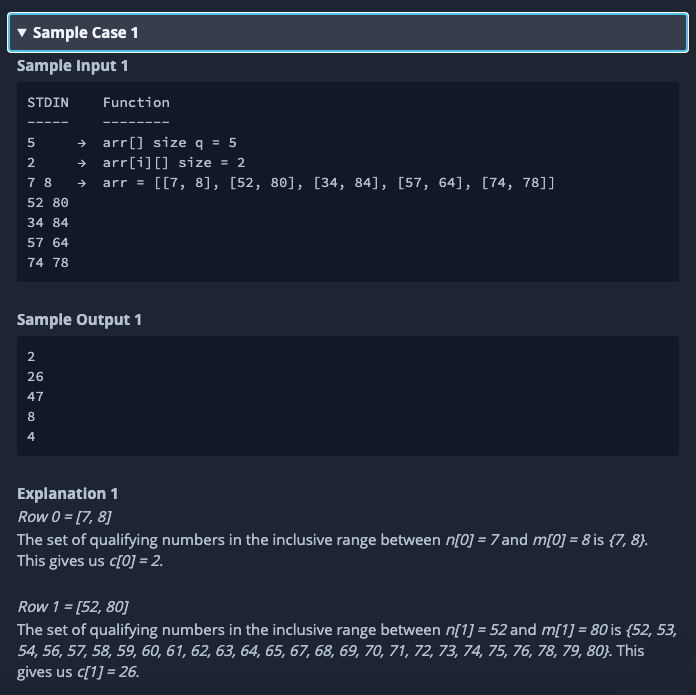
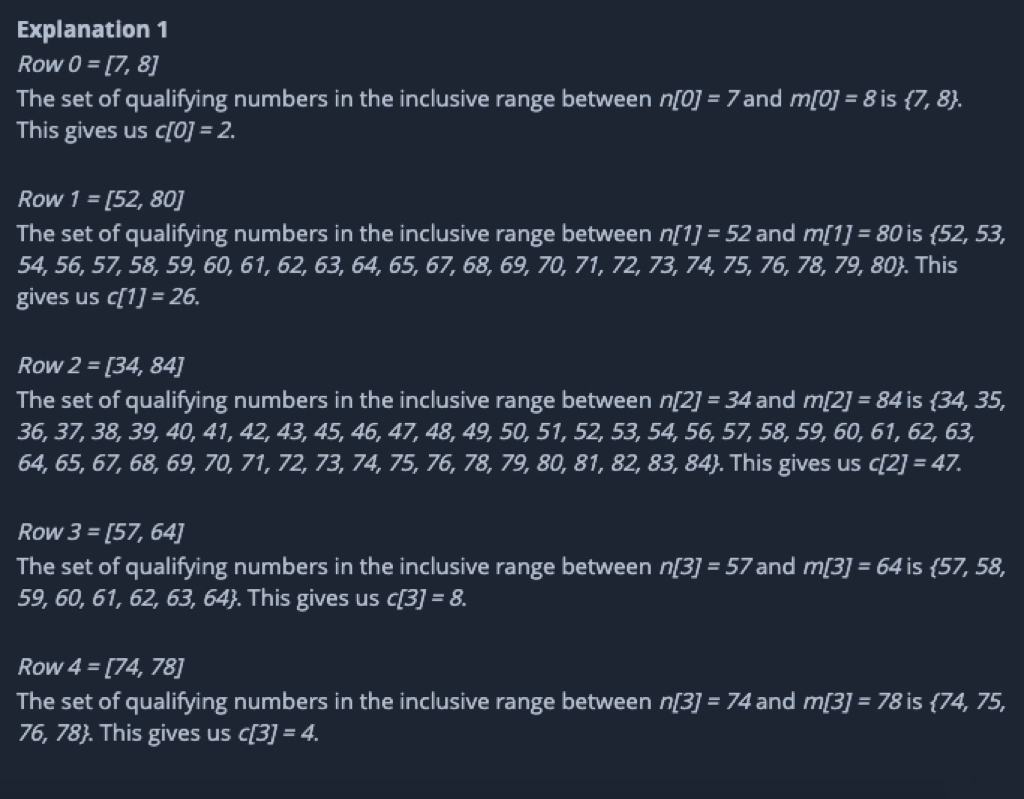
This problem required counting numbers in a range where each number had distinct digits. With constraints q ≤ 1e5 and m ≤ 1e6, iterating each number for every query would have timed out, so preprocessing was necessary.
My thought process:
I preprocessed a valid array by iterating from 1 to 1e6. Each number was converted to a string and checked with len(str(x)) == len(set(str(x))) to determine if digits were distinct. Valid numbers were marked 1, others 0.
A prefix sum array prefix was built, where prefix[i] represented the total count of valid numbers from 1 to i. This allowed computing any interval [n,m] quickly using prefix[m] - prefix[n-1].
For each query, the prefix sum formula was applied to get the result. For the range [80,120], the final answer was 27.
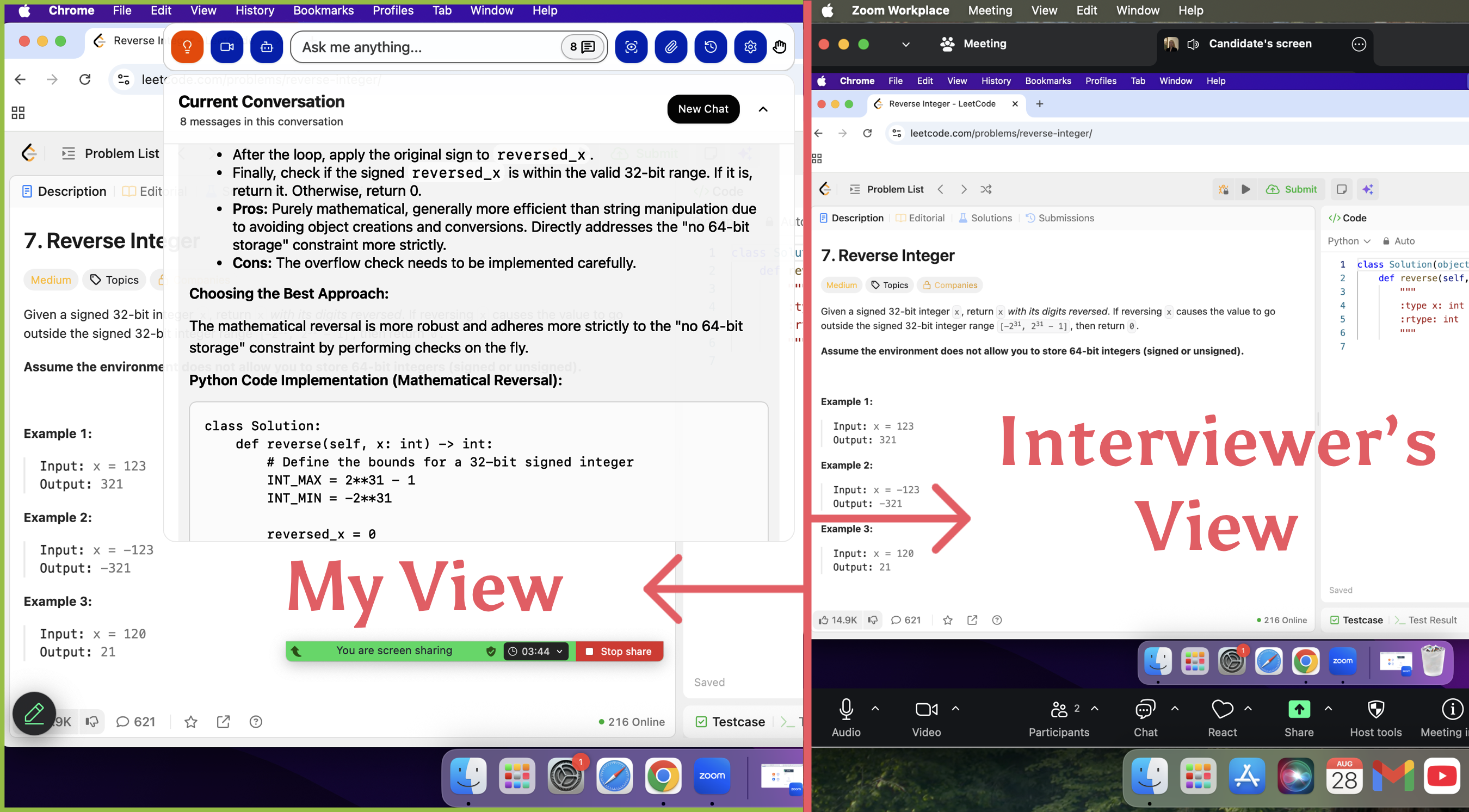
I have to say, Linkjob AI is really easy to use. I used it during the interview after testing its undetectable feature with a friend beforehand. With just a click of the screenshot button, the AI provided detailed solution frameworks and complete code answers for the coding problems on my screen. I’ve successfully passed the test, with the HackerRank platform not detecting me at all.
Question 3: Balanced Numbers
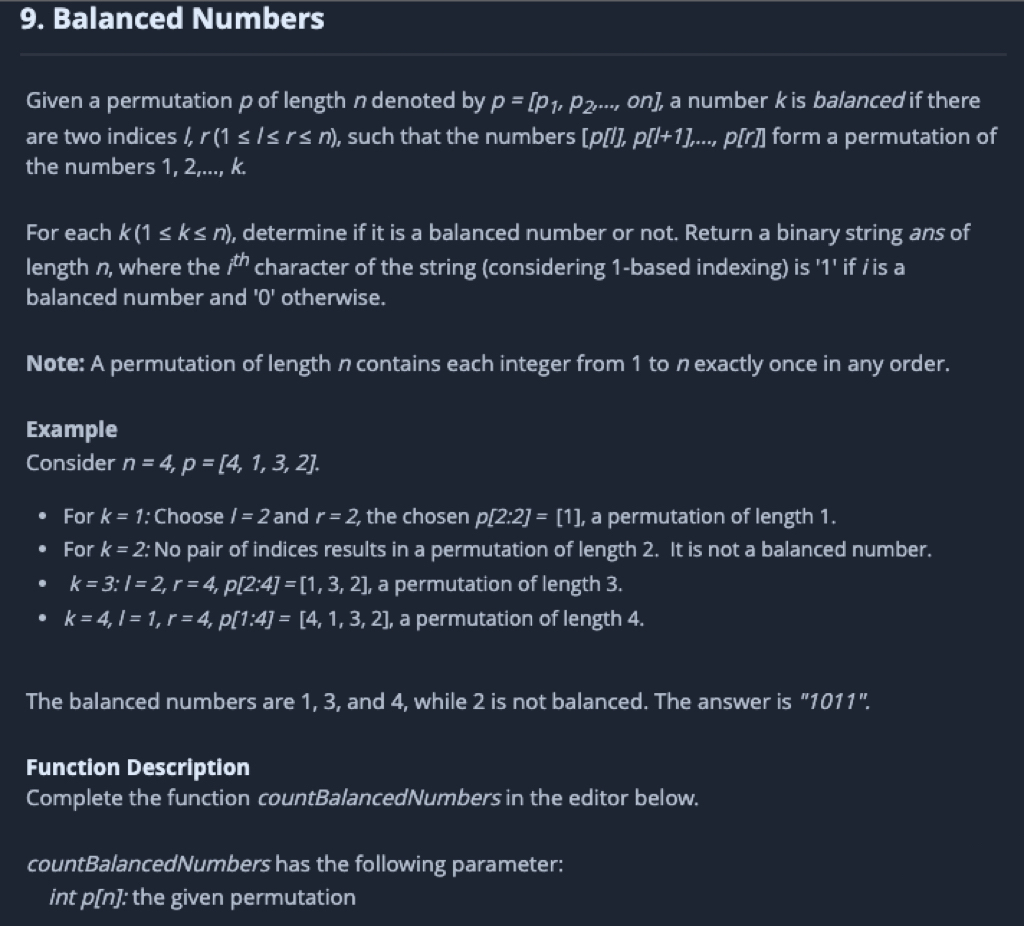
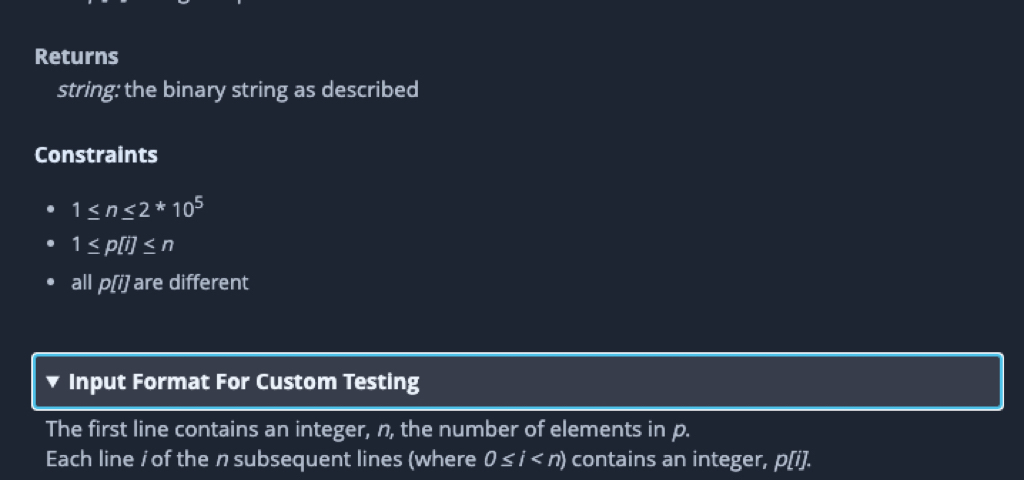
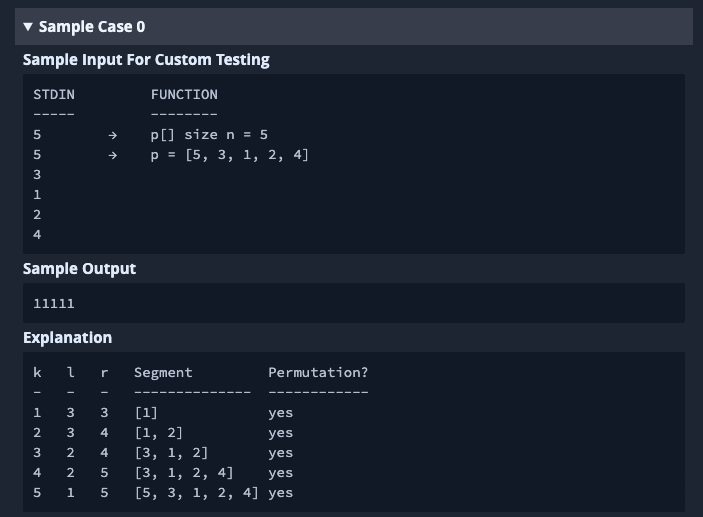
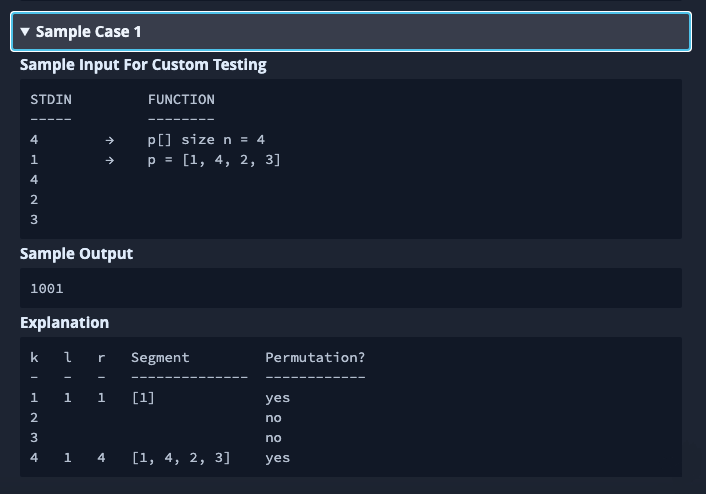
The definition was a bit tricky. A number k was considered balanced if there existed a subarray [l,r] forming a permutation of 1 to k, with length equal to k.
My thought process:
I recorded the position of each number in the permutation p. For example, for p = [4,1,3,2], positions were pos[1]=2, pos[2]=4, pos[3]=3, pos[4]=1.
Then iterated k from 1 to n:
Maintained min_pos and max_pos for positions of numbers from 1 to k.
If max_pos - min_pos + 1 == k, the subarray length matched k and included all numbers from 1 to k. In this case, k was balanced and marked ‘1’; otherwise, ‘0’.
Results for each k were concatenated into a string. For the sample p = [4,1,3,2], the output was 1011.
VMware Hackerrank Interview Experience
Interview Format and Process
VMware’s HackerRank online assessment is the core initial technical screening. The test lasts 90 minutes and includes 3 coding questions, supporting multiple mainstream programming languages (Python, Java, C++, etc.).
The platform provides basic functionalities such as code editing, compiling, running, and sample testing. There are also 6 relatively simple multiple-choice questions. The test must be completed independently within the allotted time.
The system records code submissions, execution time, and pass rates in real time. Final scoring is mainly based on passing all test cases, and some questions also assess time/space complexity optimization.
The overall process does not require real-time interaction with interviewers and focuses more on my independent problem-solving ability and code implementation efficiency.
Types of Coding Questions
The coding questions in VMware HackerRank OA focus on basic algorithm applications and engineering-level coding skills. They do not involve extremely difficult algorithm derivations and lean more toward assessing whether I can solve practical problems with concise and efficient code.
Question Categories: Primarily involve array/string manipulation, sorting and searching, prefix sum/difference arrays, hash table applications, and simple greedy/simulation problems. Occasionally, basic dynamic programming or graph theory may appear, but infrequently. Most questions are scenario-based with clear output requirements, so overanalyzing the problem is unnecessary—the core is translating text into algorithmic logic.
Difficulty Level: Overall, the questions are moderately easy, with a few reaching medium difficulty. Easy questions focus on basic syntax and logic implementation, while medium questions focus on algorithm optimization. There are no extremely hard or unusual questions. Since I have prior basic algorithm training, I found the difficulty threshold quite manageable, though I still need to pay attention to detail during the test.
Concepts Tested
Array and String Operations: Basic operations such as element traversal, filtering, sorting, concatenation, digit manipulation, and handling edge cases.
Sorting and Searching Algorithms: Custom sorting rules, binary search, hash table lookup (mainly testing time complexity optimization, e.g., reducing query complexity from O(n) to O(1) using a hash table).
Prefix Sum and Difference Arrays: Used for quickly calculating range sums and statistics, a frequently tested optimization technique in VMware OA.
Hash Table Applications: Storing element positions, counting frequencies, detecting duplicates, etc., focusing on leveraging the efficient query capabilities of hash tables to solve practical problems.
Basic Logic and Simulation: Reconstructing business scenarios based on problem descriptions and translating textual rules into code logic, testing code readability and rigor.
Time and Space Complexity Optimization: Avoid brute-force enumeration (e.g., O(n²) solutions). Candidates are expected to come up with optimal solutions such as O(n) or O(n log n), while also considering space usage (e.g., reasonable use of arrays, hash tables, or other data structures).
Edge Cases and Exception Handling: Handling 0, negative numbers, very large values (e.g., on the order of 1e6), empty inputs, etc., testing code robustness.
Preparation Tips for VMware Hackerrank
Time Allocation Tips
Time management made all the difference when I took the OA. VMware’s questions aren’t overly challenging, but getting stuck on small details can eat up time quickly. I found a rhythm that worked well for me.
First, I spent a few minutes skimming through all the questions. I noted down each one’s main focus on scratch paper, then picked the one I felt most comfortable with to start. Solving that first helped build my confidence right away, which made tackling the more complex questions later much easier.
Here’s how I managed my time, based on what worked for me:
I made sure to mark key constraints while reading questions. This helped me avoid having to rewrite code later because I already knew what approaches wouldn’t work.
I split my available time, leaving a small buffer at the end. The buffer was useful for checking edge cases that I might have missed earlier.
If I hit a wall with a question, I didn’t waste time. I wrote a basic solution first to get some points, then came back to refine it once I had other questions done.
I practiced with a timer beforehand. This helped me get used to working under pressure, so the real exam felt more familiar.
Effective Study Strategies
I made a few missteps while preparing, but adjusting my approach helped me work more efficiently. Looking back, these are the things that really helped:
I focused my practice on areas VMware tends to emphasize. There was no need to dive into extremely hard topics. I concentrated on common areas like array and string work, hash maps, and prefix sums, these came up most often in the OA. For topics like dynamic programming, I stuck to basic problems, and I didn’t spend much time on graph theory since it rarely came up.
I didn’t skip reviewing the basics. I practiced different ways to do simple tasks, like traversing arrays, to avoid fumbling with syntax during the exam. For hash maps, I made sure I knew when to use different types, like when a set was cleaner than a dictionary.
I didn’t just solve random problems. I picked problems that matched the types VMware uses, and I did a few each day. After every problem, I wrote down a quick summary of my approach. This helped me remember what I’d learned and spot patterns in different questions.
I memorized a few simple code snippets that I knew I might need. Things like counting bits in a number or setting up a prefix sum array, having these down helped me save time and avoid mistakes during the exam.
Recommended Practice Platforms
I tried a few different platforms, but three stood out as the most helpful for the VMware OA. Here’s how I used each one:
I spent a lot of time on HackerRank. Their interview preparation kit had sections that matched the OA’s format closely, especially for arrays and strings. Practicing there helped me get comfortable with how the real exam would look.
LeetCode was great for building problem-solving skills. I focused on medium and easy problems from their popular lists, these had similar patterns to the questions I saw in the OA.
I used GeeksforGeeks for quick refreshes. If I forgot how to do something, like work with prefix sums, I could find a clear example quickly without reading through long explanations.
I also kept track of my mistakes. I grouped them by type (like missing edge cases or not optimizing enough) and reviewed them a few days before the exam. This helped me avoid making the same errors again.
FAQ
Can I use multiple programming languages or switch between them?
The platform allows multiple languages, but I chose the one I was most comfortable with to save time. Switching languages mid-test can waste precious minutes because of differences in syntax and built-in functions. I recommend sticking to a single language for the entire test unless you are equally fluent in more than one.
Are all test cases visible during the VMware HackerRank test?
No, not all test cases are visible. Only sample test cases are provided, and the platform automatically checks your code against hidden cases after submission.
See Also
How to Cheat HackerRank Tests With AI: My 2026 Update
How I Passed 2026 Microsoft HackerRank Test on My First Try
How I Passed 2026 JP Morgan HackerRank Assessment: Q&A
2026 Update: My Stripe HackerRank Online Assessment Questions
Questions I Encountered in 2026 Goldman Sachs HackerRank Test
© Copyright 2025 Linkjob.ai - All Rights Reserved.