How I Realized Cluely Wasn't as Safe as I Thought and Switched to a Better Alternative


Like many job seekers, I started using Cluely to gain an edge in interviews. For a while, it seemed like a useful tool. But the more I used it, the more I found myself questioning whether the convenience was worth the trade-offs.
Around the same time, I started seeing other users share similar concerns online. Then the Cluely data breach happened. That was the moment I decided to take a much closer look at the platform and whether it was really a risk worth taking.
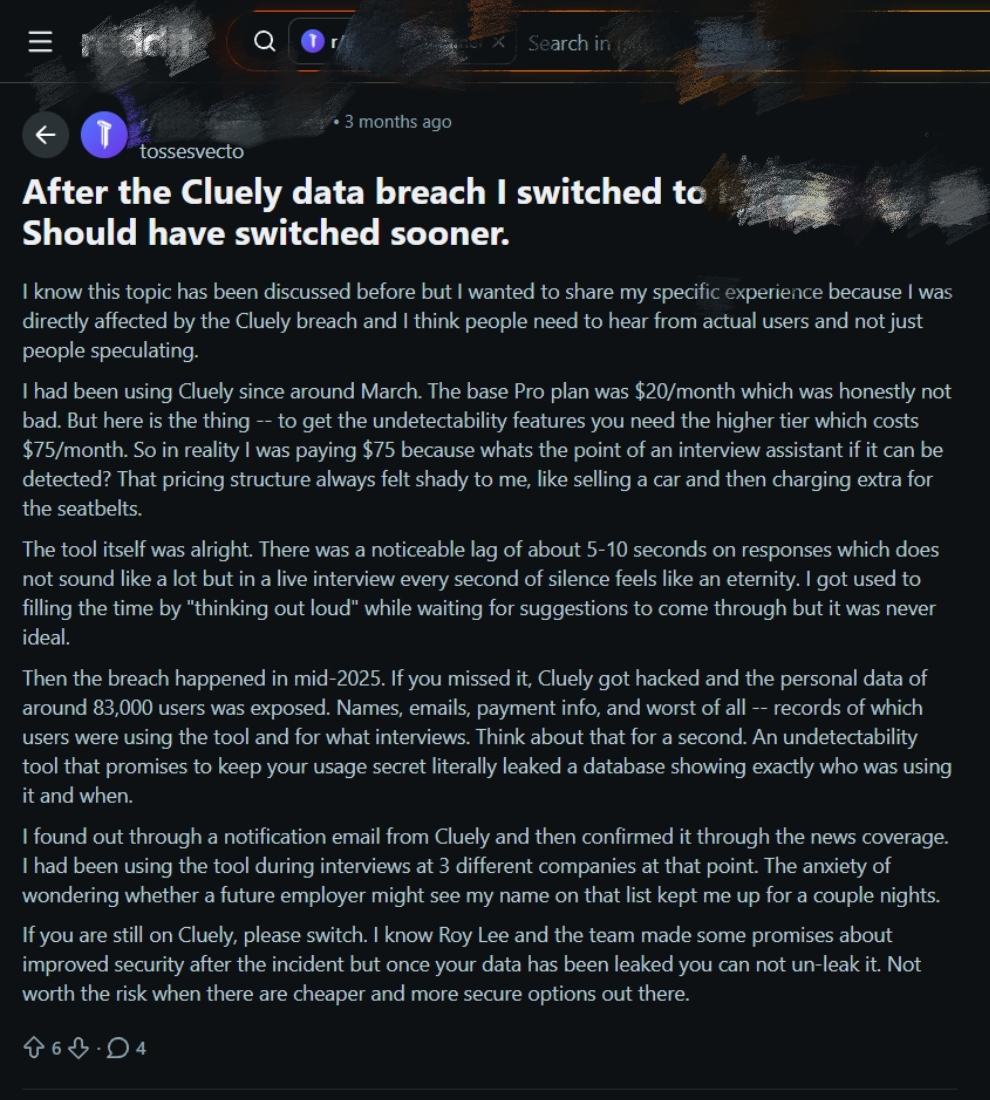
One post I came across summed up many of the concerns I had already been having. It also pushed me to start exploring alternatives—a search that eventually led me to Linkjob AI, a Cluely AI alternative that actually work.
Key Takeaways
Understanding Cluely risk requires looking beyond features and pricing to consider reliability, privacy, and long-term trust.
Lag, freezing, and delayed responses can create real problems during coding interviews and other high-pressure interview situations.
User feedback and online discussions played a major role in helping me evaluate the potential risks of using Cluely.
The best AI interview tools aren't necessarily the ones with the most features—they're the ones you can depend on when it matters most.
My search for a safer Cluely alternative ultimately led me to Linkjob AI, which offered a smoother experience for technical and coding interviews.
What Is Cluely?
I first came across Cluely while preparing for technical interviews. At the time, it seemed to be everywhere. Social media posts, YouTube videos, and online discussions all painted the same picture: an AI assistant that could quietly help you during live interviews.
Why Cluely Looked So Appealing at First
I'll admit it—the pitch was hard to ignore.
Cluely promised real-time interview assistance, support for resumes and job descriptions, automated follow-ups, and, most importantly, an "invisible" interface that supposedly couldn't be detected during screen sharing or video calls.
For someone juggling coding interviews, system design rounds, and behavioral questions, that sounded incredibly convenient. Instead of trying to memorize every possible answer, I could have AI support available whenever I needed it.
At first glance, it felt like the kind of tool that could remove a lot of interview stress.
The First Red Flags I Noticed
The reality was a little different.
The first issue I noticed was Cluely's high latency. Responses often took several seconds to appear. That may not sound like much, but during a live interview, even a short delay feels much longer than it actually is.
Then I learned that some of Cluely's most important stealth features weren't included in the standard plan. To get the full "undetectable" experience, I would have needed to pay significantly more. That immediately raised a question: if avoiding detection is the product's biggest selling point, why is it locked behind an expensive upgrade?
Around the same time, I started coming across posts from other users who were raising similar concerns. Some complained about performance. Others questioned the pricing. A few were already discussing privacy and security issues.
Looking back, those were the warning signs I should have paid more attention to.
Understanding Cluely Risk
When I first started using Cluely, my biggest concerns were performance and pricing. The lag was frustrating, and the expensive paywall around stealth features didn't sit right with me. But the more I researched the company, the more I realized those weren't the biggest risks.
Privacy and Security Concerns
At first, I wasn't overly concerned about security. Like most people, I was focused on whether the tool worked and whether it could help me perform better in interviews.
That changed when I started seeing posts from users who claimed they had been affected by Cluely's reported data breach. One post in particular stuck with me because it framed the issue in a way I hadn't considered before.
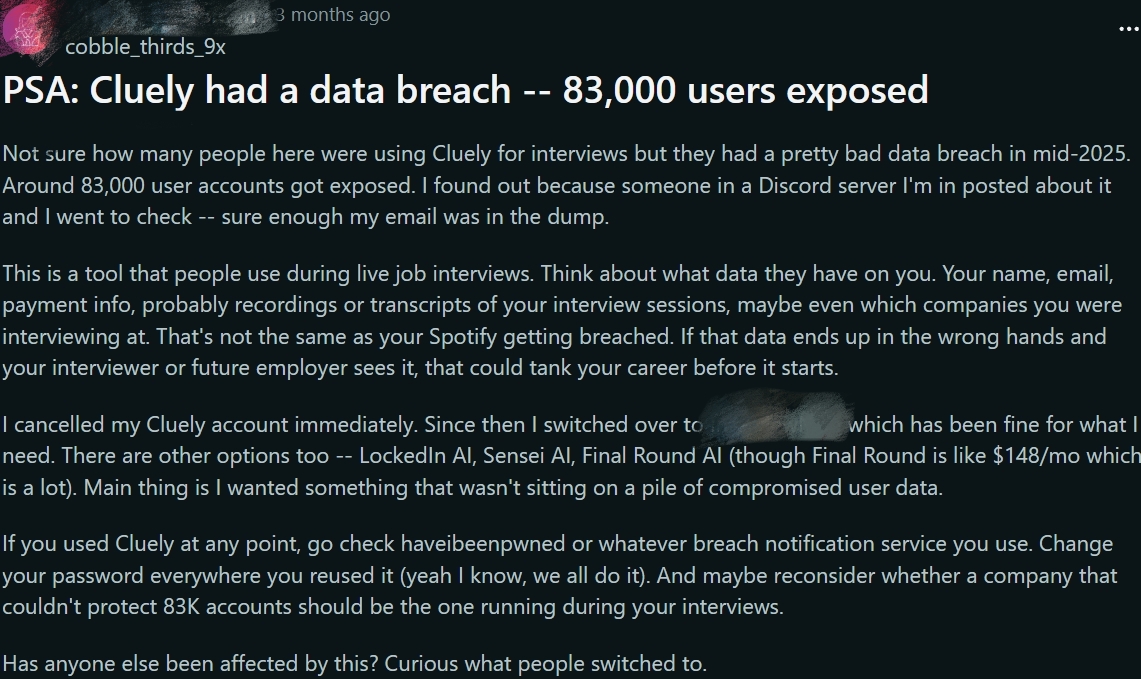
The author pointed out that interview tools often store far more sensitive information than people realize. Beyond names and email addresses, users may upload resumes, job descriptions, interview notes, and other career-related information. Whether every claim in the post was accurate or not, it made me stop and think about how much personal data I was trusting a single platform to handle.
Up until that point, I had mostly viewed Cluely's problems as annoyances—slow responses, occasional glitches, and expensive pricing. After reading discussions like this, I started wondering whether the bigger risk was what could happen if that information was ever exposed.
What Other Users Were Worried About
As I dug deeper, I noticed that I wasn't the only one feeling uneasy.
Some users complained about performance issues and expensive pricing. Others questioned whether a tool marketed around being "undetectable" was creating unnecessary risks for candidates. I also found discussions about contradictions between Cluely's marketing and how the company described acceptable use in its own policies.
Then there was the issue of trust. Around the same period, controversy emerged after Roy Lee admitted that previously shared ARR figures were not accurate. Whether that mattered to individual users or not, it made me think more carefully about the company behind the product.
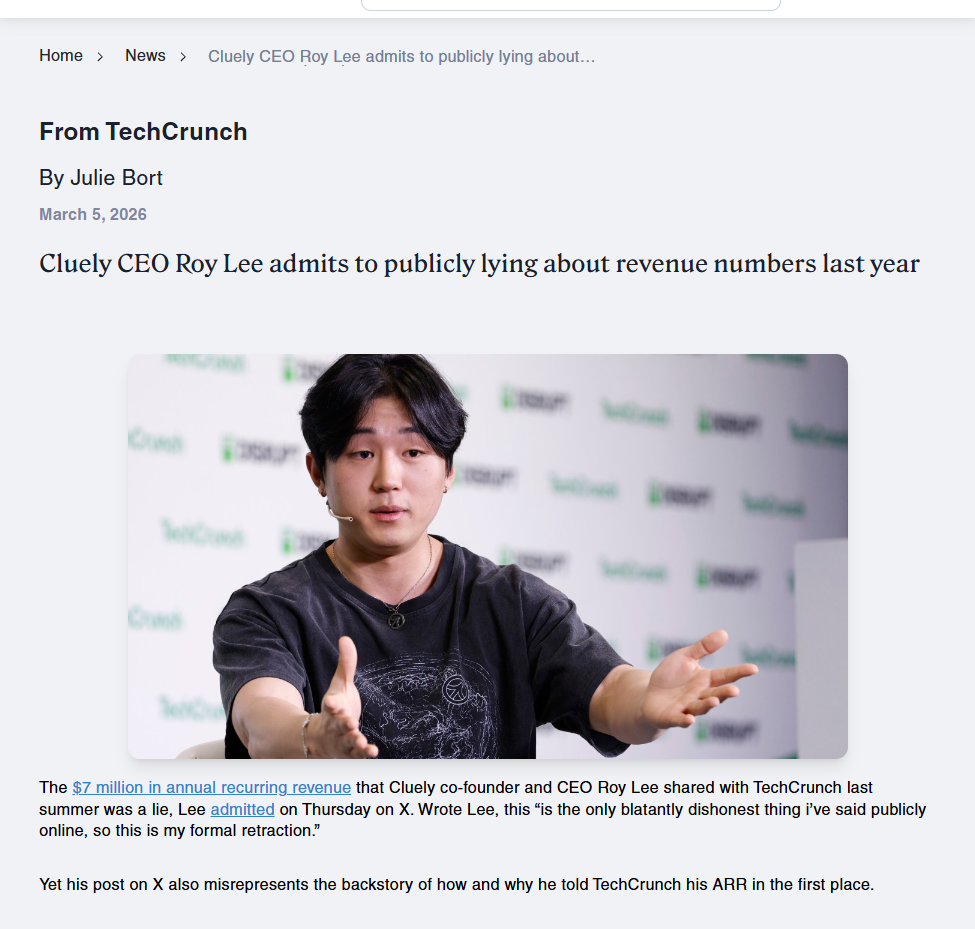
By this point, I wasn't evaluating Cluely based solely on features anymore. I was evaluating whether I trusted the platform itself—and that turned out to be a much harder question to answer.
Cluely Risk in Interviews
Lag, Freezing, and White Screen Problems
The first risk I noticed wasn't security—it was reliability.
In a live interview, timing matters. A delayed answer can feel awkward, and a frozen screen can completely break your flow. While using Cluely, I occasionally ran into lag, delayed responses, and moments where the tool simply didn't behave as expected.
At first, I assumed it was just me. Then I started seeing other users report similar issues.
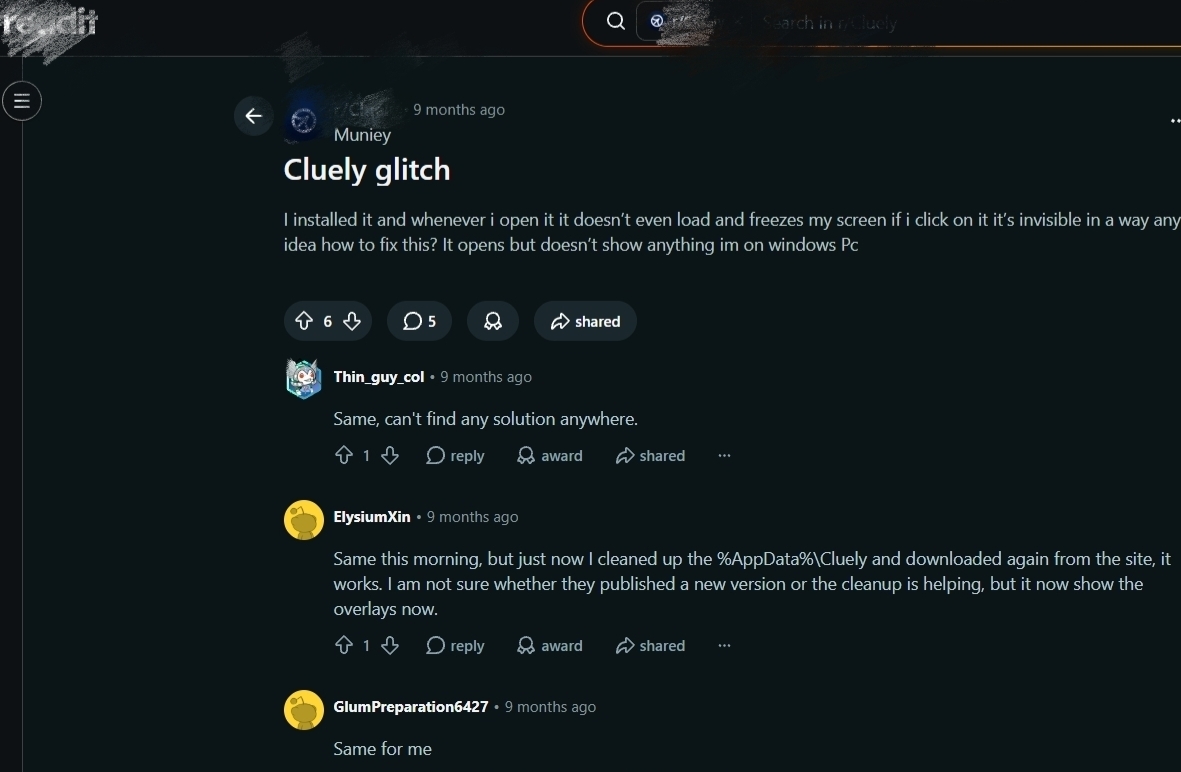
Reading those posts was strangely reassuring. It confirmed that the problems I was experiencing weren't isolated incidents. More importantly, it made me realize how risky it is to depend on a tool that might fail during a high-stakes interview.
When you're already nervous about solving coding problems or explaining your experience, the last thing you want is to wonder whether your AI assistant is about to crash.
Detection Concerns During Interviews
The second concern was detection.
Cluely heavily promotes its "undetectable" experience, but I eventually realized there was no practical way for me to verify those claims. As AI interview tools become more common, employers are becoming more aware of them as well.
Even if the actual detection risk is low, the uncertainty itself can be distracting. Instead of focusing entirely on the interview, I found myself thinking about whether the tool was working correctly, whether it might be visible, or whether something unusual would draw attention.
That wasn't the kind of pressure I wanted during an interview.
Is Cluely Worth the Price?
The more I used Cluely, the harder it became to justify the cost.
The basic plan looked affordable at first, but many of the features users care most about were tied to higher-priced tiers. Combined with the lag, reliability concerns, and growing questions about security, I started looking at alternatives.
Since most of my interviews were software engineering and coding-focused, I wanted something designed specifically for technical interviews rather than general meetings. That's when I came across Linkjob AI's Coding Interview Assistant.
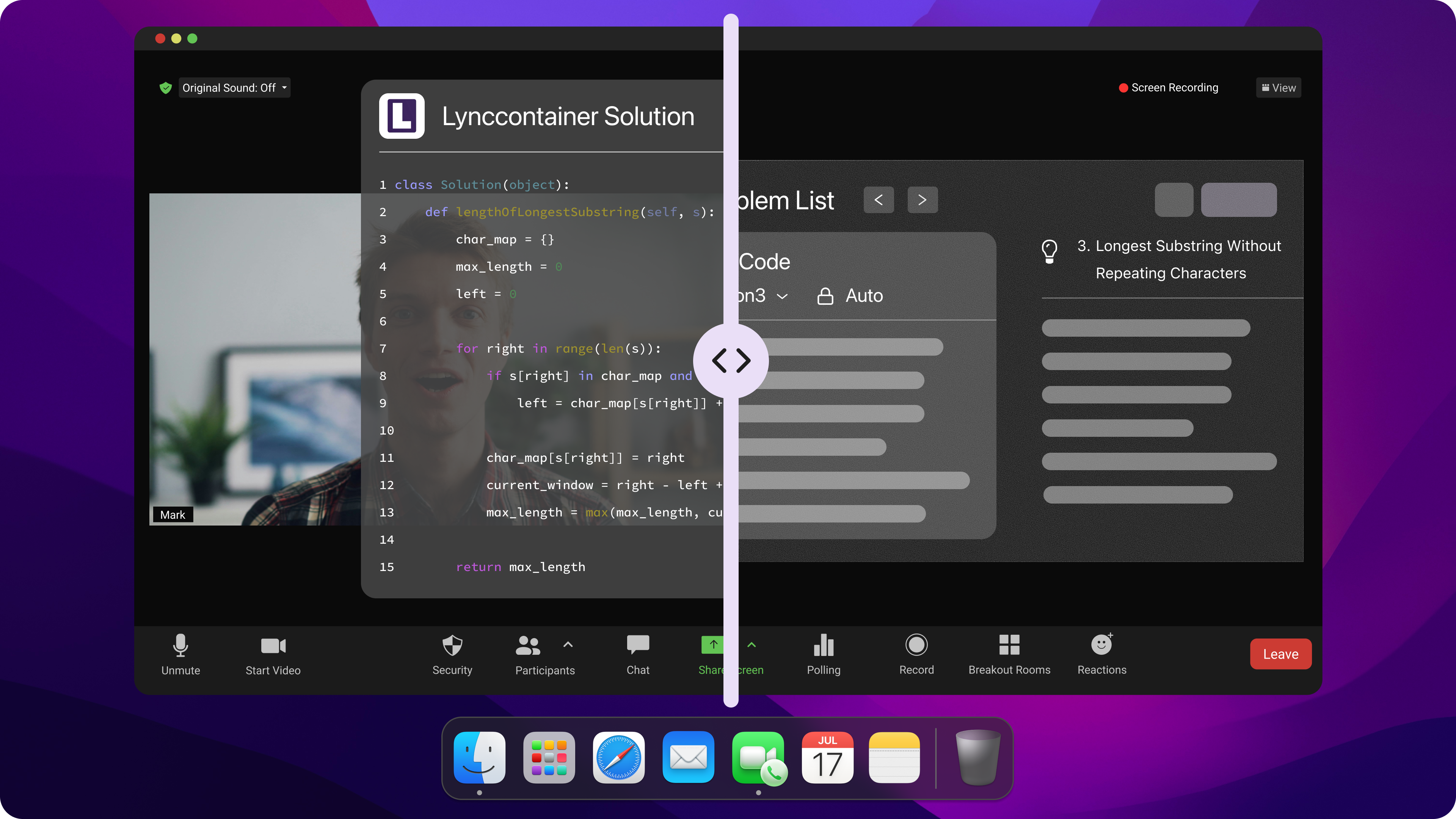
Real-time AI Coding Interview Assistant
What immediately stood out was the focus on coding interviews. Instead of acting as a generic meeting copilot, it was built around technical questions, coding challenges, system design discussions, and real interview workflows. More importantly, the responses felt noticeably faster in my testing, which removed a lot of the stress I had experienced with Cluely.
At that point, I wasn't looking for more features. I was looking for a tool I could actually rely on.
Why I Decided to Leave Cluely
By this point, I had already seen enough warning signs to start questioning whether Cluely was the right tool for me.
The lag and reliability issues were frustrating. The discussions around privacy and security made me uncomfortable. Then I started seeing more users share similar concerns online. Individually, none of these issues would have been enough to make me leave. Together, they painted a picture that was hard to ignore.
What Happened During the Cluely Data Breach
The turning point was the reported data breach.
Up until then, I had mostly viewed Cluely's problems as inconveniences. A slow response is annoying. A frozen screen is frustrating. But a potential security incident is different.
What caught my attention wasn't just the number of accounts reportedly affected. It was the type of information involved. Interview tools often contain resumes, job descriptions, personal notes, and other career-related information that users wouldn't want exposed.
That was the moment I started asking whether the convenience was worth the risk.
Looking at User Reviews and Feedback
After hearing about the reported breach, I wanted to know whether I was overreacting. So, I started browsing online discussions to see how real users were reacting to Cluely.
One post stood out because it came from someone who claimed they had been directly affected. Their concern wasn't just a compromised account—it was the possibility that interview-related information could be exposed.
What stuck with me was their point that an interview assistant isn't like a music app or a shopping account. Users often upload resumes, job descriptions, interview notes, and other career-related information. If that data is exposed, the consequences can feel much more personal.
The post also echoed some of the concerns I was already having about reliability and trust. By that point, I wasn't just evaluating Cluely's features anymore. I was evaluating whether I felt comfortable relying on the platform at all.
That realization ultimately pushed me to start looking for alternatives.
Switching to a Safer AI Interview Tool
What I Wanted in an Alternative
By the time I decided to leave Cluely, I had a much clearer idea of what I was looking for.
I didn't need more features. I needed fewer problems.
After dealing with lag, reliability concerns, and ongoing questions about privacy, my requirements were surprisingly simple:
Fast response times during interviews.
Stable performance under pressure.
Transparent pricing without essential features locked behind expensive upgrades.
Strong privacy and security practices.
Support for technical interviews, not just general meetings.
Most importantly, I wanted a tool that would let me focus on the interview itself instead of worrying about whether the software would fail at the worst possible moment.
Why I Chose Linkjob AI
After testing several options, I eventually settled on Linkjob AI.
What initially caught my attention was its focus on technical interviews. Unlike general-purpose meeting assistants, Linkjob AI includes a dedicated Coding Interview Assistant designed for software engineering candidates.
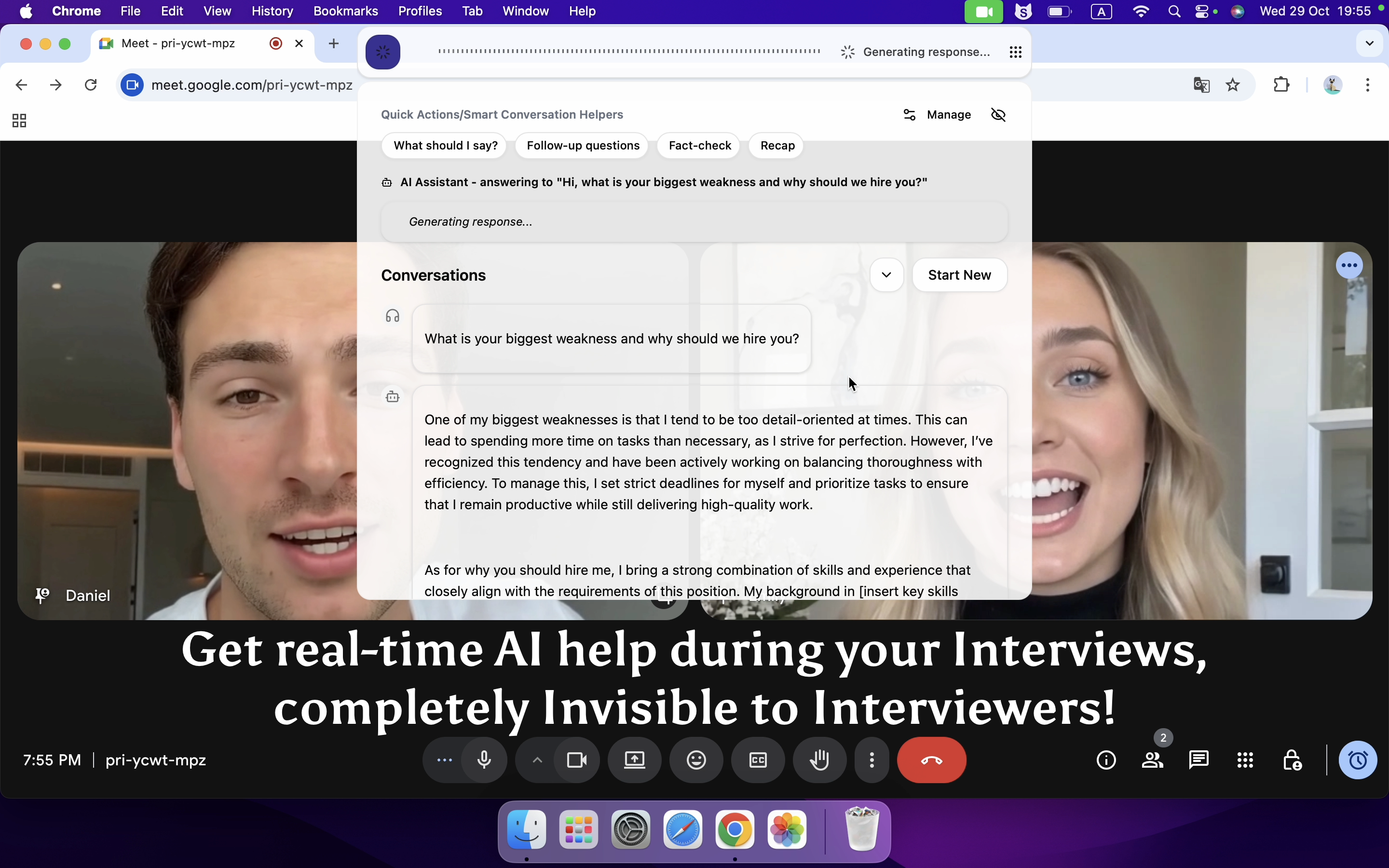
Your Undetectable AI Interview Assistant
The platform supports coding interviews, system design discussions, algorithm questions, and behavioral rounds. More importantly, the responses felt significantly faster than what I had experienced with Cluely.
Another difference was pricing. Features related to stealth and interview assistance were included in the standard plans rather than being locked behind a premium tier, which made the overall value proposition easier to justify.
My Experience After Switching
I've been using Linkjob AI for several months now, and the experience has been noticeably smoother.
The biggest improvement was reliability. I no longer found myself waiting for suggestions to load or wondering whether the tool would freeze during an important conversation.
Because most of my interviews were coding-focused, I also found the technical guidance more useful. The Coding Interview Assistant was better aligned with the kinds of questions I was actually being asked, whether that involved algorithms, debugging, or system design discussions.
Most importantly, I stopped thinking about the tool itself.
Instead of worrying about lag, crashes, or security headlines, I could focus on preparing for interviews and improving my performance. That's ultimately what I wanted from an AI interview assistant in the first place.
Final Verdict: Is Cluely Still Worth the Risk?
Looking back, I don't think any single issue made me leave Cluely.
It was the combination of everything: the performance problems, the growing concerns around privacy and security, the uncertainty around detection, and the feeling that I was relying on a tool I didn't fully trust.
Some users may decide those trade-offs are acceptable. For me, they weren't.
Switching to Linkjob AI didn't magically guarantee interview success, but it removed many of the concerns that had been distracting me. The experience felt more stable, more focused on technical interviews, and ultimately more aligned with what I needed as a software engineering candidate.
At the end of the day, every AI interview tool involves trade-offs. The important question isn't which tool has the longest feature list—it's which one you feel comfortable trusting during a high-stakes interview.
FAQ
How did I start questioning Cluely?
It wasn't one single issue. First, I noticed occasional lag and reliability problems during interview practice. Then I came across online discussions about privacy concerns and a reported data breach. The combination of performance issues, security concerns, and trust questions made me reevaluate whether Cluely was worth using.
Is Cluely safe for interview preparation?
That depends on your risk tolerance. Some users may be comfortable using it, but I personally became concerned about reliability, privacy, and the potential consequences if interview-related information were ever exposed. Those concerns ultimately led me to look for alternatives.
What was the biggest Cluely risk for me?
Surprisingly, it wasn't the lag or occasional glitches. It was the realization that interview tools often contain sensitive information such as resumes, job descriptions, and interview notes. Once I started thinking about the potential impact of that data being exposed, I viewed the risks very differently.
Why did I switch to Linkjob AI?
I wanted an AI interview assistant that felt more reliable during technical interviews. After testing several options, Linkjob AI stood out because of its Coding Interview Assistant, faster response times, and focus on software engineering interviews rather than general meeting assistance.
Is Linkjob AI better for coding interviews?
In my experience, yes. Most of my interviews involved coding challenges, algorithms, and system design discussions. I found Linkjob AI's Coding Interview Assistant more relevant to those situations, and the overall experience felt smoother than what I had experienced previously.
See Also
What I did when Cluely stopped working for me in 2026
Linkjob AI vs Cluely The Ultimate Showdown of Stealthy Interview Assistants
Top AI Tools for Getting Invisible Help in job interviews: My Honest Picks for 2026
My 2026 Picks: The 5 Best Real-Time AI Interview Assistants
6 Best AI Coding Interview Assistants in 2026: Review & Comparison
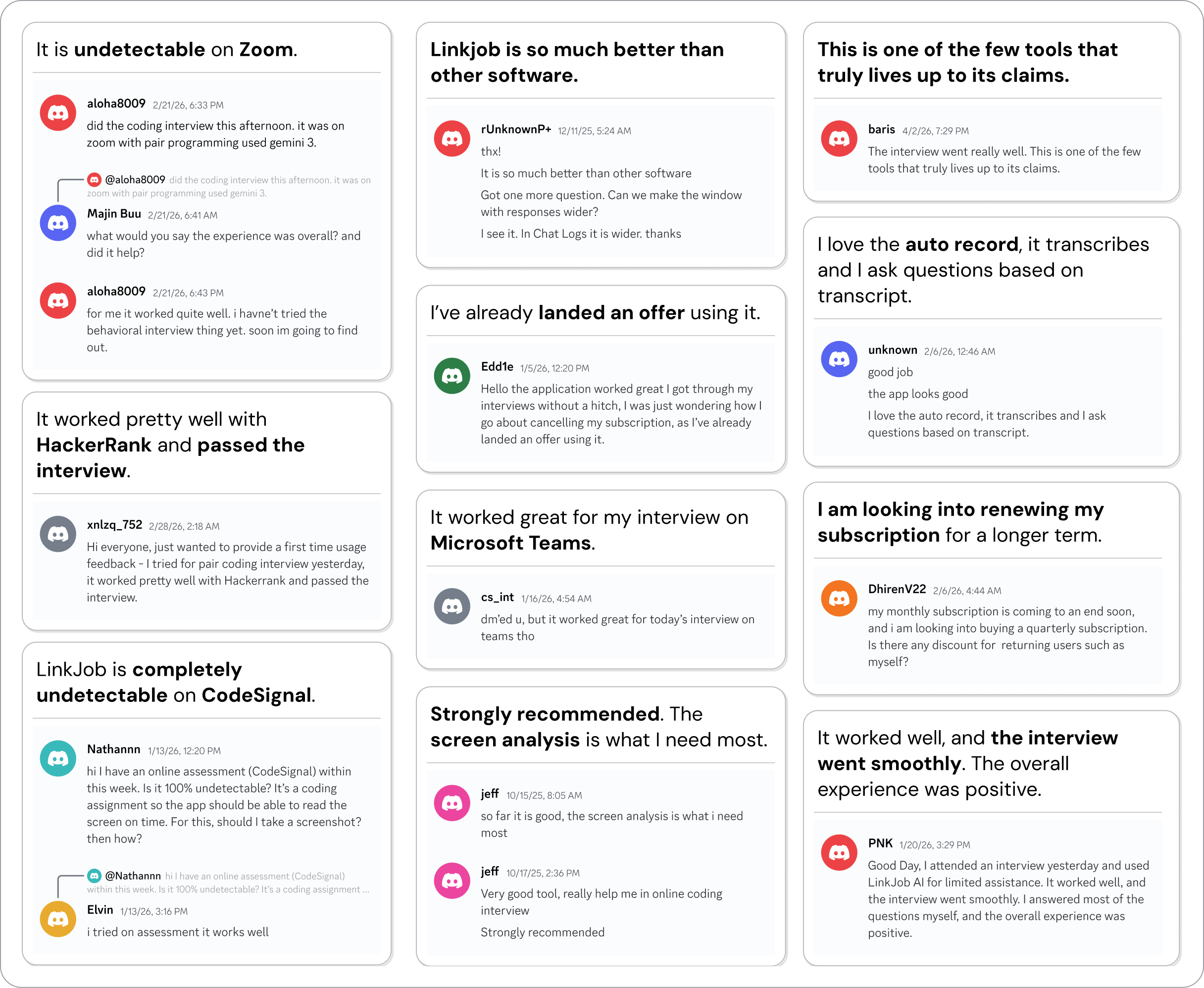
Why People Choose Linkjob AI
Smoother interviews, coding challenges cleared, and job offers landed. See how users describe their experience with Linkjob AI—in their own words.

© Copyright 2026 Linkjob AI - All Rights Reserved.