CTRLpotato vs Cluely: Which AI Interview Tool Wins in 2026?

As I said in my CTRLpotato review, sometimes a good interview assistant can help you with the whole interview process, but on the other hand, tools that aren't completely invisible – especially the ones I mentioned in my Cluely review – can ruin everything.
This post is similar to my previous article comparing Parakeet AI vs Cluely. Today I'm going to look at the various aspects of CTRLpotato versus Cluely. I still used the same comparison method, which is to do some benchmark tests on two laptops. In this in-depth analysis, I'll take a close look at their public reputation, latency bottlenecks, stealth risks, and pricing.
I'll also talk about how I got fed up with the voice latency and ended up switching to a faster option. Check out this 1-minute YouTube demo of the real-time AI interview co-pilot, or click the link below to download Linkjob AI and try it out for yourself.
CTRLpotato vs Cluely: Quick Answer at a Glance
Just a quick reminder for anyone who might have come across this on the web – here's a brief overview.
CTRLpotato sees itself as an AI interview tool that's all about helping you prepare for exams. You need two devices to run it, and it helps people build their own personalised library of answers, get structured feedback and access stuff to help them prepare for live interviews.
Cluely, on the other hand, is more of a real-time AI interview assistant. It's designed to provide support during live interviews, offering quick and relevant prompts while minimising distractions. The starting price is good, but the stealth mode is a bit pricey.
Feature | CTRLpotato | Cluely |
Real-Time Interview Support | Yes (using two devices) | Yes (undetectable mode only available after paying $149.99/mon) |
Pre-Interview Preparation | Strong | Limited |
Personalized Answer Bank | Yes | No |
Mock Interview Simulator | Yes | No |
Resume Builder | Yes | No |
Live Interview UX | Okay | Clean |
Behavioral Interview Support | Strong | Variable |
Technical Interview Support | Moderate(may look suspicious) | Moderate (only capable of that when paying $149.99/mon) |
Non-Tech Role Coverage | Broad | Limited |
Best For | Structured prep + live support | Sales calls, live meetings & real-time coaching |
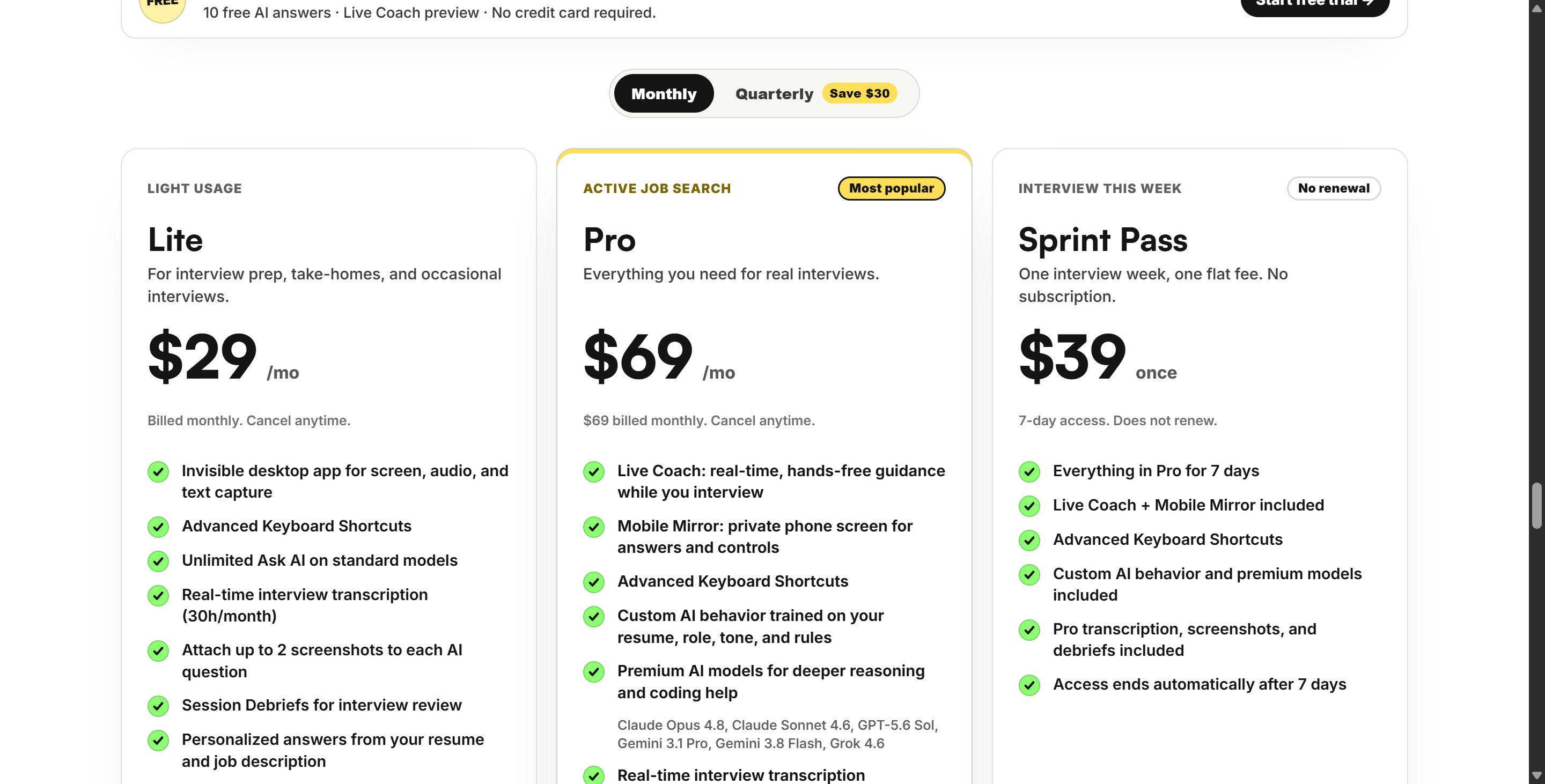
Pricing | Pricing starts at $29/month (Lite) and $69/month (Pro) with a free tier | Starts at $20/month (Pro) up to $149.99/month (with undetectable mode) |
Public Reputation Survey: CTRLpotato vs Cluely
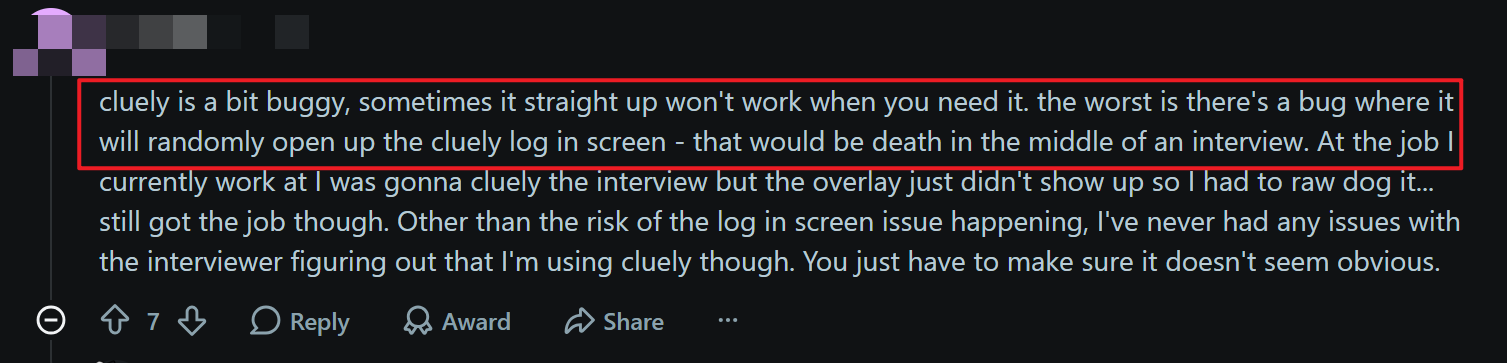
Before running live pair-programming sessions or system design benchmarks with either assistant, I spent weeks investigating candidate sentiment across public developer forums, Reddit threads (such as r/leetcode and r/cscareerquestions), Trustpilot reviews, and engineering blogs like Shadecoder. Analyzing feedback from verified job seekers for CTRLpotato vs Cluely revealed clear patterns regarding subscription costs, audio transcription delays, screen-share visibility risks, and setup complexities.
CTRLpotato Community Sentiment and Feedback
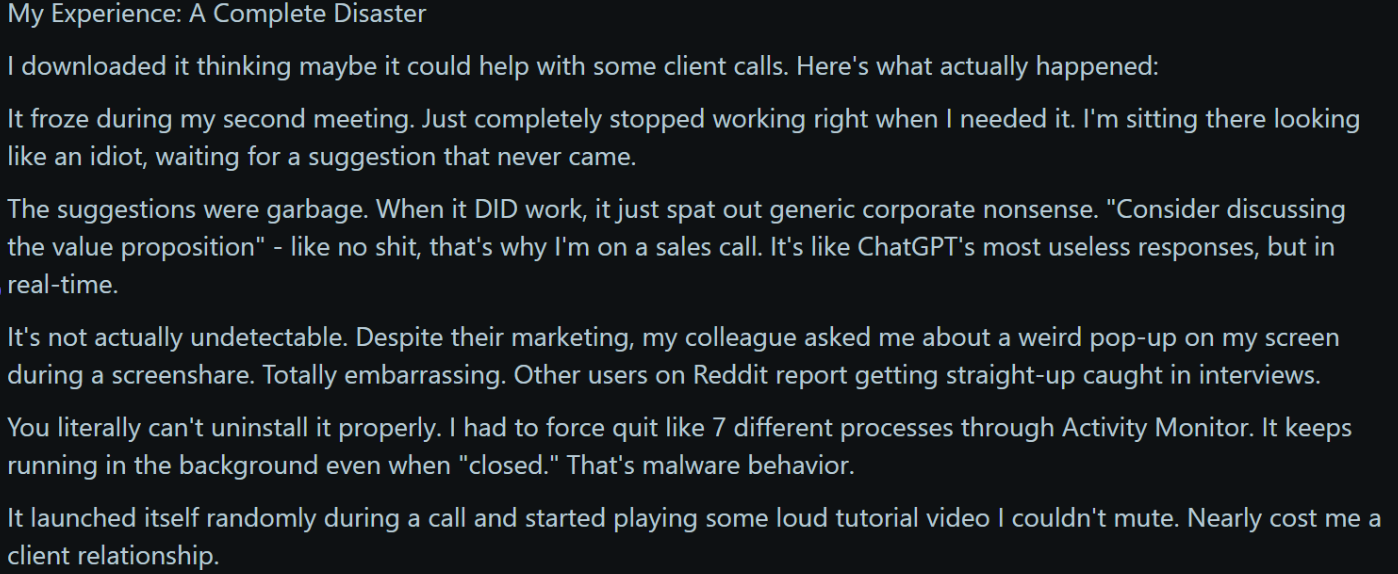
CTRLpotato positions itself as an interview assistant built around multi-device integration and phone mirroring. While it appeals to candidates seeking secondary-screen privacy, candidate forums and third-party teardowns highlight several operational friction points:
Heavy Manual Setup Requirements: Users report having to manually upload or paste resumes and job descriptions before every call, creating friction during sudden interview invites.
Single-Device Execution Failures: Multiple candidate reviews note that when running CTRLpotato on a single laptop, the app often gets stuck at "Waiting for a question" or locks up screen focus entirely.
Mediocre Technical Answer Depth: Developers on r/leetcode observe that CTRLpotato's responses often produce generic, conversational explanations rather than optimized, production-ready code blocks.
Cluely User Reception and Reputation
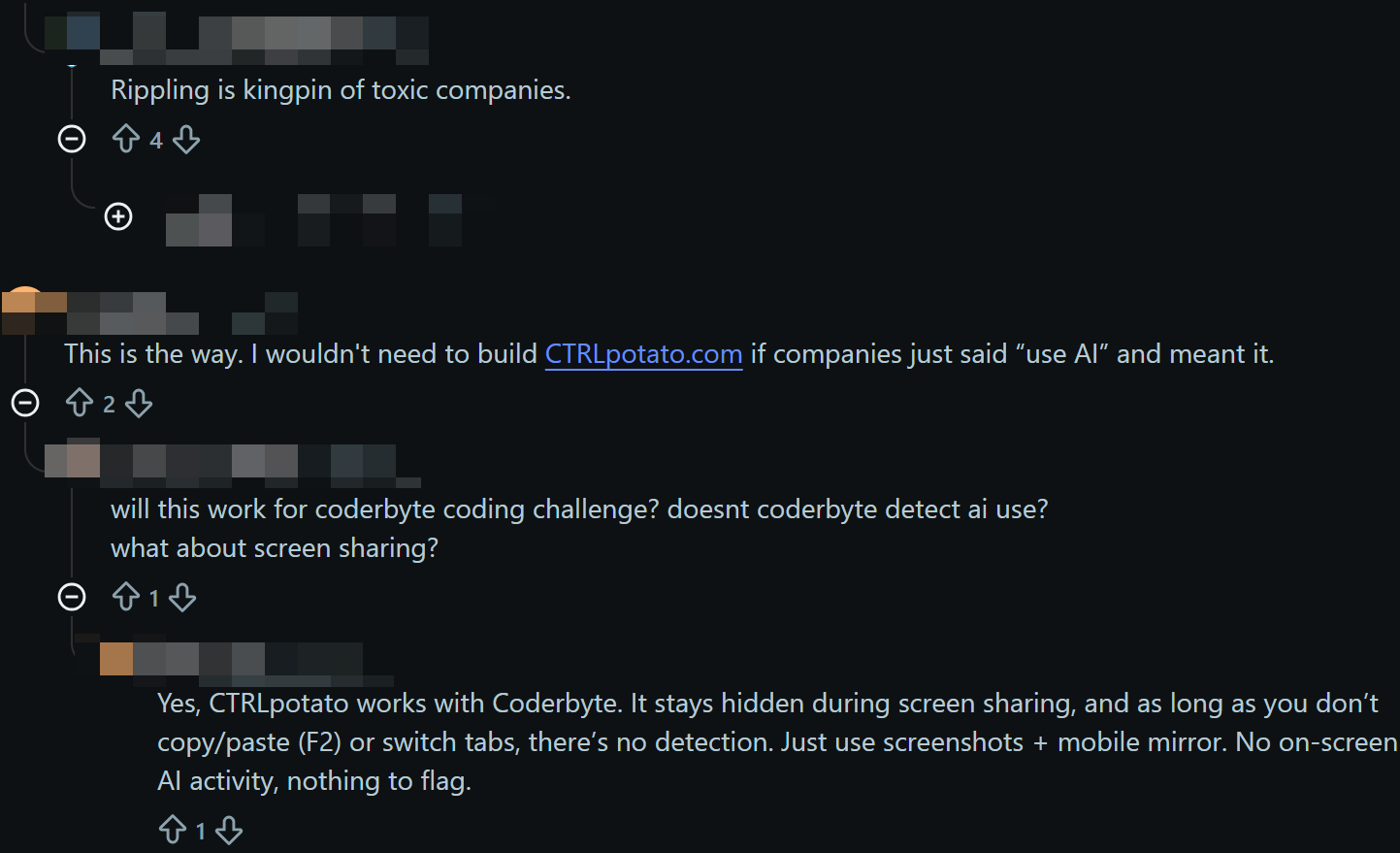
Cluely originated as a real-time sales meeting copilot before pivoting toward interview assistance. While its clean interface attracts initial interest, community feedback across Reddit and developer blogs reveals notable liabilities:
High Stealth Tier Pricing: While Cluely offers a basic Pro plan starting at $19.99 to $20 per month, unlocking its "Undetectability" package pushes the price up to an astronomical $149.99 per month.
Process Detection Risks: Security researchers note that Cluely does not obfuscate its background application binaries, leaving visible processes in Activity Monitor and Task Manager that proctoring tools scan for.
Lack of Multi-Model Customization: Users point out that Cluely locks candidates into fixed cloud models without allowing them to switch between top-tier LLMs for specialized coding rounds.
Real-World Benchmarks: CTRLpotato vs Cluely in Live Testing
I decided to set up a benchmarking environment using two laptops to evaluate the two co-pilots in a realistic technical interview setting.
During the 45-minute technical screening process, which was actually a simulation, Laptop A had the candidate's software running and Laptop B joined the session via Zoom as the interviewer (with voice support provided by ChatGPT-Live). They presented dynamic CoderPad programming challenges, SQL queries and system design scenarios to the candidate.
Audio Latency and Response Speed Evaluation
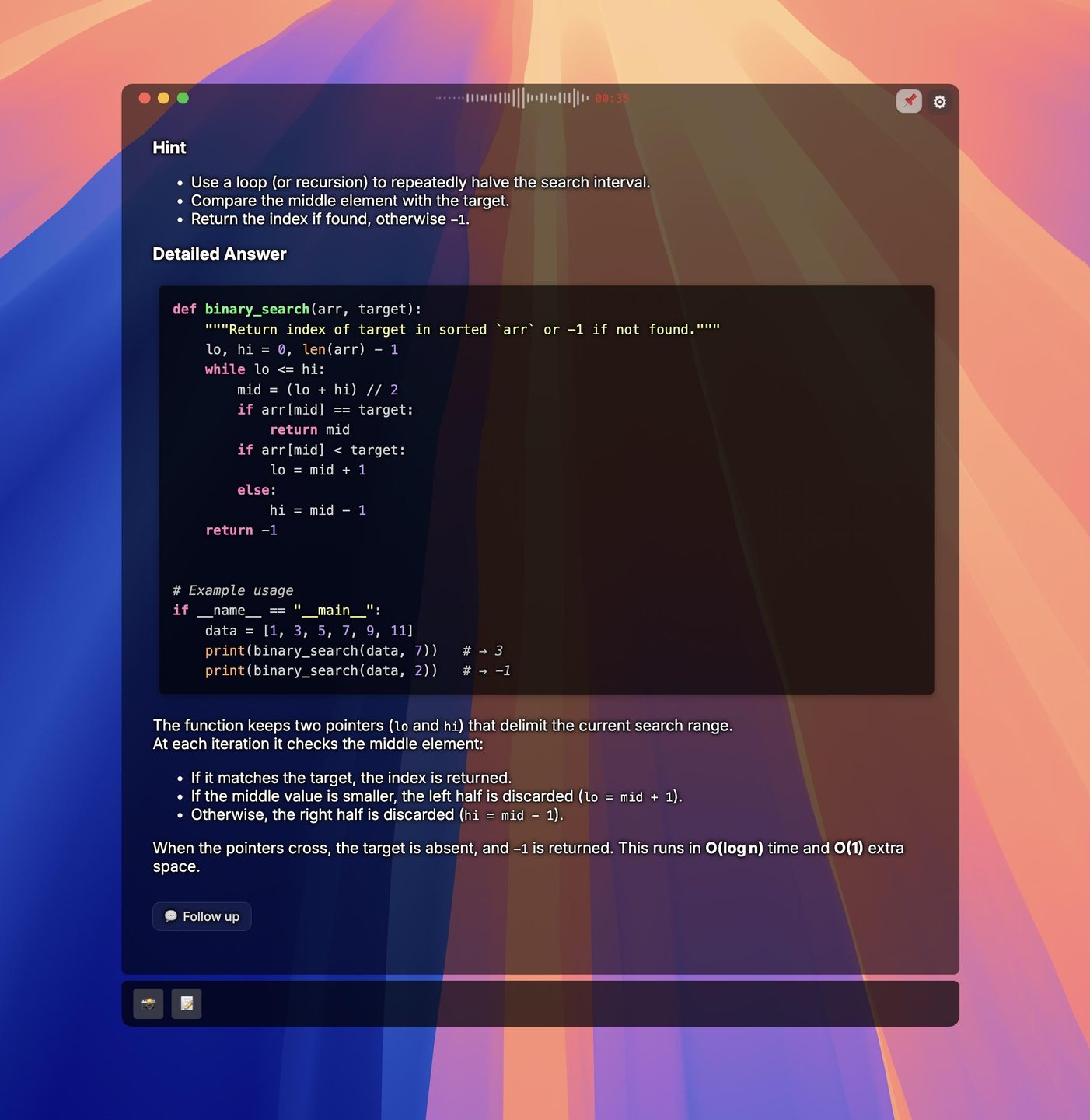
During live technical screens, audio-driven copilots struggle to keep up with fast-paced technical dialogue. When evaluating CTRLpotato vs Cluely on live audio ingestion, both platforms exhibited severe speech processing delays:
Audio Ingestion: Capturing spoken conversation through virtual sound drivers or microphone inputs.
Speech-to-Text Parsing: Translating spoken words into text, where complex technical terms like idempotency keys or sliding window counter were occasionally mistranscribed.
LLM Prompting: Sending parsed transcripts to cloud models and waiting for text generation.
UI Response Lag: Displaying suggestions after an uncomfortable 3.5 to 5.5-second delay.
In contrast, replacing speech transcription with direct visual context capture eliminates speech latency completely. Linkjob AI utilizes Smart Screenshot Capture to take instantaneous snapshots of target screen regions and pass visual code directly to multi-modal AI models. Instead of waiting 5 seconds for speech transcription, Linkjob AI processes live IDE code, LeetCode problems, or system diagrams in 1 to 2 seconds, streaming precise technical code without missing context.
Technical Depth in Live Coding and System Design
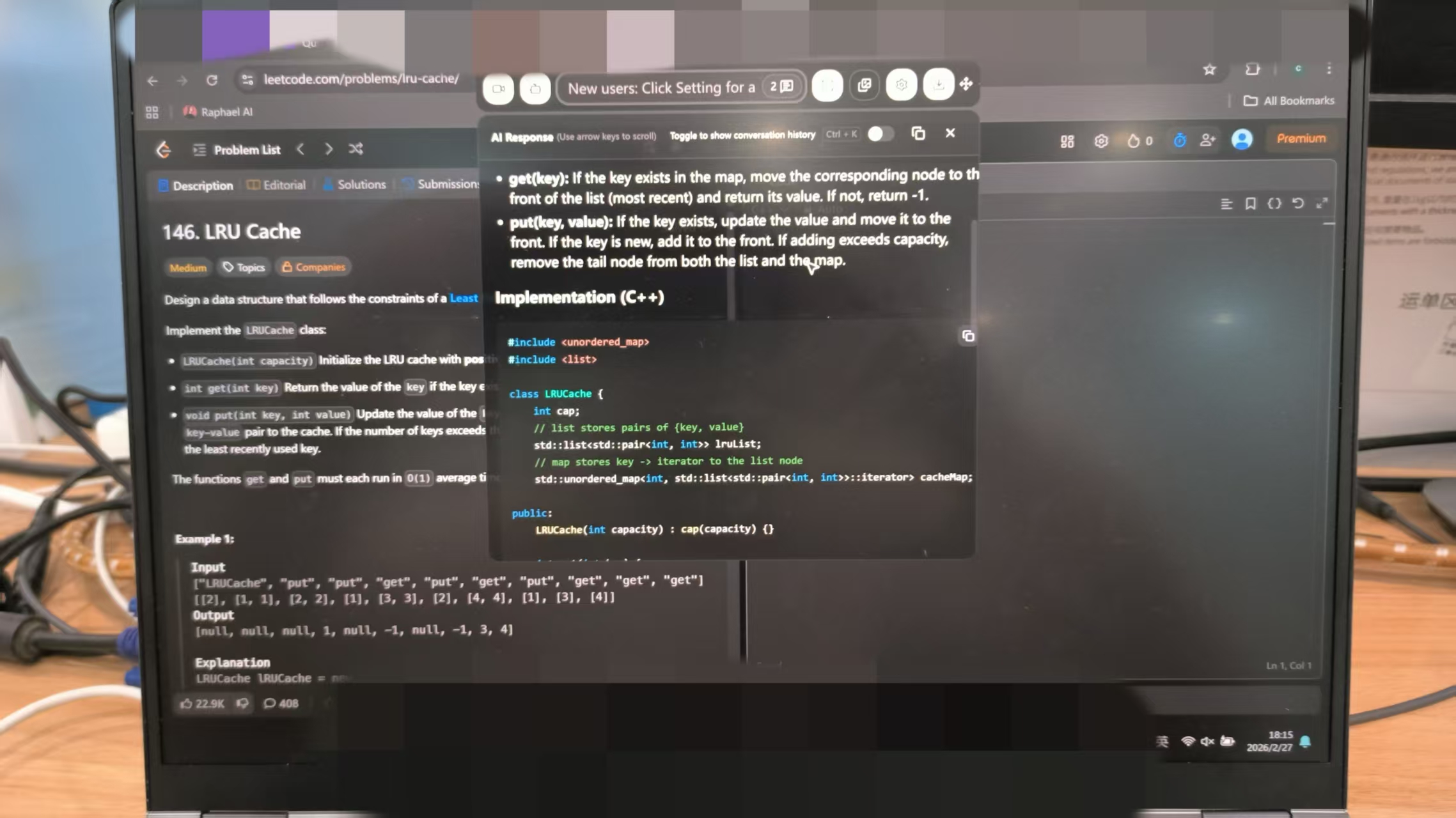
When my mock interviewer introduced mid-interview requirement changes—such as converting a synchronous API to an asynchronous message queue—both tools struggled during real-time testing.
"In my head-to-head evaluation of CTRLpotato vs Cluely, CTRLpotato required constant phone triggers that broke my focus, while Cluely returned conversational sales-style paragraphs that were useless during live CoderPad refactoring."
CTRLpotato Test Performance: When using phone mirroring to trigger AI model switches, managing secondary device buttons mid-call proved cumbersome. Furthermore, code suggestions lacked proper error handling and edge-case validation.
Cluely Test Performance: Cluely generated wordy, STAR-method text blocks optimized for behavioral questions rather than executable, syntactically perfect code for LeetCode Hard problems.
CTRLpotato vs Cluely Feature Comparison Matrix
To visualize how these tools stack up technically alongside modern developer alternatives, I compiled data across primary input technology, response latency, stealth capabilities, model access, and pricing:
Feature Benchmark | CTRLpotato | Cluely | Linkjob AI |
Primary Input Tech | Audio + Area Screenshots + Text | Audio Listening + Single Screenshot | Smart Screenshot Capture |
Response Latency | 3.5 – 5.5 Seconds | 3.0 – 5.0 Seconds | 1.0 – 2.0 Seconds |
Mobile Phone Control | Yes (Phone Mirroring) | No (Desktop Focus Only) | Yes (Desktop + Multi-Device) |
Process Obfuscation | Obfuscates Task Manager | No (Visible in Task Manager) | Hidden Background Process |
AI Model Choices | Limited LLM Switching | Fixed Unspecified Models | 80+ Top Models (GPT-5, Claude) |
Starting Cost | $29/mo (Lite) – $69/mo (Pro) | $20/mo (Pro) – $149.99/mo (Stealth) | $29.99/mo (Annual) / $99.99 Monthly |
Stealth Architecture: CTRLpotato vs Cluely
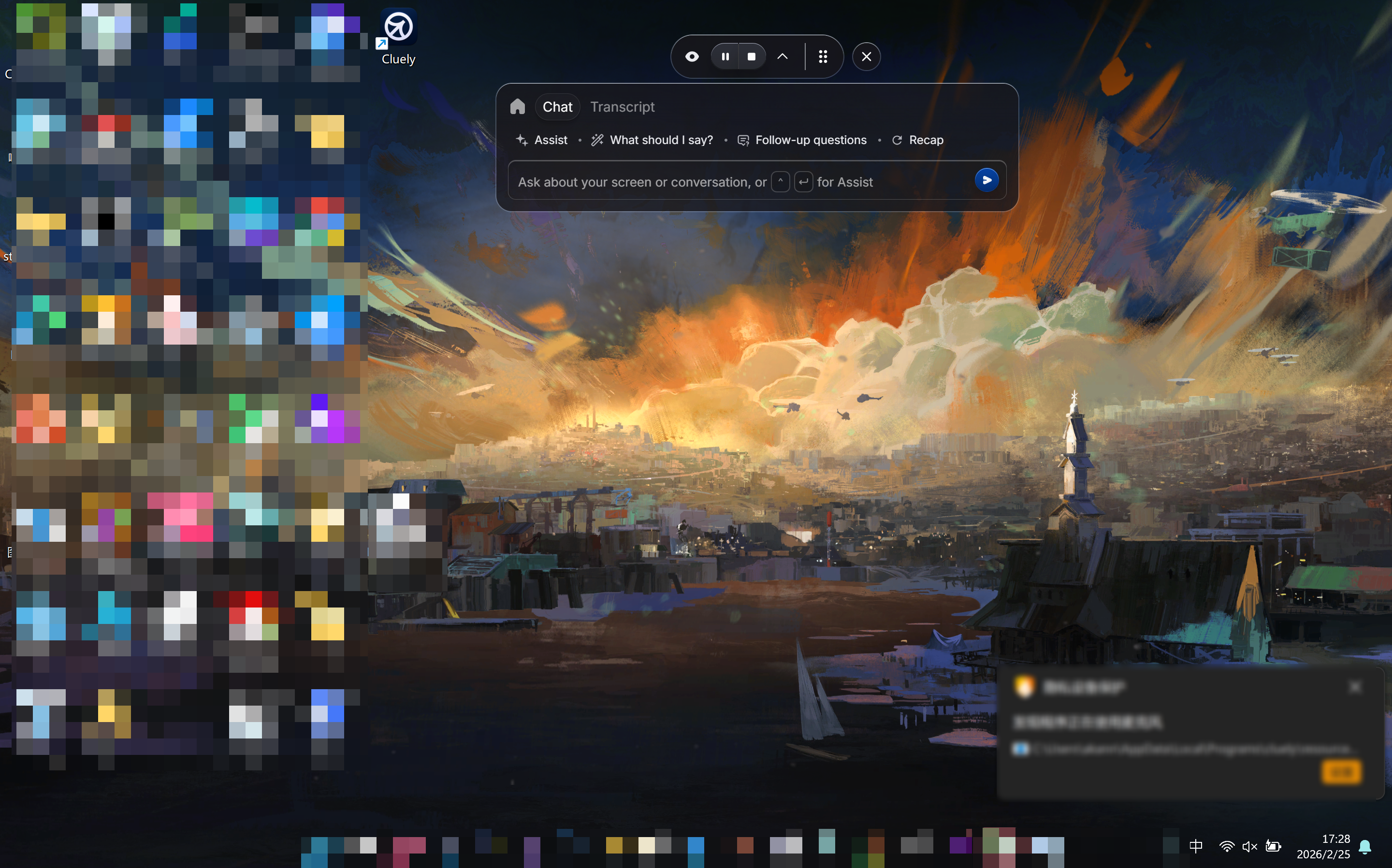
When it comes to picking an AI interview assistant, invisibility is the most important thing to consider. If a tool leaves visible window marks during a full-desktop screen share or triggers browser-level focus monitors, candidates risk being disqualified right away.
Screen Sharing Risks in CTRLpotato vs Cluely Tests
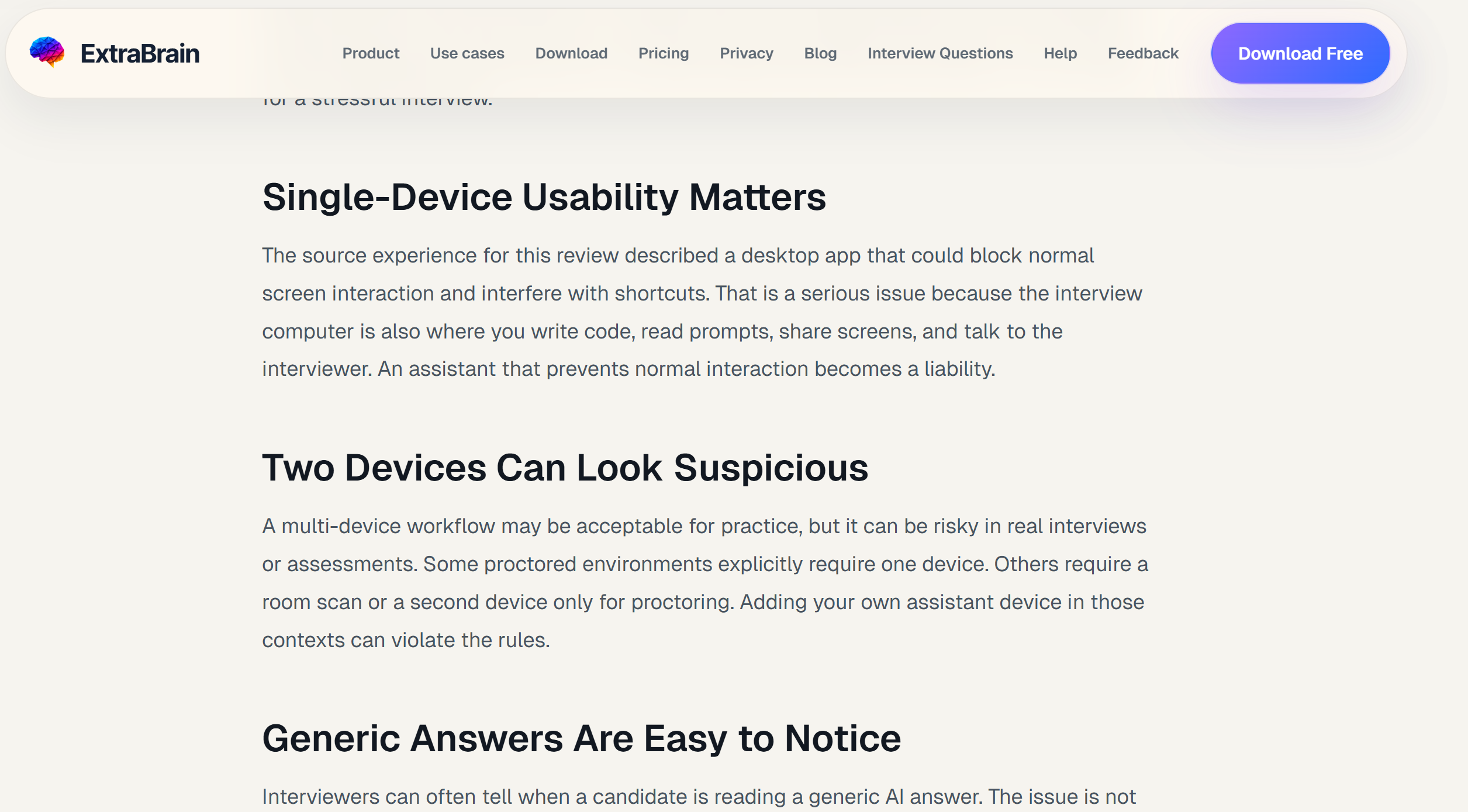
During technical interviews, hiring managers routinely ask candidates to share their entire desktop—not just a single browser tab—to monitor their live problem-solving workflow. During my desktop screen-sharing tests on Zoom and Microsoft Teams, testing CTRLpotato vs Cluely revealed major visibility liabilities:
Cluely Overlay Leaks: Cluely relies on desktop window overlays. Because standard overlays reside inside the operating system window hierarchy, Desktop Window Manager (DWM) flattens all layers during full desktop shares, rendering the prompt window visible on the interviewer's feed.
CTRLpotato Desktop Lockups: When running on a single screen without phone mirroring, CTRLpotato's overlay frequently covered screen regions completely, preventing interaction with the IDE.
To eliminate screen-sharing detection entirely, Linkjob AI was engineered with a dedicated desktop stealth pipeline:
Linkjob AI Stealth Architecture Execution Pipeline:
[Desktop Screen Region Capture] ➔ [Hidden Background Process Processing] ➔ [Screen-Share Invisible Overlay] ➔ [0% Visibility on Zoom/Teams Share]
By operating as an invisible background process and utilizing specialized overlay concealment, Linkjob AI remains 100% hidden during full-desktop Zoom, Microsoft Teams, and Google Meet screen shares.
Anti-Cheat Detection and Focus Tracking Vulnerabilities
Modern online assessment platforms like HackerRank, CoderPad, HirePro, and TestGorilla utilize aggressive client-side JavaScript monitoring to detect unauthorized external tools:
Tab-Switching Tracking: Clicking on external pop-ups or browser extension overlays shifts focus away from the test window, triggering
window.onbluranddocument.visibilitychangeevents.Keyboard Event Interception: Hotkeys that trigger browser-based extensions fire standard
keydownevents that anti-cheat scripts flag as suspicious automation.
// How Proctored Assessment Platforms Detect Window Focus Loss
window.addEventListener('blur', () => {
    console.warn('Candidate shifted focus away from assessment window.');
    ReportAntiCheatViolation({ type: 'TAB_SWITCH_DETECTED', timestamp: Date.now() });
});
Because Linkjob AI operates completely outside the browser sandbox as an independent desktop application via hidden background processes, interacting with its interface avoids triggering DOM focus-blur events entirely during proctored assessments.
Pricing and True Value: CTRLpotato vs Cluely
Evaluating the overall value of CTRLpotato vs Cluely requires looking beyond initial marketing claims to analyze exact billing tiers, stealth add-ons, model availability, and cancellation policies.
CTRLpotato and Cluely Cost Structure Breakdown
When comparing pricing models, job seekers should carefully review whether a tool forces expensive upgrades for basic invisibility:
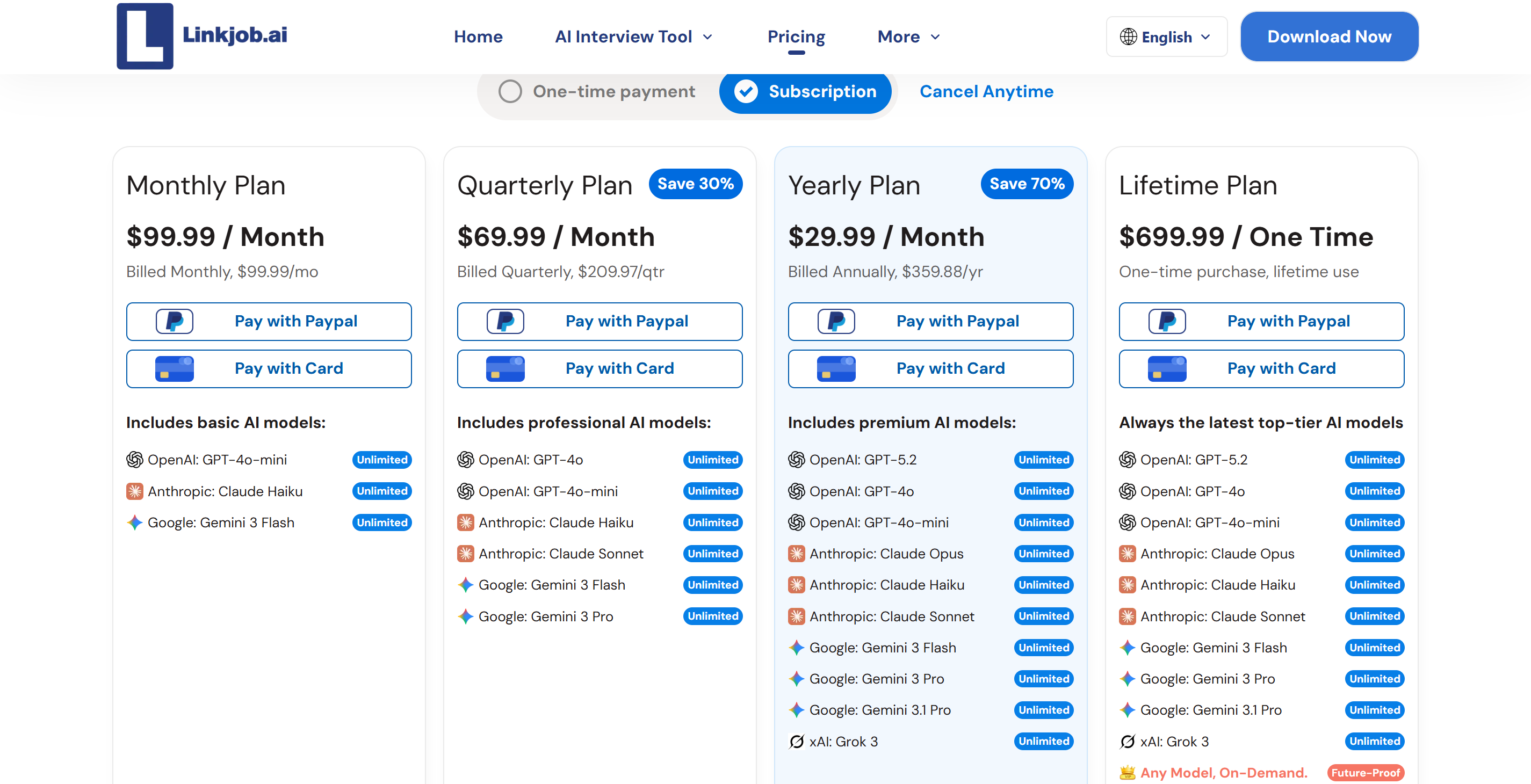
CTRLpotato Pricing: Offers a Lite tier starting at $29 per month and a Pro tier at $69 per month. While lower than some competitors, its reliance on phone control for stealth limits its usability during single-screen coding tests.
Cluely Pricing: Starts at $20 per month for the basic Pro tier, but accessing its "Undetectability" tier jumps to an expensive $149.99 per month.
Linkjob AI Pricing: Delivers developer-friendly pricing without hidden stealth tier upsells. Candidates can choose the $29.99 per month annual plan (billed at $359.88 per year) or a flexible $99.99 per month monthly plan. Both options unlock access to over 80+ top-tier AI models (including GPT-5, Claude, and Gemini 3 Pro), unlimited usage, hidden background process stealth, Smart Screenshot Capture, and self-service cancellation.
Evaluating Long-Term Utility for Developers
When choosing an interview copilot in 2026, software engineers need a tool designed specifically for technical problem-solving rather than generic meeting notes:
Purpose-Built Coding Focus: Generic sales tools struggle with complex syntax, dynamic memory constraints, and system architecture.
Single-Device Reliability: Secondary phone setups introduce physical lag and awkward eye movements that experienced interviewers notice.
Model Versatility: Accessing specialized coding LLMs yields superior algorithm optimization compared to generic cloud models.
Why I Abandoned Both Tools for Linkjob AI
After extensive testing comparing CTRLpotato vs Cluely, my conclusion is clear: neither tool delivers the combination of sub-2-second speed, true screen-sharing invisibility, and multi-model technical depth needed for high-stakes engineering interviews.
CTRLpotato's reliance on multi-device phone control creates physical friction, while Cluely's $149.99/month stealth tier and visible Task Manager processes (pmodule) introduce real detection risks.
Sub-2-Second Speed with Smart Screenshot Capture
Switching to Linkjob AI solved every performance bottleneck I encountered during live coding screens:
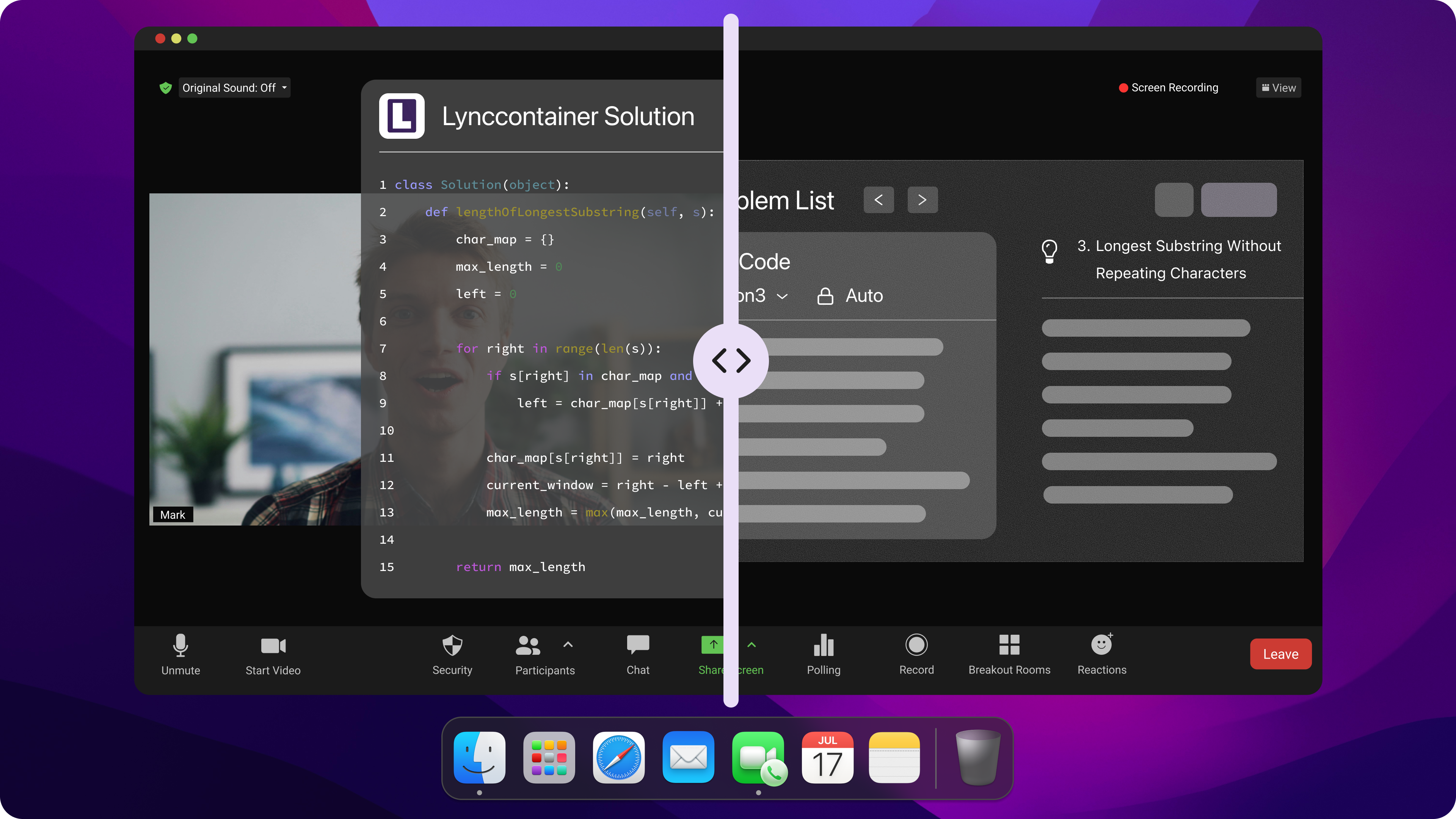
Instant Region Capture: Pass LeetCode problems or system diagrams directly to AI models in 1 to 2 seconds.
Zero Audio Misinterpretations: Eliminates speech-to-text translation errors for complex technical terminology.
Streamlined Coding Workflow: Receive syntactically correct code snippets ready to explain on camera.
True Undetectability with Hidden Background Processes
Linkjob AI provides peace of mind during full-desktop screen shares:
"Unlike traditional overlays that leak on Zoom or browser extensions that trigger focus-blur tracking, Linkjob AI's hidden background process architecture remains 100% invisible during full-desktop shares."
0% Zoom/Teams Share Visibility: Bypasses operating system window flattening.
DOM Focus Safety: Avoids triggering
window.onblurevents on proctored assessment platforms.
80+ Advanced AI Models at Unbeatable Pricing
Plan Metric | CTRLpotato | Cluely | Linkjob AI |
Annual Price Tier | N/A (Monthly Only) | $240/year (Basic) | $29.99/mo ($359.88/yr) |
Monthly Flexible Tier | $29 – $69/mo | $149.99/mo (Stealth Tier) | $99.99/mo |
Model Ecosystem | Limited LLM Options | Fixed Unspecified Models | 80+ Models (GPT-5, Claude) |
Stealth Included | Phone Mirroring Required | Requires $149.99 Upgrade | Included in All Plans |
FAQ
What is the main difference between CTRLpotato and Cluely?
CTRLpotato is a tool for interviewing that uses secondary phone mirroring for stealth, with prices from $29 to $69 per month. Cluely is a sales meeting copilot that charges $149.99 per month for its stealth tier. CTRLpotato needs you to sync it manually, while Cluely runs basic desktop overlays that you can see are running in the background.
Can CTRLpotato or Cluely be detected during Zoom screen sharing?
Yeah, Cluely's standard window overlays can actually be captured during full-desktop Zoom shares, 'cause the operating system flattens those window layers. CTRLpotato sidesteps desktop capture by firing off answers to your phone, but its single-device desktop mode locks focus and stays in your line of sight.
Why is Linkjob AI a better alternative to CTRLpotato and Cluely?
Linkjob AI offers lightning-fast response times of less than 2 seconds with Smart Screenshot Capture, and it ensures 100% screen share invisibility through hidden background processes. The monthly cost for the annual plan is $29.99. So, unlike Cluely's $149.99 stealth upgrade and CTRLpotato's clunky phone mirror setup, Linkjob AI offers seamless single-device execution with access to over 80 top-tier AI models.
How does Linkjob AI achieve faster speeds than speech-to-text copilots?
Linkjob AI uses Smart Screenshot Capture to take quick pictures of parts of the screen and send them straight to multi-modal AI models. This means you don't have to go through the usual multi-step process of getting the audio in, turning it into text, and putting the transcript together, which can take 3 to 6 seconds with traditional voice-driven assistants.
See Also
Will Ctrlpotato Enhance Your Interview Skills for 2026?
Top Alternatives to CTRLpotato for Live Interviewing
Evaluating Cluely: Is It Effective for Interview Preparation?
Why People Choose Linkjob AI
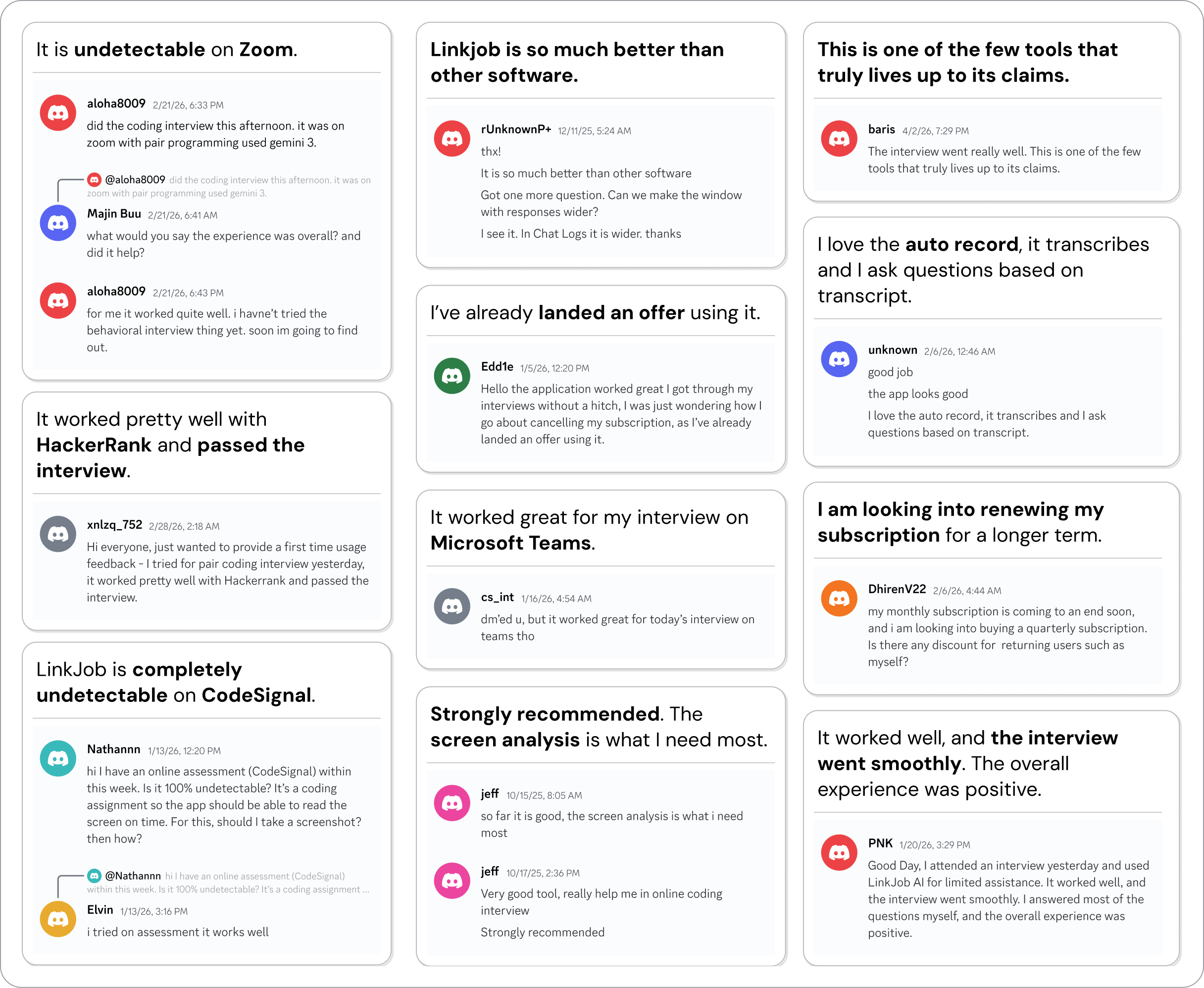
Smoother interviews, coding challenges cleared, and job offers landed. See how users describe their experience with Linkjob AI—in their own words.

© Copyright 2026 Linkjob AI - All Rights Reserved.