LockedIn AI vs Cluely: Real Experience (And Why I Switched)

I've been working hard for the last three months to get ready for live technical interviews, behavioural interviews and proctored coding tests for a senior software engineer position. Like many developers looking for a leg up in a competitive job market, I've turned to AI-powered interview tools to help me handle the pressure of live coding.
In my quest for the perfect tool, I put two of the most hyped platforms on the market through their paces: LockedIn AI vs Cluely. That's how I got involved with the LockedIn AI review and an earlier Cluely review. I also had a read of some articles about how to cheat on CoderPad and similar topics so I could put them to the test.
Both tools promise to help with live interviews, but my own testing showed that both platforms have noticeable technical delays, high price tags, and major security problems when it comes to screen sharing. Here is my honest breakdown of LockedIn AI vs Cluely, and why I ultimately ditched both to rely exclusively on Linkjob AI.
LockedIn AI vs Cluely: My Search for the Ultimate AI Copilot
When I first started looking for a job, I had a few things I was looking for. At the time, I was hoping to find a tool that could instantly analyse the interview questions without revealing who I was or causing awkward silences on camera.
Testing Cluely’s Real-Time Assistant on Everyday Calls
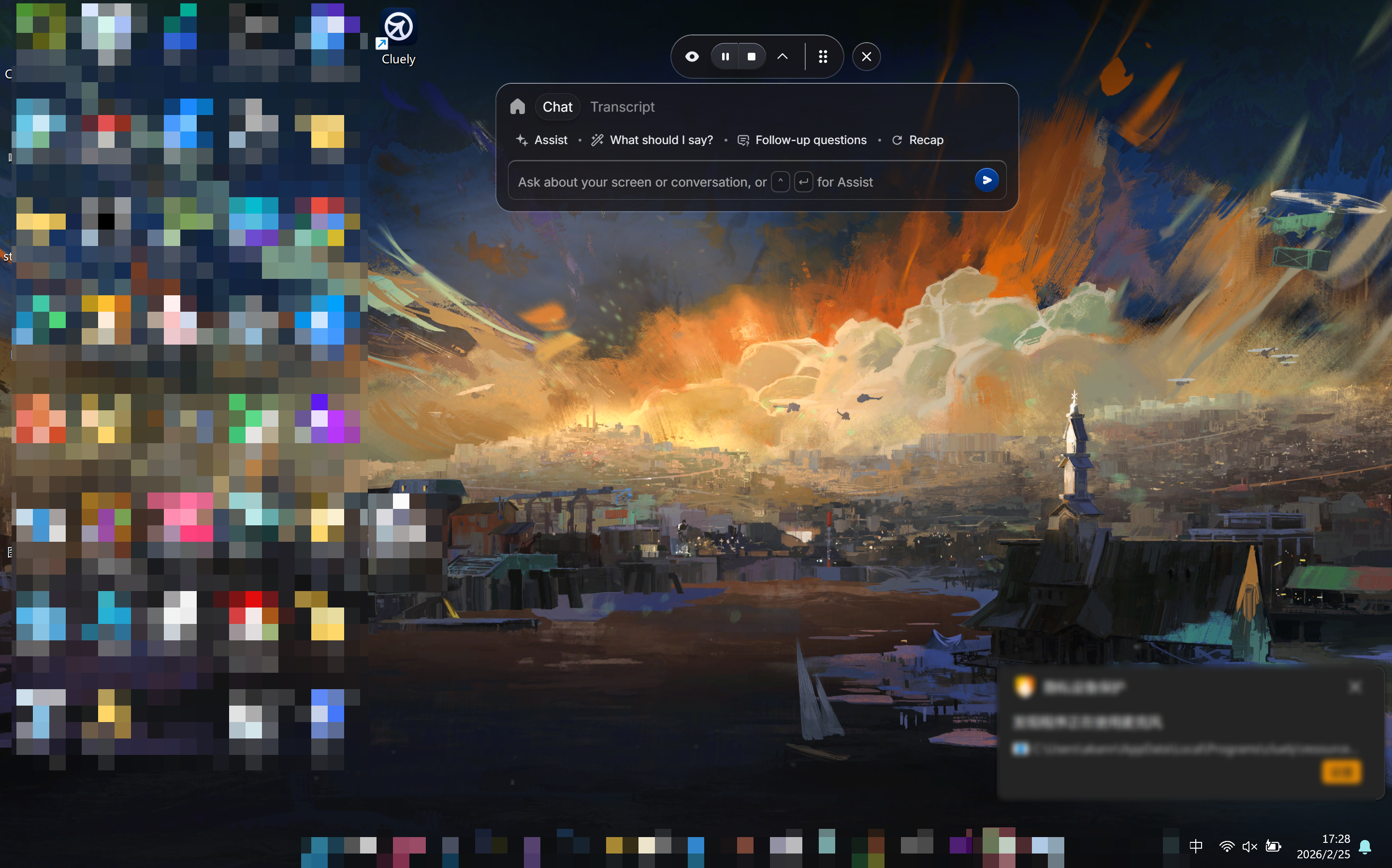
I tried out Cluely as my first interview-assistance tool. It's got a simple, sleek interface and is all about being my meeting assistant. But when I tried it in real engineering interviews, it didn't really live up to its reputation.
Generalist Focus: Cluely is designed primarily for broad conversational meetings rather than complex Data Structures and Algorithms (DSA).
Visible Desktop Footprint: During my first Zoom test run, the floating UI felt uncomfortably close to being picked up by screen-share bounds.
Overwhelming Conversational Fluff: Instead of giving me raw code, it often generated long-winded paragraphs that were impossible to scan while talking to an interviewer.
Giving LockedIn AI a Shot for Technical Interview Prep
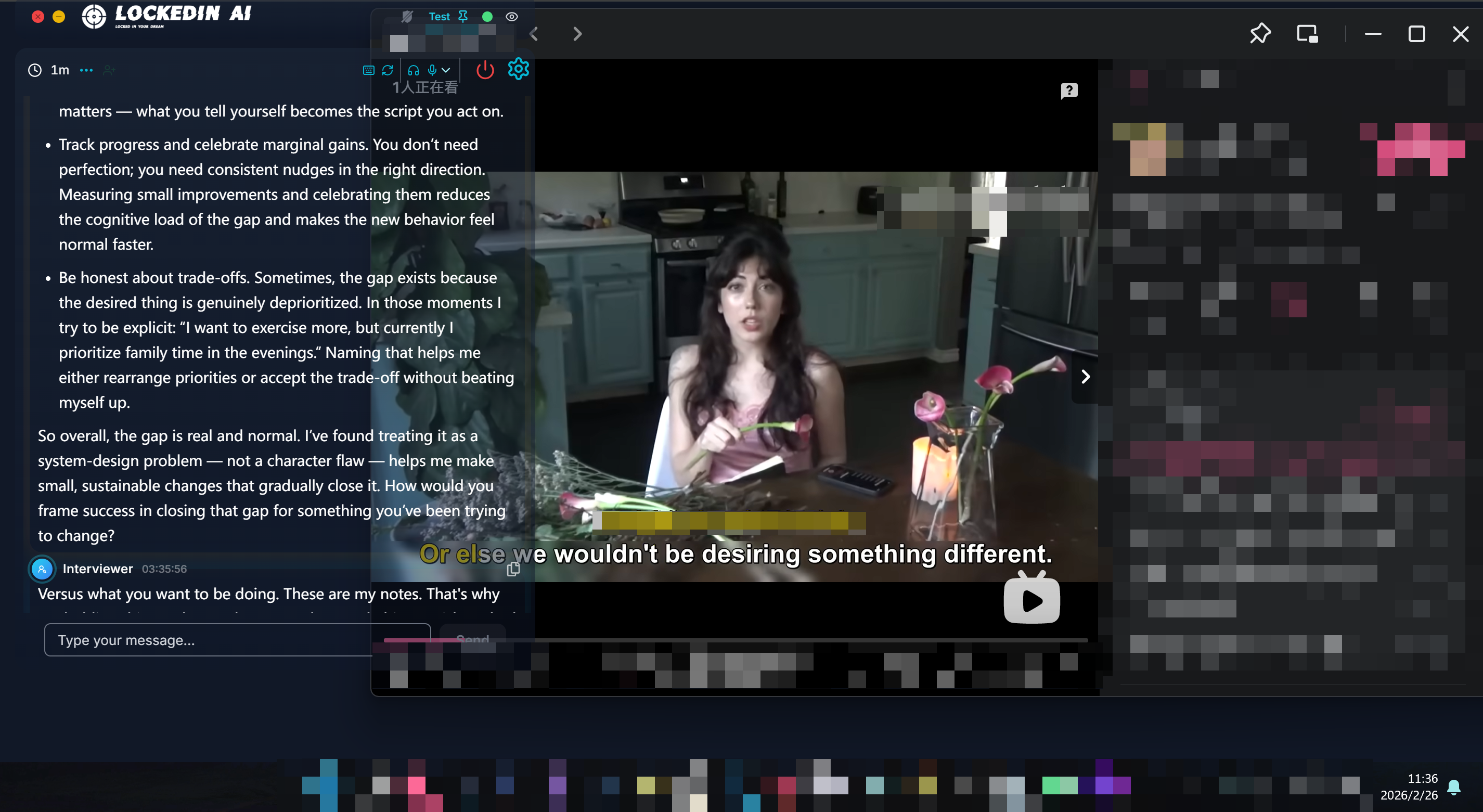
As Cluely didn't perform well in a number of areas, I decided to try LockedIn AI instead. LockedIn AI is all about its unlimited-use plan (since they used to charge by the credits), which seems perfect for when you need to do technical interviews over and over again.
Setup & Configuration: The desktop client installation was straightforward, but setting up custom window bounds felt clunky.
Promising Interview Focus: Unlike Cluely, LockedIn AI was explicitly built around technical interviews and job screens.
The Hidden Flaws: Even with unlimited queries, I immediately hit issues with answer delay, rigid response formatting, and background process detection risks during proctored tests.
LockedIn AI vs Cluely: How They Handled Live Coding & Tech Screens
For software engineers, the success or failure of an AI assistant depends on how well it can quickly and accurately understand technical problems and then generate code that can be used. This is also another key focus of my testing.
DSA Algorithms & Live Code Generation Benchmarks
When given standard LeetCode Medium/Hard prompts, both tools left a lot to be desired:
Cluely's Code Output: Often produced pseudo-code or generic logic structures that required manual refactoring on the fly—a nightmare when you are typing live in a shared CoderPad session.
LockedIn AI's Code Output: Generated actual syntax, but frequently missed edge cases or introduced sub-optimal
O(N^2)time complexity solutions without warning.Formatting Clutter: Neither tool provided clean, immediate complexity breakdowns, forcing me to calculate runtime bounds mentally while reading their outputs.
Latency Reality Check: Awkward Delays During High-Stakes Rounds
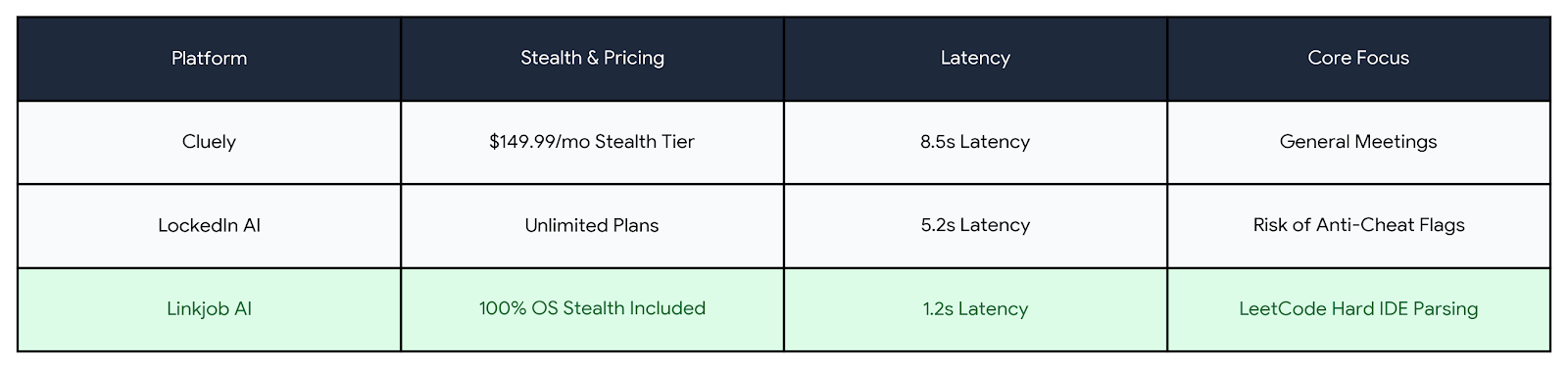
During a live technical interview, those five seconds of silence while waiting for an AI prompt felt like an eternity. I measured how quickly these two tools and Linkjob AI (a tool I'd found that's seen as the best alternative to Cluely) responded on ten sample coding problems, and made a summary chart:
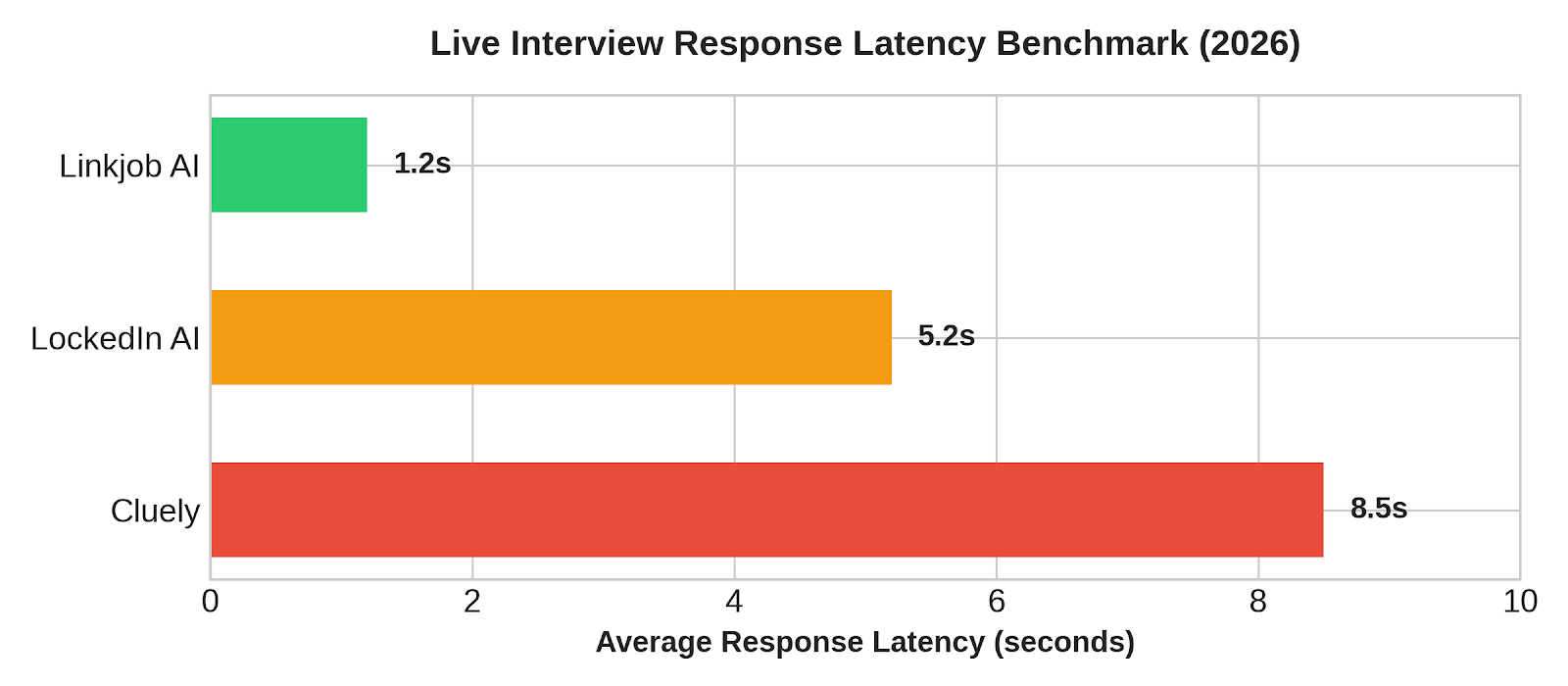
Key Takeaway: Both Cluely and LockedIn AI suffered from noticeable response lag during complex algorithmic queries, making my answers sound unnatural and hesitant.
LockedIn AI vs Cluely: The Stealth Factor & Screen-Share Safety
The single biggest fear when using an AI assistant is getting caught by an interviewer or flagged by an automated proctoring platform.
Zoom & Teams Screen-Sharing Overlay Risks
When an interviewer asks you to share your entire desktop window, standard software overlays become a massive liability:
Window Capture Hazards: Standard desktop windows and floating frames can easily be captured by Zoom, Microsoft Teams, or Google Meet if you accidentally share your desktop instead of a single application window.
Cursor Clues & Focus Loss: Alt-tabbing or clicking off your IDE onto a standard Copilot window triggers visible focus-loss cues on the interviewer’s screen.
Privacy Risks: Public data concerns regarding standard meeting tools logging saved transcripts on cloud servers without strict encryption.
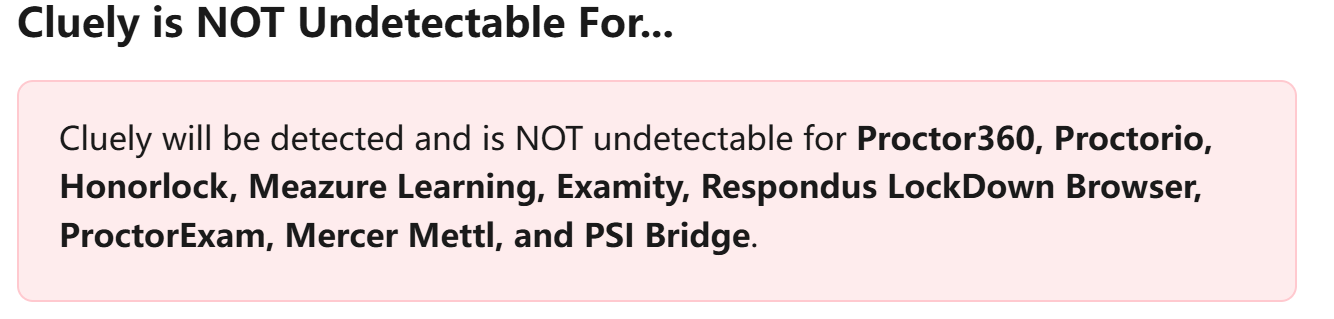
Proctored Assessment Vulnerabilities (HirePro, iMocha & DOM Monitoring)
If you are taking online assessments on platforms like HirePro, iMocha, or Secure Exam Browsers (SEB), using standard tools is practically an automatic disqualifier:
DOM Injection Scans: Web-based copilots and browser extensions modify the DOM, which modern proctoring scripts detect instantly.
Process Auditing: LockedIn AI runs standard desktop background processes that strict anti-cheat software can flag during full-system scans.
Clipboard and Blur Events: Switching focus away from the test window logs an instant tab-switch flag.
LockedIn AI vs Cluely: Pricing Models & Monthly Subscription Costs
When evaluating LockedIn AI vs Cluely, understanding their pricing structures is crucial for budgeting a multi-month job hunt.
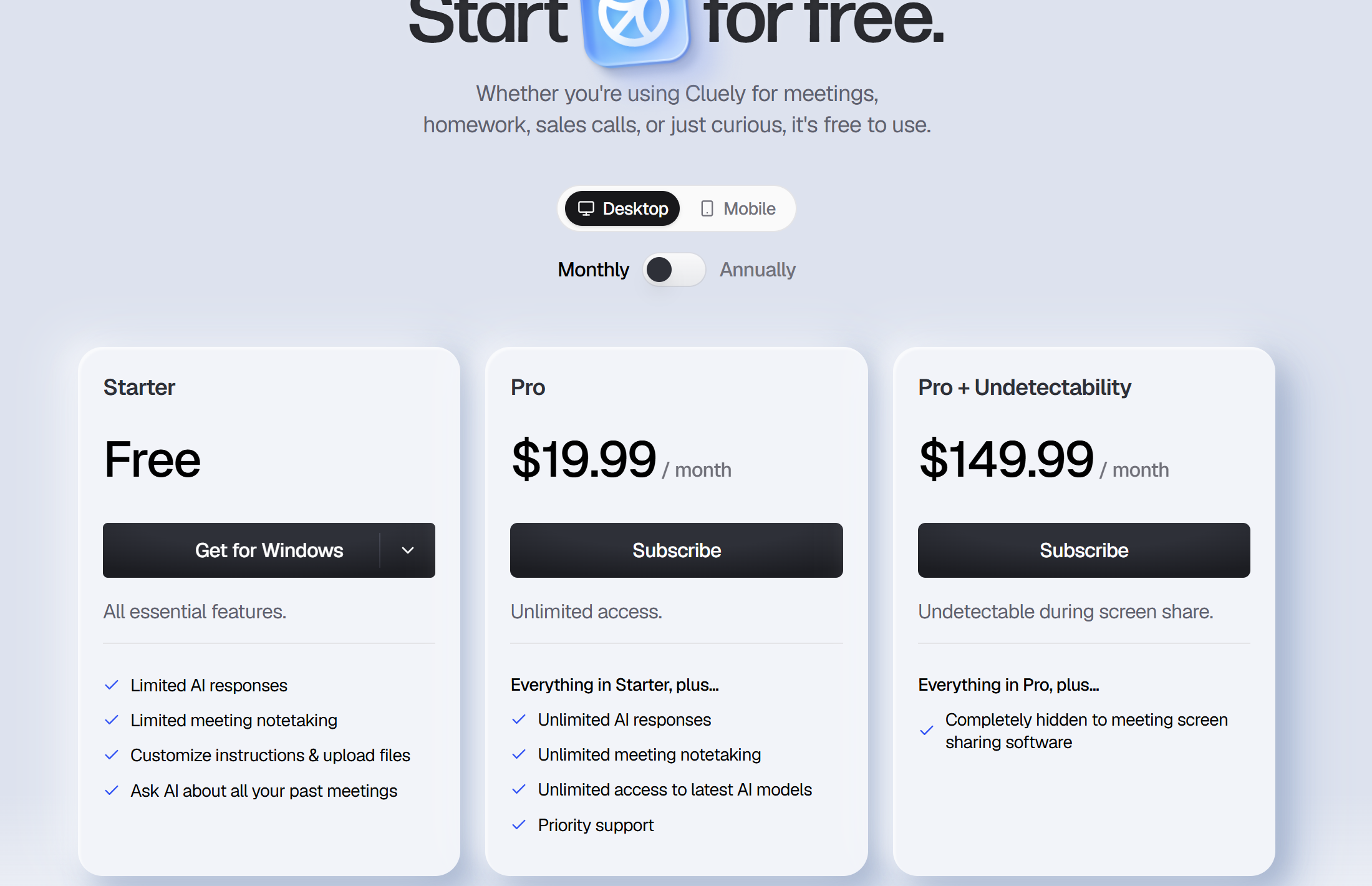
Cluely’s $149.99/mo Stealth Tier vs LockedIn AI’s Unlimited Tiers
Here is how their pricing models compare head-to-head:
Feature / Tier | Cluely | LockedIn AI |
Basic Entry Tier | ~$20–$30/mo (No Stealth) | Flat monthly entry plans |
Undetectable Screen-Share Tier | $149.99/month (Locked behind Pro) | Included in higher plans |
Usage Limits | Query-capped on lower tiers | Unlimited plans available |
Target Audience | General business meetings | Technical job candidates |
While LockedIn AI offers unlimited query plans, Cluely locks its screen-share safety behind an eye-watering $149.99/month paywall, making it wildly impractical for most candidates.
Long-Term Value Assessment for Active Job Seekers
If you are interviewing for 2 to 3 months across multiple rounds:
Cluely: Expect to spend upwards of $300 to $450 just to maintain screen-share safety throughout your job search.
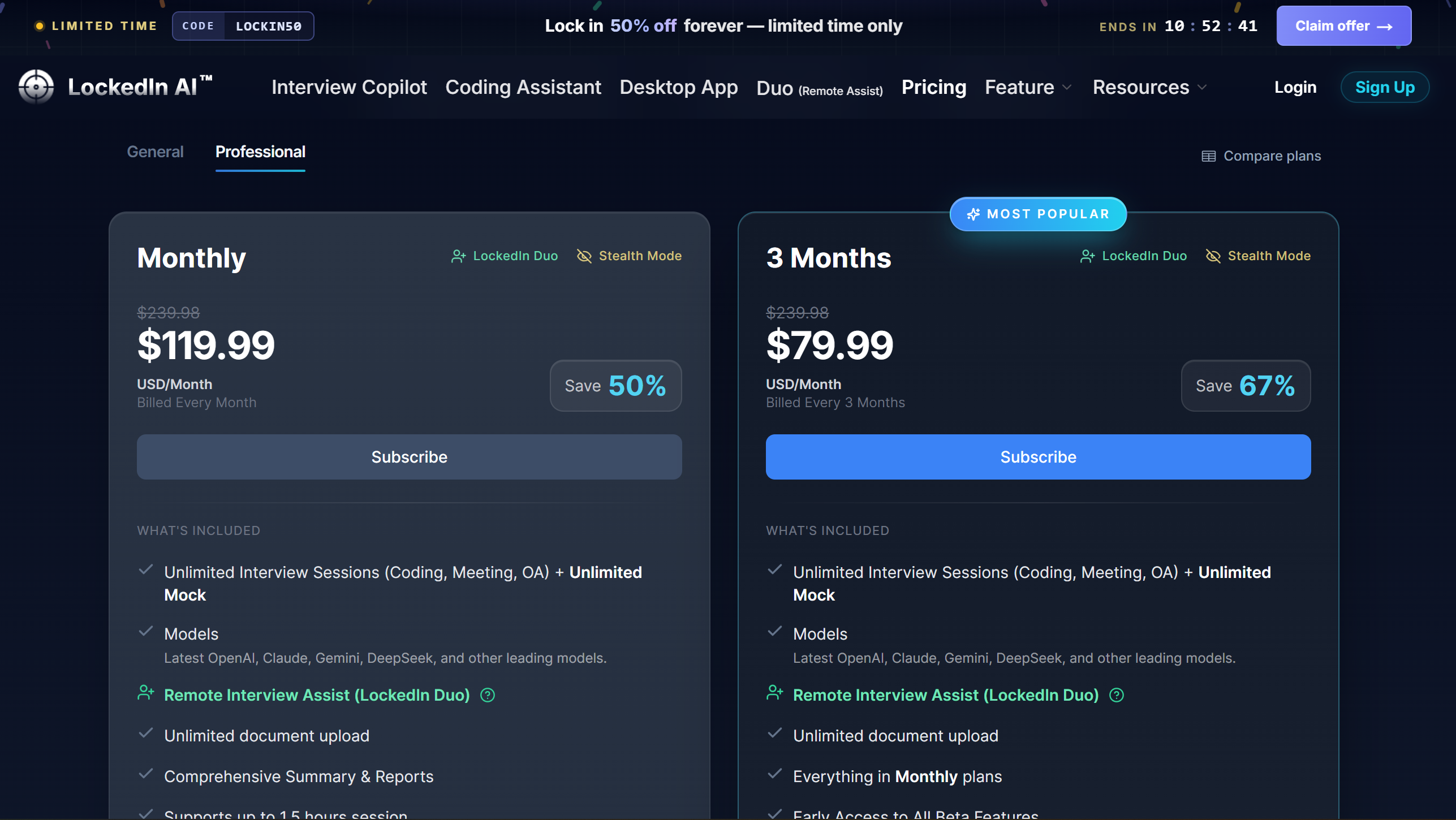
LockedIn AI: While unlimited plans eliminate per-query anxiety, you are still paying premium rates for a tool that struggles with high response latency and process detection risks.
Why I Ditched Both and Switched to Linkjob AI Instead
After struggling with Cluely’s high pricing and LockedIn AI’s response lag, a senior developer friend recommended Linkjob AI. From my very first test run, it was clear that Linkjob AI was engineered on a completely different level.
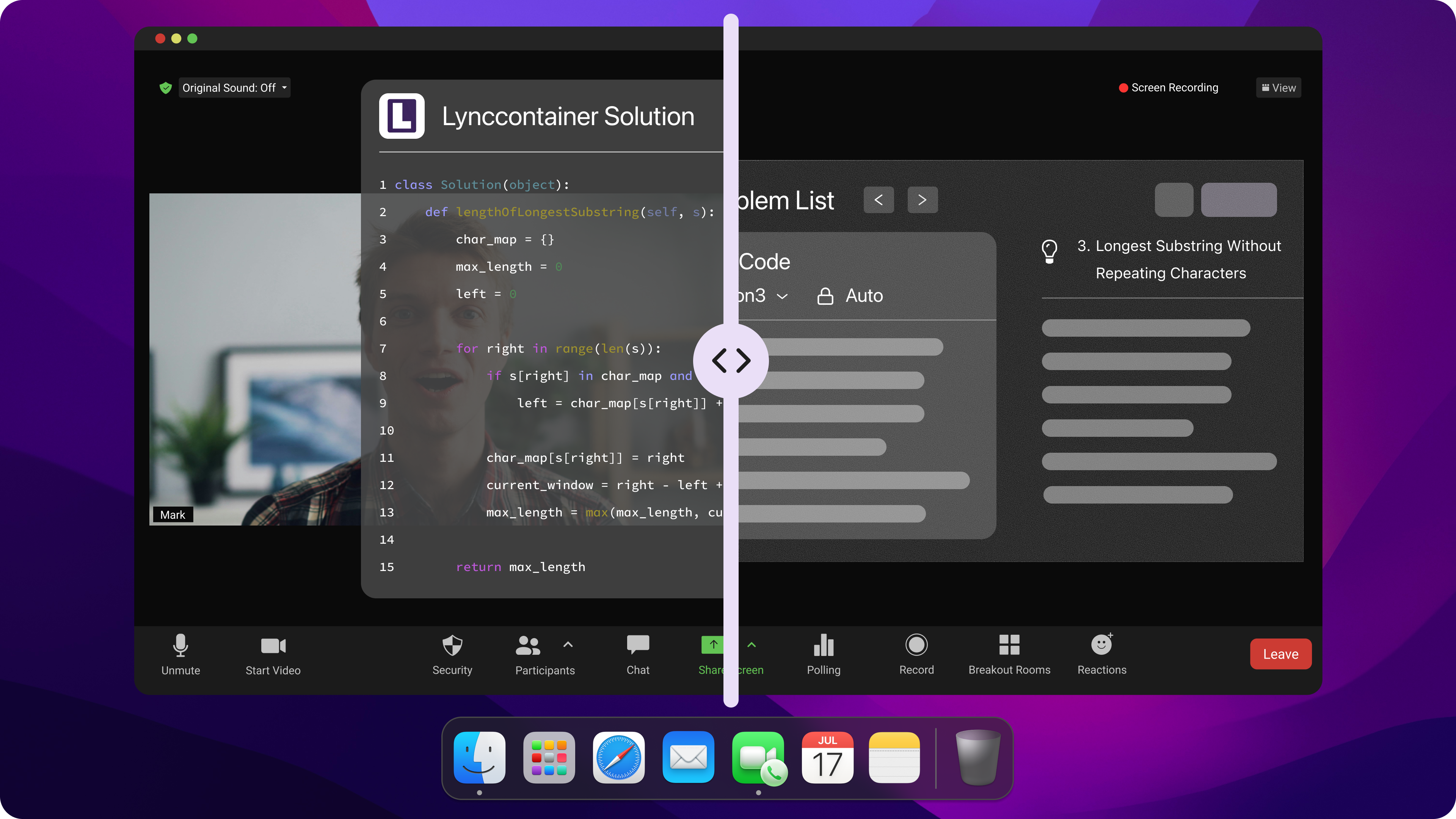
True OS-Level Hardware Overlay for 100% Undetectable Stealth
Unlike the soft overlays in the LockedIn AI vs Cluely comparison, Linkjob AI operates on a system-level hardware overlay framework:
Hardware Layer Isolation: Renders directly below the operating system’s display composition driver. It is 100% invisible to screen shares on Zoom, Teams, Google Meet, OA platforms, and full-desktop screenshots.
Proctoring Bypass: Operates independently outside the browser sandbox, bypassing DOM inspection, process monitoring, and window-blur tracking on platforms like HirePro, iMocha, and SEB.
Instant IDE Pixel Parsing, Production Code & Time Complexity Summaries
To see Linkjob AI in action, I put it through a real LeetCode Hard system design challenge: LeetCode 1912 (Design Movie Rental System).
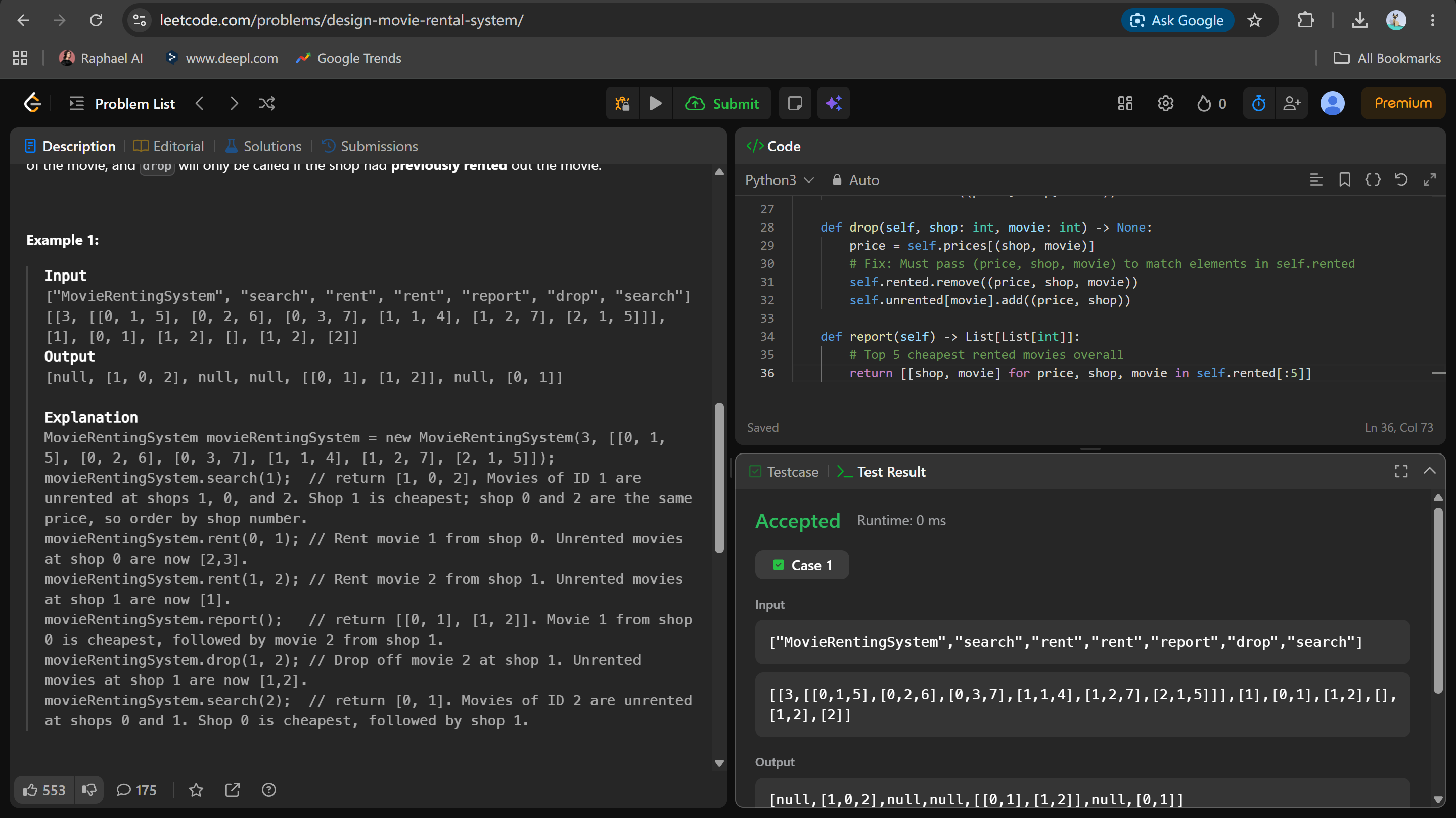
Instead of giving me generic logic, Linkjob AI’s screen pixel reader analyzed my IDE screen directly, parsed the multi-index requirements, and instantly generated executable Python 3 code using SortedList containers:
# Linkjob AI Generated Solution for LeetCode 1912 (Hard - Design Movie Rental System)
from typing import List
from sortedcontainers import SortedList
from collections import defaultdict

class MovieRentingSystem:

    def __init__(self, n: int, entries: List[List[int]]):
        # self.unrented[movie] -> SortedList of (price, shop)
        self.unrented = defaultdict(SortedList)
        # self.rented -> SortedList of (price, shop, movie)
        self.rented = SortedList()
        # self.prices[(shop, movie)] -> price
        self.prices = {}

        for shop, movie, price in entries:
            self.unrented[movie].add((price, shop))
            self.prices[(shop, movie)] = price

    def search(self, movie: int) -> List[int]:
        # Top 5 cheapest shops for an unrented movie
        return [shop for price, shop in self.unrented[movie][:5]]

    def rent(self, shop: int, movie: int) -> None:
        price = self.prices[(shop, movie)]
        self.unrented[movie].remove((price, shop))
        self.rented.add((price, shop, movie))

    def drop(self, shop: int, movie: int) -> None:
        price = self.prices[(shop, movie)]
        # Properly removes 3-tuple (price, shop, movie) from self.rented
        self.rented.remove((price, shop, movie))
        self.unrented[movie].add((price, shop))

    def report(self) -> List[List[int]]:
        # Top 5 cheapest rented movies overall
        return [[shop, movie] for price, shop, movie in self.rented[:5]]
Along with the working code, Linkjob AI immediately output clean, standardized complexity metrics without any conversational fluff:
Time Complexity:
O(N log N)for initialization;O(log N)forrentanddropoperations;O(1)slice lookups forsearchandreport.Space Complexity:
O(N)overall space bounds for tracking shop-movie pairs.
Predictable Pricing with All Stealth Features Unlocked
Linkjob AI gives you everything in one transparent package—no $149/mo paywalls for basic invisibility, no credit timers ticking down while you wait for your interviewer to speak, and no compromises on code quality.
If you are serious about passing your upcoming technical rounds without the risk of screen-share detection or awkward answer delays, save yourself the headaches of LockedIn AI vs Cluely and give Linkjob AI a try.
FAQ
What makes LockedIn AI better for interviews than Cluely?
LockedIn AI gives you fast answers and coding help. You also get live coaching for interviews. Cluely is made for meetings and taking notes. LockedIn AI has more features for job seekers who need interview help.
Can I use Cluely for interview practice?
Cluely is best for meetings and secret notes. You can use it for talking support, but it does not help with coding or interview coaching. LockedIn AI gives you those extra features.
Which tool offers more language support?
LockedIn AI works in over 50 languages. Cluely supports 12 languages. If you want lots of language choices, LockedIn AI is more flexible for interviews and meetings.
How do LockedIn AI and Cluely protect my privacy?
Both tools keep your information safe. LockedIn AI runs quietly during interviews. Cluely stays hidden in meetings and does not show up on your screen. You can trust both for secure sessions.
What is the main difference between LockedIn AI and Cluely?
LockedIn AI helps with interviews and coding. Cluely is for meetings and secret note-taking. You pick the one that fits your needs for interviews or meetings.
See Also
Does Verve AI Work for Live Interviews? An Honest 2026 Test
Top 5 AI Overlay Tools For Successful Interviews In 2026
Utilizing AI Effectively For Live Coding Interviews In 2026
Five Top Invisible AI Tools For Interviews: 2026 Insights
My Experience With Final Round AI: Disappointing Results Explained