How to Use AI Tools on Equip Assessment in 2026

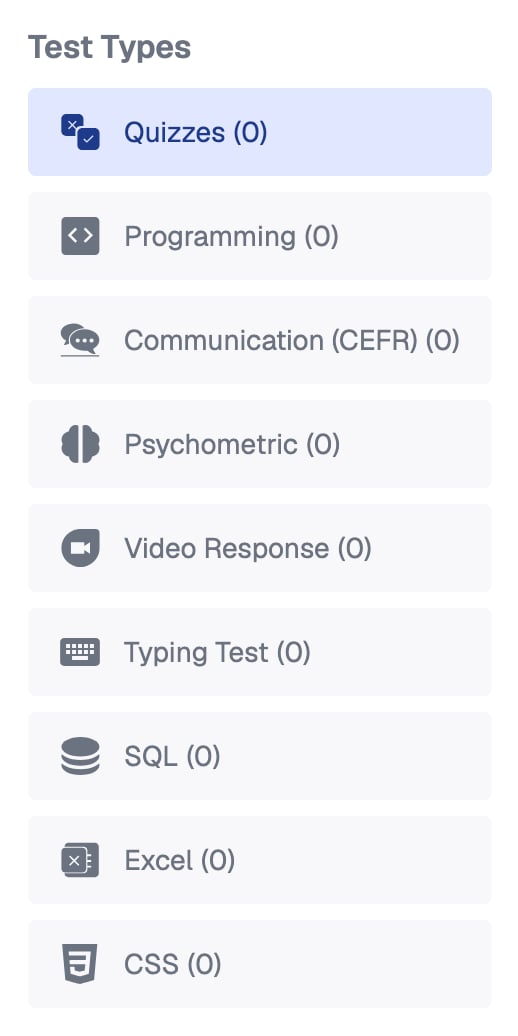
A few weeks ago, Equip invited me to do an online technical assessment as part of the hiring process. I'd done some standard screening tests on traditional platforms before, so I just thought this would be a regular multiple-choice exam. But then, when I logged into the candidate portal, guess what? It was a modular assessment environment combining real-time coding challenges, multi-table SQL queries, interactive Excel tasks and timed quiz modules.
When I saw how many different tasks there were, I thought the only way to do it was to look online for a trick to get around the Equip assessment. The official description says that Equip's advanced proctoring framework has configurable tab-switching tracking, real-time clipboard restrictions, continuous session recording, and optional auxiliary smartphone camera monitoring. It looked like it would be impossible to bypass.
But, as not all features are necessarily enabled during a single assessment, I managed to successfully bypass the proctoring measures by using Linkjob AI (which I'd previously used to see How to cheat on CoderPad and to try How to cheat on Honorlock).
In this guide, I'll look at how Equip keeps an eye on how candidates behave in different types of assessments, take a close look at its core proctoring features, and explain how I used real-time AI interview tools to safely get through these assessments while avoiding anti-cheating alerts.
Can You Cheat Equip 2026 with AI Tools? How Can Equip Detect Cheating?
Equip does not rely on one single anti-cheating feature. The easiest way I found to understand its current system is to think of it as several monitoring layers working together:
Browser and device monitoring
Assessment-level anti-cheating controls
Camera and audio monitoring
Session evidence collection
AI-focused detection features
Trust Score and recruiter review
One important detail is that these settings can be configured per test or AI interview, so two candidates taking an Equip assessment may not necessarily experience the same level of monitoring.
According to Equip's current Proctoring Settings documentation, employers can choose which controls to enable depending on the assessment type and the level of integrity they need.
1. Core Proctoring Features in Equip
Equip currently offers a fairly broad set of configurable proctoring controls.
Feature | What It Does | Where It Is Most Relevant |
|---|---|---|
Detect Audio | Detects background audio or speaking activity | Coding, SQL, quizzes, technical tests |
Detect Face | Flags missing or multiple faces and can capture evidence | General assessments |
Detect Switched Tab | Detects when the candidate leaves the assessment tab or application | Quiz, coding, SQL, etc. |
Switched Tab Screenshot | Captures a screenshot when the candidate switches away | Desktop-browser assessments |
Random Photos | Takes candidate photos during the test | General assessments |
Photo Before Start | Captures a candidate photo before the test begins | Identity and session evidence |
Prevent Multiple Monitors | Detects multiple displays and can block continuation until they are disconnected | Desktop Chromium environments |
Full-Screen Enforcement | Requires the candidate to stay in full-screen mode | Most standard tests |
Desktop Enforcement | Requires the assessment to be completed on a desktop or laptop | Configurable by employer |
Session Recording | Records activity inside the assessment tab, including mouse movement, clicks, and typed text | Coding, SQL, quizzes |
Webcam Preview | Keeps the candidate's own camera preview visible during the assessment | Optional |
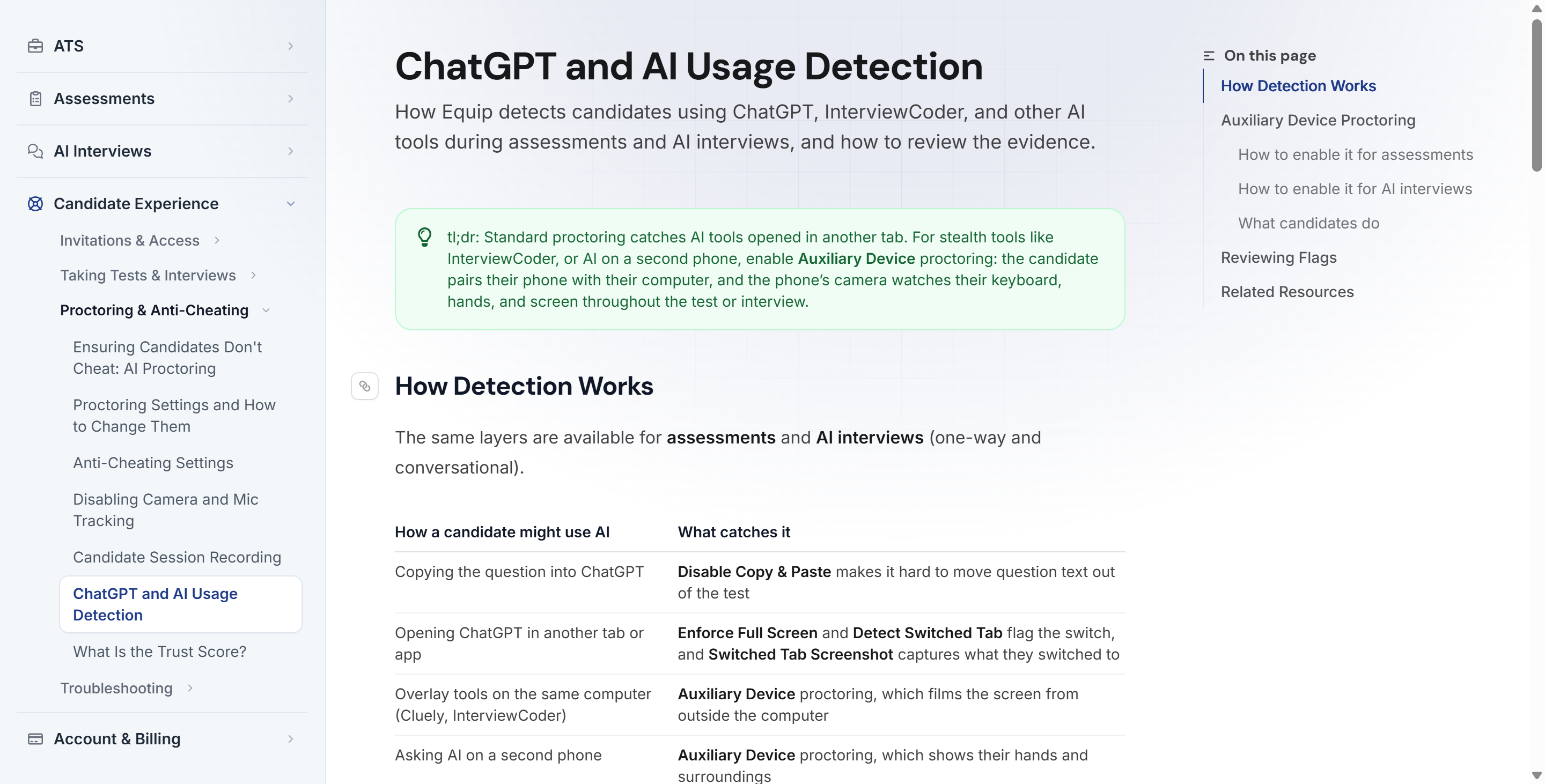
Auxiliary Device | Uses a phone as a second camera showing the hands, keyboard, and computer screen | Higher-security and AI-cheating detection |
They said they use device fingerprinting, IP logging, and multi-session detection, but these aren't presented as standard proctoring toggles like features such as "face detection" or "tab switching detection.
2. Different Assessment Types Use Different Default Proctoring
Equip does not apply the exact same default settings to every assessment type.
That distinction is important because a coding test may feel heavily monitored while a personality assessment on the same platform may use a much lighter configuration.
Programming, SQL, CSS, and Typing Tests
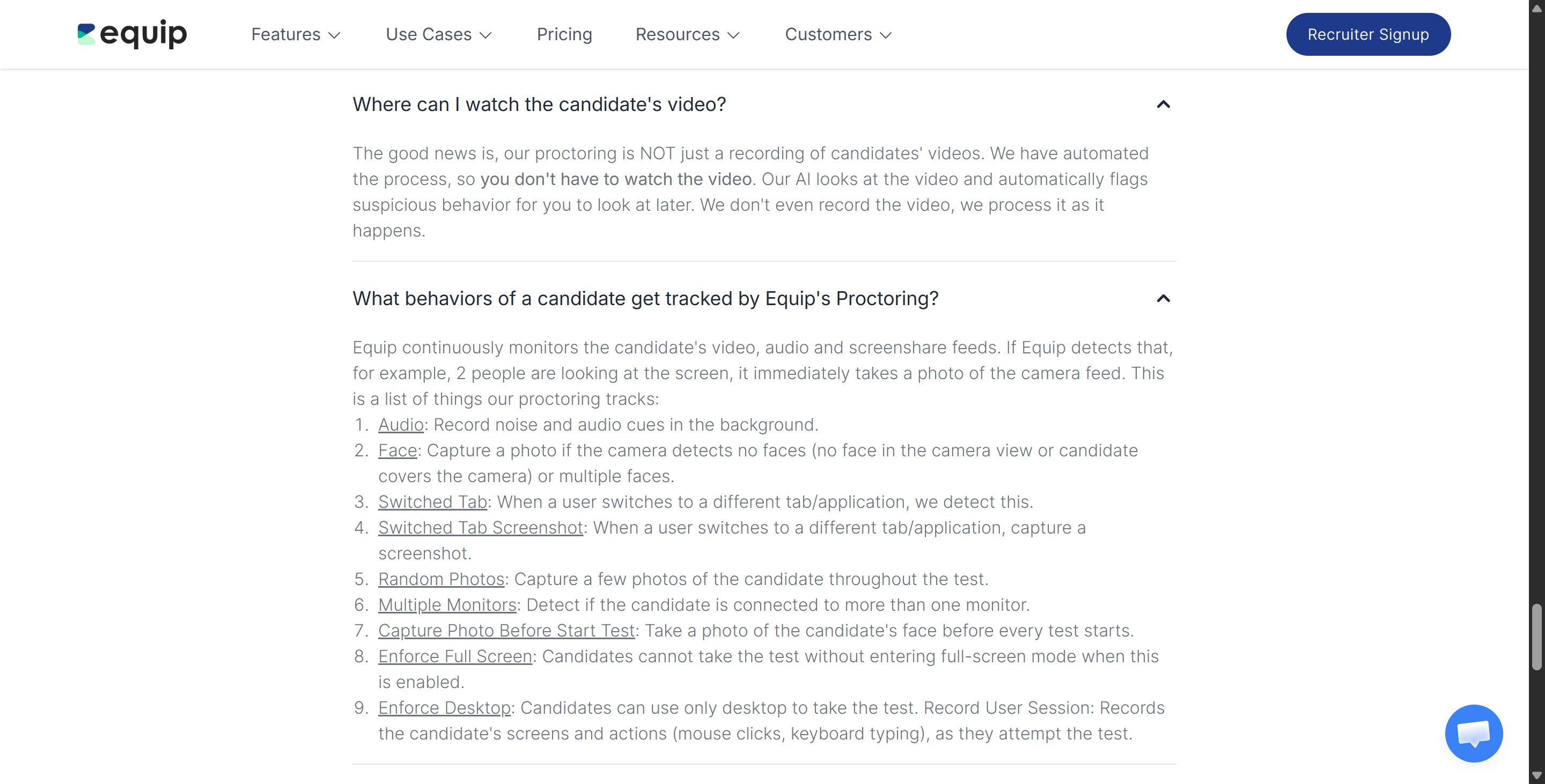
These are among the more heavily monitored assessment types.
Equip's current proctoring table shows that most of its monitoring settings are enabled by default for technical assessments such as programming and SQL.
Depending on the configuration, that can include:
face monitoring;
tab-switch detection;
full-screen enforcement;
multiple-monitor checks;
session recording;
audio detection.
The Auxiliary Device feature is different. It is generally disabled by default and has to be deliberately enabled by the employer.
Quiz / Multiple-Choice Assessments
Quiz-style assessments can combine standard proctoring with a separate set of question-level anti-cheating controls.
Those can include:
randomized question order;
shuffled answer choices;
disabled copy and paste;
optional auto-submit after excessive tab switching.
So a quiz can be protected in two different ways at once:
the questions themselves become harder to share or predict
and
the candidate's browser/session behavior can still be monitored.
Excel Assessments
Excel assessments can still use many of Equip's normal monitoring features.
However, Session Recording is not enabled by default in the same way it is for several coding, SQL, or quiz-based assessments.
That is a useful reminder that "Equip proctoring" does not automatically mean every monitoring feature is always running.
Psychometric Assessments
Personality and psychometric assessments are much lighter by default.
Equip disables many of the heavier monitoring options unless the employer specifically turns them on, including features such as:
audio detection;
face detection;
tab-switch detection;
random photos;
full-screen enforcement;
multiple-monitor blocking.
That makes sense because psychometric assessments are usually measuring preferences or behavioral tendencies rather than asking candidates to produce one objectively correct technical answer.
Video Responses and AI Interviews
Video-response questions already require the candidate to record themselves, so several additional monitoring options may be redundant or disabled by default.
AI interviews also have their own exceptions.
For example, Equip can disable Detect Audio when the interview itself depends on microphone or audio interaction. In conversational AI interviews, audio is obviously part of the assessment rather than automatically being treated as suspicious activity.
3. Question-Level Anti-Cheating Settings
Equip also has a separate set of controls that operate at the question or test-design level rather than through webcam or browser monitoring.
These currently include:
Randomize question order
Shuffle answer choices
Disable Copy & Paste
Auto-submit on Tab-switch
These should not be confused with the normal Proctoring Settings because they affect how the assessment itself behaves.
Detect Switched Tab
Once this monitoring feature is enabled, exiting the assessment may trigger a proctoring event or generate relevant evidence, which will appear in the candidate’s integrity report.
In other words, the system can:
Detect and report
Tab-switching behavior.
Automatically submit the assessment when a tab is switched.
Therefore, the difference between the two is simple:
Feature | Main Effect |
|---|---|
Detect Switched Tab | Records and reports the event |
Auto-submit on Tab-switch | Can end the assessment after the configured limit |
This is an important difference because not every anti-cheating feature is simply there to create evidence for later review. Some settings can directly affect whether the candidate is allowed to continue.
4. What Equip’s Session Recording Actually Captures
I originally assumed that "Session Recording" meant Equip was recording the candidate's entire desktop.
That is not the way Equip currently describes the feature.
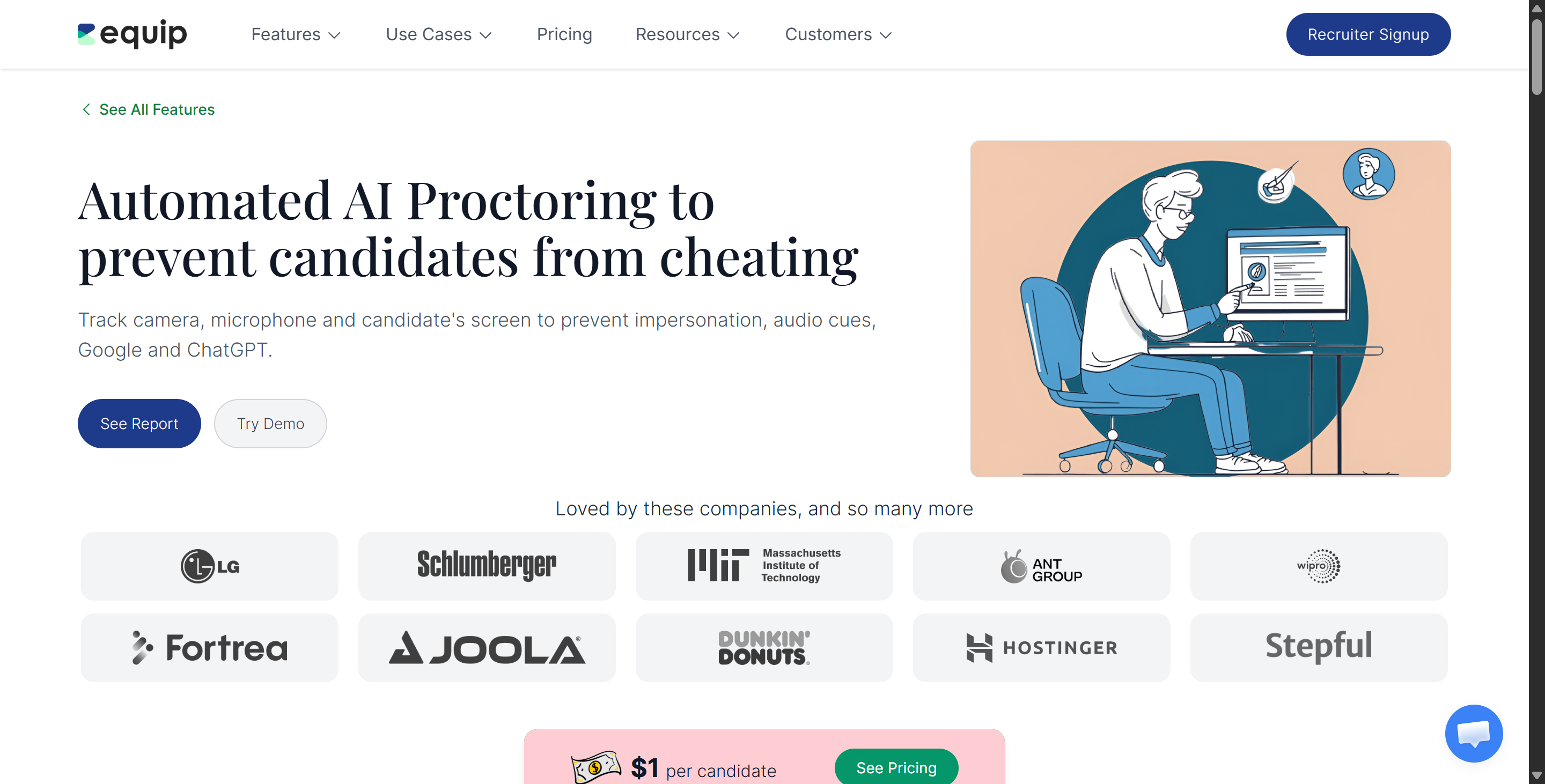
According to its documentation, Session Recording primarily records activity inside the assessment tab, including:
what appears inside the test interface;
mouse movement;
mouse clicks;
text typed by the candidate;
warnings and notifications generated by Equip.
It should therefore not be described as continuous full-desktop recording.
This becomes clearer when you compare it with Switched Tab Screenshot, which is a separate feature.
Feature | What It Captures |
|---|---|
Session Recording | Activity inside the Equip assessment tab |
Switched Tab Screenshot | Evidence captured when the candidate switches away from the assessment |
So if a candidate leaves the assessment tab, the normal Session Recording does not automatically mean Equip continuously records every other application on the computer.
Instead, the platform can use a separate switched-tab screenshot feature to preserve evidence related to that event.
5. How Equip Approaches ChatGPT and AI-Assisted Cheating
Equip uses several overlapping controls against unauthorized AI assistance rather than relying on one "ChatGPT detector."
Copy/Paste Restrictions
Disabling copy and paste makes the classic workflow less convenient:
question → external AI tool → answer → paste back into assessment
This does not mean outside AI becomes technically impossible to use, but it removes one of the easiest ways to move large amounts of text between the assessment and an external tool.
Full-Screen and Tab-Switch Monitoring
Leaving the assessment to open:
ChatGPT;
another browser tab;
another browser window;
another application
can create full-screen or switched-tab monitoring events when those settings are enabled.
This is a browser-centric form of monitoring: Equip does not necessarily need to inspect every process on the computer to know that the candidate has repeatedly left the assessment environment.
Visible AI Overlay Detection
Equip also says that AI tools or answer overlays can be flagged when they appear visibly in the monitored screen environment.
That distinction is important.
Detecting a background process and seeing the visual output of that process are two different things.
Even without deep operating-system process scanning, a proctoring platform can still analyze something that becomes visible in the screen or camera evidence it receives.
6. Auxiliary Device Proctoring: Equip’s Most Distinctive AI-Detection Feature
Equip's current anti-AI design is pretty interesting, especially the "auxiliary device proctoring" feature. (It's also the hardest part to bypass.)
This pretty strict monitoring measure apparently comes from the fact that computer-based browser monitoring has its limits.
For example, traditional browser monitoring may have trouble with the following:
AI overlays that act differently from normal browser tabs;
extra info shown on a second physical device;
operations that happen completely outside the main computer.
Instead of trying to fix all these issues in the browser itself, Equip brings in a second physical perspective.
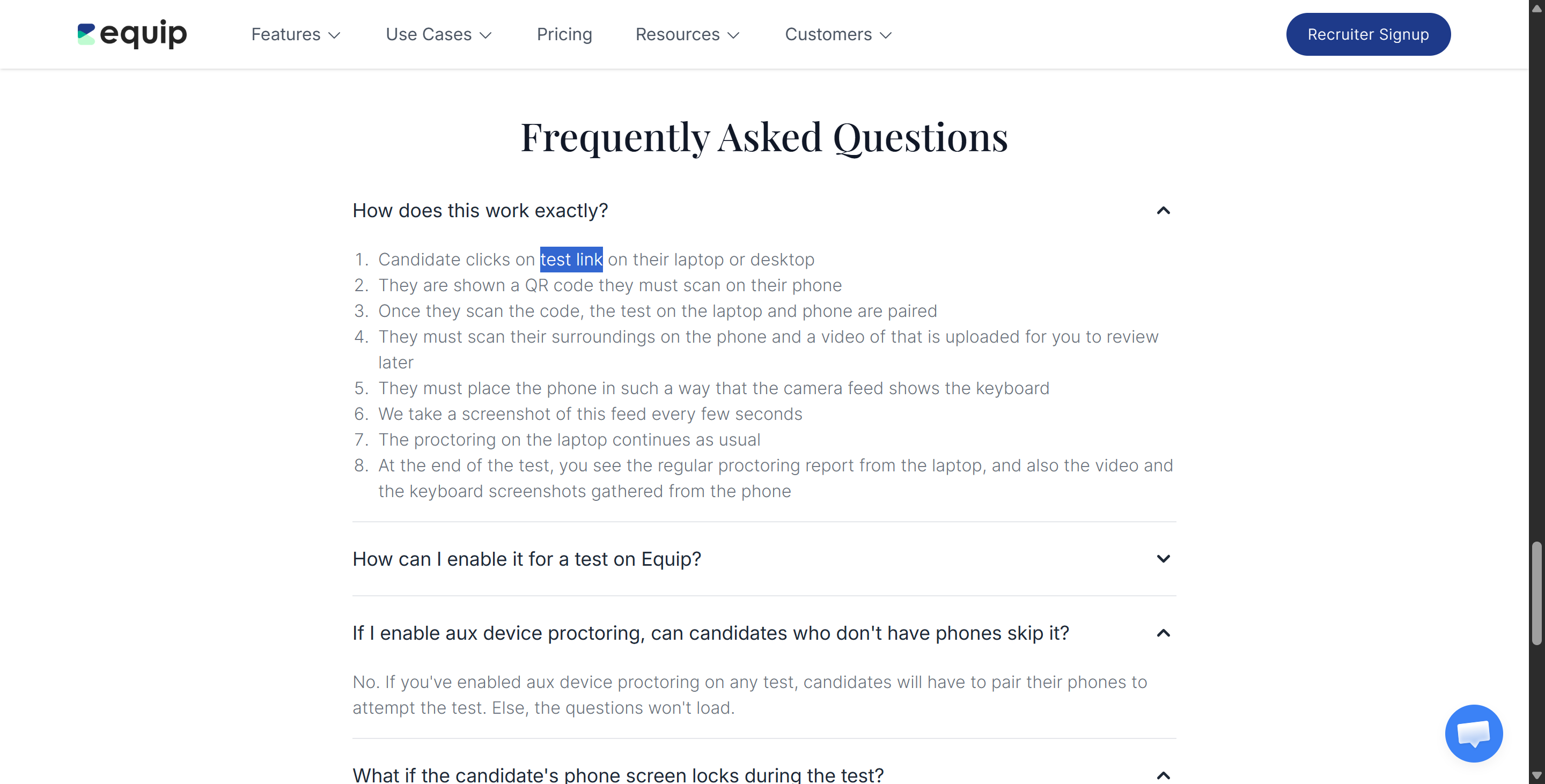
Here's roughly how the workflow looks:
The test-taker opens the assessment on their computer.
They just scan a QR code with their phone.
The smartphone pairs with the current assessment session.
The test-taker just displays or records their surroundings.
The phone is positioned so that the camera can see the following:
· The candidate's hands, the keyboard and the computer screen.
· The smartphone camera stays on for the whole assessment.
· Equip periodically captures images from this external perspective.
If the smartphone is locked or the camera feed is interrupted, the candidate will get a warning on the computer and might need to restore the feed before continuing.
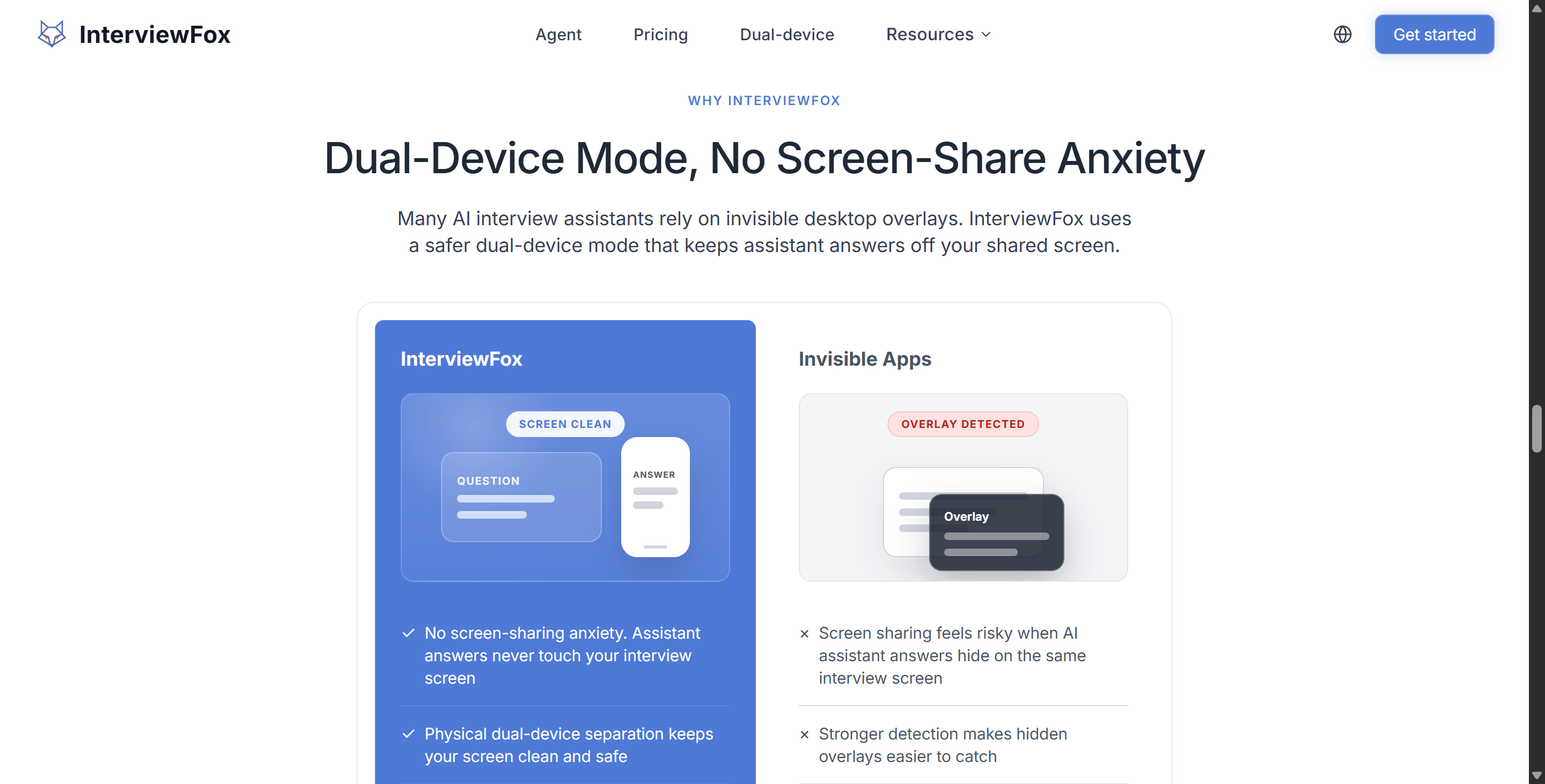
So this is where the AI interview assistants that rely on other devices like a phone fall short. For example, some tools like InterviewFox really need another phone to deliver all the analysis and answers, thus cannot pass this part of the Equip assessment.
7. Equip Trust Score and Human Review
Equip does not describe every detected event as automatic proof of cheating.
After a proctored assessment, the platform can generate a Trust Score between 0 and 100%.
A lower score means Equip has identified more evidence that may deserve attention.
Recruiters can then inspect the underlying session evidence, including:
individual violations;
timestamps;
screenshots;
webcam evidence;
Session Recording.
The review process is therefore better understood as:
Stage | What Happens |
|---|---|
Automated Detection | Equip identifies potentially suspicious events |
Trust Score | The session receives an overall integrity score |
Evidence Review | Recruiter reviews screenshots, timestamps, recordings, and violations |
Human Decision | Recruiter decides whether the evidence actually matters |
But according to a special note from Equip to employer teams, they're advising against rejecting candidates based solely on their "Trust Score".
For example, if there's a single alert for facial detection, if someone accidentally switches tabs, or if the camera malfunctions for a second, it doesn't necessarily mean that a candidate received unauthorised assistance.
So, the "Trust Score" is more of a guideline than anything else. It's not something you should use to automatically rule someone out, like you or me, just based on that score.How Different Assessment Modules Handle Proctoring and How to Cheat on Equip Assessment
Equip does not apply identical proctoring default settings to every assessment category. A live coding challenge features heavy default surveillance, whereas a psychometric personality test operates under a significantly lighter configuration. Recognizing these differences is essential for anyone evaluating how to cheat on Equip assessment effectively.
Avoiding Flags and Maintaining Trust Scores When Learning How to Cheat on Equip Assessment
To complete an Equip evaluation without generating integrity flags, candidates must maintain absolute control over their physical environment and input habits. Bypassing browser-centric proctoring while executing a strategy for how to cheat on Equip assessment requires meticulous workspace preparation and organic behavioral pacing.
My Basic Hardware Setup
Single-monitor Configuration: Before you launch the Equip benchmark, make sure you've disconnected all secondary monitors, external tablets and HDMI display splitters. This gets rid of any hardware prompts that are generated by the multi-monitor detection script.
Secondary Webcam HUD Placement: Put a see-through extra window (like a Linkjob AI overlay that doesn't do anything) right under the camera lens. Make sure I can see the webcam properly so that I don't take my eyes off the screen when I'm doing programming or testing.
Isolated Audio Environment: Please do the assessment in a quiet room so that background noise doesn't trigger any alerts.
Clear Your Browser Workspace: Before you start the exam, make sure you've cleared your browser cache, turned off pop-up blockers, disabled any conflicting third-party browser extensions, and closed all background messaging apps.
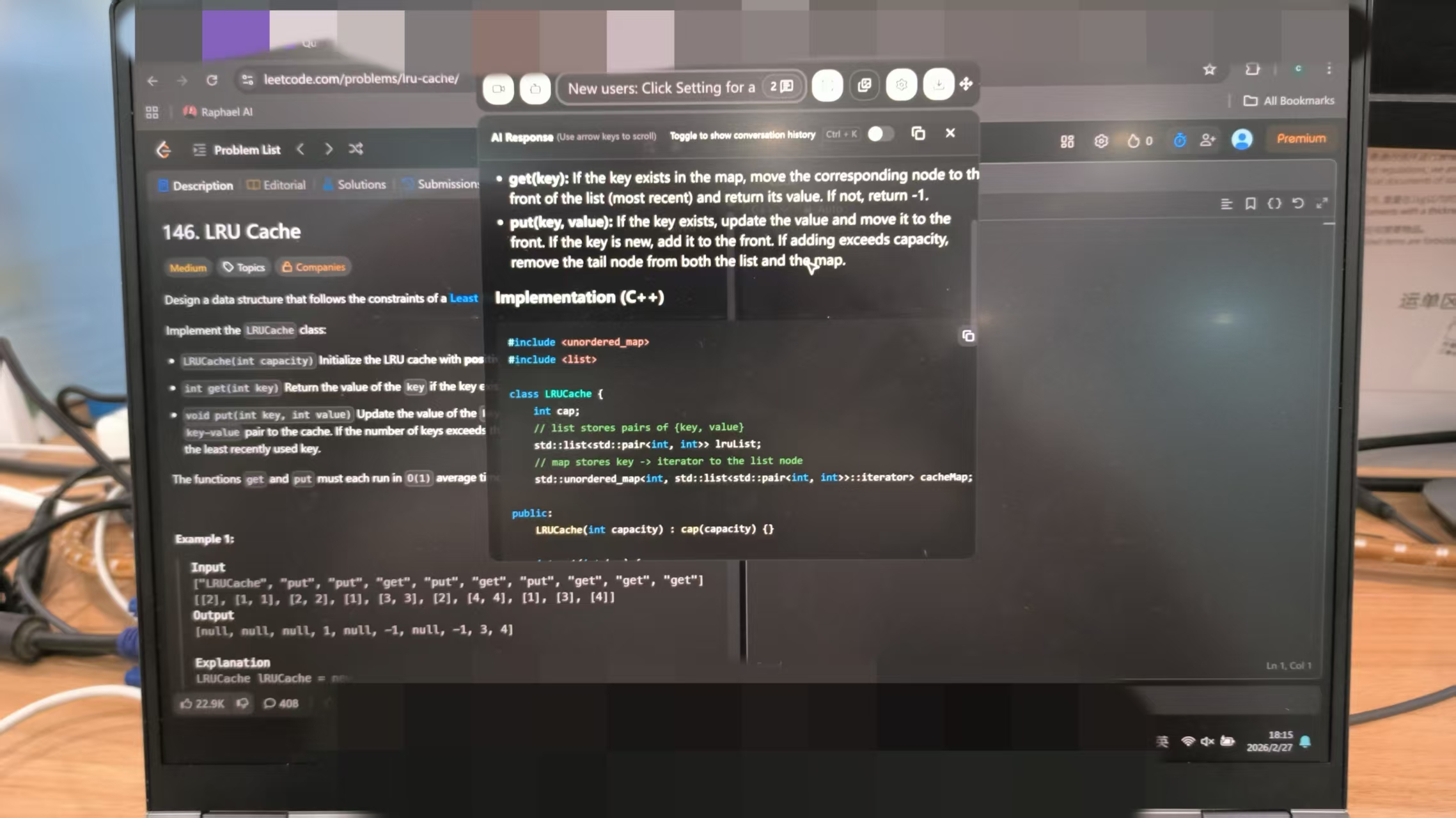
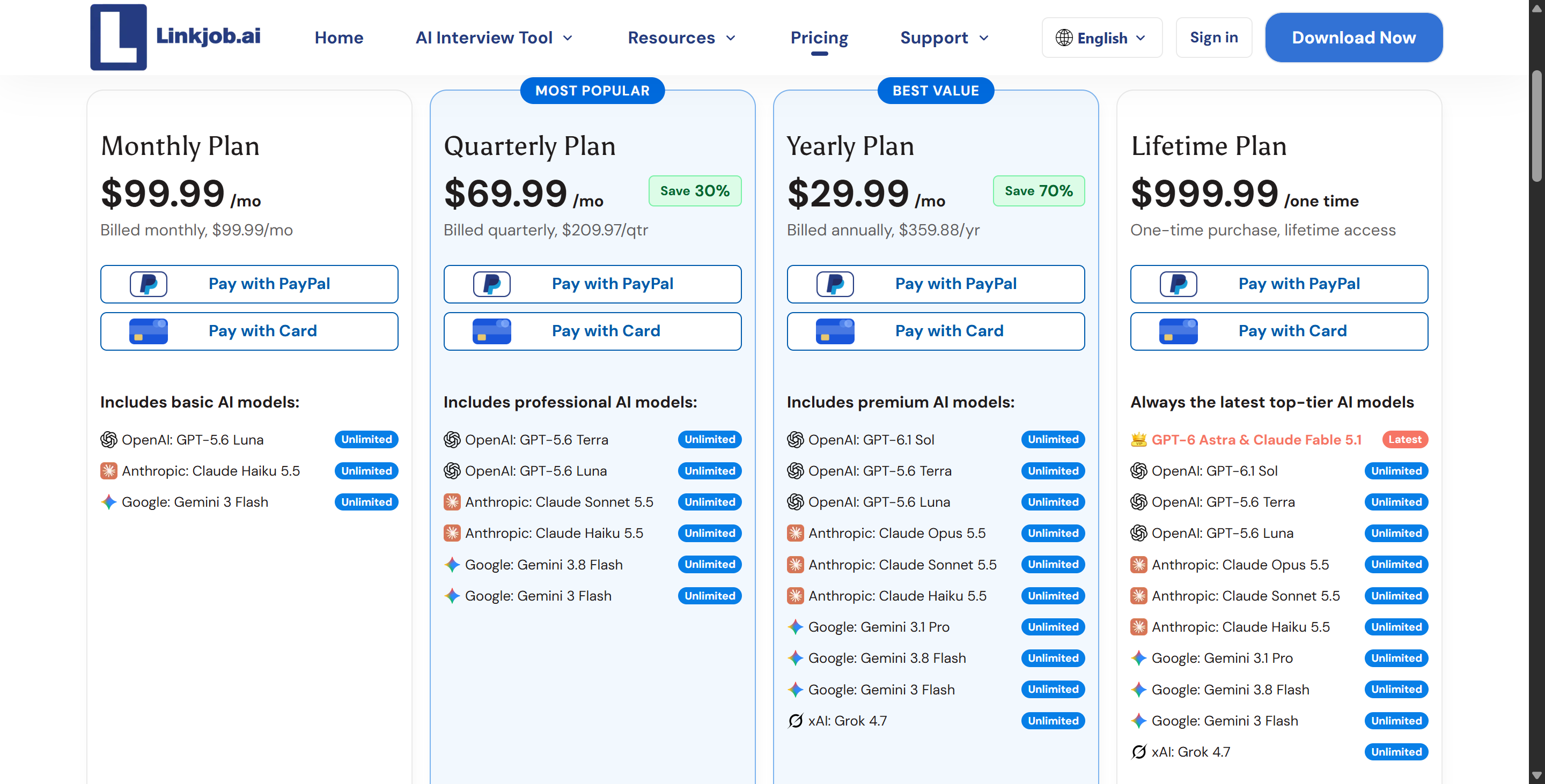
At the moment, if the multi-device proctoring option isn't enabled, an interview tool like Linkjob AI – which supports custom prompts and the latest LLMs – is enough to help with the whole Equip assessment. After I'd set everything up like the guide said, I was able to get through the whole assessment process without any problems, just like I'd practised with a friend, and I could get answers by taking screenshots whenever I needed help. Everything went to plan.
I had to stay as inconspicuous as possible, even though Linkjob AI's global hotkey feature was very useful, since I had confirmed that the assessment would record keystrokes.
Behavioral Pacing, Keystroke Dynamics, and Session Flow
Character-by-Character Manual Entry: Never attempt to paste text into code editors, SQL input boxes, or open text response fields. Always type out AI-generated code solutions line by line to generate organic keystroke dynamics on the Session Recording timeline.
Natural Cognitive Pacing: On complex algorithmic or multi-table SQL prompts, allow a realistic 15-to-30-second thinking pause before you start typing. Submitting instant, flawless code immediately after opening a problem creates unnatural timing markers in recruiter playback logs.
Controlled Gaze Alignment: Keep your eyes fixed steadily on the central display area where test questions and your HUD overlay sit, avoiding sharp downward or lateral head movements.
Intentional Error Correction: Introduce minor typos, backspace edits, or temporary variable naming iterations on purpose, then correct them naturally to make your keystroke timeline look completely organic.
Composed Session Management: Avoid abrupt window interactions or rapid hotkey spamming that could trigger automated tab-switch screenshot captures or full-screen exit warnings.
Adhering to these physical setup rules and behavioral habits guarantees that your session audit log remains natural, credible, and free of high-risk flags when evaluating how to cheat on Equip assessment.
Frequently Asked Questions About How to Cheat on Equip Assessment
Here are direct, concise answers to common questions test-takers ask when researching how to cheat on Equip assessment:
Does Equip use continuous full-desktop screen recording?
No. Equip's Session Recording captures activity strictly inside the assessment browser tab rather than recording your entire desktop continuously.
Can Equip detect when a candidate switches browser tabs?
Yes. When enabled by employers, Equip tracks browser DOM focus loss (window.onblur) and logs tab-switch events or captures automated screenshots.
Does Equip require an auxiliary second camera for all tests?
No. Auxiliary Device Proctoring is an optional high-security feature that must be explicitly enabled by the hiring organization.
What is an Equip Trust Score and does a low score mean automatic failure?
No. The Trust Score is a review signal summarizing session anomalies, which recruiters examine manually rather than using it as an automatic disqualification rule.
Can Equip detect visible AI overlays or second-device assistance?
Yes. Auxiliary device monitoring and proctoring snapshots can capture visible AI HUD overlays or external equipment placed within the workstation view.
Do standard psychometric tests on Equip feature strict proctoring?
No. Standard personality and motivation assessments disable heavy proctoring controls by default unless specifically overridden by the employer.
See Also
How to Get Invisible AI Help for Ropes Interview in 2026 without Getting Caught
Employing AI for Real-Time Coding Interviews in 2026
How to Pass the Mercor Interview with Secret Methods in 2026
My Experience with AI Tools to Ace Glider AI Test in 2026
How I Managed to Get Invisible AI Help for Honorlock Exams in 2026
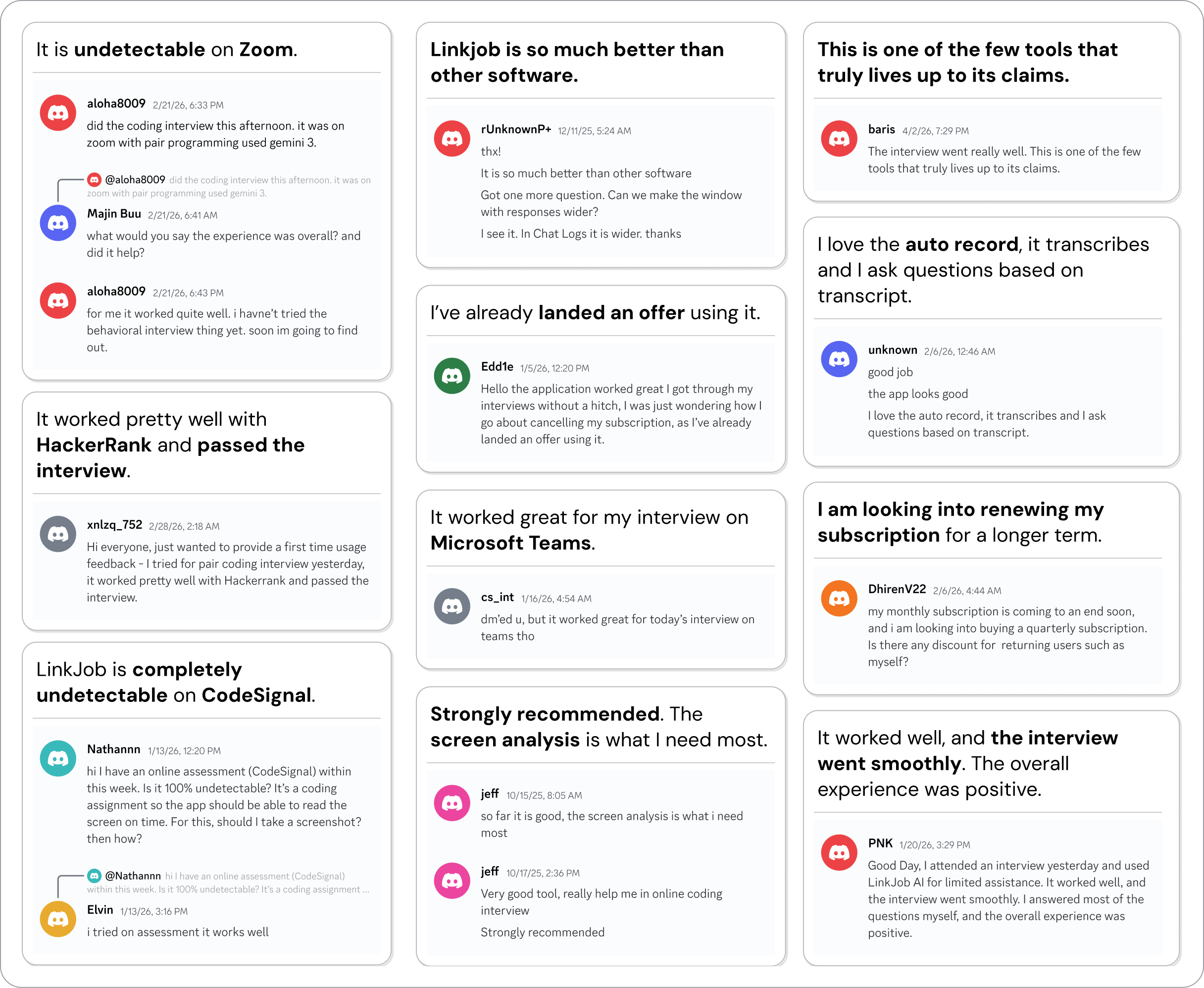
Why People Choose Linkjob AI
Smoother interviews, coding challenges cleared, and job offers landed. See how users describe their experience with Linkjob AI—in their own words.

© Copyright 2026 Linkjob AI - All Rights Reserved.