Best InterviewFox Alternative: Linkjob AI vs InterviewFox

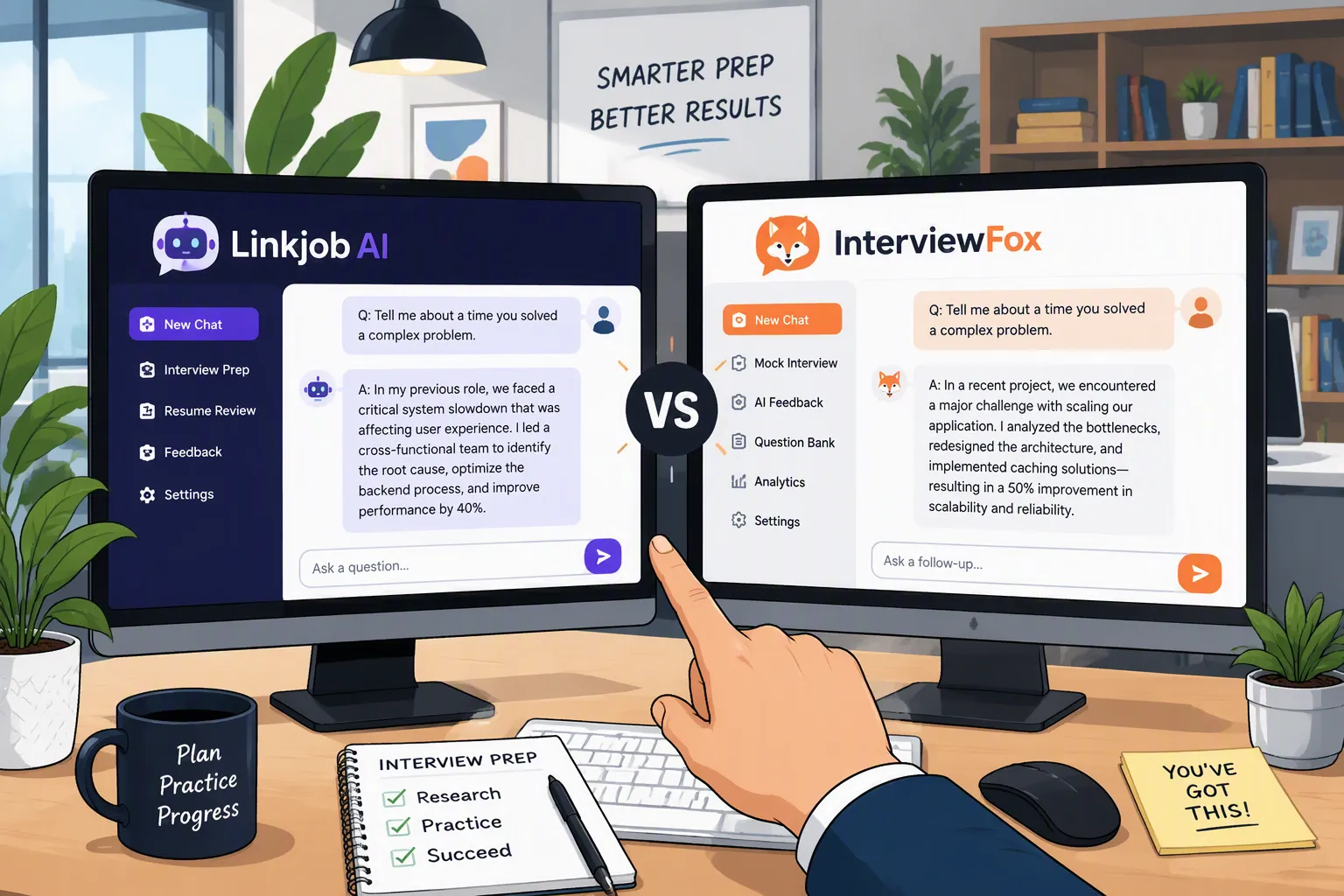
TL;DR: InterviewFox is a strong choice if Dual-Device Mode and pay-as-you-go credits are your priorities. Linkjob AI is the InterviewFox alternative I prefer if you want a native desktop workflow, broader published model selection, resume/job context, coding support, screenshots, mock interviews, and one interface across more interview types.
After finishing my InterviewFox review, I did not come away thinking InterviewFox was a bad product. I tried it out, and I actually got a better idea of why it's so popular. The interface is clean, the transcription speed is fast, and the "dual-device mode" is nothing like the typical overlay solution. But, looking at how I do interviews, I’m still looking for an InterviewFox alternative.
I wanted a tool that could handle behavioural interviews, coding challenges, system design tasks, screenshots, resume analysis, and mock practice all at once, without forcing me to switch back and forth between my laptop and phone, and without triggering increasingly strict gaze detection methods. It was these very requirements that made me choose Linkjob AI.
After checking them out, I decided to go with the annual plan from Linkjob AI. InterviewFox currently charges $348 per year, while Linkjob AI costs $359.88. In a year, the difference between the two is just $11.88. And for just under $12, I get a better experience and the tool integration is way better.
InterviewFox Alternative: Quick Side-by-Side Comparison
The two products overlap more than their marketing suggests.
Feature | InterviewFox | Linkjob AI |
|---|---|---|
Primary Workflow | Dual-device + live assistant | Native Windows/macOS desktop copilot |
Real-Time Answers | Yes | Yes |
Coding Assistant | Yes | Yes |
System Design | Yes | Yes |
Resume/Context | Yes | Yes |
Mock Interviews | Deeper Agent/Elite workflow | Included in paid plans |
Screenshot Analysis | Yes | Yes |
Monthly Price | $49-$129 | $99.99 |
Annual Equivalent | $29-$79/mo | $29.99/mo |
Annual Total | $348 | $359.88 |
Entry Models | Luna, Haiku 4.5 | Luna, Haiku 4.5, Gemini 3 Flash |
Annual Premium Models | Sol, Opus 5, Terra, Sonnet 5, Grok 4.3, Luna | Sol, Terra, Luna, Opus 5, Sonnet 5, Haiku 4.5, Gemini 3.1 Pro, Gemini 3.8 Flash, Gemini 3 Flash, Grok 4.6 |
Main Advantage | Dual-device separation + credit packs | Broader integrated desktop workflow + larger model catalog |
As the table shows, InterviewFox and Linkjob AI do similar things, but the key difference is in their design.
Here's how InterviewFox does it: If the answers don't show up on the interviewer's computer, wouldn't that make the tool completely invisible? It was this way of thinking that led to the two-device stealth approach.
Here's how Linkjob does things: It would be great if the interview assistance tool was part of the standard desktop workflow. So, it offers a more seamless experience, along with a dashboard that requires more independent exploration.
This is the foundation of my comparison of InterviewFox alternatives.
InterviewFox Alternative: Dual-Device vs Native Desktop Workflow
InterviewFox's defining feature is Dual-Device Mode. The assistant can put answers on a phone while the interview remains on the main computer. InterviewFox specifically promotes this as an alternative to same-device overlays.
Where InterviewFox Has The Clearer Disadvantage
I get that there are a few reasons why this design is a hit:
The AI answer panel won't take up space on the interview screen, which is great.
The answer interface is physically separated from the main computer, which is also good.
It works naturally with the "laptop + smartphone" setup, which is a bonus.
Some users simply don't like having to open another desktop window, so this is useful.
This is indeed a valid product advantage.
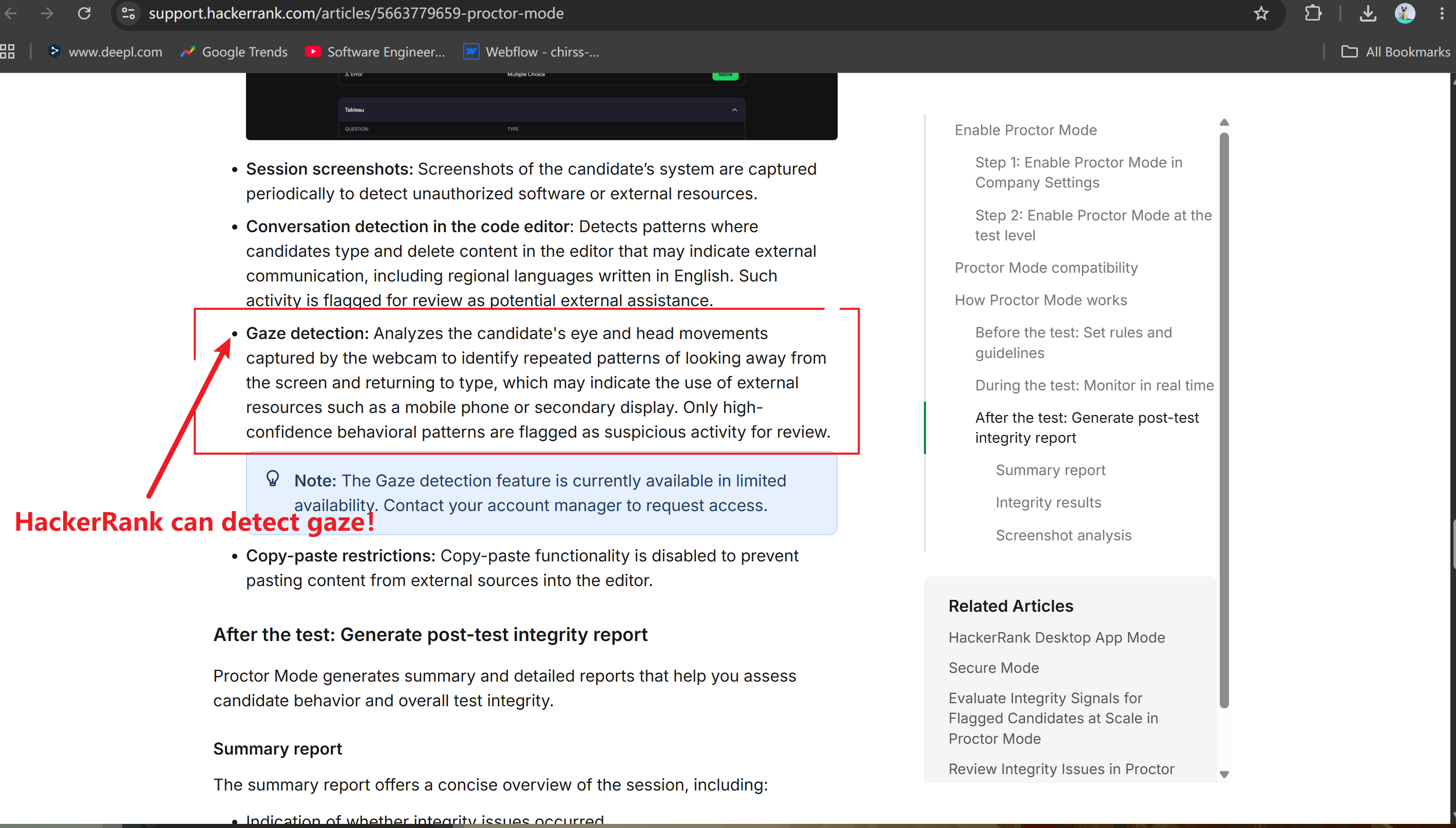
But I also found something in the HackerRank instructions that said: "A second device is more secure and less likely to be detected than an overlay." So, modern proctoring technologies can do things like gaze analysis using your webcam, detect any mobile phones or tablets, and monitor screenshots and behaviour. Even InterviewFox's own article on HackerRank says that gaze and visible device monitoring might still happen in "proctored mode."
Some OA platforms need you to use two different devices to record the whole process of a candidate's responses. So setting up a third device to run InterviewFox completely defeats the purpose of "invisibility."
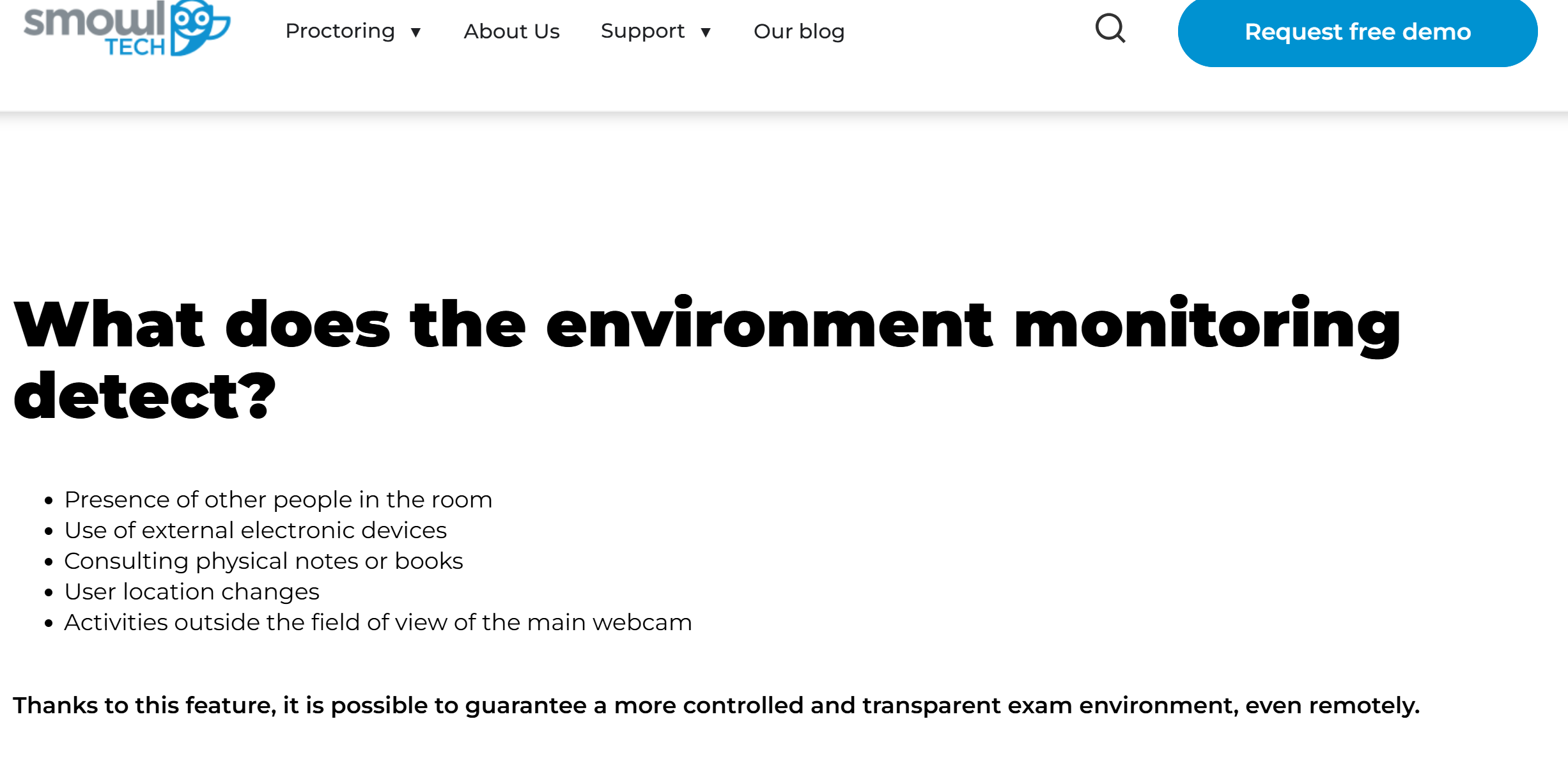
Even without this requirement, I'd much rather consolidate all this info into a single desktop workflow, rather than constantly switching my attention between two devices. After all, there's always the possibility of being discovered at any moment due to a shift in gaze or an unnatural look on glasses.
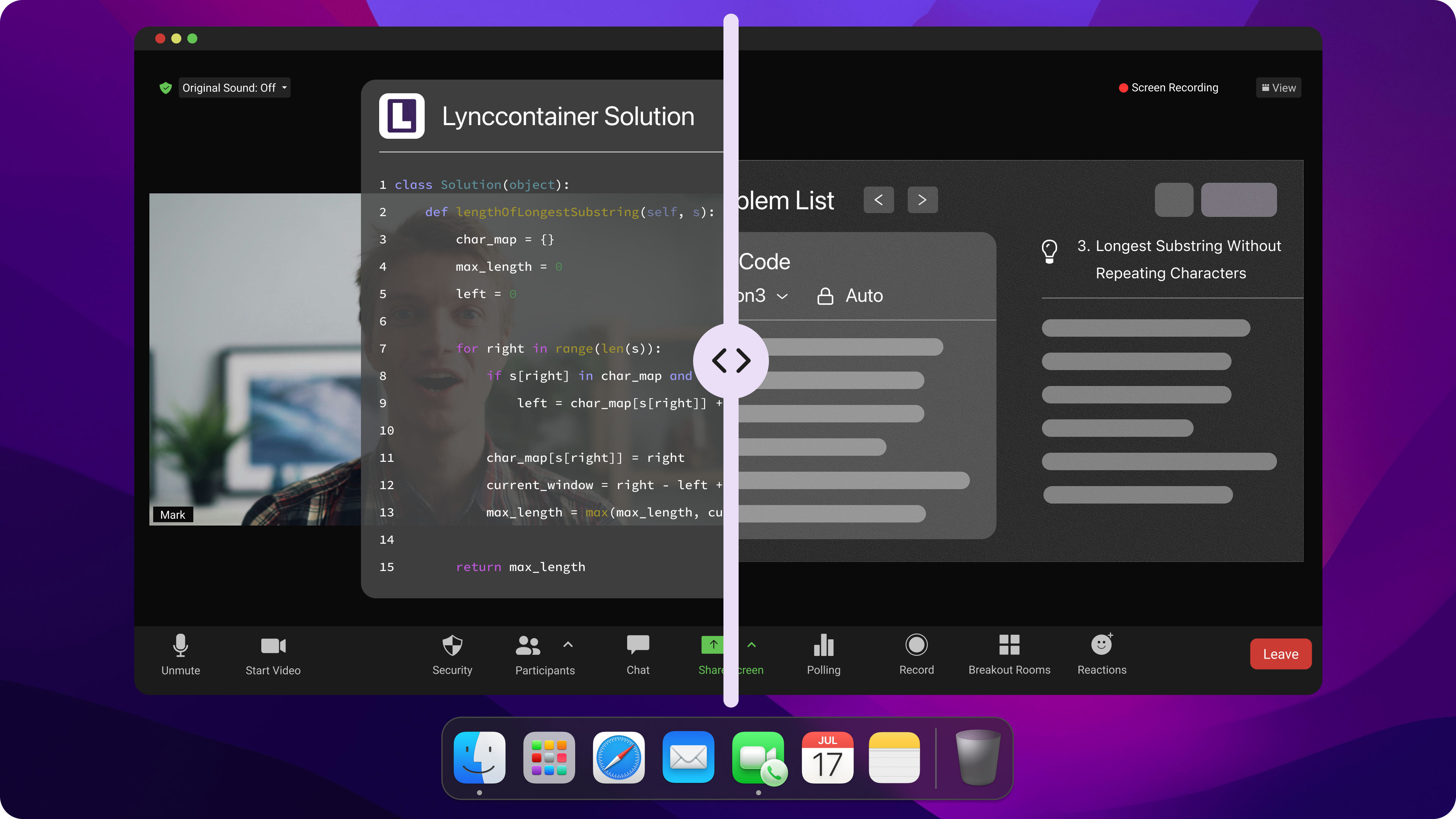
Linkjob AI has native Windows and macOS applications and supports behavioural, programming, system design, case study, finance, quantitative analysis and other types of interviews, too. It also lets users provide resumes, job descriptions, and custom instructions to generate personalised responses. That’s why Linkjob has become a better alternative to InterviewFox for me.
InterviewFox Alternative: Coding And LLM Choice
This is where the comparison became much more important after I ran a separate fast-model benchmark.
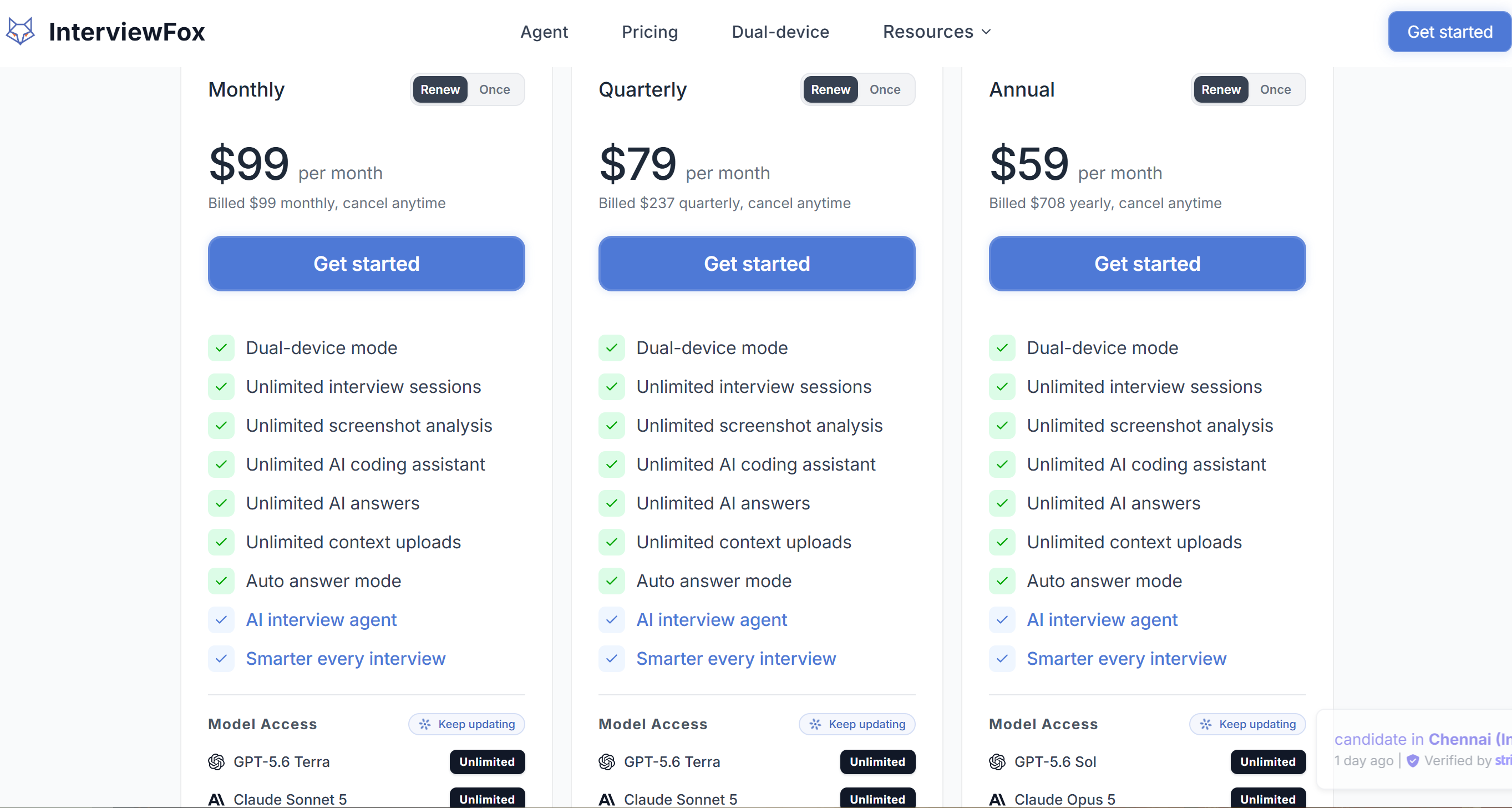
InterviewFox's monthly and quarterly Pro plans currently include:
GPT-5.6 Luna
Claude Haiku 4.5
Its annual plan adds:
GPT-5.6 Sol
Claude Opus 5
GPT-5.6 Terra
Claude Sonnet 5
Grok 4.3
GPT-5.6 Luna
Fast Models Sometimes Fail When You're Coding
I recently used a high-speed LLM to check the edge cases of newly written algorithm problems and system designs. The results seem pretty comprehensive, but a closer look shows it actually made quite a few mistakes. I can tell you for sure that most of the fast models won't pass edge case tests with even a 1 in 10 probability, as you can see from the test results below:
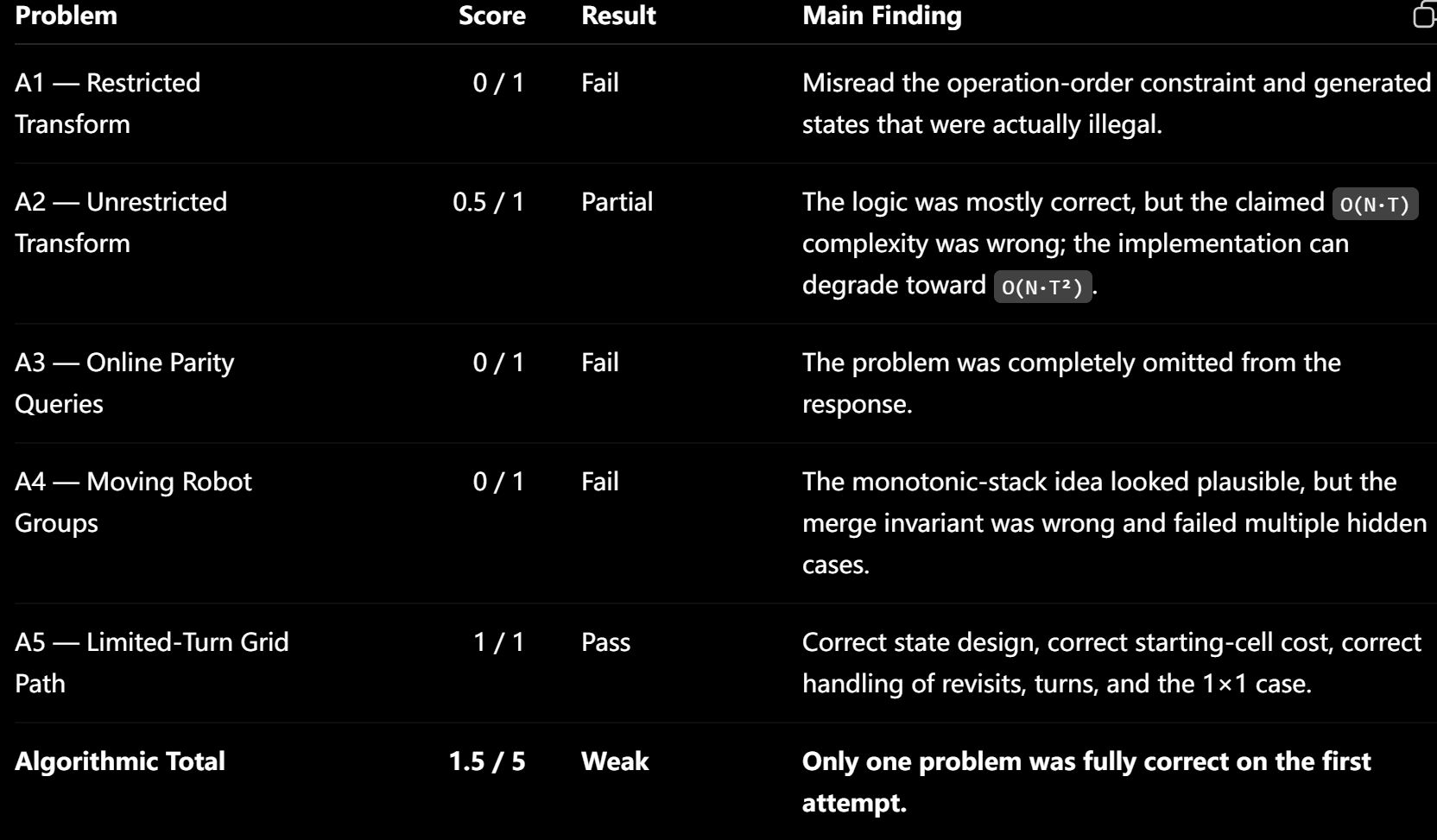
I didn't do these experiments myself using InterviewFox's model, so I can't say for sure that InterviewFox's fast models perform the same way. But this also shows a key difference: Being fast enough for in-person interviews doesn't necessarily mean you're up to the challenge of really tough programming interviews.
That's also why I don't take a strong stance on InterviewFox's performance — they say their Elite AI model is more sophisticated, but it's priced at $59 a month at least, which is way higher than Linkjob AI's $29 offering for something similar.
At the moment, Linkjob has multiple tiers for model access. When it comes to monthly plans, it's pretty similar to what InterviewFox offers, but when you start looking at the quarterly plans, you've got some really cool models to choose from. And there's no tiered treatment either — whatever model you go for, you can make the most of all its features.
For me, this is one of the best reasons to go with Linkjob instead of InterviewFox.
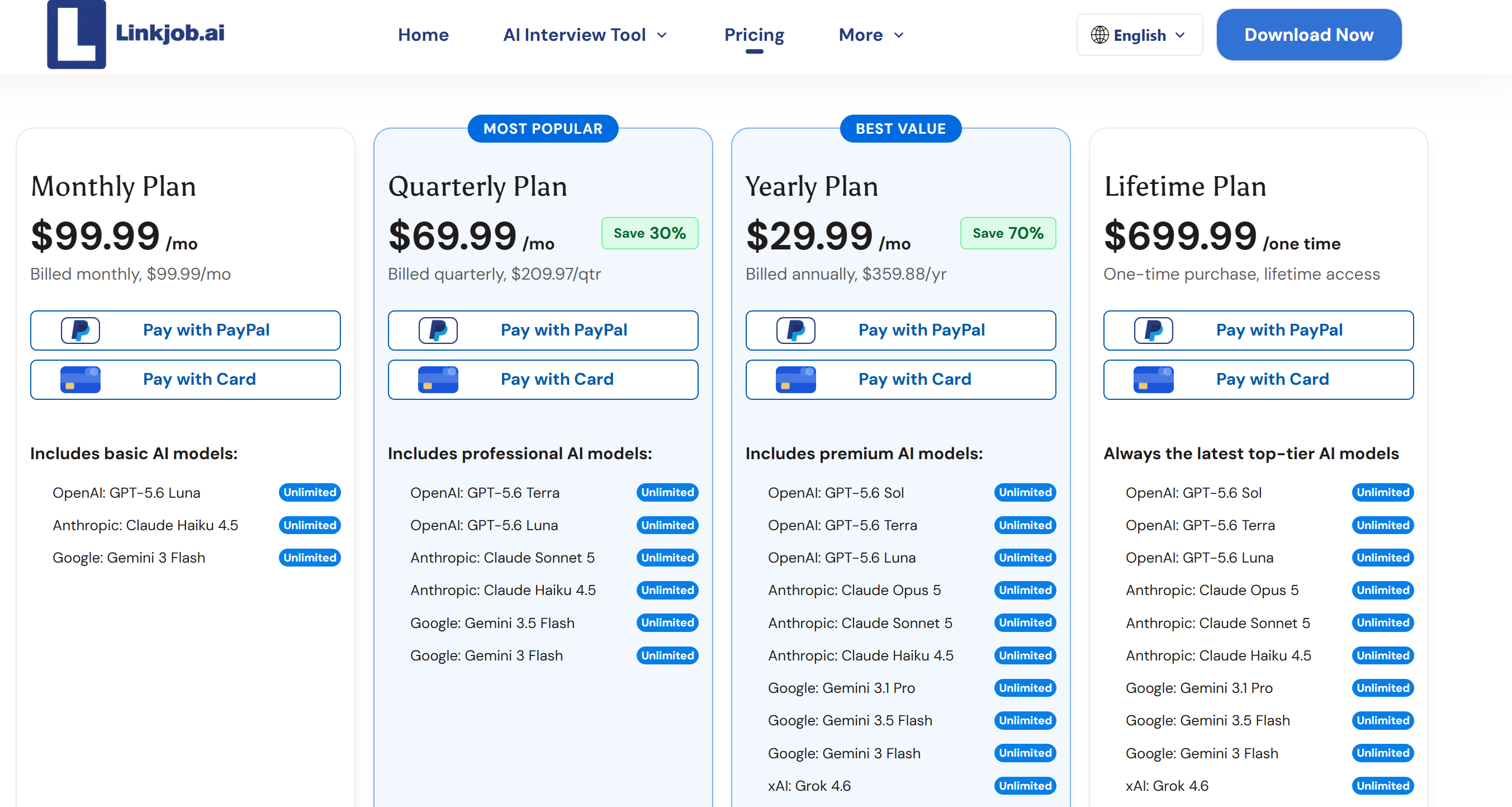
In normal interviews, I can go for speed; when the interview moves on to algorithms or system design, I can switch to a model that's better at reasoning. Even though the annual fees are pretty much the same, Linkjob has a better range of premium models.
InterviewFox Alternative: Resume Context, Interview Preparation, & Added Features Compared
This is one area where InterviewFox really shines. Its smart assistant can:
Tweak your CV;
Get company research stuff ready;
Come up with interview tactics;
Do some practice interviews;
Come up with plans for after the interview;
Save any useful info for later.
It's a great idea for people who like to chat to their job-search assistant on WhatsApp. But if you want to customise things like advance preparation or custom prompts, you'll need to go for one of the Elite plans, starting at $59/month. That's because the InterviewFox agent isn't included in any plans other than Elite.
If you compare the options, I think you'll get a better sense of why I thought Linkjob AI is the best InterviewFox alternative.
For just $29/month, here's what you get with InterviewFox:
Half a Basic Credit Pack, 500-minute interview sessions, and the base model
Or one month of the Pro plan based on an annual subscription, but without mock interviews or a dedicated agent – and other interview assistant features designed to help you
But if you spend $29 on Linkjob AI, you basically get all the features of a full-year InterviewFox Elite subscription, which costs twice as much. WhatsApp integration isn't available, but you can still open Linkjob AI on your computer and use all its models and features as normal.
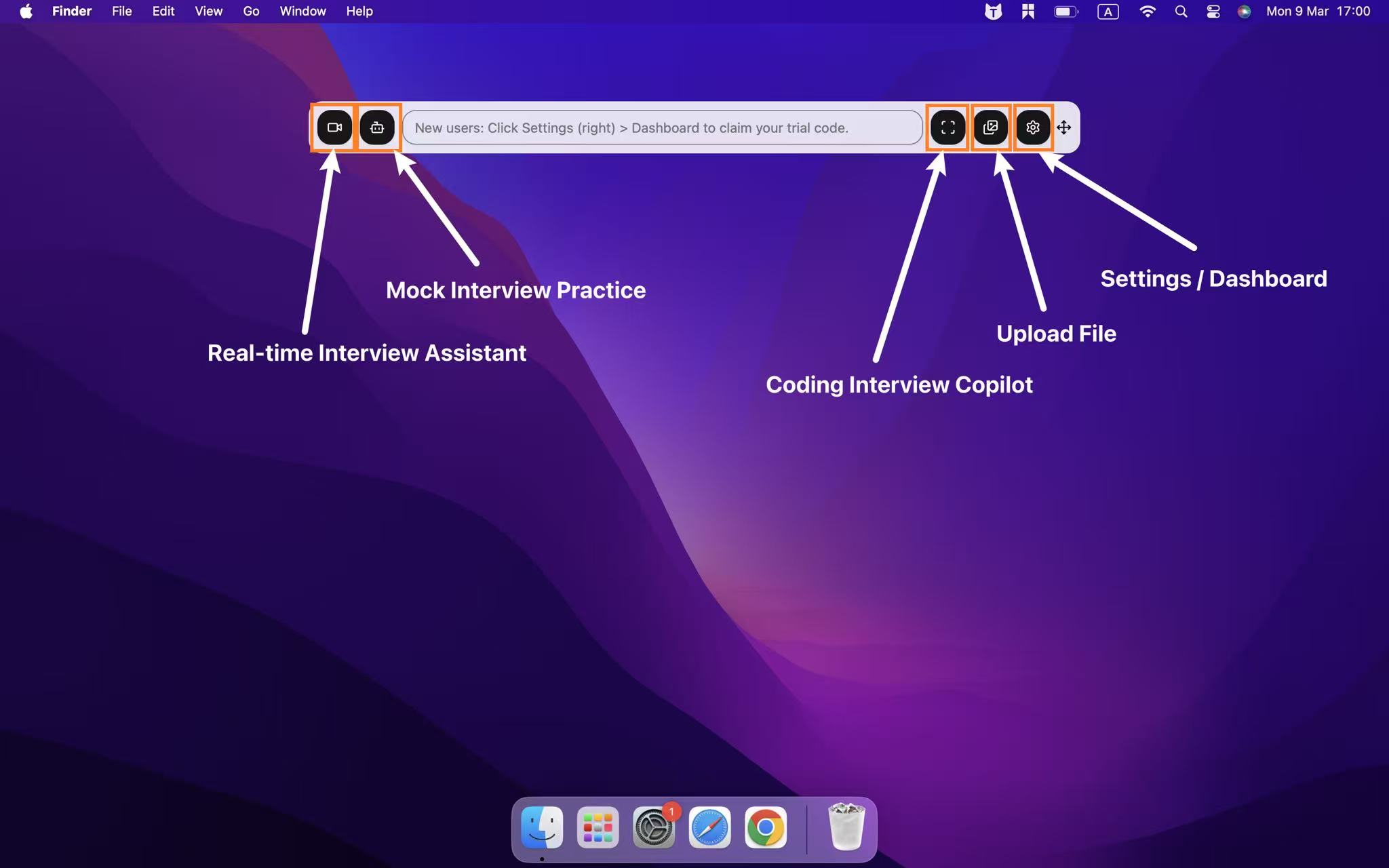
InterviewFox Alternative: Support And Product Transparency
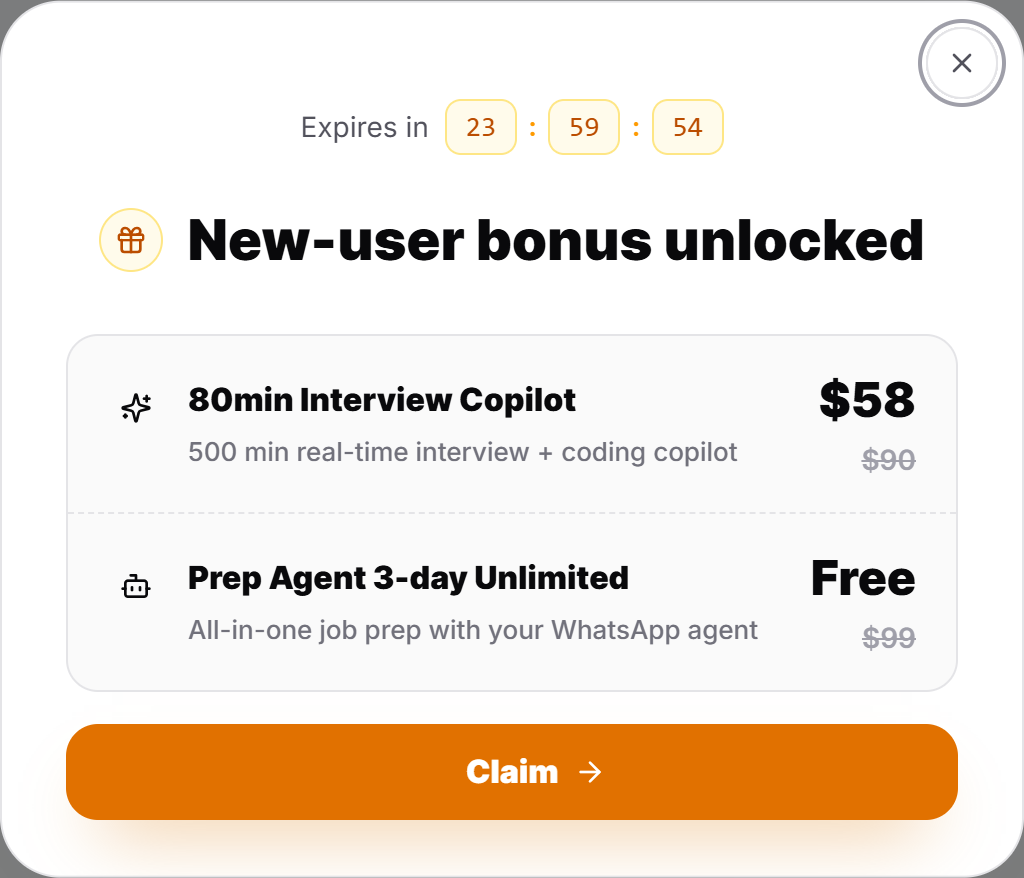
To be honest, during my testing period, InterviewFox often made me feel like they were "desperate to make money off me". Instead of making the product as good as possible, it just kept cramming a price list into the corner where a user guide or FAQ should have been, and even popped up a window with a limited-time offer the moment I clicked into the Dashboard.
I'm not really into that kind of thing, so the overall experience was actually a bit lacking.
On the other hand, using Linkjob AI feels more flexible because you can customise it to suit your needs. There aren't any tutorials for the settings or the various small buttons, which I like. At least it doesn't keep reminding me that I should pay for a certain plan or that I need to hurry up and buy a credit pack.
Considering Better Customer Service
I know InterviewFox has been around for a while, because I've seen posts on Instagram from at least nine months ago. I'd say it's a well-established tool, but I'm not overly impressed with its customer service.
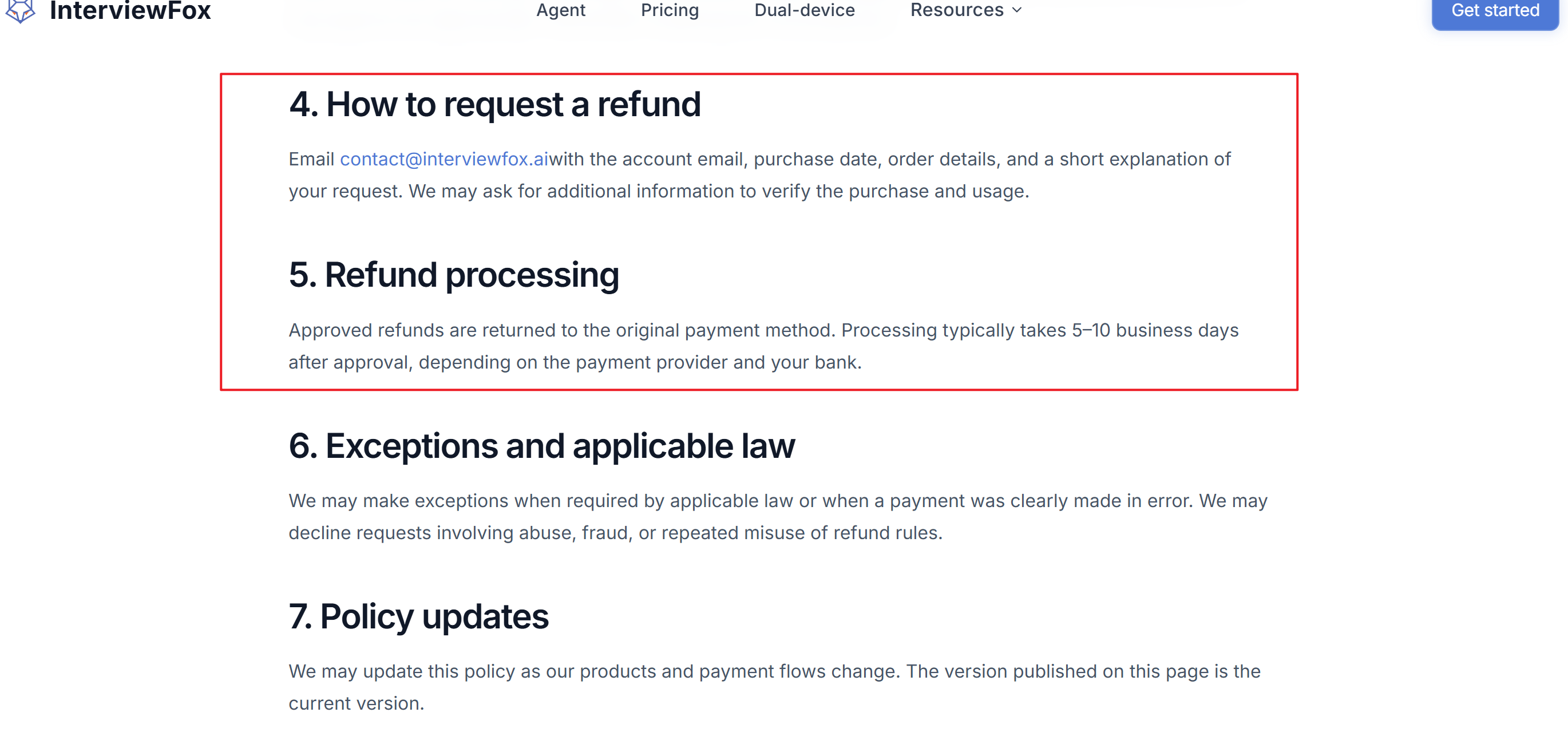
As you can see from the image above, if you encounter a bug, need a refund or have a question, you have to email the founder, and the refund process takes a while.
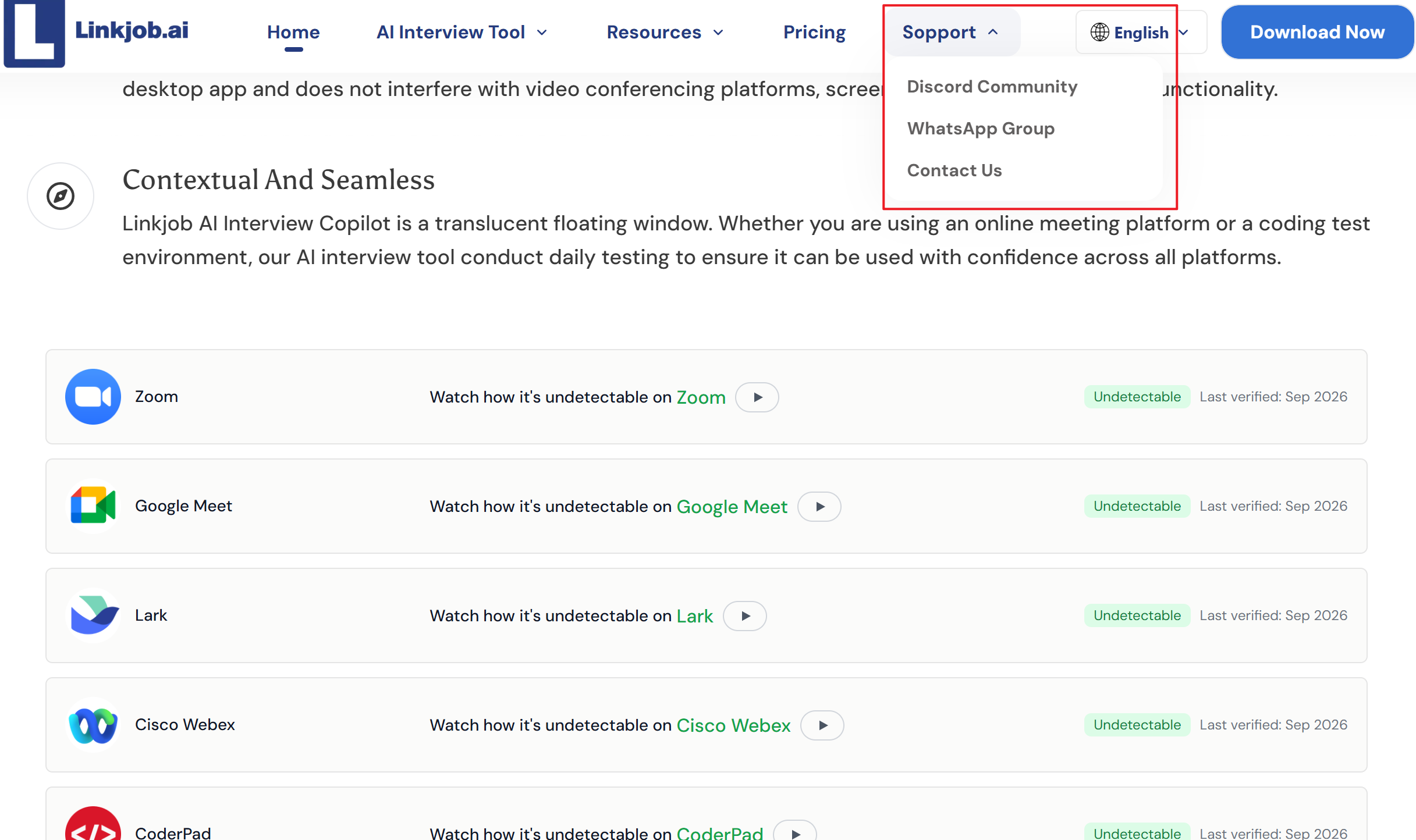
Well, Linkjob AI has set up some groups on Discord and WhatsApp, so I can report issues quickly using different channels. When it comes to customer service, I have to admit that Linkjob AI is a better InterviewFox alternative.
InterviewFox Alternative: Final Recommendation
After comparing these two products directly, I think that both InterviewFox and Linkjob AI are designed around two different ideas of "undetectability".
Here at InterviewFox, they think that "undetectability" means getting the assistant to separate from the computer that's being used for the interview.
Here at Linkjob, they think that "undetectability" means integrating the interview workflow into a single desktop application as much as possible, while making sure that the desktop application remains invisible.
If it weren't for the fact that hardware-based workarounds are likely to be exposed for various reasons (including, but not limited to, gaze detection and situations requiring a second device for proctoring), I would say the two are pretty much on par. But, to be honest, I still think a native desktop app like Linkjob AI is better for interview assistance and is a better InterviewFox alternative, because hardware-based methods are easier to detect and harder to explain.
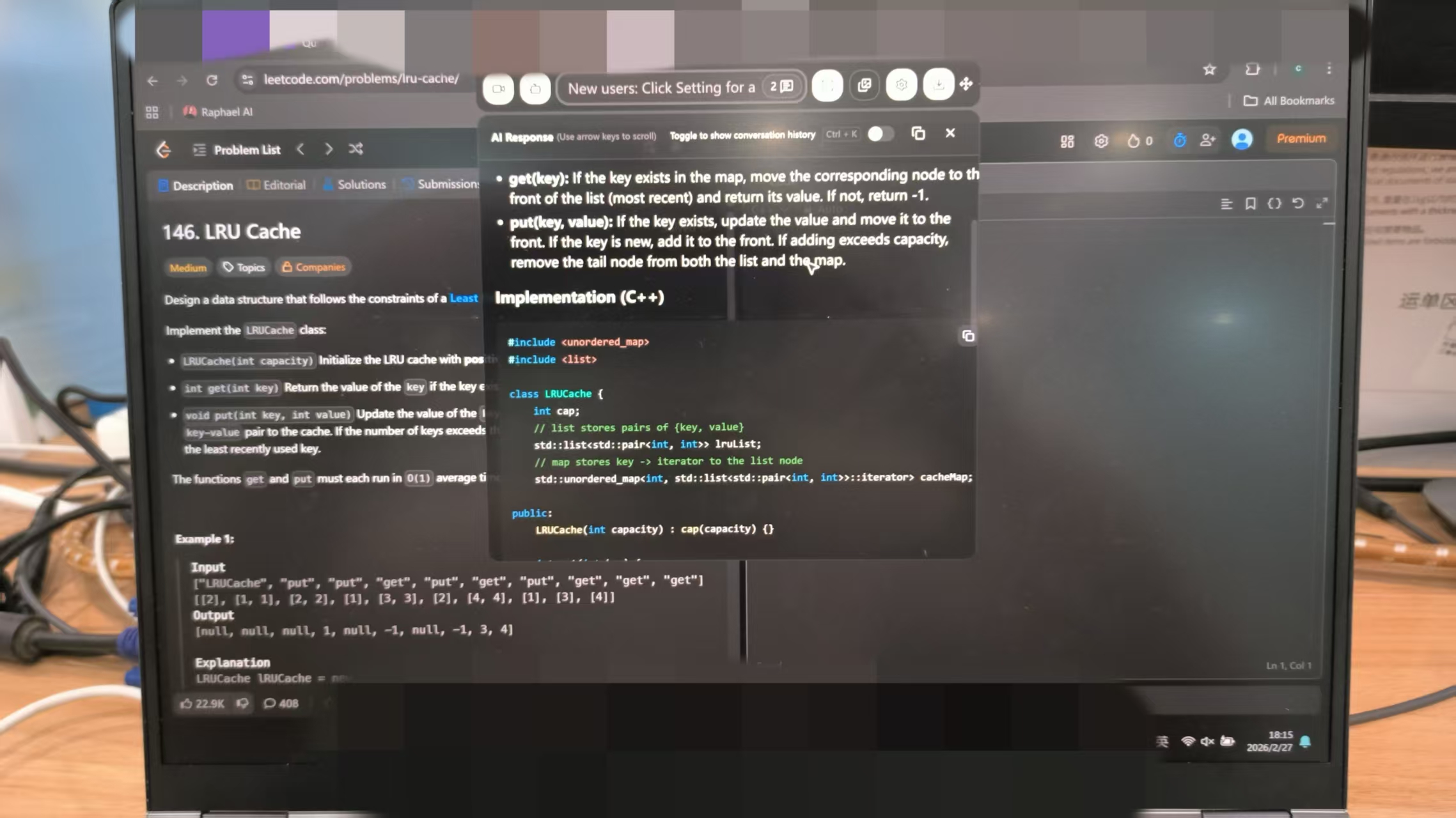
Linkjob AI's Strongest Advantages
If you're looking for a technical job long-term, Linkjob costs just $11.88 more per year than InterviewFox. For me, the wider selection of models and the seamless desktop workflow within a single app are well worth the difference.
Integration with Windows/macOS desktop workflows;
Personalized resumes and job descriptions;
Unlimited mock interviews;
Coding and multi-screenshot analysis features;
A wider selection of published advanced models;
Multiple support and community channels;
Annual pricing is nearly identical to InterviewFox.
InterviewFox Alternative FAQ
Is Linkjob AI Cheaper Than InterviewFox?
No. InterviewFox is cheaper monthly at $49 versus $99.99, and its annual plan is $11.88 cheaper per year.
Does InterviewFox Offer Better Pay-As-You-Go Pricing?
Yes. InterviewFox sells non-expiring credit packs, which can be more economical for occasional interviews.
Which InterviewFox Alternative Has More Published Premium Models?
Linkjob AI currently publishes the broader annual catalog, including GPT-5.6 Sol, Claude Opus 5, Gemini 3.1 Pro, and Grok 4.6.
Is InterviewFox Better If I Want A Second-Device Workflow?
Yes. Dual-Device Mode is one of InterviewFox's clearest differentiators and is the better fit for users who specifically prefer keeping the assistant on a phone.
What Is The Best InterviewFox Alternative Overall?
For my mix of behavioral interviews, coding, screenshots, resume context, mock practice, and model choice, Linkjob AI is the better overall fit.
See Also
InterviewFox Review: Is Dual-Device Really Undetectable?
My Verdict: Is Linkjob AI the Best InterviewMan Alternative?
Best Ultracode AI Alternative? Meet Linkjob AI
Best Beyz AI Alternative for AI Interview Assistant in 2026
Best Interview Sidekick Replacement For AI Interview Assistant Service
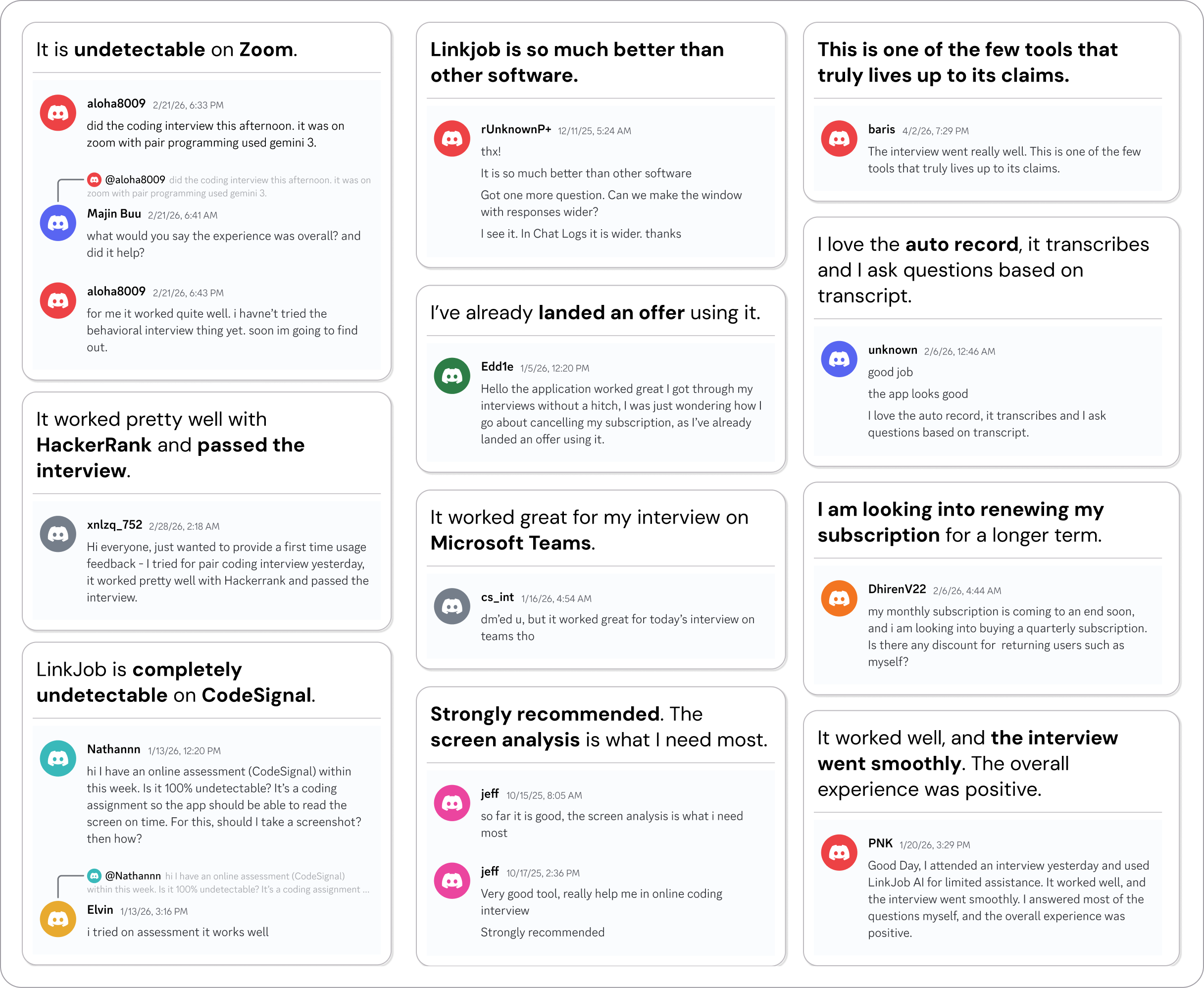
Why People Choose Linkjob AI
Smoother interviews, coding challenges cleared, and job offers landed. See how users describe their experience with Linkjob AI—in their own words.
© Copyright 2026 Linkjob AI - All Rights Reserved.