How I ace Interviews with On-Screen AI Assistant in 2026

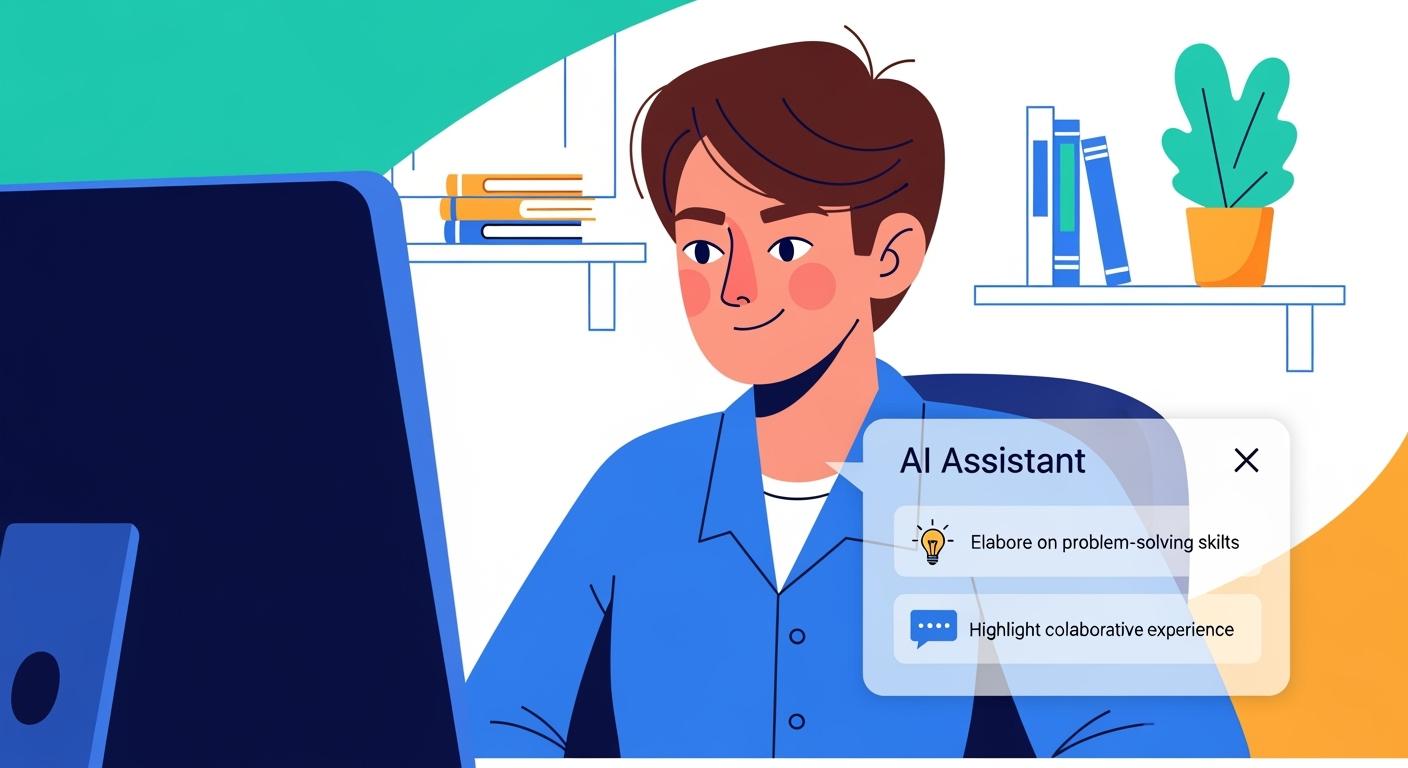
As hiring platforms ramp up their monitoring of AI tool usage, the days of simply switching tabs to ChatGPT are over. Today’s technical evaluations and live coding rounds require a more sophisticated approach. If you want to maintain your edge without triggering red flags, you need a specialized on screen ai interview assistant designed for stealth and seamless integration.
I recently tested Linkjob.ai during a high-stakes interview, and the experience was a game-changer. Unlike traditional tools, this on screen ai interview assistant is built to be completely invisible to proctoring software. I used it throughout my latest Online Assessment (OA), and it performed flawlessly, providing real-time support without any detection issues on platforms like HackerRank.
I’m sharing this because it’s the most effective way I’ve found to bridge the gap between your skills and the pressure of a live round. Beyond just getting the right answers, a true on screen ai interview assistant helps you maintain your flow and confidence.
If you’re looking to optimize your performance across various environments, I’ve put together a series of strategic guides: How to Cheat on Codility, How to Cheat in Microsoft Teams Interview, How to Cheat HackerRank Tests.
Introducing the On-Screen AI Interview Assistant
In today’s highly digitalized recruitment landscape, AI interview assistants have become essential tools for many job seekers to enhance their performance and alleviate anxiety. Among these, the On-Screen AI Interview Assistant represents one of the most advanced and integrated solutions. Rather than being a standalone device or a distracting second screen, it runs directly embedded within the computer screen I use for interviews, coexisting within the same visual field as my interview window.
This means the assistant can “see” the questions, shared code editors, or presentation documents right in front of me in real time, and “hear” every question the interviewer asks, enabling context-aware, precise assistance. Linkjob AI is precisely such a desktop-based, screen-embedded AI assistant. Through deep system-level integration, it provides powerful support while ensuring smooth operation and a high degree of discretion, making it a professional tool designed specifically for serious job seekers.
Comparison of the On-Screen AI Interview Assistant with Other Types of Interview Assistants
Compared to On-Screen solutions, other common forms of assistance have significant shortcomings, making On-Screen the superior choice:
Comparison with mobile voice assistants:
Perceptual limitations: Mobile assistants typically rely solely on microphones to capture audio. They cannot “see” the screen content, rendering them completely helpless when faced with whiteboard coding problems, system design diagrams, or documents shared by the interviewer. They may misinterpret conversations that reference specific lines of code on the screen, leading to answers that miss the point.
Operational Distraction: Job seekers must divert their attention to check their phone screens for prompts. This shift in gaze and focus is easily noticed by the interviewer, appearing unprofessional and lacking in concentration.
Compared to Human Side-by-Side Assistance:
Reliability and Delay: The knowledge level and on-the-spot reactions of another person cannot be guaranteed, and communication delays are inevitable. In high-pressure interviews, such delays can be fatal.
Poor Discretion: This is the least discreet method and carries extremely high risks. Even when communicating via headphones, the subtle facial expressions and delayed reactions of a job seeker while listening to prompts can easily be detected by an experienced interviewer.
Lack of Technical Depth: For in-depth algorithms, details of specific tech stacks, or complex system design questions, ordinary assistants struggle to provide immediate, accurate answers.
Why is On-Screen a Fundamental Advantage?
Full Context Awareness: Simultaneously capturing visual screen information and audio dialogue is its core strength. It can understand instructions like “Please optimize the function on the third line of the screen” and provide suggestions specific to the code or charts.
Non-intrusive Interaction: Prompts can be displayed directly within the workspace with minimal disruption (such as smart subtitles at the edge of the screen or subtle visual cues), enabling rapid access with “zero eye movement.”
High Integration and Synchronization: As an integral part of the system, its response speed far exceeds any solution requiring cross-device communication, delivering true real-time assistance.
Categories of On-Screen AI Interview Assistants
There are three main types of “On-Screen” implementation methods, which vary significantly in terms of integration, capabilities, and stealth:
Browser Plugins:
How they work: Extensions installed in browsers such as Chrome and Edge only function within browser tabs.
Advantages: Quick to install and somewhat effective for browser-based video interview platforms (such as Zoom Web and HireVue).
Key Disadvantages:
High Detection Risk: Interview platforms or professional proctoring systems (such as ProctorU) can easily detect the presence and activity of browser extensions, which may result in disqualification.
Limited Functionality: Cannot be applied to desktop applications (such as the Zoom client or desktop IDEs) or specific window areas during screen sharing.
Limited Permissions: Access to operating system audio and the entire screen is restricted, which may affect its ability to comprehensively monitor the environment.
Web Applications:
How It Works: A web application is opened in a separate browser tab. Users must manually share the interview window’s audio with this webpage and transmit video information via screenshots or similar methods. The process is cumbersome and not truly “built-in.”
Advantages: No installation required; cross-platform.
Key Drawbacks:
Fragmented Experience: Requires switching back and forth between the interview window and the assistant webpage, which is highly distracting and increases the risk of detection.
Complex Setup: Involves configuring complex audio-sharing and screen-capture permissions, making errors likely during the high-pressure start of an interview.
Equally Prone to Detection: The browser’s task manager or screen-sharing status may reveal the additional open webpage.
Standalone Desktop Software:
How it works: A standalone application installed directly on the computer’s operating system (Windows/macOS). It integrates into the interviewee’s workflow in a more fundamental and seamless manner through system-level permissions.
Key Advantages:
Superior Stealth: Professional desktop software can “hide” itself using advanced techniques such as virtual camera drivers and embedded audio streams. To the interview platform, it appears as just “one camera” and “one microphone” device; the platform cannot distinguish whether the signals come from real hardware or intelligently processed virtual devices. This significantly reduces the risk of being flagged by anti-cheating mechanisms.
Global Coverage: Whether the interview takes place in a browser, standalone client, full-screen application, or specific window, the desktop software works seamlessly, providing a consistent assistive experience.
Higher Performance and Stability: By directly accessing system resources, the software responds faster and remains unaffected by browser crashes or tab closures.
Deep Integration Capabilities: It enables richer interaction methods, such as custom hotkey triggers and the ability to draw unobtrusive assistive pop-ups anywhere on the screen.
Within the realm of on-screen solutions, standalone desktop software currently represents the most powerful, discreet, and seamless option available. It fully leverages the inherent advantages of being “built-in,” while overcoming the detection risks and functional limitations associated with plugins and web-based applications through system-level integration. It is the ideal choice for users seeking efficient, secure, and professional interview support.
How to Use the On-Screen AI Interview Assistant to Cheat During an Interview
Taking Linkjob AI as an example, let’s break down how AI assistants use underlying technical logic to cleverly bypass various interview monitoring mechanisms.
The Underlying Logic Behind Bypassing Full-Screen Locking and Activity Monitoring
The vast majority of online interview platforms run on web browsers. By design, browsers are built as a secure, isolated environment known as a “sandbox”—meaning that code within a single page cannot cross boundaries to spy on other tabs.
When I take an interview in a browser, the platform can display questions or run scripts, but it is strictly confined to the current “bubble.” It has absolutely no permission to cross system boundaries to detect other programs running in the background on my computer.
Why Is a Desktop AI Assistant the Only Solution?
The most effective countermeasure is to use a desktop AI assistant. Since these tools run outside the browser’s sandbox, the interview platform has neither the permission nor the technical means to scan standalone software on your system. More importantly, desktop applications don’t require me to switch windows, allowing them to perfectly bypass real-time monitoring of active tabs.
Thanks to Linkjob.AI’s deep integration with the operating system, it hovers at the very front as a “persistent overlay” while remaining hidden at the system level. This means I can still receive real-time support even in strict full-screen interview mode. To verify its stealth, I conducted a test with a friend before an interview: when I enabled full-screen sharing, the AI was completely invisible on my friend’s screen.
How I Used Linkjob AI to Take Control of the Interview
As a job seeker, I know all too well the pressure of an interview, especially when faced with complex algorithm questions or unexpected follow-ups. After using Linkjob AI, my biggest takeaway is this: it’s not just a tool—it’s more like an invisible mentor sitting right beside me, who understands my background and always stays calm.
Here are the four key points that impressed me the most during my actual use:
1. Real-Time Listening and Synchronized Analysis: My “Second Brain”
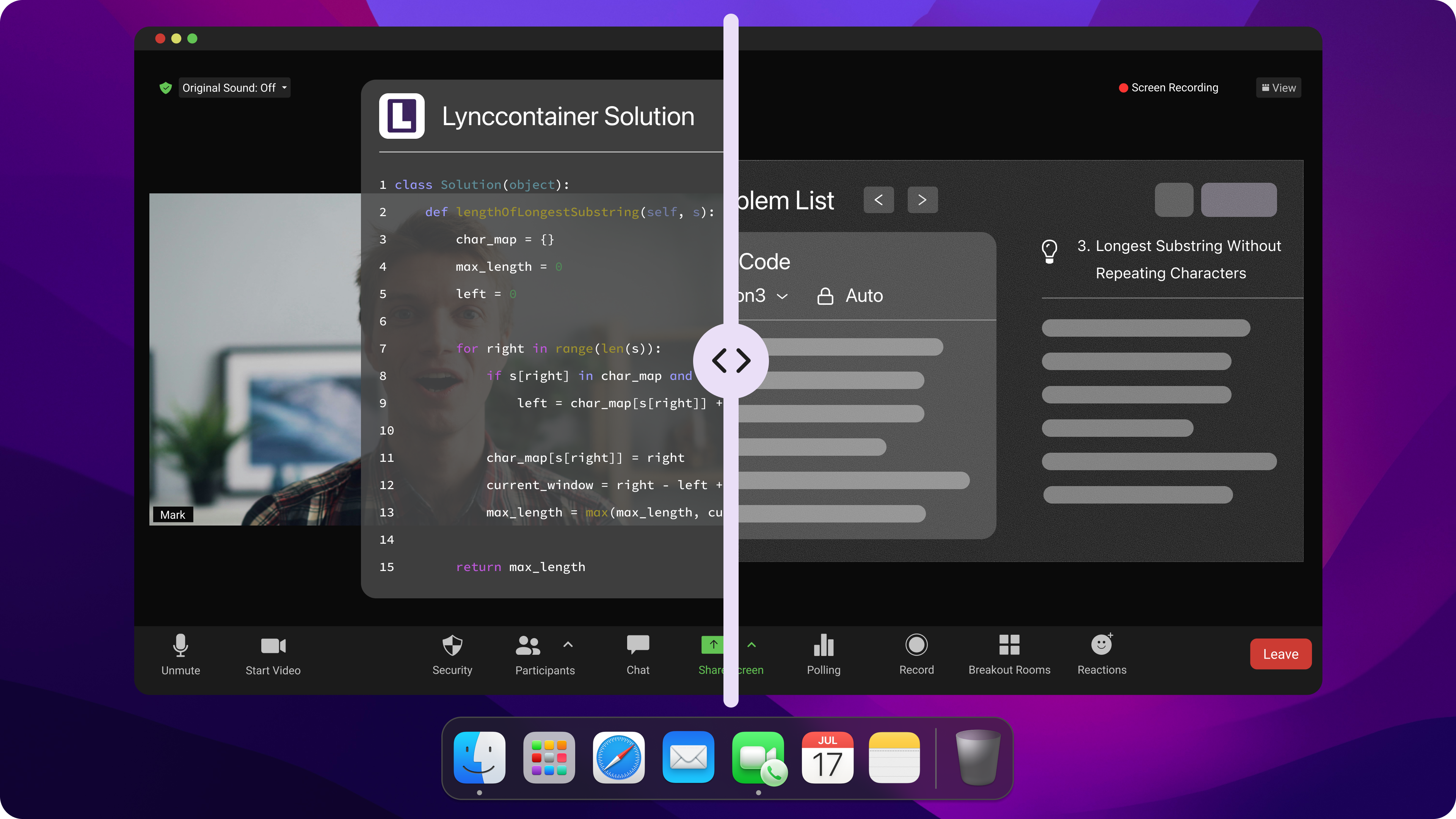
During the interview, Linkjob AI listens to the interviewer’s questions in real time and captures code information on the screen. What amazed me most was its ultra-low latency—it generates precise answer suggestions almost the moment the interviewer finishes speaking. I no longer need to frantically flip through my notes; all support is seamless.
2. Absolute Invisibility: Making Monitoring a Non-Issue
This is the feature I value most. Whether in full-screen mode, under active tab detection, or with the camera on, it manages to completely “disappear.” You won’t find a trace of it in the system’s Task Manager, Dock, or Activity Monitor. Even when I enabled full-screen sharing, the interviewer didn’t notice it at all. This seamless, low-level technical integration allows me to focus entirely on my performance without distraction.
3. Understands Me and the Interview: Tailored Answers
Unlike ordinary AI tools on the market, Linkjob AI integrates over 80 mainstream large language models, including GPT-5.1 and Claude Opus. After uploading my resume and job requirements in the settings, every answer it provides is a “customized” response tailored to my personal background—professional and natural, completely free of that stiff, formulaic “AI feel.”
4. A Powerhouse Coding Assistant: The Ultimate Lifesaver for Algorithm Problems
When it comes to technical interviews, its performance is nothing short of perfect. Whether analyzing algorithm problems via real-time screenshots or tackling system design questions, it provides complete code solutions with syntax highlighting. I can pre-set the AI’s response behavior to offer targeted optimization suggestions for different interview stages, which helps me stay calm even when facing challenging coding problems.
Advanced Undetectable Cheating Strategies
Seamless Usage Tips
I want to look natural and confident, not distracted or robotic. Here are my favorite tips for using the assistant without getting noticed:
I practice using hotkeys until they feel automatic. This way, I don’t fumble or look down during the interview.
I keep my eyes on the camera and use the assistant’s context-aware cues. These prompts are subtle, so I can stay engaged with the interviewer.
I avoid reading answers word-for-word. I use the suggestions as a guide and speak in my own voice.
I always remember to smile and use positive body language. This helps me look confident and genuine.
I focus on showing my personality and soft skills. Here are some common mistakes I avoid:
Over-relying on AI-generated answers, which can make me sound rehearsed.
Forgetting about body language and eye contact.
Skipping feedback from friends or mentors.
Common Mistakes to Avoid
I’ve learned to watch out for a few common mistakes. Here’s what I avoid:
Giving answers that sound too perfect or rehearsed.
Pausing too long before I respond.
Fumbling with my mouse or looking away from the camera.
Forgetting to check my privacy settings before the call.
If I keep my answers natural and my movements smooth, I stay under the radar. My on screen ai interview assistant helps me shine.
FAQ
Can I use these assistants on any video platform?
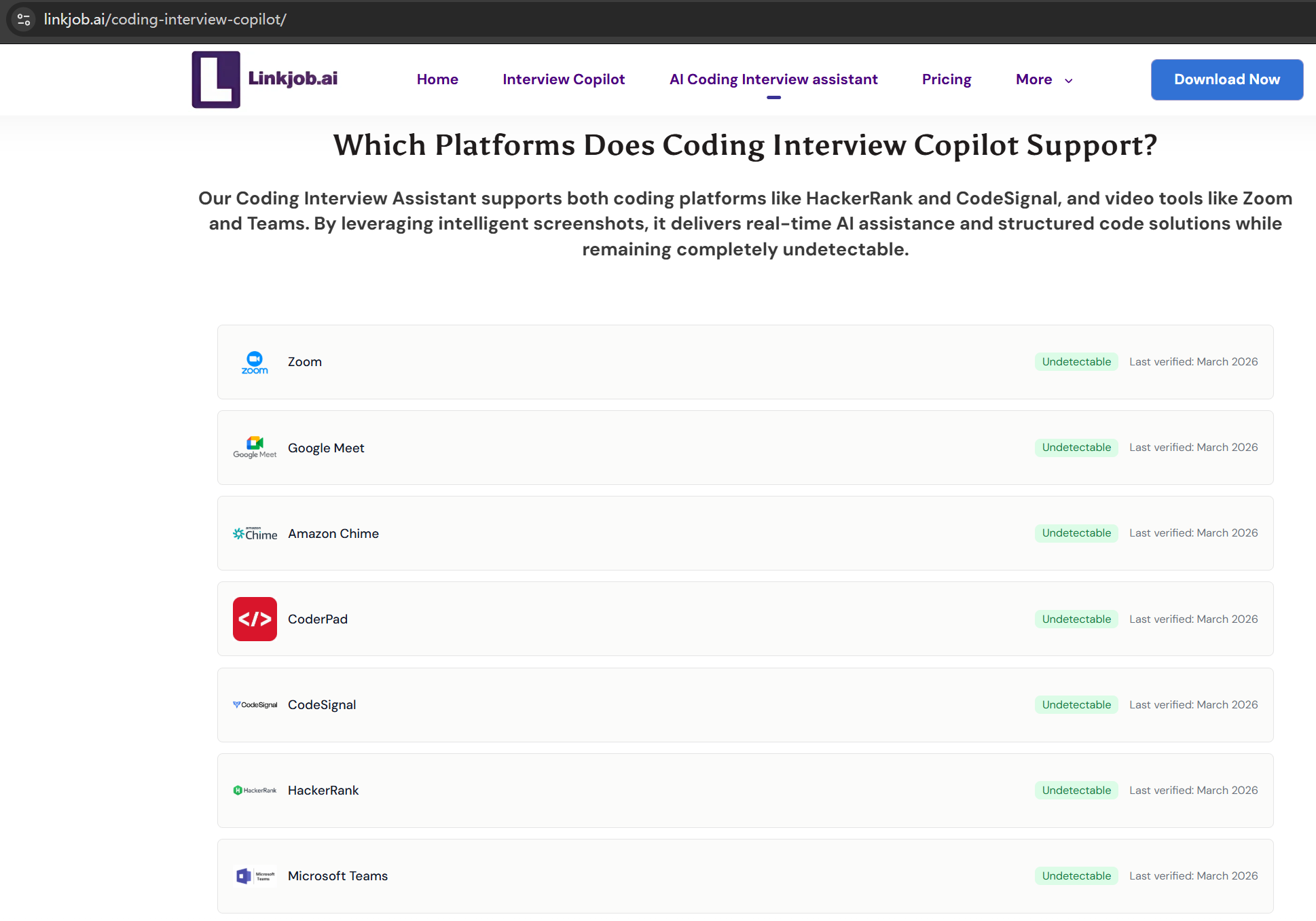
Yes! I use my assistant with Zoom, Google Meet, and Microsoft Teams. Most top tools support all major platforms. I always check compatibility before my interview.
If I share my entire screen, will Linkjob AI still remain undetected?
Yes. Because Linkjob AI uses a hardware-accelerated overlay, its AI interface resides on a separate graphics layer that cannot be captured by standard screen-sharing protocols (such as Zoom or Google Meet). As a result, your screen will appear completely clean to the interviewer.
Can I hide the Linkjob AI icon from the Dock?
Yes, you can turn it off in the settings.
See Also
How to Cheat on TestGorilla With AI: My 2026 Update
How to Cheat Mettl Exam in 2026 Without Getting Caught
How to Cheat on CodeSignal Proctored Tests in 2026: My Tricks
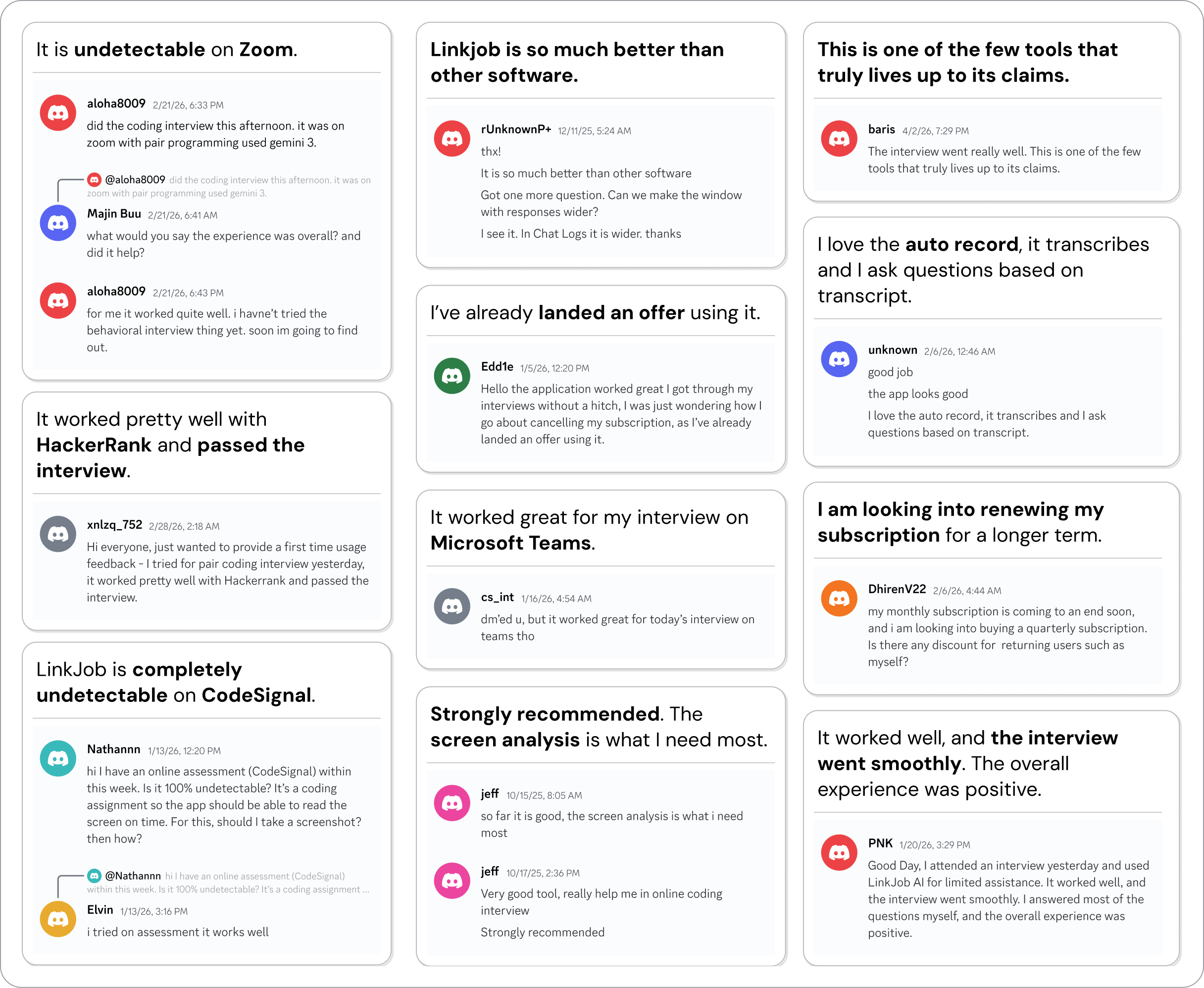
Why People Choose Linkjob AI
Smoother interviews, coding challenges cleared, and job offers landed. See how users describe their experience with Linkjob AI—in their own words.

© Copyright 2026 Linkjob AI - All Rights Reserved.