My 2026 Oracle OCI Interview Full Process and Real Questions

I cracked the oracle oci interview in 2026 after months of focused preparation and persistence. I want to share not just my real questions but also the strategies that helped me succeed. I learned that understanding both technical and behavioral aspects is key. Let me show you what matters most in these interviews:
Competency Type | Description |
|---|---|
Technical Questions | Test your coding skills, problem-solving, and knowledge of system design and databases. |
Behavioral Questions | Look at how you handle challenges and work with others. |
Oracle-Specific Questions | Check your familiarity with Oracle’s cloud products and services. |
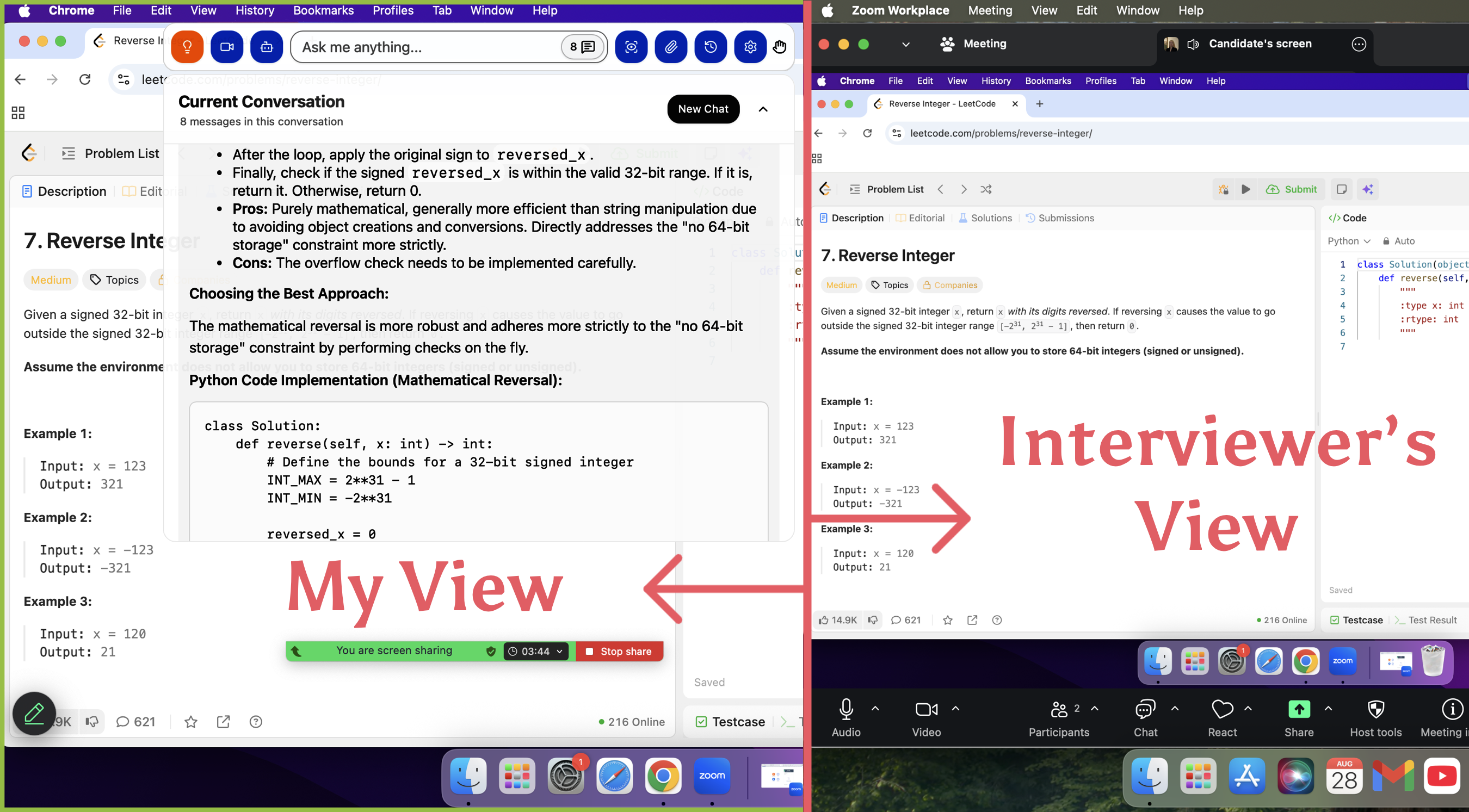
I’m truly grateful to Linkjob.ai for helping me succeed in my interviews, which is why I’m sharing my full experience and questions here. Having an undetectable AI assistant that can screenshot, analyze problems in real time, and show answers and thinking directly gives me a huge advantage during interviews.
My Full Oracle OCI Interview Process & Questions
1. Screening Round: Basic Technical Assessment
The first round was a basic technical screening, and the core coding task was to implement a simplified Redis-like data structure using Golang. I was asked to complete five key operations, which were clearly outlined by the interviewer:
`set`: Set a key to a string value, and override the value if the key already exists.
`list_push`: Push a string to the head of the list associated with a given key; if the list doesn’t exist, create a new one.
`get`: Return the value corresponding to the key, which could be either a string or a list.
`list_remove`: Remove matching values from the list—if count > 0, remove the first N matches; if count < 0, remove the last N matches; if count = 0, remove all matching values.
Expiration functionality, which required a deferred implementation (the interviewer didn’t ask for a full working version but focused on the logic).
This round was relatively straightforward, focusing on basic data structure understanding and Golang syntax, which helped me ease into the rest of the interview.
2. VO Technical Round: 3 Coding Challenges
After passing the screening, I moved on to the VO technical round, which included three back-to-back coding questions. The interviewer was friendly and gave hints when I got stuck, which made the process less stressful:
Implement an LRU Cache: This is a classic coding question, and I focused on optimizing the time complexity for get and put operations using a hash map and a doubly linked list.
Merge Two Sorted Linked Lists: After I completed this, the interviewer asked a follow-up question—Merge K Sorted Linked Lists. I explained my approach of using a min-heap to efficiently merge multiple lists, and walked through the code step by step.
Delete Target Leaf Nodes from a Binary Tree: I needed to traverse the tree, identify leaf nodes that matched the target value, and remove them. The key was to handle the parent nodes correctly after deletion to avoid broken links.
This part was quite difficult and involved many follow-up questions. So I referred to the code solutions and optimization strategies provided by Linkjob AI. It worked well. The answers were reliable, and I used the AI without being detected.
3. Project Deep Dive + Extra Coding Task
The third stage combined a deep dive into my resume projects and an additional live coding task. First, the interviewer asked detailed questions about my most recent project—including the architecture, technical challenges I faced, how I solved them, and what I would do differently if I could redo it. They focused on my problem-solving skills and technical decision-making, so I made sure to highlight specific examples and data to back up my answers.
After the project discussion, I was given another coding task: Design a Hospital Appointment Booking API. The requirements were clear: the hospital has 1,000 doctors, each working from 9 AM to 5 PM with 15-minute appointment slots. The API needed to book the first available slot for a given doctor on a specific date, return the booked slot, or return an error if there were no available slots. I also had to ensure the state was maintained across API calls (since it was a POST request).
4. HM Round: Pure Behavioral Interview
The final round was a behavioral interview with the hiring manager, and there were no coding questions—just two key behavioral prompts to assess my soft skills and fit for the team:
Prioritization Approach: The manager asked how I prioritize tasks when I have multiple deadlines and conflicting priorities. I shared a real example from my previous role, explaining how I evaluate urgency and importance, and how I communicate with stakeholders to manage expectations.
Handling Failure and Customer Impact: I was asked to describe a time when I faced a failure at work that impacted customers, and how I handled it. I focused on taking responsibility, troubleshooting the issue, communicating transparently with customers, and implementing changes to prevent similar problems in the future.
Oracle OCI Interview Evaluation Criteria
I want to share what I think are the most critical areas to focus on for VO. These aren’t just random topics—they’re the ones interviewers love to dig into:
1. Database Fundamentals
I learned that focusing on fundamentals is key—but I quickly realized memorizing definitions wasn’t enough. I spent a lot of time digging into database architecture, from logical storage structures like tablespaces, segments, extents, and blocks to how data is physically organized on disk. During my interviews, recruiters asked me to explain these concepts in detail, so I made sure to tie them to real-world scenarios from my past projects.
2. SQL Mastery
SQL is the foundation of any database role, and that’s something I learned firsthand. I didn’t just practice simple SELECT statements—I pushed myself to master complex joins, subqueries, and even advanced operations like recursive CTEs. There were times I struggled with nested subqueries, but I kept practicing by rewriting queries for projects I’d worked on, and that hands-on practice made all the difference in my interviews.
3. Indexing & Optimization
Indexing and optimization were areas I initially overlooked, but they ended up being some of the most important topics in my interviews. I took the time to learn the differences between B-trees, B+ trees, and bitmap indexes, and more importantly, when to use each one. I also researched scenarios where the query optimizer might ignore an index—like when using functions on indexed columns—and how to use index hints to influence the execution plan. This wasn’t just about writing working queries; it was about writing efficient ones.
4. Stored Procedures &Triggers
Stored procedures and triggers were another key area I focused on, and they tested my ability to write maintainable, robust database code. I practiced writing stored procedures with proper exception handling—something I learned the hard way after a project where a lack of error handling caused data inconsistencies. I also worked with cursors for batch data processing, figuring out how to use them efficiently without causing performance bottlenecks. I also reflected on when triggers were the right tool for the job; I once used a trigger to automate data validation in a project, but I also learned when to avoid them (like when they added unnecessary complexity).
If you're using other platforms for your online assessments, feel free to check out my another article, I’ve compared 6 AI Coding Interview Assistants to help you find the most reliable tool for your specific platform.
Oracle OCI Interview Process Overview
If you’re preparing for your own journey, I’m here to help you feel confident and ready.
When I started my journey with the oracle oci interview, I wanted to know exactly what to expect. The process felt long, but breaking it down helped me stay focused. Here’s how the stages usually go:
Stage | Duration |
|---|---|
Initial Screening | 1-2 weeks |
Technical and Behavioral Interviews | 2-4 weeks |
Final Interviews and Decision-Making | 1-2 weeks |
Background Checks and Offer Finalization | 1 week or more |
Application and Screening
I submitted my application and waited for the initial screening. Recruiters checked my resume and matched my skills with the job requirements. I made sure to clarify the interview focus with the recruiter. This helped me prepare for both technical and behavioral questions. I recommend asking about the interview format and topics early. It saves time and reduces stress.
Technical and Coding Rounds
The technical rounds tested my coding skills and problem-solving abilities. I faced questions on data structures and algorithms. Topics like hashing, linked lists, and dynamic programming came up often. I also got problems about finding maximum sums in arrays and shortest paths in matrices. Sometimes, I had to design APIs or high-level systems. Practicing these types of questions gave me confidence.
Data structures and algorithms
Hashing and linked lists
Dynamic programming
System and API design
If you're also interviewing for a technical role at Oracle, you may need some real questions for Oracle Technical Interview.
System Design and DSA Rounds
These rounds challenged me the most. I remember a tough dynamic programming problem about converting a string into a palindrome. Many candidates find these rounds demanding, especially with dynamic programming. I learned to break down problems and explain my approach step by step. Practicing system design scenarios helped me think clearly under pressure.
System or database design questions appear for experienced candidates, and the complexity increases significantly for senior-level positions. If you're specifically targeting a Senior Software Engineer role at Oracle, you'll face deeper architectural discussions and leadership scenario questions—check out these specific Oracle Senior Software Engineer Interview Questions for detailed examples.
Tip: Don’t rush your answers. Take a moment to organize your thoughts before you speak.
Behavioral and HR Rounds
The behavioral and HR rounds focused on my teamwork, leadership, and how I handle challenges. I prepared stories from my past experiences. I practiced explaining how I solved conflicts and worked with others. I stayed honest and showed my willingness to learn. These rounds matter as much as the technical ones in the oracle oci interview.
Others’ Experiences and Common Issues
Reported Candidate Experiences
When I started preparing for the oracle oci interview, I wanted to know how others felt about the process. I talked to friends and read online forums. I found that experiences vary a lot. Some candidates feel excited and positive. Others feel neutral or even frustrated. Here’s a quick look at what people report:
Experience Type | Percentage |
|---|---|
Positive | 33% |
Neutral | 33% |
Negative | 33% |
I noticed that many candidates share stories about tough technical rounds. Some celebrate their success, while others talk about feeling overwhelmed. It helped me realize that everyone faces ups and downs. If you feel nervous or unsure, you’re not alone.
Common Interview Challenges
I learned that certain challenges come up again and again. Let me share what I found:
Candidates often struggle with the technical depth required, especially in data structures and algorithms.
There is a big focus on domain-specific knowledge for Oracle Cloud Infrastructure roles.
Demonstrating cultural fit during behavioral interviews can be tricky.
Candidates should prepare for frequently asked programming questions involving Backtracking and Two Pointers, as these techniques are commonly tested in Oracle OCI interviews.
Online technical assessments focus on core data structures and algorithms.
Real-time coding problems happen during technical interviews.
System or database design questions appear for experienced candidates.
Behavioral interviews at Oracle focus on cultural fit and soft skills. I noticed that questions often revolve around teamwork, conflict resolution, and leadership. Candidates need to explain their experiences clearly. This can be hard for people who are more technical.
Lessons from Rejections and Delays
I faced delays and even rejection before I succeeded. Many candidates talk about waiting weeks for feedback. Some never hear back. I learned to stay patient and keep practicing. Persistence matters. If you get rejected, use it as a chance to improve. I kept a list of what went wrong and worked on those areas. Waiting can feel tough, but it’s part of the journey. Keep going, and don’t lose hope.
Preparation Tips and Strategies
Study Resources and Materials
I started my oracle oci interview prep by gathering the best resources. I wanted to cover both theory and hands-on practice. Here’s what helped me most:
Oracle Cloud Infrastructure Documentation gave me a solid foundation.
Oracle Hands-on Labs let me use Oracle’s trial period and $300 cloud credits for real practice.
Udemy Courses provided instructor-led lessons and practical exercises.
Practice Exams from Oracle and helped me test my knowledge and timing.
I kept a table to track which resources I used for each topic:
Resource | Use Case |
|---|---|
Documentation | Concepts and definitions |
Labs | Hands-on experience |
Courses | Structured learning |
Practice Exams | Self-assessment |
Oracle also has specialized interview tracks for different technical roles. If you're interviewing for a Machine Learning position, the focus shifts from general DSA to ML algorithms, model design, and AI system architecture. Check out this guide on Oracle Machine Learning Interview Questions for role-specific preparation.
Practice Routines
I set up a daily routine to build my skills. I focused on coding, system design, and behavioral questions. Here’s what worked for me:
I practiced coding problems every morning.
I drew system diagrams and explained them out loud.
I used self-interviewing to spot weak answers.
I recorded my sessions and reviewed them for improvement.
I practiced with friends to simulate real interview pressure.
Balancing Technical and Behavioral Prep
I made sure to prepare for both technical and behavioral questions. Oracle looks for candidates who can solve problems and fit into the team. I practiced situational answers and teamwork stories to show my values and decision-making skills.
Managing Interview Stress
I learned to manage stress by staying organized and proactive. Here are my top strategies:
I monitored my progress and set small goals.
I kept detailed notes of my study sessions.
I anticipated common issues and prepared solutions.
I built relationships with peers for support.
I invested time in learning new skills.
If you follow these steps, you’ll feel more confident and ready for your oracle oci interview.
Avoiding Pitfalls in the Oracle OCI Interview
Common Mistakes
I noticed that many candidates make the same mistakes during the oracle oci interview. Let me share what I learned so you can avoid these pitfalls:
Jumping straight to the optimized solution. I always start with a simple approach and explain my reasoning before refining it.
Coding silently without communication. I talk through my plan and share my thought process out loud.
Pretending to know everything. If I don’t know something, I admit it and show my willingness to learn.
Not asking for hints when stuck. I ask for guidance if I need help, which shows I can collaborate.
Not being ready to discuss my own projects. I prepare to explain my contributions and the challenges I faced.
Tip: Practice writing solutions long-hand and ask clarifying questions if the problem seems vague. Talking through your plan before coding helps interviewers understand your approach.
Mindset and Confidence
I treat the interview as a two-way opportunity. I want to see if the company fits me, just as much as they want to see if I fit them. I focus on strong communication skills and prepare high-impact questions to ask the interviewer. Shifting my mindset from “test” to “collaboration” helps me relax and show the value I bring. I lead with confidence by engaging actively and closing the interview on a strong note.
View the interview as a conversation, not an interrogation.
Demonstrate your expertise by explaining complex ideas simply.
Ask strategic questions to show your interest and knowledge.
Note: Ending the interview confidently leaves a lasting impression.
Final Checklist
Before I walk into the interview, I run through my checklist:
Understand O2C, P2P, and R2R business flows.
Review key setups: customers, suppliers, items, taxes, payments.
Prepare to discuss common business issues and how I handled them.
Brush up on SQL joins, subqueries, and performance basics.
Know the important base tables used in my projects.
Understand interfaces versus APIs and when to use each.
Review concurrent programs and BI Publisher reports.
Be ready to explain Fusion-specific scenarios like FBDI vs ADFdi.
Practice debugging REST/SOAP API data failures.
Prepare real project scenarios and explain my process clearly.
Callout: Explaining your project from business to technical to outcome is interview gold.
If you follow these steps, you’ll avoid common pitfalls and walk into your oracle oci interview feeling prepared and confident.
I cracked the Oracle OCI interview by mastering storytelling, tailoring my answers, and clarifying doubts during each round. I focused on tough situations and explained how I solved them. The interview tested my thinking, communication, and design skills. Here’s what helped me:
Share your experiences with confidence.
Match your answers to the role.
Ask questions if something feels unclear.
Highlight how you overcame challenges.
Round | Key Topics |
|---|---|
Coding | Linked lists, arrays, tree traversal |
DSA | Subarrays, string operations, graphs |
Design | Multithreading, REST APIs, sharding |
Behavioral | Production issues, team conflict, aspirations |
Stay persistent. Balance your prep. Learn from every setback. You’ve got this!
FAQ
What should I focus on first when preparing for the Oracle OCI interview?
I always start with Oracle Cloud Infrastructure basics. I read the official documentation and practice hands-on labs. This gives me confidence before tackling coding and system design questions.
How do I handle tough technical questions during the interview?
I stay calm and explain my thought process step by step. If I get stuck, I ask for hints. Interviewers appreciate honesty and clear communication.
What’s the best way to prepare for behavioral questions?
I use the STAR method. I pick real stories from my experience. I practice telling them out loud. This helps me sound natural and confident.
How can I manage stress before and during the interview?
I set small goals and track my progress. I talk to friends for support. Deep breaths help me relax. Staying organized keeps my mind clear.
Do I need to know every detail about Oracle products?
No, I focus on the basics and my own experience. I admit when I don’t know something. I show my willingness to learn and adapt.
See Also
My Azure Databricks Interview in 2025: Real Questions I faced
I Passed My 2025 Azure Technical Interview and Here is How
How My AWS RDS Preparation Led To My 2025 Job
© Copyright 2025 Linkjob.ai - All Rights Reserved.