How to Master TestTrick Assessment 2026 with AI Tools


I remember how, at the start, I spent hours researching and getting ready for the TestTrick assessment to get a high-paying job. Those AI-powered real-time interview tools really did the trick, totally changing the game for me when it came to getting ready. I even got some direct help while I was being assessed and during the interview, which was a huge help.
I saw for myself how they made practice easier and helped me quickly spot my weaknesses. But I didn't just rely on technology; I also used some behavioural strategies to avoid being flagged by TestTrick's strict anti-cheating mechanisms.
Obviously, I've also been invited to take assessments on loads of other platforms, I've done some digging to see how to cheat on Tesgorilla and how get round the anti-cheating stuff on Coderpad. Plus I've tried out the best Hirevue interview assistants to see what's best. If you're interested, you can click to read more.
How TestTrick Prevents & Detects Cheating?
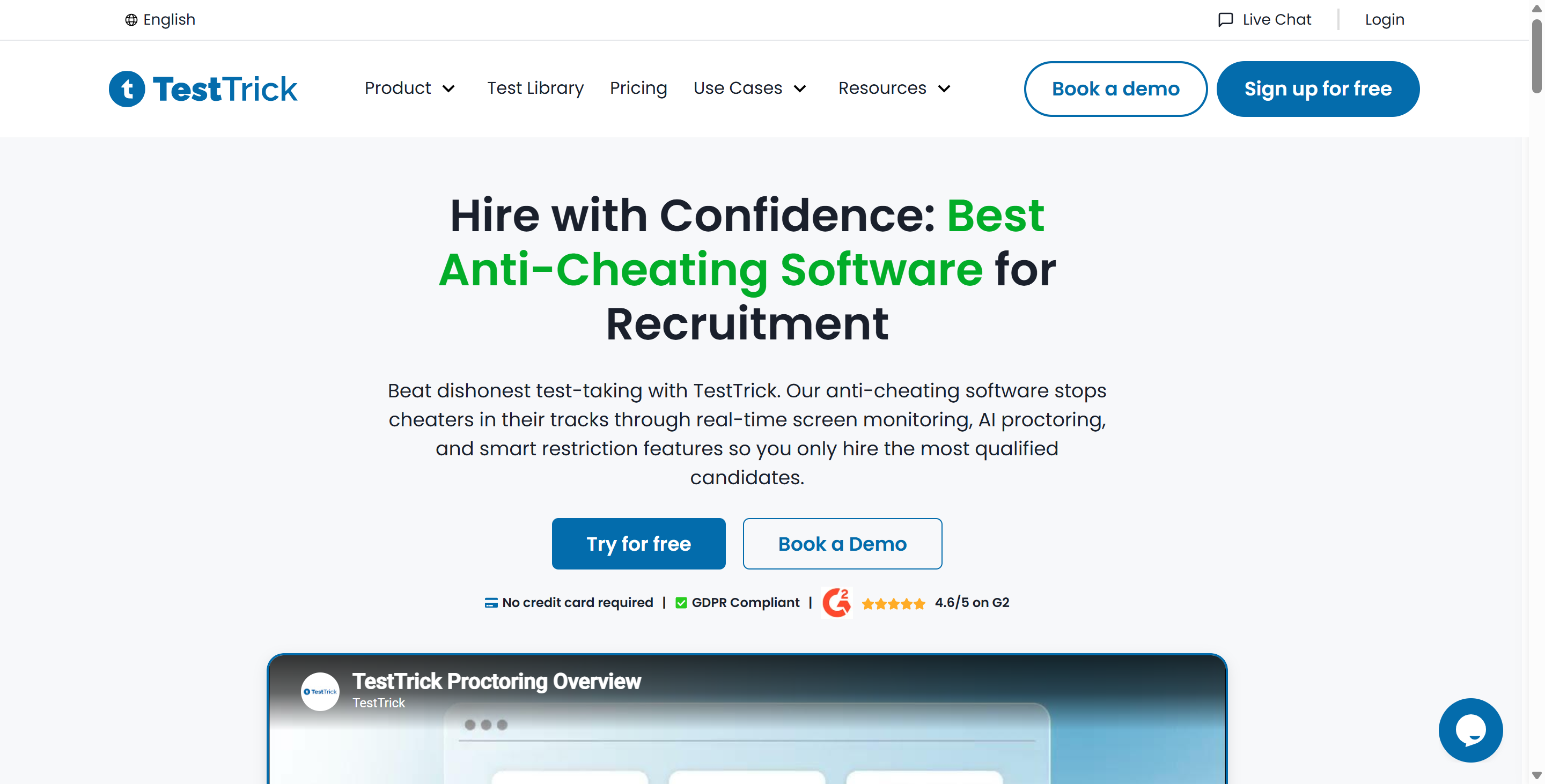
1. Visual and Identity Monitoring
TestTrick mostly relies on keeping an eye on things visually to make sure that the person taking the assessment is the registered applicant and isn't getting any physical help.
AI-Based Face Detection: The system uses facial recognition tech to create a baseline image of the candidate. It keeps an eye on the video feed to make sure the same face is always in view.
Impersonation and Multiple-Face Alerts: If the AI spots a second face (like someone leaning in to read the screen) or the candidate completely steps out of the webcam's view, the system will log the violation straight away.
Webcam Recording and Screenshots: TestTrick takes screenshots and records video streams so that recruiters can check for anything unusual (like constantly looking down at a phone).
Audio Monitoring: The system is designed to pick up on background noise and outside sounds, helping to spot candidates who might be talking to an accomplice in the room or using headphones.
2. Digital Environment and Screen Locking
To stop candidates from googling answers or using standalone AI tools, TestTrick puts strict restrictions in place for the digital environment.
Dual-Screen Detection: This is a big problem for people who cheat. TestTrick can tell you if there's something like an external monitor, an extended screen, or screen mirroring running. This stops people from taking the test on one screen while having ChatGPT open on another.
Tab Proctoring (Browser Focus): The system keeps track of when you're not paying attention. But, if someone clicks away from the current assessment tab to open a new browser window or desktop application, the system will immediately generate a warning and record the incident.
Continuous Screen Recording: TestTrick captures everything the candidate does on their screen during the test and takes regular screenshots.
3. Programming-Specific Integrity Measures (Hardest to Bypass)
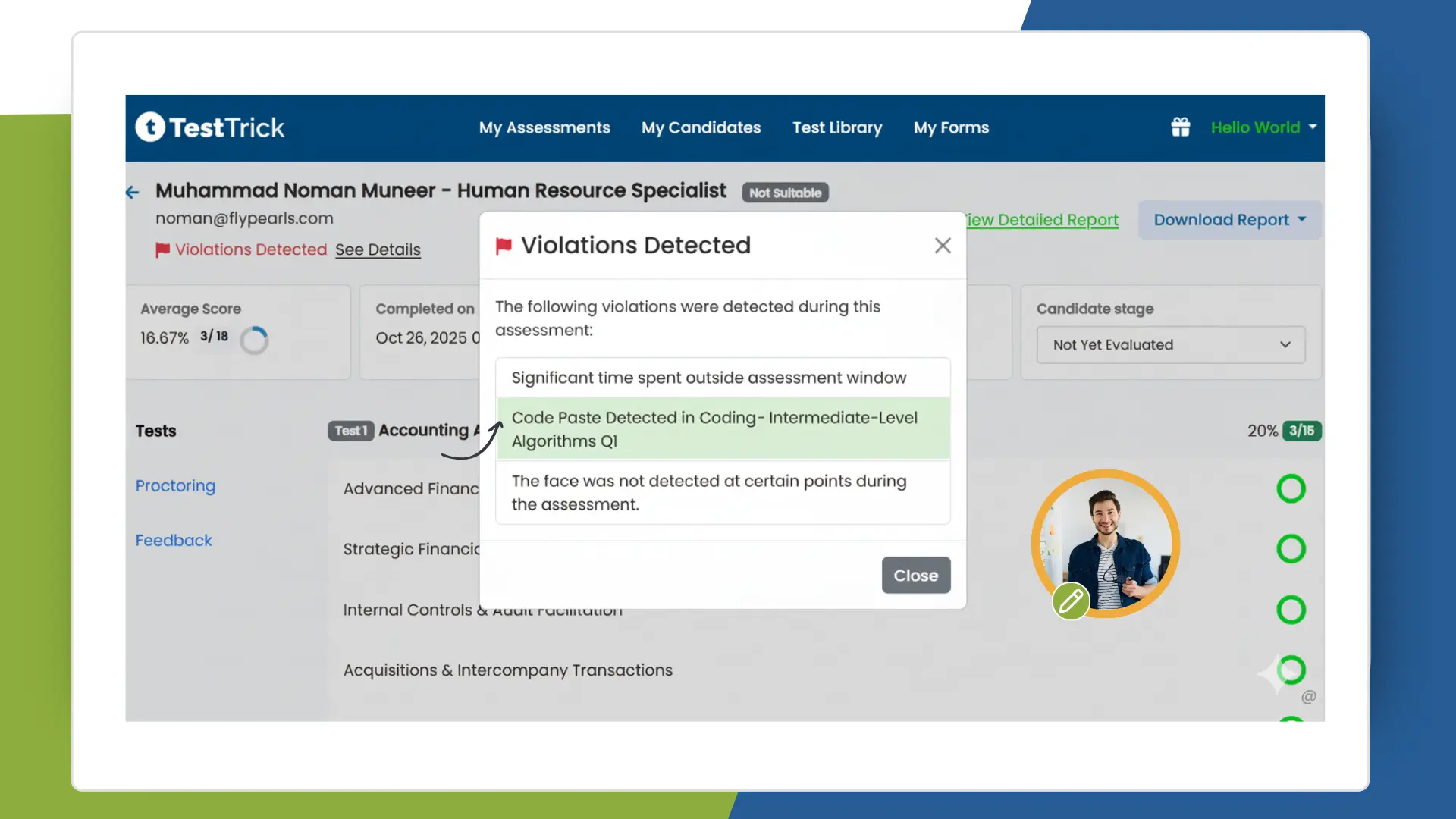
For technical roles, TestTrick does basic proctoring as well as reviewing the code-writing process.
Copy-paste disabling and paste detection: It stops you from using Ctrl+C and Ctrl+V to export questions or paste in pre-written solutions. If someone types in a code that's been pasted in using special software, the system will flag that line of code exactly.
Keystroke Replay: This is the most powerful defense against cheating that TestTrick has. Recruiters can see the final code that's been submitted, and they can also replay the candidate's keystrokes as they typed.
If you suddenly see 50 lines of perfect code, or if the typing rhythm is totally robotic—with no natural human pauses or backspace operations—then it's clearly an AI-generated solution.
Plagiarism and AI Similarity Scoring: TestTrick compares submitted code against a global code repository and ChatGPT output patterns, as well as against past candidate submissions, to detect plagiarism.
4. Test Design and Anomaly Detection
Question Randomisation: TestTrick picks questions at random from a huge question bank and shuffles them around. Even if candidates search the question bank online, the questions they see will be different, so cheat sheets won't help at all.
AI Anomaly Detection: The system collects all behavioural data, including when someone's been inactive for a while (maybe they're waiting for something to come in from outside), unusual head positions (maybe they're reading something on a hidden device), and fast mouse movements.
Little Summary & What Kind of AI Tool Won't Work
From what I've seen, TestTrick is designed for recruitment scenarios, so its anti-cheating system is mainly aimed at modern methods, like ChatGPT, dual-screen setups and copying and pasting code. As TestTrick records your typing rhythm and blocks secondary screens, common methods like:
apps that retrieve answers on a second device
AI interview assistants that rely on limited tab sharing
won't work as intended. In fact, they might even get you flagged for cheating, which could cost you the job opportunity.
Even if a candidate tries to use a second device to get answers, they'd probably need to use complex hardware screen splitters or standalone offline devices (like putting a tablet outside the camera's field of view) while manually typing the AI's responses to copy human keystrokes. But this approach still carries significant risks. So here comes a question: what kind of AI interview helper could be of great use without too much risk?
Best AI Tools for Testtrick 2026
What Kind of AI Tools Are The Best?
When I started looking for the best tools to prep for TestTrick, I found a few platforms that stood out. Here are the ones I tried and how the outcome looks:
Method / Tool | Tab/Extension Detection | Code-Paste Blocking | Screen Capture/Recording | Risk Level |
Desktop App (such as Linkjob AI) | Safe (Runs independently of browser) | Bypassed if you use them properly (type manually) | Medium (Must keep window size hidden) | Low to Medium (extremely low if used with tactics) |
Any Chrome Extension | ❌ Caught Instantly | ❌ Blocked | ❌ Visible on Review | 🔴 Critical Risk |
Dual Device AI Apps | ❌ Got Caught Instantly | Okay to pass | ❌ Detectable during assessment | Quite Risky |
Hardware Capture Splitter | Safe (Zero software footprint) | Bypassed (You manually re-type code) | Safe (invisible to OS) | Medium |
Best Desktop App For TestTrick Assessments
So, after testing the three main AI interview assistants on the market, it turns out that only one desktop application can run without being detected by TestTrick. But there are some differences between these tools. For example:
Some users have reported issues with InterviewCoder, such as lag and the sudden failure of its invisible overlay.
InterviewMan's desktop app is tricky to control; its shortcut keys often don't work, meaning users have to click to get answers, and sometimes the app freezes completely. Others have said that it doesn't recognise computer audio, meaning you have to enable external speakers for it to work.
Parakeet AI needs to be manually triggered to generate answers, which results in a slight but awkward delay, and it can't stay completely invisible, especially during screen sharing, coding sessions, or fast-paced technical discussions.
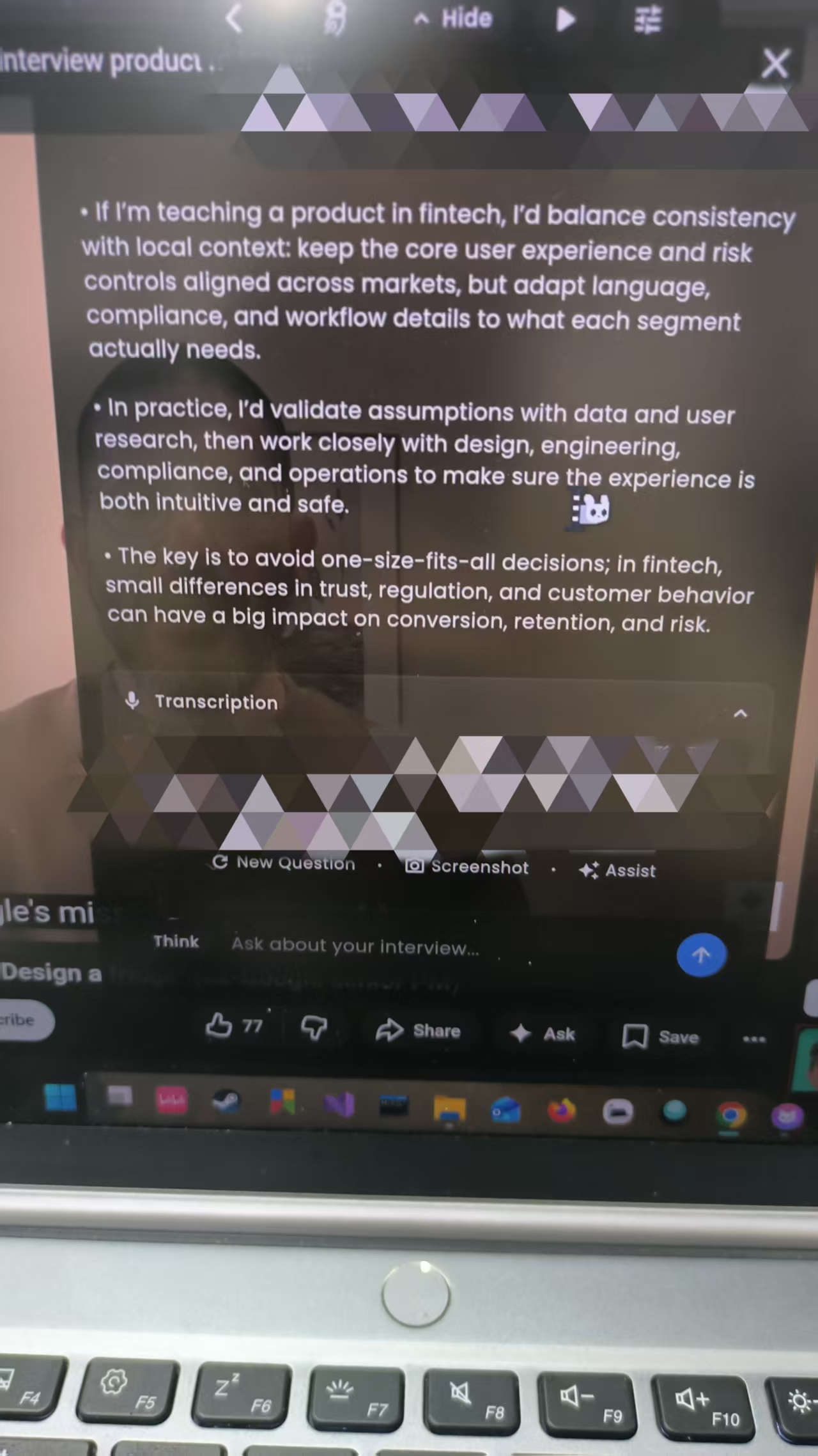
After loads of attempts and trying out a bunch of different things with friends, I decided to go for an AI interview assistant. It's a bit pricey, but it covers a lot of different interview processes and assessments, and it's really transparent about the AI models it uses: Linkjob AI.
How to Cheat on TestTrick: Using Linkjob AI
Get real-time AI assistance.
I've tested full-screen screen sharing, and it's great to see that Linkjob AI operates independently of video calls. There was no need for any browser extensions, there are no cloud operations, and it's completely invisible during screen sharing.
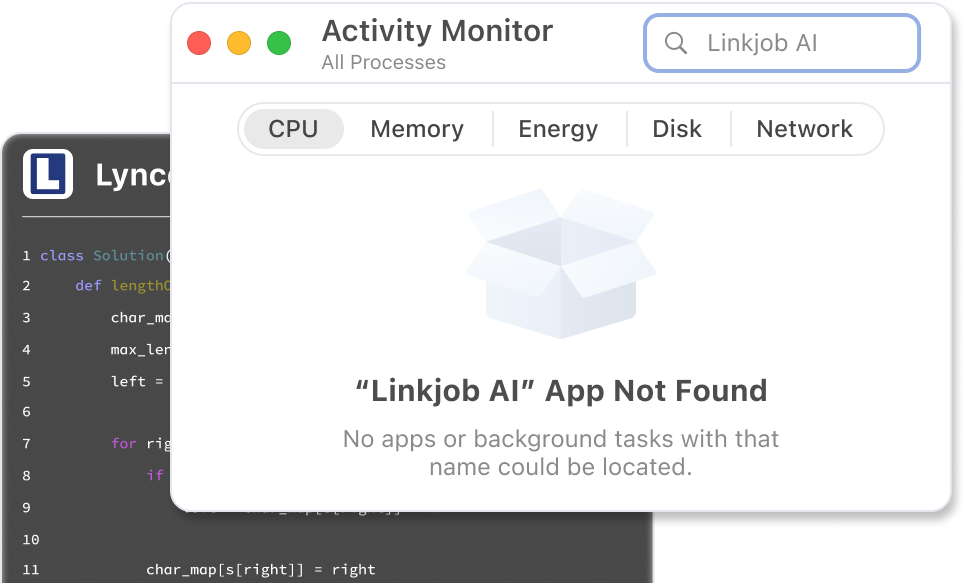
Also, if you toggle a switch, it'll hide it from the Dock, and no process named Linkjob AI will appear in Activity Monitor. This completely bypasses all the TestTrick anti-cheat mechanisms mentioned above.
I don't have to read from notes or switch windows; I just glance at a discreet, private overlay that appears only on my screen, showing concise suggestions based on the interviewer's questions. I find that the instant responses mean I never have to worry about awkward pauses or hesitation.
During the assessment, I rephrased the AI's suggestions in my own words and used personal experiences to make sure the answers were authentic. When I was asked questions that required a verbal answer, I tried to keep a natural tone rather than trying too hard, so the AI wouldn't spot anything unusual and the interviewer wouldn't get suspicious.
Mastering Focus
The real challenge isn't about noise or a mess of information — it's about keeping your head in the game and using real-time AI to help you out.
With Linkjob AI, I can quickly access a transcript of voice prompts using an invisible shortcut, so follow-up verification and authenticity checks never distract me. Instead, there are short, simple prompts that appear as a private overlay on the screen – they were only visible to me, and they never showed up when the screen was shared.
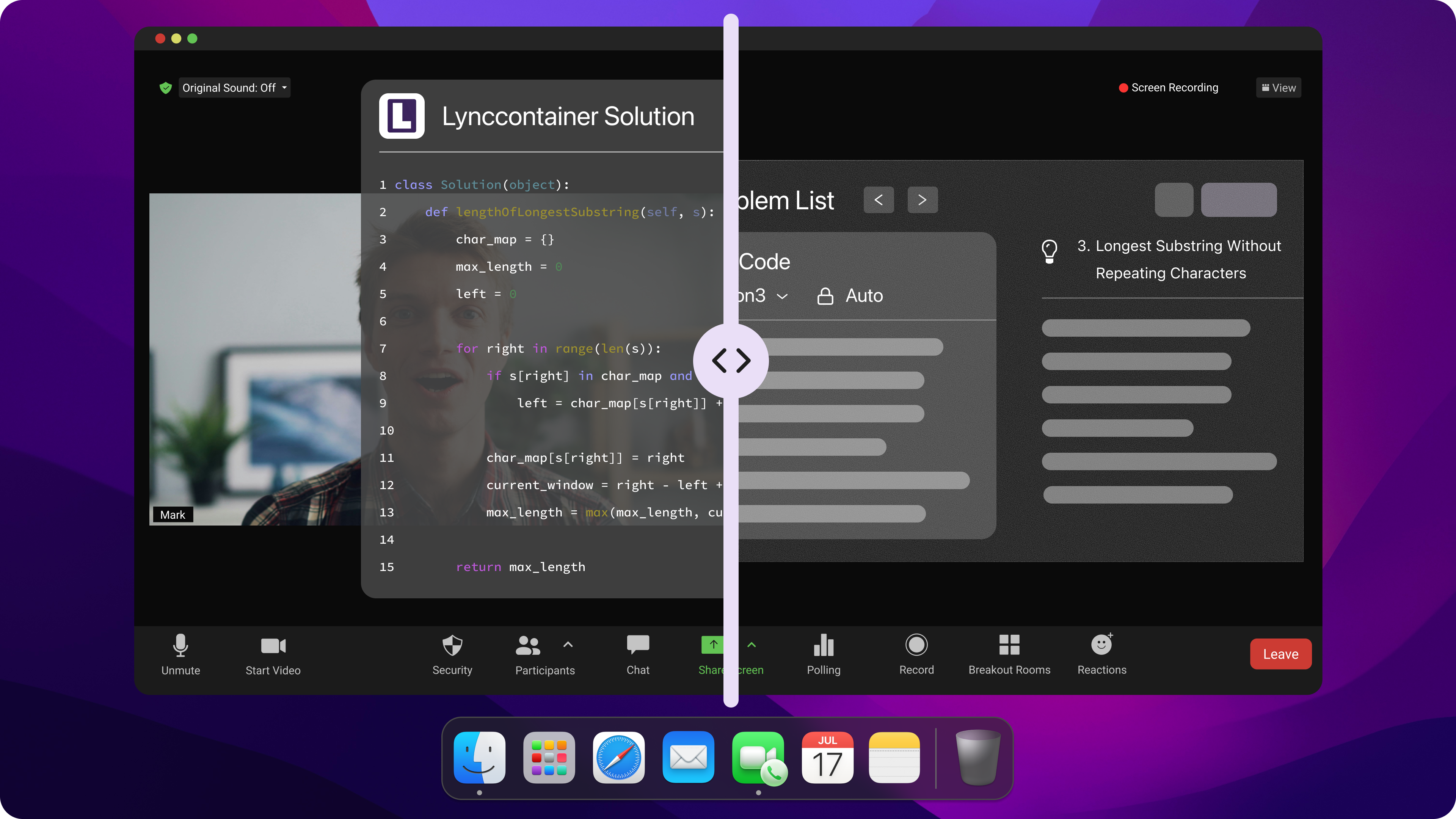
This meant I could keep watching the camera, stay upright, and speak naturally without worrying about it. I didn't need to check notes, switch tabs, or type quickly, so the key was being able to take suggestions on the spot and express them in my own words when I was under pressure.
The most important thing is to trust the tool and yourself.
Look into the camera and make sure you look confident.
Let the AI handle the memory retrieval and focus on your delivery.
Keep your body still – even small movements can show you're nervous.
Handling Skepticism
I remember that at the end of the interview, I'd just finished answering the last open-ended question when the interviewer asked a follow-up question I wasn't expecting.
The question was clearly asking if I'd used outside help. It was super obvious because the interviewer was checking something specific from a previous question and asking why there'd been an odd pause in my typing (probably because TestTrick flagged me as suspicious and that detail was actually pretty minor).
As for me? I kept my cool, answered him in a calm and measured way, and told him about a similar problem I'd solved on LeetCode before, trying to remember how I'd tackled it back then, since that problem was quite challenging. Linkjob AI had also provided me with some possible follow-up questions after each screengrab was uploaded, so I could always be prepared for this kind of skepticism.
I made sure I kept eye contact with the camera the whole time when answering, which is a great way to build trust and put any doubts to rest.
In the end, the interviewer said they understood, so I said goodbye, exited the meeting and the testing page, and then got an email about the next round a week later.
Step-by-Step Guide for TestTrick Assessments
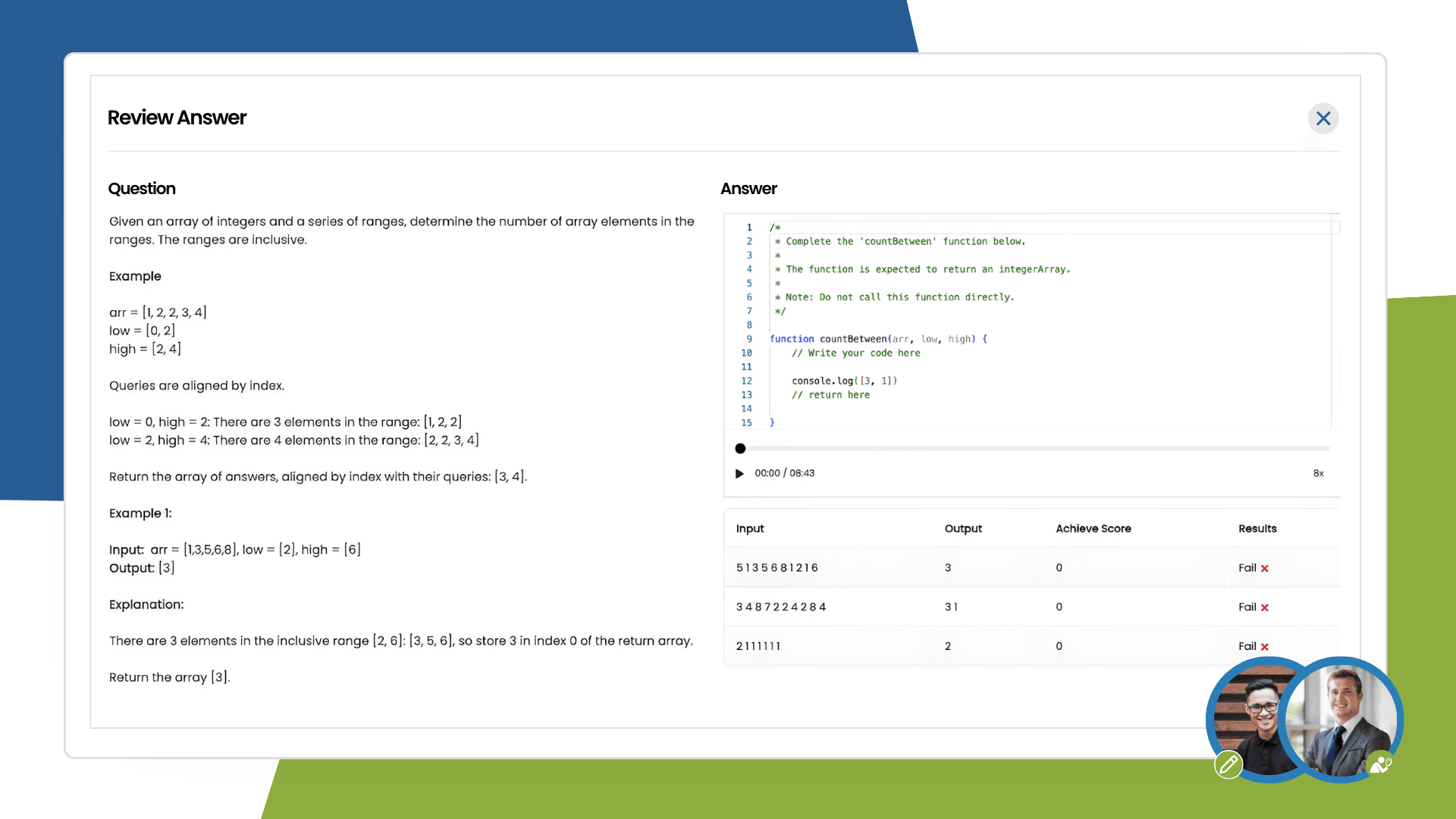
Preparation Strategies
I always start getting ready for exams the night before. I check my equipment—my laptop, webcam, and internet connection. I make sure all my AI tools are set up and ready to go, and I do a full-screen mock interview with a friend half an hour beforehand. I keep my study notes out of sight, but I do review the main points so I don't go blank during the exam.
TestTrick's AI proctoring features include keeping an eye on your identity by taking regular webcam snaps, as well as monitoring your screen and the tabs you're using to make sure you're not cheating. You've got to know what these features are before you use them, otherwise you might accidentally trigger a cheating alert even without using tools like Linkjob AI.
Log on early to beat the stress
Close all the tabs and apps you're not using
Clear your desk – you can leave a bottle of water, but it's best to keep it empty
Give your desk a good look-over to make sure there are no potential distractions
Real-Time Execution
When the test starts, I focus on time management. I read each question carefully. If I get stuck, I use my AI chatbot for quick hints or explanations. For coding questions, I let Copilot or ChatGPT help me debug, but I always check the answers myself.
Here’s what I do to keep things smooth:
Keep the test short—aim for 15 to 30 minutes per section.
Make sure I understand what’s expected before I start.
Move quickly between questions to avoid wasting time.
Use my cheat sheet only when I need a fast reminder.
Stick to standardized answers so my responses look consistent.
I stay calm and avoid switching screens too much. I know proctoring tools can catch unusual activity.
Post-Test Review
After the test, I take a few minutes to review my performance. I check which questions I missed and why. I track my completion rate and see how long each section took me. I also ask myself if my AI tools helped or if I relied on them too much.
Here’s a quick checklist I use:
Track completion rates.
Monitor how much time I spent.
Review early mistakes.
Think about what to improve for next time.
I always try to learn from each test. That way, I get better and more confident for the next round.
Risk Management and TestTrick Detection Avoidance
Non-AI Cheating Tactics
I know not everyone wants to rely on AI. Sometimes, old-school tricks work best when you want to cheat testtrick 2026. I tried a few classic methods that still get the job done.
Hidden Devices: I used a smartwatch or a tiny earpiece to get answers from a friend outside the room. I made sure to keep the device out of sight.
Proxy Test-Taker: I asked a tech-savvy friend to log in as me using a VPN or remote desktop. This worked best for online tests with weak security.
Browser Extensions: I installed extensions that let me search for answers without leaving the test window. Some extensions even auto-fill answers.
Sticky Notes and Paper Tricks: I wrote formulas or key facts on sticky notes and placed them around my monitor. For in-person tests, I hid notes under my sleeve or inside a calculator cover.
Bypassing Proctoring: I used screen mirroring apps to send the test to another device. My friend could see the questions and send me answers in real time.
Tip: Always test your setup before the real exam. Some proctoring tools can detect extra devices or unusual activity.
Cheat Sheets and Quick Reference
I never went into a test without a cheat sheet. A good cheat sheet can save you when you blank out or run short on time. Here’s how I built mine for Cheat on TestTrick in 2026:
Summarize Key Concepts: I wrote down formulas, definitions, and shortcuts in my own words.
Organize by Topic: I used color codes or headings to separate math, logic, and coding sections.
Use Tables for Fast Lookup: I made quick tables for things like conversion rates or syntax rules.
Example Cheat Sheet Table:
Topic | Key Info | Shortcut/Formula |
|---|---|---|
Math | Area of Circle | πr² |
Coding | For Loop (Python) | for i in range(n): |
Logic | If-Else Structure | if (condition) {...} |
Keep It Small: I fit everything on one or two pages. I folded the paper to hide it easily.
Practice Using It: I rehearsed with my cheat sheet so I could find info fast during the test.
Alert: Don’t overload your cheat sheet. Too much info can slow you down. Focus on what you forget most.
I always balanced AI tools with these classic methods. That way, I had a backup plan if one trick failed. If you want to cheat on Testtrick in 2026, try mixing these tactics and see what works best for you.
FAQ
How do I pick the best AI tool for Testtrick Assessment 2026?
I looked at what I need most—stealth mode support, mock interview feature, coding help, and question analytics. I started with the free versions first, before which I checked reviews from other test-takers (normally, people talk truth in Discord groups and Telegram).
Can I use AI tools during the actual test?
It's okay if you get the right AI tools that would not raise a red flag during the test. Using some visible tools might get you in trouble.
What should I do if my AI tool gives a wrong answer?
I double-check the answer myself. I ask the AI to explain its steps. If it still looks wrong, I trust my own logic or use my cheat sheet. I never rely on AI alone.
How can I avoid getting caught by proctoring software?
I tested my setup for Linkjob AI before the exam. I kept my workspace clean, and I avoided using a second device.
Is it possible to prepare without using any AI tools?
Yes! I use classic methods like flashcards, cheat sheets, and practice tests. I study with friends. I focus on understanding concepts, not just memorizing answers. Sometimes, old-school works best.
See Also
Leveraging AI Tools to Ace the Glider AI Exam
Using AI Strategies to Succeed on TestGorilla in 2026
Employing AI Techniques for Live Coding Interviews in 2026
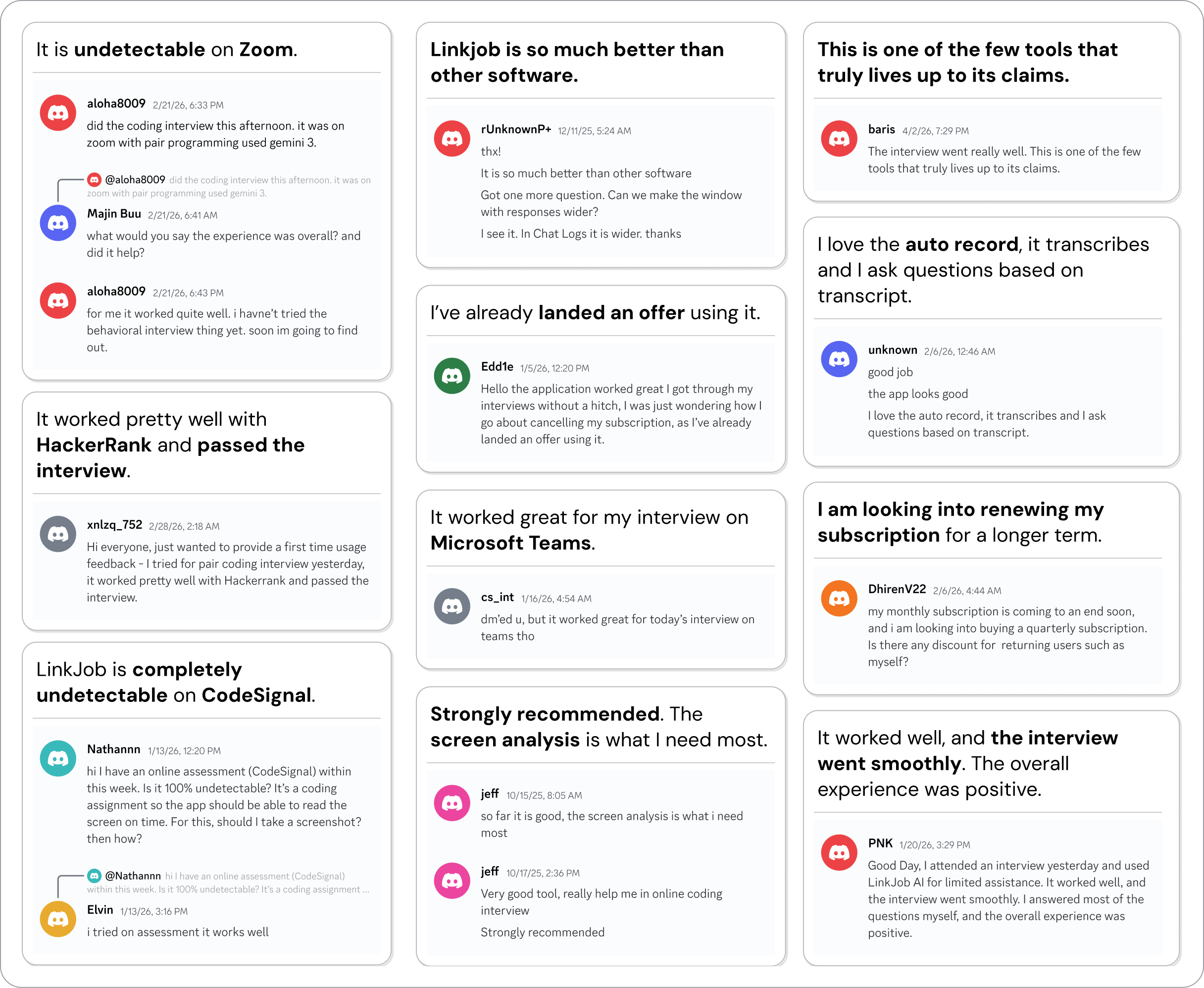
Why People Choose Linkjob AI
Smoother interviews, coding challenges cleared, and job offers landed. See how users describe their experience with Linkjob AI—in their own words.

© Copyright 2026 Linkjob AI - All Rights Reserved.