My 2026 Vanguard HackerRank: Questions I Faced and Solved

My Vanguard SDE HackerRank assessment had a total of seven questions. Four of them were multiple-choice, and the other three were coding problems. The questions were not very difficult, and the coding problems could be solved using brute-force approaches.
I am really grateful for the tool Linkjob.ai, and that's also why I'm sharing my entire OA interview experience here. If you're looking for Vanguard assessment test answers, I'll walk through my exact solutions below—including the logic behind each step. Having an undetectable AI assistant for real time support is indeed very convenient.
This article is part of the HackerRank series. If you're interested in other articles in this series, feel free to read: Microsoft HackerRank test, JP Morgan HackerRank test, Stripe HackerRank online assessment.
In the following, I will show all the questions I encountered and explain my approach to solving the three coding problems.
Vanguard Hackerrank Questions 2026
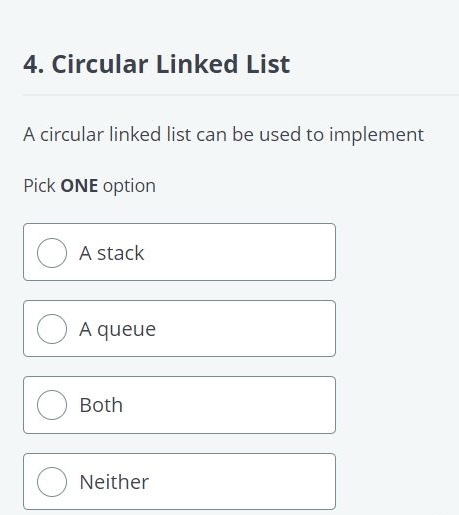
Multiple-Choice Questions
Coding Question 1: Spam Detection
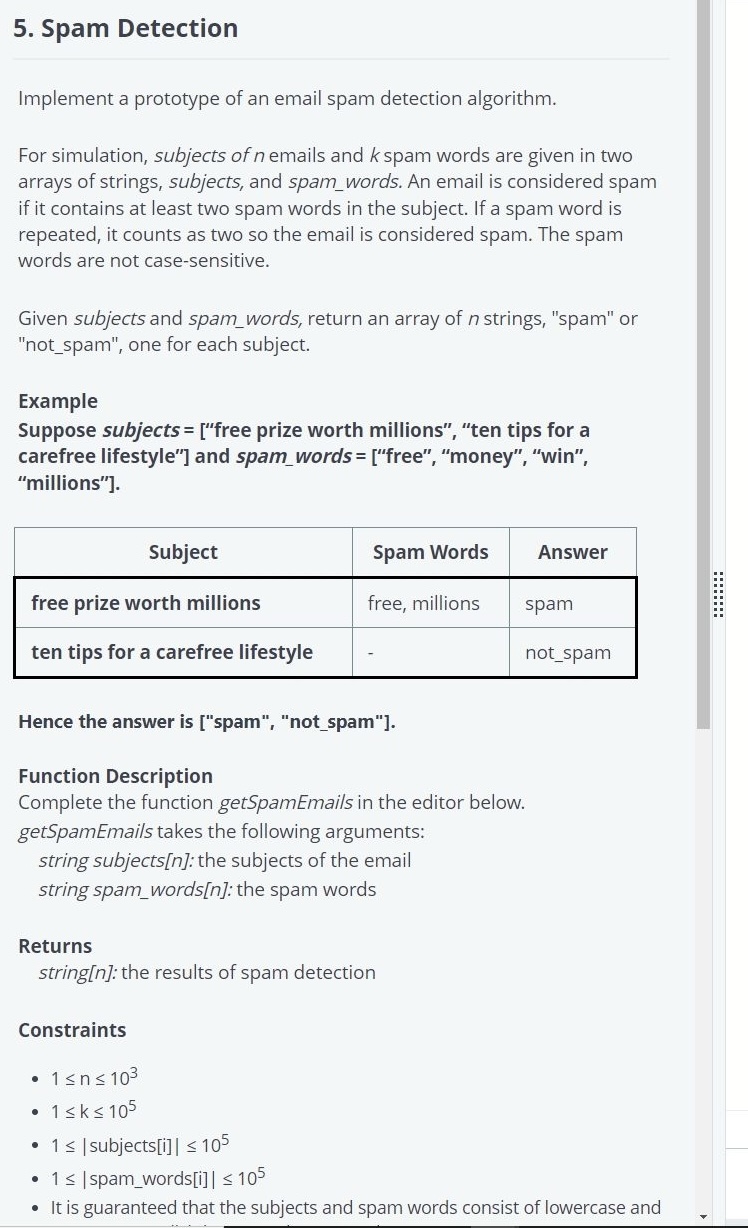
The logic here is straightforward, focusing on case-insensitive matching and frequency counting. I first clarified the rules: a subject is considered spam if it contains at least two spam words (repeated words count) and matching is case-insensitive.
My approach:
Convert all spam words to lowercase and store them in a set for quick lookup.
For each email subject, split it into words, convert each word to lowercase, and count how many appear in the spam word set.
If the count is 2 or more, mark it as spam; otherwise, mark it as not_spam.
For example, in the sample input, the first subject “free prize worth millions” contains “free” and “millions” as spam words, count = 2, so it is marked spam. In the second subject, “carefree” is not considered a spam word because it is not exactly “free”, so count = 0, marked not_spam.
Coding Question 2: Are they Pangrams
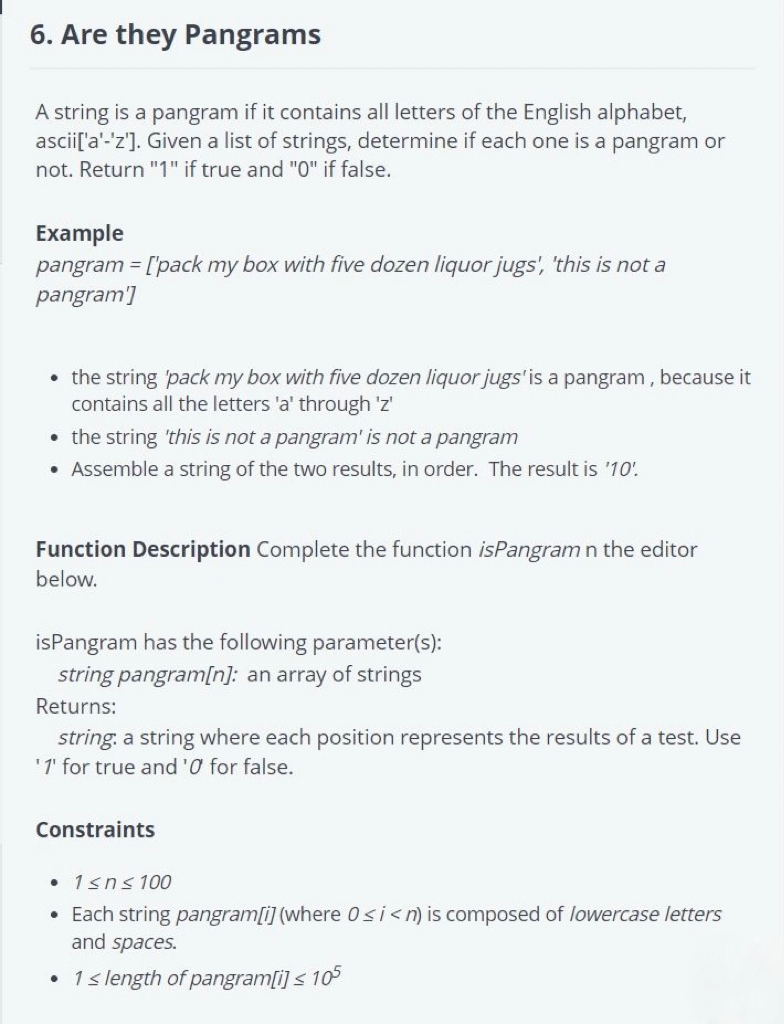
This problem requires checking if a string contains all 26 lowercase letters. A pangram is defined clearly, so the main task is counting unique letters in the string.
My approach:
Extract all letters from the string while ignoring spaces.
Store the letters in a set and check if the set size is 26.
If yes, mark 1; otherwise, mark 0. Concatenate all results at the end.
For example, in the sample, the first sentence “pack my box with five dozen liquor jugs” contains all 26 letters, so it is 1. The second sentence is missing many letters, so it is 0. Result: “10”.
To be honest, I was a bit worried at first, since HackerRank's detection system is extremely strict. But as mentioned in the article “HackerRank How to Cheat,” Linkjob wasn't detected by HackerRank at all during the entire process. If you're also afraid of being caught cheating by the platform or interviewer during an interview, I recommend reading this article.
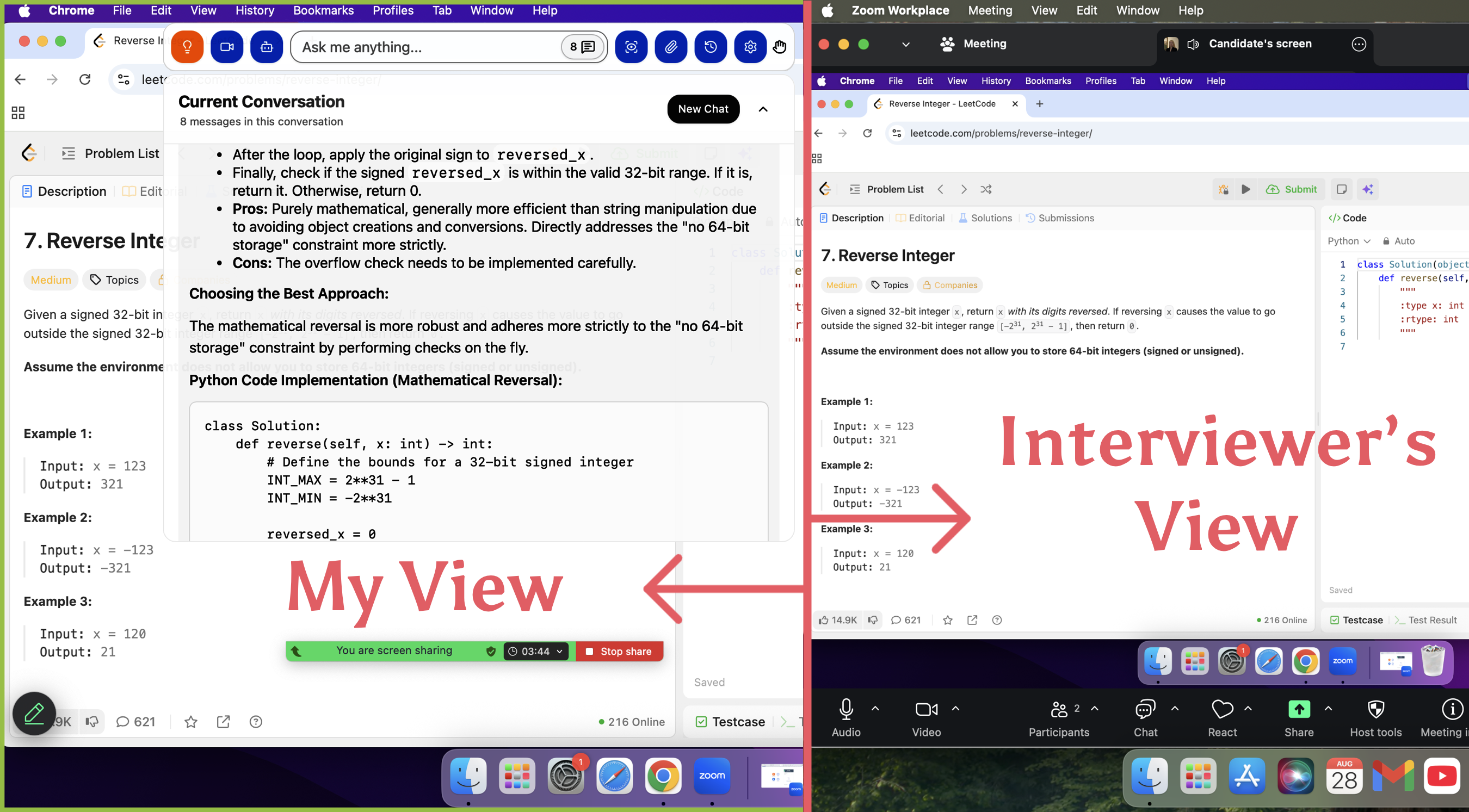
And I have to say, Linkjob AI is really easy to use. I used it during the interview after testing its undetectable feature with a friend beforehand. With just a click of the screenshot button, the AI provided detailed solution frameworks and complete code answers for the coding problems on my screen.
Coding Question 3: Missing Words
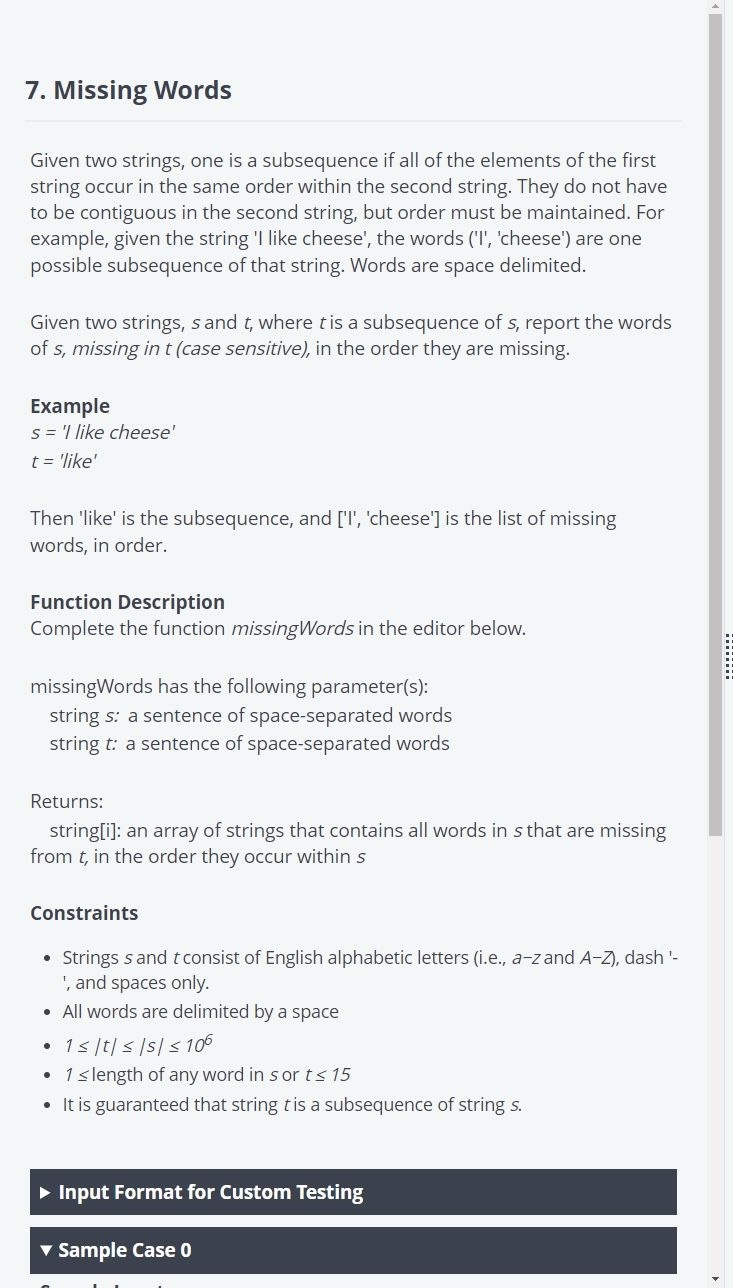
First, I confirmed the definition of a subsequence: words in t appear in s in the same order but not necessarily consecutively. The goal is to find words in s that are not in t, preserving s’s order.
I used a two-pointer approach:
Split s and t into word lists, s_words and t_words.
Initialize two pointers i (for s_words) and j (for t_words), both starting at 0.
Traverse s_words:
If s_words[i] == t_words[j], the word exists in t, move j forward by 1.
Otherwise, the word is missing and added to the result list.
Always move i forward in each loop.
Return the result list at the end.
For example, s = [“I”, “like”, “cheese”], t = [“like”].
i = 0, s[0] != t[0], add “I” to the result.
i = 1, s[1] == t[0], move j to 1 (beyond t’s length).
i = 2, add “cheese” to the result. Final result: [“I”, “cheese”].
How I Prepared for the Vanguard HackerRank Assessment
Study Materials
Insights from Tech Communities and Career Platforms
I frequently checked the Vanguard sections on Glassdoor and Blind to gather insights from previous candidates about OA focus areas. These platforms consistently highlight that foundational coding ability is the core requirement, and that candidates often lose points on rule interpretation and handling edge cases. Another advantage is that they offer preparation guidance helping me avoid irrelevant topics and stay focused on what actually matters. Such as practicing fundamental algorithmic logic and paying attention to efficiency.
General Problem-Solving Methods from Video Platforms
I used YouTube to organize general frameworks for solving coding problems, focusing on the core ideas: how to apply basic data structures, how to break down standard requirements, and how common algorithms work. The visual code walkthroughs helped me quickly build problem-solving intuition and handle different types of OA questions more effectively.
Practice Platforms
HackerRank’s Basic Algorithm Sets
I focused on HackerRank’s Easy-to-Medium foundational algorithm questions, especially those tagged with Counting, Matching, and Sequence. I practiced under OA-like timing—15–20 minutes per question—to get used to the platform’s test case patterns, such as handling duplicates and multi-condition logic. This helped me prepare targeted strategies in advance.
LeetCode High-Frequency Fundamentals
I prioritized LeetCode’s high-frequency Easy-to-Medium fundamentals, concentrating on core skills like basic counting logic, sequence processing, tokenization, and boundary handling. After solving each problem, I compared different solution approaches to learn more efficient patterns, ensuring that my code remained robust and fast enough for OA time limits.
Vanguard HackerRank Assessment Overview and Test FormatTest Positioning
From an overall design perspective, Vanguard’s HackerRank test is not aimed at tackling highly difficult problems. Its core focus is on assessing fundamental engineering skills. The question difficulty mostly ranges from easy to medium and does not involve complex algorithms. The problems primarily center on string manipulation and similar high-frequency workplace scenarios. These scenarios represent basic modules in everyday enterprise development, covering the essential skills required for almost all technical positions.
The key value of this positioning is the ability to quickly identify candidates who can translate basic business logic into stable code. For companies, advanced algorithm skills can be evaluated later in technical interviews, but solid foundational engineering skills are essential for employees to quickly contribute. For candidates, these tests emphasize rigor and practicality over algorithmic talent. With strong fundamentals and careful problem reading, success is highly achievable.
Skills Assessment
Tool Application
Using basic operations such as string splitting, case conversion, and data structure usage, the test assesses familiarity with programming language APIs. Mastery of these tools forms the basis for efficient coding. For example, efficiently using collections to speed up lookups or leveraging concise APIs for string processing directly affects code efficiency and clarity.
Rule Translation
Converting natural language rules into code logic is a key step in evaluating a candidate’s ability to understand requirements and model problems. This skill determines whether a developer can accurately interpret business needs. Many development errors stem not from technical difficulty but from misinterpreting requirements. The test uses detailed problem statements to identify candidates who are careful and logically precise.
Engineering Mindset
Implicit evaluation of handling edge cases and optimizing efficiency gauges engineering thinking. In professional development, code must not only function correctly but also remain stable, efficient, and maintainable. Test designs such as repeated spam word counting and double-pointer optimizations help identify candidates who consider extreme scenarios and seek optimal solutions. These candidates reduce potential online issues caused by insufficient code robustness after joining.
Job Relevance
It is clear from the test content that Vanguard’s HackerRank is highly aligned with the needs of business-focused technical roles rather than research-oriented positions. This is reflected in three aspects:
Scenario Matching
The selected string manipulation tasks mirror the daily work focus of business technical roles. Passing the test indicates that a candidate possesses the foundational skills to handle such tasks, enabling a smooth transition into workflows and reducing onboarding costs for the company.
Skill Alignment
The abilities assessed (rule translation, handling edge cases, and efficiency optimization) are core competencies for business technical roles. Most development work revolves around implementing business rules, managing exceptions, and ensuring stable interfaces rather than solving complex algorithmic problems. Such tests help companies identify candidates who can deliver quickly and with fewer errors, aligning with the “fast delivery and stable operation” goal of business roles.
Barrier Balance
The easy-to-medium difficulty ensures efficient screening while remaining inclusive. This threshold suits the talent needs of business technical roles: companies seek candidates with solid fundamentals and a meticulous attitude rather than algorithmic geniuses. By controlling test difficulty, companies can accurately identify the target candidate profile.
How I Cleared All 7 Questions on My 2026 Vanguard HackerRank OA: 4 Real MCQs, 3 String & Sequence Coding Tasks, Edge-Case Traps, and Safe Setup
When my Vanguard HackerRank invitation arrived in early 2026 for an Application Engineer / Technology Leadership Program (TLP) track (spanning Vanguard's Malvern, Pennsylvania headquarters alongside Charlotte, Dallas-Plano, Scottsdale, Toronto, and London technology hubs), I expected gnarly Dynamic Programming or Wall Street options math. Instead, opening the 90-minute test revealed a very specific 7-question build: 4 conceptual multiple-choice questions followed by 3 practical string-and-sequence coding problems! Yet that approachable surface is the exact reason overconfident CS majors fail Vanguard's screen every week: the coding prompts hide razor-sharp tokenization, duplicate-counting, and subsequence-ordering traps that quietly strip away hidden test cases while your visible sample outputs look 100% green.
During my own 90-minute sitting, pausing for thirty seconds on Question 5 (Spam Detection) saved me from a classic substring blunder—because "carefree" must never match the spam keyword "free", while "free free" must count as two hits even though it is the same word repeated! Even more critical, HackerRank's active monitoring on Vanguard links checks for background apps and overlays continuously mid-session—not just at launch—where a stray desktop widget can pause the exam automatically and invalidate your entire attempt.
To double-check exact-token rules and duplicate-subsequence edge cases without placing any software overlay on my monitored laptop screen, I paired Linkjob AI in Dual-Device Mode—scanning the desktop QR code to open Linkjob AI on my phone's mobile webpage, turning off the desktop answer-display toggle so zero UI ever appeared on my computer monitor, and tapping capture from my phone's mobile webpage (zero laptop shortcut keys and zero window.onblur focus drops) to verify every boundary condition 1 inch below my webcam lens (alongside testing Desktop Floating Window Mode on unproctored practice links). Below is every real MCQ and coding problem from Vanguard's 2026 HackerRank pool, clean Python 3 solutions, and what follows in the live interview and Superday.
How the Vanguard HackerRank OA Works in 2026 (The 7-Question Build, Role Tracks, & Scoring)
Before launching my 90-minute timer, I compared Vanguard's engineering gate against peer investment-management and banking loops—including my 2026 Goldman Sachs HackerRank test breakdown, how I solved Goldman Sachs coding interview questions, my Goldman Sachs Superday walkthrough, my Morgan Stanley HackerRank test guide, how I passed the JP Morgan HackerRank test, my Wells Fargo SWE interview notes, how I handled the Barclays Codility test, my Visa CodeSignal SWE experience, and what showed up on my Virtu Financial HackerRank test. Understanding Vanguard's exact test architecture keeps you from studying the wrong material:
1. The Flagship 90-Minute, 7-Question SWE / Application Engineer / TLP Format
Questions 1 to 4 (
4 Conceptual MCQs— ~10 Minutes Total): Cover data-structure pointer mechanics, OOP inheritance/polymorphism, time complexity, bitwise/short-circuit operators, and software-testing judgment. Each MCQ is scored binary (1or0) with zero negative marking—banking all four cleanly in your opening 10 to 12 minutes leaves nearly 80 calm minutes for the three coding tabs!Questions 5 to 7 (
3 Coding Problems— ~75 Minutes + Edge-Case Review): Focus deliberately on translating natural-language business rules into bug-free string, set, and sequence code (Python 3,Java 8/17,C++, andC#unlocked on standard SWE tracks). You do not need segment trees or obscure graph theorems; Vanguard wants developers who read specifications carefully and never ship subtle edge-case regressions into production fund systems.IMDP, Risk, & UK Graduate Variants (And the HireVue Myth): Candidates applying to Vanguard's Investment Management Development Program (
IMDP), quantitative risk, or data tracks receive Python/SQL data-wrangling tasks on HackerRank, while select UK/graduate cohorts pair HackerRank with Arctic Shores behavioral assessments (note: despite generic blog rumors, zero verified first-hand US Vanguard reports use HireVue!).
2. How Vanguard Grades Your HackerRank Submission
Fractional Test-Case Partial Credit + Binary MCQs: Each coding problem runs against visible sample inputs and a larger suite of hidden boundary cases—your coding score on each tab equals the fraction of hidden test cases passed, combined with your
0–4MCQ score into a recruiter summary report rather than a candidate-visible pass/fail number.Why
30-Minute SpeedrunsLose Offers: Every cycle onr/csMajors, candidates boast about finishing Vanguard's HackerRank in 30 minutes—only to get rejected two weeks later because substring matching onSpam Detectionorset()deduplication onMissing Wordsquietly failed 40% of hidden cases! Taking 55–65 deliberate minutes and reserving 3 custom-input review minutes per tab locks in100%hidden coverage.
Questions 1–4: The 4 Real Multiple-Choice Archetypes on Vanguard's HackerRank OA
Across 2025–2026 candidate logs, Vanguard's four opening MCQs draw from four repeatable CS fundamentals:
Linked-List Pointer Walk Tracing: "Given a non-empty singly linked list with
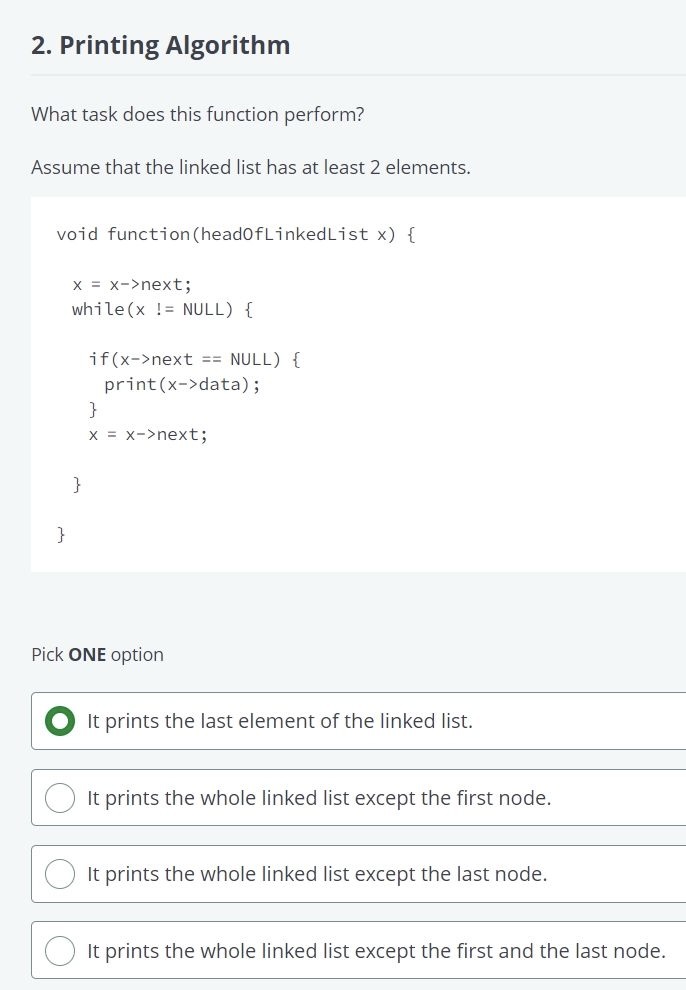
curr = head.next, advancecurrin a loop and printcurr.valonly whencurr.next == null—what prints?" Watch thehead.nextinitialization: on a 1-node list (head.next == null), nothing prints (currstarts null!), while on a list of length>= 2, only the tail node's value prints!Circular Singly Linked List ADT Capabilities: "Can a circular singly linked list implement a stack, a queue, both, or neither in
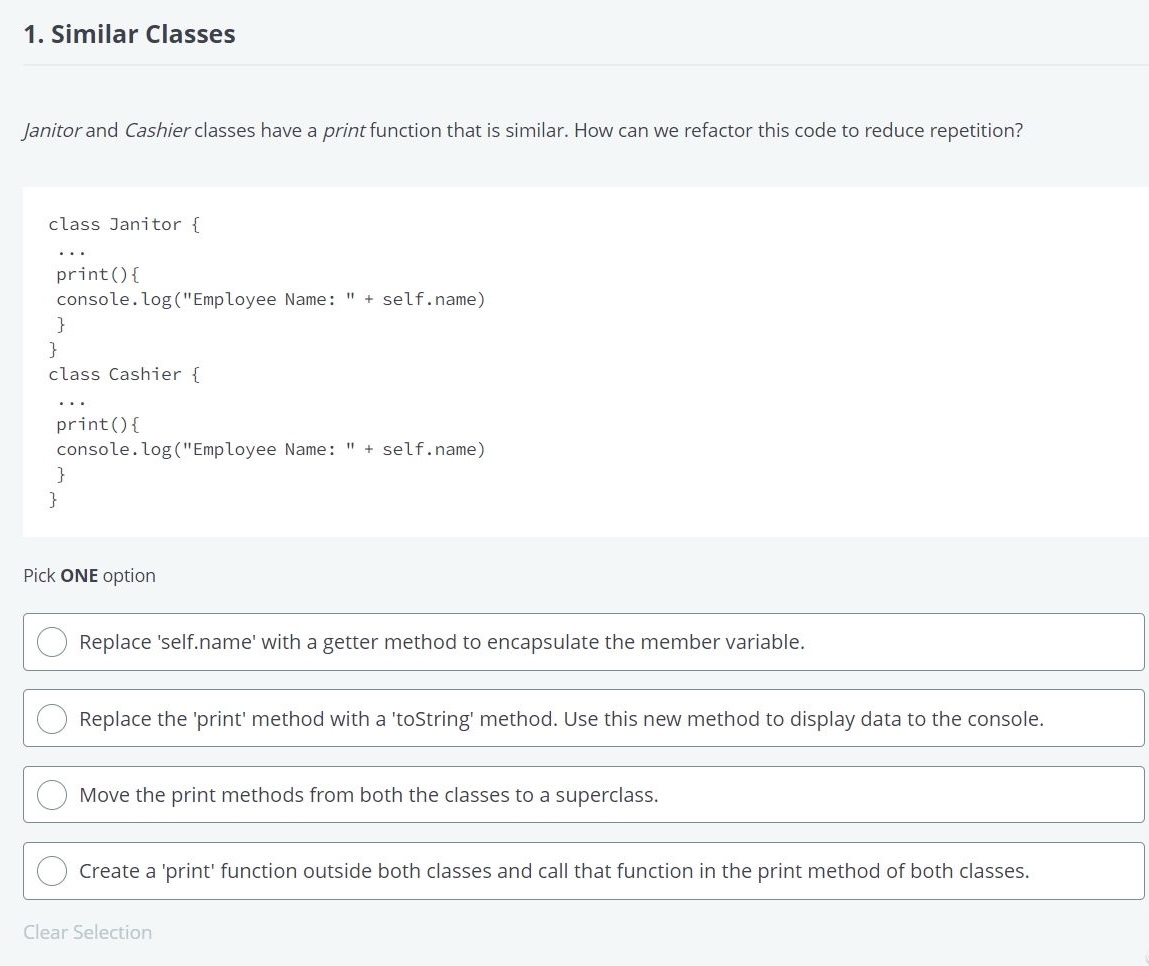
O(1)time per operation?" When you maintain a pointer to thetailnode (tail.nextishead!), inserting athead(push/popfor a stack) and inserting attail+ removing athead(enqueue/dequeuefor a queue) all run inO(1)time—so the correct choice is both!OOP Inheritance, Method Overriding, & Testing Scope: Expect one Java/C# class-hierarchy snippet distinguishing compile-time overloading from runtime virtual/polymorphic overriding, or choosing between unit tests (isolated business logic with mocked I/O) and integration tests.
Mystery Pseudocode Time Complexity & Bitwise Logic: Count loop halving (
i = i * 2->O(log n)) vs. nested triangular scans (jfrom0toi->O(n^2)), and distinguish bitwise&/|(evaluates both operands!) from logical short-circuit&&/||.
Questions 5–7 (Plus 3 Confirmed Pool Alternates): All Real Vanguard HackerRank Coding Solutions
Below are the three exact coding problems from my 2026 Vanguard HackerRank sitting (Spam Detection, Are They Pangrams, and Missing Words) followed by three confirmed alternates from Vanguard's broader HackerRank bank (Picking Tickets, Binge Watching, and Remove Duplicate Anagrams—matching core themes in HackerRank coding test archives).
1. Question 5 (Coding Problem 1): Spam Detection (Exact-Token & Repeat-Count Traps)
The Problem: Given
subjects: list[str](email subject lines) andspam_words: list[str], classify each subject as"spam"if it contains at least2spam words, and"not_spam"otherwise. Three rules govern hidden test cases: (a) matching is case-insensitive ("FREE"matches"free"), (b) repeated occurrences of the same spam word count separately ("free trial free"has 2 hits ->"spam"), and (c) matching is strictly whole-word token equality ("carefree"does not match"free"!).Why Substring Checks &
setIntersections Fail: Writingsum(subject.lower().count(w.lower()) for w in spam_words)falsely flags"carefree"as"free", whilelen(set(subject.lower().split()) & spam_set) >= 2misses"free gift free"when"gift"is not a spam word! Pre-building a lowercasespam_setand counting exact tokens per subject runs inO(S + W)linear time:
import re


def classify_spam_subjects(
    subjects: list[str],
    spam_words: list[str],
) -> list[str]:
    """
    Time Complexity: O(total characters across subjects + spam_words)
    Space Complexity: O(unique lowercase spam_words)
    """
    spam_set = {word.strip().lower() for word in spam_words if word.strip()}
    verdicts: list[str] = []

    for subject in subjects:
        # Check starter examples: standard Vanguard inputs split on whitespace;
        # if punctuation attaches to words in your prompt, re.findall(r"[a-z0-9]+", ...)
        # or .split() can be chosen to match the visible sample specification!
        tokens = subject.lower().split()
        hit_count = 0
        for tok in tokens:
            if tok in spam_set:
                hit_count += 1
                if hit_count >= 2:
                    break
        verdicts.append("spam" if hit_count >= 2 else "not_spam")

    return verdicts
2-Minute Custom Input Check: Before moving to Question 6, run
subjects = ["Carefree living today", "FREE update free", " "]withspam_words = ["Free"]to verify["not_spam", "spam", "not_spam"]!
2. Question 6 (Coding Problem 2): Are They Pangrams (26-Letter Set & Signature Check)
The Problem: Given
sentences: list[str], determine for each string whether it is a pangram—containing every English letter'a'through'z'at least once (case-insensitive, ignoring spaces, digits, and punctuation). Output'1'(or integer1) if true and'0'(or0) otherwise.Watch the Return-Type Signature (
Concatenated Stringvs.Integer List): Across Vanguard HackerRank templates, one version's starter stub returns a single concatenated string"1001"(def isPangram(pangram: list[str]) -> str), while another prints/returns1or0per line! Always glance at the starter stub's return annotation before submitting—and guard empty or symbol-only strings ("","99999!"):
def are_they_pangrams_concat(sentences: list[str]) -> str:
    """Returns concatenated '1'/'0' string across all input sentences."""
    bits: list[str] = []
    for text in sentences:
        alpha_seen = {ch for ch in text.lower() if "a" <= ch <= "z"}
        bits.append("1" if len(alpha_seen) == 26 else "0")
    return "".join(bits)


def are_they_pangrams_list(sentences: list[str]) -> list[int]:
    """Per-line integer variant returning [1, 0, ...] when stub expects list[int]."""
    return [
        1 if len({ch for ch in s.lower() if "a" <= ch <= "z"}) == 26 else 0
        for s in sentences
    ]
3. Question 7 (Coding Problem 3): Missing Words (Case-Sensitive Two-Pointer Subsequence Walk)
The Problem: Given two space-separated strings
sandt, wheretis formed by deleting zero or more words froms(for example,s = "I am using HackerRank to improve programming"andt = "am HackerRank to improve"), return the missing words (["I", "using", "programming"]) in the exact order they appear ins. Word comparisons are case-sensitive!Why Set Difference Fails Duplicate Words: If
s = "Vanguard ETF Vanguard Bond ETF"andt = "Vanguard ETF",tmatches the first"Vanguard"and first"ETF"via greedy subsequence alignment, leaving["Vanguard", "Bond", "ETF"]! Usingset(t.split())wrongly deletes the second"Vanguard"and second"ETF", returning["Bond"]and failing hidden duplicate tests! A clean two-pointer walk (ions_words,jont_words) runs inO(N)time and handles duplicate words effortlessly:
def missing_words(s: str, t: str) -> list[str]:
    """
    Time Complexity: O(|s| + |t|)
    Space Complexity: O(number of words in s and t)
    """
    s_words = s.split()
    t_words = t.split()

    j = 0
    t_len = len(t_words)
    omitted: list[str] = []

    for word in s_words:
        if j < t_len and word == t_words[j]:
            j += 1
        else:
            omitted.append(word)

    return omitted
4. Three More Confirmed Vanguard HackerRank Pool Problems (Picking Tickets, Binge Watching, & Remove Duplicate Anagrams)
If your Vanguard sitting rotates one of its three coding slots, these three problems come directly from Vanguard's verified 2019–2026 OA bank:
Picking Tickets(O(n log U)Longest Contiguous Adjacent Run): Choose the largest subset of ticket prices such that when sorted, every adjacent pair differs by0or1([8, 5, 4, 8, 4] -> [4, 4, 5]of size3). Counting frequencies and extending runs across consecutive keysx, x + 1, ...avoidsO(n^2)nested scans!Binge Watching(O(n log n)Two-Pointer Bin Packing<= 3.00Hours): Given movie durations in[1.01, 3.00], find the minimum days needed when each day holds at most3.00hours (because every movie exceeds1.00, at most two movies can ever fit into one3.00-hour day—so pairing lightestleftwith heaviestrightwhend[left] + d[right] <= 3.00 + 1e-9is provably optimal!).Remove Duplicate Anagrams: Keep only the first word encountered for each sorted-character anagram signature, then return the surviving words sorted alphabetically (check whether your prompt asks for alphabetical output or original order!):
from collections import Counter


def max_picking_tickets(tickets: list[int]) -> int:
    if not tickets:
        return 0
    freq = Counter(tickets)
    best = 0
    for val in sorted(freq):
        if (val - 1) not in freq:
            curr = val
            run_total = 0
            while curr in freq:
                run_total += freq[curr]
                curr += 1
            best = max(best, run_total)
    return best


def min_binge_watching_days(durations: list[float]) -> int:
    films = sorted(durations)
    left, right = 0, len(films) - 1
    days = 0
    while left <= right:
        if left < right and films[left] + films[right] <= 3.00 + 1e-9:
            left += 1
        right -= 1
        days += 1
    return days


def remove_duplicate_anagrams(words: list[str]) -> list[str]:
    seen_signatures: set[str] = set()
    kept: list[str] = []
    for word in words:
        sig = "".join(sorted(word))
        if sig not in seen_signatures:
            seen_signatures.add(sig)
            kept.append(word)
    return sorted(kept)
My 7-Day Prep Blueprint for Vanguard's HackerRank, Live Coding, & Superday
Days 1–3 — String Tokenization, Two-Pointer Sequences, & Anagram Hashing: Code
classify_spam_subjects,are_they_pangrams_concat,missing_words,max_picking_tickets, andmin_binge_watching_daysfrom scratch without notes, testing empty strings,"carefree"vs."free", and repeated subsequence tokens.Days 4–5 — CS Fundamentals MCQs & Classic
Two Sum/Valid Parentheses: Review linked-list pointer corner cases, circular listtailoperations, OOP overriding, and May 2025/2026 reported warmups (Two Sum,Valid Parentheses).Day 6 — One Timed 90-Minute
4 MCQ + 3 CodingRehearsal: Practice clearing the 4 MCQs in 12 minutes, spending 20 minutes per coding problem, and saving 3 minutes per tab for Custom Input edge verification.Day 7 — Vanguard's Mutual Ownership Thesis & STAR Stories: Prepare a sharp "Why Vanguard?" answer built on Vanguard's mutual ownership structure—Vanguard is owned by its funds, which are owned directly by fund shareholders, eliminating external-stockholder fee pressure so technology scale flows straight back to clients as lower expense ratios! (Also brush up on active vs. passive management and index/ETF basics.)
How Vanguard's HackerRank Proctoring Works in 2026 (And the Mid-Session Pause Trap)
Vanguard's HackerRank links enforce active integrity monitoring throughout the 90-minute window. Across how HackerRank detects integrity violations, whether HackerRank uses your camera, whether HackerRank detects screen mirroring, whether HackerRank can detect a virtual machine, and HackerRank test retake rules, six mechanisms catch careless setups:
Mid-Session Background-App & Overlay Pause/Invalidation: Monitoring scans continuously mid-test—not only at minute
0! A stray floating overlay or background screen utility popping up mid-session can pause the HackerRank test automatically and invalidate your attempt.Tab-Switch &
window.onblurFocus Logging: Records every browser focus loss,Alt + Tab, or minimization with away-duration timestamps on Vanguard's recruiter summary report.External Copy-Paste Attribution (
insertFromPaste): Flags pasted code blocks on your keystroke Code Playback scrubber.Optional Webcam & Desktop Proctor Mode: Captures periodic snapshots when enabled on campus or lateral links.
Secondary Monitor, Screen Mirroring, & VM Checks: Flags
window.screen.isExtended === true, AirPlay/Sidecar mirroring, and VMware/VirtualBox WebGL strings.AST Similarity & Cadence Checks: Compares code structure and typing rhythm across cohort submissions.
Technical Blueprint: Clearing Vanguard's 90-Minute OA With Zero Flags
Name the Pattern Before Typing Line 1: Classify each task upfront—exact-token counting (
Spam Detection), 26-letter set coverage (Pangrams), two-pointer subsequence walk (Missing Words)—so you never pick asetwhere order and duplicates matter!Close Every Background App & Unplug Extra Monitors First: Ensure
isExtended === falseon bare-metal hardware, close Discord/Slack/recording widgets, and skip VMs orLockDown Browserworkarounds so nothing pauses your test mid-flight.Reverse-Infer Unstated Rules From Sample Cases: Spend 2–3 closing minutes per tab testing empty strings, punctuation-only strings,
"carefree"vs."free", and repeated words insandt.
How I Used Linkjob AI on My Vanguard HackerRank OA (Dual-Device Mode vs. Desktop Floating Window)
Confirming the "carefree" exact-token rule and Missing Words duplicate-word handling—without risking a mid-session desktop overlay pause or invalidation—is why I kept all assistance off my laptop monitor using an undetectable AI coding interview assistant (see how an invisible AI interview assistant works):
1. Mode 1: Dual-Device Mode (My #1 Setup for Proctored / Monitored Vanguard Sessions)
QR Code Pairing & Turning Off Desktop Answer Display (Zero On-Screen UI): Before opening my Vanguard HackerRank link, I launched the Linkjob AI desktop client on my single-monitor laptop, granted accessibility permissions, scanned the dashboard QR code with my phone to open Linkjob AI on my phone's mobile webpage, and turned off the desktop answer-display toggle. Zero overlays or floating widgets ever existed on my computer screen to pause or flag the test!
Silent Remote Capture From My Phone's Mobile Webpage (
0Laptop Hotkeys): Pressing zero shortcut keys on my computer, I tapped capture directly on my phone's mobile webpage—producing0full-screen exits,0window.onblurdrops, and0clipboard writes.Reading Edge-Case Checks 1 Inch Below the Webcam Lens: Verified exact-token splitting and two-pointer
Missing Wordswalkthroughs rendered exclusively on my phone's mobile webpage, propped 1 inch below my webcam lens so my gaze stayed centered on the HackerRank editor while typing clean Python code manually.
2. Mode 2: Desktop Floating Window Mode (For Unproctored Practice & Web Links)
When rehearsing on unproctored HackerRank Prep Kits or standard web links without full-screen/overlay monitoring or screen sharing, use Linkjob AI's desktop floating window workflow under two strict rules:
Finish All Settings Before Opening the Link (Never Click Settings Mid-Test): Select Python 3, Java, or C++, upload your resume, and position the floating window before opening HackerRank—never click the Settings button mid-test so browser focus never drops.
Never Press
Cmd + \orCtrl + \During an Active Test: Never pressCmd + \orCtrl + \to toggle the floating window once the timer starts; keep it fixed in place until after submission.
My 4-Step Pre-Test Checklist & What Comes Next in Vanguard's Loop
Step 1 — Quit Background Apps, Unplug Monitors, & Pair Dual-Device Mode First: Confirm
isExtended === false, open Linkjob AI on your phone's mobile webpage via QR code, and verify the desktop answer-display toggle is OFF.Step 2 — Pace
12m MCQs + 22m Per Coding Tab + 12m Edge Audits: Bank the 4 binary MCQs early so you never rush Question 7!Step 3 — Check Starter Return Types (
strvs.list[int]) & Duplicate Edge Cases: Verify"101"string vs.[1, 0, 1]list signatures onPangramsand repeated words onSpam DetectionandMissing Words.Step 4 — Prep for Recruiter Screen, Application Engineer Live Coding, &
Superday: Passing leads to a recruiter screen (nail Vanguard's mutual ownership cost-advantage thesis + basic index/ETF concepts!) followed by live coding + behavioral/architectural Superday interviews emphasizing clear communication with non-technical stakeholders, working through ambiguous data, and client-first engineering ownership.
Frequently Asked Questions About the 2026 Vanguard HackerRank Assessment
1. How many questions and minutes are on the 2026 Vanguard HackerRank OA?
The flagship Application Engineer, Entry-Level Developer, and TLP assessment runs roughly 90 minutes with 7 questions total: 4 conceptual multiple-choice questions (OOP, linked lists, complexity, debugging) followed by 3 string/sequence coding problems.
2. Are the Vanguard HackerRank coding questions LeetCode Hard?
No—the confirmed coding set (Spam Detection, Are They Pangrams, Missing Words, plus alternates like Picking Tickets and Binge Watching) sits at Easy-to-Medium difficulty. Candidates lose points on rule-reading edge cases ("carefree" vs. "free", repeated spam words, duplicate words in subsequences, and empty strings) rather than esoteric algorithms.
3. How is the Vanguard HackerRank test scored?
Coding tasks award fractional partial credit per passed hidden test case, while the 4 MCQs grade binary (correct/incorrect). Vanguard recruiters review the combined summary report rather than displaying a raw cutoff score to candidates.
4. Does Vanguard use HireVue after or alongside HackerRank in the US?
Despite outdated third-party rumors, recent verified US tech and IMDP reports confirm HackerRank for technical screening (with Arctic Shores appearing on select UK/graduate funnels) rather than HireVue, followed by recruiter phone screens, live coding, and virtual Superday panels.
5. Which programming language is best for Vanguard's HackerRank OA?
Standard SWE assessments unlock Python 3, Java, C++, and C#. Python 3 is exceptionally fast for Vanguard's heavy string-tokenization, set coverage, and Counter problems, saving 15+ minutes for custom edge-case testing.
FAQ
Which programming languages could be used for Vanguard’s HackerRank assessment?
I used C++ at the time. Other languages were also allowed. The choice could be based on personal preference.
When dealing with implicit rules in the problem statement, how can they be identified accurately during the test?
In my experience, the most effective approach is reverse-inferring from the examples and leaving time to validate edge cases. First, study the sample test cases carefully and deduce any unstated constraints from their behavior. After completing the code, reserve 2–3 minutes to test extreme scenarios such as empty inputs or boundary values to ensure that all hidden requirements are fully covered.
How do I prepare for the Vanguard assessment test?
I prepared for the Vanguard assessment test by focusing on three things: basic string manipulation, edge case handling, and time management. The questions aren't algorithmically hard—they're more about translating rules into clean code.Also, pay close attention to the examples; they often hint at hidden rules that aren't explicitly stated.
See Also
2026 Nvidia HackerRank Test: Questions I Got and How I Passed
How I Cracked 2026 Citadel HackerRank Assesment Questions
My IBM 2026 HackerRank Assessment: Real Questions & Insights
My 2026 MathWorks HackerRank Assessment Questions & Solutions
Questions I Encountered in 2026 Goldman Sachs HackerRank Test
Why People Choose Linkjob AI
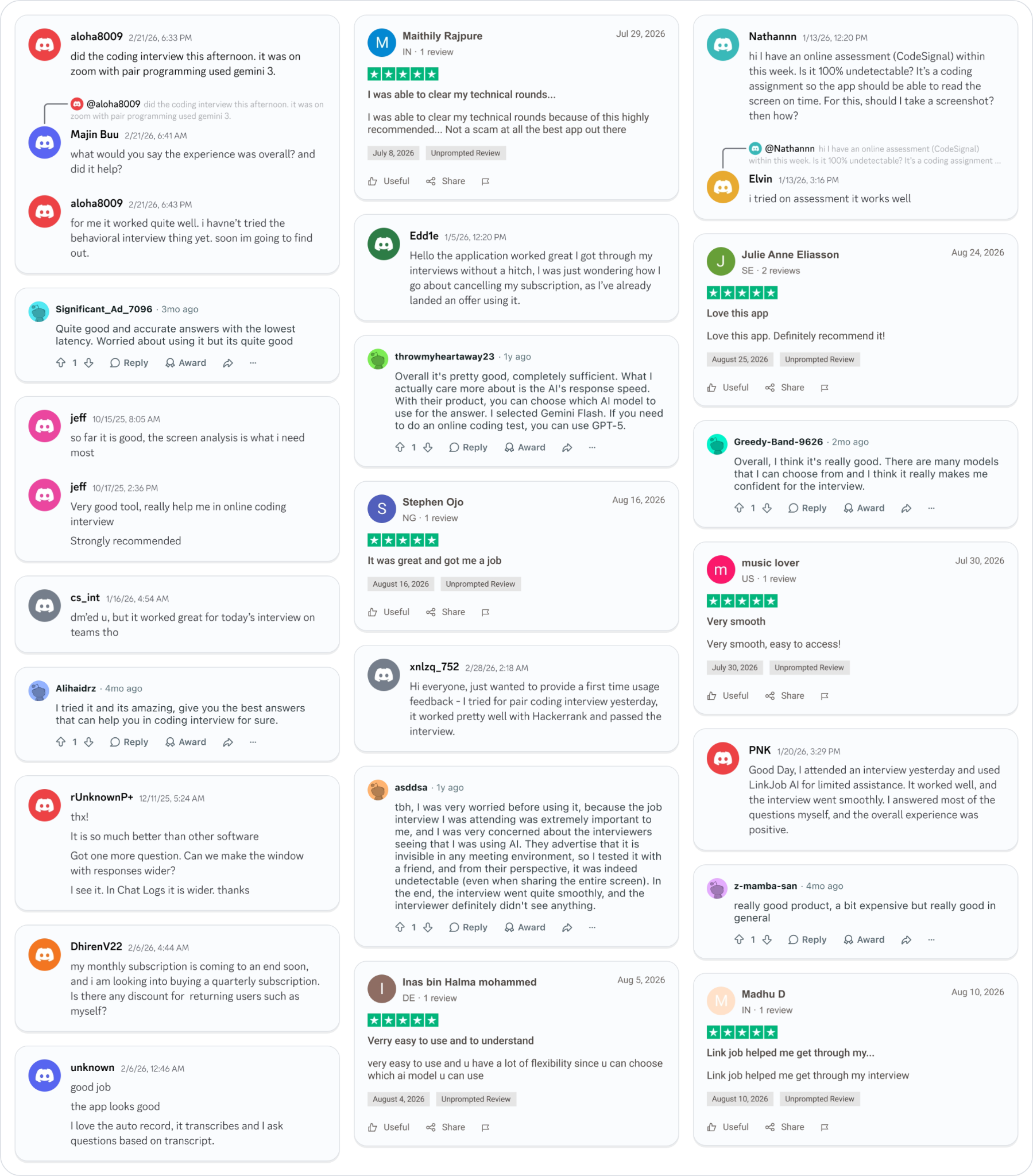
Smoother interviews, coding challenges cleared, and job offers landed. See how users describe their experience with Linkjob AI—in their own words.

© Copyright 2026 Linkjob AI - All Rights Reserved.