Best StealthCoder Alternative: Linkjob AI vs StealthCoder

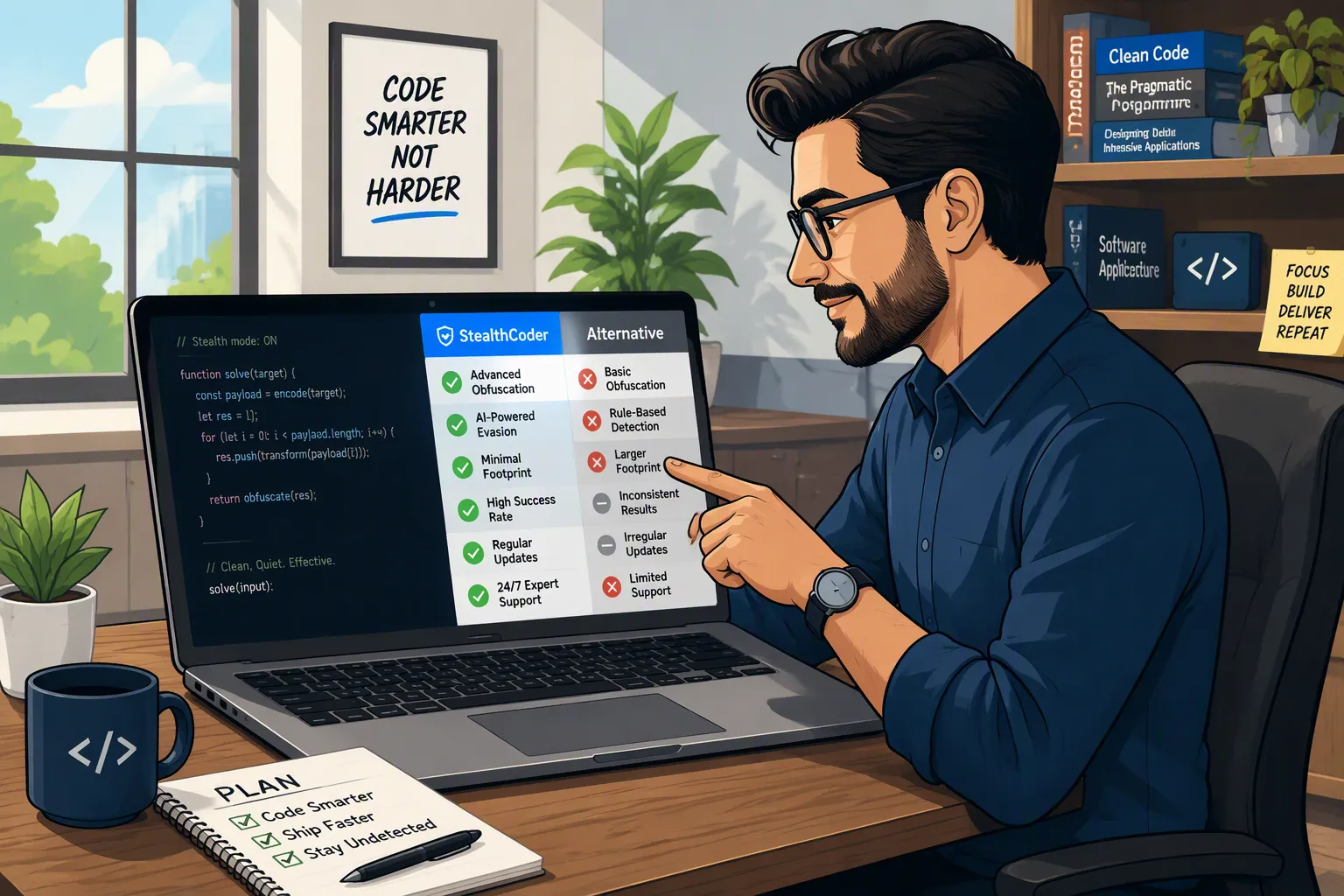
TL;DR: If you only want an inexpensive coding specialist, StealthCoder still has a strong case. If you want broader interview coverage, clearer model choice, and a more complete live workflow, Linkjob AI is the StealthCoder alternative I would choose.
After finishing my StealthCoder review, actually, StealthCoder is still a good fit for a certain group of users: those who mostly need help with programming and system design, like using keyboard shortcuts, and are okay with automatic renewal terms.
But what I'm really looking for is a tool that can help prepare for the whole interview process. I'd want something that I could use from the LeetCode problems all the way to system design and then to behavioral interview questions. I'd hate to have to switch tools or worry about which AI model is answering my questions. So I kept comparing stealthy AI interview assistants, tested Linkjob AI, generated blogs like that ShadeCoder review and InterviewMan review, then eventually settled on its annual plan. That became my preferred StealthCoder alternative.
In my experience, there are a few features that could be improved, but Linkjob AI can currently handle standard interviews, coding tests, mock interviews, analyzing multiple screenshots, and online assessments. The $29.9/month plan includes advanced models like Claude Opus 5 and Gemini 3.1 Pro, which make it worth the subscription price.
I was still on the fence, but the customer support really sealed the deal for me. Peter, the founder, always gets back to them ASAP. They're way faster than Final Round AI or Parakeet AI when it comes to cancelling a subscription or requesting a refund. I'll do my best to explain the rest based on my personal experience in the next parts.
StealthCoder Alternative: Quick Side-by-Side Comparison
The easiest way to understand the difference is to stop asking which product has “more features” and instead ask what each one is designed to replace.
Feature | StealthCoder | Linkjob AI |
|---|---|---|
Primary focus | Coding + system design | General + coding + phone + HireVue + mock interviews |
Platforms | Windows, macOS | Windows, macOS |
Coding help | Yes | Yes |
System design | Yes | Yes |
Behavioral interview support | Not a primary focus | Yes |
Screen analysis | Yes | Yes |
AI model disclosure | Mixed messaging | Exact models listed by plan |
Free access | 7-day card-backed trial | 30-minute free trial |
Monthly price | $40 | $99.99 |
Best annual rate | $15/mo equivalent | $29.99/mo equivalent |
Annual total | $180 | $359.88 |
Support | Priority support | 24/7 support + Discord + WhatsApp + email |
Cancellation | Dashboard cancellation advertised | Self-service Stripe/PayPal cancellation + support |
Their website says it's $40 a month or $180 a year, and if you try it for 7 days, you'll be charged unless you cancel. Linkjob's current annual plan costs $29.99 per month.
This brings us to a minor highlight: StealthCoder is cheaper—a lot cheaper. But Linkjob AI puts more tools into one platform and offers more transparency. It's exactly this wider range of features that makes it my go-to StealthCoder alternative during interviews.
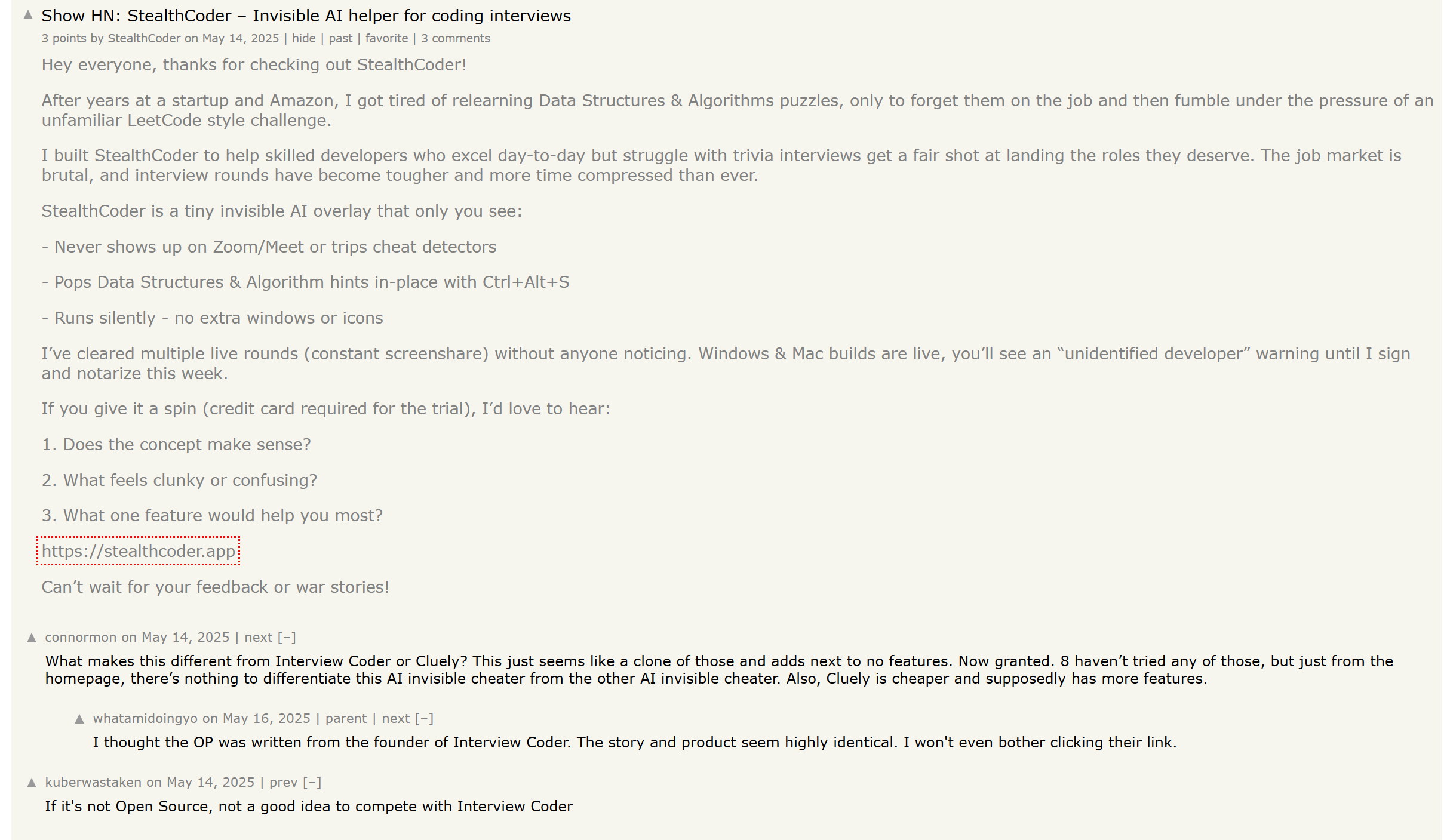
Coding And System Design Compared
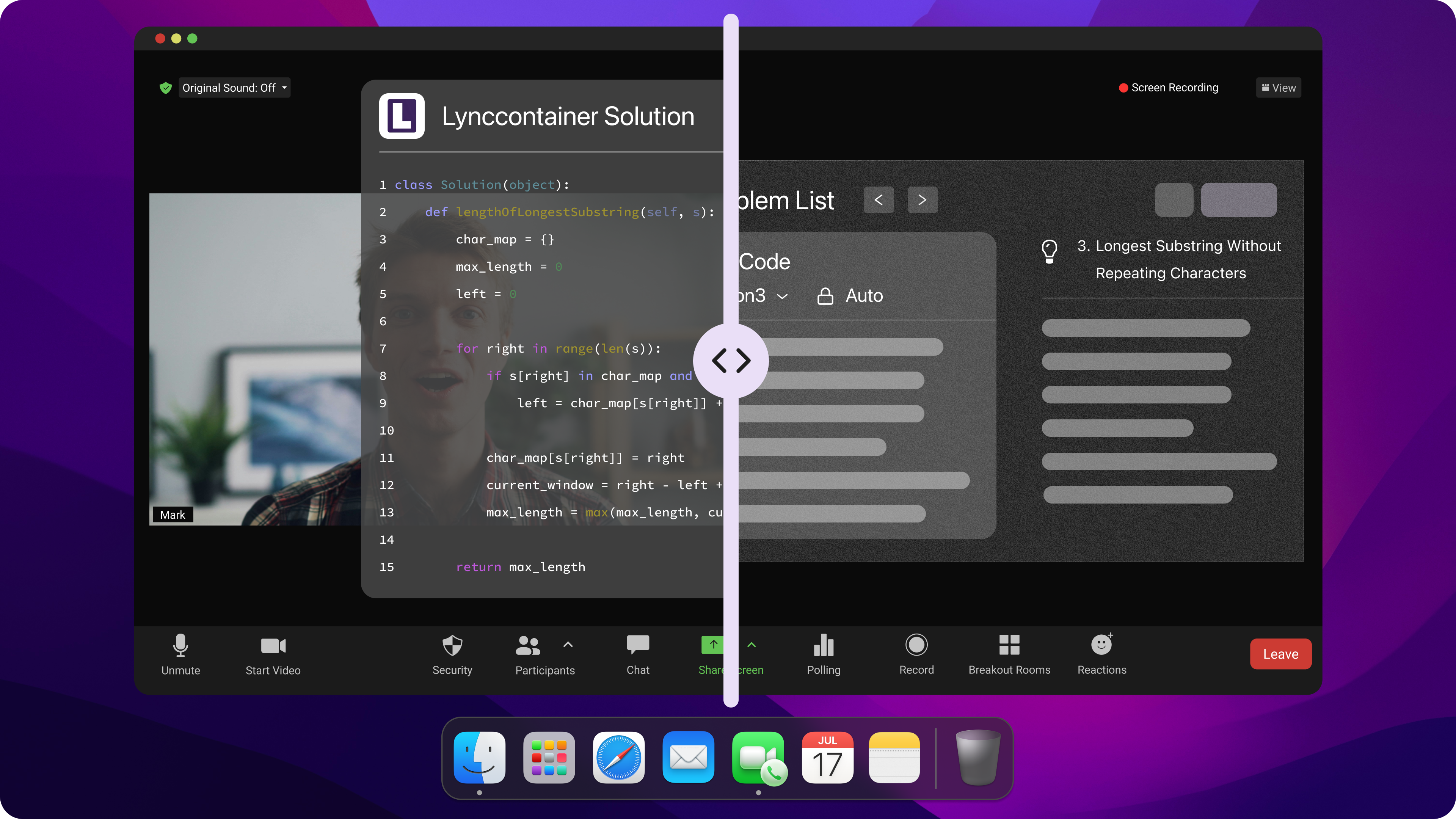
One of its main features is that its workflow is really straightforward. It keeps the programming problem visible, triggers a scan with a keyboard shortcut, and then provides a solution with an explanation and the time and space complexities. It's especially great for system design problems, and it can really help out in technical interviews, which a lot of basic AI interview copilots can't do.
Coding Workflow And Screen Context
When it comes to pure coding, I appreciate StealthCoder's simplicity.
It's clear that it has a lot of advantages:
You can operate it with a keyboard.
It can recognize programming problems.
It can generate executable code.
It can analyze complexity.
It uses system design patterns.
You don't need a separate API key.
If I spent all my time on HackerRank, LeetCode, CodeSignal, and system design stuff, I'd definitely think it'd be worth spending $180 on an annual subscription. But the truth is, interviews are rarely that "pure."
One technical interview session might include coding, architecture, project discussions, behavioral questions, and follow-up questions from the recruiter—all on the same day. That's where Linkjob AI steps in. It's got all the features we just talked about, plus even more support. I'd say it's totally worth the extra ten-plus dollars a month — that's a bargain, especially when you think about how important it is for job hunting.
System Design And Broader Interview Coverage
StealthCoder's system design capabilities are top-notch. It can analyze architectural diagrams, recommend database options, propose scalability solutions, and help break down distributed system problems. The difference is in the scope of coverage.
When you're using StealthCoder, if the interviewer's question changes from:
"How would you scale this service?"
to:
"Tell me about a time when you made a bad call on an architectural decision."
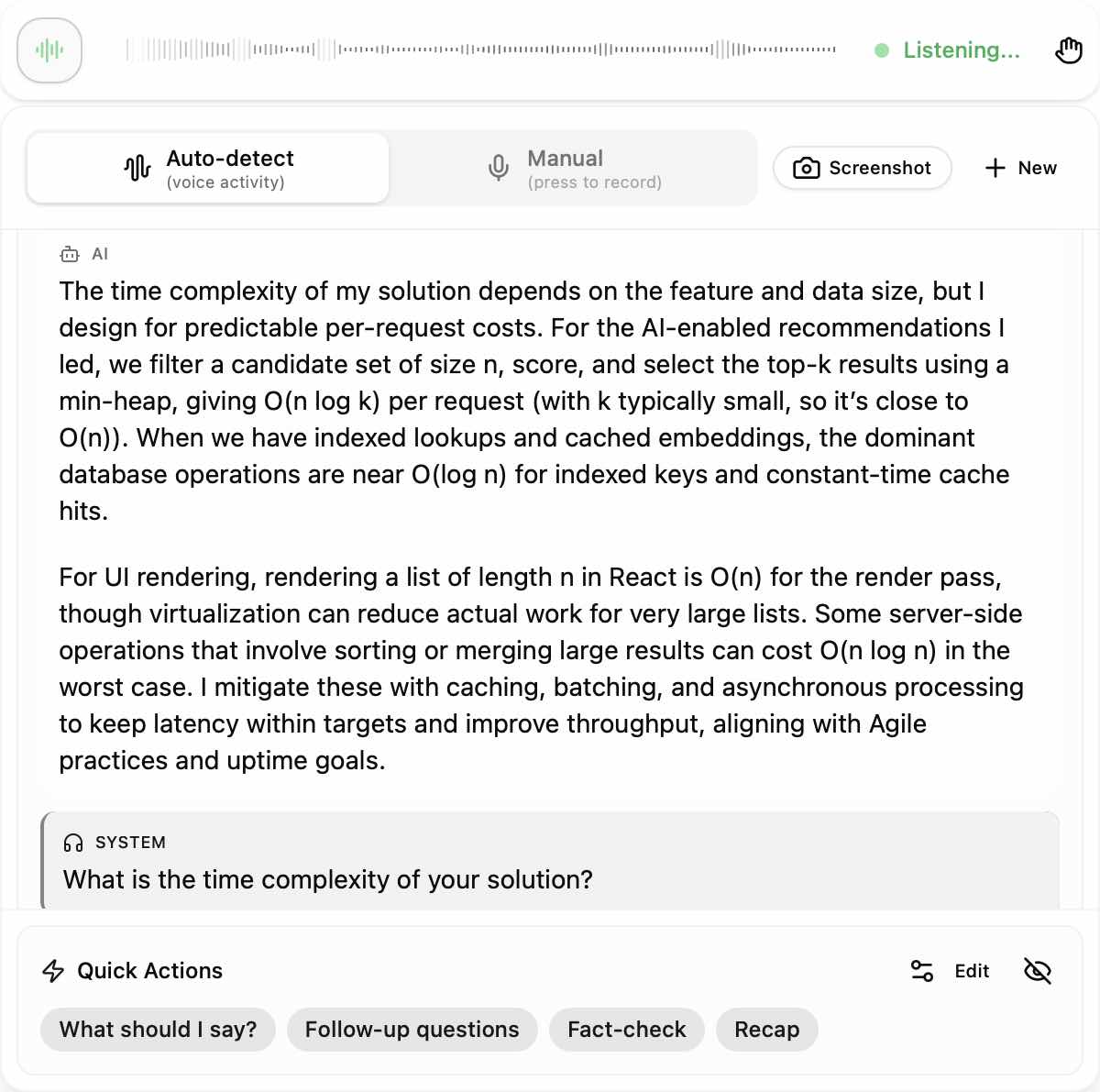
Just think about what would happen if StealthCoder got stuck on that part — how would you deal with it? In real interviews, they usually ask similar questions to see if a SWE can handle different situations as part of a team. For me, Linkjob AI's assistance is a better fit than StealthCoder's.
Stealth And Screen Sharing Compared
Both products sell screen-share privacy as a major feature, but the important details are in the setup.
StealthCoder's Screen-Sharing Limits
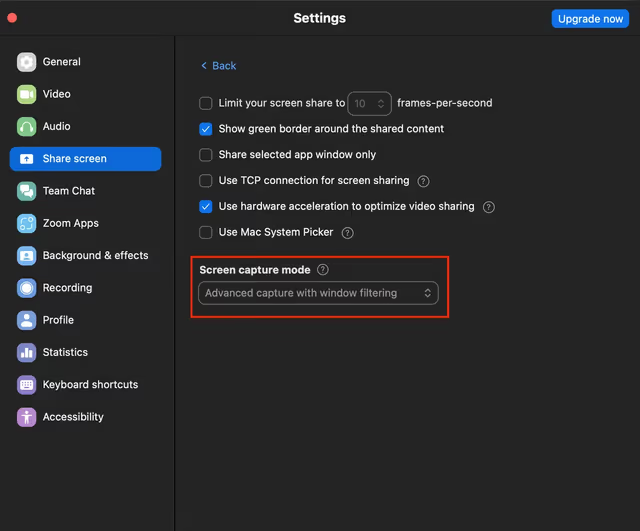
StealthCoder says its overlay remains invisible on major platforms and coding assessments. However, its own FAQ includes a specific Zoom requirement: users should enable Advanced capture with Window filtering.
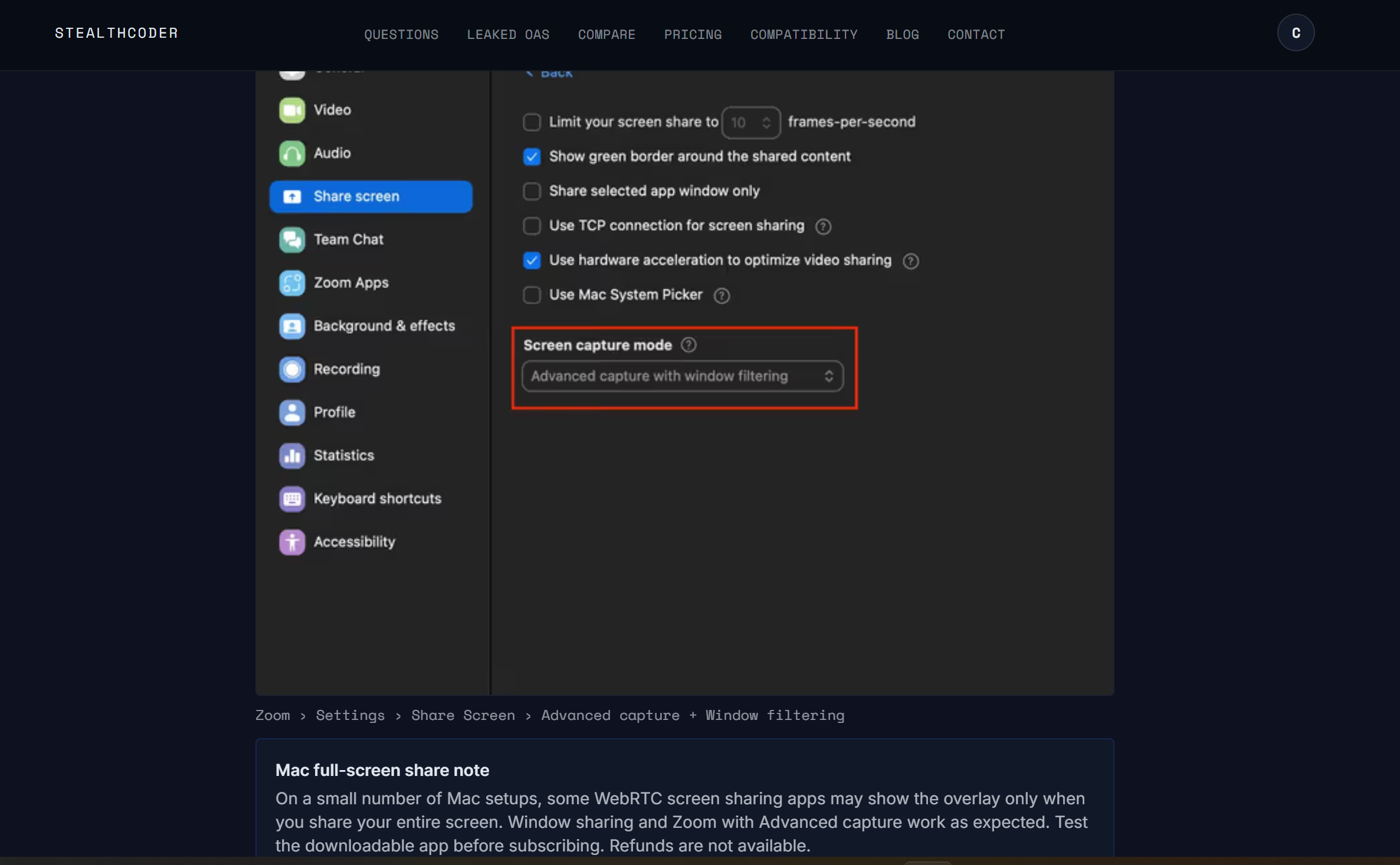
The website also says that, on some Mac devices, certain WebRTC full-screen sharing configurations might show the overlay, and suggests that users test the app before subscribing—but here's the catch: the Stripe window that appears during the trial doesn't lie; it starts an automatic monthly subscription renewal ($40/month).
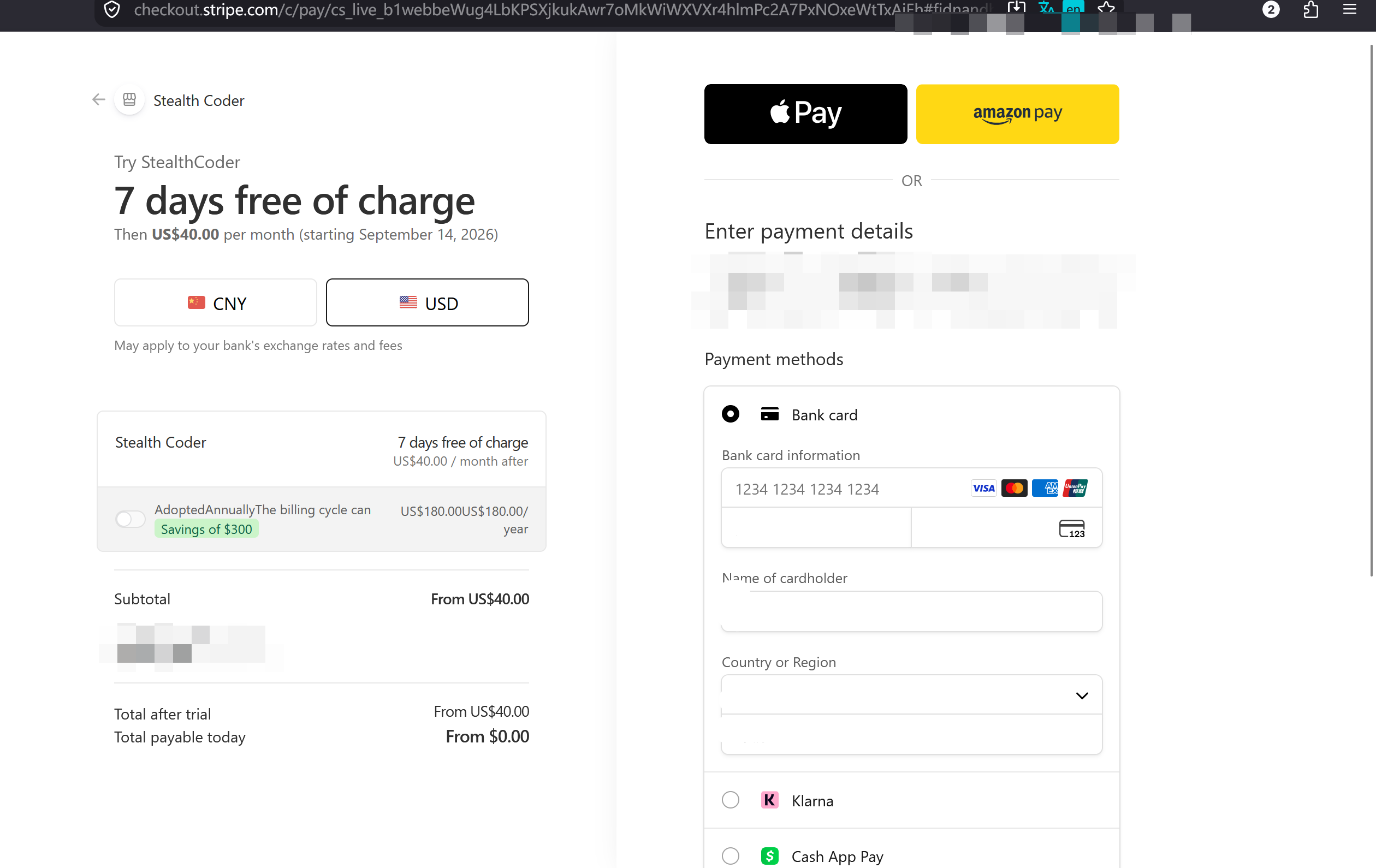
To be honest, this really bugs me. It's like being asked to pay in advance. Even though StealthCoder says you can cancel whenever, I still see a lot of hidden problems with this page.
When you're comparing the StealthCoder alternative, it's important to keep in mind that the product name itself might mislead users. They might think that this stealth layer doesn't require any special attention, but that's not the case. You have to double-check it repeatedly.
Linkjob AI's Stealth Workflow
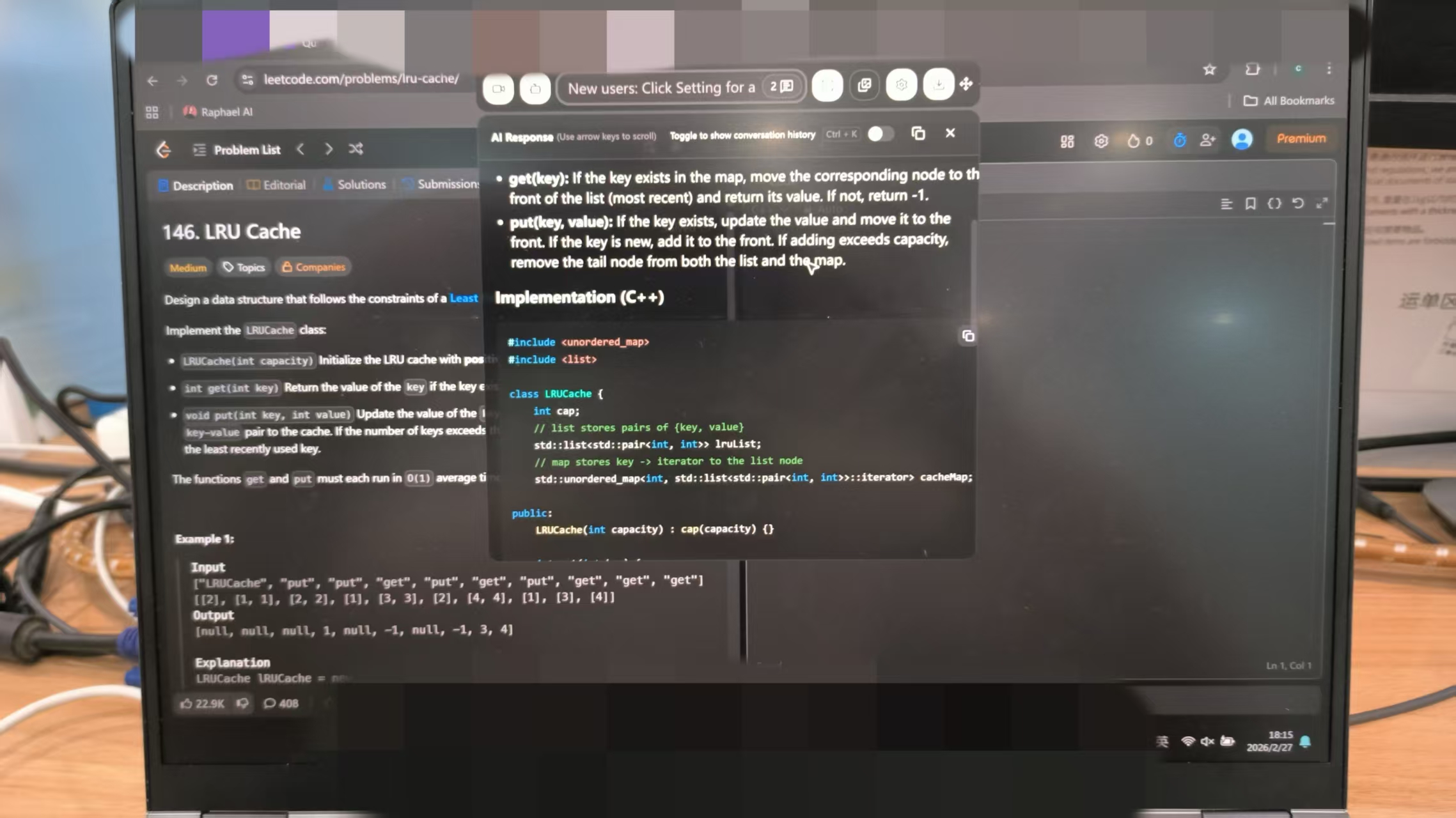
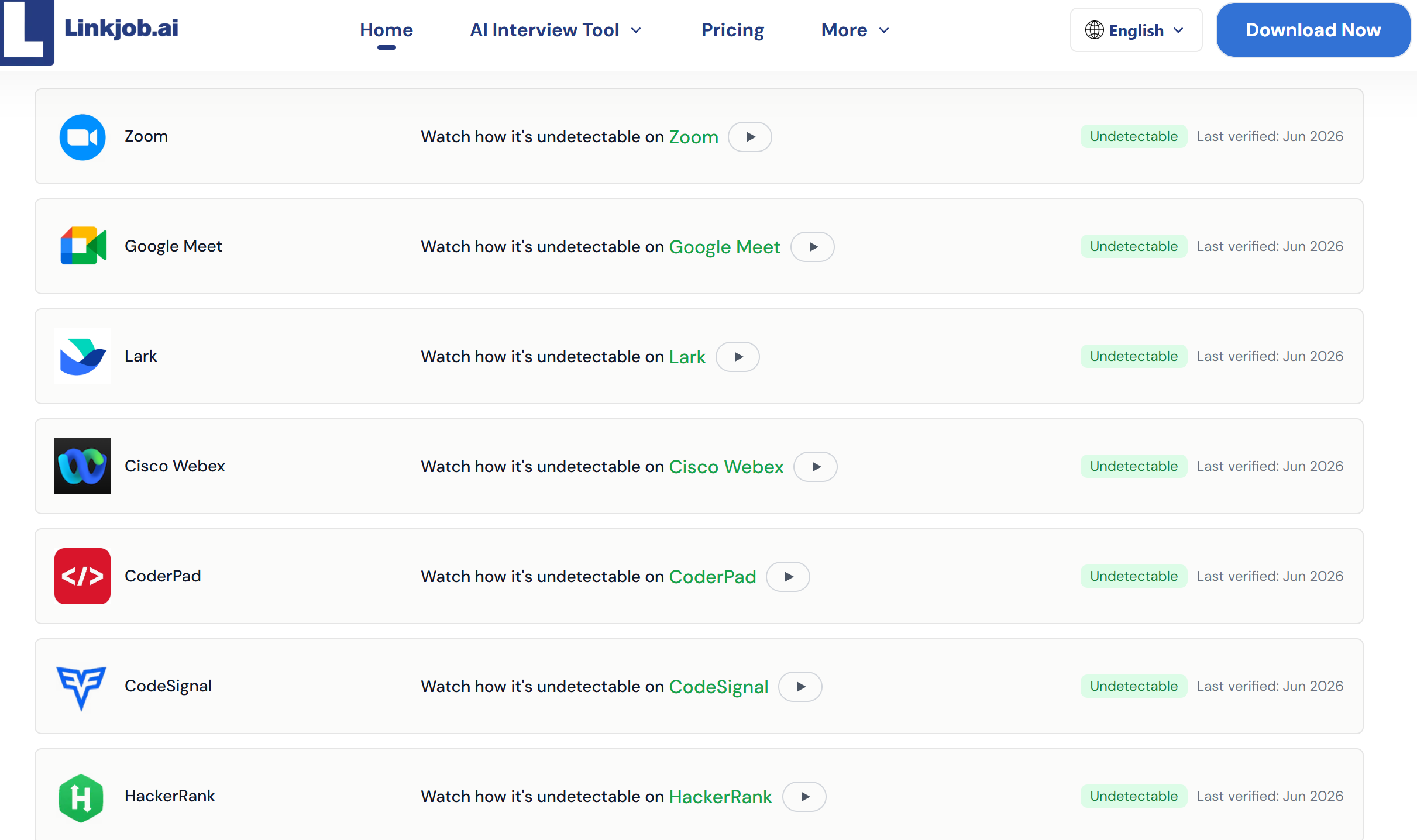
Yeah, you have to test Linkjob AI's stealth mode before starting a Zoom meeting, but that's usually because of version updates and the need for timely adjustments. There's also an article that explains why Linkjob AI isn't detected by the platform.
Peter's set up a few channels to answer questions. If you're not sure if the platform you're using can detect Linkjob AI, just go to one of these channels to ask.
I think that if a feature isn't being actively promoted, you can't really trust that it's even there. I'm thinking the StealthCoder process might be visible in Task Manager or Activity Monitor, or that its icon might appear in the Dock. In my experience, if it could do these things, it would definitely be on the homepage.
StealthCoder Alternative: AI Models And Answer Quality
This difference is especially important to me here.
According to the pricing page on the StealthCoder website, their paid plans use the latest Claude model. But its FAQ section says that the company doesn't say which provider or model it uses. Instead, it uses a state-of-the-art model that's been optimized.
Well, this is another major red flag that they aren't even trying to hide.

StealthCoder Keeps The Model Layer Abstract
If StealthCoder’s managed models can provide a good solution, many users might not care about the underlying principles. But when interview questions get tricky, I, for one, definitely do care.
For example:
Boundary cases in dynamic programming;
Graph problems with special constraints;
Trade-offs in distributed systems;
Concurrency issues;
Complex debugging;
Performance optimization...
For these issues, I want to know whether I’m using a fast model or something else. While Claude is certainly rigorous in its programming capabilities, that doesn’t mean any Claude LLM can perfectly solve increasingly difficult problems. In some tests, the accuracy of fast models in solving edge cases is less than 30%, and this uncertainty is one of the main reasons I’ve been looking for a StealthCoder alternative.
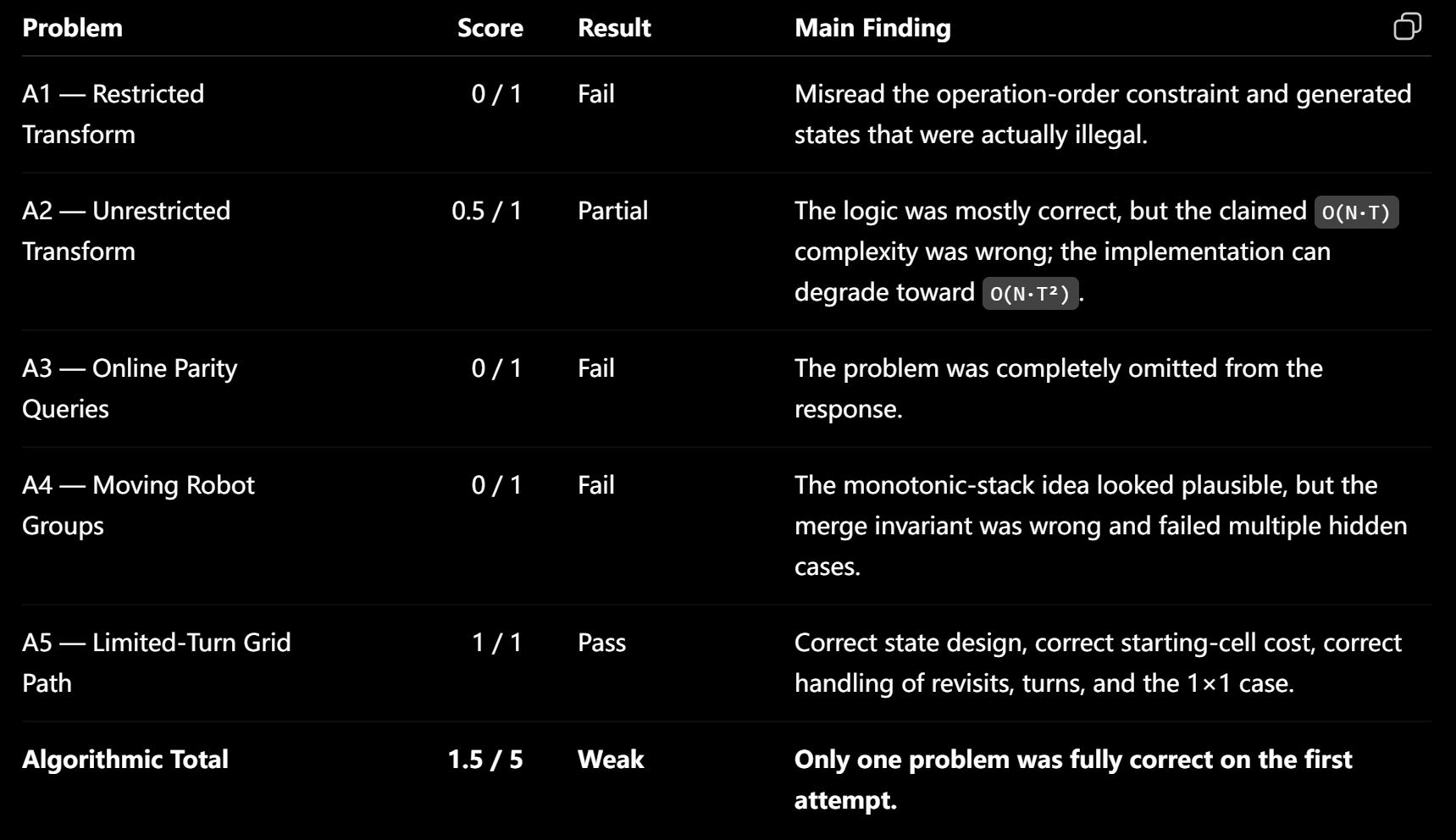
Linkjob AI Lists The Exact Models
Linkjob AI's yearly plan currently lists:
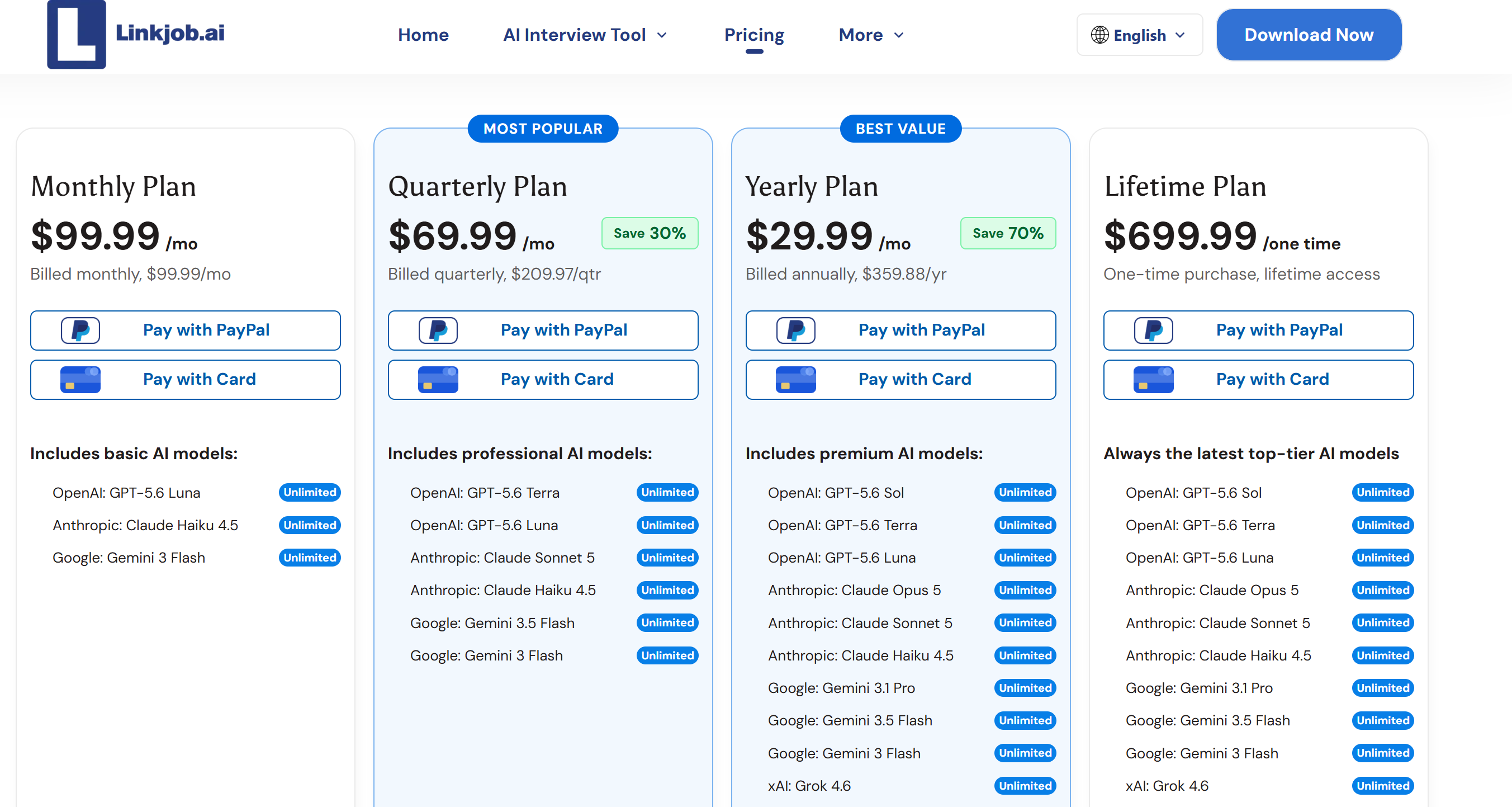
LLMs are really diverse and transparent, which makes them super convenient. If I have a behavioral question, I can choose a model that runs faster. If I'm dealing with a tricky algorithmic or architectural problem, I can switch to a model with stronger reasoning capabilities.
I think Linkjob AI is the better StealthCoder alternative for advanced technical interviews, and I think that's mostly because it's so transparent.
Usability, Support, And Cancellation
Real-time interview tools are really sensitive to the quality of technical support. If Spotify goes down, I can try again tomorrow. But if the interview assistant bails 15 minutes before the last round of interviews starts, waiting until tomorrow might be too late.
Onboarding And Daily Use
Once the app is up and running, the workflow described in the StealthCoder documentation is super fast: open a problem, use a hotkey, and get the result.
It's the same old story—the seven-day free trial requires a credit card and is tied to a $40 monthly subscription. I couldn't get the registration to work, so I couldn't fully test the product as I'd hoped.
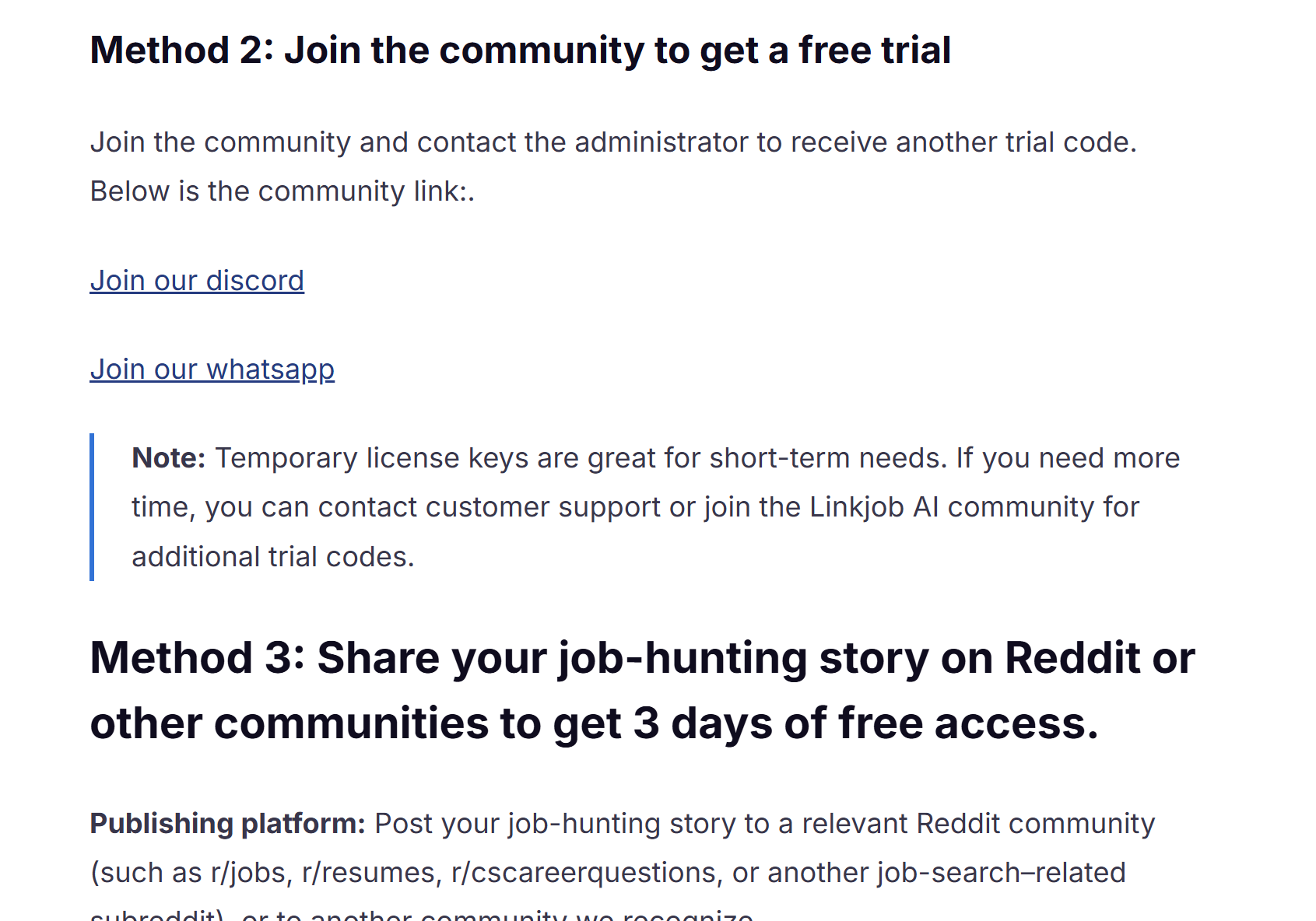
Linkjob AI's free trial approach is a bit different. The pricing page right now offers a 30-minute trial that you can start right away after downloading the app. You can also get longer free trials on Discord or WhatsApp.
This helps me figure out if I like the workflow before I decide if I want to subscribe to the annual plan. But from a trial perspective, I'd also prefer Linkjob AI, which gives me more options.
Support And Subscription Management
I'm confident choosing Linkjob AI over StealthCoder for a few other key reasons.
Here are the current support channels:
Discord;
WhatsApp;
support email;
self-service Stripe cancellation;
self-service PayPal cancellation;
24/7 support messaging.
Linkjob says that if you buy a quarterly or annual plan for the first time, you can get your money back if you meet the published refund criteria.
Also, the Discord discussions I've seen make the support service seem more personal, since users can contact the team directly when they encounter account issues. And when you add the cancellation process, it seems like the yearly subscription is less risky.
StealthCoder Alternative: Pricing And ROI
This is the category StealthCoder wins most clearly.
Pricing Comparison
Plan | StealthCoder | Linkjob AI |
|---|---|---|
Free trial | 7 days, card required | 30 minutes |
Monthly | $40 | $99.99 |
Quarterly | — | $69.99/mo |
Annual | $15/mo equivalent | $29.99/mo equivalent |
Annual total | $180 | $359.88 |
Lifetime | Not listed | $699.99 once |
If price is the only metric, there is no contest. StealthCoder costs roughly half as much annually.
Which Plan Has Better ROI?
The answer to this depends on what you want the software to replace.
StealthCoder's $180 yearly plan is a great deal, especially in these situations:
Interviews focused on programming;
Candidates focused on system design;
Users who don't need behavioral interview coaching;
Those who are satisfied with the selection of pre-built models.
Linkjob AI's $359.88 annual plan is better suited for the following scenarios:
People applying for jobs with multiple rounds of behavioral and technical interviews
Job seekers who want to practice mock interviews
People who want to explicitly choose their models
People who need to complete both coding assessments and on-site interviews using the same product
People in situations with a longer job search cycle that require unlimited access
So, I wouldn't say Linkjob AI is a cheaper option compared to StealthCoder. It's a bit more expensive, but it's got all the bells and whistles.
For me, based on the annual fee, the monthly price difference between the two is about $15. If it can replace another interview prep service and give me more powerful model options, it'll open up better job opportunities. It's definitely worth it.
Who Should Actually Switch to a StealthCoder Alternative?
Choose StealthCoder If You Want A Coding Specialist
I would stay with or choose StealthCoder if:
coding and system design are almost your entire interview process;
$180/year is your preferred budget;
you like a keyboard-first workflow;
you do not care which managed LLM is being used;
you are willing to test your exact screen-sharing setup first.
For that user, switching purely because another product has more features would be unnecessary.
Choose Linkjob AI If You Want One Interview Copilot
I would choose Linkjob AI as the StealthCoder alternative if:
you also have behavioral and general interviews;
you want stronger model transparency;
you want premium GPT, Claude, Gemini, and Grok options;
you use screenshots and coding assistance alongside live audio;
you value Discord/WhatsApp support and clearer cancellation routes;
you prefer one tool across the whole interview loop.
That describes my use case much more closely.
StealthCoder Alternative: Final Recommendation
After writing a review of StealthCoder and comparing the two products directly, I don't think StealthCoder lost out because it's a bad coding assistant. I think it lost out because it's too specialized.
Its strengths are obvious:
$15/month annual pricing;
coding-first design;
system-design support;
native Windows and Mac apps;
simple keyboard interaction.
If these are exactly what you need, StealthCoder might still be the better choice. But if you're looking for something other than StealthCoder—something that's still useful even when the interviews aren't strictly about coding—then I think Linkjob AI is a better fit.
Linkjob AI offers a bunch of helpful features in one neat subscription, like general interview help, mock interviews, coding support, smart screenshots, online assessment help, and support for phone and HireVue interviews. Plus, they've got a straightforward pricing structure with tiered options, so it's super easy to figure out how much it'll cost. So, even though Linkjob AI's yearly plan asks for a higher payment at the start ($359.88), it's still my top pick.
StealthCoder Alternative FAQ
Is Linkjob AI Cheaper Than StealthCoder?
No. StealthCoder costs $180/year, while Linkjob AI's annual subscription costs $359.88/year.
Is StealthCoder Better For Coding Interviews?
It can be the better value if coding and system design are your only priorities; Linkjob AI is broader and provides explicit premium-model choices.
Does StealthCoder Reveal Which AI Model It Uses?
Not consistently. Its pricing mentions the latest Claude models, while its FAQ says provider and model names are not published.
Can I Cancel Linkjob AI Easily?
Yes. Linkjob AI provides self-service Stripe and PayPal cancellation as well as support through Discord, WhatsApp, and email.
What Is The Best StealthCoder Alternative Overall?
For my mixed technical and behavioral interview workflow, Linkjob AI is my pick; for a coding-only workflow, StealthCoder itself may remain the better-value option.
See Also
An Honest Assessment Of Shadecoder: Does It Operate Stealthily?
Top Interview Coder Substitute For Coding Interview Copilot Assistance
Leading Shadecoder Replacement And The Reason For My Selection
StealthCoder Review: Tested for Live Code Interviews
My Method For Evading CoderPad Cheating Detection During 2026
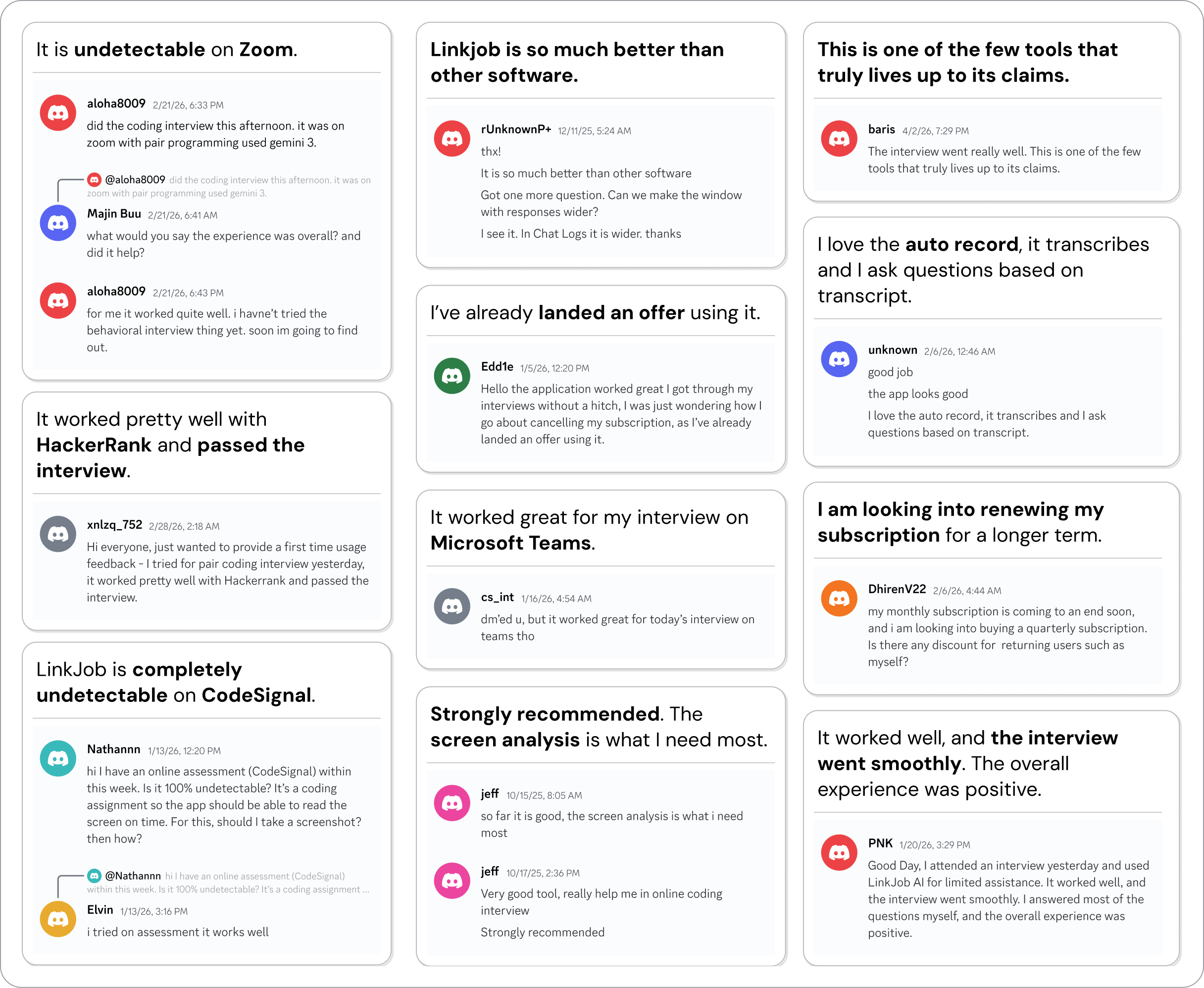
Why People Choose Linkjob AI
Smoother interviews, coding challenges cleared, and job offers landed. See how users describe their experience with Linkjob AI—in their own words.

© Copyright 2026 Linkjob AI - All Rights Reserved.