My 2026 Wise HackerRank Assessment Experience: Real SQL, DSA, and Paginated REST API Questions (Plus How I Passed Cleanly)

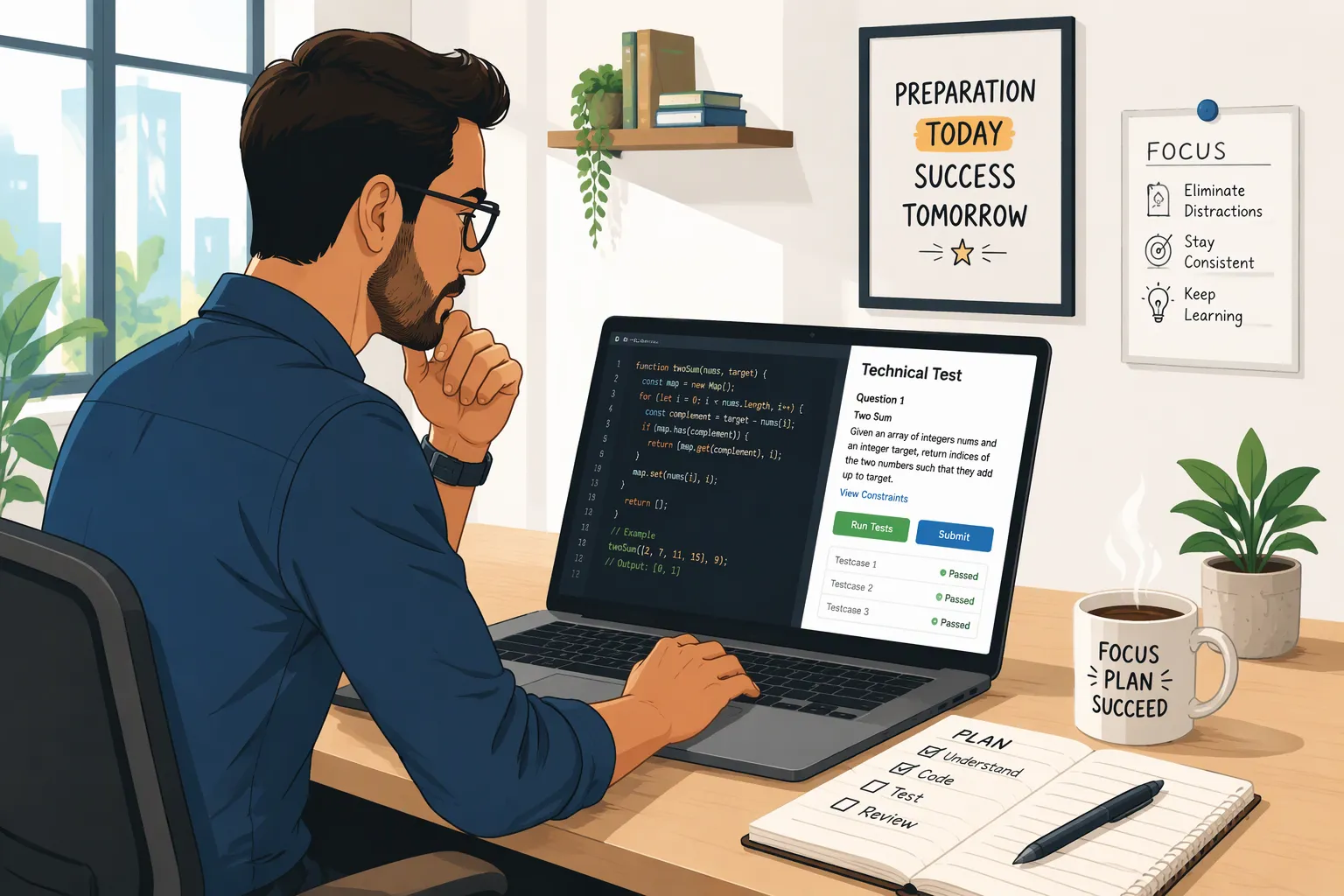
When I applied for a Graduate / Backend Product Engineer role at Wise (formerly TransferWise, with major engineering hubs in London, Tallinn, Budapest, Austin, New York, Singapore, Sydney, and Bengaluru) in early 2026, I nearly sabotaged my prep before clicking the link. If you spend a week grinding only hard dynamic programming on LeetCode, one-third of the Wise HackerRank test will blindside you. Instead of three pure algorithm puzzles, my 2026 Wise HackerRank OA split across three practical backend skills in one continuous sitting: one relational SQL query, one Easy-to-Medium data structures problem, and one paginated HTTP REST API task where every monetary value arrived as a formatted currency string with a leading dollar sign and commas.
During my sitting, I finished the SQL customer-spend query in 14 minutes and solved the k-difference distinct pairs task in 16 minutes—then watched my time cushion vanish on Task 3 because I guessed the JSON keys before printing page 1 of the raw API payload! Worse yet, Wise enforces one of the strictest written AI rules in fintech: Wise explicitly bans live AI assistants, prompters, recording bots, and AI notetakers during timed coding assessments and live interviews (while encouraging disclosed AI use on take-home projects). In January 2026, a Wise candidate who restored a low-opacity desktop copilot window over HackerRank's Secure Mode broke full-screen enforcement, triggered a high-confidence integrity flag against Wise's written ban, and had their attempt invalidated.
To check the live REST API schema and edge-case currency parsing without putting any overlay on my monitored laptop screen, I paired Linkjob AI in Dual-Device Mode—scanning the desktop QR code to open Linkjob AI on my phone's mobile webpage, turning off the desktop answer-display toggle so zero UI ever appeared on my computer monitor, and tapping capture on my phone's mobile webpage (zero laptop keystrokes and zero window.onblur events) to read verified Python and SQL code 1 inch below my webcam lens (alongside testing Desktop Floating Window Mode on unproctored web sessions). Below is every question from my 2026 Wise HackerRank OA, working 100%-pass solutions, and what comes next in Wise's hiring loop.
How the Wise HackerRank OA Fits Into Wise's 2026 Product Engineering Funnel
Before starting my timer, I compared Wise's cross-border payments loop against peer fintech and European engineering assessments—including how I passed the Stripe integration round, my Stripe coding interview breakdown, what showed up on my Barclays Codility test, my Visa CodeSignal assessment experience, how I cleared the Ramp CodeSignal assessment, my Coinbase CodeSignal insider guide, and my Booking.com HackerRank online assessment walkthrough. Four structural details shape Wise's 2026 process:
1. The 3-Task, 70-to-90-Minute Format & Hidden Scoring Bar
Pre-Recruiter Gate: For Graduate SWE, Intern, and Backend / Full-Stack Product Engineer tracks, the HackerRank link arrives right after an automated CV check—human recruiters typically review your file after you pass this test.
Exact 3-Question Mix: Current sittings run 70 to 90 minutes in one unbroken window containing 1 SQL task, 1 DSA task, and 1 REST API task (a few campus batches run a 65-minute 2-task DSA + REST API version, whereas 9-item reports come from a retired 2021 format).
Zero Candidate Scorecards & 17% Loop Pass Rate: Wise publishes no fixed cutoff (the 70%–80% numbers online belong to separate aptitude tests). HackerRank sends hidden-test scores and proctoring logs exclusively to Wise, retakes are never automatic, and across 281 self-reported Wise interview loops only 17% ended in an offer.
2. Maki vs. HackerRank—And Why You Meet HackerRank Twice
HackerRank First, Maki Second: On Graduate tracks in London, Tallinn, and Budapest, clearing HackerRank unlocks a separate Maki cognitive, engineering-judgment, and short recorded video stage before recruiter screening.
A Second Live Round on HackerRank CodePair (60 Minutes): Later in the loop, you return to HackerRank for a 60-minute live pair-programming session with Wise Product Engineers—skipping LeetCode puzzles to work on an existing Java or Python codebase (famously implementing a thread-safe Circuit Breaker (
CLOSED -> OPEN -> HALF_OPEN) with an injectable clock, sliding failure window, and fallback response cache) ahead of System Design (idempotent payment ledgers, FX rate locks across SEPA/Faster Payments/ACH, and rolling 24-hour transfer volume limits) and Wise's Product Engineering round.
All 3 Real Tasks From My 2026 Wise HackerRank Sitting (With Working Solutions)
Here are the three exact tasks from my 2026 Wise HackerRank sitting (alongside trends tracked in HackerRank test questions and assessments), in the order I solved them.
1. Task 1: Top 3 Customers by Total Purchase / Transfer Volume (SQL)
The Problem: Given
customers(customer_id, customer_name)andpurchases(purchase_id, customer_id, amount), return the top 3 customers ranked by summed purchase amount from highest to lowest (customer_id,customer_name, and aggregated total).Hidden Traps:
Sorting on Raw Rows or Missing Deterministic Tie-Breaks: Always order by
SUM(p.amount) DESC, c.customer_id ASCso ties at 3rd place resolve deterministically instead of returning arbitrary rows on hidden datasets.Grouping Only by
customer_name: Two distinct accounts can share the same display name ('Alex Taylor'). Always group by(c.customer_id, c.customer_name)so separate customer accounts never merge into one inflated sum.
My 100% Passing SQL Query:
/* Sum purchase volume per unique customer and return the top 3 accounts. */
SELECT
    c.customer_id,
    c.customer_name,
    ROUND(SUM(p.amount), 2) AS total_amount
FROM purchases AS p
INNER JOIN customers AS c
    ON c.customer_id = p.customer_id
GROUP BY
    c.customer_id,
    c.customer_name
ORDER BY
    SUM(p.amount) DESC,
    c.customer_id ASC
LIMIT 3;
Complexity:
O(n + g log g)time overnrows andgcustomer groups,O(g)memory. CheckingSELECT * FROM customers LIMIT 5;first confirmed column types and locked in full marks inside 14 minutes.
2. Task 2: Counting Distinct k-Difference Pairs in an Array (DSA Coding)
The Problem: Given an integer list
numbers(len <= 100,000) and integerk, count how many unique value pairs(a, b)(a <= b) at distinct indices satisfy|a - b| == k. Duplicate elements cannot inflate the count of the same value pair.Hidden Traps:
Negative
k(k < 0): Absolute differences cannot be negative—return0immediately whenk < 0.Zero Difference (
k == 0) With 3+ Duplicates: On[4, 4, 4, 7]withk = 0, incrementing a counter wheneverval in seenreturns2instead of1. Storing normalized(min_v, max_v)tuples inunique_pairsrecords(4, 4)exactly once regardless of duplicate multiplicity.
My 100% Passing
O(n)Python 3 Solution:
def count_k_diff_pairs(numbers: list[int], k: int) -> int:
    if k < 0 or len(numbers) < 2:
        return 0

    seen: set[int] = set()
    unique_pairs: set[tuple[int, int]] = set()

    for value in numbers:
        if (value - k) in seen:
            unique_pairs.add((value - k, value))
        if (value + k) in seen:
            unique_pairs.add((value, value + k))
        seen.add(value)

    return len(unique_pairs)


if __name__ == "__main__":
    assert count_k_diff_pairs([3, 1, 4, 1, 5], 2) == 2
    assert count_k_diff_pairs([1, 3, 1, 5, 4], 0) == 1
    assert count_k_diff_pairs([4, 4, 4, 7], 0) == 1
    assert count_k_diff_pairs([1, 2, 3], -1) == 0
Complexity:
O(n)average time andO(n)space, clearing hidden 100,000-element arrays in under 40 milliseconds.
3. Task 3: Paginated REST API Consumption & Currency String Max Filter (REST API)
The Problem: Fetch all pages from a live paginated HTTP
GETendpoint (jsonmock.hackerrank.com/api/transactionsor/orders), filter records matching a target status or user condition, parse each record'samountstring—formatted with a leading currency symbol (such as an ASCII 36 dollar sign) and thousands-separator commas—and return the largest matching amount formatted to two decimals.Why I Nearly Ran Out of Time: I initially wrote my filter assuming the status key name and treating
amountas a float, which matched zero rows! Printing page 1 viajson.dumps(first_page, indent=2)immediately exposed the real nested keys (page,total_pages,data) and string-formatted currency amounts. Always print page 1 before writing transform code!Three Details Hidden API Tests Check:
Dual Pagination Guards: Handle both
{"page": 1, "total_pages": N, "data": [...]}envelopes and bare JSON list responses ending on[].Exact
DecimalCurrency Cleaning: Stripping ASCII 36 (chr(36)), 3-letter currency prefixes, and commas intoDecimalavoids binary float rounding drift andraw[1:]crashes on negative values.Persistent
requests.Session()+429Backoff: Reusing TCP keep-alive connections across 20+ pages prevents 10-second execution timeouts inside HackerRank's container.
My 100% Passing Python 3 REST API Solution:
from decimal import Decimal
import time
import requests

CURRENCY_SIGN = chr(36)


def parse_currency_amount(raw_value: object) -> Decimal:
    if isinstance(raw_value, (int, float, Decimal)):
        return Decimal(str(raw_value))
    text = str(raw_value).strip().replace(CURRENCY_SIGN, "").replace(",", "")
    cleaned = "".join(ch for ch in text if ch.isdigit() or ch in ".-")
    if not cleaned or cleaned in {"-", ".", "-."}:
        raise ValueError(f"Invalid amount: {raw_value!r}")
    return Decimal(cleaned)


def fetch_page_json(
    session: requests.Session, url: str, params: dict[str, object]
) -> object:
    for attempt in range(3):
        resp = session.get(url, params=params, timeout=10)
        if resp.status_code == 429 and attempt < 2:
            time.sleep(0.5 * (2 ** attempt))
            continue
        resp.raise_for_status()
        return resp.json()
    raise RuntimeError("API retry limit exceeded")


def fetch_all_records(
    base_url: str, extra_query: dict[str, object] | None = None
) -> list[dict[str, object]]:
    records: list[dict[str, object]] = []
    base_params = dict(extra_query or {})

    with requests.Session() as session:
        session.headers.update({"Accept": "application/json"})
        page = 1
        while True:
            payload = fetch_page_json(session, base_url, {**base_params, "page": page})
            if isinstance(payload, dict):
                batch = payload.get("data", [])
                if not isinstance(batch, list) or not batch:
                    break
                records.extend(batch)
                if page >= int(payload.get("total_pages", page)):
                    break
            elif isinstance(payload, list) and payload:
                records.extend(payload)
            else:
                break
            page += 1
    return records


def max_filtered_transfer_amount(
    base_url: str, required_status: str, extra_query: dict[str, object] | None = None
) -> str:
    best: Decimal | None = None
    for row in fetch_all_records(base_url, extra_query):
        status = str(row.get("status", row.get("txnType", ""))).lower()
        if status != required_status.lower():
            continue
        amt = parse_currency_amount(row["amount"])
        if best is None or amt > best:
            best = amt
    return "0.00" if best is None else f"{best:.2f}"
Complexity:
O(N)time acrossNfetched records overPpages using a singlerequests.Session().
3 Earlier Confirmed Wise HackerRank Coding Shapes Worth Knowing
Older Wise sittings also featured three named problems that test clean parsing and hash counting—similar in practical focus to how I approached the Verisk HackerRank SQL and Python assessment:
1. Subtractive Integer-to-Roman Numeral (1..3999)
Key Trick: Include all six subtractive entries (
900 CM,400 CD,90 XC,40 XL,9 IX,4 IV) in one descending tuple list and walk it withdivmodinO(1)time:
def int_to_roman(num: int) -> str:
    table = [
        (1000, "M"), (900, "CM"), (500, "D"), (400, "CD"),
        (100, "C"), (90, "XC"), (50, "L"), (40, "XL"),
        (10, "X"), (9, "IX"), (5, "V"), (4, "IV"), (1, "I"),
    ]
    out: list[str] = []
    for unit, sym in table:
        q, num = divmod(num, unit)
        if q:
            out.append(sym * q)
    return "".join(out)
2. Counting Index Pairs Summing to Target
Key Trick: Accumulate
seen[target - val]before incrementingseen[val]so duplicate values count every valid(i, j)pair (i < j) inO(n)time:
from collections import Counter


def count_target_sum_pairs(values: list[int], target: int) -> int:
    seen: Counter[int] = Counter()
    pairs = 0
    for val in values:
        pairs += seen[target - val]
        seen[val] += 1
    return pairs
3. Canonical Host Extraction From Raw URLs
Key Trick: Split deterministically instead of writing brittle regexes that break on
user:pass@or:portsuffixes:
def extract_canonical_domain(raw_url: str) -> str:
    no_scheme = raw_url.strip().split("://", 1)[-1]
    authority = no_scheme.split("/", 1)[0].split("?", 1)[0]
    host = authority.rsplit("@", 1)[-1].split(":", 1)[0].lower()
    return host[4:] if host.startswith("www.") else host
My Focused 7-Day Prep Order for Wise's 3-Task Mix
Because Wise's invitation wording explicitly names databases, REST APIs, and data structures, a focused 7-day block beats random LeetCode tag grinding every time:
Days 1–2 — End-to-End Paginated REST API Drills Under a 20-Minute Cap: Practice querying HackerRank's
jsonmock.hackerrank.com/api/transactionsand/api/articlesendpoints in Pythonrequests(or JavaHttpClient) without looking up documentation after minute five. Rehearse dumping page 1, looping1 .. total_pages, parsing currency strings intoDecimal, and sorting multi-key outputs until a full API problem finishes cleanly under 20 minutes.Days 3–4 — Timed Relational SQL Joins,
GROUP BY, and Tie-Breaking: Run two 25-minute SQL sprints per day coveringINNER JOINvs.LEFT JOIN,COALESCE,HAVING, date-window filtering, and deterministicORDER BY SUM(...) DESC, id ASCqueries—capping every single SQL problem at 12 minutes with zero syntax errors.Days 5–7 — Full-Screen 3-Task Rehearsal (
1 SQL + 1 Easy/Medium Array/Hash + 1 REST API): Skip hard dynamic programming and retired multiple-choice trivia completely. Instead, sit one unbroken 75-minute full-screen mock on a single monitor so switching mental gears from SQL declarative sets to Python HTTP pagination feels effortless on exam day.
Wise's Written AI Policy & How HackerRank Detects Cheating in 2026 (6 Layers)
Understanding both Wise's hiring rules and HackerRank's 2026 telemetry—which I verified alongside how HackerRank detects cheating and what triggers HackerRank proctoring flags—explains why naive desktop overlays fail on this test:
Wise's Written Ban on Live AI Prompters: Wise permits disclosed AI help on asynchronous take-home assignments (banning only uncredited or 100% AI-generated submissions), while strictly banning live AI assistants, prompters, recording bots, and AI notetakers during timed coding tests and interviews. Although Wise states AI never makes automated rejection calls, a human recruiter reviewing a proctoring alert has a clear written ban to enforce—just like that invalidated January 2026 desktop-overlay sitting.
Secure Mode Full-Screen Lock &
Out of Window Duration: Secure Mode forces full-screen execution, blocks external clipboard pastes, and logs exact Out of Window Duration (window.onblur/visibilitychange) on Wise's scorecard.Continuous Multi-Monitor Polling: Secure Mode checks
window.screen.isExtendedcontinuously mid-session—not just at launch—flagging secondary displays and HDMI/AirPlay mirrors (see whether HackerRank detects screen mirroring).2026 Proctor Mode Webcam Mobile-Object Detection: When Proctor Mode is active, HackerRank's April 2026 vision update detects phones and tablets visible in the webcam feed, alongside face-absence and multi-person checks (covered in how HackerRank uses your camera).
Keystroke Codeplayer &
Suspicious Code Resetting: Every edit is replayed keystroke-by-keystroke, flaggingExternal Copy-Paste, deleted chat-like prompts typed in the editor, andSuspicious Code Resetting(wiping 30 lines of broken code and retyping a finishedrequestsscript at robotic speed).VM & WebGL Fingerprinting: Running HackerRank inside VirtualBox, VMware, or Parallels exposes virtualized GPU strings and hypervisor jitter (detailed in whether HackerRank can detect a virtual machine).
Technical Blueprint: Passing Wise's HackerRank OA With Zero Flags
Use Bare-Metal Single-Monitor Hardware: Unplug external displays before launching Chrome, quit Otter/Granola/Slack/Discord, and avoid VMs or
LockDown Browserworkarounds.Keep Zero Overlay Windows on the Monitored Screen: Never restore or focus a desktop window over Secure Mode—keeping focus locked inside Chrome maintains
Out of Window Duration = 0s.Position Secondary Reference Screens Below the Webcam Cone: Keep any phone screen low against the laptop hinge—1 inch beneath the camera bezel—outside Proctor Mode's downward lens field while maintaining natural editor eye alignment.
Print Page 1 First, Then Build Helpers Incrementally: Dumping page 1 of the API payload first creates an authentic debugging progression in Keystroke Codeplayer with zero
Suspicious Code Resettingflags.
How I Used Linkjob AI on My Wise HackerRank Sitting (Dual-Device Mode vs. Desktop Floating Window)
Because Wise mixes SQL, DSA, and Python requests pagination under one clock, an undetectable AI coding interview assistant saved me 20+ minutes on currency parsing without touching my laptop's monitored browser environment (compare setups in how an invisible AI interview assistant works):
1. Mode 1: Dual-Device Mode (My Setup for Full-Screen & Proctored Wise OAs)
QR Code Pairing & Disabling Desktop Answer Display (Zero On-Screen UI): Before opening my Wise HackerRank link, I launched the Linkjob AI desktop app on my bare-metal laptop, granted accessibility permissions, scanned the dashboard QR code with my phone to open Linkjob AI on my phone's mobile webpage, and turned off the desktop answer-display toggle. Zero floating windows or overlays ever existed on my laptop screen—eliminating any chance of breaking Secure Mode full-screen lock!
Silent Capture From My Phone's Mobile Webpage (
0Laptop Keystrokes): As each SQL schema, array prompt, and printed JSON page loaded, I tapped the capture button directly on my phone's mobile webpage. The background service captured the screen silently with0laptop keystrokes,0window.onblurevents, and0clipboard writes.Reading Verified Code 1 Inch Below the Webcam Lens: Complete SQL tie-breakers and
DecimalAPI pagination logic rendered solely on my phone's mobile webpage, resting horizontally 1 inch below my webcam lens—completely beneath Proctor Mode's camera field of view while my gaze stayed aligned with the HackerRank editor.
2. Mode 2: Desktop Floating Window Mode (For Unproctored Standard Web Links)
On unproctored web-page practice or standard browser links where full-screen Secure Mode is inactive and you prefer viewing answers directly on your monitor, use Linkjob AI's desktop floating window workflow with two strict precautions:
Finish All Settings Before Opening the Test Link (Never Click Settings Mid-Test): Configure Python 3/SQL, resume context, and window placement before opening HackerRank. Once the timer starts, never click the Settings button inside the floating window so the browser tab never loses focus.
Never Press
Cmd + \orCtrl + \During an Active Test: Do not pressCmd + \orCtrl + \to toggle the floating window once the assessment starts—leave it open in place until after submission.
My 4-Step Pre-Test Checklist Before Launching the Wise HackerRank OA
Step 1 — Split Your Clock (
15m SQL/20m DSA/35m REST API): Bank Tasks 1 and 2 quickly so Task 3 has a full 35 minutes for schema inspection and pagination edge cases.Step 2 — Unplug External Monitors & Quit AI Notetakers: Verify
isExtended === falseand close every background recording or chat app before opening Chrome.Step 3 — Pair Dual-Device Mode & Turn Off Desktop Answer Display: Open Linkjob AI on your phone's mobile webpage via QR code, confirm the desktop answer-display toggle is OFF, test one silent capture on HackerRank's sample test, and place your phone low beneath the webcam bezel.
Step 4 — Print Page 1 of the API Payload First: Spend your first 60 seconds on Task 3 printing
session.get(url, params={"page": 1}).json()so you never guess field names or currency formats!
Frequently Asked Questions About the 2026 Wise HackerRank Assessment
1. How many questions are on the Wise HackerRank test in 2026, and how long does it take?
Current Graduate SWE, Intern, and Backend Product Engineer sittings include 3 tasks in 70 to 90 minutes: 1 SQL query, 1 Easy-to-Medium DSA problem, and 1 paginated REST API task.
2. What score is required to pass the Wise HackerRank OA?
Wise publishes no fixed cutoff and never sends score reports to candidates. Clearing virtually all hidden test cases across all 3 tasks—especially currency parsing and pagination on Task 3—with zero proctoring flags gives you the strongest pass into recruiter review.
3. Does Wise allow live AI tools or overlays on HackerRank?
No. Wise explicitly bans live AI assistants, prompters, recording bots, and AI notetakers during timed assessments and interviews (allowing only disclosed AI on take-home projects), and breaking Secure Mode full-screen lock with a desktop window has invalidated candidate attempts.
4. Does Wise enable webcam proctoring on HackerRank?
Wise runs HackerRank Secure Mode (full-screen lock, single-monitor check, paste blocking, focus-loss tracking) or Proctor Mode (adding webcam snapshots and 2026 mobile-device object detection in camera frames) depending on cohort, so always prepare for full Proctor Mode.
5. What happens after passing the Wise HackerRank OA?
Graduate applicants typically complete Wise's Maki cognitive/video stage and recruiter review, followed by a 60-minute live HackerRank CodePair interview (often implementing a thread-safe Circuit Breaker in Java or Python), System Design, and the final Product Engineering interview.
See Also
My Successful 2026 TikTok CodeSignal Assessment: Tips, Strategies, and Preparation Guide
My 2025 Palantir New Grad Software Engineer Interview Success Story
Using AI to Succeed in My 2026 Microsoft Teams Interview
My Tricks for Invisible AI Help on 2026 CodeSignal Proctored Tests
Why People Choose Linkjob AI
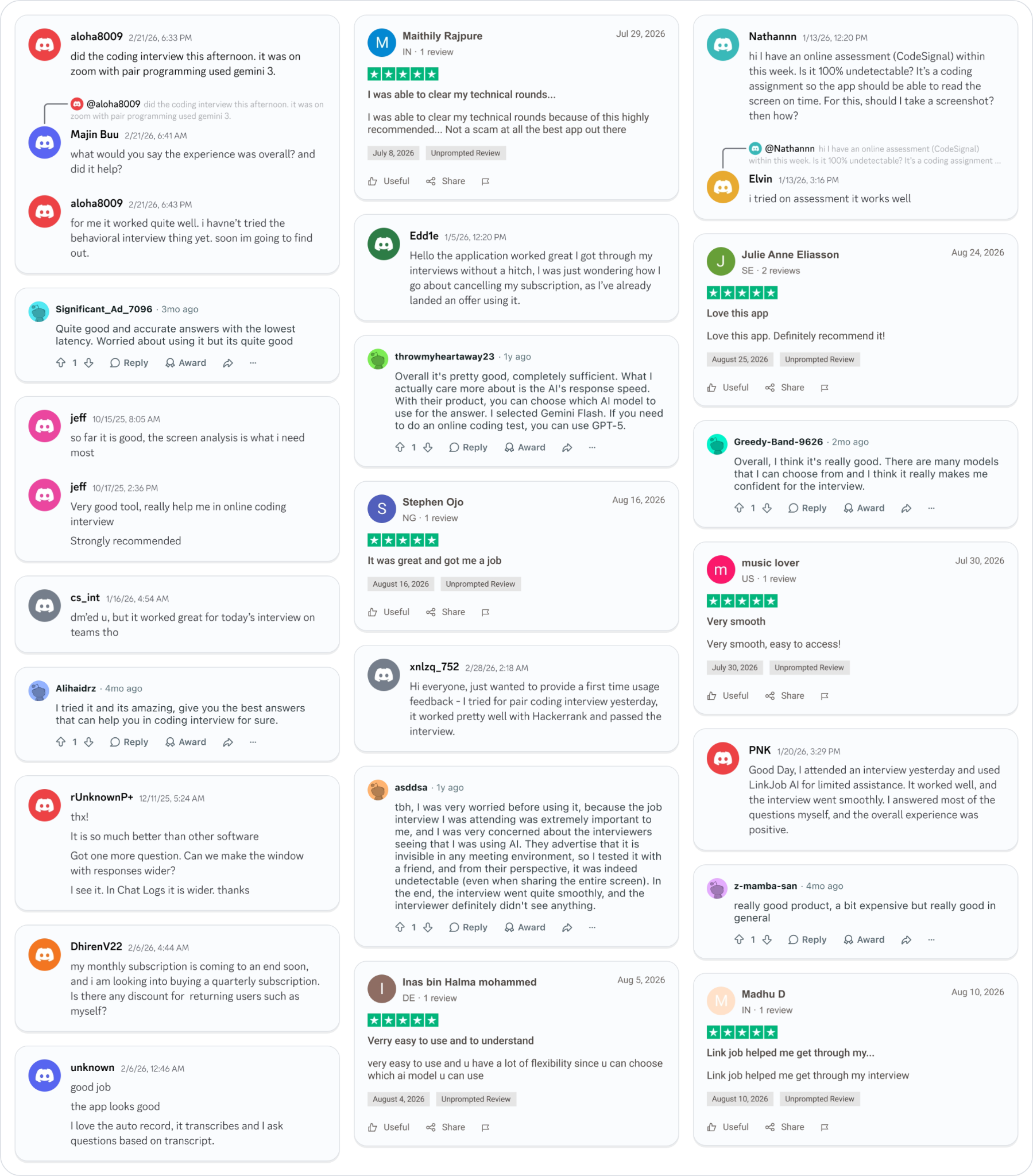
Smoother interviews, coding challenges cleared, and job offers landed. See how users describe their experience with Linkjob AI—in their own words.

© Copyright 2026 Linkjob AI - All Rights Reserved.